This list looks at 20 key figures who played major roles during the war, whether in government offices, on the battlefield, or behind closed doors. Understanding who they were and what they did offers a clearer picture of the past and how the world unfolded.
Their stories are a reminder that history often turns on the choices of a few. Here are 20 historical figures who shaped the course of World War I.
1. Archduke Franz Ferdinand

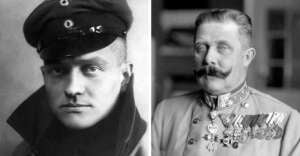
His assassination was the spark that set off the powder keg that was WWI. It set a domino of alliances into motion, plunging Europe into war. His untimely death forever tied a personal tragedy to a global catastrophe.
2. Gavrilo Princip

Gavrilo Princip was the young nationalist who made the fatal shot that triggered the war. His act of radicalism shows how one individual’s actions can ignite a massive geopolitical war.
3. Kaiser Wilhelm II

Germany’s last emperor believed in building up the military and expanding the empire, which pushed other countries away and made enemies feel threatened. His unpredictable actions and strong support for Austria-Hungary helped lead Europe into war.
4. Woodrow Wilson

At first, President Wilson wanted the U.S. to stay out of the war, but in 1917, he decided to join to help protect democracy. After the war, he pushed for ideas like the League of Nations, which changed how countries worked together.
5. Georges Clemenceau

Clemenceau, known as “The Tiger,” was a strong and determined leader for France during the toughest times of the war. He helped keep the country focused and motivated, even when things looked bad. At the peace talks after the war, he pushed for harsh terms to make sure Germany couldn’t attack France again. He believed Germany should be punished for the damage it caused, and he wanted to protect France from future danger.
Trending on The Scroller
6. Raymond Poincaré

The President of France during the war’s outbreak, Poincaré, championed preparedness and close ties with Russia. Though less prominent later, his early leadership helped solidify France’s united front against German aggression.
7. Marshal Joseph Joffre

Joffre was France’s commander-in-chief during the critical early months of the war. His leadership at the First Battle of the Marne halted the German advance and saved Paris from capture.
8. Marshal Ferdinand Foch

Foch became Supreme Allied Commander in 1918, in charge of bringing together British, French, and American forces. He worked hard to make sure the Allies were united and fighting with a clear plan. His leadership during the Hundred Days Offensive helped break through German lines and push them back. These attacks eventually led to Germany’s defeat and the end of the war.
Sign up for our newsletter
9. Marshal Philippe Pétain

Pétain became a national hero for his leadership at Verdun, one of the longest and deadliest battles of the war. He focused on keeping soldiers’ spirits up and made sure they didn’t stay on the front lines too long by creating a rotation system. This helped prevent exhaustion and boosted morale. His calm and caring leadership earned the respect of both the troops and people back home.
10. General John J. Pershing

Pershing was the leader of the American Expeditionary Forces during World War I. He believed that U.S. troops should fight as their own army instead of just helping British or French forces. This decision gave America a stronger role in the war. Under his leadership, U.S. soldiers played an important part in key battles during the final year. His efforts helped turn the tide and gave the Allies the boost they needed to win.
11. Newton D. Baker

As U.S. Secretary of War, Newton D. Baker was in charge of getting the country ready for war after the U.S. joined in 1917. He helped set up the draft and made sure soldiers had the training, equipment, and supplies they needed. He worked closely with General Pershing to send American troops overseas in an organized and effective way. Thanks to his efforts, the U.S. military was able to grow quickly and make a real difference in the war.
12. Lord Kitchener

Kitchener was Britain’s War Minister at the start of World War I and played a big role in building up the army. He helped organize recruitment and was responsible for getting thousands of men to join the fight. His face appeared on famous posters with the words “Your country needs you,” which became a powerful symbol of duty and patriotism.
13. Vladimir Lenin

Lenin returned to Russia in 1917, during a time of revolution and unrest. He led the Bolsheviks in taking control of the government and quickly made big changes. One of his first moves was to sign a peace treaty with Germany, which ended Russia’s involvement in the war. This allowed him to focus on building a new communist government. His decisions not only changed Russia’s future but also affected the rest of the war in Europe.
14. Manfred von Richthofen

Manfred von Richthofen, known as the Red Baron, was Germany’s most famous and feared fighter pilot during World War I. He was credited with 80 confirmed kills in the air, making him the top ace of the war. His skill and bravery made him a legend, both to his allies and his enemies.
15. Wilfred Owen

A British soldier and poet, Owen’s works captured the psychological trauma of trench warfare with haunting realism. Killed in action just days before the Armistice, he remains a voice of his generation.
16. Fritz Haber

Fritz Haber was a chemist whose work on nitrogen helped create fertilizers that boosted food production around the world. But during World War I, he also used his knowledge to develop deadly chemical weapons, like poison gas. His work shows how science can be used for both helpful and harmful purposes.
17. General John Monash

An Australian commander known for precision and planning, Monash led some of the most successful Allied offensives in 1918. His modern tactics are credited with shortening the war’s final phase.
18. Winston Churchill

Churchill was in charge of the British Navy at the start of World War I. He came up with the idea for the Gallipoli campaign, hoping to defeat the Ottoman Empire and open up a new front. But the plan didn’t work, and it ended in heavy losses. After the failure, Churchill stepped down and even served briefly on the front lines.
19. General Frederick Maude

General Frederick Maude was a British commander who led troops in the Middle East during World War I. In 1917, he captured the city of Baghdad, which was a major victory for the Allies. His success gave Britain more control in the region and weakened the Ottoman Empire’s hold on the area.
20. General Aleksei Brusilov

General Aleksei Brusilov led a major attack in 1916, known as the Brusilov Offensive. It was one of the most successful operations of the entire war and caused huge losses for Austria-Hungary’s army. His strategy surprised the enemy and gave the Allies a much-needed boost.
Want to see more military content?
Check out 25 Vintage Photos From The First World War, or take a look at 35 Vintage Photos From World War 2. Finally, if you want to see the war years in color, check out The War Years Reimagined: Colorized Photos From the Vietnam War.