We’ve all been there: you’re halfway through a cinematic masterpiece when a sudden realization hits you that makes the entire story fall apart. These plot holes are the nagging inconsistencies that defy the laws of physics, logic, or the movie’s own established rules. Usually, we are so swept up in the beautiful cinematography and the emotional performances that we perform a sort of mental gymnastics to keep the illusion alive. We want the hero to win and the mystery to be solved, so we collectively agree to look the other way when a character survives something impossible or a villain’s plan makes absolutely no sense.
However, once you see these narrative gaps, it is almost impossible to un-see them during your next rewatch. Some of these plot holes are so massive that they should have ended the movie in the first fifteen minutes if the characters had simply acted like real human beings. From magical items that are conveniently forgotten to technology that only works when it’s dramatic, Hollywood is famous for taking shortcuts with the truth. It turns out that even the most beloved blockbusters are often held together by nothing more than hope and a very distracted audience. Let’s pull back the curtain on fifteen times the script just gave up on logic.
1. Buzz Lightyear’s identity crisis – Toy Story

In the first Toy Story, Buzz Lightyear is convinced that he is a real Space Ranger and not a mass-produced plastic toy. Despite this firm belief, he still freezes and becomes motionless whenever a human enters the room, just like every other toy in Andy’s house. If he truly thought he was a sentient galactic hero, he would have tried to communicate with the “giant aliens” or defend himself instead of playing dead. It’s a classic logic fail that the creators admitted was necessary for the plot, but it essentially invalidates Buzz’s entire character arc for the first half of the film.
2. The illegal Crane Kick – The Karate Kid

The entire climax of The Karate Kid hinges on Daniel LaRusso landing the famous Crane Kick to win the All-Valley Tournament. However, the referee explicitly stated earlier in the film that strikes to the face were illegal and would lead to a disqualification. Johnny Lawrence was actually penalized for a similar move, yet Daniel is awarded the trophy and hailed as a hero for a direct kick to the jaw. Even Ralph Macchio has joked about this over the years, noting that by the tournament’s own rules, Daniel should have been sent home with a silver medal and an apology.
3. The weight of the tank – Ant-Man

In the Marvel Cinematic Universe, the “Pym Particles” are explained as a technology that reduces the space between atoms, meaning an object’s mass remains exactly the same even when it shrinks. This is why a tiny Ant-Man can still punch with the force of a full-grown man, but it makes the “Keychain Tank” scene completely impossible. Dr. Pym carries a shrunken, full-sized Soviet tank in his pocket as if it weighs nothing, even though it should technically still weigh 60 tons and crush him instantly. If the physics were consistent, the tank would have fallen through the floor and probably through the crust of the Earth the moment he let go of it.
4. The waterfall solution – A Quiet Place

The premise of A Quiet Place is that humans must remain silent to avoid being hunted by creatures with hypersensitive hearing. Early in the film, the father takes his son to a large waterfall and explains that the “background noise” is loud enough to mask their voices, allowing them to shout and talk freely. This raises the obvious question: why didn’t the family simply move their entire living quarters to the edge of the waterfall months ago? They spent years living in terrifying silence on a farm when they could have built a perfectly safe, noisy camp just a few miles away. It’s a glaring oversight that makes their high-stress lifestyle seem like a choice rather than a necessity.
5. The parental memory gap – Back to the Future

By the end of the first movie, Marty McFly returns to a present day where his parents are happier and more successful thanks to his interference in 1955. The problem is that George and Lorraine should definitely recognize that their youngest son looks exactly like “Calvin Klein,” the mysterious teenager who spent a week fixing their romantic lives and bringing them together. Even if thirty years have passed, you don’t typically forget the face of the person who punched out your bully and played the most influential guitar solo of your life. They apparently just looked at their son for twenty years and never thought, “Hey, he looks just like that time traveler we knew.”
Trending on The Scroller


6. The door space debate – Titanic

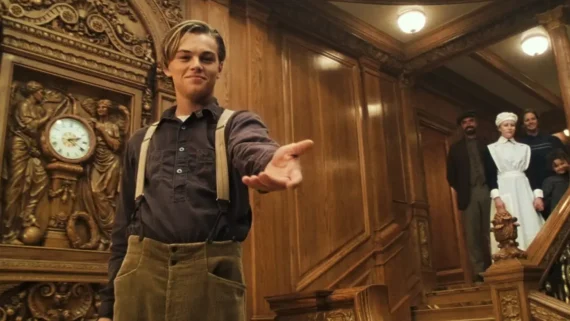
It is the most infamous debate in cinema history: could Jack have fit on that floating wooden door? While James Cameron has argued that the buoyancy was the real issue, fans have proven through countless recreations that the surface area was more than enough for two. Rose could have simply shifted her weight or placed her life jacket underneath to keep them both afloat. Instead, Jack chose to become a human popsicle in the North Atlantic, turning a potential survival story into a tragic (but avoidable) tearjerker.
7. The Time-Turner neglect – Harry Potter

In The Prisoner of Azkaban, Hermione is given a Time-Turner to handle a busy class schedule, which she later uses to save a hippogriff and Sirius Black. This reveals that time travel is a standardized, accessible technology within the Wizarding World that the Ministry of Magic literally hands out to teenagers. If such a device exists, it is completely nonsensical that nobody used it to go back and prevent the rise of Voldemort or save Harry’s parents. The entire wizarding war could have been settled over a lunch break, but the series just decided to ignore its existence after book three.
8. The “high ground” hypocrisy – Star Wars

At the end of Revenge of the Sith, Obi-Wan Kenobi claims the battle is over because he has “the high ground,” implying Anakin is at an impossible disadvantage. However, in The Phantom Menace, Obi-Wan was the one at the bottom of a pit and successfully defeated Darth Maul by leaping over him. Anakin, a legendary Jedi with incredible power, somehow forgot that leaping is a basic skill and instead jumped directly into Obi-Wan’s blade. It’s a strange moment where the “rules” of a duel change solely to serve the needs of the tragic finale.
Sign up for our newsletter
9. The microwave emitter physics – Batman Begins

The villain’s plan in Batman Begins involves using a “microwave emitter” to vaporize the city’s water supply and spread a fear toxin. The problem is that the human body is roughly 70% water, meaning the device should have instantly killed every person in the vicinity. As the emitter traveled through Gotham, people should have been exploding or boiling from the inside out before the water in the pipes even got warm. Batman and the villains walk right next to the machine without a scratch, proving that movie physics often choose when to be lethal.
10. The severed phone lines – Home Alone

At the start of Home Alone, a fallen tree branch severs the phone lines to the McCallister house, which explains why the parents can’t call Kevin. However, later in the film, Kevin is somehow able to call a local pizza shop and order a delivery to that very same house. If the external lines were down, both incoming and outgoing calls should have been impossible for everyone. It seems the “Little Nero’s” delivery driver has a better connection to the house than Kevin’s panicked mother does.
11. The glass slipper magic – Cinderella

The Fairy Godmother’s magic has a very strict expiration date: everything returns to its original form at the stroke of midnight. The carriage turns back into a pumpkin and the dress turns back into rags, yet the glass slippers remain perfectly intact. If the spell was meant to break completely, the slipper left on the stairs should have vanished or reverted into a regular old shoe. This convenience is the only reason the Prince can find her, suggesting the Fairy Godmother was a much better matchmaker than she let on.
12. The poster pin – Shawshank Redemption

Andy Dufresne’s escape from Shawshank is a masterpiece of planning, involving a tunnel hidden behind a large poster of Raquel Welch. When the warden discovers the hole, the poster is still perfectly pinned at all four corners from the outside. There is no physical way for Andy to have crawled into the hole and then reached back through to neatly re-pin the bottom of the poster. He would have needed a ghost or a very helpful cellmate to tidy up his escape route for him.
13. The alien Mac compatibility – Independence Day

To save the world from an advanced alien invasion, Jeff Goldblum’s character writes a computer virus on his 1990s PowerBook and uploads it to the mothership. This assumes that an interstellar species that traveled light-years uses the same operating system architecture and wireless protocols as a mid-90s Apple laptop. It’s like trying to fix a warp drive with a stone hammer; the “handshake” between the two technologies should have been impossible. Apparently, even the most advanced conquerors in the galaxy forgot to install a basic firewall or update their antivirus software.
14. The water weakness – Signs

The terrifying aliens in Signs have traveled across the universe to invade Earth, a planet that is roughly 70% covered in water. During the climax, it is revealed that plain old H2O acts like concentrated acid to their skin, making it their one fatal weakness. This makes the invasion the most poorly planned military operation in history, as even a light morning dew or a humid afternoon would be lethal to them. They basically invaded a “poison planet” without wearing any protective suits, which is the equivalent of humans invading a planet made of literal lava while wearing shorts.
15. Cypher’s secret meeting – The Matrix

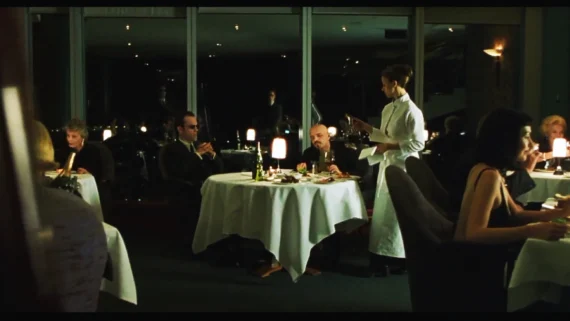
In the original Matrix, it is established that to enter the simulation, an operator must “plug you in” from the real world. Despite this, Cypher manages to have a secret steak dinner with Agent Smith to betray his crew without anyone on the ship noticing. There is no explanation for how he could have hooked himself up to the complex machinery and entered the digital world completely solo. He would have had to be in two places at once, or the rest of the crew was simply having the most unobservant movie night in history.
Want more movie’s fun facts?
Dissecting these plot holes might make us feel like cynical critics, but it actually proves how much we love the magic of the movies. We are willing to ignore the most glaring errors in logic as long as the story takes us on a journey that feels emotionally real. If you’re in the mood to uncover more secrets behind movies you love, check out these 15 Of The Most Expensive Movies Ever Made During The 1980s-1990s, or these 25 Little-Known Facts About Classic Movies Everyone Loves. You can also take a look at How Classic Movie Stunts Really Happened.