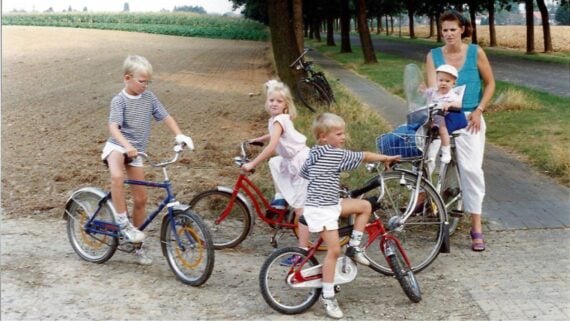
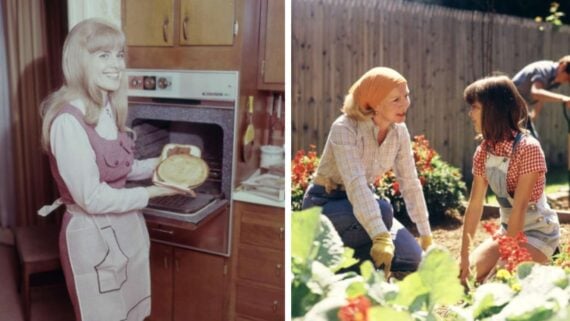
Split image: On the left, a woman in 1960s-style clothing smiles while holding a pie by an open oven. On the right, two women garden together, surrounded by green plants and flowers, with a wooden fence in the background.

Back in the seventies, managing a household budget often meant getting creative with everyday choices. Families leaned on practical habits, small adjustments, and a good amount of ingenuity to keep costs down while still covering what they needed. It was a time when saving money was less about strategies and more about everyday common sense.

Looking at these examples, you’ll start to see how different priorities shaped the way people spent their money. From how groceries were bought to how we reused items, nothing was wasted without thought. These approaches offer a glimpse into a more frugal era, where making things last was simply a part of life. Let’s dive into 20 ways seventies families saved money.

1. Rarely eating out

Three people sit around a table covered with a floral tablecloth, sharing a meal. There's a roast turkey, various dishes, and drinks. A large fern is in the background. One person wears glasses and a blue top, another a patterned shirt, and the third a plaid shirt.
slow-moving-sloth

Cooking meals at home was the norm in the ’70s, and restaurants were reserved for very special occasions. Families gathered around the table most nights, turning dinner into a shared experience rather than a quick stop on the way home.

2. Using hand-me-down clothes

Five people stand outside in colorful outfits featuring plaid patterns. They wear dresses and skirts with knee-high socks. A small child holds a rabbit. Trees and a house are visible in the background.
eaglemaxie

Clothing was often passed from one child to the next, stretching both fabric and family budgets. It was a practical system that made sure nothing useful went to waste, even if it meant developing a sense of style shaped by older siblings.

3. Carpooling

Three friends are sitting inside a red van. One is wearing a floral shirt and bandana, another in a yellow shirt is gesturing animatedly, and the third, wearing a striped top, is smiling. They seem to be enjoying a casual conversation.
pexels

Some people still carpool, but it was much more popular in the ’70s. Asking a coworker for a ride was normal then, but it has somehow become awkward recently.

4. Gardening

A woman and a girl, both wearing gardening clothing, kneel and tend to flowers in a garden. The woman wears an orange headscarf. A man is in the background using a shovel near a wooden fence.
H.Armstrong Roberts/ClassicStock/Contributor

While people still have gardens, they don’t compare to the family gardens of the ’70s. Families often grew their fruits and vegetables that would last the majority of the year, saving loads on grocery bills.

5. Couponing

Scattered collection of paper coupons on a surface, featuring various promotions and discount amounts, some with visible barcodes and colorful designs.
scelera

Clipping coupons was a regular part of grocery shopping, with families taking the time to plan purchases around the best deals. It required patience, but the savings added up in a meaningful way over time.

6. Homemade cleaning supplies

A bottle of white distilled vinegar is next to a box of pure baking soda on a kitchen shelf. Other pantry items are partially visible in the background.
trenttsd

Many households relied on simple, homemade mixtures to keep things clean, using ingredients already on hand. It was an approach rooted in practicality, even if it meant sacrificing some of the convenience and polish of modern products.

7. Repairing clothes instead of buying new ones

A person wearing a striped dress is adjusting fabric on a wooden table. Scissors sit nearby, and more fabric hangs in the background. The scene suggests dressmaking or sewing in a vintage-inspired setting.
pexels

Mending and patching clothes was a common practice that saved families loads of money. However, being the youngest in the family could be tough, as it often meant inheriting hand-me-downs that were full of patchwork.

8. Handmade gifts

A uniquely designed wooden chair with a tall, arched backrest. The chair features a mix of light and dark wood tones, with a minimalist structure and four legs, set against a plain grey background.
tanglar2

Instead of buying expensive gifts from the store, people would make gifts for themselves. Homemade gifts are cheaper and more personal.

9. Free community events

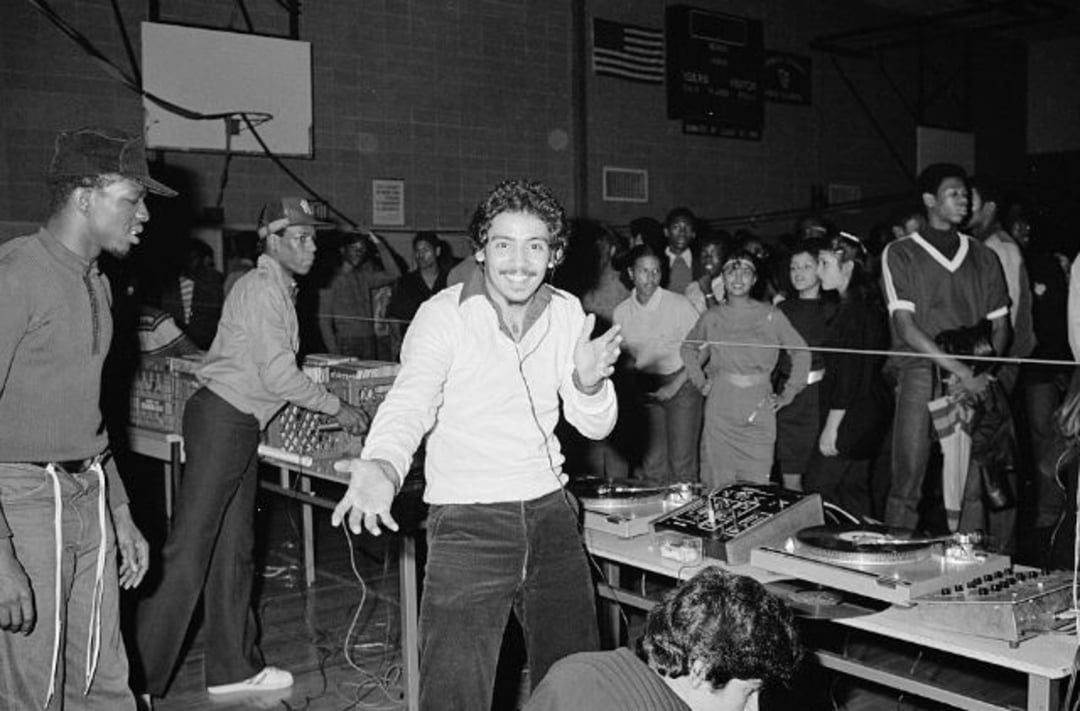
A man stands smiling and gesturing near DJ turntables at a lively indoor party, surrounded by a crowd of people enjoying the music in a gymnasium-like setting.
userdeleted/VIA Reddit.com

Attending free community events like festivals or park events was a great way to have fun without having to spend money.

10. Baking at home

A woman in a vintage kitchen, wearing a pink apron, holds a tray with slices of bread from an open oven. The kitchen features wooden cabinets and retro decor. She smiles at the camera.
Harold M. Lambert / Contributor

Instead of buying baked goods that are marked up 100%, families would bake their own bread, cookies, and cakes from scratch.

11. Hand-me-down toys
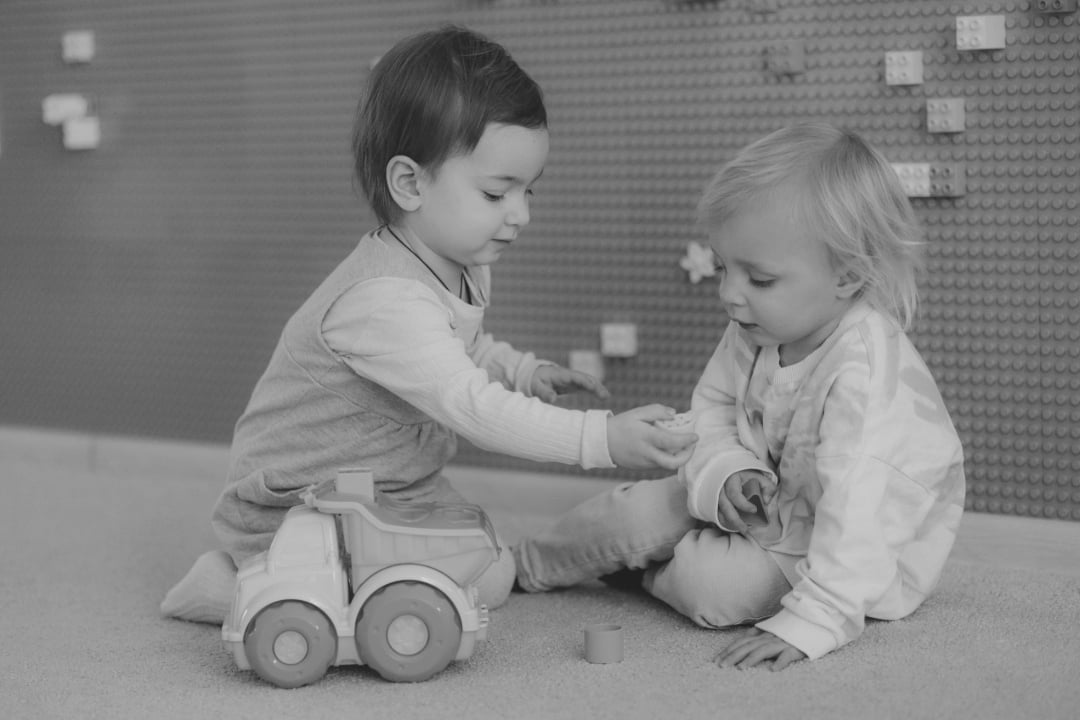
Two young children sit on the floor playing together. One child hands a toy block to the other, who is holding a piece. A toy truck is beside them, and toy blocks are attached to the wall in the background.
via pexels.com

The money people spend on toys today is incredible. In the ’70s, kids would inherit toys from older siblings and relatives, cutting the need for new ones.

12. Using cloth diapers
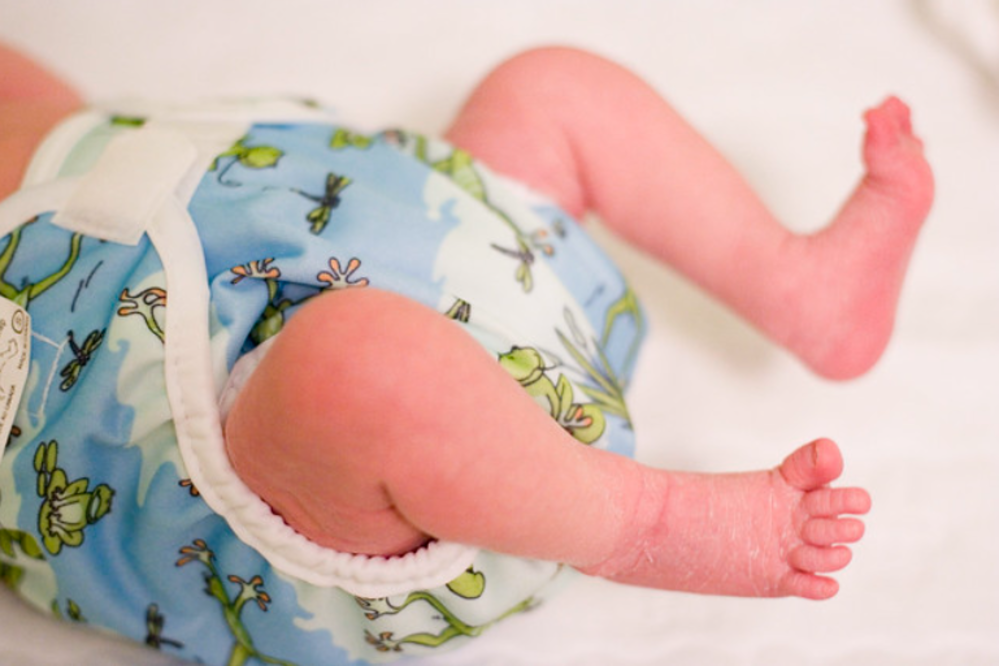
Baby wearing a cloth diaper with a playful frog and lily pad pattern on a soft white surface. The baby's legs are slightly bent and visible.
mccord

Cloth diapers remained a practical choice for families looking to cut costs, even as disposable options became more available. They required more effort, but the long-term savings made the extra work worthwhile.

13. Reusing plastic

A plastic bag drying rack with multiple prongs is positioned on a granite countertop. Behind it, a partially open reusable plastic bag leans against a tiled backsplash, featuring a diamond pattern in neutral tones.
stickinthemud57

Taking a look at how much plastic is thrown away today will blow anyone away. Back in the ’70s, we washed and reused plastic bags and items rather than throwing them out.

14. No air conditioning

Two vintage table fans with metal grilles sit side by side on a wooden surface. The fan on the left has blue blades, and the fan on the right has brown blades. Both fans have a similar design with white bases and control panels.
userdeleted

Keeping cool meant opening windows, drawing curtains, and relying on fans rather than expensive systems. It required some adjustment, but it kept energy costs manageable during the hottest months.

15. Fixing appliances
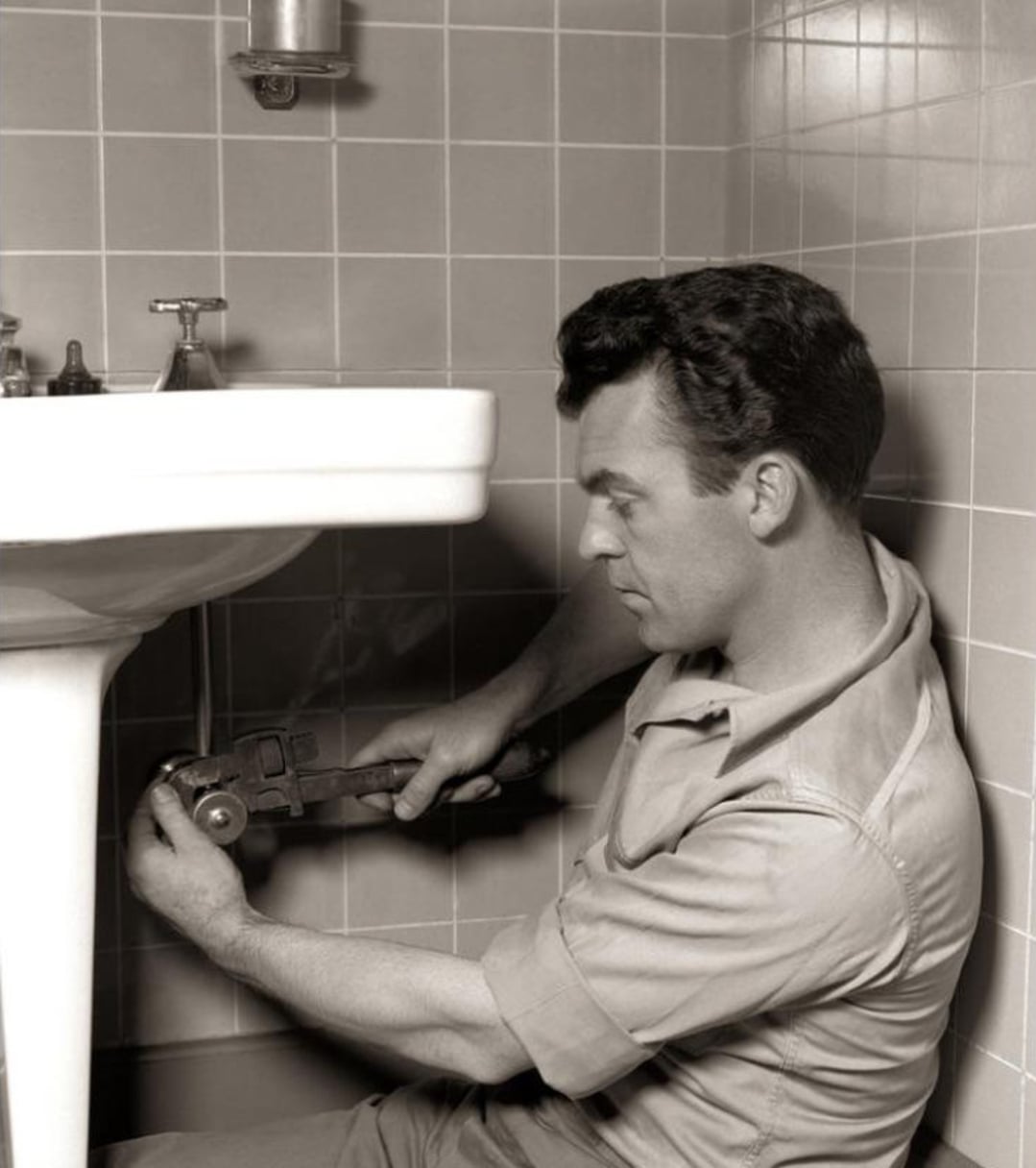
A man in work clothes uses a large wrench to fix pipes beneath a bathroom sink, surrounded by tiled walls.
timevanson

When something broke, the first instinct was to fix it rather than replace it or call for help. Learning how things worked was part of everyday life, and it saved a significant amount of money over time.

16. Making do with one car

A family is packing a car in front of a house. A woman and two children, one holding a beach ball, organize items like a picnic basket and toy sailboat. A man carries a cooler. A dog is sitting nearby. The setting is a suburban neighborhood.
ClassicStock/Contributor

Instead of owning multiple vehicles, many families would collaborate and use one car. Although this process can be extremely stressful, it’s a great way to save some extra cash.

17. Home haircuts
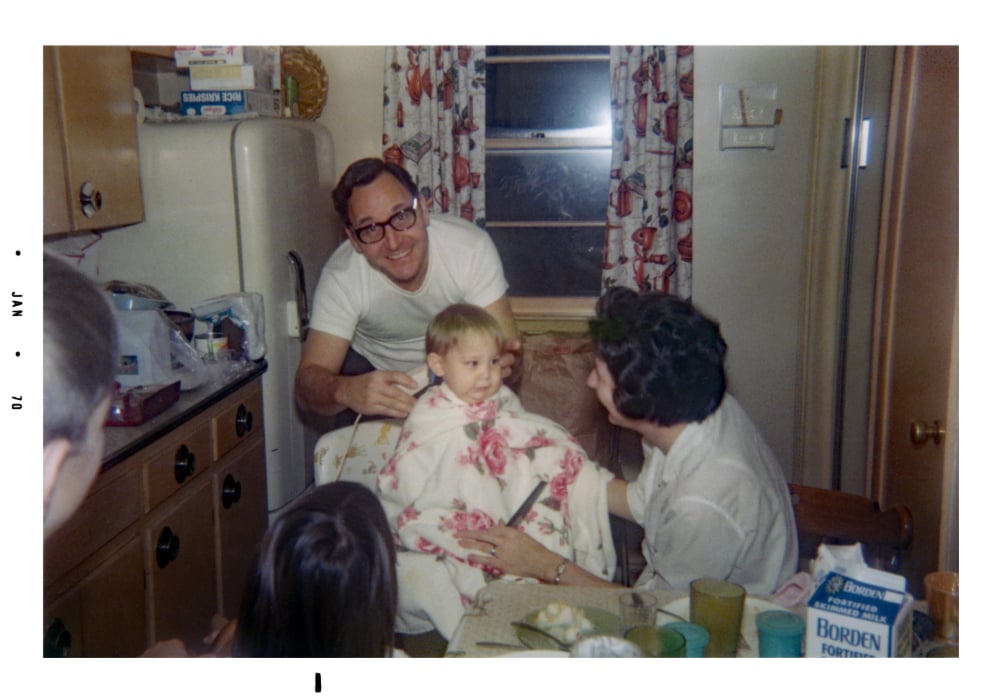
A child is getting a haircut in a cozy kitchen. The child is wrapped in a floral-patterned towel while a woman cuts their hair. A man stands behind, smiling. The scene includes vintage kitchen decor and a Borden's milk carton.
blacklungdisease

Can you believe the price of haircuts today? Cutting family members’ hair at home could save a lot of money instead of going to a salon.

18. Simple vacations

Four children are sitting in the open trunk of a vehicle. They are surrounded by bags and a stroller. The environment is lush and green, suggesting a park or forest setting. All are smiling and wearing casual clothes, with two wearing caps.
middelveld/Getty

In the ’70s, a road trip or camping was the height of family vacations. Kids today lose their minds if they don’t go to Disney for one year.

19. Living with fewer home luxuries

Retro kitchen with orange chairs and a yellow countertop. Vintage floral wallpaper and wooden cabinets. Table set with orange bowls and green plates. Green patterned carpet and silver appliances. Vintage decor with a warm, nostalgic vibe.

Many families went without fancy things like microwaves and dishwashers to save money. Although these gadgets are useful, they are costly.

20. Drinking tap water

A hand is holding a clear glass under a running kitchen faucet, filling it with water. The scene takes place in front of a window, and the image is in black and white.
via Newportwater.com

Did you know that Americans spend more than $18 billion annually on plastic water bottles? If you’re buying a $6 pack of water every few days for your family, try getting a water filter instead.

Want to see more content from the seventies?

Check out 18 Vintage Images That Show What High School Was Like In The Seventies, or take a look at 20 Actresses Who Ruled The Seventies. Finally, if you want to see yearbook photos from the ’70s, check out 20 Yearbook Photos from the Smokin’ Seventies.


Meet the Writer

Patrick is a writer based in upstate New York, where he grew up and still calls home. Over the past year, he’s been diving deep into storytelling, especially tales rooted in history, the Wild West, lost treasures, and ancient artifacts. He’s also drawn to unsolved mysteries and whatever the internet can’t stop talking about.

Whether it’s a centuries-old legend or a bizarre internet rabbit hole, Patrick is always chasing the threads of a compelling story. When he’s not chasing stories, Pat’s probably hiking mountain trails with his dog, exploring new corners of the U.S., or doom-scrolling between hangouts with friends and family. He finds inspiration in nature, forgotten places, and random conversations—anything that sparks curiosity. Whether it’s city streets or backcountry paths, Patrick’s always on the lookout for the next great story.