Infomercials were almost impossible to avoid if you turned on the TV late at night during the 1990s. Someone was always selling an appliance, exercise machine, kitchen tool, or household gadget with an enthusiastic demonstration and a special offer that somehow kept getting better. Some products looked more like jokes than serious inventions, but viewers bought them in astonishing numbers. A few even made their creators very wealthy.
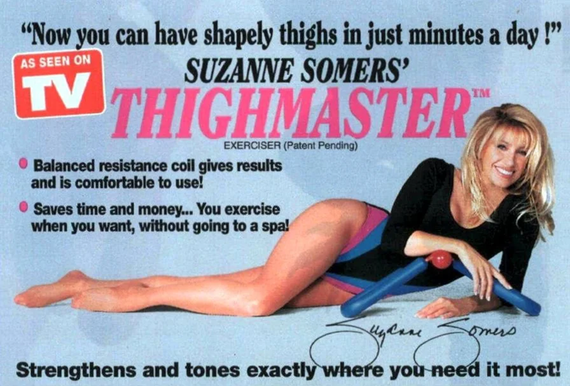
1. ThighMaster: Suzanne Somers and a Very Expensive Spring
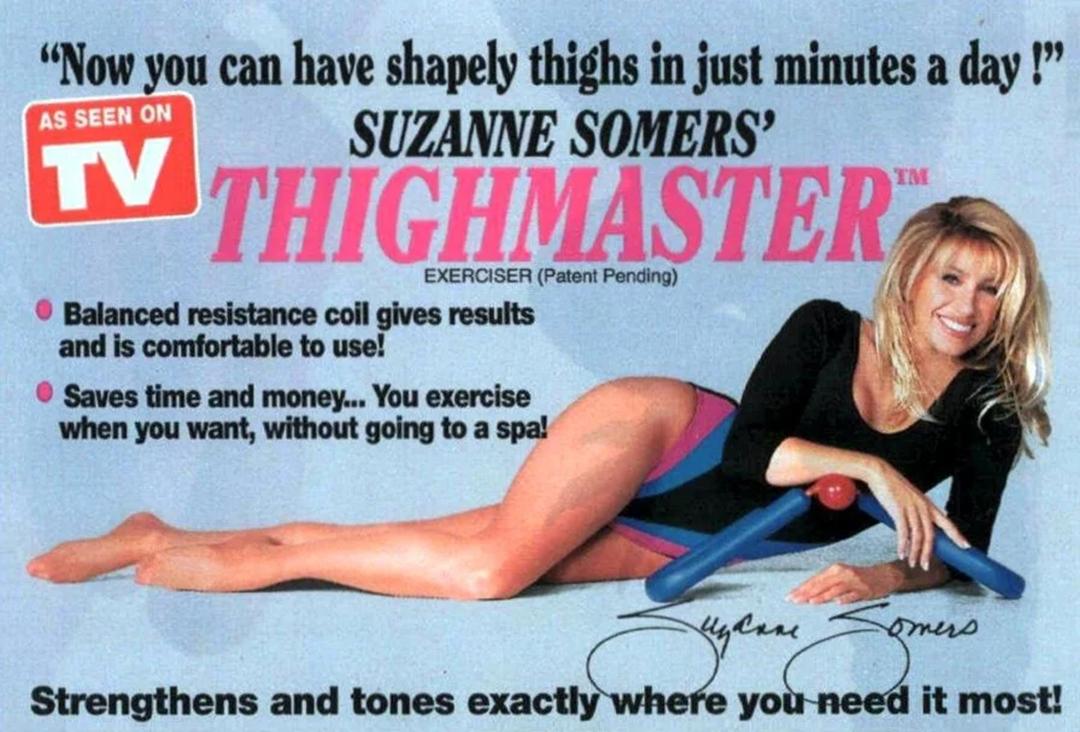
The ThighMaster was about as simple as exercise equipment could get. It had two padded handles connected by a spring, and the idea was to squeeze them together using the thighs. Suzanne Somers began promoting it in 1991, usually demonstrating the movement while seated and looking entirely comfortable. That was a big part of the appeal. There were no complicated instructions, no gym membership, and no particular skill involved. Around six million ThighMasters sold during the first 18 months, turning an ordinary-looking piece of exercise equipment into a national craze. The commercials became a regular target for comedians, but the jokes didn’t seem to hurt sales.
2. GLH Formula #9: Spray-On Hair for Balding Men
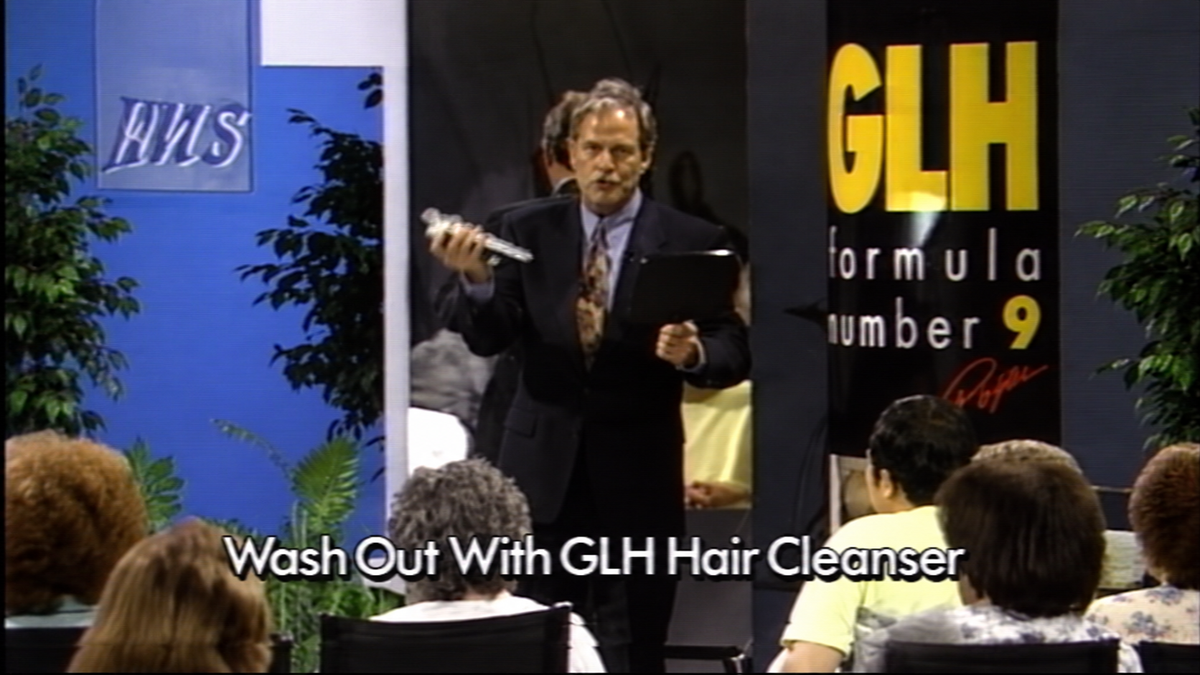
Ron Popeil wasn’t shy about demonstrating this one on camera. GLH Formula #9, short for Great Looking Hair, came in an aerosol can and deposited colored fibers onto thinning areas of the scalp. It didn’t grow hair, despite how dramatic the before-and-after shots sometimes appeared. It just made existing hair look thicker. Popeil offered nine shades, charged roughly $40 per can, and reportedly sold 900,000 of them in one year. The fact that so many people were willing to spray their heads with colored fibers was probably less surprising than how convincing some of those television demonstrations looked.
3. Ab Roller Plus: Making Sit-Ups Look Complicated
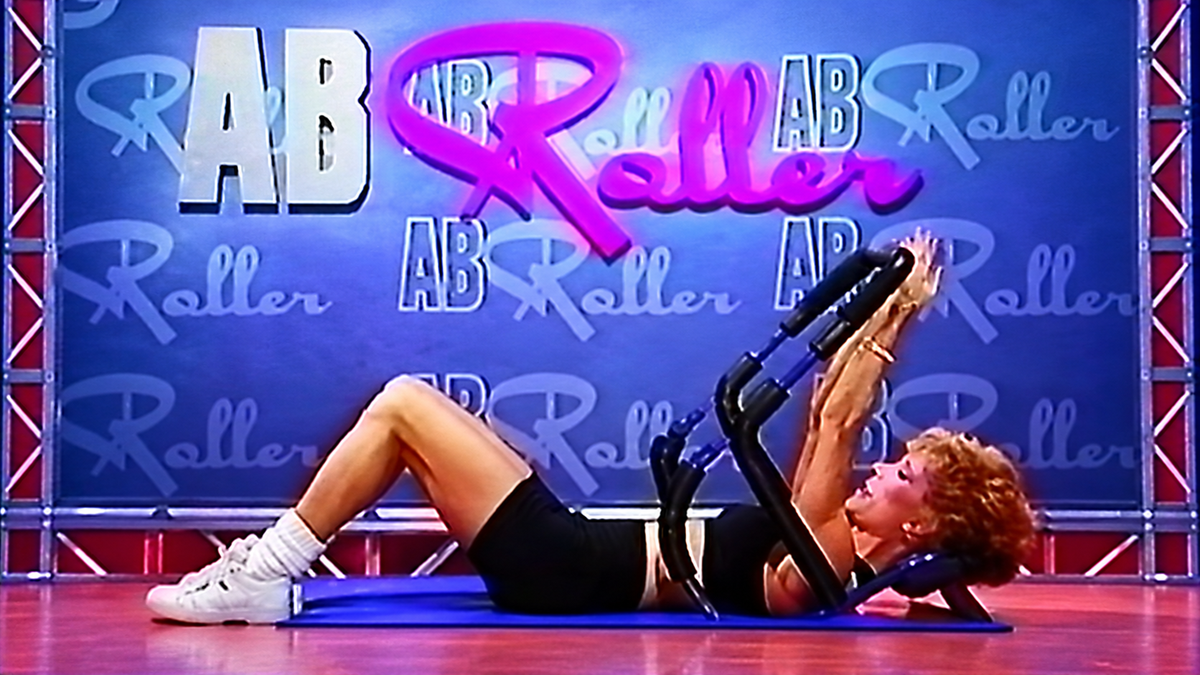
Doing crunches on the floor apparently wasn’t enough for 1990s consumers. The Ab Roller offered a curved metal frame with handles and a padded support for the head, allowing users to perform abdominal exercises with additional neck support. Its infomercial spent plenty of time showing people struggling with ordinary sit-ups before introducing the machine. By 1996, the Ab Roller Plus had become the top-selling infomercial product of the year, according to television sales rankings published by Wired. For a device that mostly helped people do an exercise they could already do for free, that was quite an accomplishment.
4. George Foreman Grill: More Profitable Than Boxing
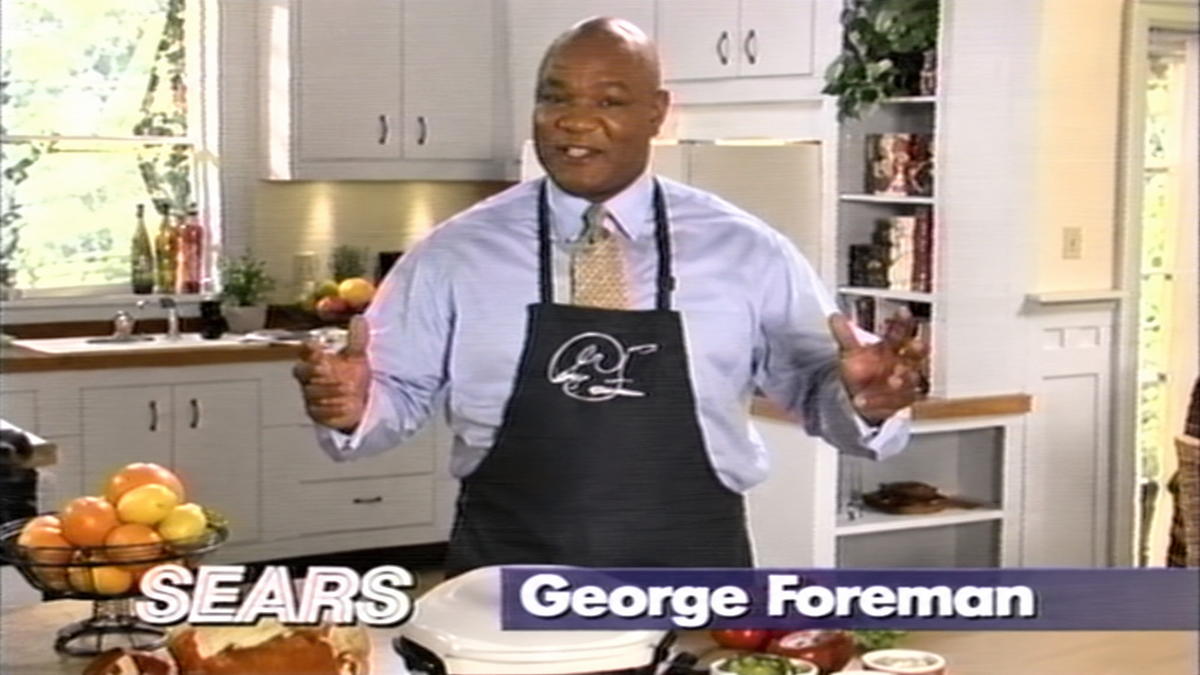
George Foreman’s electric grill arrived in 1994 with a fairly straightforward selling point: it could cook food from both sides while letting grease drain away. The slanted cooking surface wasn’t especially glamorous, but Foreman made it seem like something every kitchen needed. He was relaxed and funny in the commercials, often talking about food rather than complicated cooking techniques. Sales grew rapidly, reaching roughly $200 million annually by 1999. Foreman later received $137.5 million for the rights to his name and likeness in connection with the product. The grill went on to sell more than 100 million units worldwide, many of them probably spending their final years in the backs of kitchen cabinets.
5. Ronco Showtime Rotisserie: The Chicken Machine With a Catchphrase
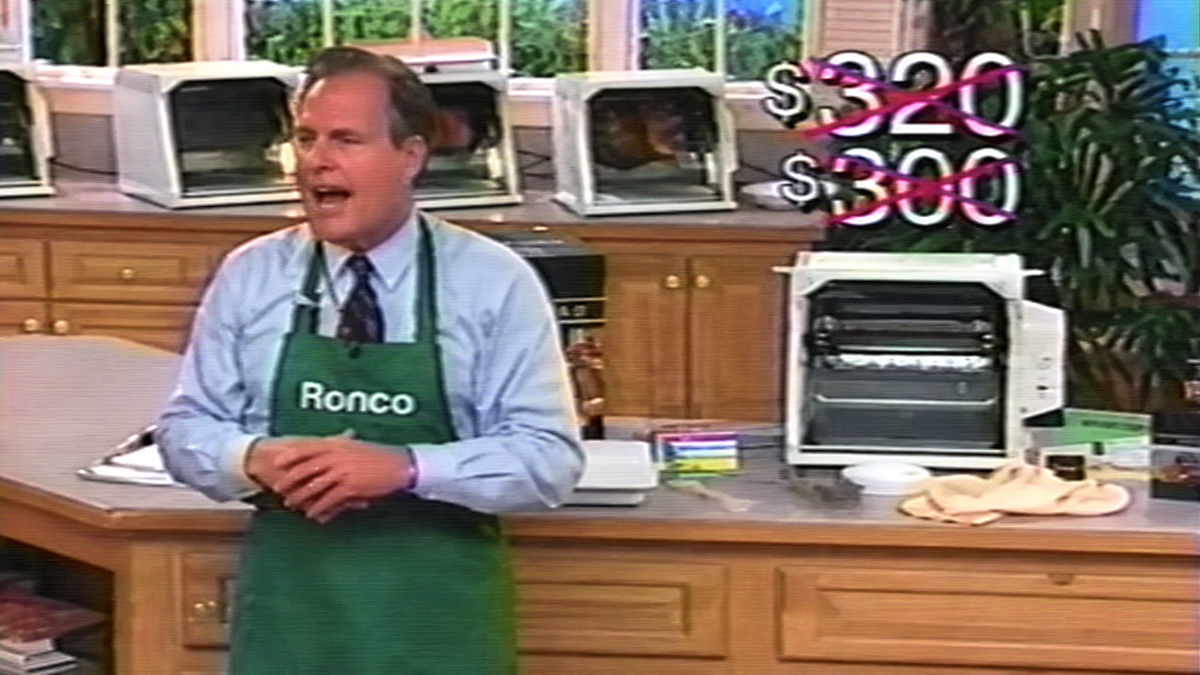
“Set it and forget it” became one of the most recognizable lines in late-night advertising, thanks to Ron Popeil and his Showtime Rotisserie. Introduced in 1998, the countertop oven slowly rotated chickens, roasts, and other foods behind a glass door. The demonstrations made it look easy, although customers still had to prepare the food and eventually clean the machine. Popeil often cooked several dishes during a single infomercial, with an audience responding enthusiastically to each reveal. The Showtime product line went on to generate hundreds of millions of dollars in sales during the following years. That’s a remarkable amount of money for a machine that took up nearly as much counter space as a microwave.
Trending on The Scroller


6. Total Gym: Chuck Norris Selling Exercise Equipment
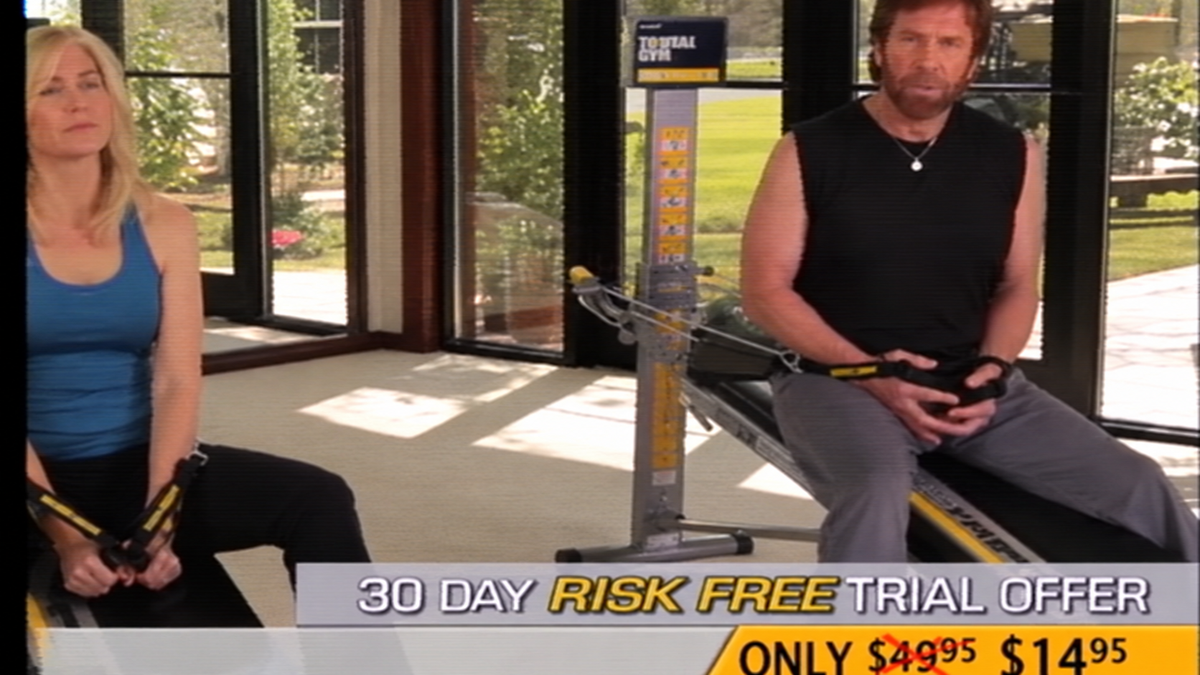
Chuck Norris spent the 1990s appearing in action movies and television shows, but he also became a familiar face in exercise infomercials. Alongside Christie Brinkley, he promoted the Total Gym, a sliding bench system that used body weight and adjustable resistance for different exercises. The machine could be folded away, which helped make its size seem less intimidating. Customers weren’t just watching an anonymous fitness instructor demonstrate the equipment. They were watching an action star use it. In 1997, Total Gym topped the industry’s annual infomercial sales rankings, beating an assortment of kitchen gadgets, fitness products, and self-improvement programs.
7. OxiClean: Billy Mays and a Tub of White Powder
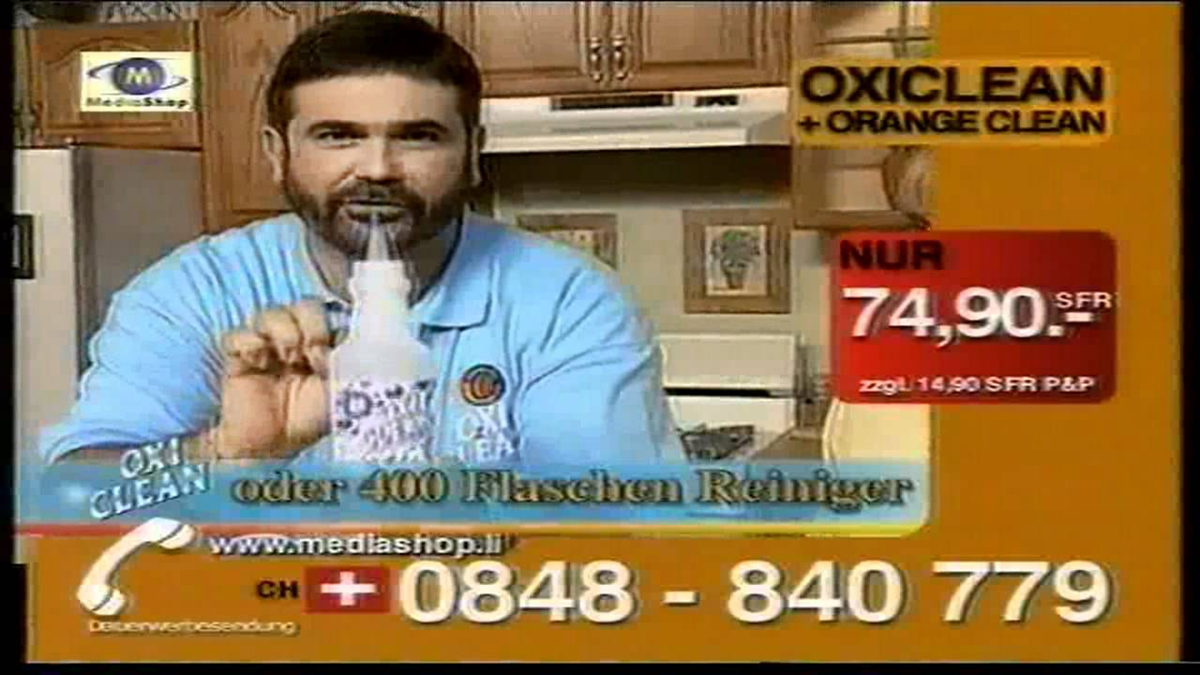
OxiClean wasn’t particularly exciting to look at. It was a powder in a plastic container, sold as a way to remove stains and clean household surfaces. What made the commercials memorable was the demonstration. Billy Mays began promoting the product on television in 1999, using his booming voice and dirty fabrics to show what the cleaner could do. OxiClean belonged to the same company as Orange Glo, which was already finding success through television shopping. Orange Glo International’s reported revenue grew from roughly $12 million in 1998 to $86 million in 1999, reflecting the expansion of its cleaning-product business rather than OxiClean sales alone. Mays would become much more closely associated with the brand during the following decade.
8. Bowflex: The Home Gym That Cost a Small Fortune
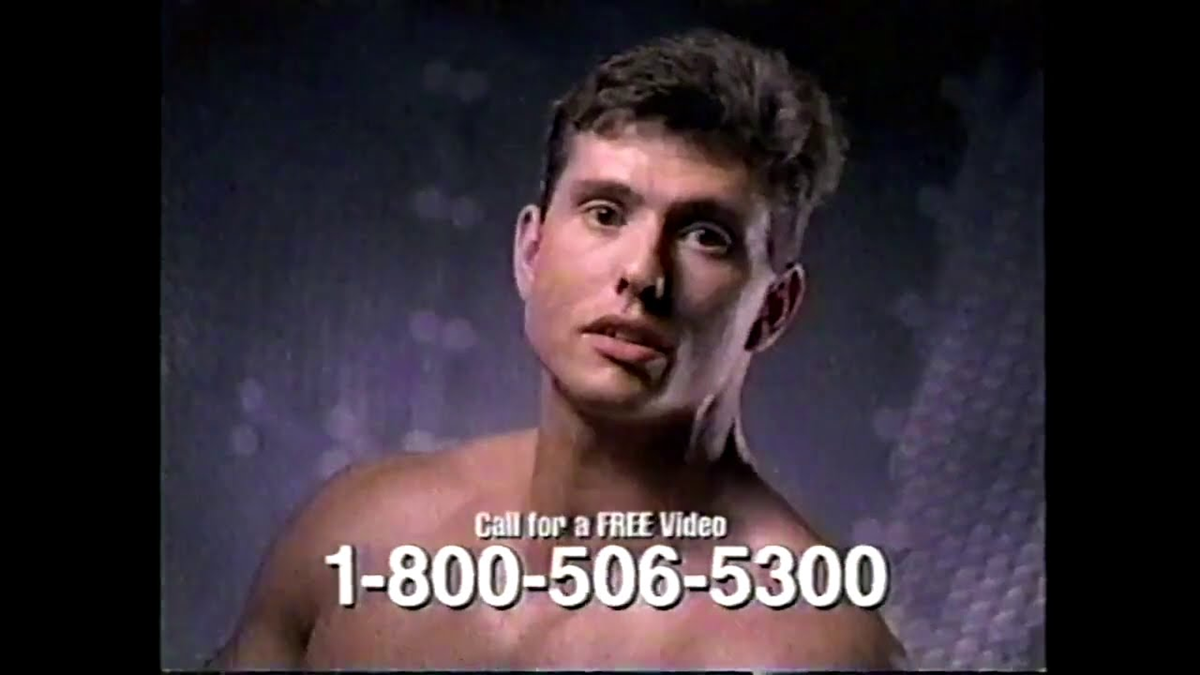
Buying a Bowflex wasn’t like ordering a vegetable slicer or a cleaning product. These were large exercise machines, often costing hundreds or thousands of dollars, with flexible resistance rods that replaced traditional weights. The company began running infomercials in 1997, showing muscular models using the equipment in tidy homes with plenty of available floor space. Financing options made the price seem more manageable, including a program that allowed qualifying buyers to purchase without an initial down payment. Direct Focus, the company behind Bowflex at the time, reported revenue of approximately $19.9 million in 1997, a 134% increase from the previous year. Not everyone had room for one, but plenty of people apparently found a way.
Sign up for our newsletter
9. Flowbee: The Haircut Machine That Attached to a Vacuum Cleaner
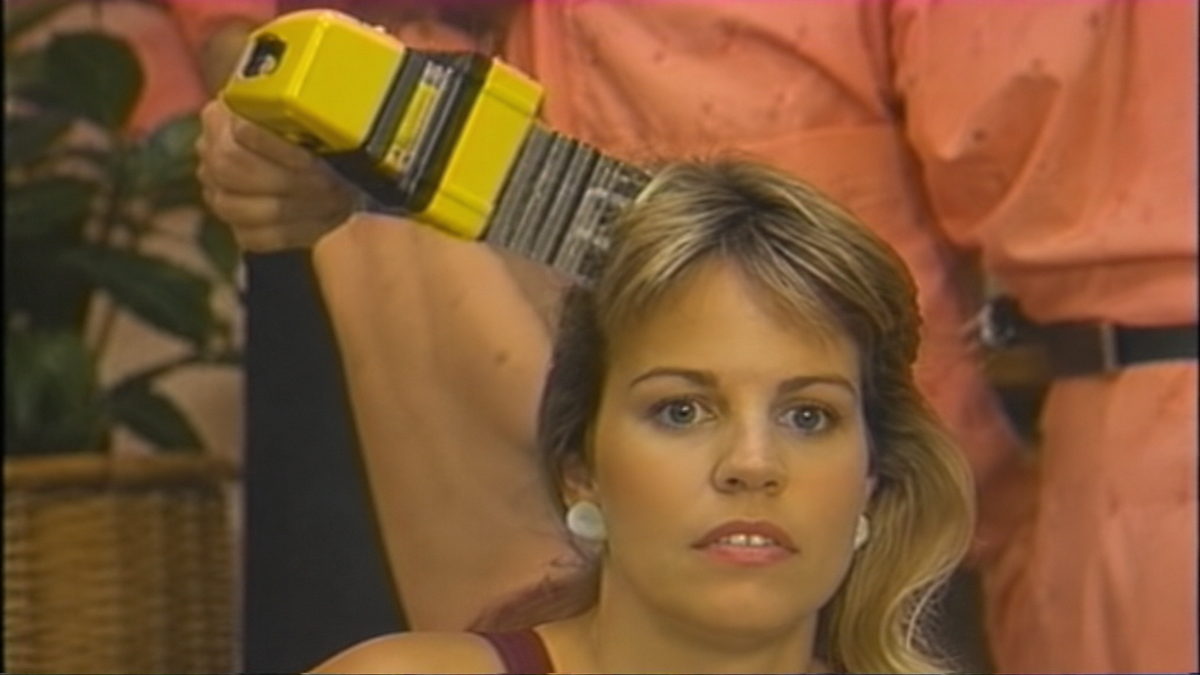
Cutting your own hair was already risky enough without bringing a vacuum cleaner into the bathroom. But that was exactly what the Flowbee encouraged people to do. Invented by California carpenter Rick Hunts, the device combined electric clippers with a hose that connected to an ordinary vacuum, using suction to lift hair before trimming it. Its first infomercial aired in 1988, and the machine became a familiar sight on late-night television throughout the 1990s. By January 2000, roughly two million units had been sold. The idea was strange enough to inspire the fictional Suck Kut in Wayne’s World, but apparently practical enough to convince an awful lot of people to try it at home.
10. BioSlim: A Diet Product That Beat the George Foreman Grill

There was serious money in selling weight-loss products during the 1990s, and BioSlim was a good example. Marketed by Thane, it reached the top of the infomercial sales rankings in 1998, finishing ahead of the George Foreman Grill and Total Gym. Industry figures placed the year’s highest-grossing infomercial at approximately $80 million in television sales, although the rankings didn’t disclose an exact figure for BioSlim. The advertising appealed to people looking for an easier way to lose weight. Of course, a successful infomercial said very little about whether a diet product actually delivered on its promises.
11. Popeil Automatic Pasta Maker: A Machine for People Who Hated Making Pasta
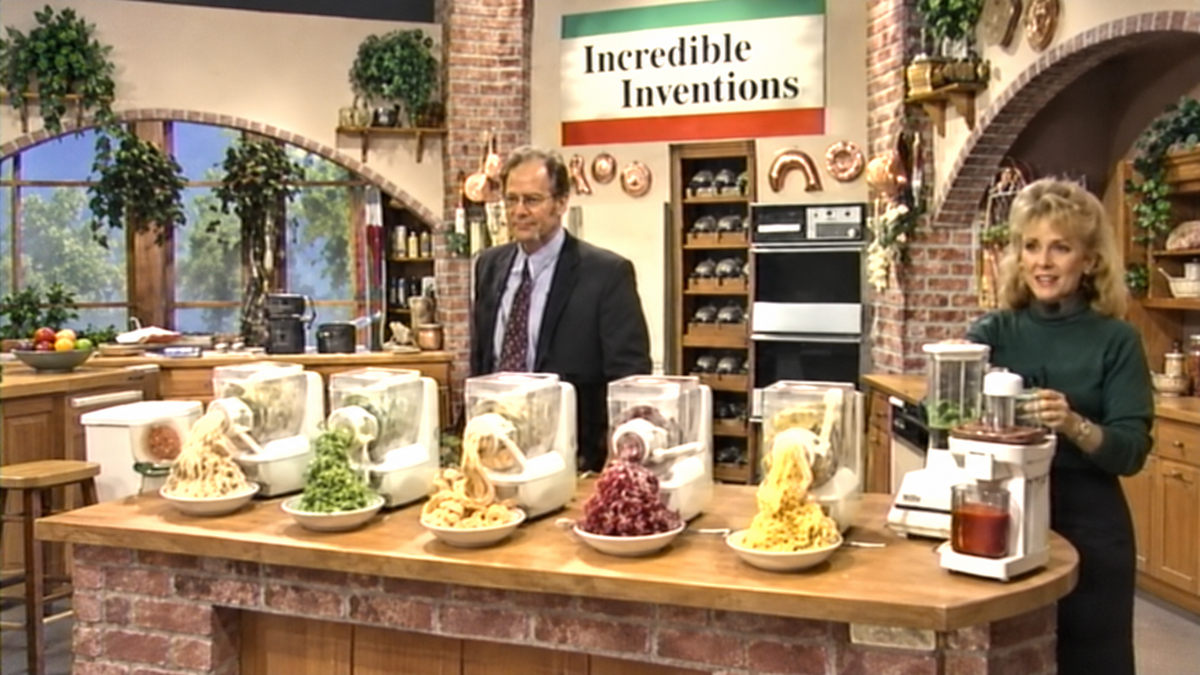
Fresh pasta used to require a fair amount of work, unless Ron Popeil was doing the explaining. His Automatic Pasta Maker, introduced in 1993, mixed dough and pushed it through attachments to produce different noodle shapes. There were even accessories for making sausage. The commercials showed the finished pasta piling up while Popeil described all the meals customers could prepare. More than 500,000 machines were sold through infomercials and television shopping channels. Of course, there was still the business of measuring ingredients, cooking the pasta, and washing the machine afterward.
12. Power Rider: The Exercise Machine That Looked Like a Mechanical Horse
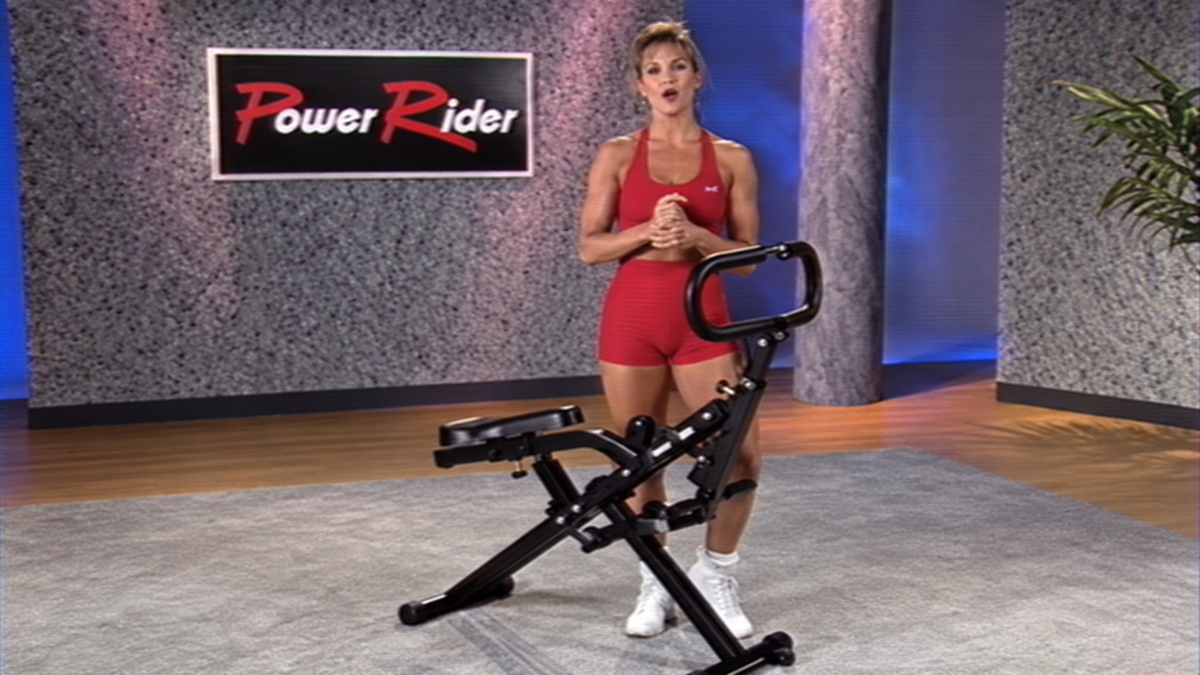
The Power Rider was difficult to describe without making it sound ridiculous. Users sat on a narrow seat, grabbed a set of handlebars, and rocked back and forth while pushing with their legs. The movement was supposed to exercise several muscle groups at once, although watching someone use the machine looked a little like witnessing a very strange horseback-riding lesson. Guthy-Renker promoted it heavily during the mid-1990s. In 1996, the Power Rider ranked seventh among the year’s highest-grossing infomercials. Apparently, plenty of people had room in their homes for one more awkward piece of exercise equipment.
13. Proactiv Solution: The Acne Treatment That Kept Customers Ordering

Proactiv didn’t look particularly unusual. It was a collection of skincare products developed by dermatologists Katie Rodan and Kathy Fields, introduced in 1995. The clever part was how it was sold. Rather than asking customers to purchase a single cream, Proactiv offered a complete routine that encouraged repeated purchases. The brand’s television history included actress Judith Light, who appeared as a spokesperson in 1999, helping bring the system to a wider audience. Proactiv later became a business generating enormous annual sales, with much of that growth occurring during the 2000s. The real money wasn’t necessarily in selling someone a skincare kit once, but in getting them to keep using it.
14. Orange Glo: Wood Polish That Became a Television Sensation
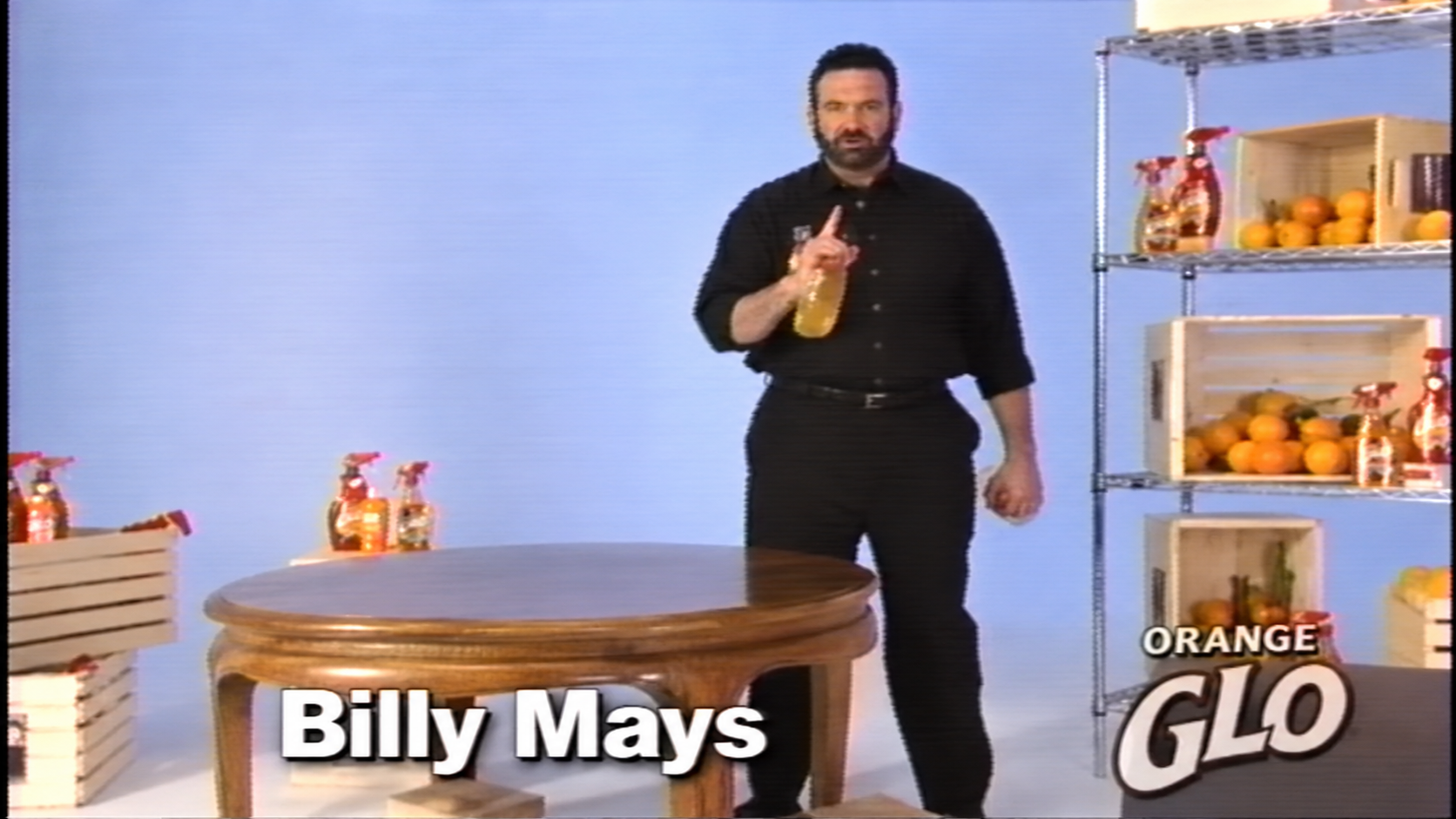
A bottle of wood polish doesn’t sound like exciting television, but Billy Mays knew what to do with it. Orange Glo, developed by Max and Elaine Appel, was promoted on home-shopping television during the 1990s, with demonstrations showing furniture and wooden surfaces looking noticeably cleaner after treatment. Mays reportedly sold 6,000 bottles during an 11-minute television appearance, with each bottle priced at around $18. The company went on to expand into other cleaning products, including OxiClean. Shiny furniture wasn’t exactly a thrilling concept, but it made for an effective sales demonstration.
15. Red Devil Grill: The Portable Gas Grill With a Serious Problem
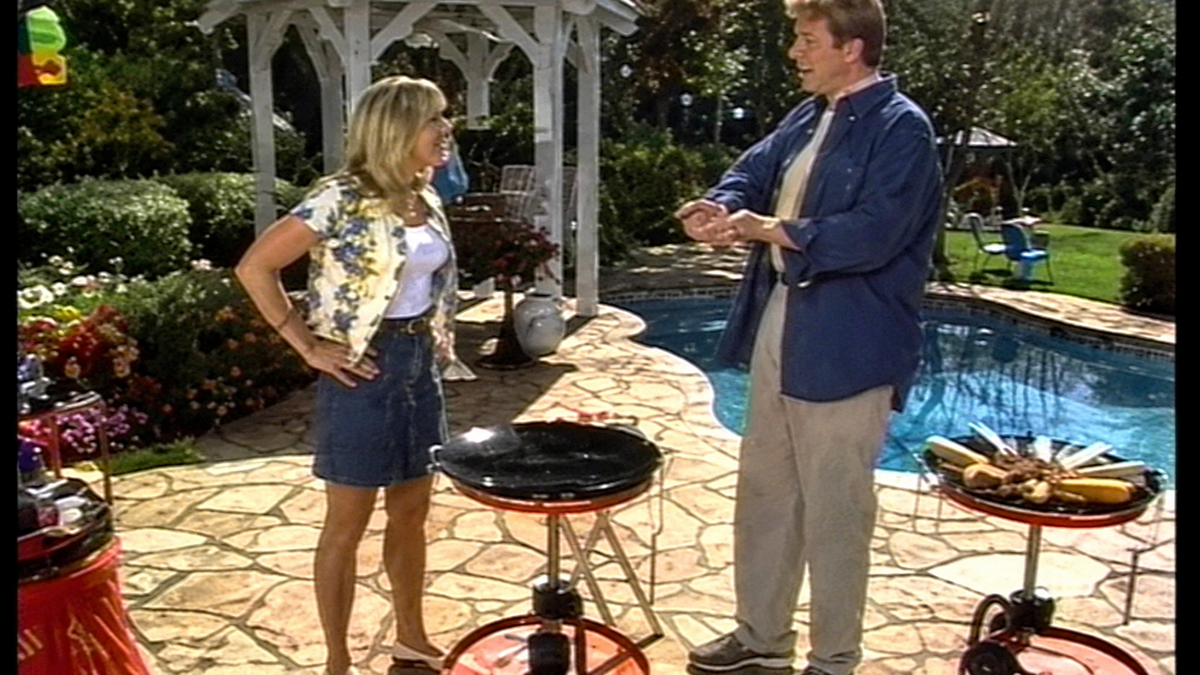
The Red Devil Grill promised something a little different from the electric countertop grills appearing on television during the late 1990s. It was a portable gas-powered cooker with a tripod stand, designed for outdoor meals without a full-size barbecue. Infomercials promoted the product beginning in 1998, and it became successful enough to finish sixth in that year’s infomercial sales rankings. Unfortunately, the design had a dangerous flaw. In 2002, the U.S. Consumer Product Safety Commission warned that some grills could be mistakenly lit at an air intake tube, causing extreme heat, burns, and even structural collapse. The agency reported 44 burn injuries and warned consumers about approximately 155,000 units. For a product marketed around convenient cooking, that was a particularly bad ending.
In the mood for more?
Check out 20 Bizarre Infomercial Products That Were Oddly Tempting, or take a look at 25 Tech Gadgets Everyone Wanted in the 1990s. If you want to see more 90s TV shows, you can check out 14 Late-Night Talk Show Sets From the 1990s.