These Victorian-era innovations can look a bit clunky today, especially with those wooden cases, whirring gears, and hand-turned cranks. But behind all that brass and steam was a wave of problem-solving that rewired cities, hospitals, factories, and living rooms. These were tools built for a faster, cleaner, and more connected life.
From antiseptic surgery to long-distance calls, the century went from soot to switchboards in a hurry. The designs seem simple now, yet the ideas underneath still power how we move, heal, light, record, and talk.
1. The flush toilet

Victorian plumbers like Thomas Crapper standardized the parts and venting, while Alexander Cumming had earlier patented the S-trap. A curiosity: Crapper’s name made him famous, but London’s cleaner flush owed as much to Joseph Bazalgette’s sewer overhaul.
2. Public sewer network

London’s sewer system was led by Joseph Bazalgette after the Great Stink of 1858. He over-engineered pipe sizes on purpose, and that foresight still serves the city today.
3. The safe bicycle

The modern “safety” design was launched by J.K. Starley in 1885. It didn’t just change transport; people said it helped women’s independence and even influenced clothing.
4. Practical incandescent light bulbs

The first to make key improvements were Thomas Edison and Joseph Swan, and later, they merged as Edison & Swan in Britain. The big leap wasn’t only the filament; it was the whole system of wiring and sockets.
5. The telephone

Alexander Graham Bell patented the phone in 1876, with a long-standing dispute involving Elisha Gray. Early calls used operators who manually connected the lines on switchboards.
Trending on The Scroller
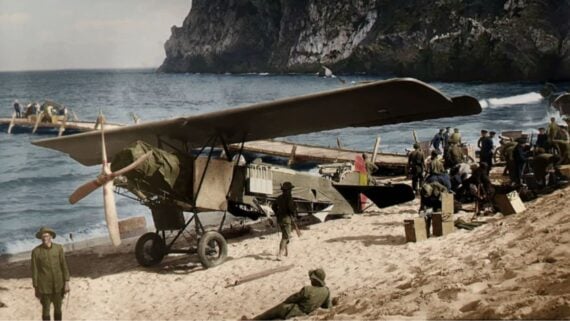
6. The telegraph and subsea cables

Samuel Morse was responsible for popularizing the code and the system, while Cyrus W. Field organized the first reliable transatlantic cable in 1866. Messages that once took weeks to cross the ocean now took minutes.
7. Antiseptic surgery

Joseph Lister introduced carbolic acid sprays and sterile techniques after reading Pasteur. The mortality in the operating rooms dropped so sharply that newspapers started calling it “miracle medicine”.
8. Pasteurization

Louis Pasteur proved that controlled heating could make food and drinks safer. Dairies resisted at first, but the cities adopted it as milk-borne illnesses fell.
Sign up for our newsletter
9. X-Rays

Wilhelm Röntgen discovered X-rays in 1895 and won the very first Nobel Prize in Physics in 1901. His famous first image was his wife’s hand with a ring.
10. The phonograph and the gramophone

Thomas Edison created the phonograph (the cylinders), and Emile Berliner developed the flat disc gramophone. Discs scaled better, and the fans could finally collect recordings at home.
11. Motion picture experiments

These had a few involved in the process. First, Eadweard Muybridge froze motion with serial photos. Later, Edison and W.K.L. Dickson built the Kinestocope, and finally, the Lumière brothers launched public film screenings in 1895. Viewers reportedly ducked at a train film.
12. The typewriter

Christopher Latham Sholes and his partners built the typewriter adopted by Remington and set the QWERTY layout. After this, offices changed overnight, and new clerical jobs opened widely to women.
13. The Bessemer steel process

Henry Bessemer blew air through molten iron to burn off impurities, making steel cheap. Later, the Siemens-Martin open-heart refined its quality and control.
14. Early automobiles with internal combustion

In 1886, Karl Benz patented a practical motorcar. In 1888, Bertha Benz drove it long-distance to prove it worked and popularized brake lining and fuel stops. Many early cars were hand-cranked and fragile, but they sparked a new industry.
15. Electric power stations and dynamos

Michael Faraday’s work made dynamos possible, and that allowed Thomas Edison’s Pearl Street Station to power a New York block in 1882. Later, Charles Parsons improved the turbines, pushing for bigger and steadier electricity.
Explore more historical content:
These “simple” builds certainly rewrote daily life. If you enjoyed it, keep the history kick going with these 20 Forgotten Inventions That Were Way Ahead of Their Time, or these 15 Jobs That Died With the 1900s. You can also check these 20 Last Known Photos of the Most Iconic Inventors in History.