1850s-chores-we-dont-do-anymore

Life in the 1850s ran on chores that started at dawn and ended when the lamps went dark. Water didn’t come from a tap, heat didn’t come from a switch, and light didn’t come from a bulb. Homes ran on hands, habit, and a rhythm we barely recognize now.

This gallery looks back at the work people did to keep a household alive and warm. The lists were simple, but the labor wasn’t. You can almost smell the stove black, the lye, and the fresh whitewash.

1. Pumping and hauling water from the well

A black-and-white photo shows a woman in a long dress and bonnet and a man in a cap and vest drawing water from a communal stone well in a rustic village courtyard. Stone buildings and buckets surround them.
THEWAYWEWERE / VIA REDDIT.COM

Families filled buckets at an outdoor pump or well and carried them inside for cooking, washing, and bathing. Every gallon was lifted by hand, several times a day.

2. Emptying and scouring chamber pots

A person stands on the steps of a small, white-sided house with a bicycle lying on its side in the grass nearby. The background shows open land with scattered trees and a pile of wood.
THEWAYWEWERE / VIA REDDIT.COM

Without indoor plumbing, waste was carried outside each morning. Pots were rinsed with hot water and scrubbed to keep odors down.

3. Whitewashing interior and exterior walls

An elderly woman wearing a headscarf and dark clothing paints a white stone wall with a long roller. Several potted plants and a white bucket sit at her feet in an outdoor courtyard. The image has a vintage, sepia tone.
FRIENDSOFSYMI / VIA FACEBOOK.COM

Lime wash brightened rooms, sanitized surfaces, and sealed rough plaster or wood. It had to be mixed, brushed on in layers, and redone often.

4. Polishing the cast-iron cookstove

A woman sits on the floor in front of a vintage wood-burning stove, tending to it with a smile. The stove is in a cozy, old-fashioned room with patterned wallpaper and a wooden chair in the background.
VIA PINTEREST.COM

Stove polish kept the iron from rusting and made it heat evenly. It was a messy paste job followed by buffing until the metal shone.

5. Sifting coal cinders and hauling fresh coal

Five men wearing flat caps and work clothes use large sieves to sift through a pile of dirt or debris outdoors, possibly at an industrial or construction site, on a foggy day.
OLDHISTORICALPHOTOS / VIA FACEBOOK.COM

Ash pans were emptied daily, and cinders sifted to reuse small lumps. Then a scuttle of new coal came in for the next fire.

6. Laying the morning fire with kindling and twigs

A girl stands on a beach next to a wood stove, lifting its lid. Four children watch her from the doorway of a small wooden shed. The scene appears old-fashioned and is in black and white.
OLDPASTDAYS / VIA FACEBOOK.COM

Each day started by building a draft, arranging shavings and sticks, and coaxing flame for heat and breakfast.

7. Boiling laundry in a copper kettle with lye soap

A woman wearing an apron and hat stirs a large pot outdoors with a wooden paddle. Laundry hangs on clotheslines in the background among trees and scattered wooden planks.
THEWAYWEWERE / VIA REDDIT.COM

Clothes were soaked, boiled, and beaten on a washboard. Washday was an all-day, whole-body job.

8. Bluing and starching linens before line-drying

Vintage advertisement shows a woman adding Bluine bluing powder to a washbasin. Text promotes Bluine as a laundry whitener that won’t settle, streak, or injure clothes. Price and company details are included.
VIA PINTEREST.COM

A touch of bluing kept whites from yellowing; starch gave shirts and aprons body. Everything dried outside, then came in stiff as boards.

9. Heating and swapping flat irons

A woman in early 20th-century clothing irons fabric on a makeshift ironing board made from wooden crates. A laundry basket with clothes sits nearby, and old signs and boxes surround her in an outdoor setting.
ANTIQUEHISTORICALPHOTOGRAPHS / VIA FACEBOOK.COM

Several irons sat on the stove; one in use, others heating. You rotated them constantly and wiped soot before each pass.

10. Beating carpets outdoors with a carpet beater

A woman stands outside holding a large woven carpet beater in one hand and a rug in the other, with a bucket and broom on the ground nearby, appearing to be cleaning.
VIA PINTEREST.COM

Wall-to-wall wasn’t common. Big rugs were hauled out, hung, and struck to raise dust. Spring air did the rest.

11. Sand-scrubbing bare wood floors

A woman in a headscarf kneels on a wooden floor, scrubbing it with a cloth. A bowl of water sits nearby. Sunlight streams through a window, illuminating the rustic room with wooden walls and simple furniture.
THEWAYWEWERE / VIA REDDIT.COM

Coarse sand and lye cut grease and lifted grime. It was tough on the hands and left the floors clean but rough.

12. Trimming lamp wicks and cleaning glass chimneys
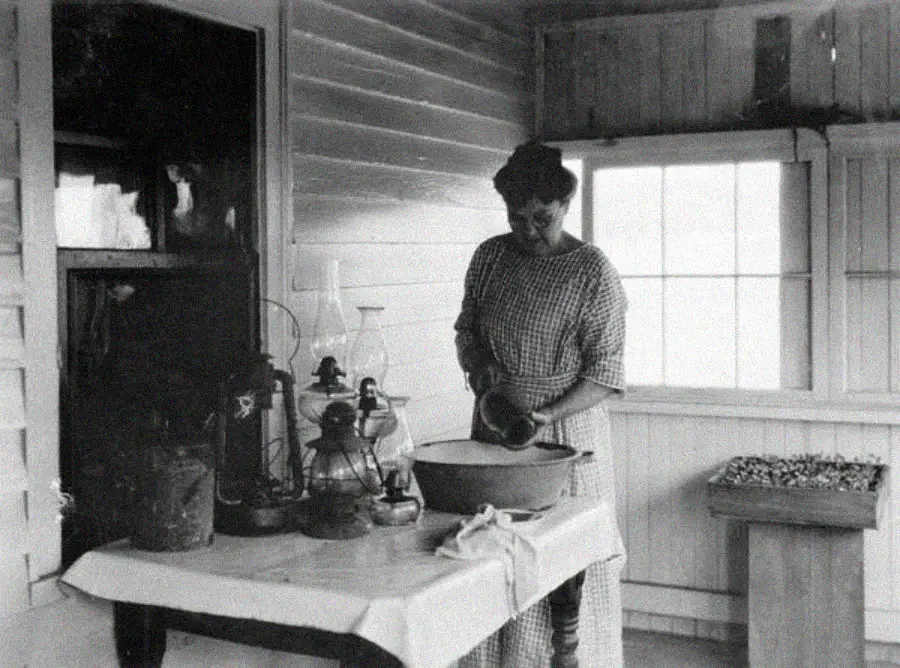
A woman in a checked dress pours ingredients into a bowl on a kitchen table, surrounded by vintage lamps and household items, in a sunlit, rustic room with wooden walls and large windows.
VIA PINTEREST.COM

Oil lamps smoked if neglected. Wicks were cut square and chimneys washed daily for a steady, bright flame.

13. Rendering tallow and hand-dipping candles
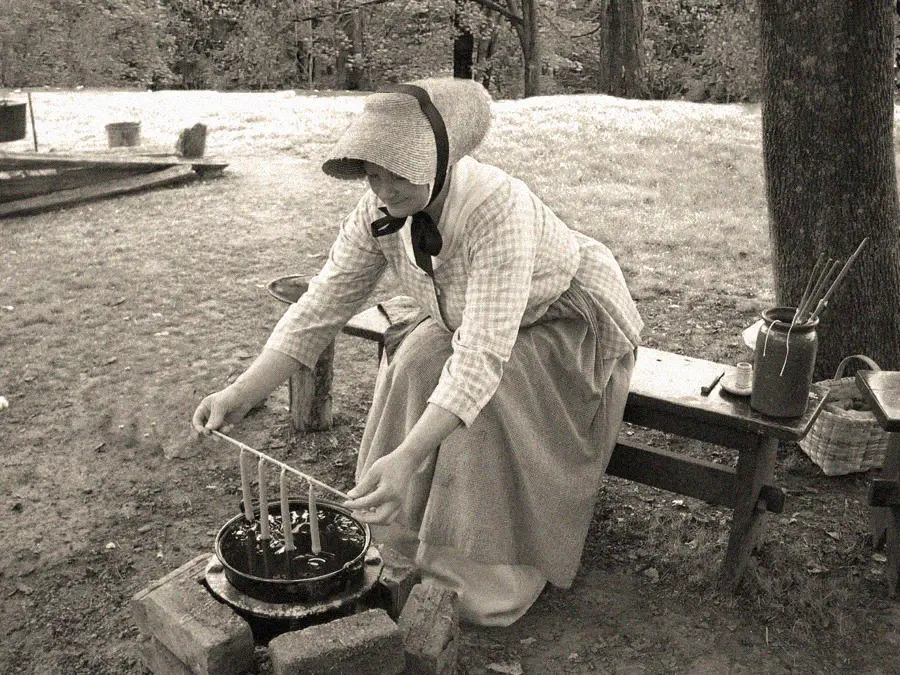
A woman in historical clothing and bonnet sits outdoors, dipping candles by hand into a pot over a fire pit, with a wooden bench and trees in the background. The photo is in black and white.
VIA PINTEREST.COM

Fat was cleaned and melted, then wicks were dipped again and again. Candles were stored for the long, dark months.

14. Leaching ashes to make lye and boiling soap

A girl in traditional clothing stands beside a large wooden sifter, pouring soil or sand into it, with a bucket below to collect sifted material. A wooden fence and grassy hill are in the background.
APPALACHIANSFOODANDRECIPES / VIA FACEBOOK.COM

Wood ashes were soaked to draw out lye, then mixed with fats and cooked. Each batch took hours and careful stirring.

15. Skimming cream in shallow pans and churning butter

A woman in historical clothing churns butter in a wooden cabin kitchen, using a large wooden barrel. Sunlight streams through a window, illuminating rustic shelves and tools in the background.
GOLDENHISTORICALPICTURES / VIA FACEBOOK.COM

Milk rested overnight so the cream could rise. A dash churn turned arm power into butter and buttermilk.

16. Preserving food without a fridge: salting, smoking, and waxing jars

A group of women in old-fashioned clothing wash clothes and prepare food outdoors in a wooded area, using large tubs and metal containers, with buckets and washing boards scattered around.
OLDHOUSESFARMS / VIA FACEBOOK.COM

Meat was salted or smoked; fruits were sealed under wax. You planned for months to keep food safe.

17. Ice-house and icebox duty

Two women in overalls lift a large block of ice with metal tongs beside a wagon. Several ice blocks are on the ground around them. The scene appears to be from the early 20th century.
THEWAYWEWERE / VIA REDDIT.COM

Winter ice was packed in sawdust and hauled in summer as blocks for the kitchen icebox. Meltwater had to be emptied before it soured.

18. Outhouse care and liming the pit

A black and white photo of an old wooden outhouse with its door open, revealing a simple bench seat inside. The structure stands on grassy ground surrounded by trees.
NATURERELIANCESCHOOL / VIA FACEBOOK.COM

Lime cut smells miraculously slowed down pests. Paper was stocked, seat boards were scrubbed, and the path was kept clear.

19. Splitting stove wood and making kindling bundles

A woman in a dress and apron splits firewood with an axe outdoors, standing beside a large log and surrounded by trees and fields. Stacks of wood and rural landscape appear in the background.
VIA PINTEREST.COM

Dry splits and neat bundles kept cooking steady. A blunt axe also certainly meant a long day.

20. Mending and remaking clothes at home

A woman in a patterned dress and cameo brooch sits against a wooden wall, looking down and sewing fabric by hand. The image is in black and white, giving it a historical feel.
JACKSONCOUNTYPARKS / VIA FACEBOOK.COM

Collars were turned, socks darned, and seams let out for growing kids. A good needle saved a trip to the dressmaker.

Explore more vintage content:

That’s a quick walk-through of the work a home demanded before switches and thermostats. If this scratched your nostalgia itch, keep scrolling through these Wintertime Realities: How Cold Weather Once Ruled Daily Life, or these 22 Images That Embody Life in 1922. You may also enjoy The 70s in Vintage Photos: 34 Moments of Easygoing Life.

Meet the Writer