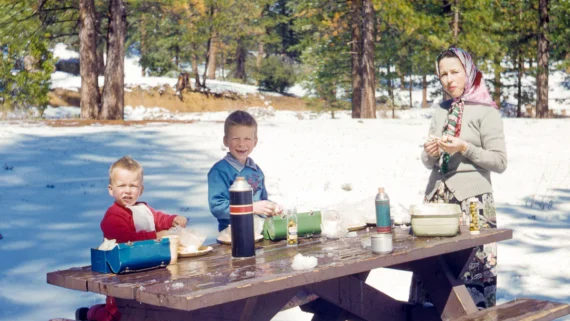
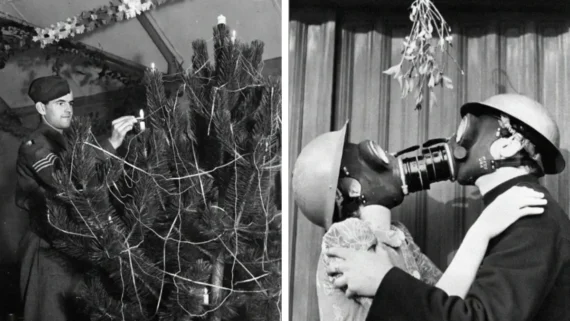
Wartime didn’t pause the holidays; it reshaped them. In WWI and WWII, American families kept traditions alive with ration books on the table and service flags in the window. Trees were smaller, sweets were scarce, and the radio did as much hosting as any living room. People improvised, shared, and found joy in little things that carried significant meaning.
These photos show that mood: resourceful, hopeful, and a little surreal in hindsight. You’ll see how communities wrote to far-off loved ones, saved every scrap for the war effort, and turned gift-giving into an act of support. It’s the season, seen through a home-front lens.
1. Hanging blue star service flags in the window
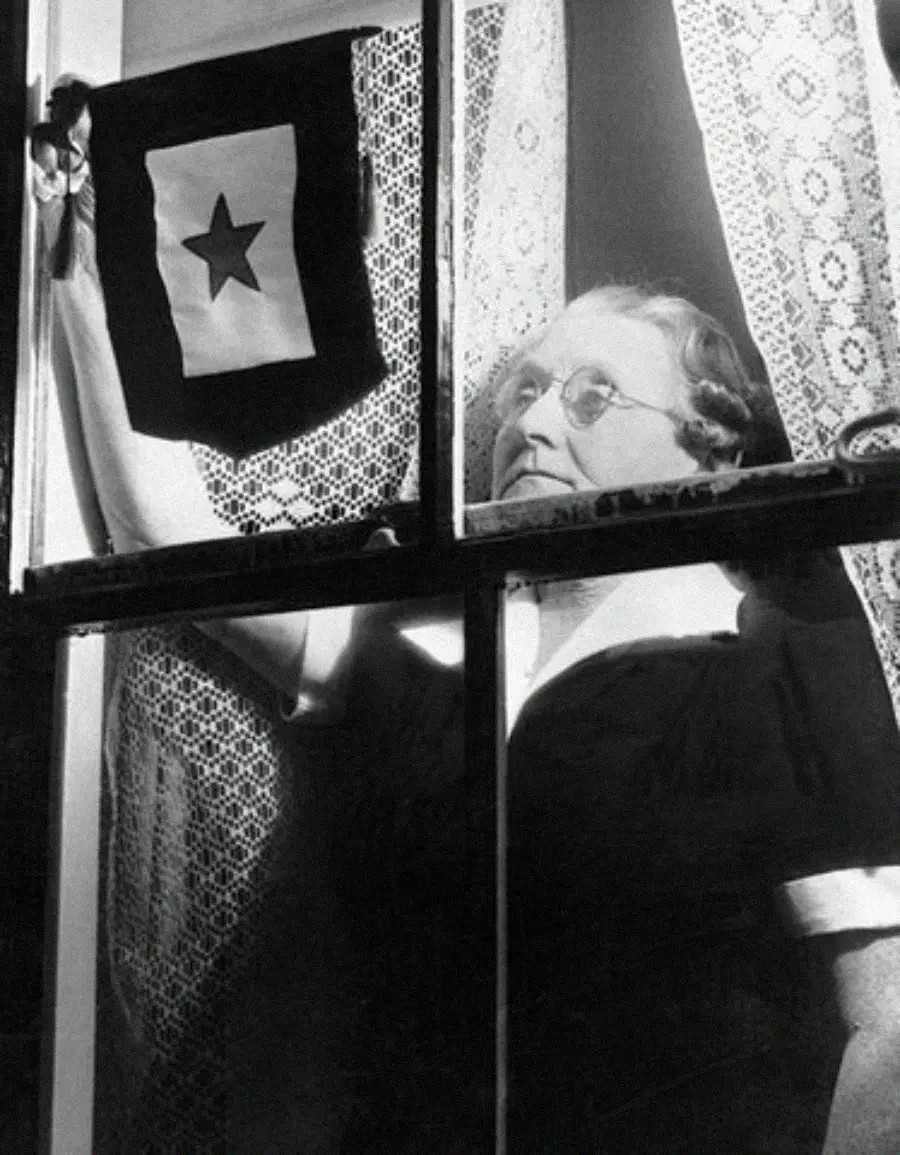
Families displayed a blue star for each loved one in uniform. It turned a front window into a roll call of sacrifice and pride. A gold star marked a loss and quieted entire blocks.
2. Knitting for the troops
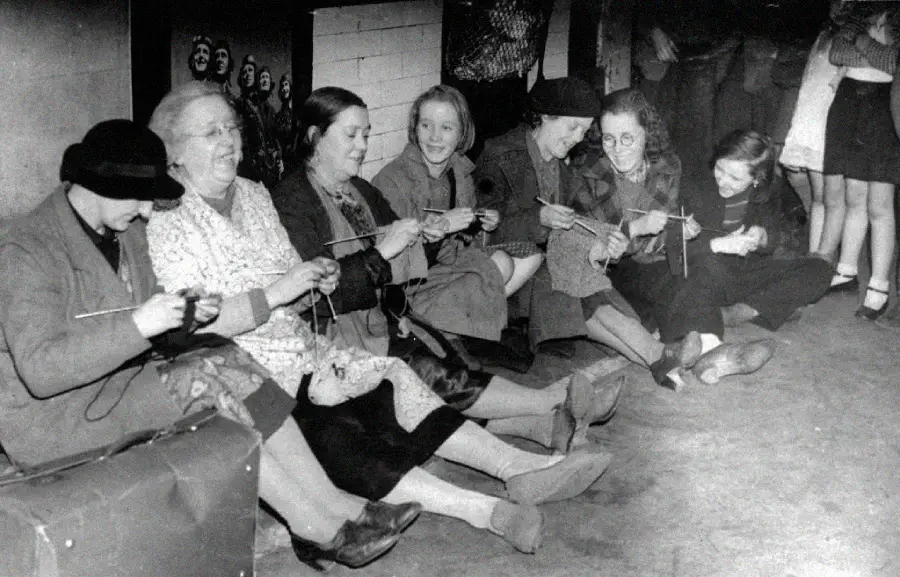
Church groups and Red Cross circles spent evenings knitting socks, scarves, and mittens. It was practical and personal, and it kept hands busy while news crackled on the radio. Notes were sometimes tucked inside for the unknown soldier who’d wear them.
3. War bonds as Christmas gifts
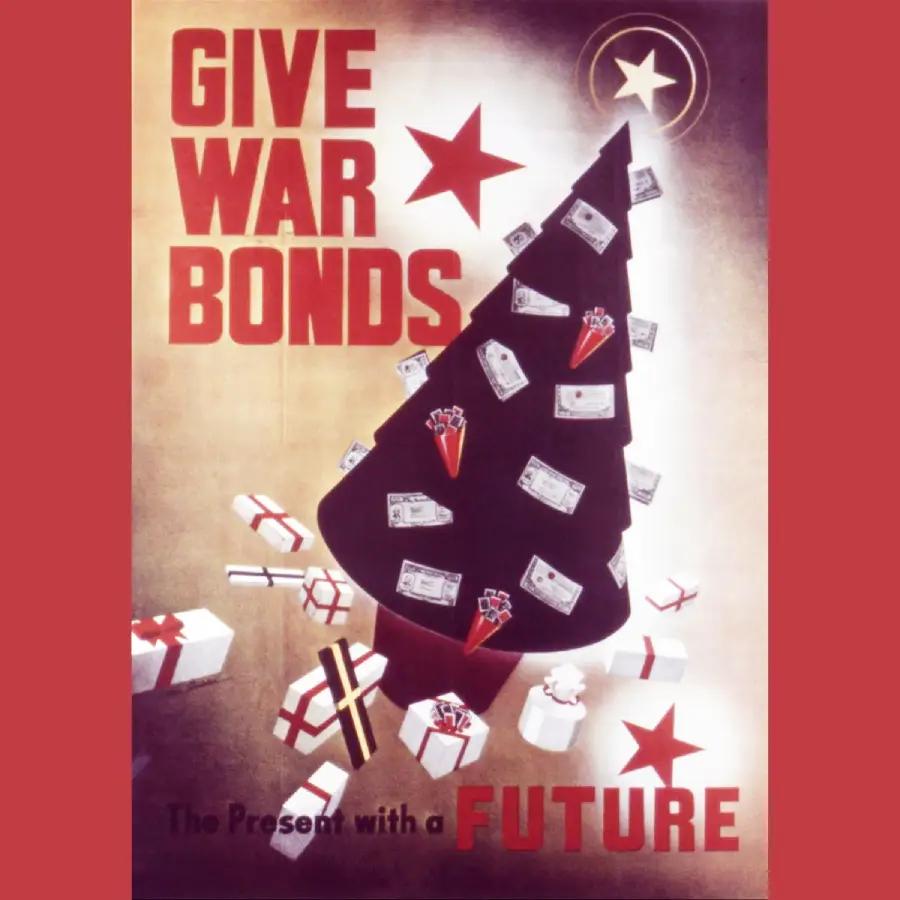
Instead of toys or perfume, many gifts came as war bonds. Parents framed the bond stub like a promise for the future. Kids learned that saving could be patriotic.
4. V-mail holiday letters
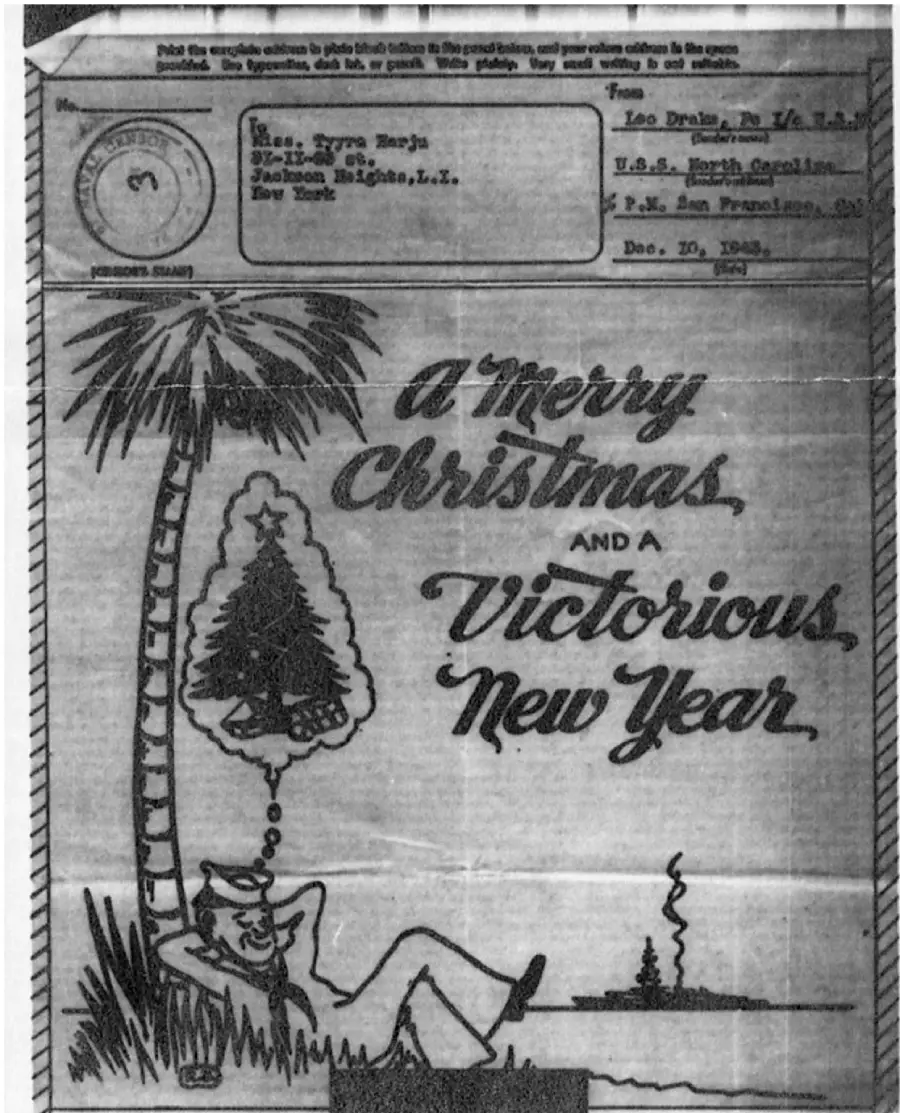
During WWII, letters were photographed onto microfilm and printed back onto paper overseas. It saved shipping space and sped delivery. Families kept those tiny, grainy greetings like heirlooms.
5. Sugar-stretching holiday baking
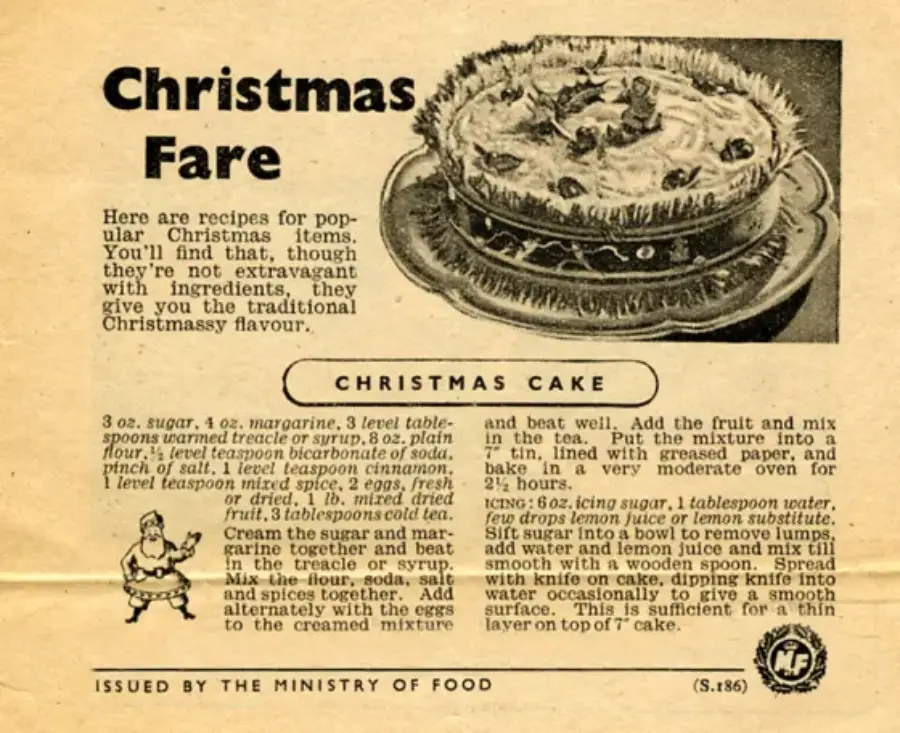
With sugar rationed, bakers leaned on molasses, corn syrup, and dried fruit. Fruitcakes, gingerbread, and pies became experiments in substitution. The taste was different, but the ritual mattered more.
Trending on The Scroller
6. USO canteen parties
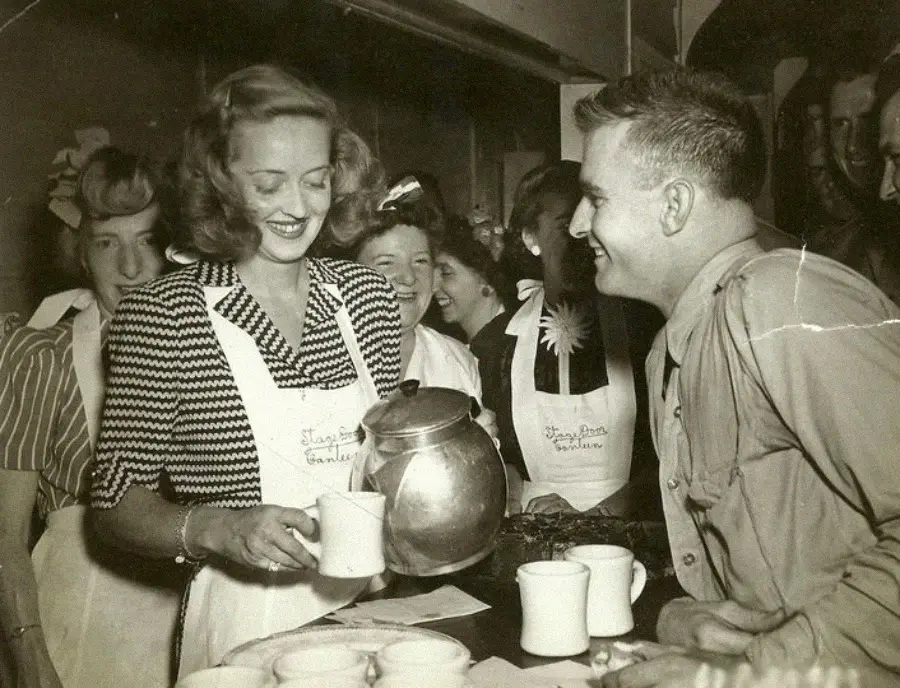
Local halls turned into dance floors for service members on leave. Volunteers decorated with crepe paper and made coffee stretch for a crowd. A live band or a scratchy record player was enough to make it feel festive.
7. Blackout or “dim-out” decorations on the coasts

Coastal towns kept outdoor lights low to avoid guiding enemy submarines. Window shades and dim strings of lights replaced bright displays. The darkness gave carols a hush people never forgot.
8. Paper Christmas ornaments

Metal and tinsel were scarce, so families made paper chains and salt-dough stars. Flags and service colors often joined the branches. The look was simple, earnest, and proudly thrifty.
Sign up for our newsletter
9. Community scrap drives with a holdiday bent

Schools and clubs held year-end drives for paper, rubber, and metal. Kids dragged wagons piled with newspapers between snowbanks. The season of giving included giving materials to the war effort.
10. Radio holiday broadcasts as family gatherings

Households gathered around the set for holiday specials and presidential messages. Bing Crosby’s Christmas broadcasts became a seasonal anchor. The radio was fireplace, stage, and reunion in one.
11. Small trees, big meaning

Evergreens could be pricey or hard to transport, so many families chose tabletop trees. A few carefully saved ornaments did the job. What counted was having a tree at all.
12. Care packages with “comforts from home”

Parcels held socks, sweets, cigarettes, and hometown newspapers. Boxes were padded with whatever materials were on hand. Mailing day felt like sending a piece of the living room abroad.
13. Ration-book stocking stuffers

Coupons and stamps sometimes showed up in stockings. It wasn’t glamorous, but it meant an extra cake or roast later. Kids learned to read the value in tiny slips of paper.
14. Neighborhood caroling for bond and relief drives

Caroling doubled as a fundraiser for the Red Cross or bond sales. Song sheets mixed hymns and patriotic tunes. A tin can made the rounds, and coins clinked like bells.
15. Homemade toys and repair-and-reuse gifts

New toys were limited, so parents repaired last year’s treasures or made their own. A fresh coat of paint or a stitched teddy bear passed as “brand-new.” The love was evident in every fix.
Explore more historical content:
If this look at wartime traditions hit that nostalgic chord, keep the scroll going with these 25 Colorized Photos from the 1910s, or these Winter Home-Front Habits: How WWII America Braved the Cold. You can also check these ’50s Holiday Gift Ideas That Feel Wild Today.