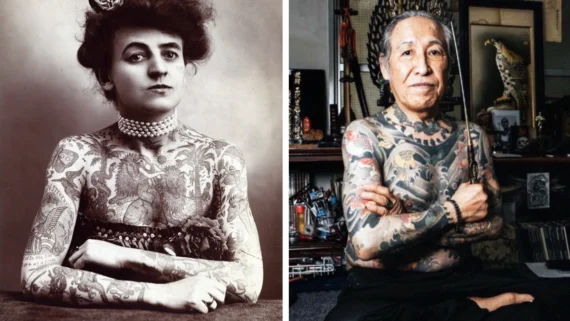
The world of professional tattooing has transformed from a gritty underground subculture into a multi-billion-dollar mainstream industry. At the heart of this evolution are the iconic tattoo artists who turned skin into a canvas for high-end fine art. While many of us know these names from reality TV shows like Miami Ink or Ink Master, the stories of how they reached the top are often filled with strange coincidences, record-breaking feats, and deep-seated traditions that date back decades.
Understanding the background of these legendary tattoo artists adds a whole new layer of appreciation to the work they produce. Beyond the celebrity clients and the flashy shops, these artists have survived extreme apprenticeships, broken gender barriers, and even influenced historical events with their needles. Whether it’s an artist who started in a tiny garage or a legend who revolutionized the very chemistry of tattoo ink, these twenty facts offer a rare look behind the buzz of the machine at the people who defined modern ink culture.
1. Kat Von D’s grueling world record

Before she was a makeup mogul, Kat Von D set a Guinness World Record for the most tattoos given by a single person in 24 hours. In 2007, she inked a staggering 400 people with an “LA” logo to raise money for charity, working through the night without sleep. Although her record was later broken, the event solidified her status as one of the hardest-working tattoo artists in the industry and became a landmark moment for LA Ink.
2. Sailor Jerry was a real-life sea captain

Norman “Sailor Jerry” Collins wasn’t just a brand name; he was a Navy veteran who spent his life traveling the Pacific and studying Southeast Asian art. He is the man responsible for the “Old School” style we see everywhere today, blending American motifs with Japanese bold-line techniques. Interestingly, he was so protective of his ink formulas that he allegedly threatened to haunt anyone who tried to copy his signature “Sailor Jerry Red.”
3. Don Ed Hardy never wanted to tattoo humans

The man who made tattoo-inspired fashion a global phenomenon actually started as a printmaker with a degree in fine arts. Ed Hardy originally viewed tattooing as a way to fund his “real” art, but he became so obsessed with the history of the craft that he moved to Japan to study under classic masters. He was the first Westerner to apply traditional Japanese “Irezumi” aesthetics to American skin, forever changing the complexity of modern designs.
4. Scott Campbell tattoos using a “lottery” system

Scott Campbell is the go-to artist for stars like Marc Jacobs and Robert Downey Jr., but he is most famous for his “Whole Glory” project. In this social experiment, participants stick their arms through a hole in a wall and let Campbell tattoo whatever he wants for free, without ever seeing him or the design first. It’s a profound test of trust that proves people value the artist’s vision more than the specific image they had in mind.
5. Ami James started as a “shop boy” cleaning toilets

Long before Miami Ink became a global hit, Ami James had to prove his worth through a traditional, grueling apprenticeship in Israel and the US. He spent his early years doing nothing but cleaning the shop, scrubbing floors, and setting up stations for older artists before he was ever allowed to touch a machine. This old-school “pay your dues” mentality is why he is known for being such a tough, no-nonsense judge on modern tattoo competitions.
Trending on The Scroller
6. Whan-od: The 100-year-old legend

Apo Whang-od is the last traditional mambabatok (Kalinga tattooist) in the Philippines, using a thorn from a pomelo tree and coal soot to ink travelers. She has been tattooing for over 80 years and was recently featured on the cover of Vogue, making her the oldest person ever to grace the magazine’s front page. Thousands of tourists trek for hours into the mountains of Buscalan just to receive three simple dots from her hand, a signature that represents the continuation of a thousand-year-old tradition.
7. Mister Cartoon’s connection to Grand Theft Auto

Known for his signature fine-line “Chicano style,” Mister Cartoon didn’t just tattoo icons like Eminem and Snoop Dogg; he helped design the look of Grand Theft Auto: San Andreas. He was instrumental in ensuring the game’s graffiti and character tattoos felt authentic to LA street culture. Before picking up a needle, he was a legendary graffiti artist and automotive airbrush master, which explains why his tattoos look like they could be painted on a classic Lowrider.
8. Paul Booth and the “Dark Surrealism” movement

Paul Booth is the master of macabre, specializing in hyper-realistic, nightmare-fueled imagery that earned him a spot as the first-ever tattooist inducted into the National Arts Club. His shop, Last Rites, was designed to look like a gothic cathedral, complete with soundscapes to immerse clients in a dark atmosphere. He is so influential in the metal scene that he has worked on members of Slipknot, Slayer, and Pantera, often completing entire “back pieces” in single, grueling sessions.
Sign up for our newsletter
9. Ryan Ashley Malarkey’s historical win

In 2016, Ryan Ashley Malarkey made history by becoming the first female artist to win the title of Ink Master. Her win was a massive cultural shift for the show and the industry, proving that her intricate, “jewelry-style” black and grey work could outshine the traditional American styles favored by old-school judges. She originally worked as a fashion designer in NYC, which is where she developed her incredible eye for detail and lace-like patterns.
10. Horiyoshi III and the “no machines” rule

The legendary Horiyoshi III is the master of the Tebori (hand-poked) technique, a traditional Japanese method that uses no electric machines. He has spent his life documenting the history of Irezumi and even founded the Yokohama Tattoo Museum to preserve the craft. He famously stopped tattooing “new” clients years ago, choosing only to finish the full-body suits of his existing patrons, a process that can take decades to complete.
11. Megan Massacre’s unexpected start in music

Before becoming the star of NY Ink and America’s Worst Tattoos, Megan Massacre was a dedicated musician who played multiple instruments. She actually stumbled into tattooing as a way to pay for her music equipment and quickly realized she had a natural gift for vibrant, “new school” color work. Her stage name, “Massacre,” was originally her DJ name, but it stuck so well in the tattoo shop that she decided to keep it as her professional brand.
12. Tin-Tin: The man who taught France to ink

Tin-Tin is the most famous tattoo artist in France, largely responsible for getting the government to recognize tattooing as an official artistic profession. He is the founder of the “Mondial du Tatouage,” one of the largest and most prestigious tattoo conventions in the world, held annually in Paris. He is known for his hyper-realistic portraits and has tattooed legends like Jean-Paul Gaultier, bridging the gap between street culture and high fashion.
13. Maud Wagner: The first female tattoo artist
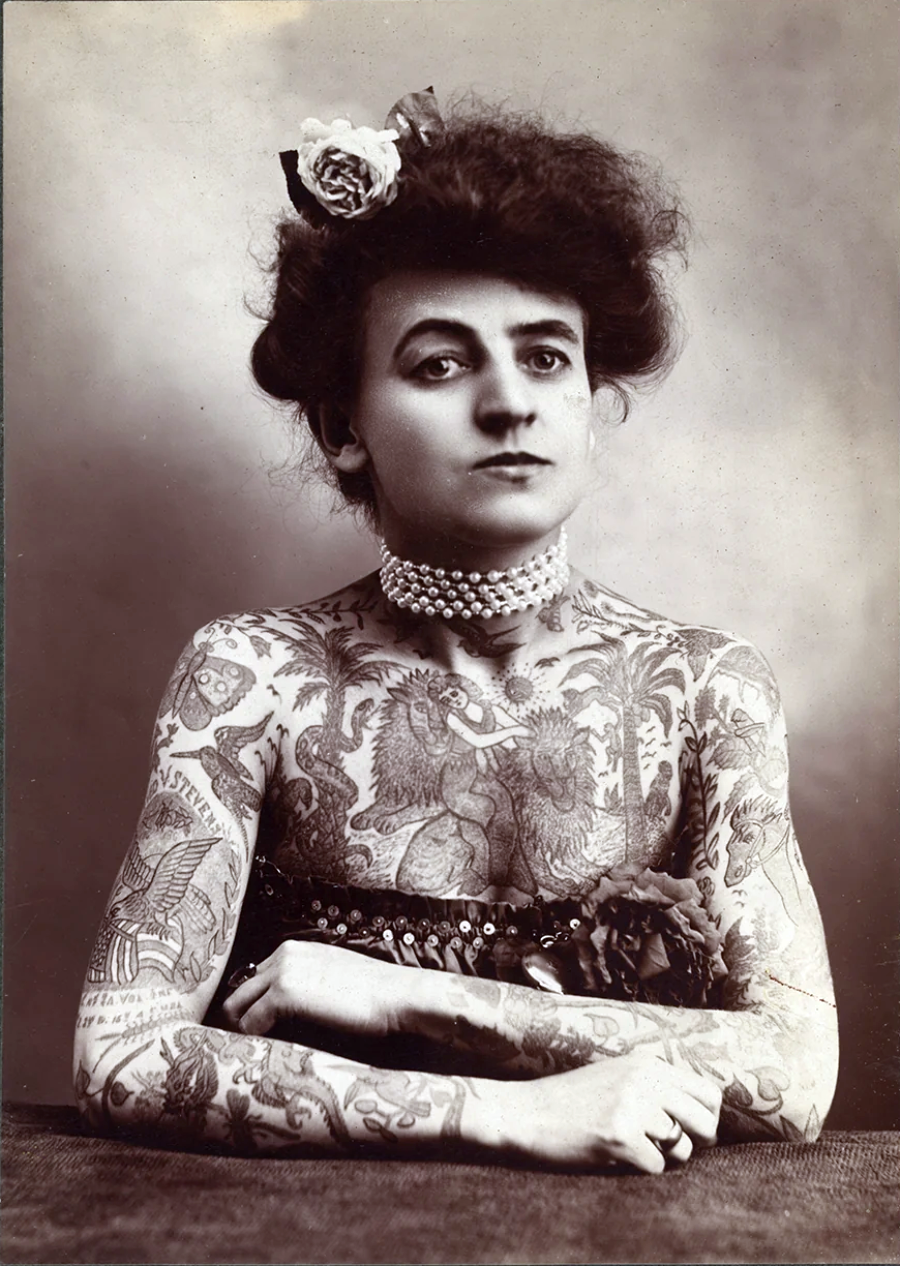
In the early 1900s, Maud Wagner traded a date with her future husband, Gus Wagner, for a lesson in tattooing. She eventually became a circus performer and traveled the country covered in ink, which was a scandalous act of rebellion for a woman at the time. She never used a machine, preferring the traditional “hand-poked” method, and paved the way for every female artist working in the industry today.
14. Jonathan Shaw’s wild connection to Johnny Depp

Jonathan Shaw, the founder of NYC’s legendary Fun City Tattoo, is often called the “godfather of modern tattooing.” He and Johnny Depp were so close in the 90s that they formed a “death cult” of friends who all shared the same tattoo, and Depp even based some of his Pirates of the Caribbean swagger on Shaw’s real-life persona. Shaw eventually walked away from tattooing to become a successful novelist, proving his creative talents extend far beyond the needle.
15. Bang Bang Rihanna’s breakthrough

Keith “Bang Bang” McCurdy rose to fame after he gave Rihanna her iconic “Shhh…” tattoo on her finger in a tiny shop on the Lower East Side. Since then, he has become the personal artist for Justin Bieber, Selena Gomez, and LeBron James, often traveling across the world just to do one session. He is famous for asking his celebrity clients to tattoo him back, resulting in a leg covered in “art” by some of the biggest stars on the planet.
16. Mark Mahoney: The father of “fine line”

Mark Mahoney is the undisputed king of the “Black and Grey” movement and the owner of the world-famous Shamrock Social Club on the Sunset Strip. He was one of the first artists to bring the single-needle style out of the prison system and into the mainstream Hollywood scene. He has inked everyone from Lana Del Rey to David Beckham, and he is known for his “gentleman” persona, always wearing a suit while he works.
17. Dr. Woo and the longest waitlist in Hollywood

Dr. Woo, a protégé of Mark Mahoney, became a viral sensation for his “single-needle” geometric and micro-realistic designs. His style is so precise and delicate that it looks like it was drawn with a technical pen rather than a tattoo machine. At one point, his waitlist was reportedly over two years long, and he now operates out of a secret, invite-only suite in the Hollywood Roosevelt Hotel.
18. Freddy Negrete and the “prison-style” revolution

Freddy Negrete is a living legend who helped pioneer the realistic black and grey style while serving time in California’s youth authority system. Using improvised machines made from guitar strings and cassette motors, he created a look that would eventually dominate the global tattoo scene. After his release, he joined Goodtime Charlie’s Tattooland and helped bring the “Chicano” aesthetic to the forefront of modern art.
19. Nikko Hurtado’s accidental career

Nikko Hurtado is widely considered the best color portrait artist in the world, but he only started tattooing on a whim after his car broke down. He took an apprenticeship just to make ends meet and ended up winning a major award for a portrait of Batman he did early in his career. His work is so realistic that it often looks like a printed photograph, and he now teaches seminars to artists around the world on his color theory techniques.
20. Oliver Peck and the Friday the 13th tradition

Oliver Peck, a long-time judge on Ink Master, is responsible for making “Friday the 13th” the biggest day of the year for tattoo shops. He started the tradition of offering $13 tattoos of “lucky 13” designs at his shop, Elm Street Tattoo, and it eventually spread to shops across the globe. He once held a world record for tattooing 415 “13s” in a single 24-hour period, solidifying the day as a holiday for ink lovers.
Want more lesser-known stories?
The legacy of these legendary tattoo artists reminds us that every piece of ink carries a story that goes far deeper than the skin’s surface. From ancient tribal traditions to modern digital-inspired realism, these creators have fought to have their craft recognized as a legitimate form of high art. If you’re hungry for more surprising truths and nostalgic deep dives, be sure to check out these 14 Lesser Known Tales about Troublemaker Stars from the 1980s, or these 20 Lesser Known Tales About 1990s Criminals. You can also enjoy these 27 Club Last Photos: Haunting Final Images of Icons.