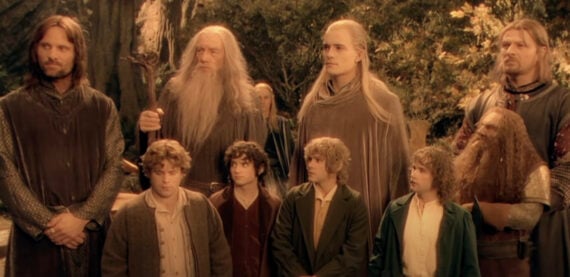
Peter Jackson’s The Lord of the Rings trilogy didn’t just change fantasy movies; it set a new standard for what “epic” could look like on screen. The production was massive, the craftsmanship obsessive, and the behind-the-scenes stories are just as legendary as the films themselves.
Here are 17 wild (and wonderfully nerdy) LOTR fun facts from the making of the trilogy.
1) All three movies were filmed at the same time

Instead of shooting one film at a time, the production tackled the trilogy in one giant, multi-year shoot, an unusually bold move for movies of this scale.
2) New Zealand basically became Middle-earth

The films used a huge range of real landscapes across New Zealand, mountains, plains, forests, and rivers, making the natural scenery feel like a character all its own.
3) The cast bonded like a real fellowship

Spending that much time together created legit friendships, and a “we’re in this together” vibe that comes through onscreen.
4) Many actors got matching tattoos

A group of the Fellowship cast members got tattoos to commemorate the experience, a permanent souvenir from a once-in-a-lifetime shoot.
5) Viggo Mortensen bought his own horse

Viggo (Aragorn) reportedly became so attached to the horse he rode that he purchased it after filming.
Trending on The Scroller

6) The “one ring” had multiple versions

Different scenes needed different Ring props, close-ups, wide shots, scale tricks, so there wasn’t just one hero ring.
7) Hobbit height tricks were a daily science project

Forced perspective, clever staging, doubles, and camera placement were used constantly to sell the size difference between Hobbits and everyone else.
8.) They built a full Hobbiton… and then rebuilt it

The Hobbiton set was constructed in a real location, and many details were designed to look like they’d existed for years (because Middle-earth shouldn’t look “new”).
Sign up for our newsletter
9) The armor and weapons weren’t just “props”; they were a whole industry

Weta Workshop produced an enormous amount of handcrafted gear: swords, shields, chainmail, creature designs, miniatures, and more.
10) Most Orcs were practical makeup, not CGI

A huge number of Orcs and Uruk-hai were actors in makeup and prosthetics, which is why so many battle scenes still look tangible.
11) Gollum’s performance changed the game

Andy Serkis’ motion-capture work helped redefine how studios approached performance-driven CGI characters, making Gollum feel unsettlingly real.
12) The miniatures were ridiculously detailed

Those sweeping fortress shots? Many were “bigatures”, large-scale miniatures packed with tiny details so they’d hold up in close-up filming.
13) The crew used “Middle-earth time” for years

The production stretched across years of shooting, pickups, post-production, and reshoots, so the world-building never really stopped.
14) The battle scenes required huge coordination

Even with CGI crowds, major battles relied on carefully choreographed stunts, practical extras, and planned chaos to keep things readable and intense.
15) The music became its own epic quest

Howard Shore’s score is one of the most beloved in film history, with recurring themes tied to places, cultures, and characters.
16) Those final goodbyes hit hard because they were goodbyes

After living in that world for so long, the emotional weight at the end of Return of the King wasn’t just acting, cast and crew were genuinely closing a chapter of their lives.
Explore more vintage content:
The wildest part of The Lord of the Rings isn’t just that it worked; it’s that it worked on a scale that would’ve been easy to mess up. But the insane planning, practical craftsmanship, and all-in performances turned the trilogy into a once-in-a-generation filmmaking miracle. Next time you watch, you’re not just seeing Middle-earth, you’re seeing years of obsessive creativity stitched into every frame. If you loved this content, check out 14 Roles Celebrities Say Changed Them Forever, or 20 People Who Can’t Take A Joke.