Growing up in the sixties came with a kind of freedom and routine that would feel almost unrecognizable to many kids today. Life moved differently, entertainment was simpler, and much of childhood happened without screens, schedules, or constant supervision. The things kids did back then were shaped by a world that expected independence and a little creativity.
Some of these memories may seem strange now, while others might sound surprisingly fun. From the way children spent their afternoons to the habits that were once completely normal, each one reflects a time with its own rhythm and values. It is a reminder that childhood changes with every generation, and some experiences only make sense to the people who lived them. Let’s dive into 20 things sixties kids did that kids wouldn’t get today.
1. Using filmstrips

Before YouTube or PowerPoint, classrooms in the ’60s often relied on filmstrips, which were rolls of images on a strip of film. These film strips were projected onto a screen, and students followed along as the teacher advanced the frames manually with a click.
2. Using chalkboards

Chalkboards were the standard in classrooms in the ’60s, but have since been replaced by whiteboards, dry-erase markers, and smartboards. We sure don’t miss the creaking sound chalk would make on whiteboards.
3. Using a View-Master

The View-Master was a toy that allowed children to view 3D images, offering a unique form of entertainment. These handheld toys could transport you into whatever world you wanted to be in.
4. Using carbon paper

Carbon paper was a thin sheet coated with a layer of carbon-based ink, usually placed between two regular sheets of paper. When you wrote or typed on the top page, the pressure would transfer the text onto the bottom sheet, creating a near-identical copy. Carbon paper was used to make copies of documents, but has since been replaced by digital printing.
5. Using slide rules

Before calculators, slide rules were used for mathematical calculations, a skill that is now largely obsolete.
Trending on The Scroller
6. Using a rotary phone

Rotary phones were the standard, and dialing each number took patience and precision. Many people still remember the satisfying spin and return of the dial after every call.
7. Using slide projectors

In the 1960s, slide projectors were the go-to technology for sharing images in classrooms, living rooms, and community centers. These devices worked by shining a bright light through small photographic slides mounted in cardboard or plastic frames, which were then projected onto a screen or wall.
8. Building soapbox cars

In the sixties, many kids, especially in suburban neighborhoods, built their own soapbox cars, often from scrap wood, spare wheels, and whatever materials they could scrounge from garages or junkyards. These homemade vehicles had no engines, relying solely on gravity and a good hill to get moving.
Sign up for our newsletter
9. Playing with lawn darts

Lawn darts were once a common backyard game before being banned because of safety risks. Almost everyone from that era seems to know a story about someone getting hurt by one.
10. Using paper maps

Before cell phones and GPS, kids were the GPS. Dad would hand you an old ratty map, and you’d have to help him navigate your way home. These paper maps caused too many fights to count.
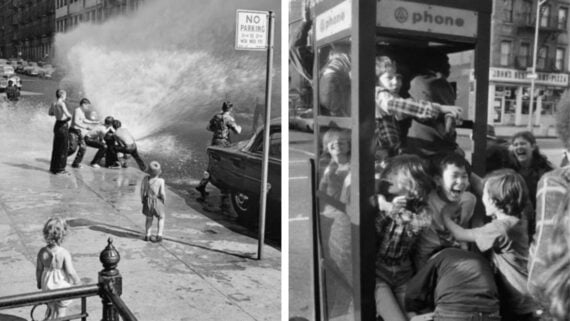
11. Cooling off in Fire Hydrants

During the summer in the ’60s, fire hydrants would be opened, and children would play in the water that shot out of them. This practice has since been restricted due to safety and water conservation concerns.
12. Playing with jacks and marbles

Back in the 1960s, kids often passed the time with simple games like jacks and marbles. These weren’t just for fun; they were a big part of everyday play, whether on the schoolyard during recess or out on the driveway after dinner. With jacks, you’d bounce a little rubber ball and try to scoop up the metal pieces before the ball came back down. Marbles took a bit more aim; you’d shoot your favorite marble to knock others out of a chalk-drawn circle on the sidewalk, trying not to lose your prized “shooter” in the process.
13. Writing letters by hand

Communication over long distances was done with handwritten letters in the ’60s. There was a personal and almost magical feel that came with receiving a handwritten letter, but this practice has since been replaced by emails and instant messages.
14. Using film cameras

Photos were taken on film cameras and then developed later at a lab instead of being viewed instantly. Every picture felt more important because you had to make each shot count.
15. Using payphones

In the sixties, if you were out at the park and wanted to go to a friend’s house, there were no text messages. So, you’d have to find a quarter and use a payphone to let Mom know.
16. Playing games in the street

Neighborhood kids often played hockey, baseball, and kick the can right in the street. There was far less worry about traffic, and the road became an extension of the playground.
17. Hitchhiking

Thumbs-up rides from strangers were a common way to travel, even for kids. This is a practice now deemed unsafe and largely abandoned.
18. Riding bikes without a helmet

Helmets were rarely part of bike riding for kids back then. Safety standards were different, and many families simply rode without thinking twice about it.
19. Using typewriters

Before personal computers, students often used manual or electric typewriters for school assignments. The steady clicking of the keys is a sound many people still remember fondly.
20. Walking to school alone

Children as young as five or six would walk to school alone, often miles at a time. This practice fostered independence and responsibility, but has since been abandoned because of safety concerns.
Want to see more sixties content?
Check out 20 Towering Hairstyles That Defined the Glamour of the 1960s, or take a look at 15 Rare Photos of the 1960s Space Race Obsession in Every American Home. Finally, if you want to see accidental foods from the ’60s, check out 15 Famous Foods That Were Invented by Accident in The 1960s (and Became Icons).