Long before drones and satellite surveillance, armies relied on a very different kind of technology: military animals. These heroes have carried soldiers into battle, delivered messages under fire, detected hidden explosives, and offered quiet companionship to men and women living through the worst moments of their lives. From the trenches of World War I to the jungles of the Pacific, these creatures did jobs that no machine of their era could replace.
These 14 vintage photos of military working animals capture a side of war that rarely makes it into the history books: the loyalty, courage, and occasional absurdity of the four-legged and feathered soldiers who served alongside their human counterparts.
1. Sergeant Stubby, the most decorated dog of World War I
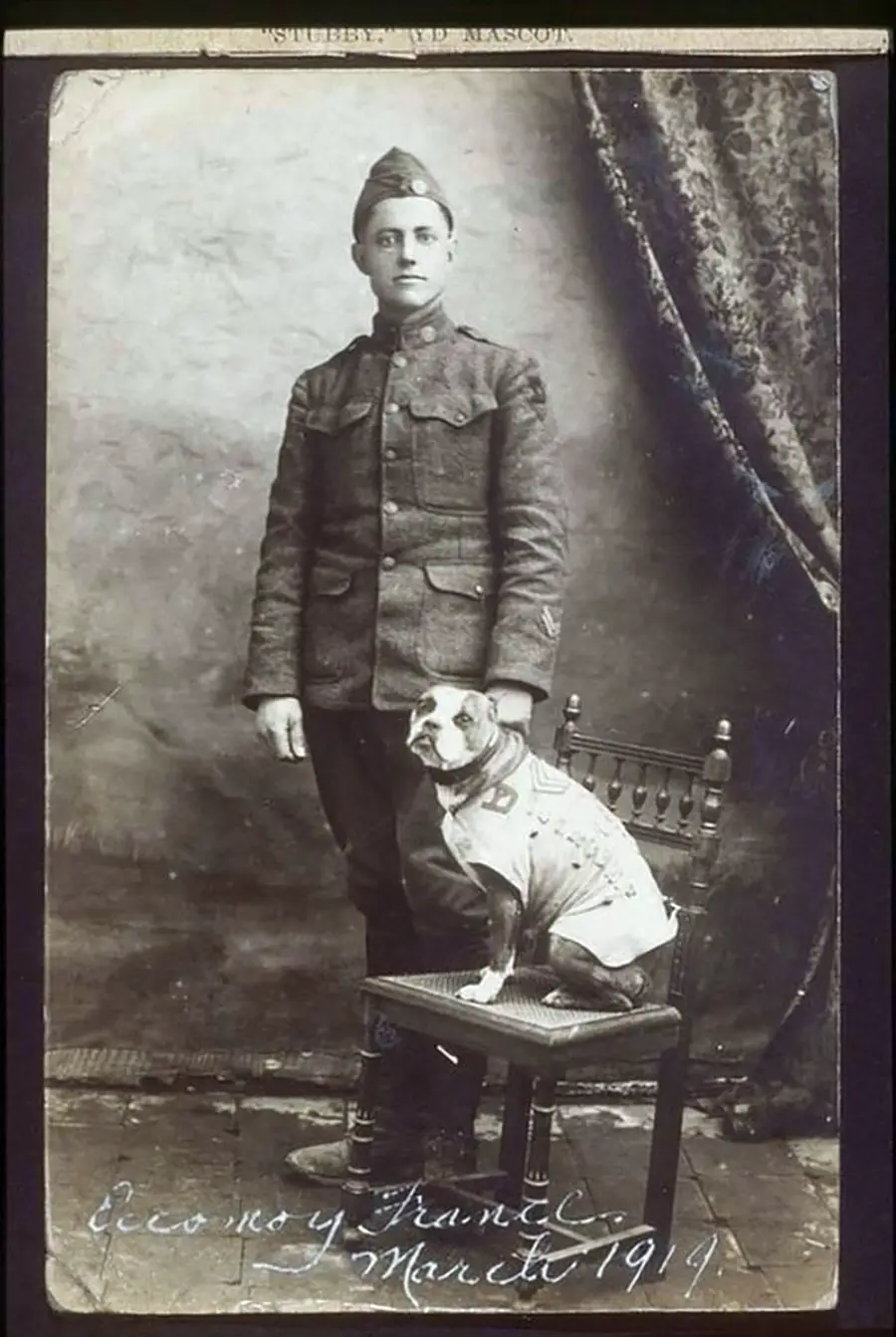
Sergeant Stubby began his military career as a stray who wandered onto the training grounds of the 26th Yankee Division in 1917. Soldiers adopted him, smuggled him onto a transport ship to France, and discovered along the way that he had a remarkable talent for detecting incoming mustard gas attacks before any human could. He alerted his unit so many times that he is credited with saving dozens of lives during his eighteen months on the front. Stubby returned home a national celebrity and met three U.S. presidents, becoming one of the most recognized animal veterans of the entire war.
2. Cher Ami, the pigeon that saved the lost battalion
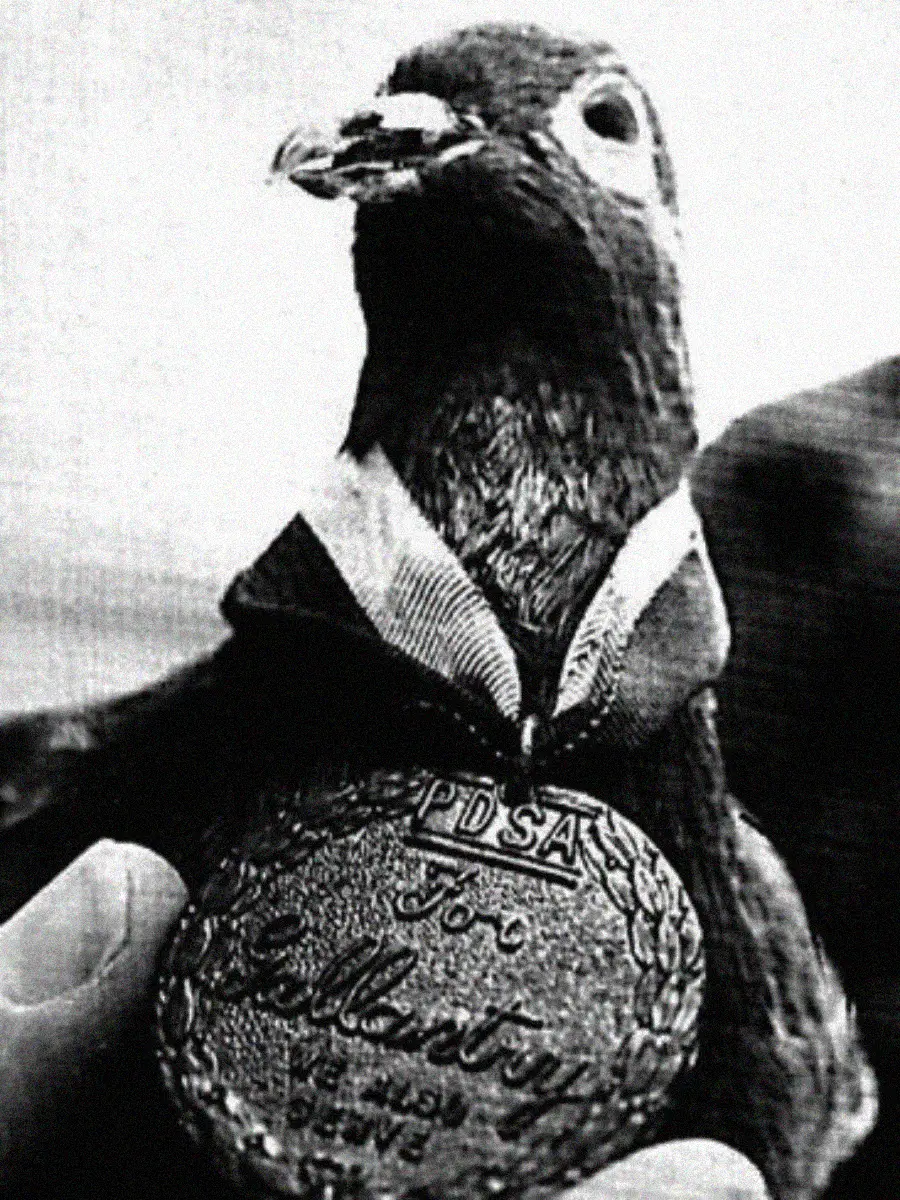
In October 1918, a battalion of roughly 500 American soldiers found themselves surrounded by German forces in the Argonne Forest with no way to call for help. Cher Ami, a homing pigeon, was released carrying a desperate message attached to her leg. She was shot down by enemy fire almost immediately, but somehow took flight again, delivering the message despite a shattered breastbone and a leg hanging only by a tendon. The message reached headquarters in time to redirect the artillery fire that had been mistakenly landing on the trapped soldiers, and Cher Ami earned the French Croix de Guerre for her actions.
3. G.I. Joes, the pigeon who stopped a bombing run
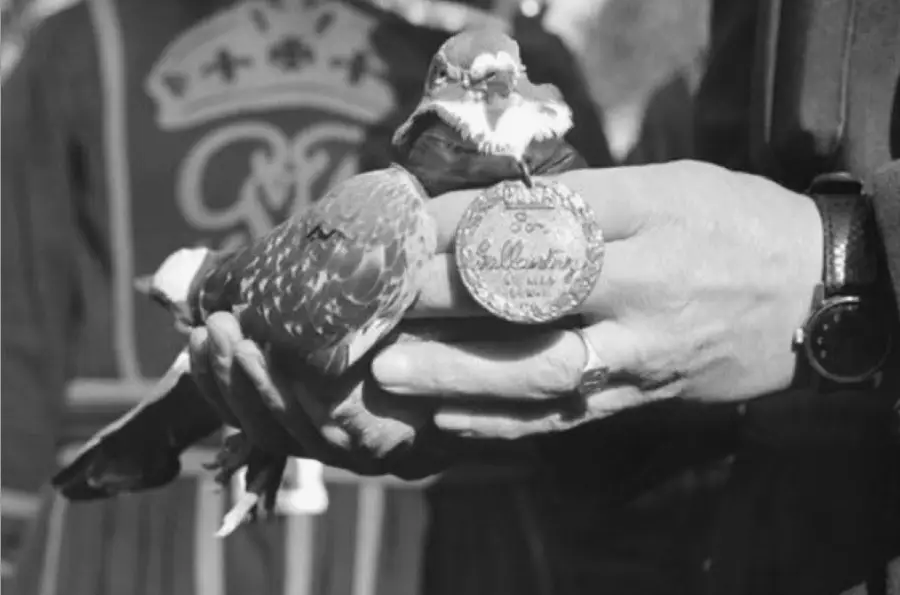
During the Italian campaign of World War II, a British regiment had taken a town faster than expected, leaving them in a dangerous position directly beneath a planned Allied bombing raid on that same location. With radio communication down, a pigeon named G.I. Joe was released and flew 20 miles in about 20 minutes, arriving just as the bombers were preparing for takeoff. The message reached the airfield in time to cancel the mission, and G.I. Joe is credited with saving the lives of approximately 1,000 soldiers. He later received the Dickin Medal, the British honor considered the animal equivalent of the Victoria Cross.
4. Chips, the war dog who took on a machine gun nest
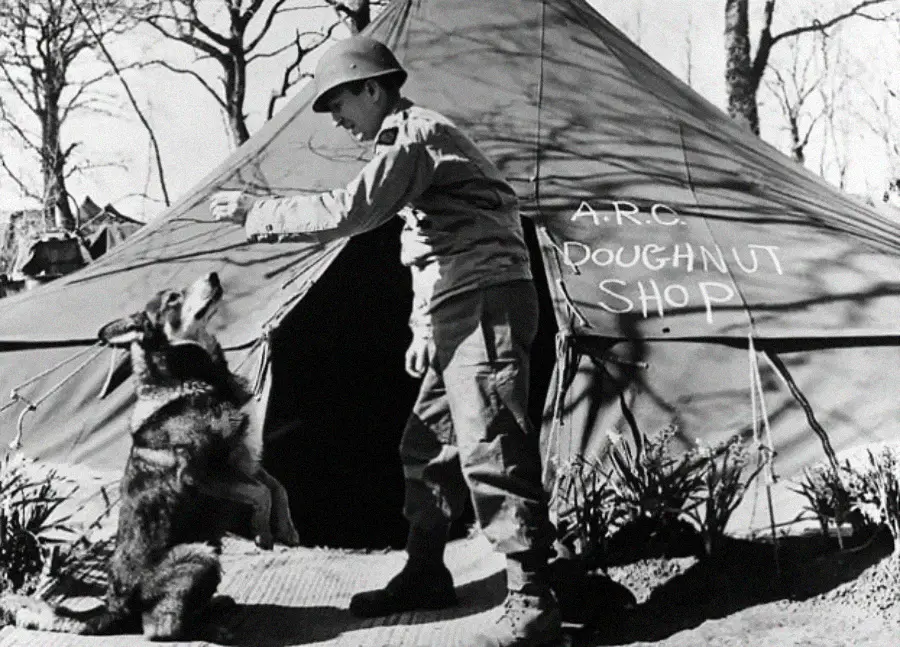
Chips was a mixed-breed dog serving with the U.S. Army during the invasion of Sicily in 1943 when his unit came under fire from a hidden machine gun nest. Without hesitation, Chips broke from his handler and charged the position, forcing the gunners to abandon their weapon and surrender. He was wounded in the attack but survived, and was initially awarded the Silver Star and Purple Heart, both of which were later revoked due to a policy change barring official military medals for animals. In 2018, decades after his death, Chips finally received the Dickin Medal in recognition of his actions.
5. Judy, the only officially registered animal prisoner of war
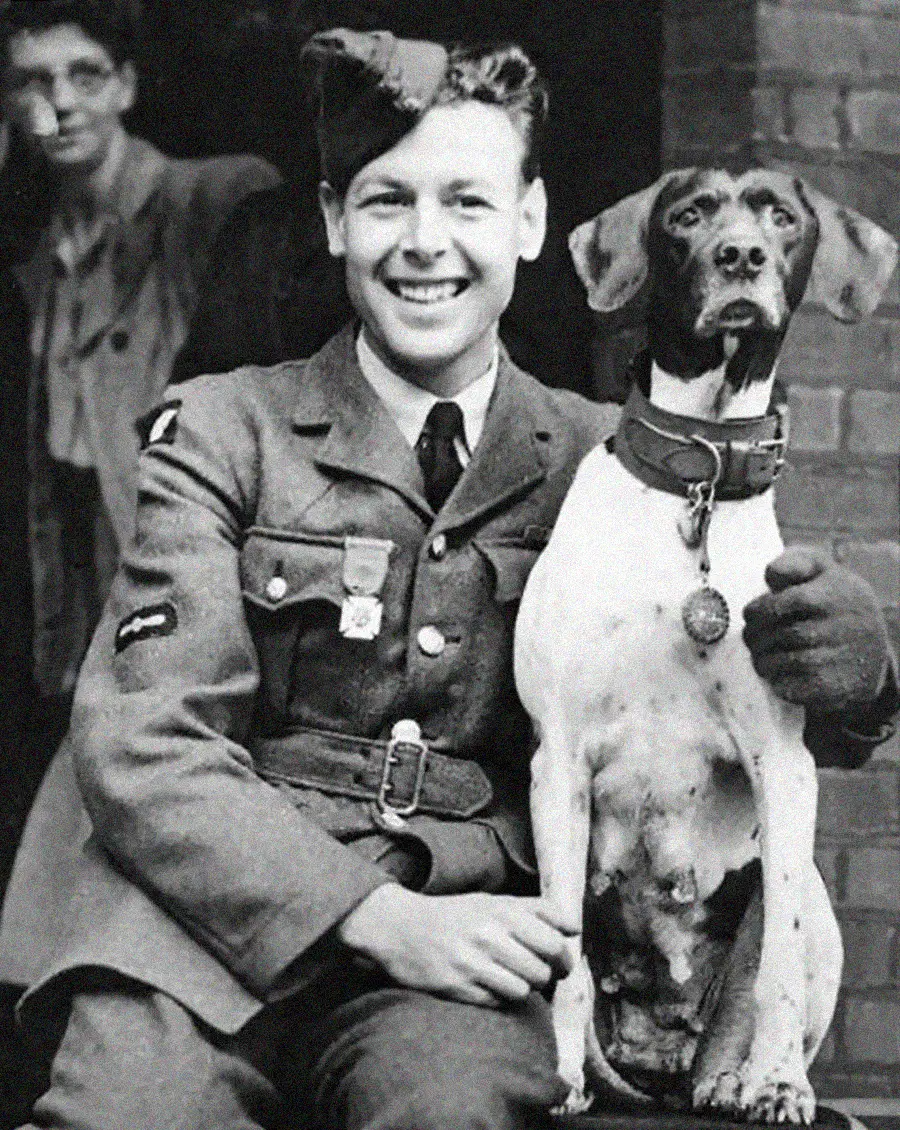
Judy was an English pointer who served aboard British Royal Navy vessels on the Yangtze River in the years leading up to World War II, helping crews detect approaching aircraft. After her ship was sunk, she survived in the open ocean before being captured along with her crew and held in a Japanese prisoner of war camp. She is the only animal in history to be officially registered as a prisoner of war, a status that gave her some measure of protection during her captivity. Judy survived multiple camps and the sinking of a prison transport ship before finally being freed at the end of the war.
Trending on The Scroller
6. Winkie, the pigeon who earned the first Dickin Medal
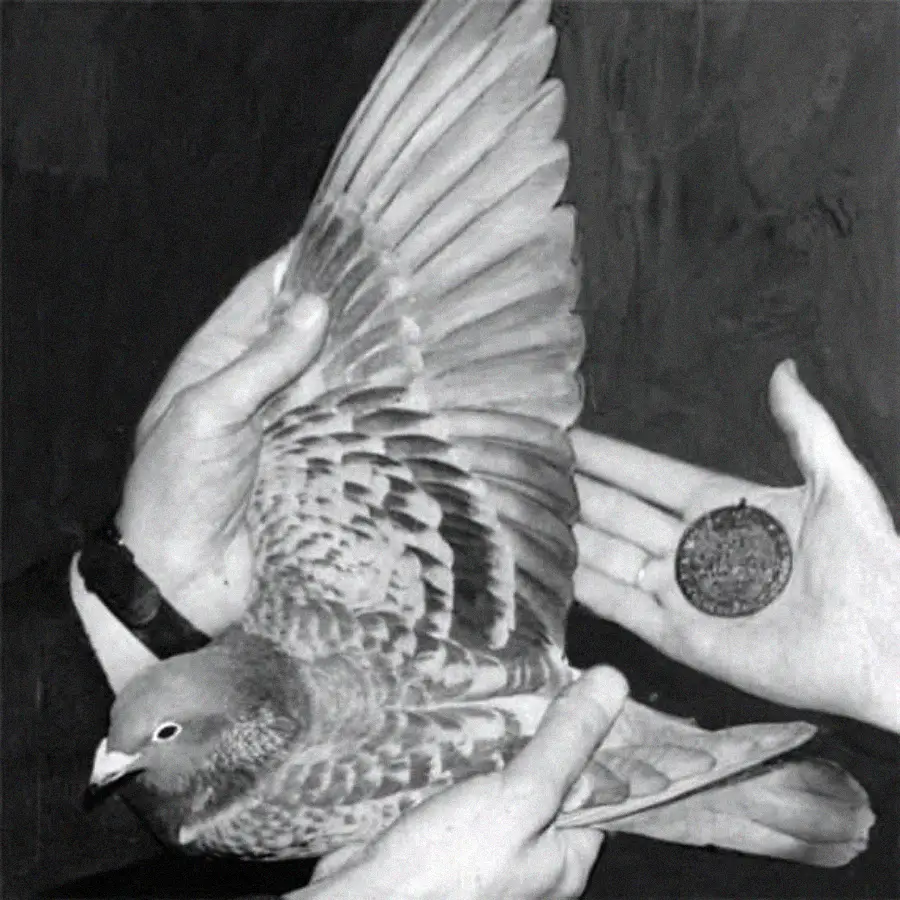
When a Royal Air Force bomber crashed into the North Sea in 1942, the crew released a pigeon named Winkie as their only hope of being found. Winkie flew over 120 miles back to her loft, arriving exhausted and covered in oil. Her arrival time allowed rescuers to calculate the bomber’s approximate location and launch a successful search, and the crew was found alive. Winkie’s flight earned her the very first Dickin Medal ever awarded, establishing the honor that would later go to animals like G.I. Joe and Chips.
7. The Devil, honored with a formal cavalry tribute
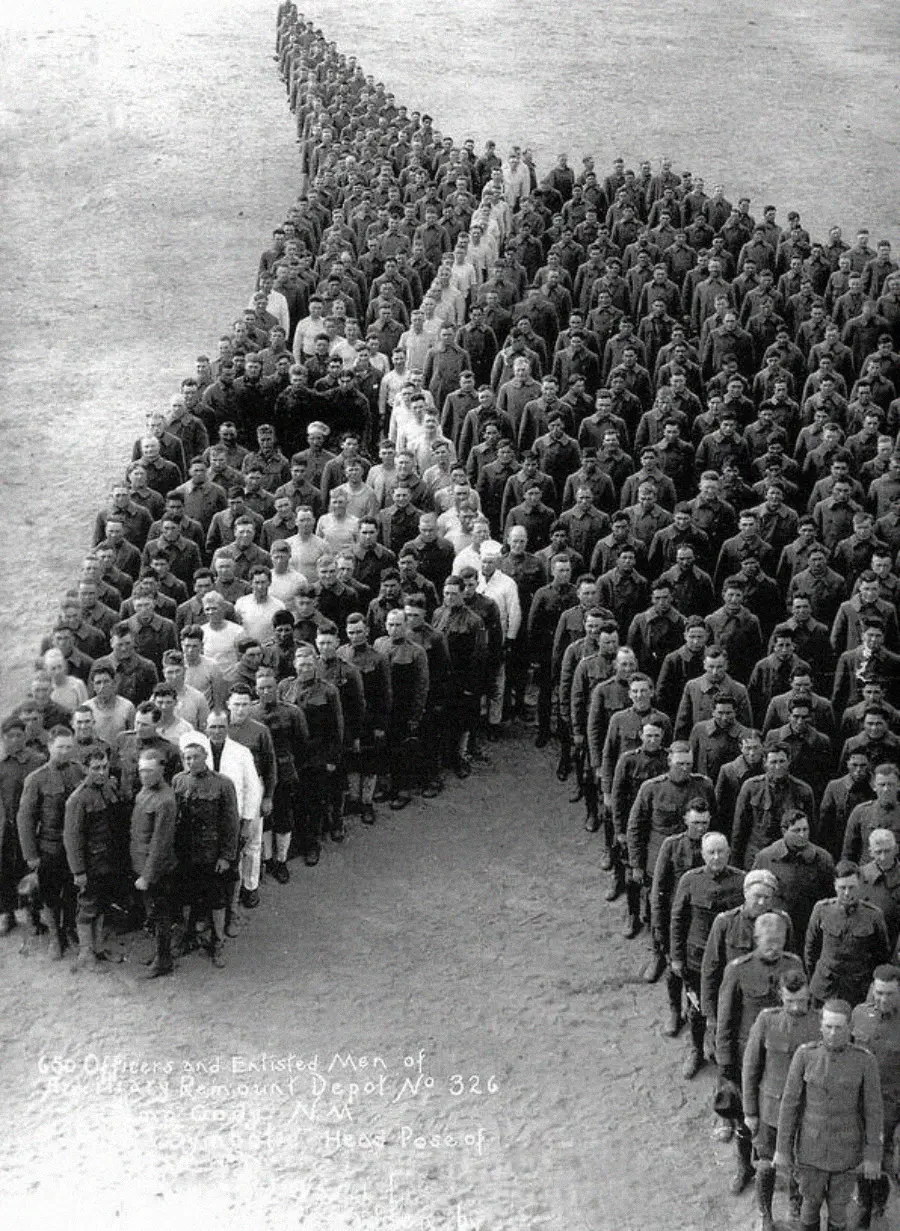
Group photographs of cavalry units posing with their horses were common in the years following World War I, but one taken in 1919 at Camp Cody, New Mexico, stands out for a different reason. It was staged specifically as a tribute to a single horse known as The Devil, ridden throughout the war by Major Frank G. Brewer. By that point, horses were already being phased out as the primary mode of military transport, making tributes like this one a final formal send-off for an era of cavalry that was quietly coming to an end.
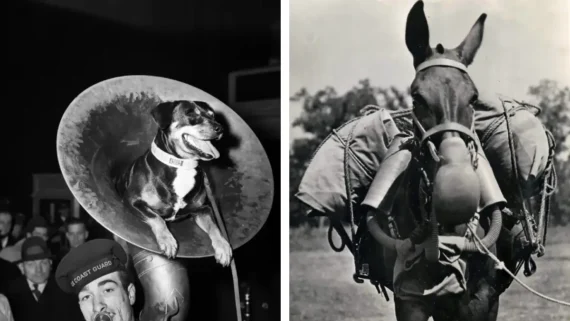
8. Sinbad, the Coast Guard’s enlisted canine sailor
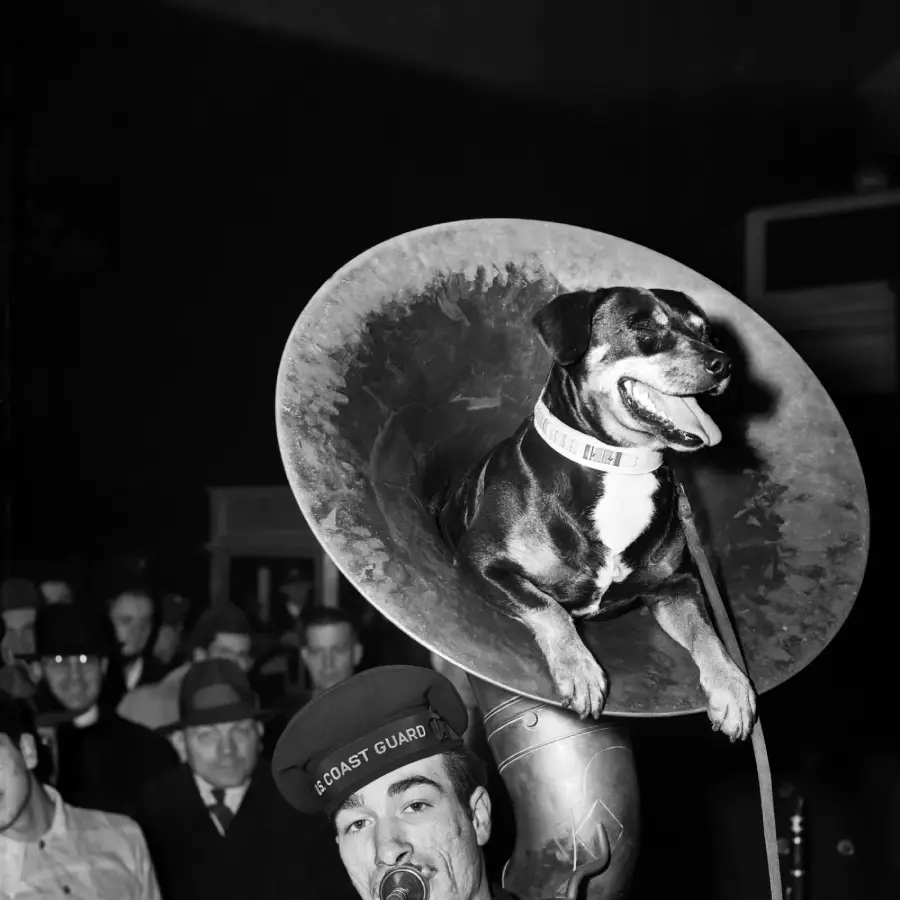
Sinbad was not simply a mascot. He held an actual service record, complete with an official enlistment certificate, aboard the USCGC Campbell during World War II. He sailed with the crew through battles in the North Atlantic, survived enemy attacks, and was treated by the Coast Guard as a full member of the ship’s company, right down to his own bunk and uniform. Sinbad became something of a legend among the crew, known for wandering into port towns on his own and somehow always finding his way back to the ship before it sailed.
Sign up for our newsletter
9. The U.S. Army’s camel corps experiment
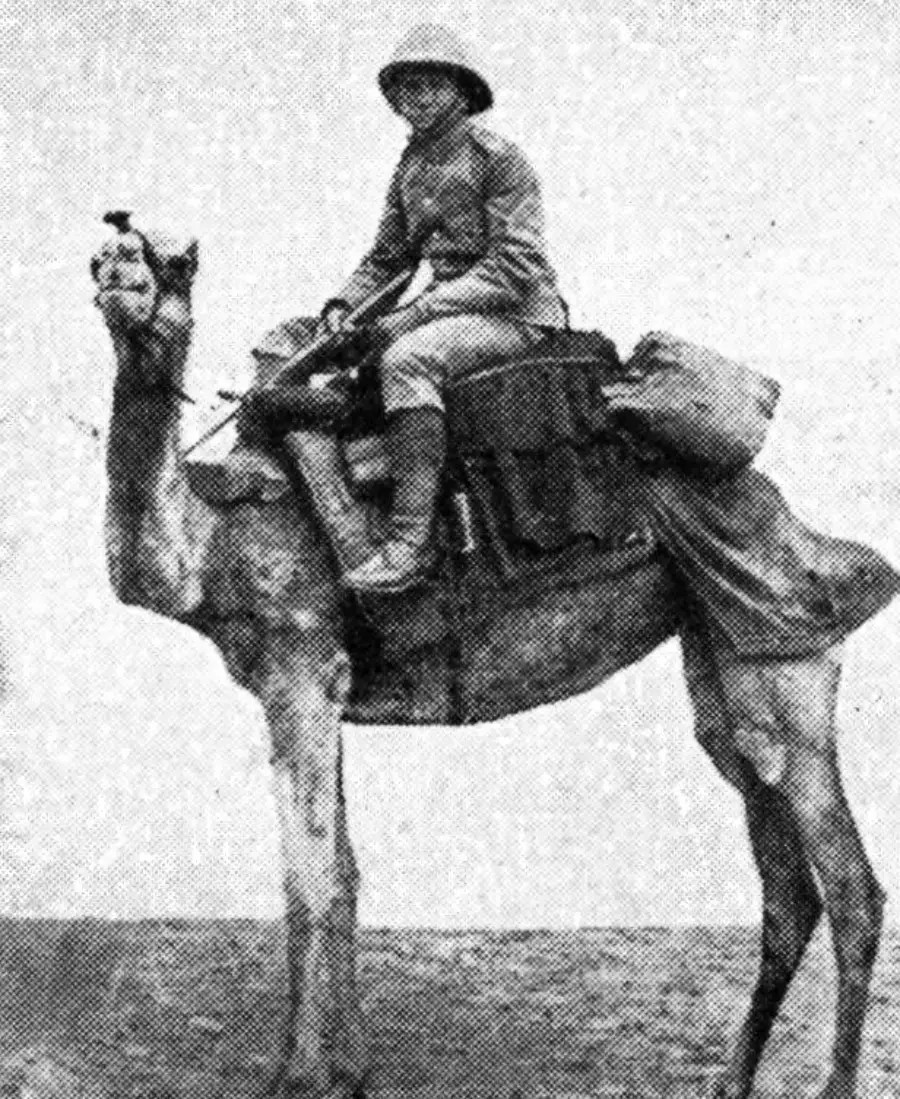
Decades before either World War, the U.S. Army ran an unusual experiment importing camels from the Middle East to test their use for transport across the arid terrain of the American Southwest. Soldiers stationed in Texas had to learn to handle animals most of them had never encountered before arriving at their post, and the camels proved capable of carrying heavy loads across desert terrain that exhausted horses and mules. The program was eventually abandoned once the railroad expanded west, but it remains one of the strangest chapters in American military logistics.
10. The gas-masked mules of World War II
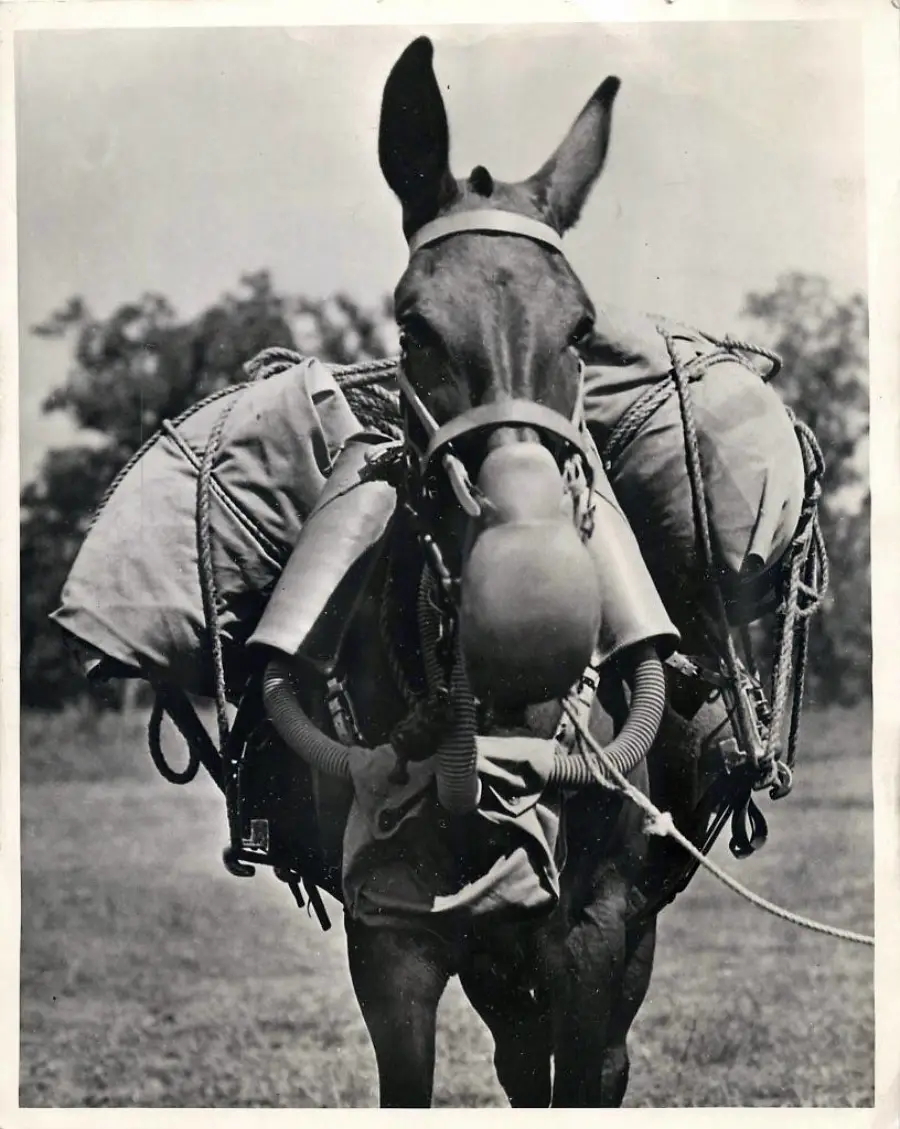
By the early 1940s, the U.S. Army’s Chemical Warfare Service had developed something few people today would expect: gas masks built specifically for horses and mules. The M-4 type mask was designed to protect pack animals working in combat areas where chemical attacks remained a real threat, fitting over the animal’s muzzle and eyes much like the masks issued to soldiers. Mules continued hauling ammunition, food, and equipment through rough terrain that no truck could reach, all while wearing equipment built to keep them breathing through a gas attack.
11. Butch, the marine dog who stood guard on Iwo Jima
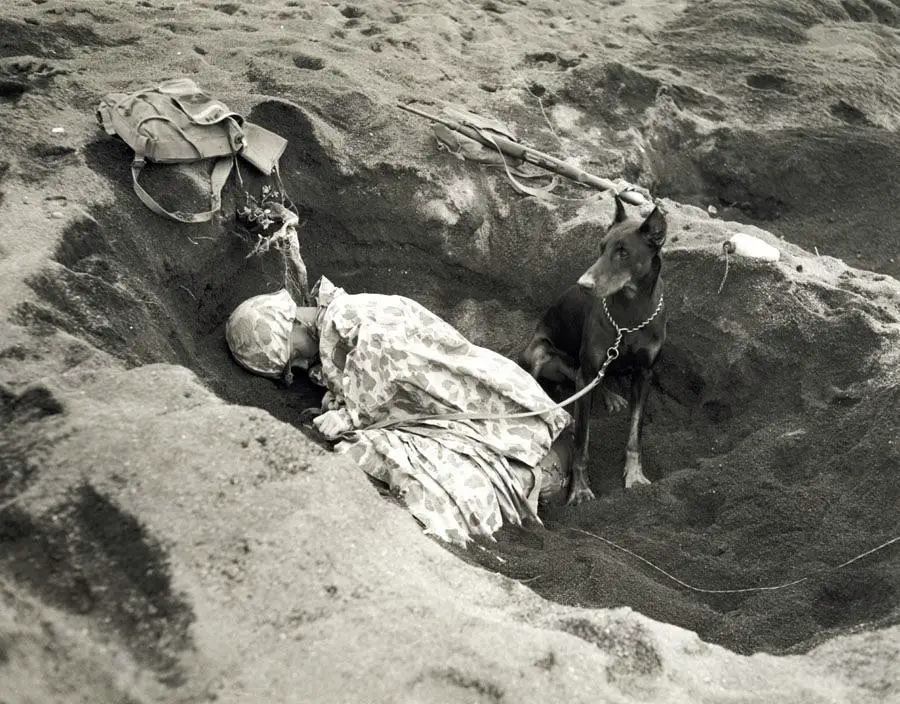
In February 1945, during one of the bloodiest battles of the Pacific War, a photograph captured Private Rez P. Hester of the Marine Corps’ Seventh War Dog Platoon catching a brief moment of sleep while his dog Butch stood watch beside him. War dogs like Butch served as sentries, scouts, and messengers throughout the brutal fighting on Iwo Jima, often allowing exhausted Marines the rare opportunity to rest without fear of being caught off guard. The image remains one of the most reproduced photographs of the Pacific war dog program.
12. The remount squad of the Pacific theater
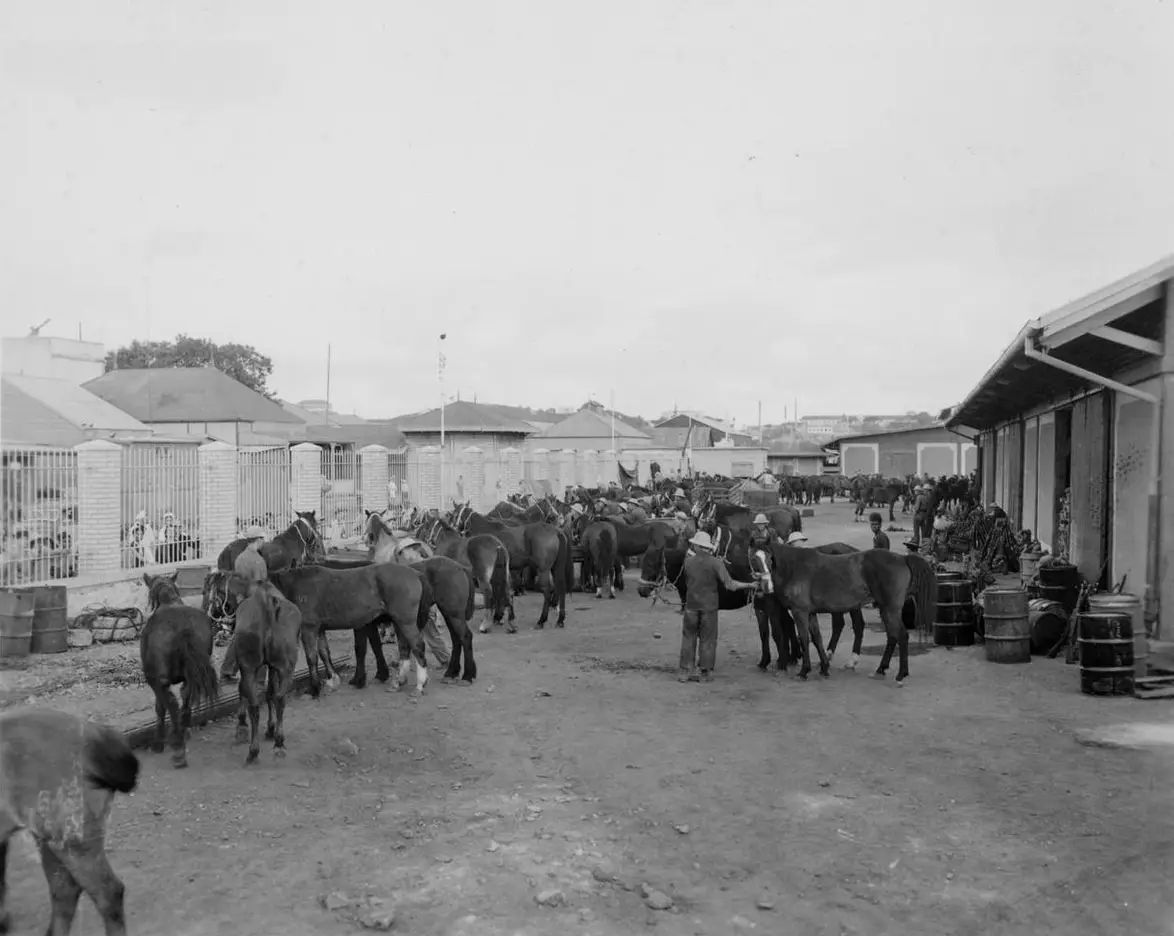
Not every World War II story about military animals comes from the European front. In 1943, Army units stationed in New Caledonia relied on horses belonging to an Army remount squad, the unit responsible for supplying and training replacement horses and mules for active service. Even in the middle of the Pacific theater, where jungle terrain made vehicles nearly useless in certain conditions, animals remained essential for moving supplies and equipment between outposts.
13. Bill, the bull terrier mascot of HMS Hood
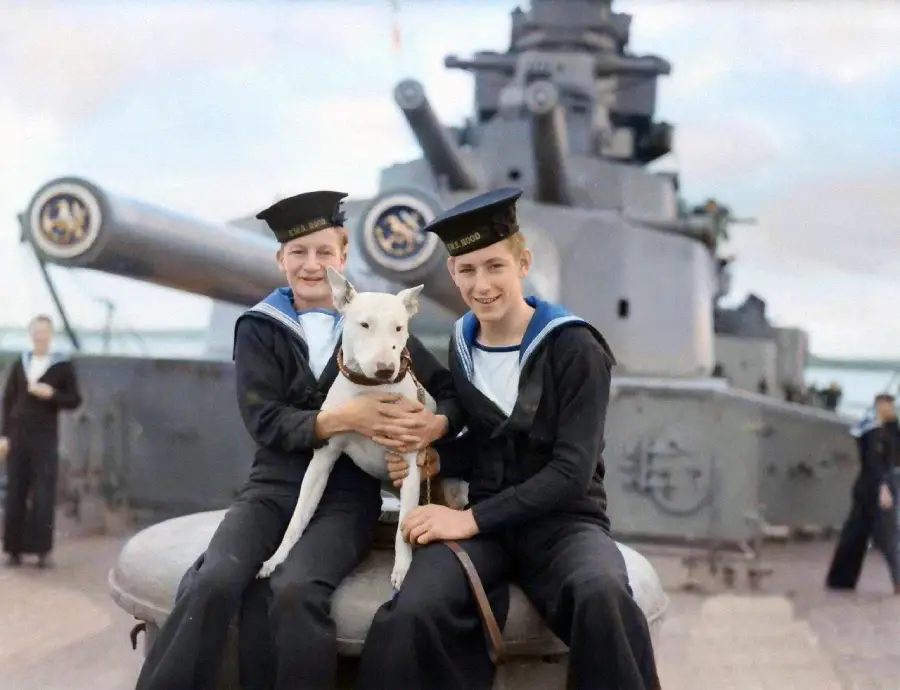
Bill was a white bull terrier who served as a beloved mascot aboard the British battlecruiser HMS Hood throughout the late 1930s, belonging to the ship’s chaplain, Reverend Harold Beardmore. In early 1941, Beardmore was transferred to another vessel and took Bill with him, just months before HMS Hood was struck and sunk during the Battle of the Denmark Strait, a disaster that killed all but three of the 1,418 men aboard. Bill’s transfer off the ship, made for reasons completely unrelated to the tragedy that followed, meant the dog who had spent years as part of the crew’s daily life was spared from one of the deadliest naval losses of the entire war.
14. Edda, the Italian mascot with an iconic name
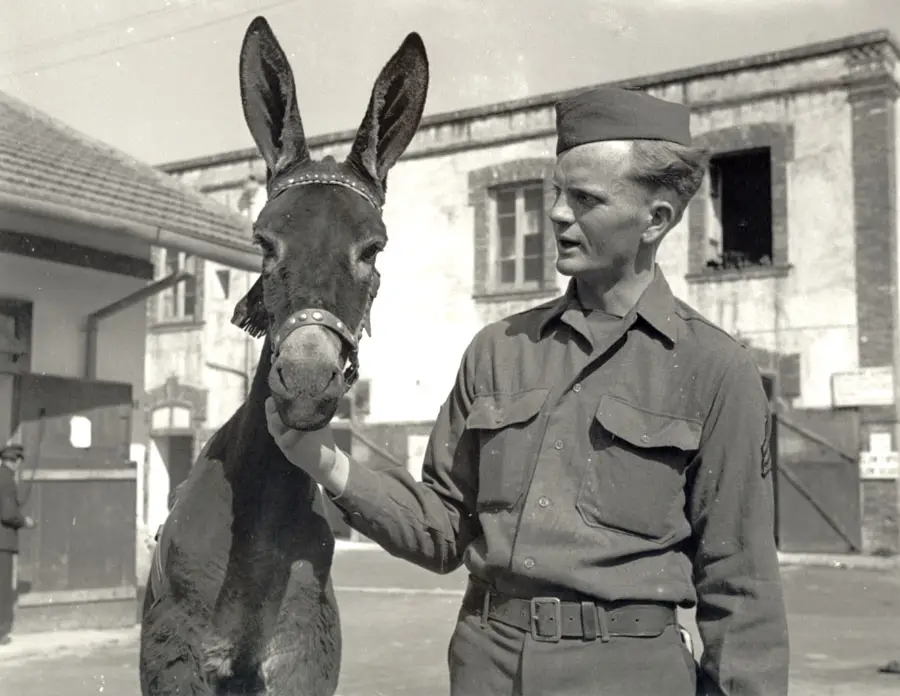
In April 1944, an American sergeant named Richard Wallen adopted his unit’s mascot in Italy, a donkey he named Edda. The name was a pointed joke: Edda was also the name of the daughter of Italian wartime dictator Benito Mussolini. Naming a humble pack donkey after the dictator’s daughter was the kind of dark, irreverent humor common among soldiers stationed far from home, and Edda carried supplies for the unit throughout the rest of the Italian campaign.
Explore more military content:
Revisiting these historical photo collections serves as an excellent reminder of the unique, unyielding cooperation that has linked humans and animals throughout our darkest historical challenges. Looking back over these brave messenger pigeons, vigilant sentry dogs, and enduring pack mules proves that while modern weapon technologies and automated military strategies change completely across the decades, the value of animal loyalty and intuition remains entirely timeless. When we choose to look past the vintage film grain of these moving portraits to appreciate the genuine service built directly into their historical records, we gain a profound understanding of the sacrifices that shaped global history. If you enjoyed this detailed look back at the animal heroes that defined past conflicts, make sure to explore these 12 Cold War Moments That Almost Sparked Nuclear War, or 20 Rare Military Images From the 1970s Era. You may also like these 18 Yearbook and Military Academy Photos of War Heroes from WWI and WWII.