
The virtual spaces where internet users gather to share personal updates, digital photography, and creative videos feel completely dominated by a select few corporate giants today. Walking into any modern workplace, university campus, or public transit hub reveals an audience deeply anchored to a uniform ecosystem of highly optimized, algorithmically driven networks. However, the foundational history of social media was once a chaotic, experimental frontier where hundreds of independent startups aggressively fought to define the basic mechanics of online human interaction. Users during the late nineties and early two-thousands spent their evenings jumping between wildly different platforms, setting up complex background music tracks and custom profile layouts just to chat with local school friends.
The incredible reality of this digital evolution highlights just how quickly a multi-million dollar online community can completely vanish when consumer preferences shift toward cleaner interfaces. The truth is that the early history of social media operates as a massive graveyard of innovative ideas, where platforms that once boasted over a hundred million active accounts collapsed entirely over a matter of months. Before global tech conglomerates fully standardized our online timelines, the internet relied on a decentralized mix of personal blogging diaries, pixelated chat lobbies, and experimental video loops. Let’s take a look back at fourteen nostalgic digital networks that paved the way for our modern online lives before quietly fading into virtual obscurity.
1. Friendster
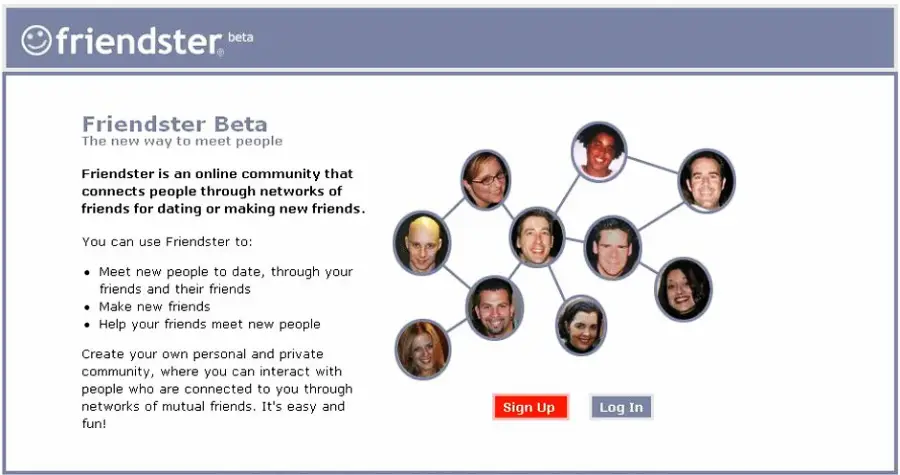
As the very first massive, modern networking hub of the digital era, Friendster successfully pioneered the core mechanics of online connection by introducing personal profiles, public friends lists, and private direct messaging systems. In 2003, Google executives recognized this immense cultural potential and offered a staggering thirty million dollars to acquire the startup, a historic buyout offer that the platform’s founders famously rejected before losing their entire market share to MySpace.
2. MySpace
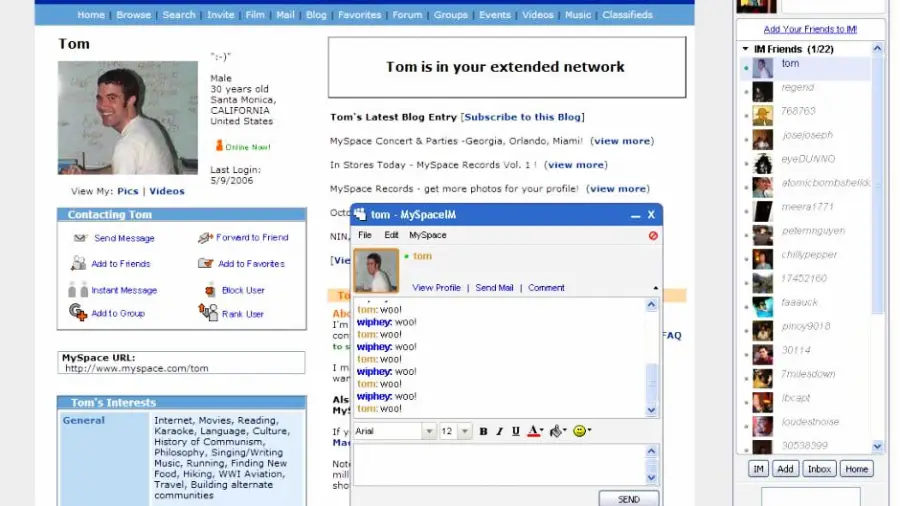
Between 2005 and 2008, MySpace reigned supreme as the single most visited web domain in the entire United States, briefly surpassing even Google in total monthly web traffic before being acquired by News Corp for five hundred eighty million dollars. The platform’s subsequent downfall was so spectacularly swift that it was resold for a mere thirty-five million dollars in 2011, a devastating corporate decline followed by a 2019 server migration glitch that accidentally erased every single user-uploaded music file hosted on the site between 2003 and 2015.
3. Bebo
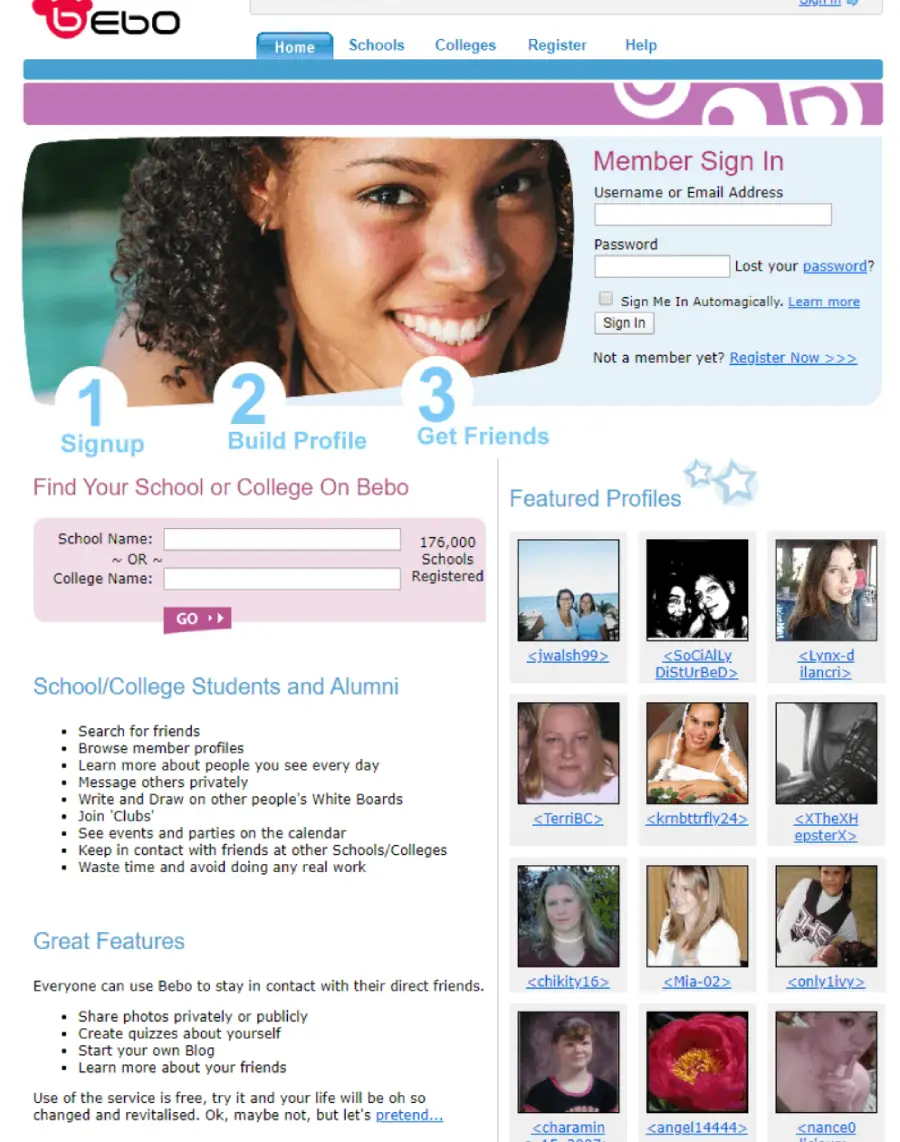
Bebo operated as the absolute dominant social network for teenagers across the United Kingdom and Ireland during the mid-2000s, turning profile customization into a primary high school obsession. Tech giant AOL aggressively purchased the thriving network for a massive eight hundred fifty million dollars in 2008, only to suffer catastrophic financial losses and resell the deteriorating asset just two years later for less than ten million dollars.
4. Hi5
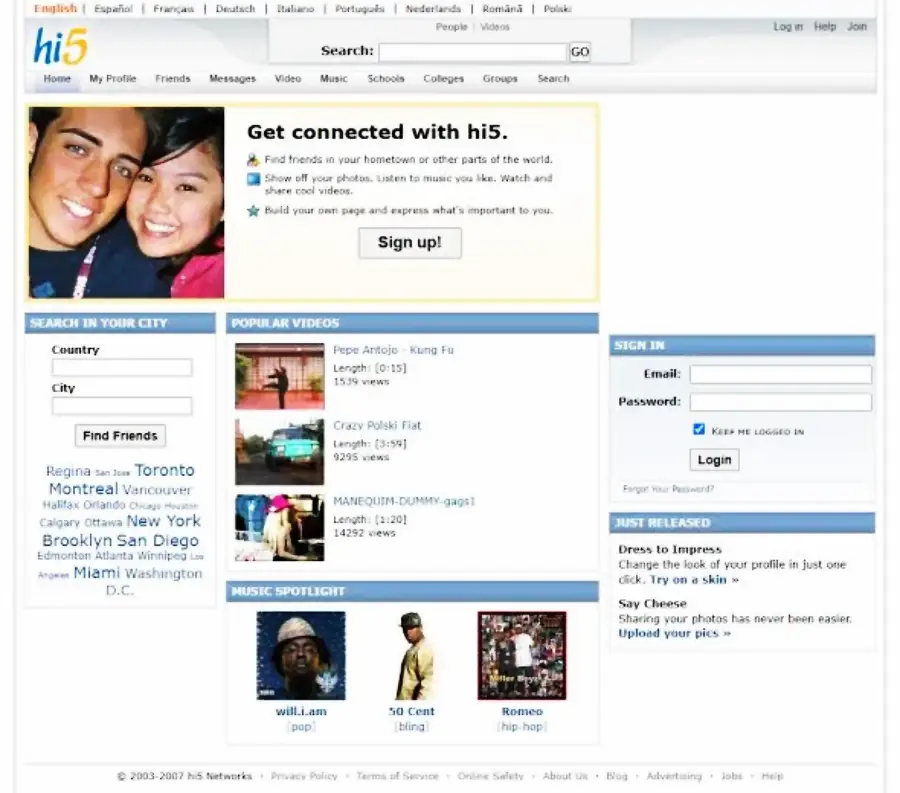
Long before contemporary networks expanded their reach into developing global economies, Hi5 captured massive consumer audiences across Latin America, Africa, and Southern Asia, eventually peaking at over eighty million active global users. Seeking to monetize this massive international user base, developers completely stripped away the platform’s traditional networking features in 2011 to pivot exclusively into social gaming, a desperate shift that alienated its core community and erased its cultural footprint.
5. Google Buzz
Google’s initial, highly publicized attempt to compete directly with Twitter and Facebook lasted exactly one turbulent year before being permanently shelved due to severe consumer privacy failures. Upon automatic deployment, the system instantly generated public broadcasting networks for Gmail users based entirely on their most private, frequent email contacts, triggering a massive class-action privacy lawsuit that cost the tech giant eight and a half million dollars to settle out of court.
Trending on The Scroller


6. Google+

The search giant’s secondary attempt at building a social empire was an immensely expensive, highly integrated project that technically accumulated over five hundred million registered accounts by forcing Google users to sign up automatically. Despite these massive superficial numbers, actual user engagement remained completely stagnant for years, prompting Alphabet executives to pull the plug entirely after discovering a massive, long-standing user data breach that corporate managers had quietly kept hidden from the public for months.
7. Vine

By restricting creators to a strict, looping six-second window, Vine successfully engineered the short-form video architecture that currently dominates global attention spans via TikTok and Instagram Reels. Twitter strategically acquired the viral application for thirty million dollars before its official launch, but ultimately discontinued the entire service in 2017 after failing to build a functional, long-term monetization pipeline for its top creative influencers.
8. Orkut

Orkut developed into an absolute cultural phenomenon across Brazil and India, achieving such massive regional penetration that it actually managed to outpace Google’s own primary search traffic within South America for several years. Although the service operated as an independent Google project, corporate leadership consistently failed to integrate the network into their core product lines, leaving Orkut vulnerable to a swift, absolute collapse the exact moment Facebook launched its localized regional platforms.
Sign up for our newsletter
9. Tumblr
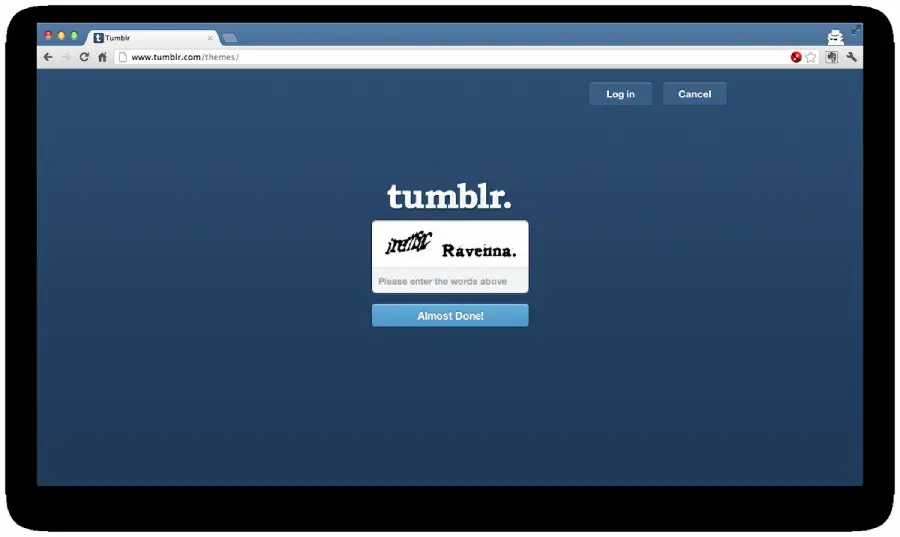
Tumblr served as the ultimate digital sanctuary for an entire generation of indie artists, writers, and highly localized visual fandoms, prompting Yahoo to purchase the blogging platform for a historic one point one billion dollars in 2013. The network’s immense cultural momentum came to a crashing halt in 2018 when corporate leadership instituted a strict ban on all adult content, causing the site to instantly lose a full third of its global traffic and resulting in a fire sale to WordPress’s parent company for a mere three million dollars.
10. Xanga
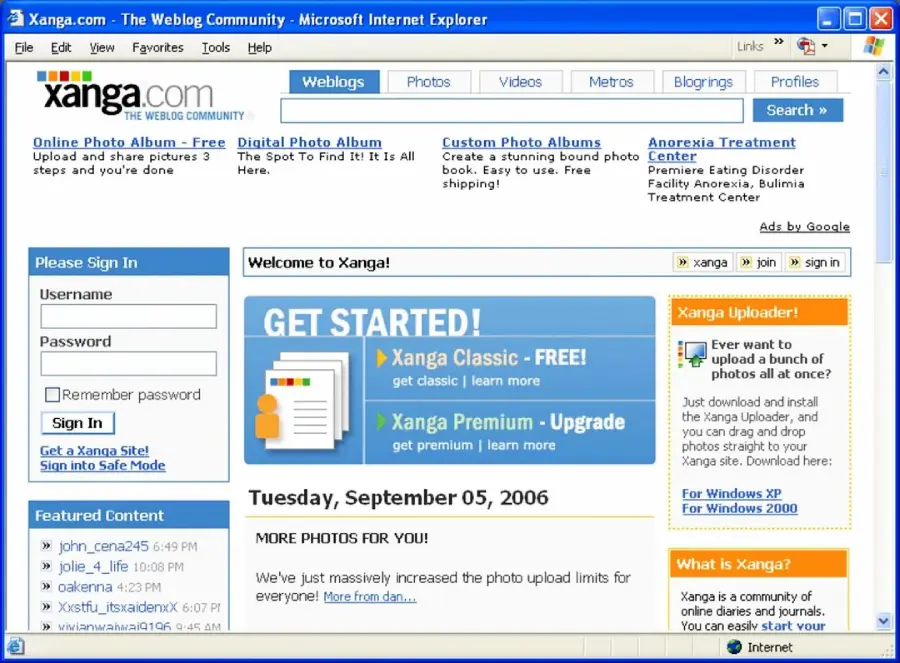
Xanga stood as the definitive home for personal teenage angst and digital journaling throughout the early days of dial-up internet, allowing users to customize intricate HTML profiles equipped with automatic background music and public visitor guestbooks. The early blogging pioneer ultimately ran out of funding to maintain its heavy server infrastructure in 2013, attempting a late, unsuccessful transition into a paid premium model that failed to attract nostalgic former users.
11. LiveJournal
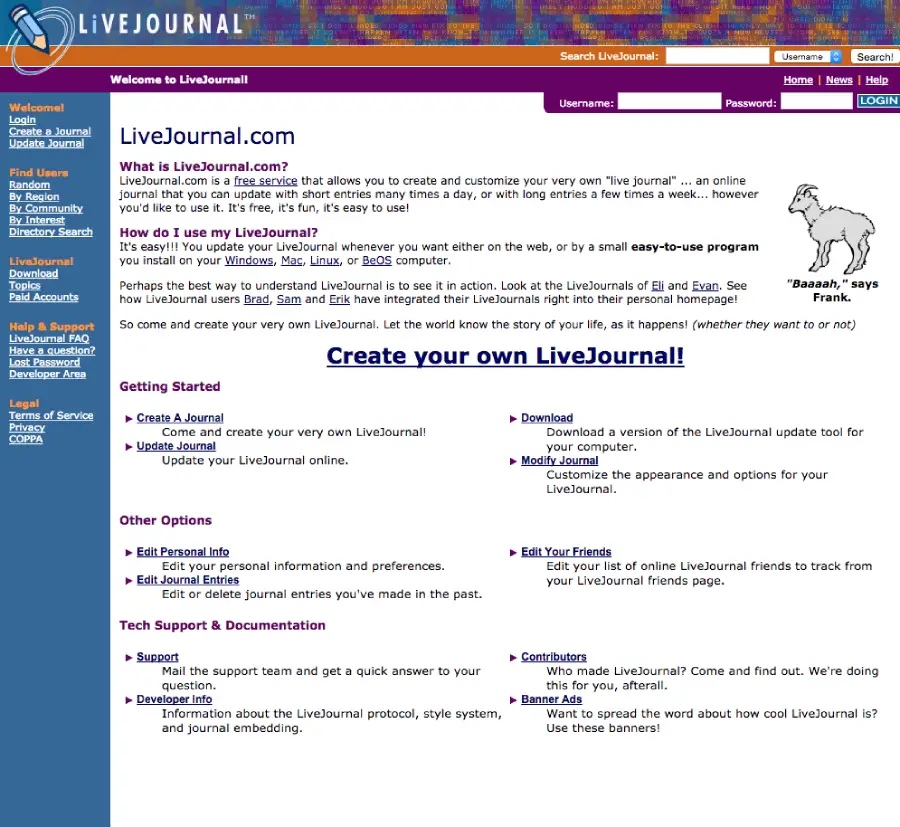
LiveJournal functioned as the supreme online community for creative writers, fanfiction enthusiasts, and deep personal reflection during the absolute golden age of early web logging. The platform’s western cultural footprint experienced a massive, abrupt migration in 2017 after its ownership group relocated its physical servers to Russia and modified the core terms of service to strictly comply with restrictive Russian data censorship laws.
12. Path
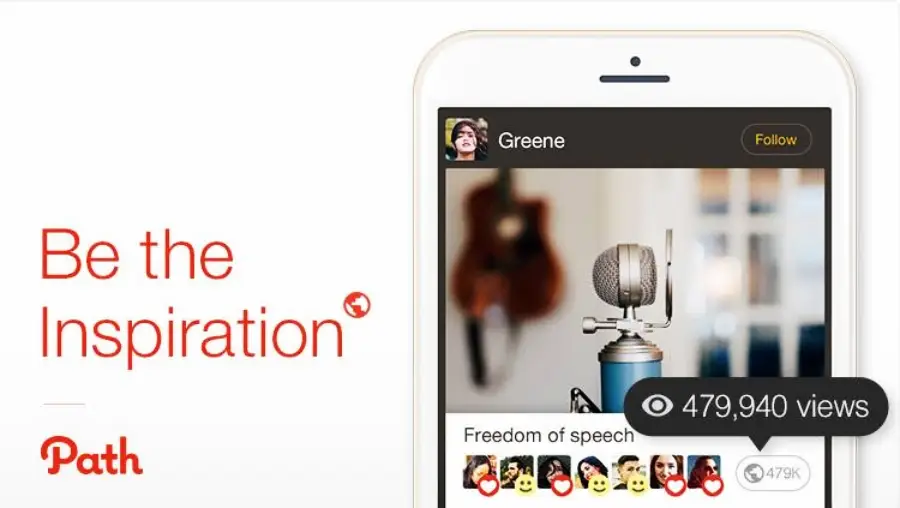
Built entirely around British anthropologist Robin Dunbar’s famous social theory that an individual can only maintain one hundred fifty stable human relationships, Path restricted users to a strict cap of one hundred fifty friends to cultivate an intimate social space. While the highly exclusive, beautifully designed mobile application generated massive investment hype throughout Silicon Valley circles, it never managed to secure mainstream consumer numbers outside of elite technology professions.
13. Diaspora
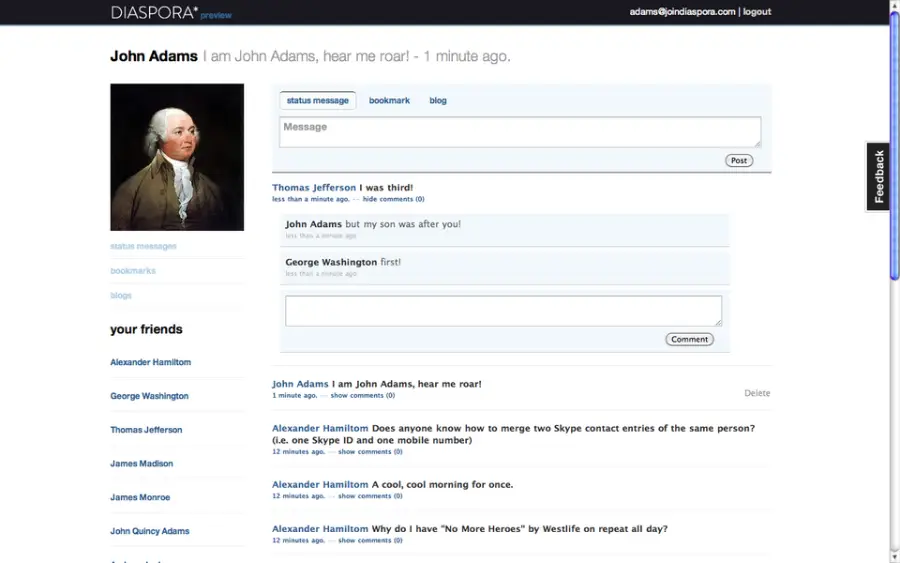
Diaspora captured immense public enthusiasm in 2010 by launching a decentralized, ad-free crowdfunding campaign on Kickstarter that raised over two hundred thousand dollars from internet users seeking an open-source alternative to corporate data tracking. Unfortunately, the complex mechanics of hosting independent, decentralized server nodes proved far too technical for the mainstream public to adopt, keeping the platform locked in permanent obscurity with under seven hundred thousand total users.
14. ICQ
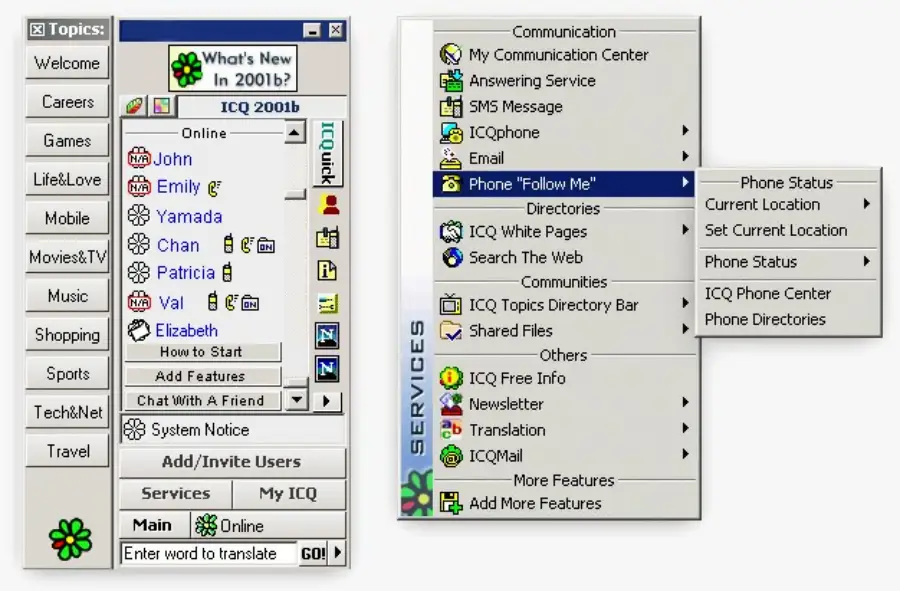
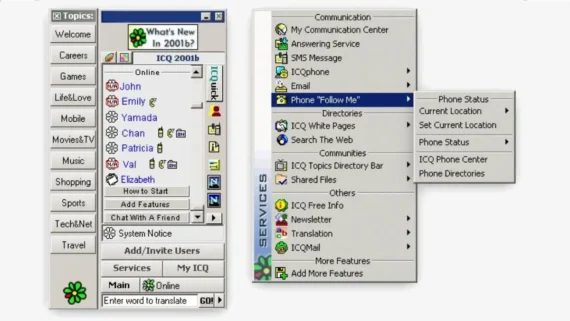
Launched well before the absolute prime of AIM or MSN Messenger, ICQ stands historically as the very first massive, standalone instant messaging application to capture the global internet public. The software’s legendary, unmistakable horn notification sound remains one of the most iconic audio signatures of early internet history, though original owner AOL consistently mismanaged the property after buying it for over four hundred million dollars in 1998.
In the mood for more early internet stories?
Revisiting these foundational digital empires serves as an excellent reminder of the unique, fast-paced transitions that define how human beings communicate across the digital grid. Looking back over these custom HTML profiles, micro-video loops, and forgotten messaging alerts proves that while user interfaces and mobile device optimization techniques change completely across the generations, the human drive for digital connection remains entirely constant. When we choose to look past the modern convenience of our current integrated applications to appreciate the rigorous, experimental history of early web startups, we gain a much deeper understanding of technology history. If you enjoyed taking this nostalgic trip back through the forgotten corners of the early web, make sure to explore these 14 Internet Trends From the 2000s That Completely Vanished, or 17 Iconic Images That Show How the Internet Looked in the ’90s. You can also check out these 16 Everyday Things From 2016 That Already Look Like History.