The Gold Rush was built on a pretty simple idea: maybe there was enough gold out there to change your life. That idea sent people across the country and into places that were barely developed, often with little more than the hope that the next trip into the hills would pay off. For some, it did. For many others, the reality was a lot harder than the dream.
The boomtowns could appear almost overnight, while mining camps were filled with people gambling their time and money on the possibility of striking it rich. Looking at these images now, it is fascinating to see how quickly the search for gold could turn a remote stretch of land into the center of a growing community. Let’s take a look at 29 historical images of the American gold rush.
1. Unknown miners taking a rest (circa 1860)

Early miners were often inexperienced; even doctors and merchants traded their professions for a pan and pick. They typically worked 10-14 hours a day, living in crude tents or makeshift cabins and enduring rampant crime and lawlessness in boomtowns.
2. Mining on the American River near Sacramento (circa 1852)

During the early years, miners relied on simple placer methods, panning and rockers (cradles) that used a hand-cranked box to wash dirt. The long tom, essentially a long wooden trough with a perforated sheet of iron, could process about 20 times more material than a rocker.
As surface gold dwindled, miners built sluice boxes and larger long toms that required cooperative labour and more water.
3. Portsmouth Square, San Francisco, during the gold rush (circa 1851)

This is a block away from where the Transamerica Pyramid stands today.
4. Unknown bearded miner (circa 1852)

This daguerreotype is beautiful, and I also love that they painted the gold in the photo.
5. River Mining on the North Fork of the American River (circa 1850-1855)

Trending on The Scroller

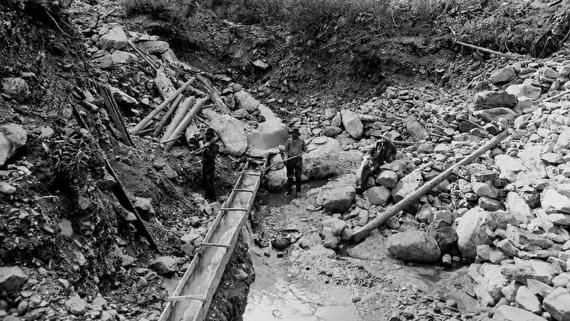
6. Unknown miner posing with his tools (circa 1851)

7. Hydraulic mining operation (circa 1856)

By the 1860s, hydraulic mining emerged: pressurized water cannons blasted hillsides and washed gold-bearing gravel into sluices. This industrial method produced enormous volumes of sediment, clogging rivers and burning farmland, and eventually prompted one of America’s first environmental lawsuits, culminating in a 1994 court decision that restricted hydraulic mining.
8. Mining town with an American flag and men relaxing (circa 1852)

Sign up for our newsletter
9. Miner Daniel J. Butler posing with gold and mining tools (circa 1850)

The painting of the gold on this daguerreotype is a bit more haphazard, but it certainly does the trick.
10. Miners tending to their sluice (circa 1850s)

11. Two troublemakers posing with liquor, a gun, and a knife (circa 1850)

12. California Gold Rush miners with wagon, stock, and mining tools (circa 1860s)

I would love to know what the average cleanup looked like on small operations like this back then.
13. Miner panning for gold during the California Gold Rush

14. Gold miners in Idaho using a rocker box to placer mine for gold (circa 1885)

Graphic House/Staff/Getty
From the looks of this operation, they’ve probably found a quartz vein in the mountain they’re chasing in the mine, crushed the rocks, and sent them through that long tom sluice.
15. Prospectors posing with their equipment as they prepare to mine somewhere in the Northwestern United States (circa 1867)

Hulton Archive/Staff/Getty
Something worth noticing is how many more guns than shovels you see headed out to the claim.
16. Gold miners in Alaska weighing up their gold (circa 1897)

Bettmann/Contributor/Getty
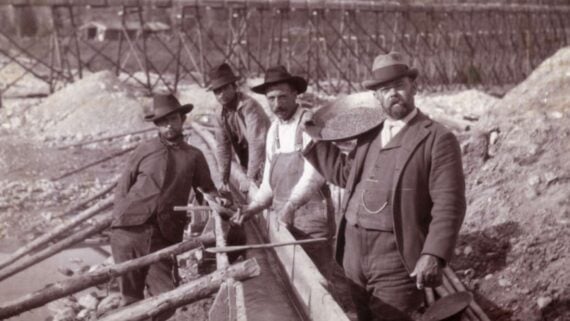
17. Miners in Alaska using a long tom sluice and showing off their gold (circa late 1890s)

Clearly, the gold rush was an incredible moment in American history. The struggle and survival of miners depended as much on hard work and perseverance as on luck, which made it an incredibly tricky and harrowing passage in this country’s not-so-distant past.
18. Gold Prospector in 1850, panning in a stream in California.

Gado/Contributor
I cannot imagine the aches and pains you’d feel from doing this all day.
19. Deadwood, South Dakota, 1888.

20. Chinese workers panning for gold in California.

21. Miner Panning for Gold in California, circa 1890.

Bettmann/Contributor
The Gold Rush had catastrophic consequences for California’s Indigenous nations. Native people, estimated at 100,000-125,000 before the rush, lost access to land and resources; by 1900, only about 16,00 remained.
22. A portrait of a young man named Charles Edward Mitchell during the California gold rush.

23. A portrait of a gold prospector in 1852.

This man has the look of someone who will never trust another man again.
24. An unidentified man with gold mining equipment, 1865.

The frame is almost as beautiful as the tintype photo itself.
25. Gold miners in El Dorado, California, between 1848 and 1853.

After a long, grueling day mining, I bet those two dogs were some comforting company.
26. Gold prospectors prepare their boat for the 1400-mile journey home from a gold mining expedition in Alaska circa 1897.

Archive Photos/Stringer
A 1400-mile trip on that tiny boat is quite the adventure.
27. Gold prospectors going to the new field in 1889

Heritage Images/Contributor
28. Gold miners posing with pickaxes, shovels, and sieves in 1853.

Heritage Images/Contributor
George Howard Johnson shot this beautiful Daguerreotype photo.
29. Placerville, California, circa 1890s
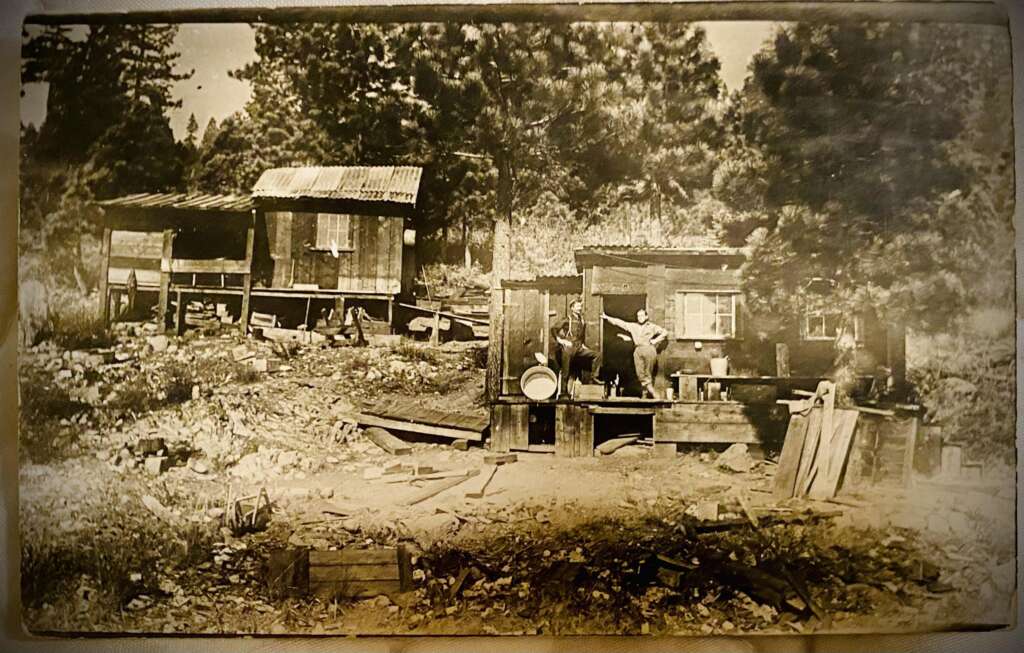
The couple pictured were miners who came to California by wagon train. They were miners before homesteading in the Placerville area.
Dig deeper into frontier life with:
30 Vintage Photos Showing Life on the American Frontier, meet legendary gunslingers in 25 Real Photos of Wild West Icons From 1860-1910, or belly up to frontier watering holes in 23 Vintage Photos of Old Wild West Saloons.