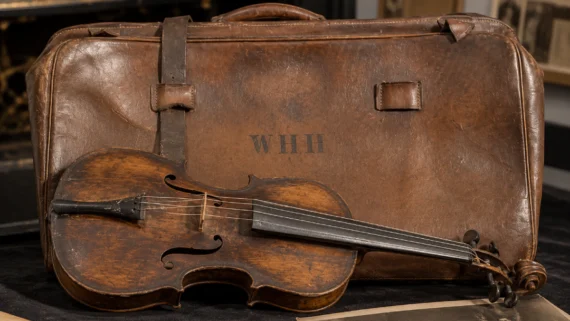
When the Titanic sank into the North Atlantic on April 15, 1912, more than 1,500 people lost their lives, along with countless personal belongings. Some possessions were recovered in the days following the disaster, while others remained on the ocean floor until the wreck was discovered in 1985.
Since then, thousands of artifacts have been brought to the surface, including jewelry, clothing accessories, luggage, and tableware. Many reveal details about the people who carried them, offering a glimpse into their lives, ambitions, and final voyage. Here are 12 objects connected to the Titanic, each with a story worth remembering.
1. Marian Meanwell’s alligator-skin handbag
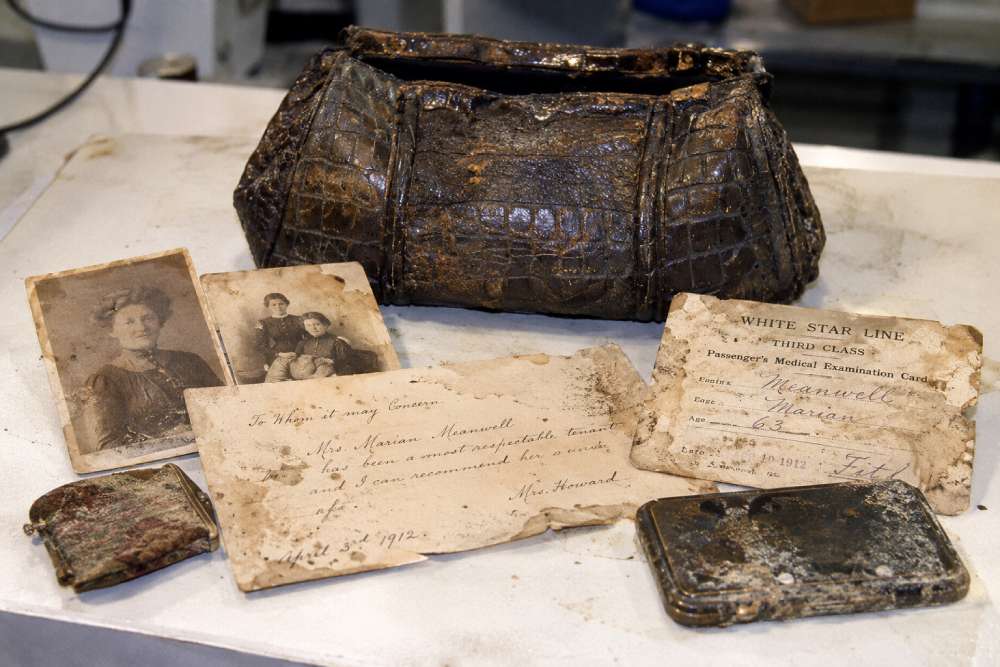
A small alligator-skin handbag recovered from the Titanic belonged to Marian Meanwell, a 63-year-old third-class passenger traveling to America to join her recently widowed daughter. Inside, researchers found photographs, a handwritten reference from her former landlord, and a medical inspection card revealing that she had originally booked passage on another White Star Line ship, the Majestic. She was transferred to the Titanic after her original voyage did not go ahead. Meanwell did not survive the sinking, but her belongings preserve evidence of the new life she had hoped to begin.
2. Adolphe Saalfeld’s perfume bottles
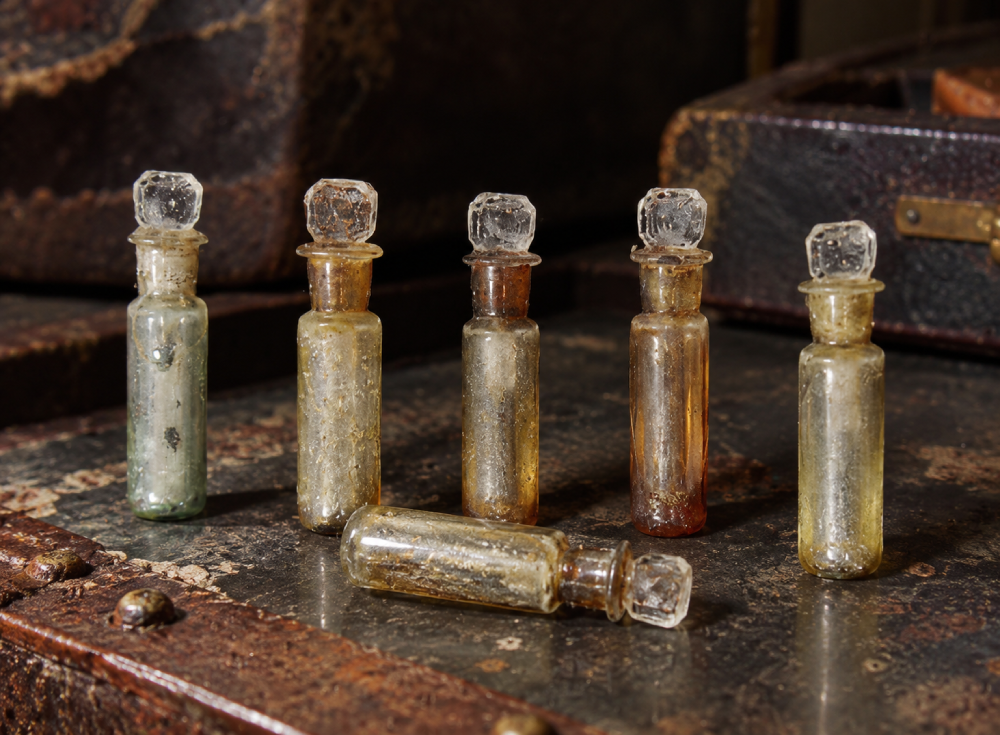
Adolphe Saalfeld, a perfume merchant traveling aboard the Titanic, carried a collection of product samples that sank with the ship, although he survived the disaster. During a 2000 expedition, researchers recovered 65 perfume vials associated with him, and some reportedly retained their fragrance after nearly 90 years underwater. The bottles reveal the practical side of his journey, which involved business rather than leisure. They also preserve a small piece of the commercial world that passengers carried with them across the Atlantic.
3. Franz Pulbaum’s German-English dictionary
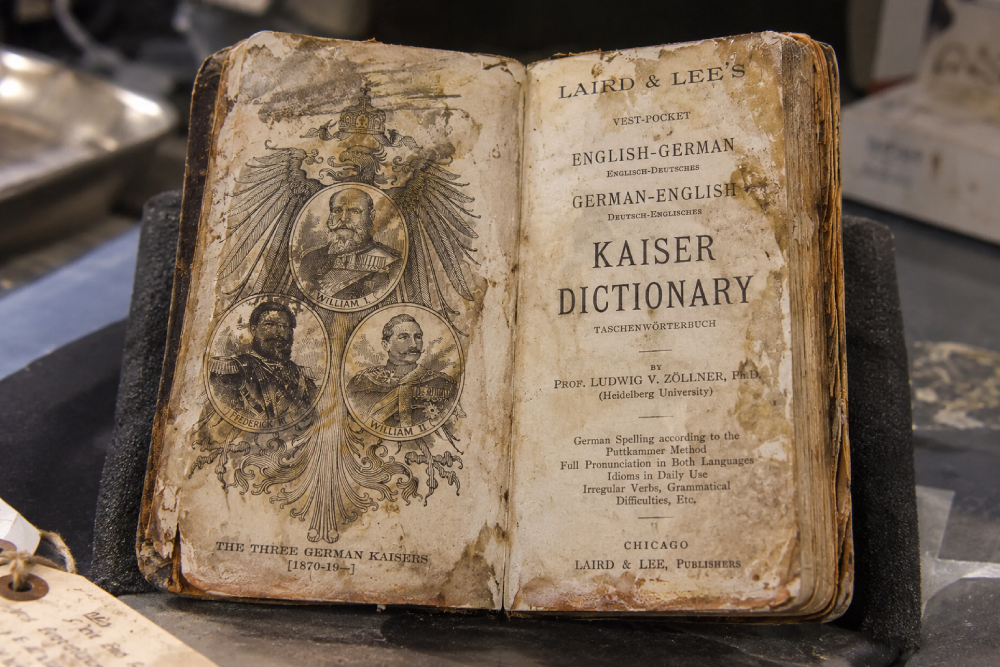
A German-English dictionary recovered in 1993 belonged to Franz Pulbaum, a 27-year-old mechanic who had emigrated to the United States in 1907. He worked on amusement park rides, including the Witching Waves attraction at Luna Park in Coney Island, and boarded the Titanic while returning from a business trip to Paris. The dictionary reflects the language skills he needed to build a career in his adopted country. Pulbaum died in the sinking, but this everyday object survived among the wreckage.
4. Franz Pulbaum’s American citizenship declaration
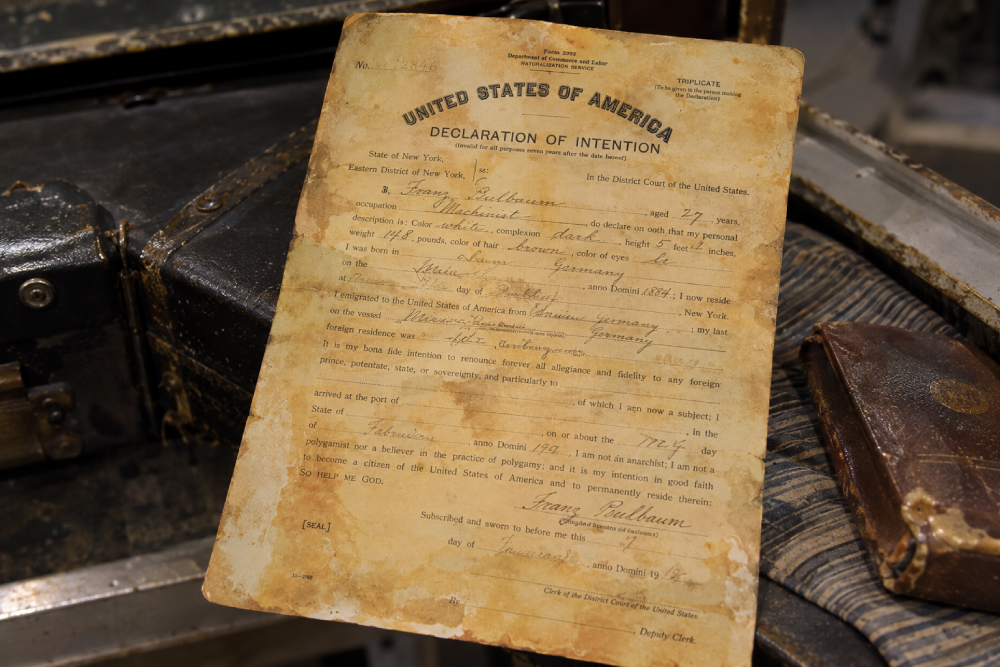
Another document recovered from Franz Pulbaum’s luggage was his declaration of intention to become an American citizen, which he signed on February 17, 1912. Found during the 1993 expedition, the document retained enough detail for researchers to identify his personal information and signature. Pulbaum was establishing himself professionally in New York and had begun the process of becoming a U.S. citizen. He never completed that journey, leaving behind a document that captured his hopes for the future just weeks before the disaster.
5. A leather bag filled with passengers’ valuables
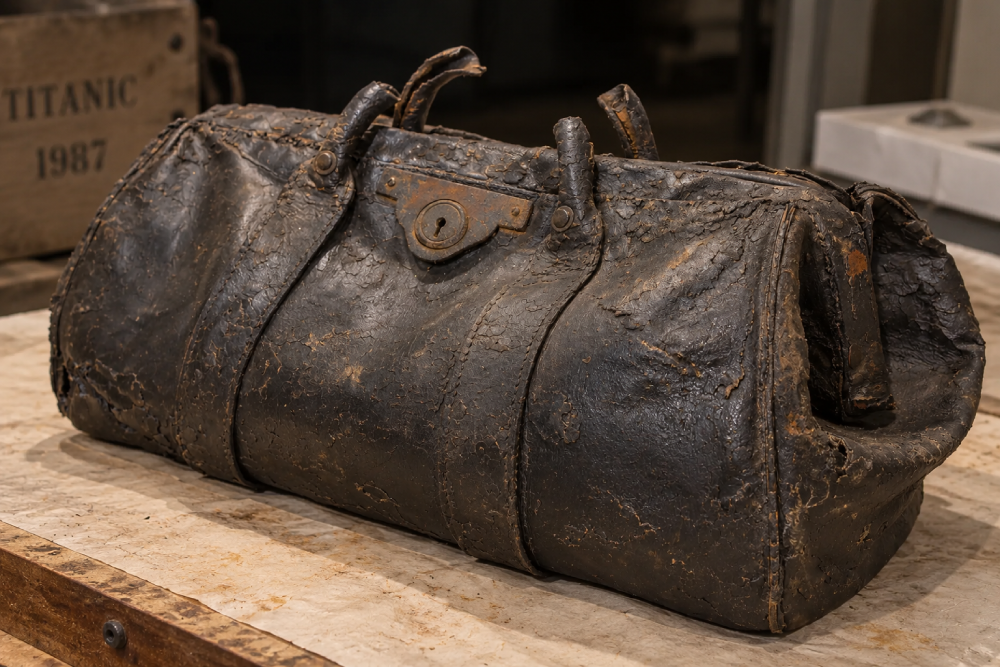
In 1987, an expedition recovered a leather Gladstone bag containing valuable possessions, including diamond jewelry and hundreds of dollars in currency. Passengers could leave valuables with the Titanic’s purser for safekeeping, and researchers believe the bag may have been prepared for their return, although this explanation remains unconfirmed. Its leather exterior helped protect the contents during approximately 75 years underwater. Unlike objects linked to a single passenger, the bag offers a glimpse into the many people who trusted the ship to safeguard their belongings.
Trending on The Scroller


6. A filigree necklace that was never claimed
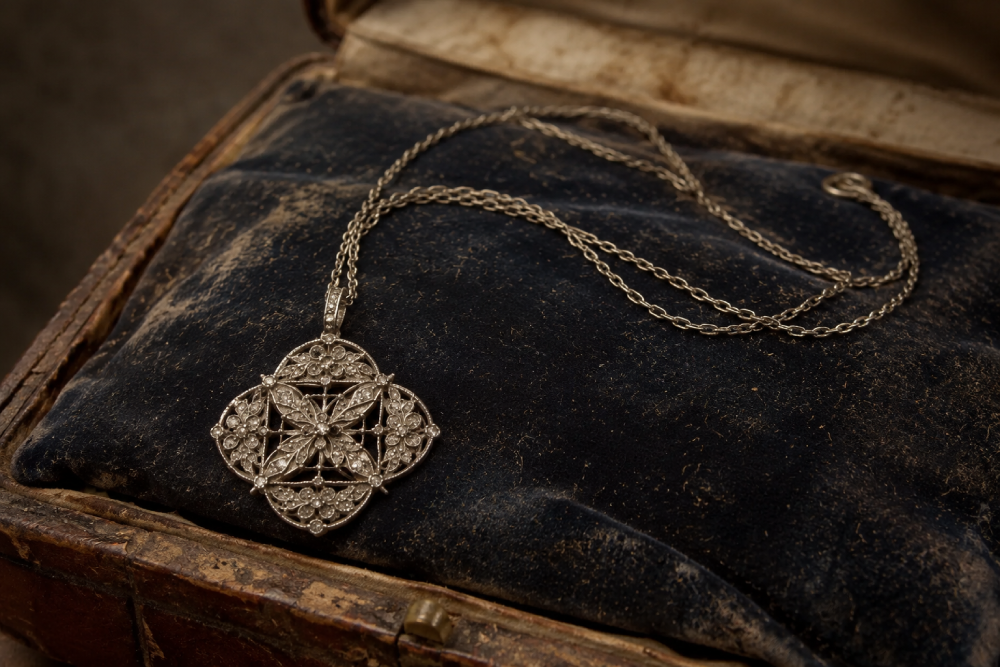
An ornate filigree pendant necklace was among the jewelry recovered from the Gladstone bag in 1987. According to RMS Titanic Inc., the piece had been deposited with the ship’s purser and carried a perforated claim ticket intended to help its owner retrieve it in New York. The writing eventually became illegible, and the passenger’s identity remains unknown. Its delicate design reflects Edwardian-era fashion, while its unfinished journey tells the story of an ordinary transaction that was never completed.
7. Wallace Hartley’s violin
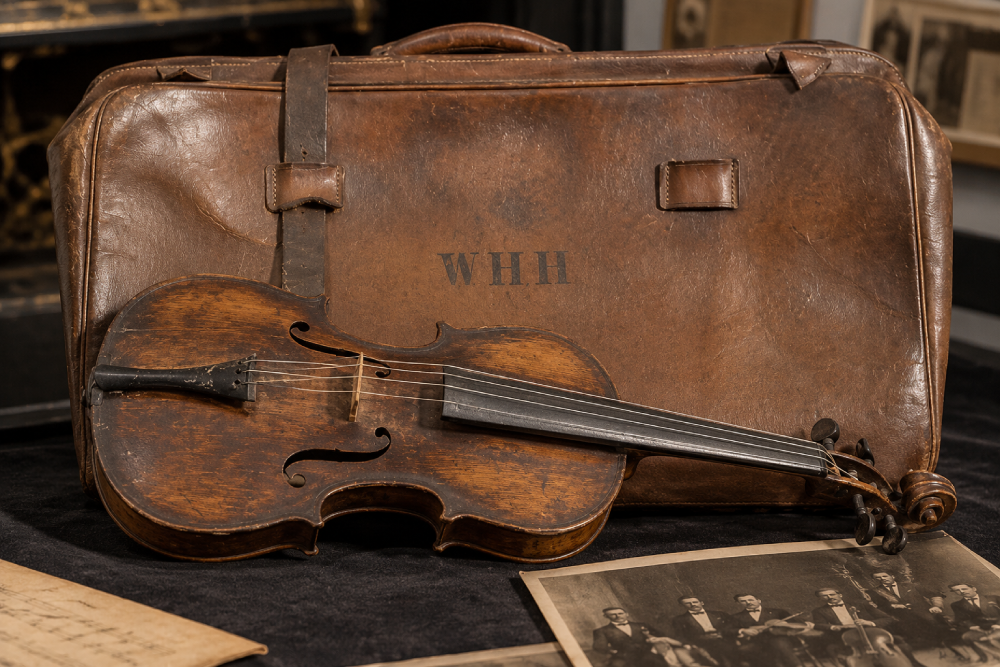
Wallace Hartley, the Titanic’s bandleader, became famous through survivor accounts describing the musicians playing as passengers prepared to abandon the ship. Hartley died in the disaster, and his body was recovered from the Atlantic alongside his violin. The instrument’s history remained controversial for decades, but researchers examined its construction, corrosion, ownership records, and other documentary evidence, including records connecting it to his fiancée, Maria Robinson. Its authentication relied on historical and forensic research, distinguishing it from many artifacts recovered from the seabed years later.
8. A water-damaged sheet of Wallace Hartley’s music
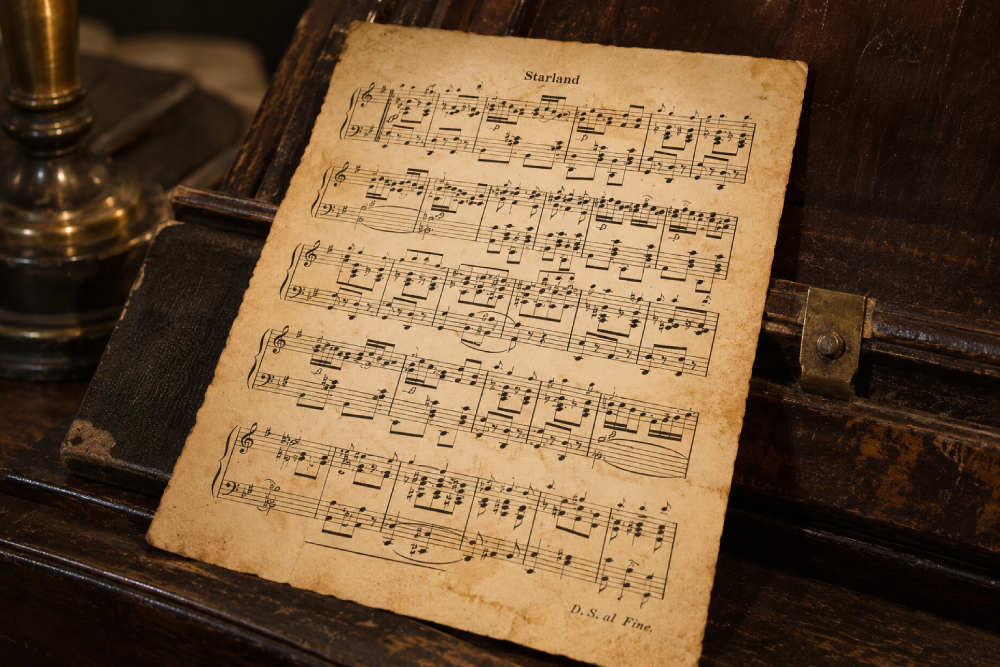
A surviving page of sheet music associated with Wallace Hartley was recovered with his body after the sinking. Documented by the Titanic Museum as the final page of the musical work Starland, the sheet displays visible water damage on its reverse. It provides a tangible connection to Hartley’s work as a musician aboard the ship, where live music formed part of everyday life. Although the exact final piece played by the band remains disputed, the surviving page helps preserve the story of the musicians who served aboard the Titanic.
Sign up for our newsletter
9. John Jacob Astor IV’s gold pocket watch
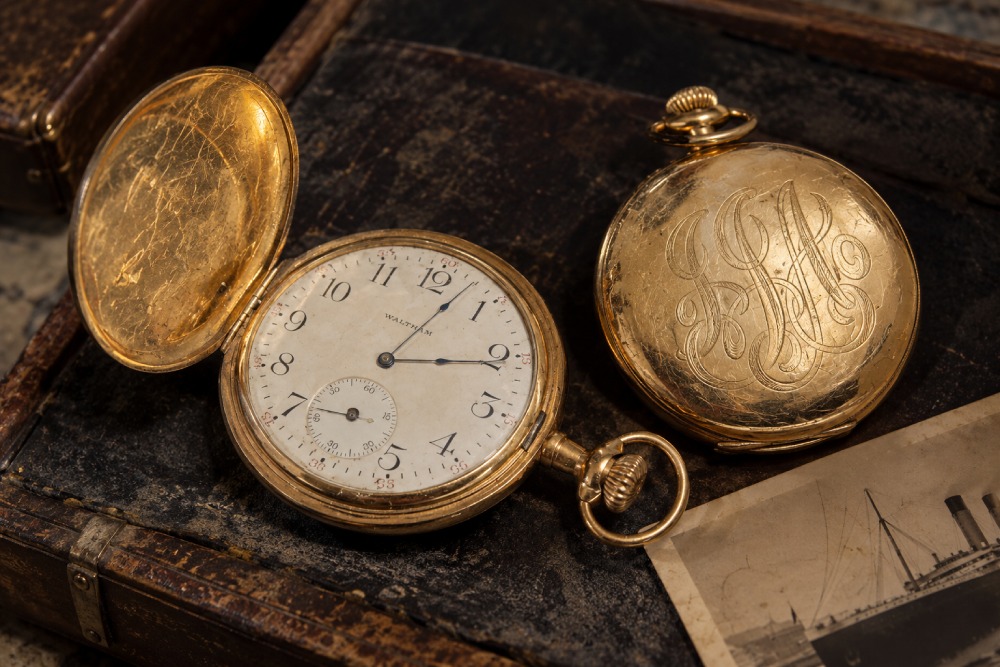
John Jacob Astor IV, one of the wealthiest passengers aboard the Titanic, died in the sinking while his pregnant wife, Madeleine, survived. Recovery crews documented valuable personal effects associated with him, including a gold watch, diamond jewelry, and currency. A 14-karat gold Waltham pocket watch engraved with his initials, JJA, has a documented family history connecting it to the timepiece recovered with his body. Later passed down through the family of William Dobbyn, an associate of the Astors, the watch illustrates how wealth could not protect its owner from the disaster.
10. A first-class porcelain cup made by Spode
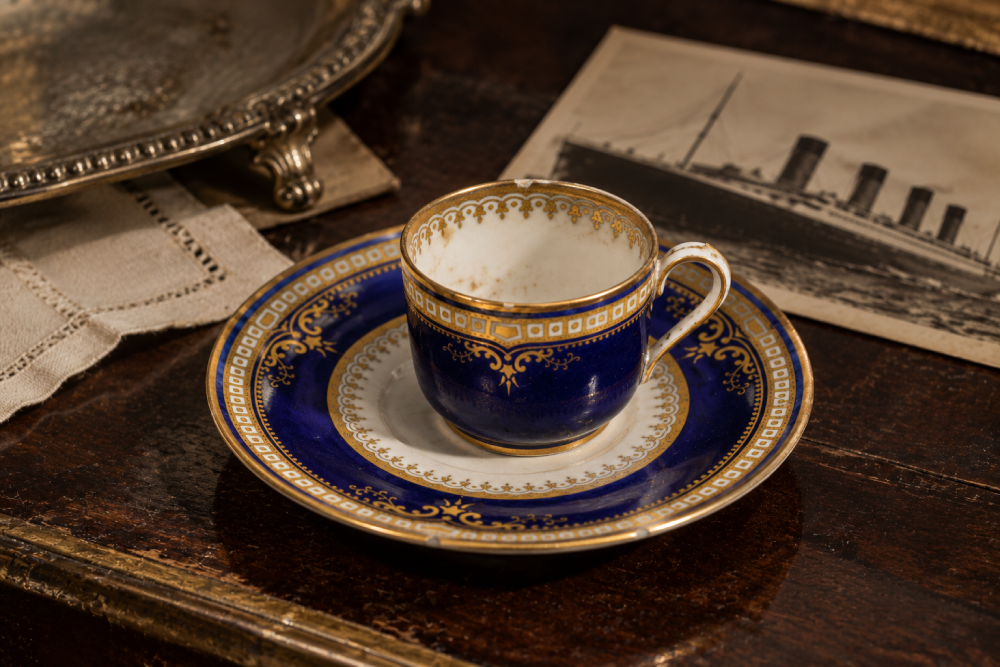
A porcelain cup recovered from the Titanic in 1987 offers a glimpse into the luxury enjoyed by some of its passengers. Made by the English pottery company Spode, it features white porcelain decorated with cobalt blue and gold, a design sometimes associated with the exclusive Millionaire’s Service. RMS Titanic Inc. notes that the precise dining area where this pattern was used remains uncertain, although it may have served the captain’s guests or other distinguished passengers. The cup demonstrates how even everyday dining items reflected the ship’s emphasis on first-class luxury.
11. A second-class dinner plate
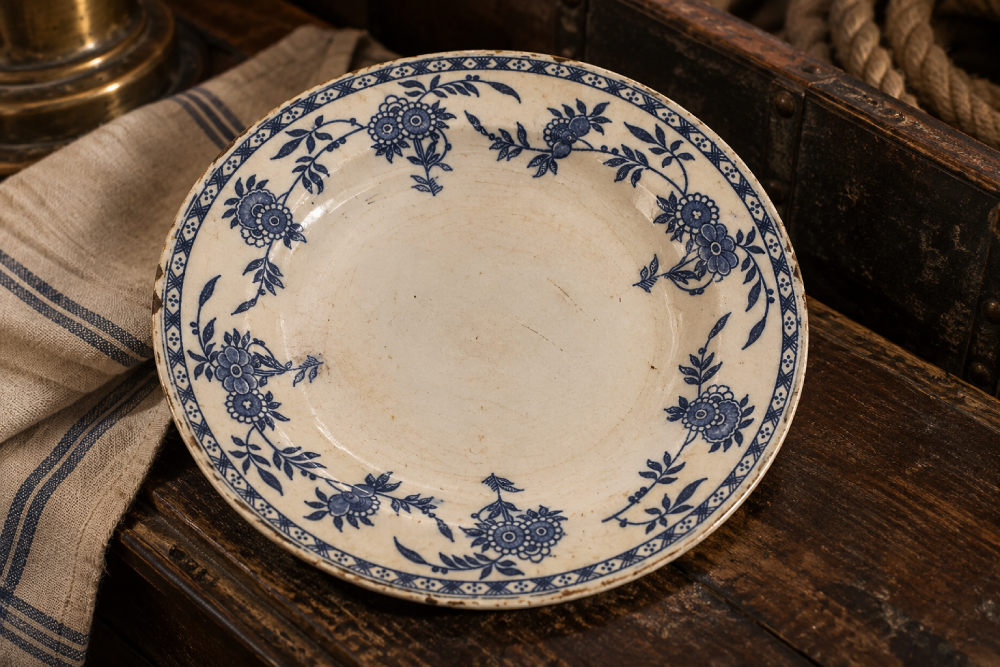
A second-class dinner plate recovered in 1994 reveals a different side of dining aboard the Titanic. Made from white earthenware, the plate features blue floral decoration inspired by Delft pottery and bears the White Star Line insignia. Its design was attractive and practical, but less elaborate than the gilded porcelain used in the most exclusive dining areas. The plate illustrates how passenger class shaped everyday experiences, even though second-class travelers still enjoyed a considerable level of comfort.
12. A simple third-class saucer
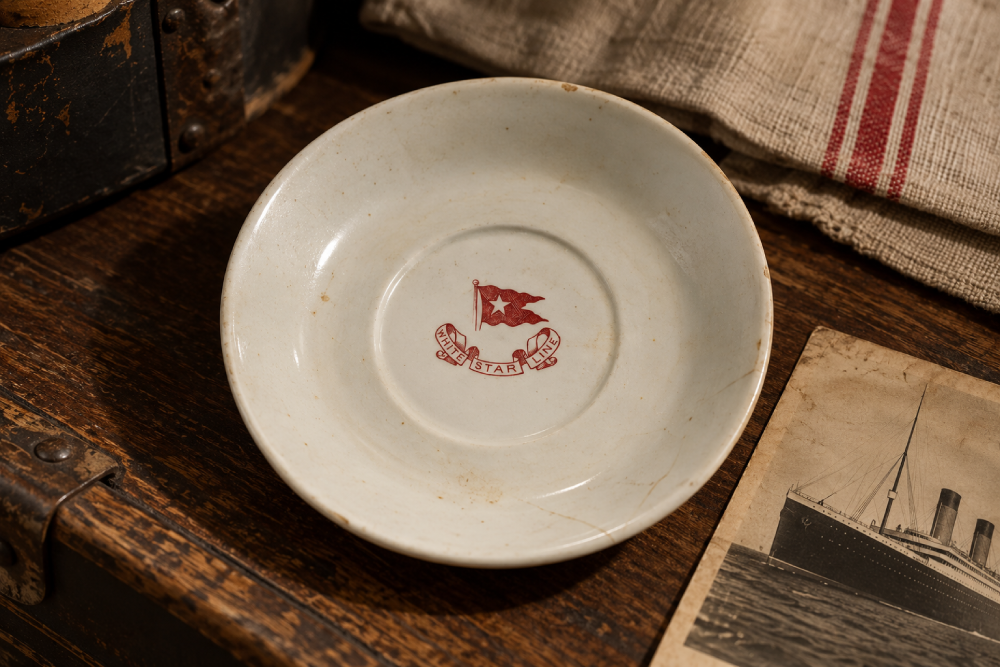
Recovered in 1998, a third-class saucer is a simple but revealing reminder of everyday life aboard the Titanic. Made from white earthenware, it bears the red White Star Line emblem and lacks the elaborate decoration found on first-class tableware. Its practical design reflects the dining service used by many third-class passengers traveling to North America in search of work, family reunification, or a fresh start. Although its original owner remains unknown, the saucer preserves a small piece of the daily routines that continued aboard the ship until its final voyage.
Explore more interesting historical facts:
The objects recovered from the Titanic reveal far more than the ship’s luxury or the scale of its destruction. A handbag preserves the hopes of a mother traveling to reunite with her daughter, a citizenship declaration records an immigrant’s ambitions, and a violin recalls the musicians who played during the unfolding disaster. From valuable jewelry to simple dining utensils, these artifacts bring individual lives into focus and remind us that every passenger had a story beyond the voyage. If you want to explore more historical content and moments that shaped everyday life, be sure to check out these 20 Bizarre Facts About Musicians or these Bermuda Triangle Myths: 17 Stories Bigger Than the Facts. You can also take a look at these 18 Strange Last Meal Requests From Notorious Criminals.