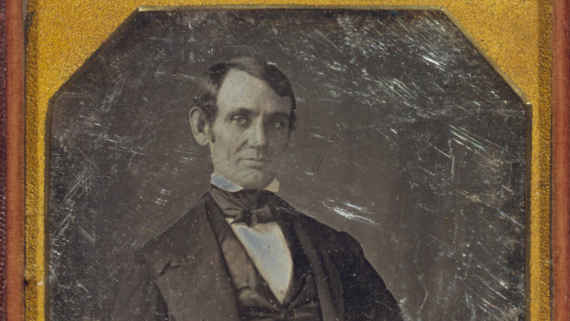
America looked very different when photography first appeared in the 1830s. Cameras were bulky, exposures took minutes, and getting a decent picture required a fair amount of experimentation. Still, photographers quickly started documenting streets, buildings, public figures, and ordinary people. Some of their earliest surviving pictures are surprisingly clear, while others are little more than faint outlines of a world that disappeared long ago.
1. Joseph Saxton’s Philadelphia Photograph (1839)
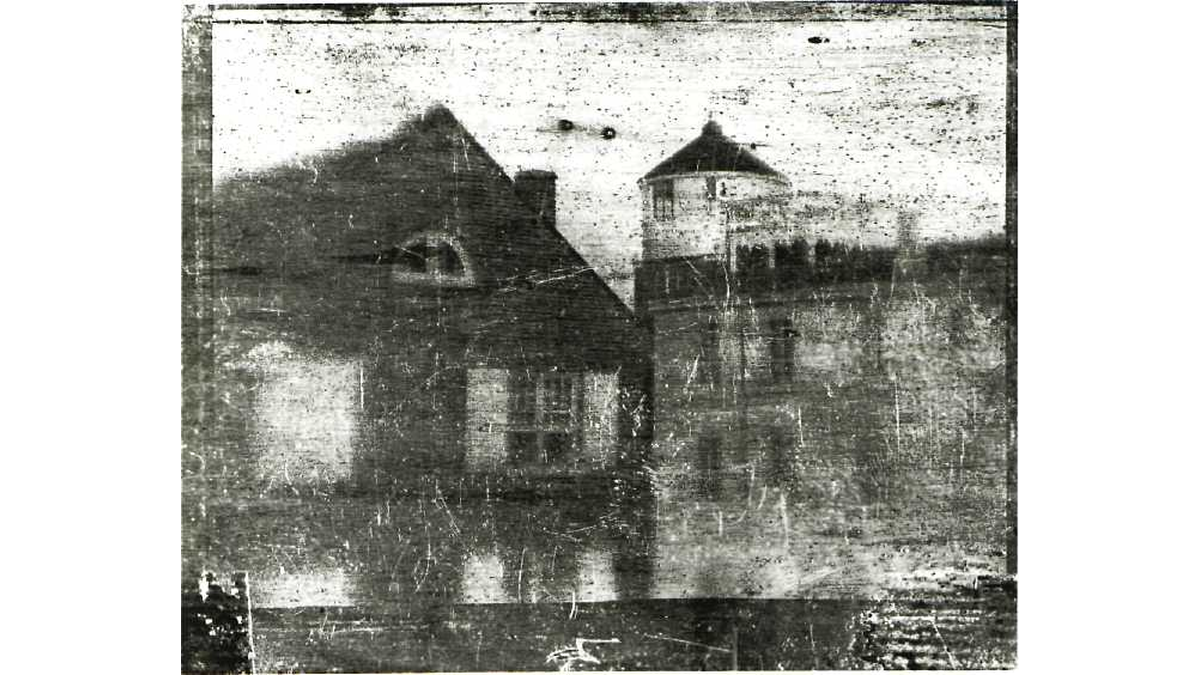
It’s not much to look at, at least at first. A few blurry buildings, some architectural details, and hardly anything that resembles a modern photograph. But Joseph Saxton’s 1839 image of Philadelphia’s Central High School is among the oldest surviving photographs taken in America. Saxton made it from a window of the nearby U.S. Mint using equipment he’d put together himself. He wasn’t a photographer by trade. He was an inventor who had become interested in the daguerreotype process almost as soon as news of it reached the United States.
2. Robert Cornelius Takes a Self-Portrait (1839)
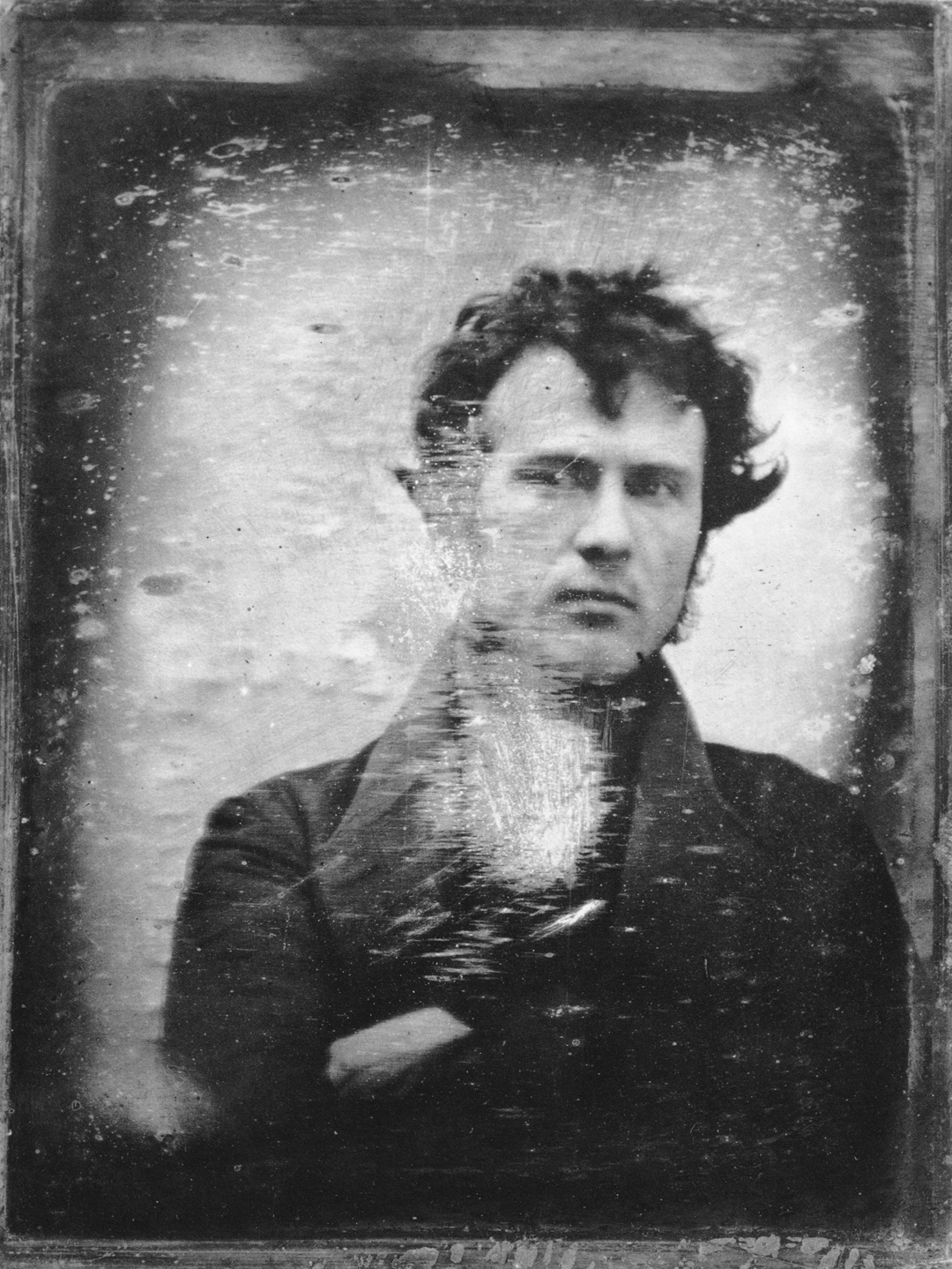
Robert Cornelius doesn’t look particularly interested in posing. His hair is messy, his collar is open, and his expression is unusually relaxed for such an early portrait. He took the picture behind his family’s Philadelphia lamp-making business in October or November 1839, using a homemade camera fitted with a lens from an opera glass. The exposure required him to hold still for several minutes. It’s generally considered the earliest surviving photographic self-portrait made in America.
3. Dorothy Catherine Draper Poses for the Camera (1839–1840)
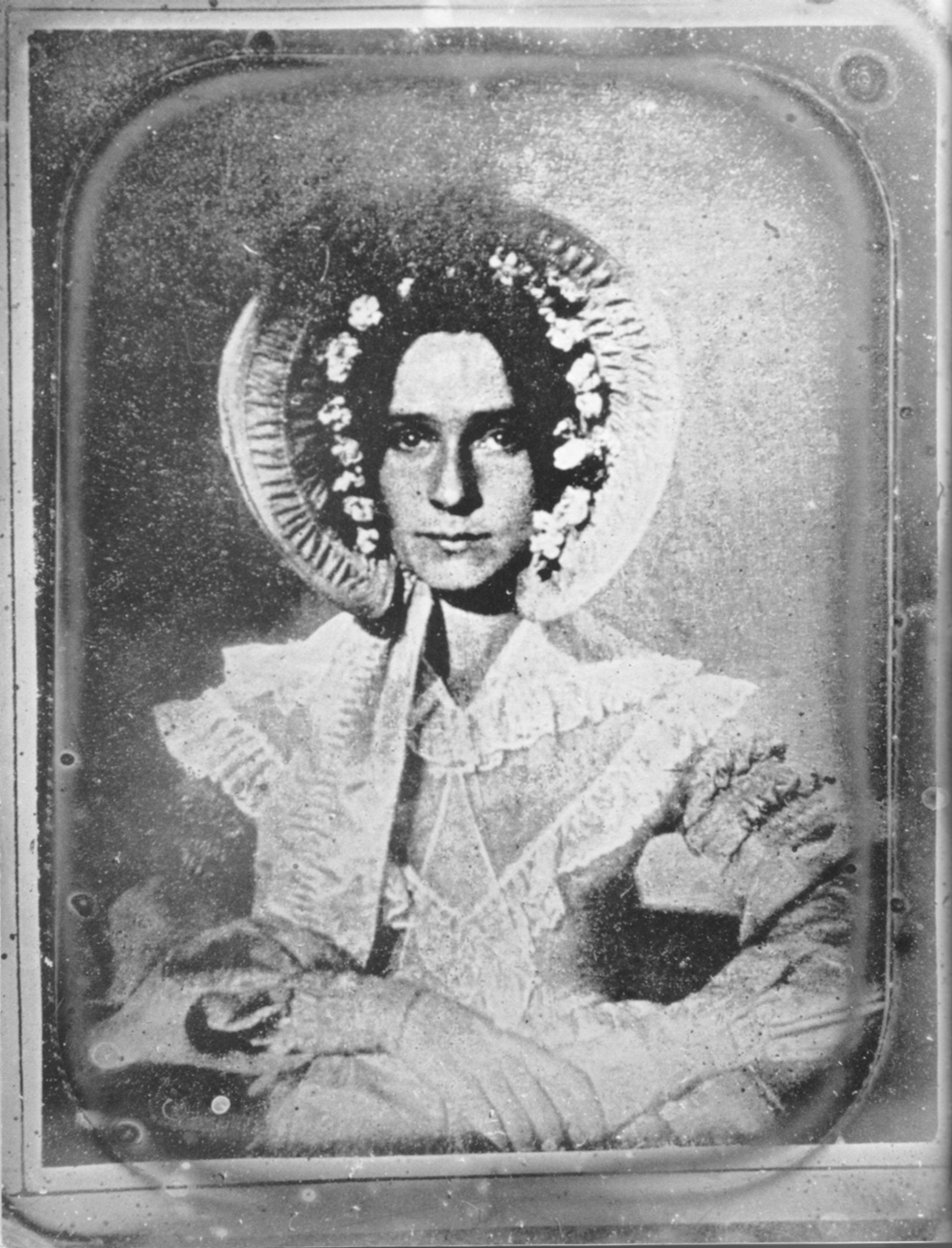
Dorothy Catherine Draper was photographed by her brother, John William Draper, at New York University around 1839 or 1840. Getting a recognizable human face onto a daguerreotype plate was still a challenge, and Draper was experimenting with ways to make portraits more practical. His sister became the subject of one of America’s earliest photographic portraits of a woman. The image commonly reproduced today comes from a copy made in 1893, rather than the original plate.
4. Philadelphia’s Merchants’ Exchange (1840)
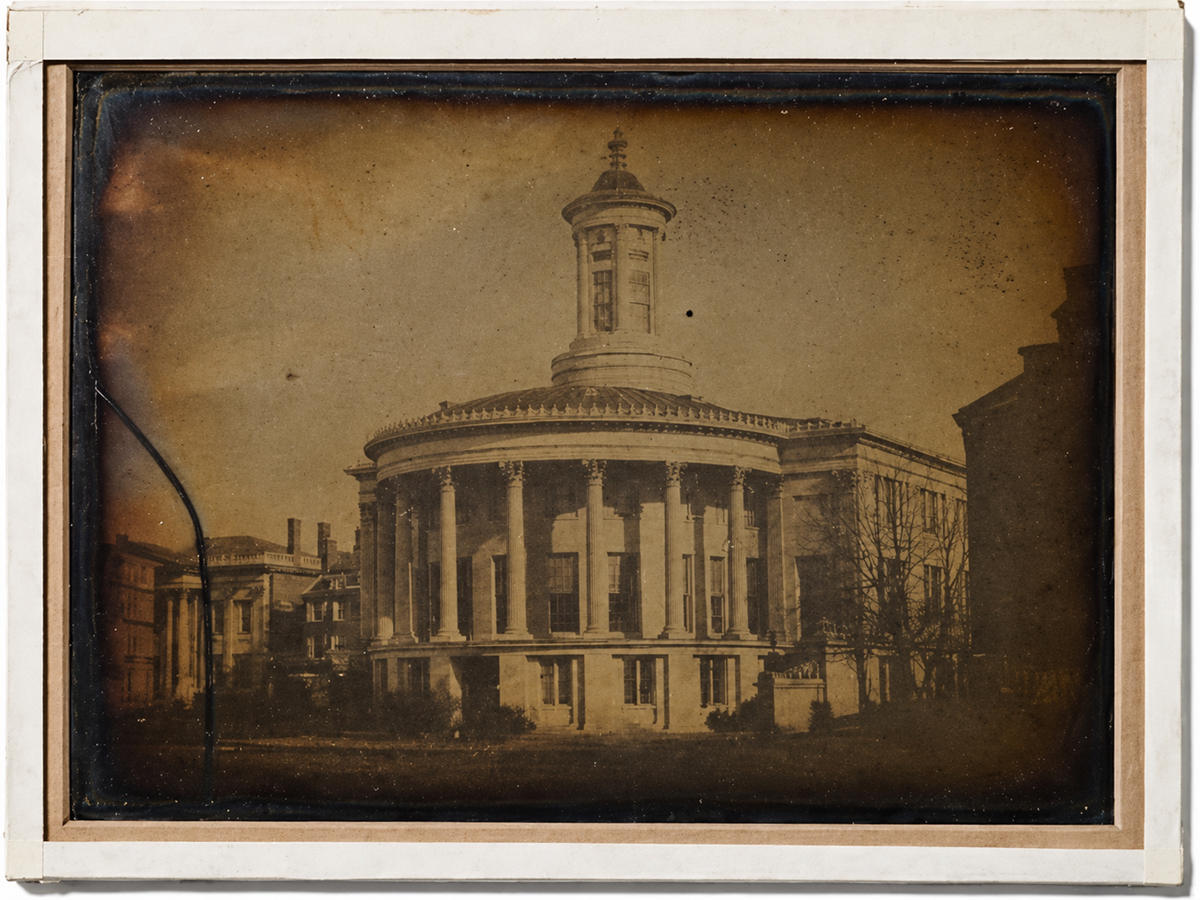
Walter R. Johnson was a chemistry professor, which probably helped when he decided to experiment with a process that depended so heavily on chemicals. On February 4, 1840, he photographed Philadelphia’s Merchants’ Exchange, a grand commercial building with a curved facade and rows of columns. A newspaper reported on the picture the next day. At the time, even successfully recording the exterior of a building was enough to attract attention.
5. Eighth and Market Streets in Philadelphia (1840)
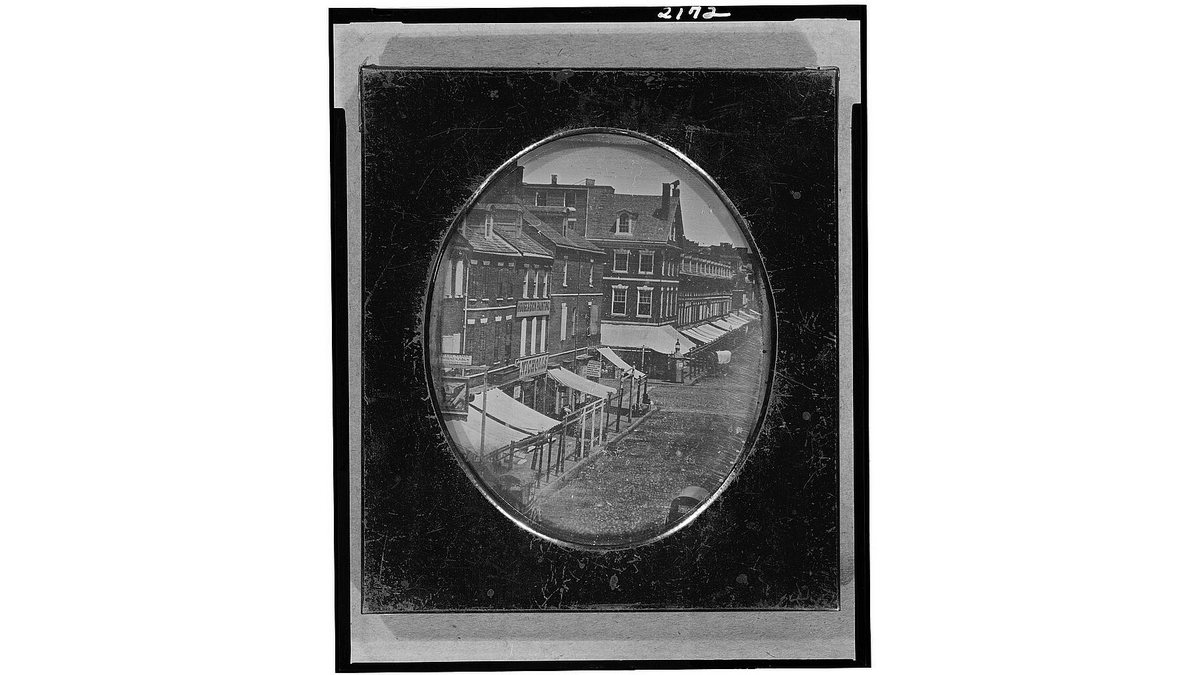
Philadelphia’s busy shopping district looks oddly deserted in this photograph Robert Cornelius took in May 1840. Buildings and storefronts are visible, but the people who normally crowded the intersection are mostly absent. Early cameras needed long exposures, so anyone walking through the scene could disappear from the finished picture. The result looks almost like a city photographed before everyone woke up.
Trending on The Scroller


6. John McAllister Jr.’s Early Studio Portrait (1840)
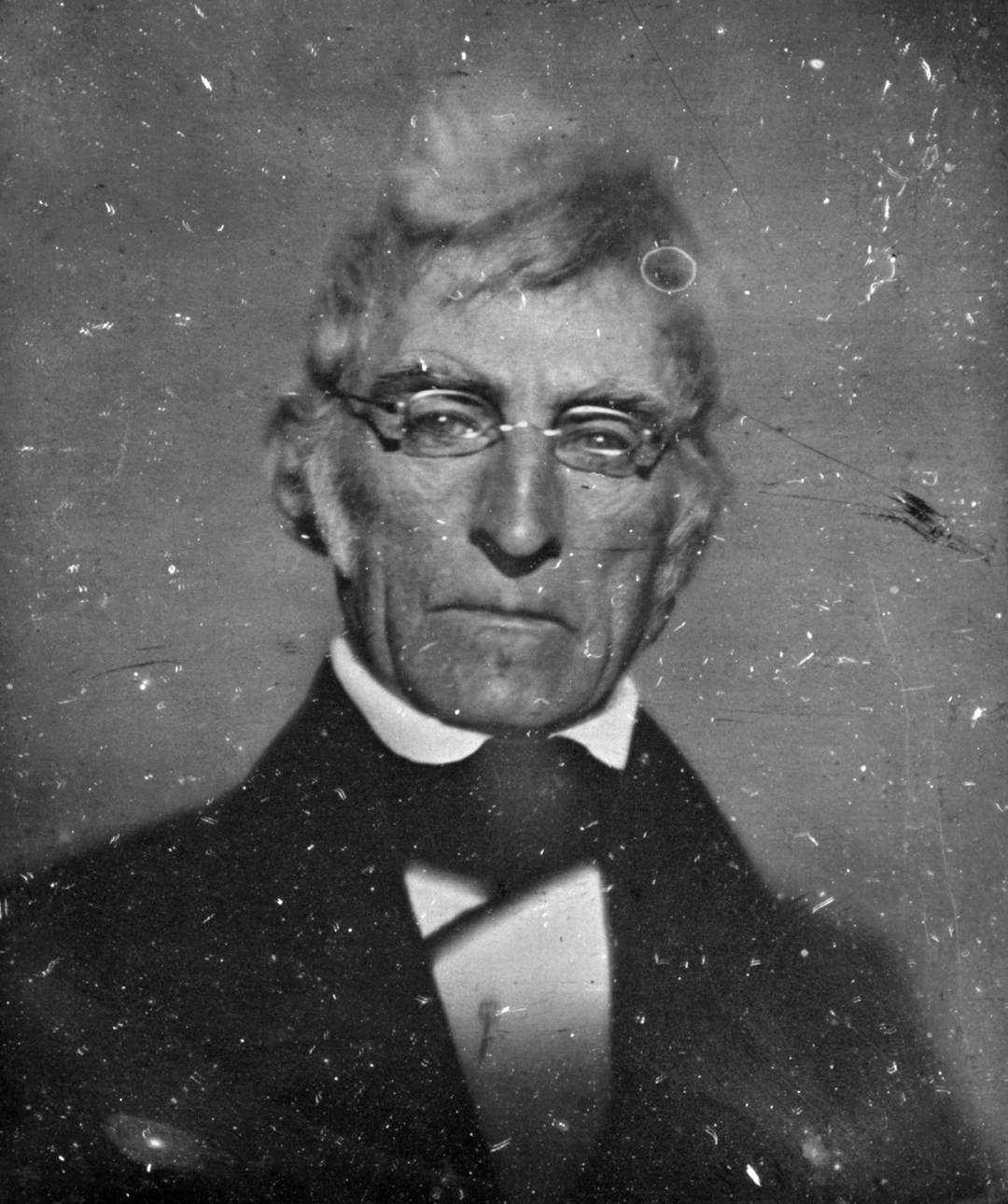
John McAllister Jr. apparently wasn’t planning to have his picture taken when he visited Robert Cornelius on May 6, 1840. He had stopped by the photographer’s Philadelphia studio to arrange a sitting for the following morning. Cornelius offered to do it immediately instead. McAllister agreed, leaving behind one of the earliest documented commercial photographic portraits in the country. The original daguerreotype still survives.
7. Dr. William Robertson Grant’s Portrait (1840)
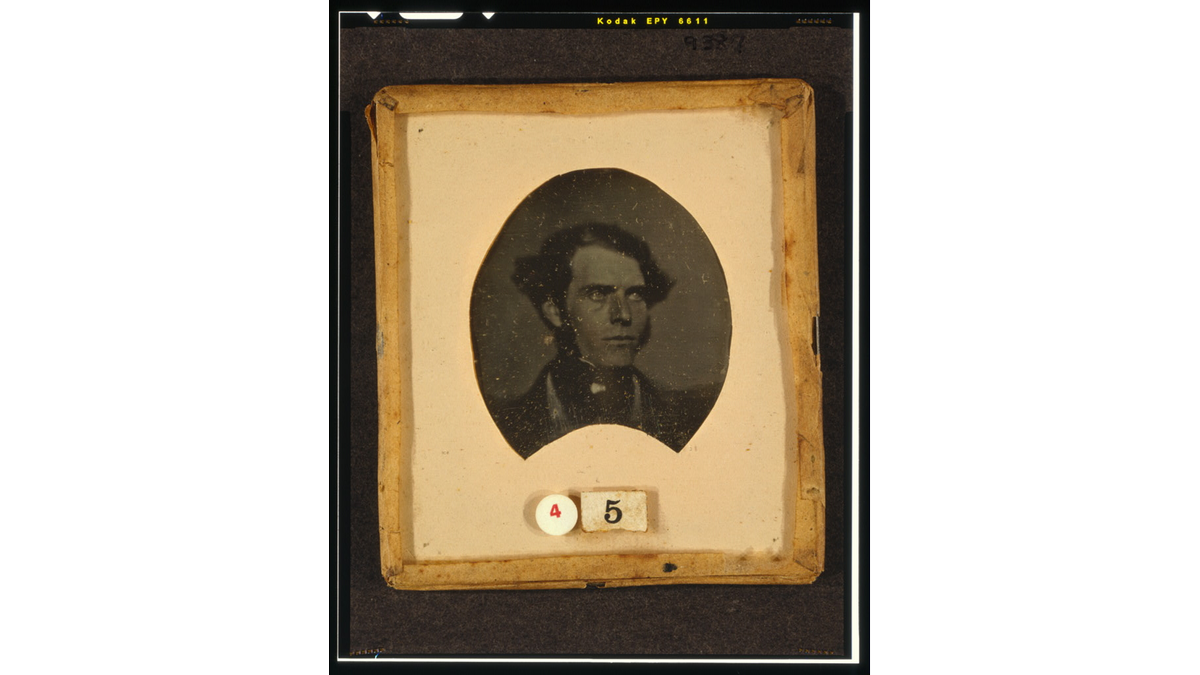
Dr. William Robertson Grant sat for Robert Cornelius in Philadelphia in May 1840. Rather than facing the camera directly, the physician turned to one side, giving the portrait a more formal appearance. It’s a simple composition, but the detail in his face and clothing shows how quickly early photographers were improving their technique. The daguerreotype is now part of the Library of Congress collection.
8. John Quincy Adams Becomes an Early Presidential Subject (1843)
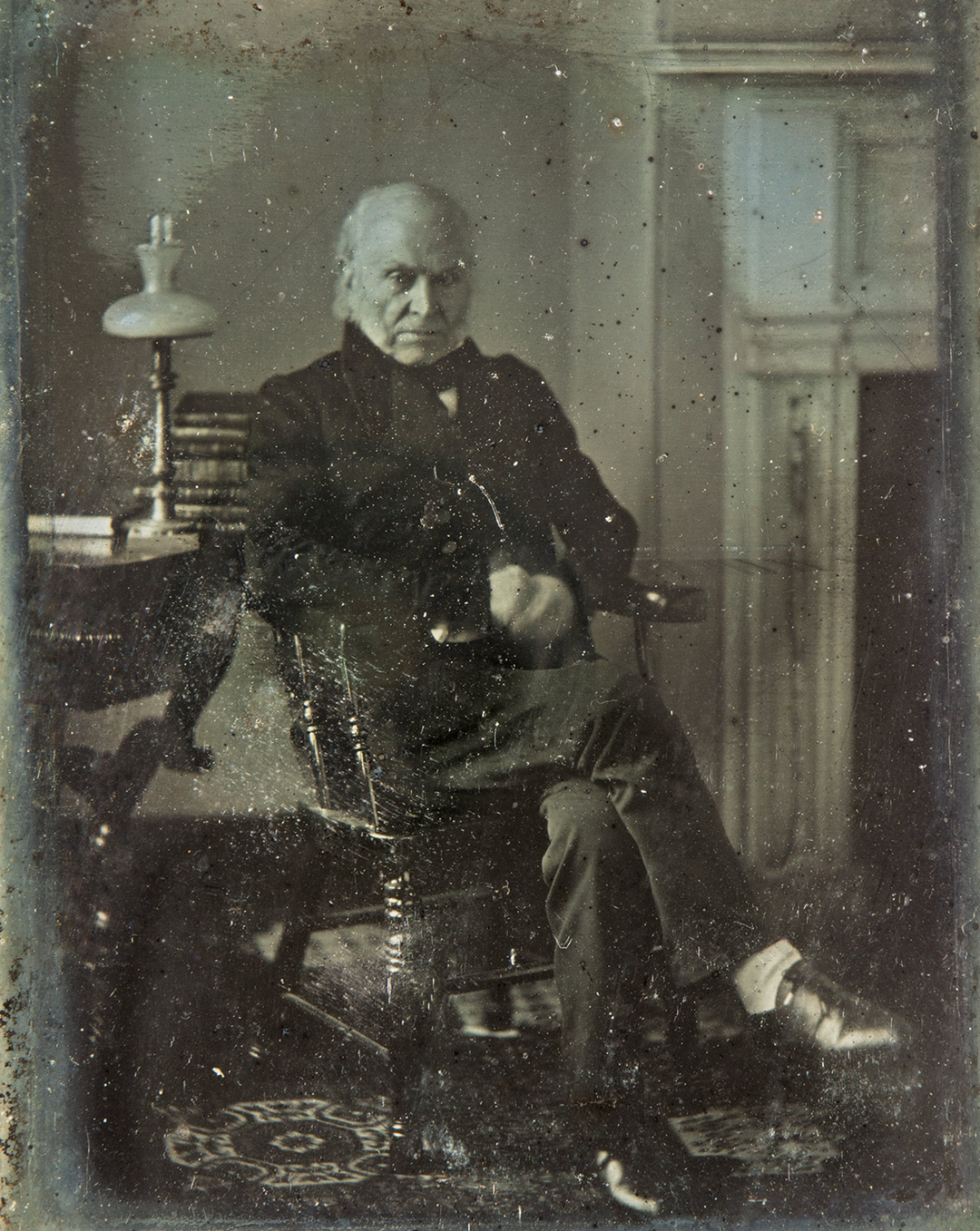
John Quincy Adams was 75 when he visited photographer Philip Haas in Washington on March 16, 1843. He had left the presidency in 1829 but was still working as a congressman, making him one of the few former presidents to return to national elected office. Haas took several daguerreotypes during the sitting. Only one original is known to survive, and it’s considered the earliest surviving photograph of an American president.
Sign up for our newsletter
9. The Philadelphia Riots Are Photographed (1844)
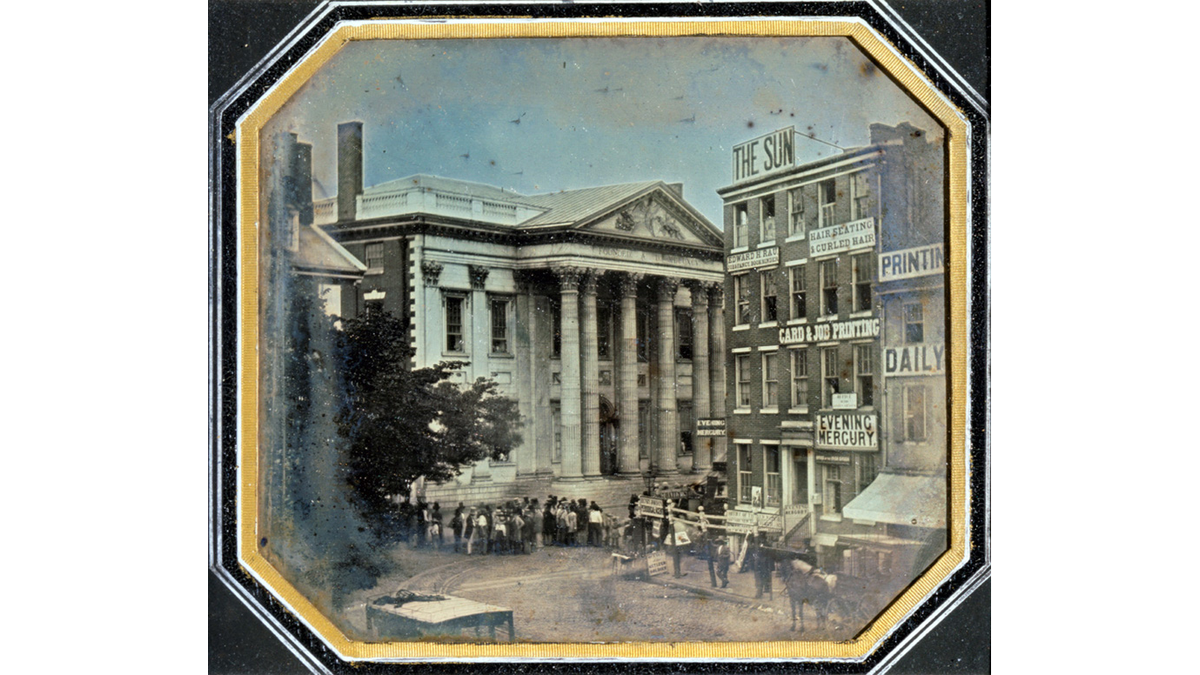
Not every early photograph was a portrait or an architectural experiment. On May 9, 1844, brothers William and Frederick Langenheim photographed militia outside Girard Bank in Philadelphia, during a period of violent anti-Catholic riots. The building had previously housed the First Bank of the United States. There’s no fighting visible in the picture, but the armed presence tells part of the story. It’s one of the earliest surviving American photographs associated with a news event.
10. Niagara Falls Appears in a Photograph (1845)
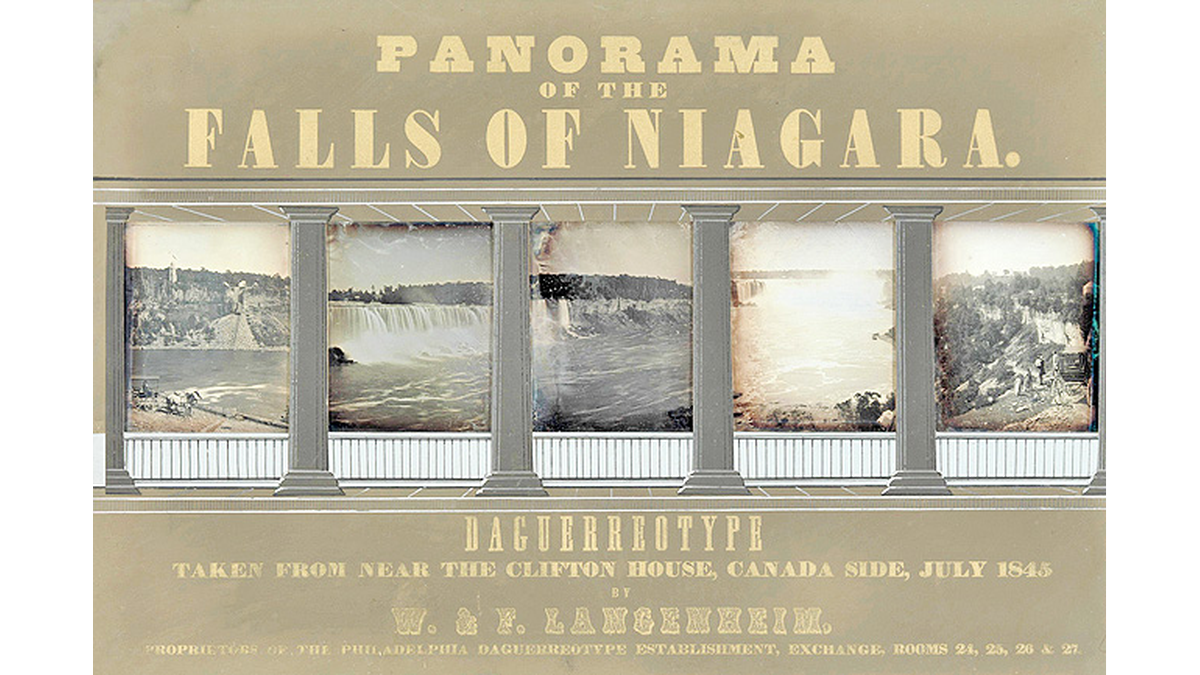
Photographing Niagara Falls with a single small daguerreotype plate wasn’t going to capture much of the scenery. So when the Langenheim brothers visited in July 1845, they made a panorama using five separate plates. The series includes the waterfalls, surrounding landscape, visitors, and carriages. Only eight sets were produced, and copies eventually reached Queen Victoria, President James K. Polk, and Louis Daguerre, the French inventor whose name was attached to the photographic process.
11. The White House in Winter (1846)
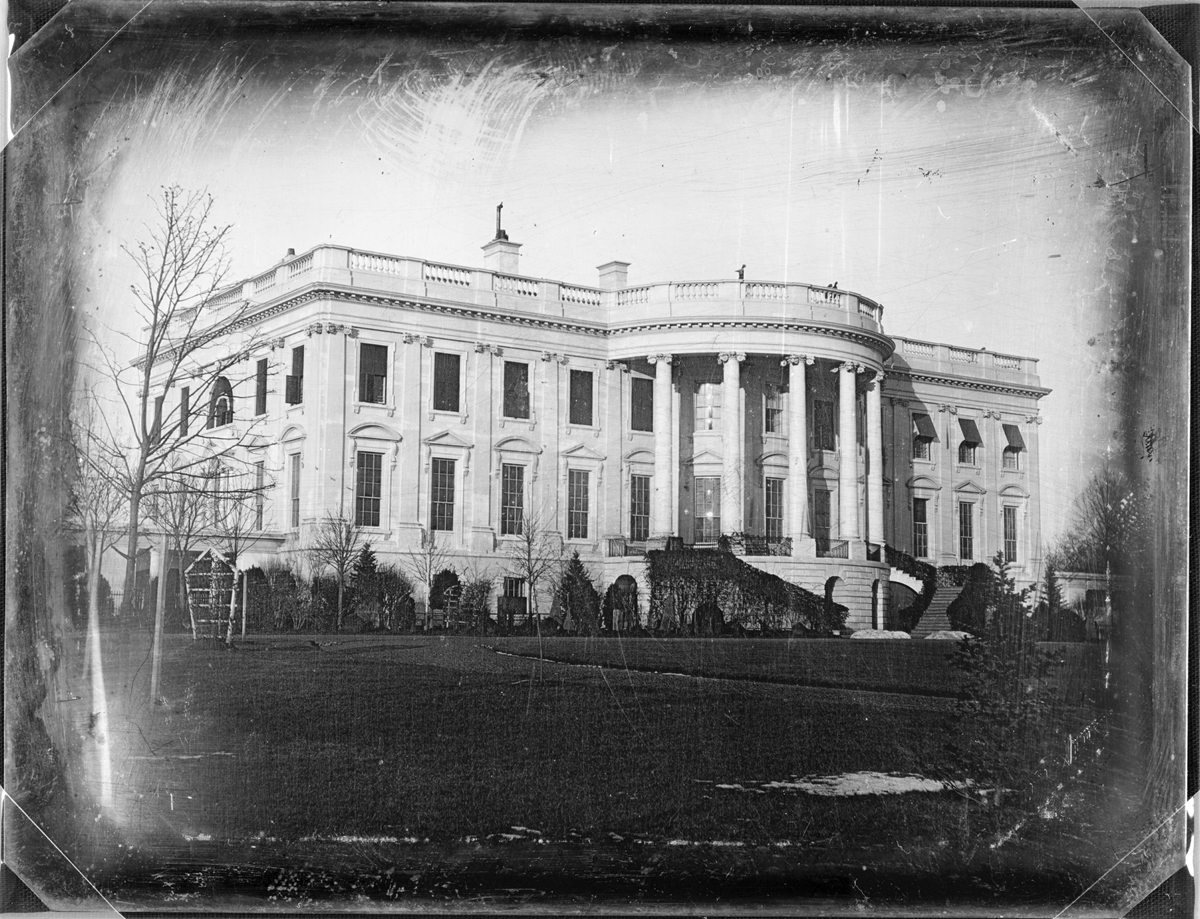
The White House looks rather plain in John Plumbe Jr.’s photograph from around the winter of 1846. There’s snow on the ground, the landscaping is sparse, and the building sits in surroundings that look considerably less polished than today’s presidential grounds. James K. Polk was living there at the time. The image is generally regarded as the earliest surviving photograph of the White House.
12. The U.S. Capitol Before Its Famous Dome (1846)
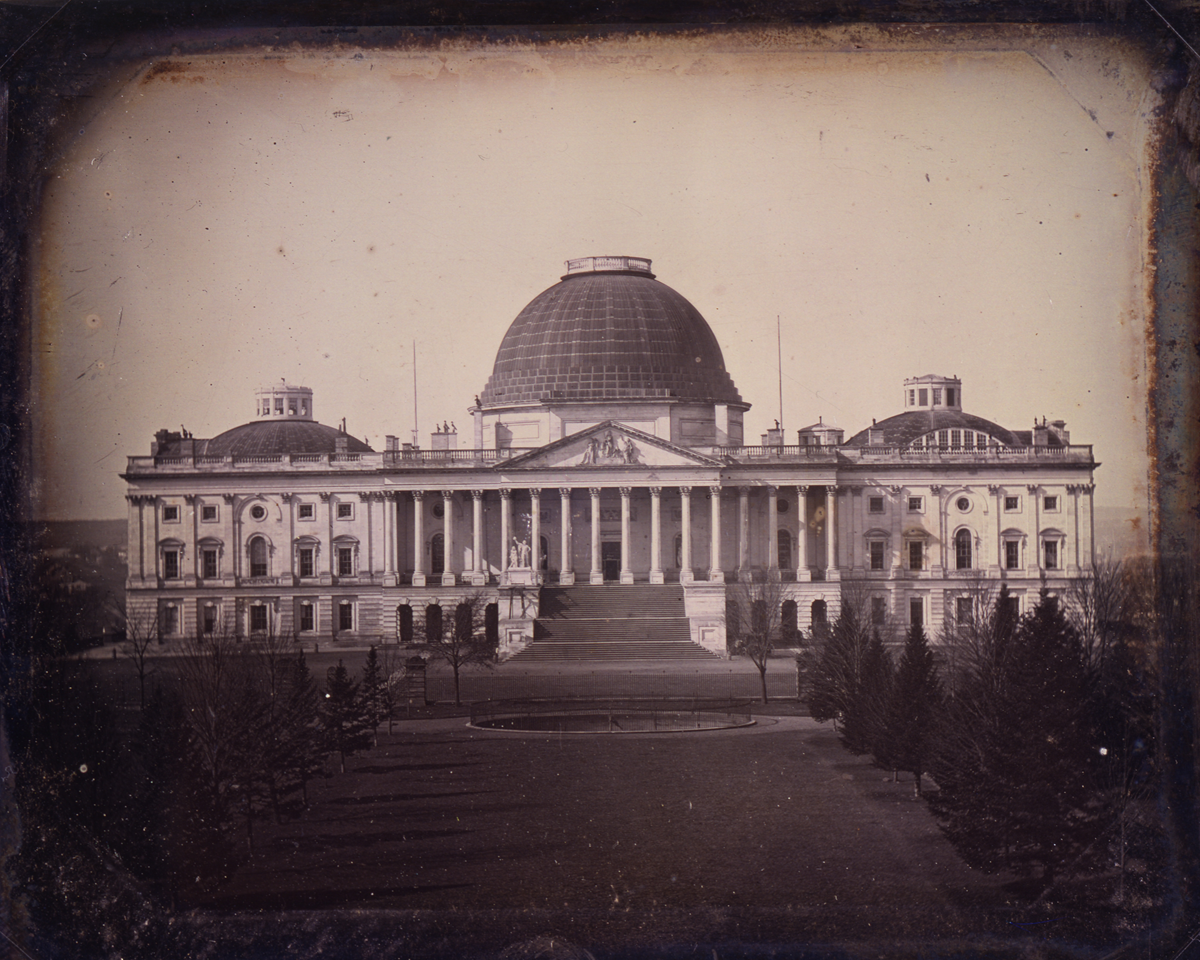
Something looks off about the Capitol in this 1846 photograph, and it’s the roof. The enormous cast-iron dome seen today didn’t exist yet. Instead, the building had a much smaller wooden dome covered in copper. John Plumbe Jr. photographed it from the east, preserving a view of Washington that’s difficult to imagine now. Construction of the replacement dome began in the 1850s, and it wasn’t completed until 1866.
13. Washington’s Old Patent Office (1846)
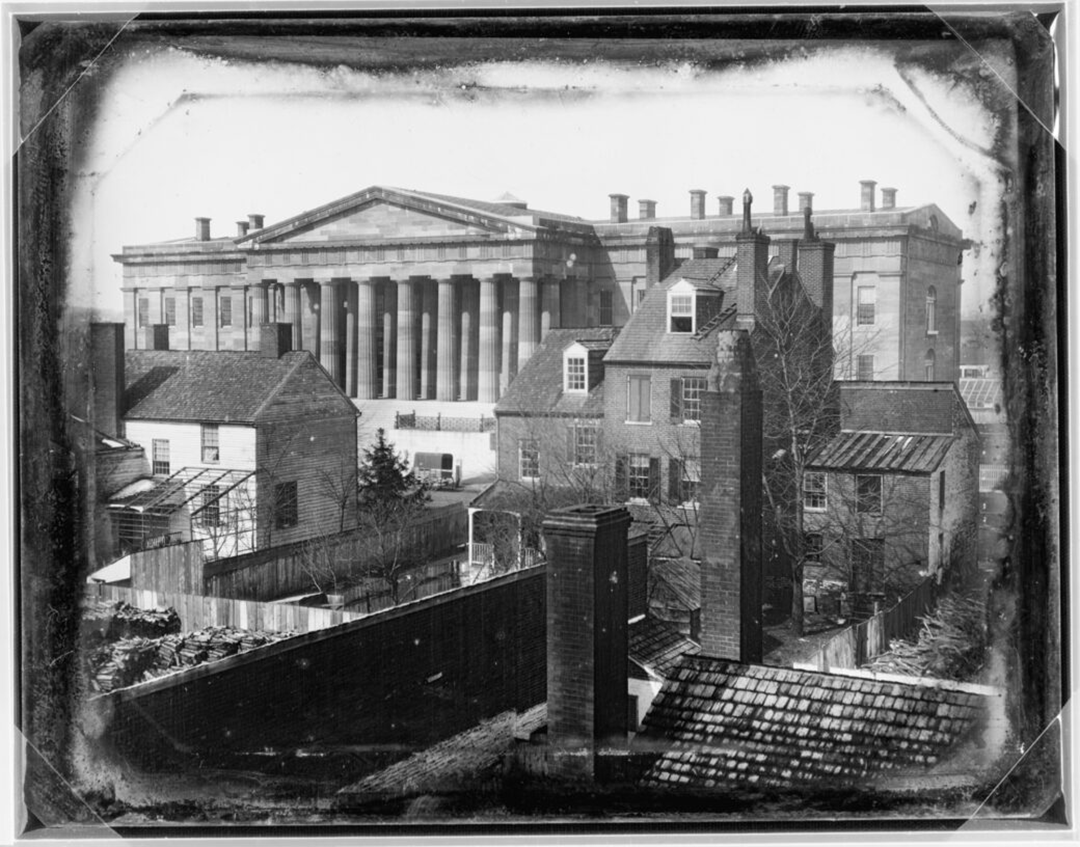
The Patent Office was one of Washington’s more imposing public buildings when John Plumbe Jr. photographed it around 1846. Its Greek Revival design, with tall columns and a broad facade, made it a natural subject for an early architectural photograph. The building housed the government office responsible for patents, along with exhibits of inventions and other collections. It eventually became home to major Smithsonian museums, including the National Portrait Gallery.
14. Abraham Lincoln Before the Presidency (1846–1847)
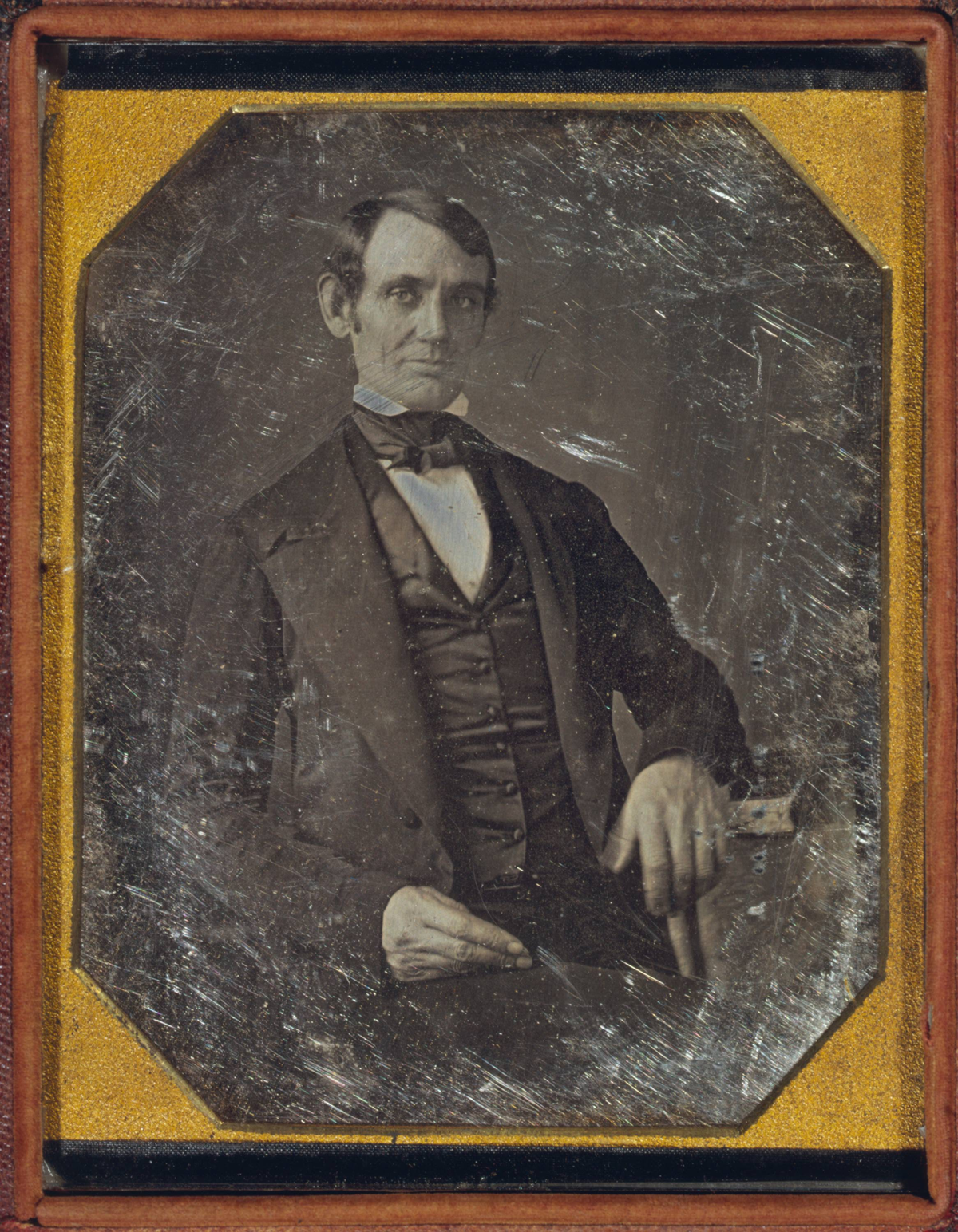
This isn’t the Abraham Lincoln most people recognize from schoolbooks. He’s younger, clean-shaven, and dressed like a fairly ordinary 19th-century professional. The daguerreotype was taken in Springfield, Illinois, around 1846 or 1847, and is generally attributed to Nicholas H. Shepherd. Lincoln had recently won election to the U.S. House of Representatives. He wouldn’t become president until 1861, and his familiar beard was still years away.
15. American Soldiers in Saltillo, Mexico (1847)
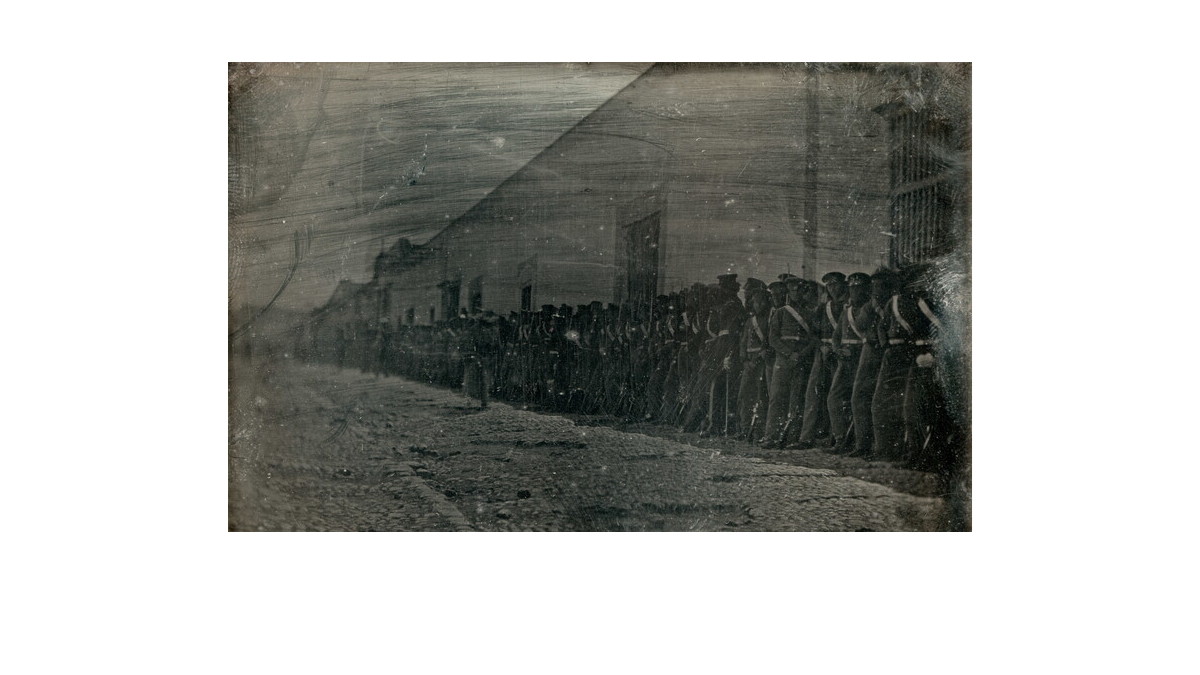
A group of American volunteer soldiers stands on a street in Saltillo, Mexico, during the Mexican-American War. The 1847 image is part of a series of daguerreotypes made by an unidentified photographer who documented military life during the conflict. There are no explosions or dramatic battlefield scenes. Just soldiers, buildings, and a moment of relative quiet in a city under occupation. For Americans accustomed to learning about wars through newspaper illustrations, photographs like these offered something quite different.
In the mood for more?
Check out 20 Photos That Open a Window Into Life in the 1840s, or take a look at 16 Vintage Photos That Show American Farming Before Industrialization. If you want to see more rare images from the past, you can check out 15 Moments From U.S. History That Can Feel Like Scenes From a Movie.