Starting a business today often feels like an impossible feat without millions in venture capital, but some of the world’s most recognizable companies prove that a great idea and a tiny budget can go a long way. Many of these corporate giants didn’t start in sleek glass towers; instead, they were born in cramped garages, dorm rooms, or even out of the trunk of a car. These humble beginnings serve as a powerful reminder that “The American Dream” isn’t just a slogan; it’s a reality built on less than $1,000 and a staggering amount of grit.
What’s truly fascinating is how these companies managed to disrupt massive industries with almost no financial safety net. From tech titans that revolutionized how we communicate to food chains that started with a single sandwich shop, their stories highlight a time when resourcefulness was the ultimate currency. Exploring their early days reveals a cinematic journey of risk-taking where the initial investment was small, but the vision was large enough to change the world forever.
1. Amazon – $0 Out of pocket for tech
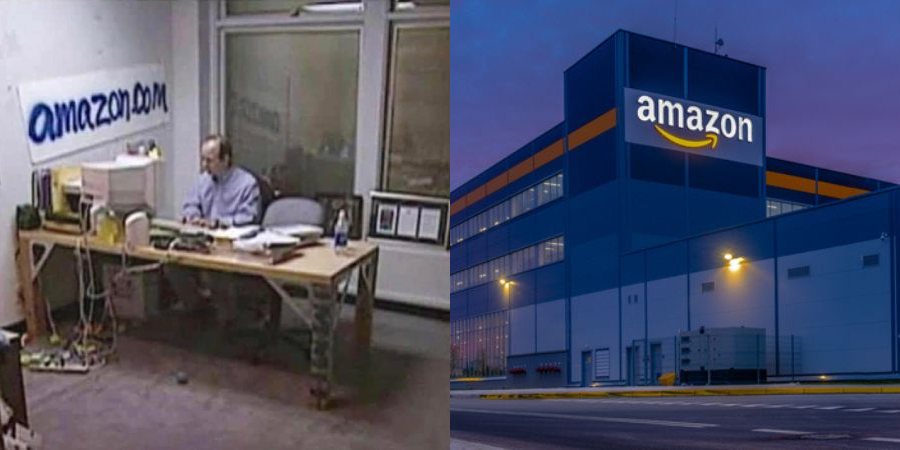
Jeff Bezos started Amazon in 1994 as an online bookstore operating out of his garage in Bellevue, Washington. While he eventually received a significant investment from his parents, the very first iterations and the “office” setup cost almost nothing beyond basic hardware. Bezos famously used old doors as desks to save money, a tradition of frugality that the company still references today. It is mind-blowing to think that the world’s largest retailer began with a bell that rang in the office every time someone made a purchase.
2. Hewlett-Packard – $538
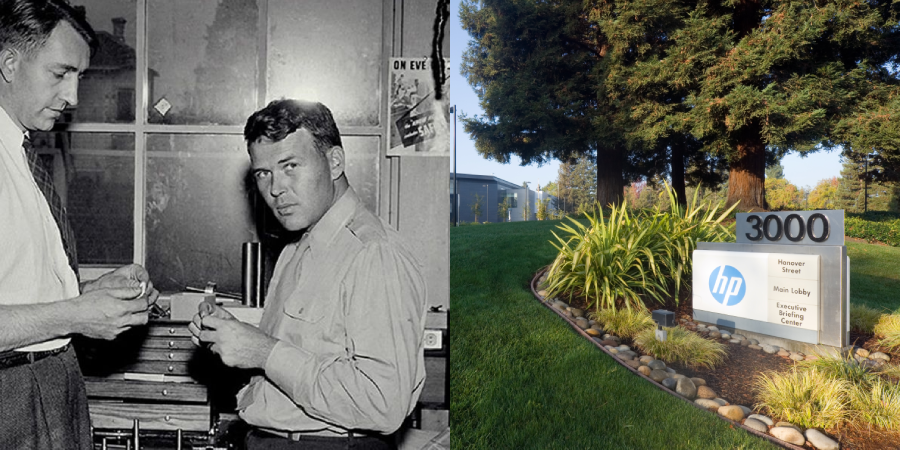
Commonly known as the “Birthplace of Silicon Valley,” HP started in a tiny garage in Palo Alto with just over five hundred dollars. Bill Hewlett and Dave Packard decided on their company name with a simple coin toss to see whose name would come first. Their first successful product was an audio oscillator used by engineers to test sound equipment. One of their very first big clients was Walt Disney, who bought eight of them to help develop the surround sound system for the movie Fantasia.
3. Dell – $1,000
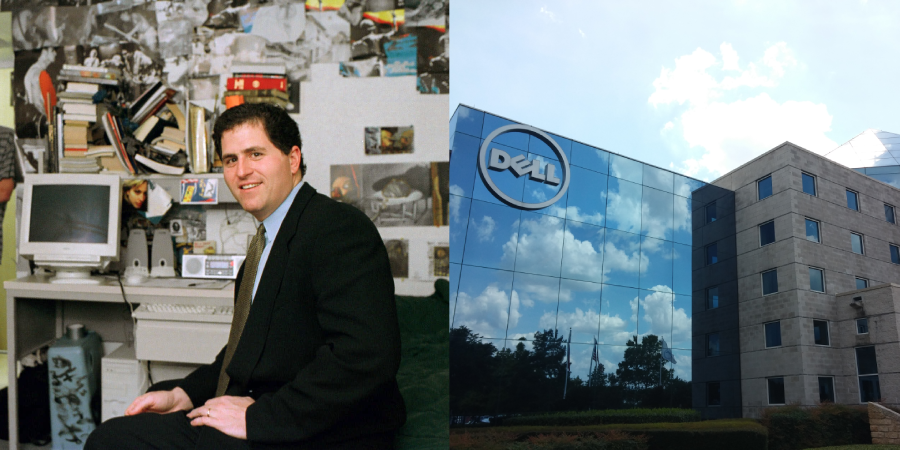
Michael Dell was just a 19-year-old freshman at the University of Texas when he started “PC’s Limited” in his dorm room. With exactly $1,000 in startup capital, he began building and selling IBM-compatible computers directly to customers. By cutting out the middleman, he could offer lower prices and custom configurations, a strategy that revolutionized the industry. He eventually dropped out of college to run the business full-time after it made $6 million in its first year alone.
4. Harley-Davidson – Minimal personal savings
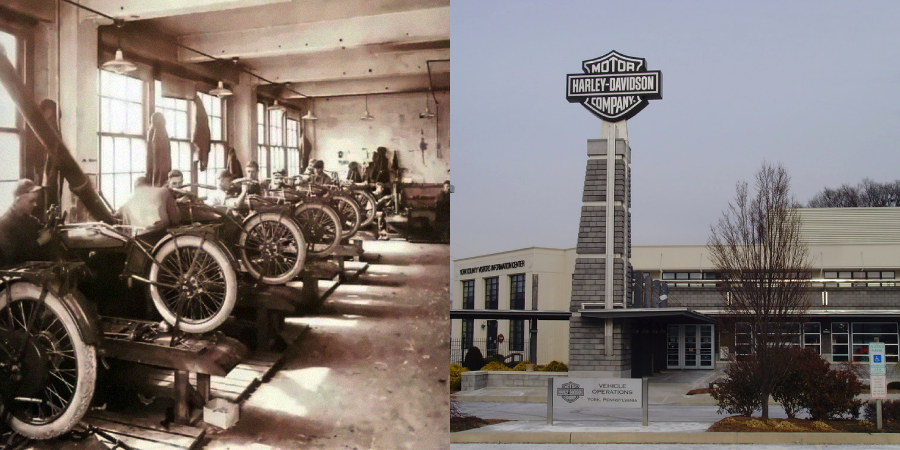
In 1903, William Harley and Arthur Davidson built their first “motor-bicycle” in a small wooden shed that measured only 10 by 15 feet. They didn’t have a massive factory or a team of engineers; they just had a passion for mechanics and a few hand tools. The duo even painted “Harley-Davidson Motor Company” on the door of the shed to make it official. That original shed was later accidentally destroyed by a cleaning crew in the 1970s, but its legacy as the birthplace of an American icon remains.
5. Nike – $1,000
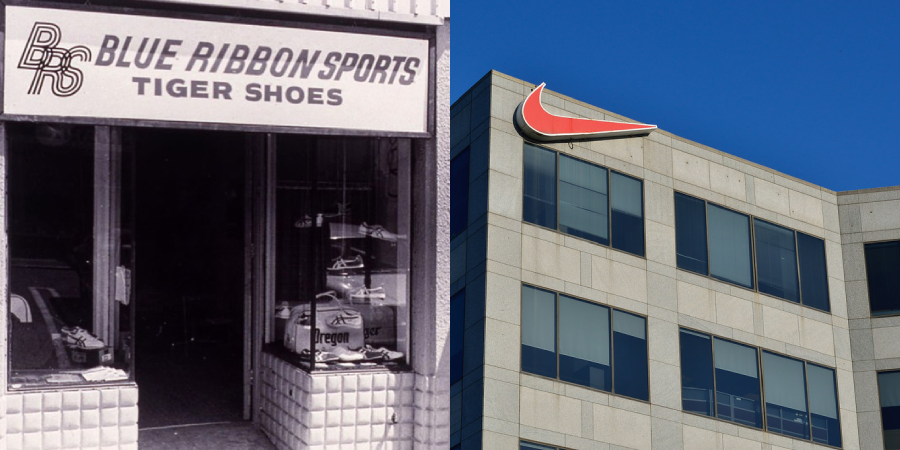
Nike wasn’t always the global powerhouse it is today; it began as “Blue Ribbon Sports” with a $1,000 investment split between Phil Knight and Bill Bowerman. Knight started by selling Japanese running shoes out of the trunk of his green Plymouth Valiant at track meets. The iconic “Swoosh” logo was actually designed by a student for only $35 because the founders were still tight on cash. Legend has it that the first “Waffle” sole was created by pouring urethane into a literal kitchen waffle iron.
Trending on The Scroller

6. Subway – $1,000
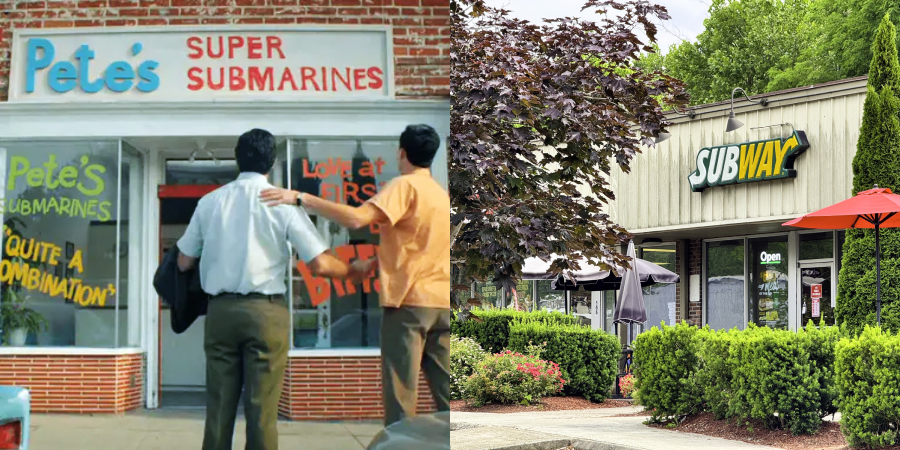
In 1965, 17-year-old Fred DeLuca was looking for a way to pay for medical school when a family friend, Peter Buck, lent him $1,000 to open a sandwich shop. Originally called “Pete’s Super Submarines,” the first location in Connecticut struggled so much that they barely made a profit on the first day. However, they persevered and eventually rebranded to the shorter, catchier name we know today. Now, Subway has more physical locations worldwide than even McDonald’s.
7. Mattel – $0
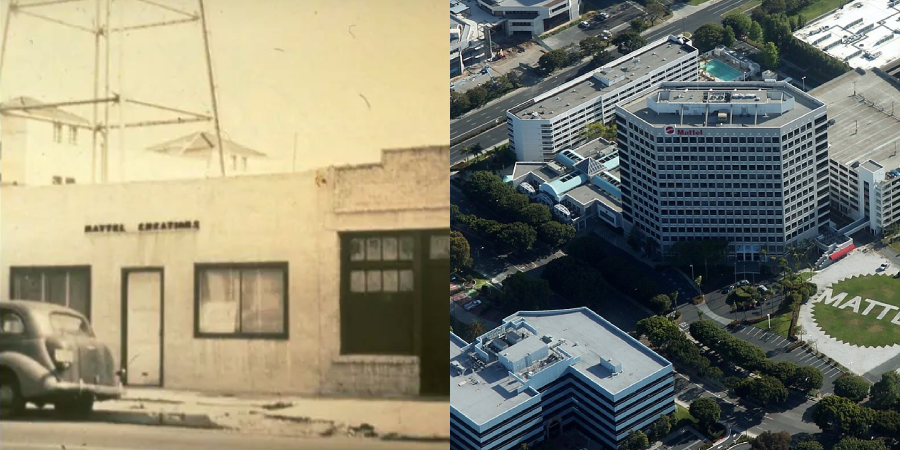
The toy giant started in a garage where founders Harold “Matt” Matson and Elliot Handler made picture frames. To avoid wasting wood scraps from the frames, they began making dollhouse furniture on the side. They soon realized the toy business was much more profitable than the framing business and pivoted entirely. Interestingly, the name Mattel is a “mush-up” of the founders’ names, Matt and Elliot.
8. Disney – $40
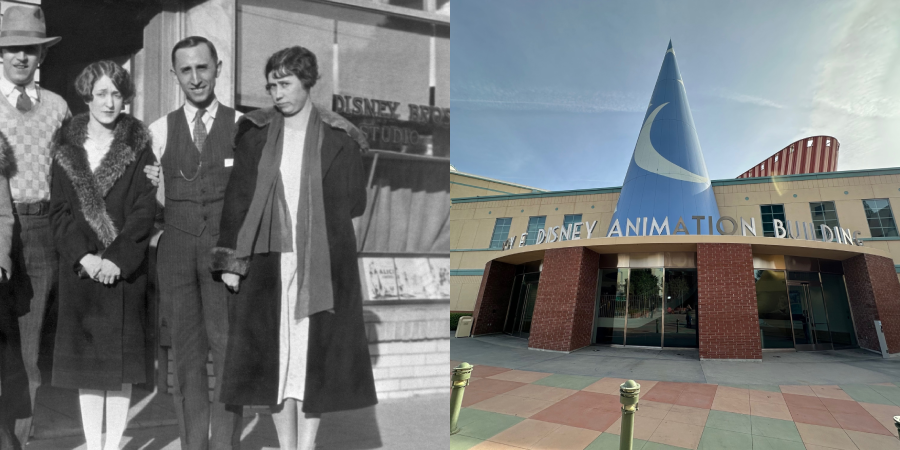
Walt Disney’s first animation studio, Laugh-O-Gram Studio, was started with a very small amount of borrowed equipment and a tiny office in Kansas City. When that venture failed, he moved to Hollywood with just $40 in his pocket and a half-finished film in his suitcase. He and his brother Roy started the Disney Brothers Cartoon Studio in their uncle’s garage using homemade equipment. It’s incredible to realize that the entire Disney empire started with a man who couldn’t even afford a train ticket to California.
Sign up for our newsletter
9. eBay – $0
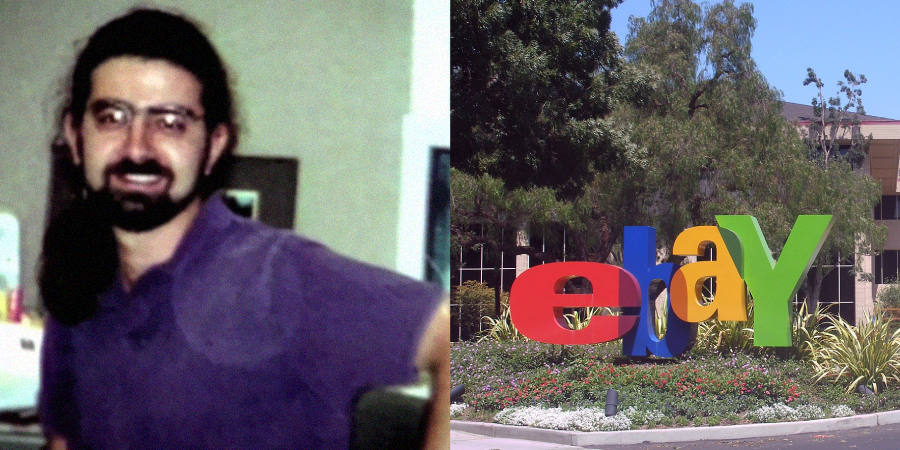
Pierre Omidyar launched eBay (originally called AuctionWeb) as a personal hobby over a long holiday weekend in 1995. Since he already owned his computer and used a basic internet service provider, the initial cost to launch was virtually non-existent. The first item ever sold on the platform was a broken laser pointer for $14.83, which stunned Omidyar. When he contacted the buyer to make sure they knew it was broken, the man replied that he was actually a collector of broken laser pointers.
10. Safer Way (later Whole Foods) – Minimal loan from family and friends
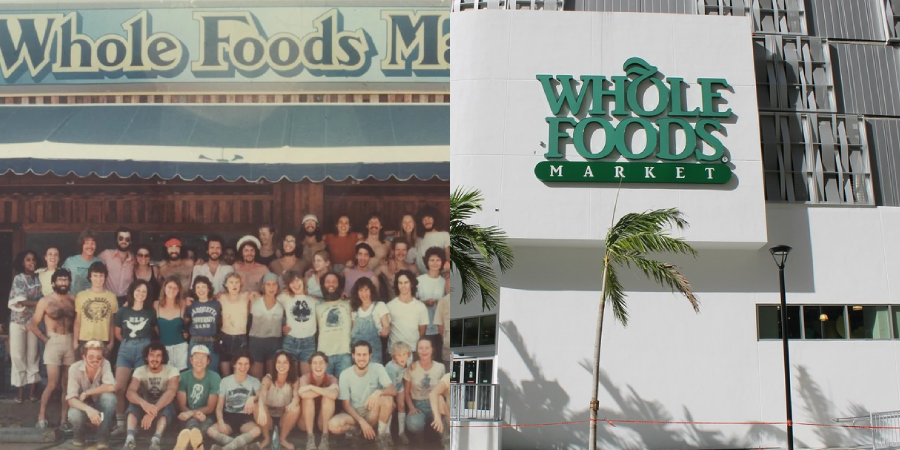
The precursor to Whole Foods, called “Safer Way,” was started by John Mackey and Renee Lawson with money borrowed from family and friends. They were so broke during the early days that they actually lived in the store because they couldn’t afford an apartment. Since the store was zoned for commercial use, they had to hide their bedding and shower using a water hose in the back. Their commitment to organic food was considered radical at the time, but it clearly paid off.
11. Microsoft – Little personal savings
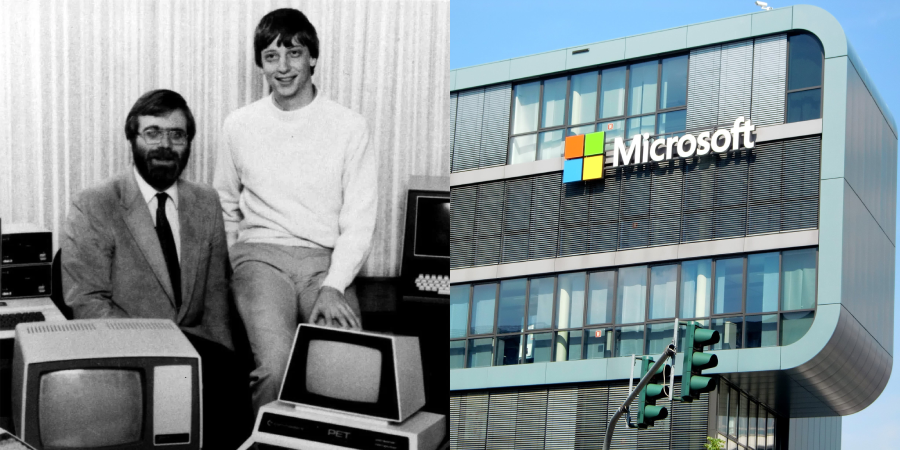
Bill Gates and Paul Allen started Microsoft (originally “Micro-Soft”) with almost no overhead other than their own time and a few rented computers. They began by writing a version of the BASIC programming language for the Altair 8800 while working out of a small motel room. Since they didn’t have a physical office or expensive hardware, their “startup costs” were essentially just their living expenses and coffee. Their first office was actually in Albuquerque, New Mexico, far from the tech hubs of today.
12. Yankee Candle – $0
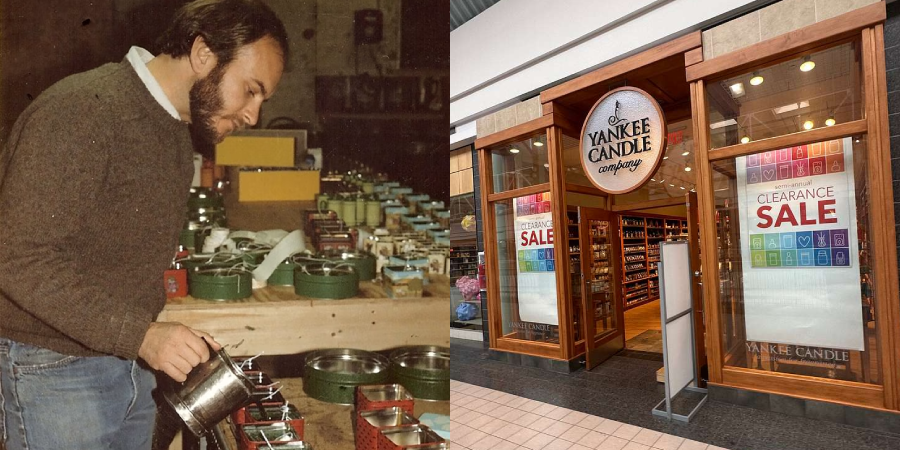
In 1969, 16-year-old Michael Kittredge was too broke to buy his mother a Christmas gift, so he melted some old crayons to make her a candle. A neighbor saw the candle, loved it, and offered to buy it from him for two dollars. He used that small profit to buy enough wax to make two more candles; one for his mom and one to sell. This tiny cycle of “buy-make-sell” eventually turned into a multi-million dollar fragrance empire.
13. Mrs. Field – Minimal investment
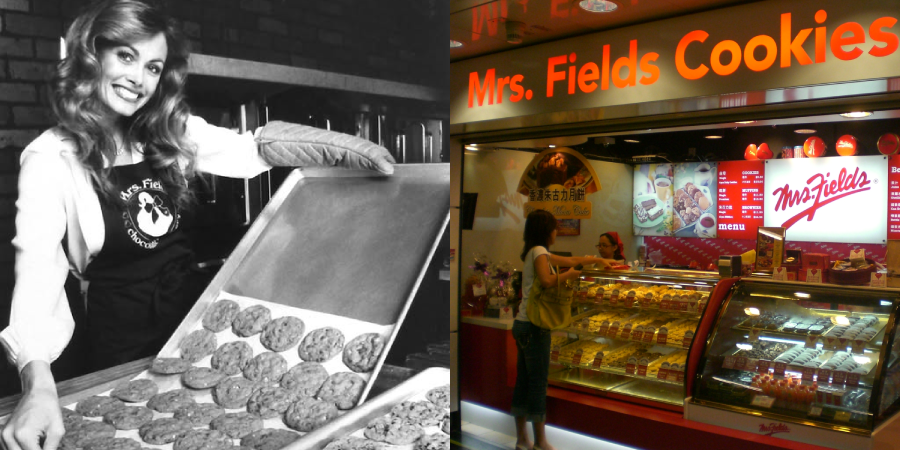
Debbi Fields was a young mother with no business experience when she decided to open a cookie shop. Her husband bet her that she wouldn’t sell $50 worth of cookies on her first day, and for the first few hours, he was right: not a single customer walked in. Refusing to give up, she took a tray of cookies out to the sidewalk and gave away free samples to lure people in. By the end of the day, she had made $75, proving that a little persistence is worth more than a huge bank account.
14. Pizza Hut – $600
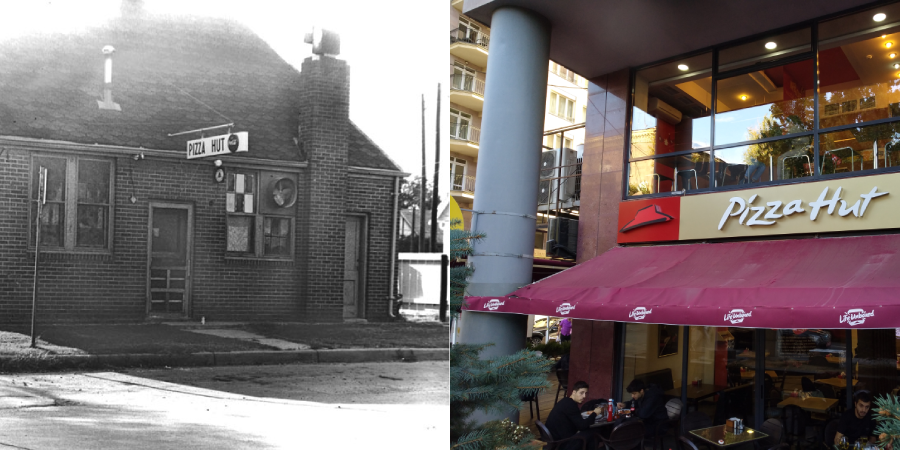
In 1958, brothers Dan and Frank Carney borrowed $600 from their mother to open a small pizza parlor in Wichita, Kansas. At the time, they were just college students with absolutely no experience in the pizza business, but they saw a local opening for a new food trend. They chose the name Pizza Hut simply because their sign only had enough space for eight letters. The original building was so small it looked like a literal hut, sparking a design aesthetic that would become a global trademark.
15. Domino’s Pizza – $900
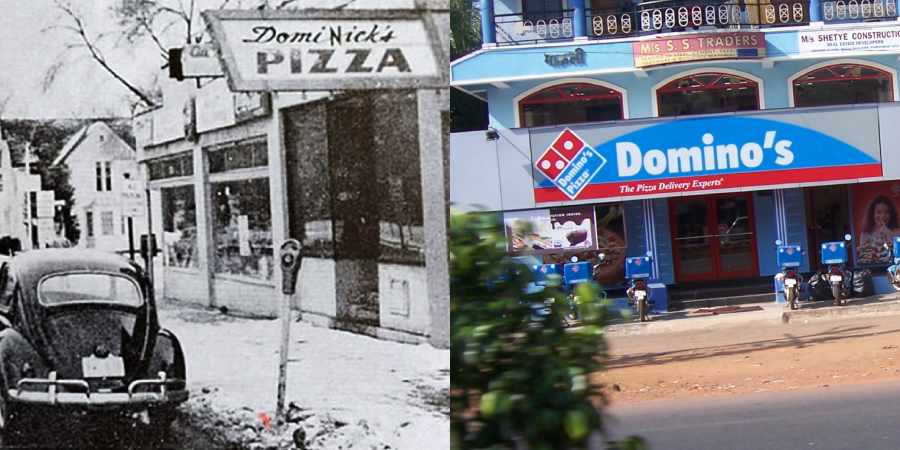
Tom and James Monaghan bought a small, existing pizzeria called DomiNick’s in 1960 using a nine-hundred-dollar loan. The partnership didn’t last long, as James didn’t want to quit his full-time job as a postman to focus on the business. In a move that became a legendary business blunder, James traded his half of the company to his brother in exchange for a used Volkswagen Beetle. While Tom turned the brand into a global delivery empire, James eventually sold that same VW for just $500.
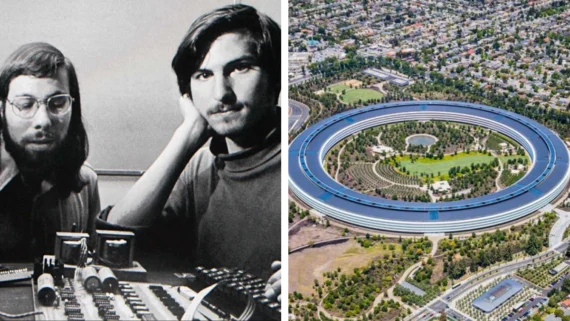
16. Apple – $1000
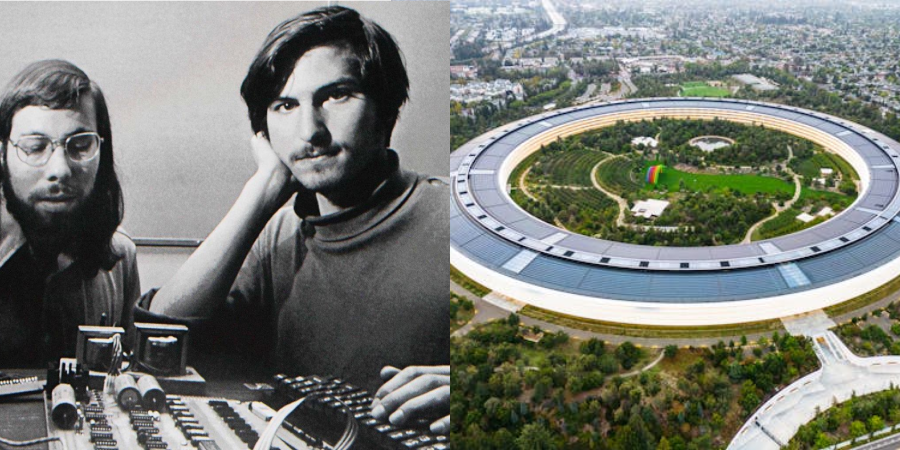
While the exact cash on hand varied, Steve Jobs and Steve Wozniak famously funded their first circuit boards by selling personal items. Jobs sold his Volkswagen bus, and Wozniak sold his HP-65 calculator to raise the capital needed to build the Apple I. This shoestring budget eventually led to the creation of the first personal computer that actually looked like a consumer product. Interestingly, the company was officially founded in a garage, a location that has since become a legendary symbol of Silicon Valley innovation.
Want more business stories?
Seeing these massive empires in their infancy is a humbling reminder that greatness often starts with a single, small step. Whether it was selling a beloved car or working out of a cramped garage, these founders proved that passion and persistence are the true engines of success. If you love discovering the hidden history behind famous names, you’ll definitely want to check out these How Big Brands Fumbled and Lost Their Fans, or 15 Jobs That Only Exist Because Of The Digital Age. You can also enjoy these 20 Ways Seventies Families Saved MoneySaved Money In the Seventies.