The 1950s are often remembered through a stylized lens of classic diners, chrome tail fins, and quiet suburban cul-de-sacs. Yet beneath that nostalgic image, the nation was undergoing a massive structural shift. Americans moved westward and into suburbs, adopted consumer credit, brought television into their daily routines, and built a vast new highway network. At the same time, the era was defined by the welfare state, civil rights milestones, and Cold War anxieties that fundamentally reshaped public life. Here are 20 facts that show how radically the decade transformed the country.
America Added Nearly 28 Million People in Just 10 Years
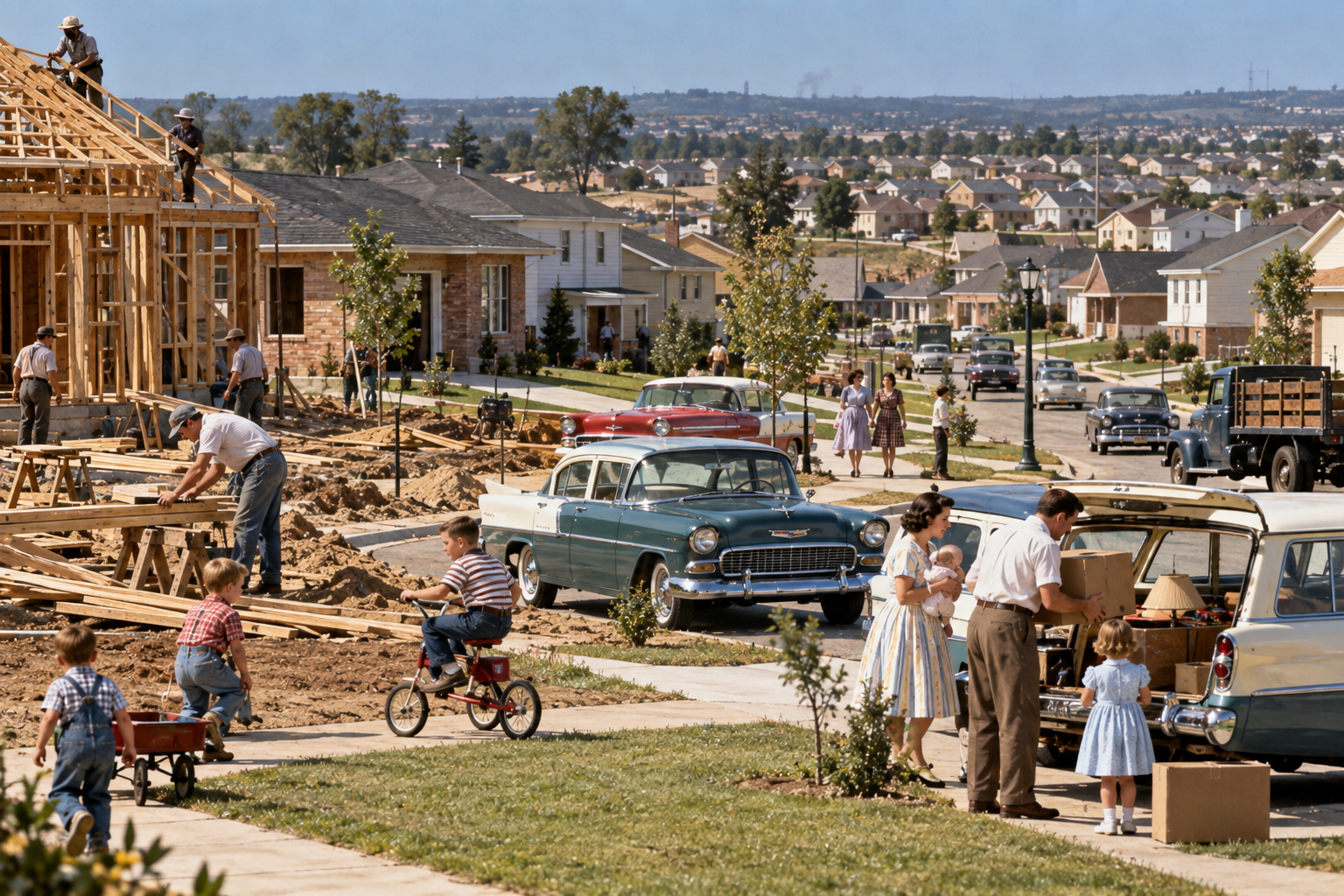
The U.S. population jumped from 151.3 million in 1950 to 179.3 million in 1960, an increase of 18.5 percent. Definitely an enormous change to absorb in just ten years. That extraordinary growth meant millions of additional homes, classrooms, cars, appliances, and jobs were suddenly needed, helping explain much of the decade´s construction and consumer boom.
The Baby Boom Actually Made America Younger
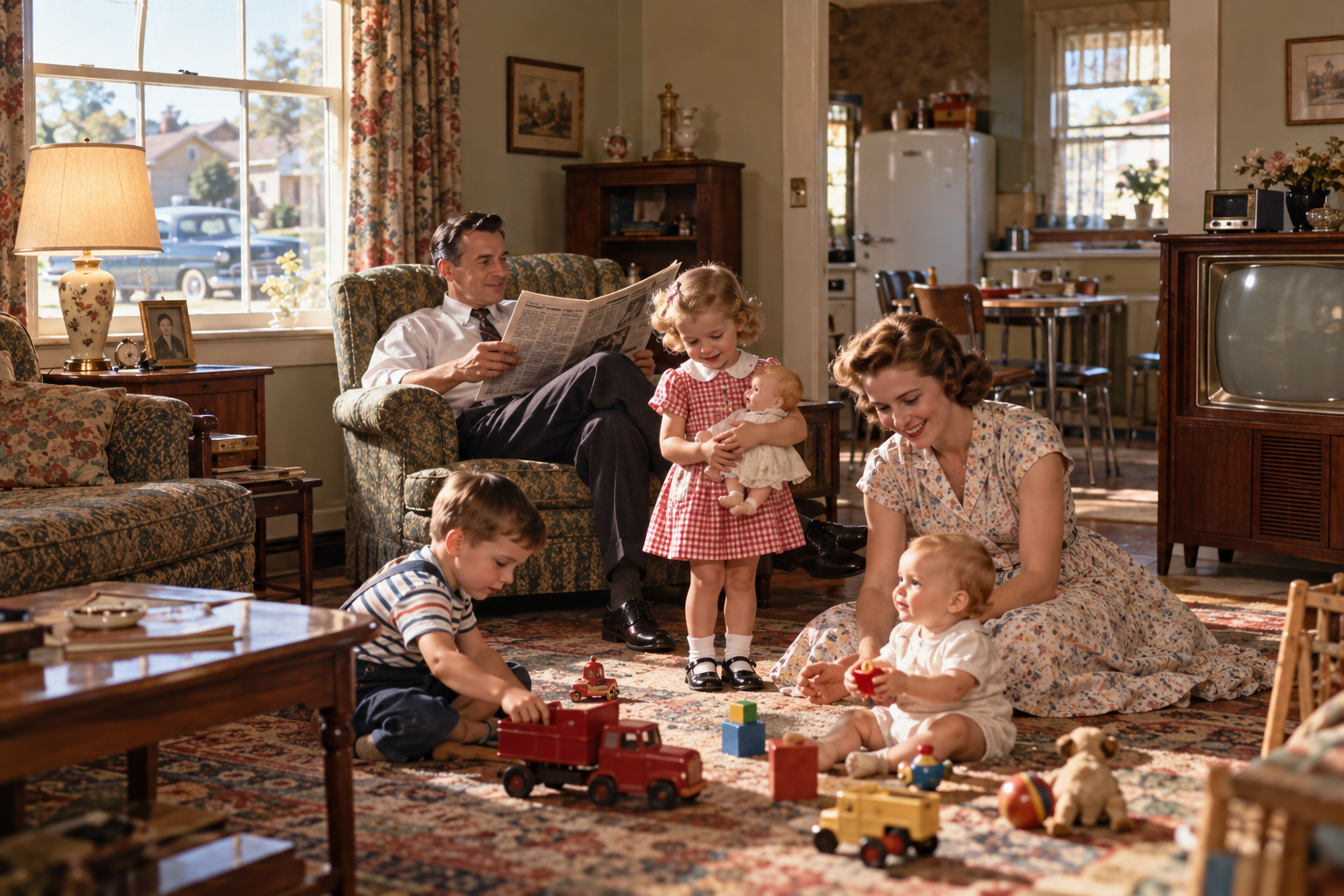
The postwar baby boom ran from 1946 through 1964, and its impact was already obvious during the 1950s. America’s median age fell from 30.2 to 29.5, while women ages 15 to 44 in 1960 had borne, on average, 25 percent more children than women of the same ages had in 1950. Unlike the aging demographic picture familiar today, mid-century America was getting younger, putting children and family life increasingly at the center of society in those days.
American Households Multiplied Even Faster Than the Population

There were about 53 million U.S. households in 1960, roughly 11 million more than in 1950. Children under 18 also grew from 29.1 percent to 34.2 percent of household members, helping make the child-filled postwar household one of the defining realities of the decade. It was a great time to be in the construction or real estate sectors.
Homeownership Jumped From 55 Percent to Nearly 62 Percent

In 1950, 55 percent of occupied American homes were owner-occupied. By 1960, the figure had reached 61-9 percent, aided by rising incomes, massive new construction, easier financing, and government-backed mortgages. Owning a detached home increasingly became an attainable middle-class expectation rather than a luxury. Unfortunately, today the reality appears to be the opposite.
The Suburbs Became the New Center of the American Dream
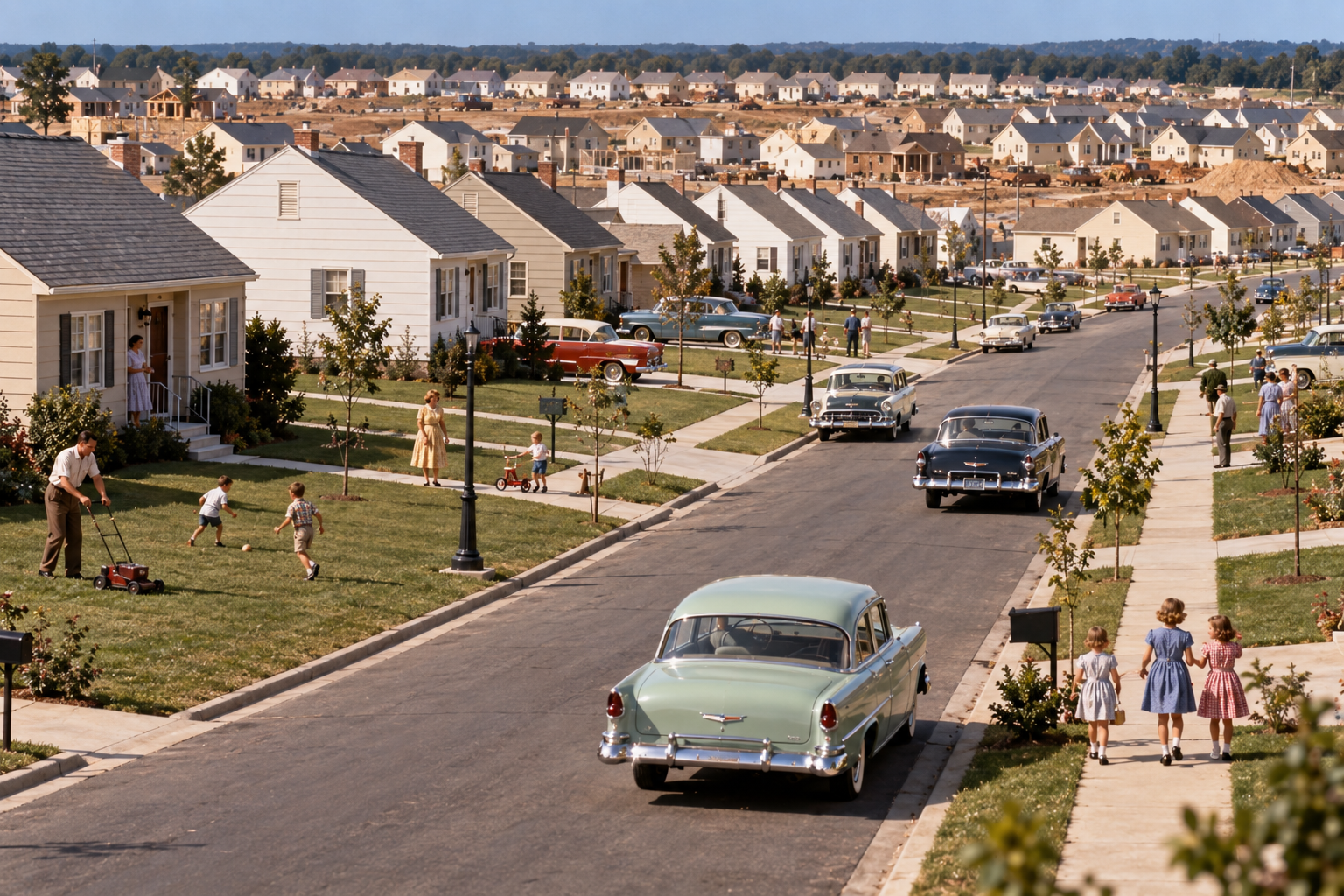
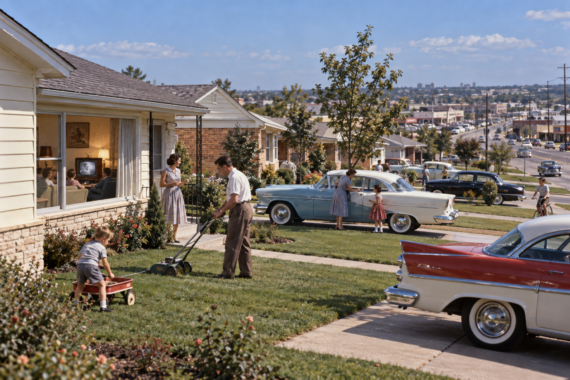
Only 23.3 percent of Americans lived in the suburbs in 1950, but the great postwar suburban expansion was already gathering speed. Developments such as Levittown, Pennsylvania, began in 1951 to meet intense demand from veteran and young families, becoming prototypes for the mass-produced subdivision that transformed the country’s metropolitan landscape. The familiar image of rows of similar houses and quiet residential streets really defines the decade.
Trending on The Scroller


But the New Suburbs Were Often Deliberately Exclusionary
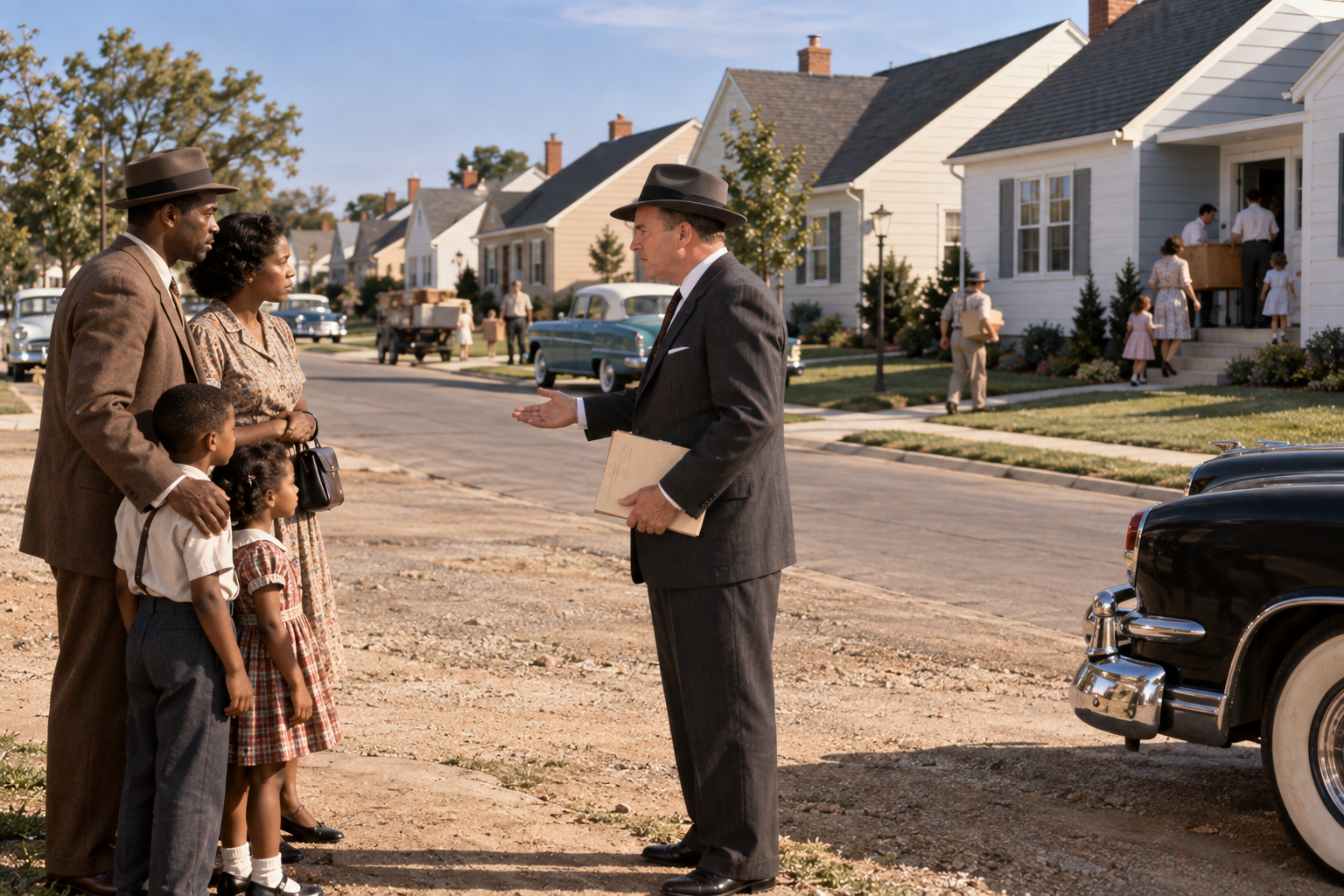
The suburban boom did not benefit Americans equally. Restrictive covenants, discriminatory lending practices, and exclusionary development policies kept many Black, Asian, Latino , and Jewish families out of developments including Levittown, contributing to the racial and economic segregation of metropolitan America. The idealized postwar housing boom created inequalities that would have consequences long after the 1950s.
The GI Bill Helped Turn College Into a Mass-Market Experience

When the original World War II GI Bill education program ended in 1956, 7.8 million veterans had received some form of education or training, including 2.2 million who attended institutions of higher learning. Its effect went beyond the veterans themselves by helping expand colleges, professional education, and the postwar middle class. Higher education was becoming accessible to a much larger part of American society.
Cars Became Close to a Household Standard

About 60 percent of American families owned automobiles in 1950, according to historical Census data. By the middle of the decade, the share was around three-quarters, making automobile ownership central to where people could live, shop, work, and spend their leisure time. The car was no longer simply a way to get somewhere. It was becoming part of the structure of everyday American life.
Sign up for our newsletter
The Interstate Highway System Changed the Physical Shape of the Country

President Dwight Eisenhower signed the Federal-Aid Highway Act on June 29, 1956, authorizing 41,000 miles of interstate highways with the federal government paying 90 percent of construction costs. The system encouraged long-distance trucking, road trips, suburban commuting, roadside business, and development far beyond traditional downtowns. It´s incredible how a country can change with just an asphalt road.
Supermarkets Replaced the Old Routine of Visiting Several Food Shops

Postwar suburban growth and car ownership helped supermarkets thrive. Instead of visiting separate butchers, produce sellers, grocers, and other specialists, shoppers could increasingly buy nearly everything under one roof and load it directly into their cars. The change permanently altered American food retailing and made grocery shopping faster, more convenient, and increasingly dependent on packaged goods and recognizable brands.
Television Went From a Novelty to the Center of the Living Room
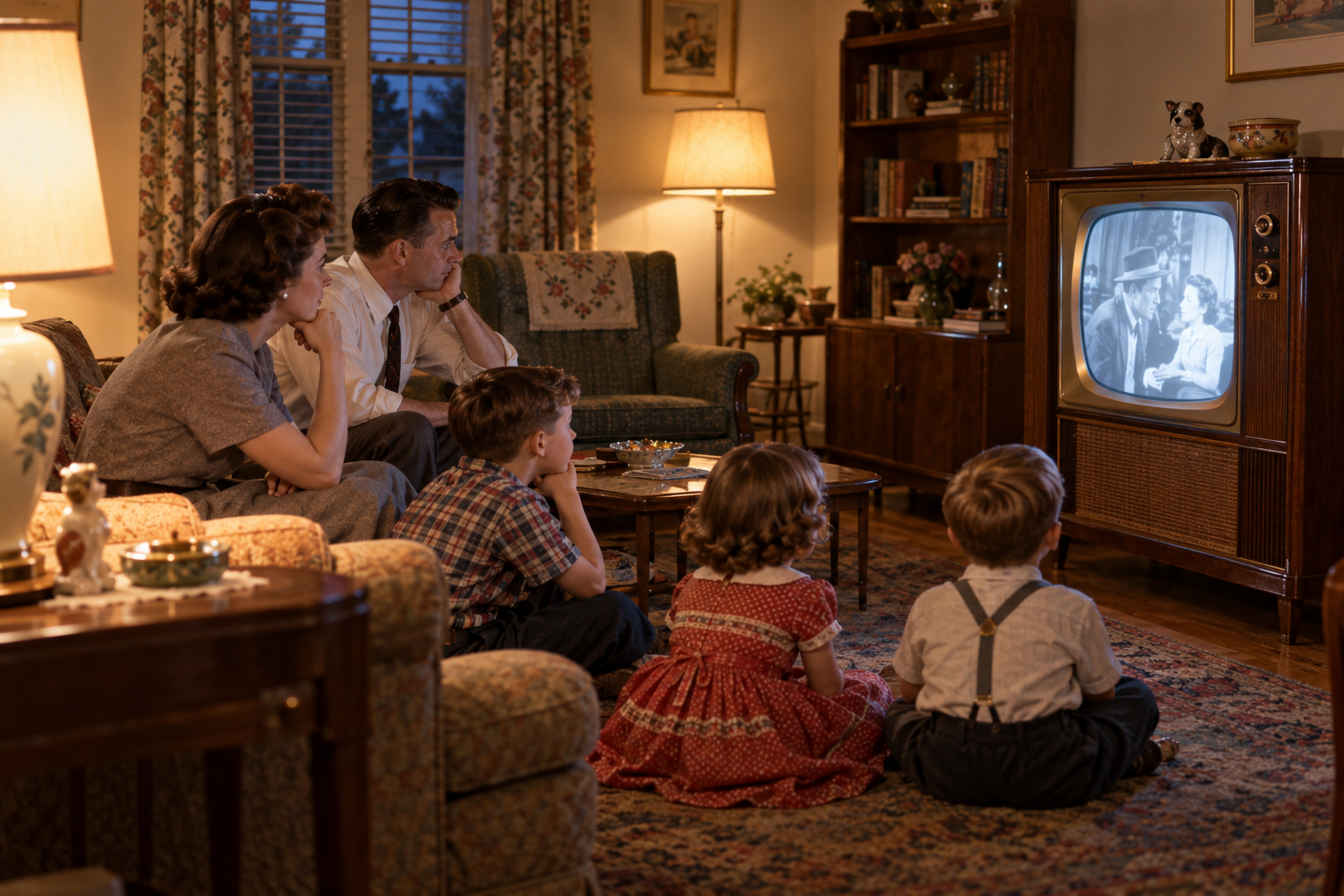
In 1950, only about 9 percent of American households owned a television. By 1960, the figure had soared to about 65 percent, an astonishing transformation that gave millions of Americans the same entertainment, advertisements, political appearances, and national news images at the same time. It´s amazing how in just ten years, television went from something unusual to something most families expected to have at home.
Credit Cards Began Detaching Shopping From the Cash in Your Wallet
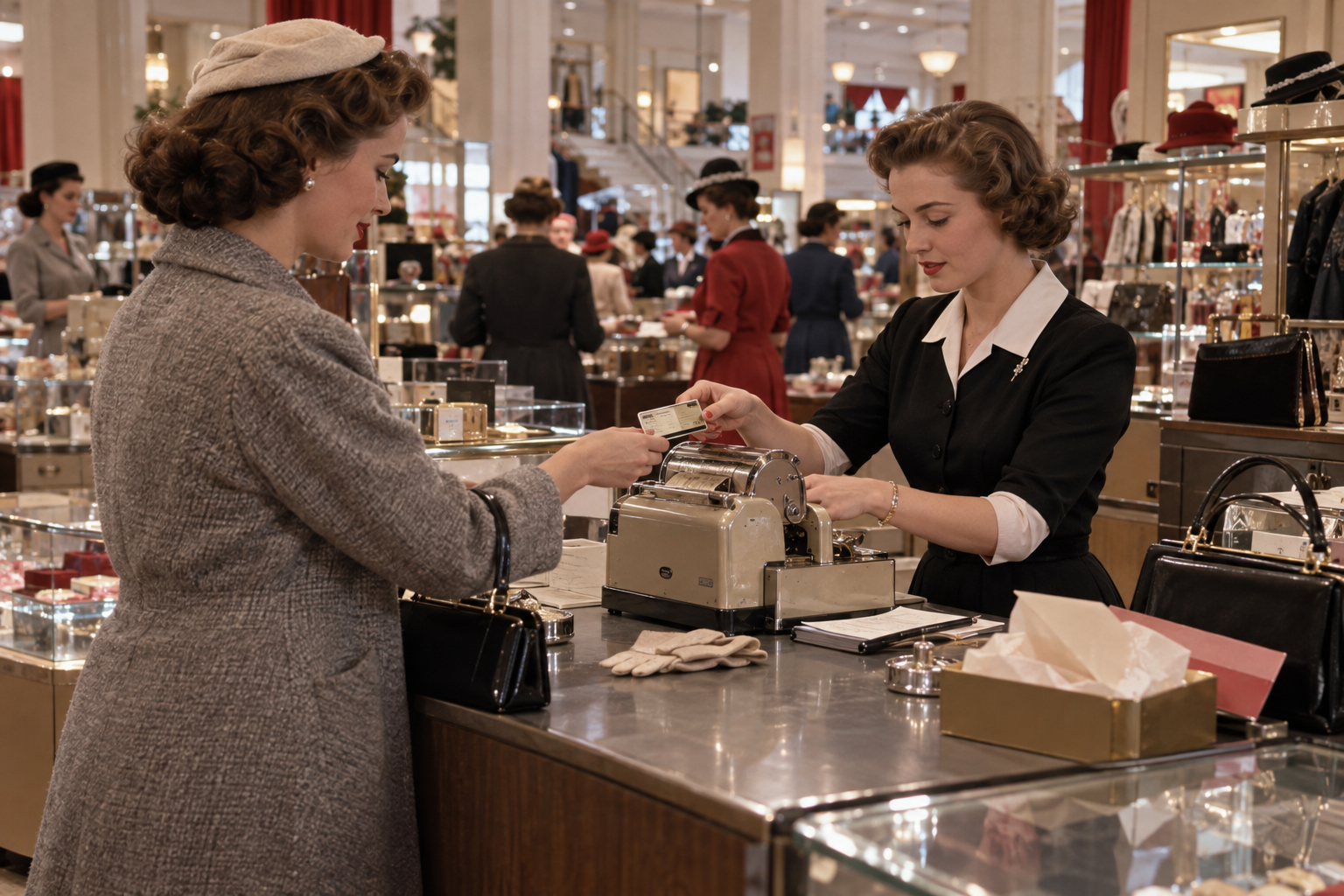
Diners Club launched in 1950 and allowed customers to use one card at multiple participating businesses rather than carrying enough cash for every purchase. By the late 1950s, American Express and BankAmericard, the predecessor of Visa, had entered the general-purpose card market. The change laid the groundwork for a profound transformation in consumer spending, separating purchases from the physical cash people carried with them.
More Women Were Entering the Labor Force Despite the Stay-at-Home Mom Stereotype
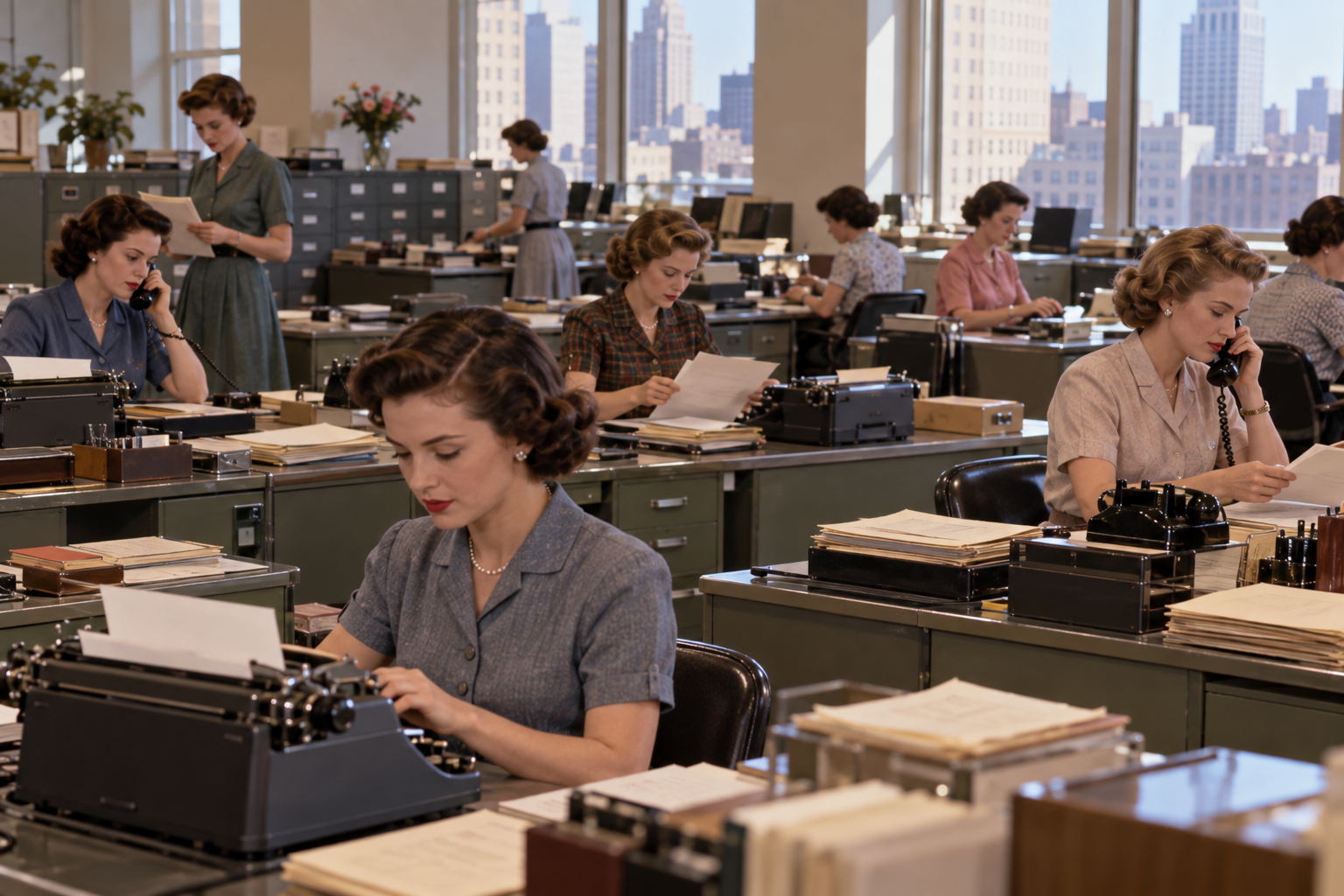
The popular image of the 1950s housewife hides an important economic shift. Women represented 29.6 percent of the U.S. labor force in 1950 and 33.4 percent by 1960, while women’s labor-force participation rose from 33.9 percent to 37.7 percent over the decade. The contrast between the popular image of suburban domesticity and the growing presence of women in the workforce is one of the decade’s more revealing contradictions.
The Population Was Shifting Dramatically Toward the West
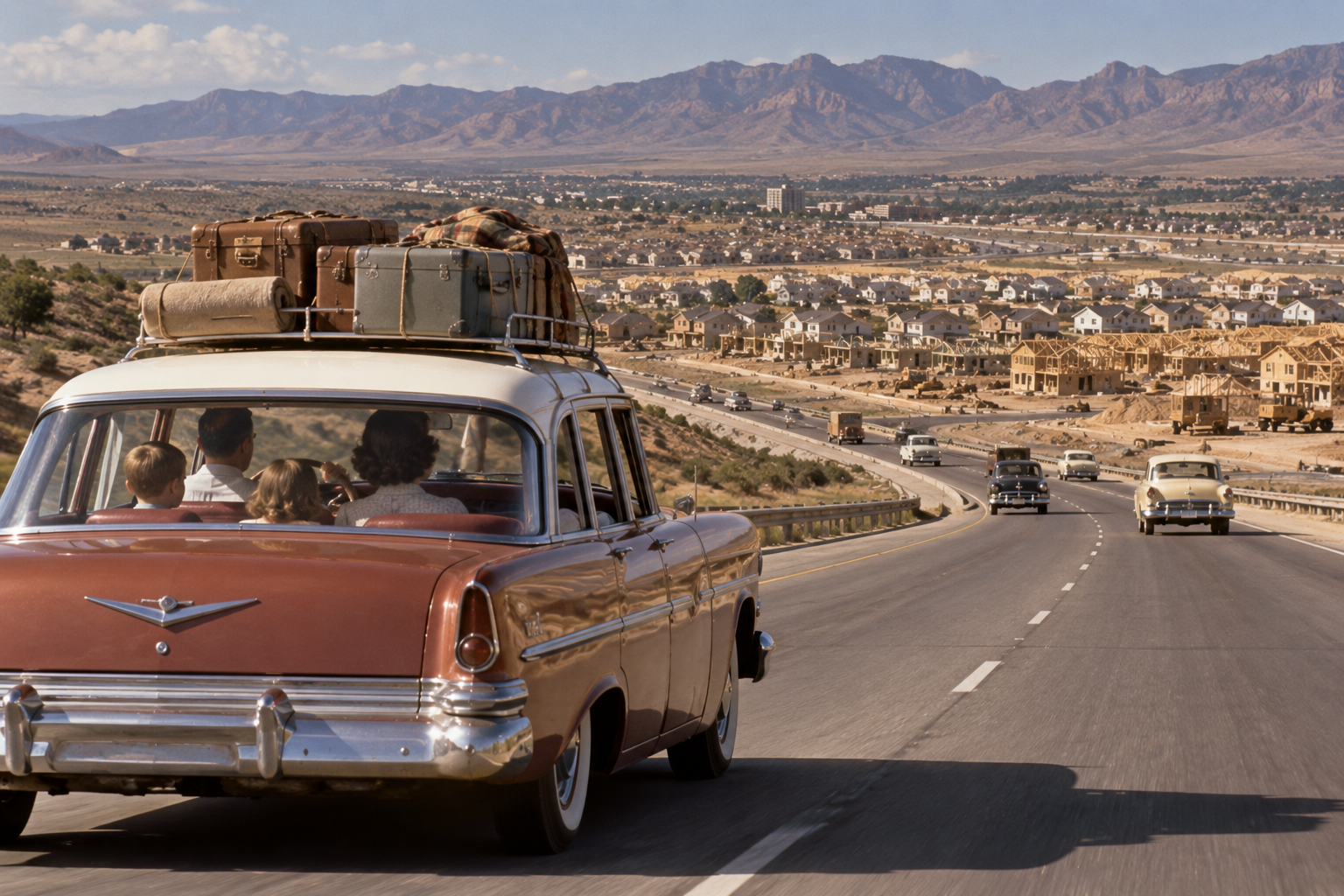
Between 1950 and 1960, the West’s population increased by an extraordinary 38.9 percent, compared with 18.5 percent nationwide. The Pacific states alone grew 40.2 percent, while Florida posted the highest percentage increase of any individual state. The migration foreshadowed the political and economic rise of the Sun Belt, a transformation that would continue for decades.
A Vaccine Began Turning Polio From a National Terror Into a Preventable Disease

The United States recorded more than 21,000 paralytic polio cases in 1952, one of the disease’s worst years. After the inactivated polio vaccine arrived in 1955, cases plummeted, reaching 2,525 by 1960 and just 61 by 1965. The vaccine saved a lot of lives and may have changed the course of 1950s society.
Brown v. Board Declared Segregated Public Schools Unconstitutional

On May 17, 1954, the Supreme Court unanimously ruled that state-mandated racial segregation in public schools violated the Constitution, rejecting the idea that separate schools could be truly equal. The ruling did not instantly integrate American education, but it destroyed a major legal foundation of Jim Crow and energized the expanding civil rights movement.
Montgomery Demonstrated the Power of Mass Grassroots Protest
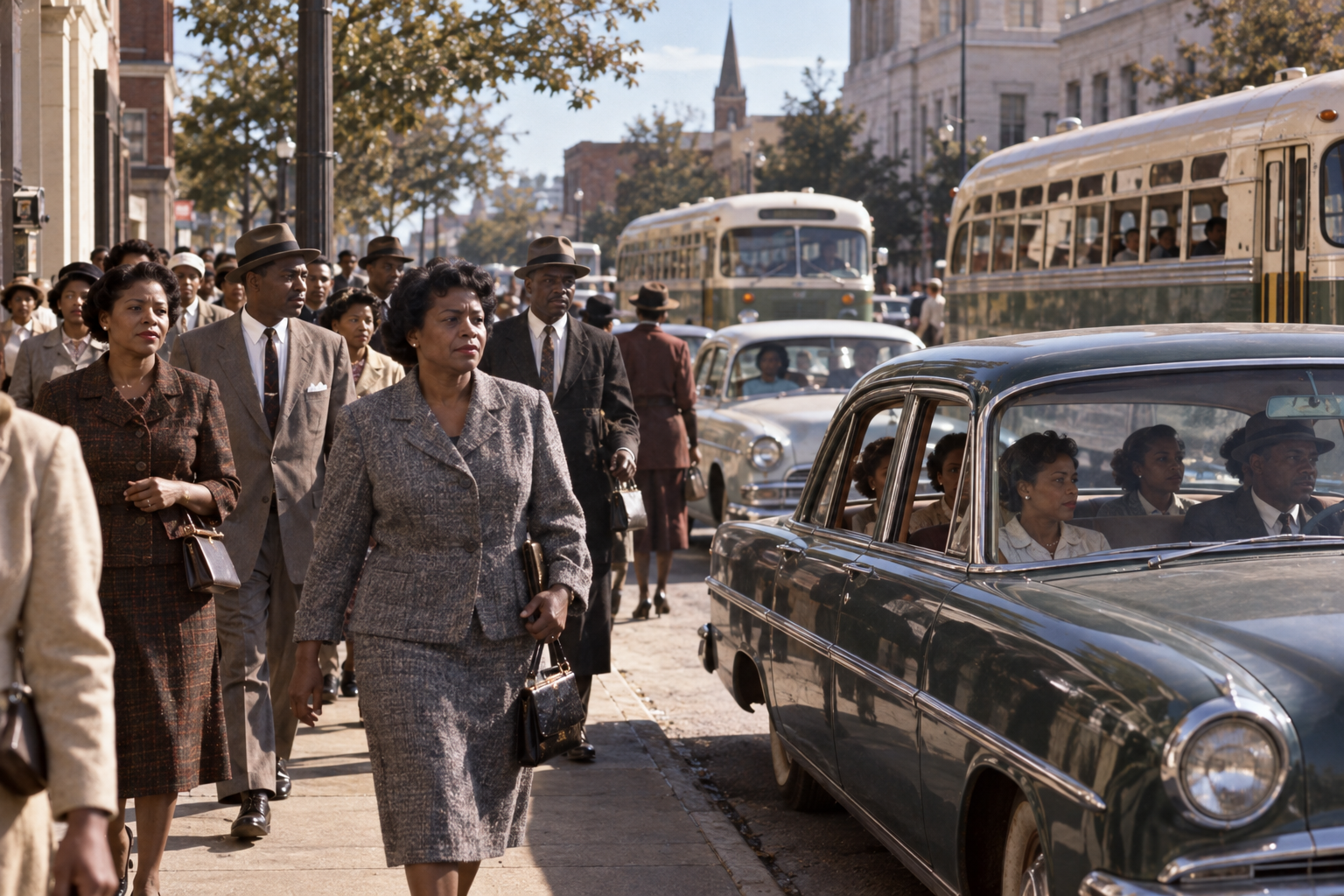
This shows how sustained local organizing could produce national consequences. After Rosa Parks’ December 1955 arrest, Black residents of Montgomery, Alabama, sustained a bus boycott for 381 days, organizing carpools and sometimes walking miles to work. The campaign helped desegregate Montgomery’s buses and propelled 26-year-old Martin Luther King Jr. from a local minister into a nationally recognized civil rights leader.
The Little Rock Crisis Showed That Desegregation Could Require Federal Force
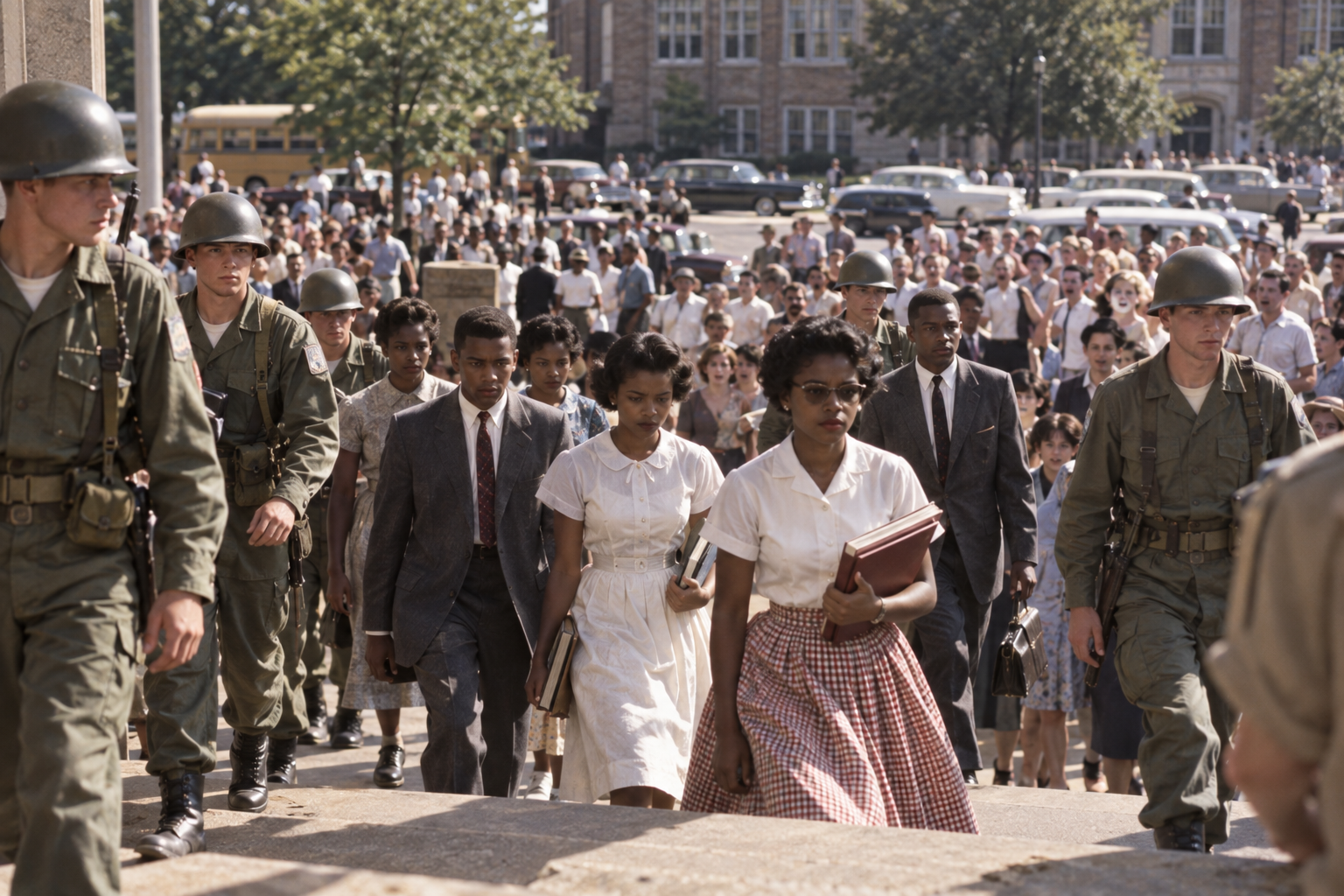
When nine Black students attempted to integrate Central High School in Little Rock in 1957, Arkansas Governor Orval Faubus used the National Guard amid resistance to integration. President Eisenhower ultimately issued Executive Order 10730, bringing the Arkansas National Guard under federal authority and using federal troops to enforce the students’ right to attend school.
Nuclear War Became Something Schoolchildren Were Taught to Prepare For

The Cold War entered everyday ñife through civil-defense films, pamphlets, school drills, and campaigns such as 1951’s Duck and Cover. After the unexpectedly powerful Castle Bravo hydrogen-bomb test in 1954 demonstrated the danger of radioactive fallout over enormous distances, government planning increasingly emphasized fallout protection and private shelters. For children growing up in the 1950s, the possibility of nuclear war was not just something they heard about in the news.
Sputnik Changed What America Taught, Funded, and Dreamed About

The Soviet Union’s launch of Sputnik on October 4, 1957, shocked Americans and transformed the technological competition of the Cold War. Congress responded with the National Defense Education Act of 1958, directing federal support toward science, mathematics, foreign languages, college loans, and other educational programs. The National Aeronautics and Space Act also created NASA that same year. The Space Race had only just begun.