When we look back at the grand timeline of human civilization, we naturally seek patterns, logical chains of cause and effect, and clear structural explanations for major events. We prefer to view history as an orderly progression where human choices, technological breakthroughs, and political maneuvers dictate the definitive outcomes of our collective past. This analytical mindset allows us to feel a sense of control over our understanding of the world, comforting us with the idea that every monumental shift possesses a rational origin story. However, a closer look at the historical archives reveals a series of deeply eerie, reality-bending coincidences that completely defy all mathematical probability and scientific logic.
These unsettling anomalies represent moments where the fabric of reality seemed to fold in on itself, linking entirely separate individuals, centuries, and geographical locations through inexplicable parallel details. From tragic maritime disasters detailed in fiction long before the real ships were ever constructed to iconic historical figures who shared identical structural life milestones, these events leave modern researchers completely baffled. They challenge our rigid boundaries of logic, forcing us to wonder whether human history is guided by a hidden, complex script that we are entirely unable to decipher. Let’s dive into fourteen chilling historical coincidences that have never been fully explained by mainstream science or traditional historians.
1. The eerie parallel lives of King Umberto I and his royal double
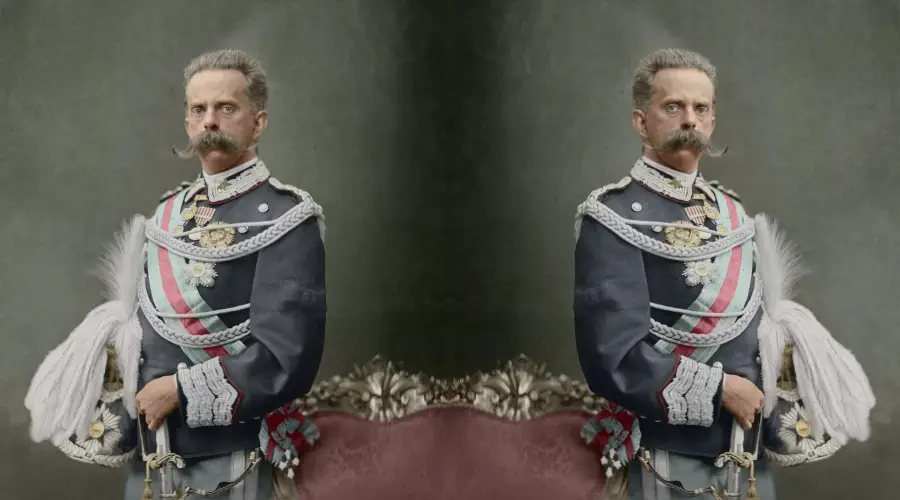
In July 1900, King Umberto I of Italy visited a modest restaurant in the city of Monza for a casual dinner after an exhausting public event. Upon meeting the establishment’s owner, the monarch was deeply shocked to discover that the restaurateur looked completely identical to him in every single physical aspect. As they began talking, the two men uncovered a mind-boggling string of structural parallels, discovering they were both born on the exact same date in the same town and had both married women named Margherita. To make matters even more unsettling, the restaurateur had opened his business on the precise day of the King’s royal coronation. The cosmic strangeness reached its tragic conclusion the following afternoon, when the restaurant owner was accidentally killed by a stray firearm shot, and the devastated King was assassinated by an anarchist just hours after hearing the news.
2. The twin brothers killed on the same street by the same taxi driver
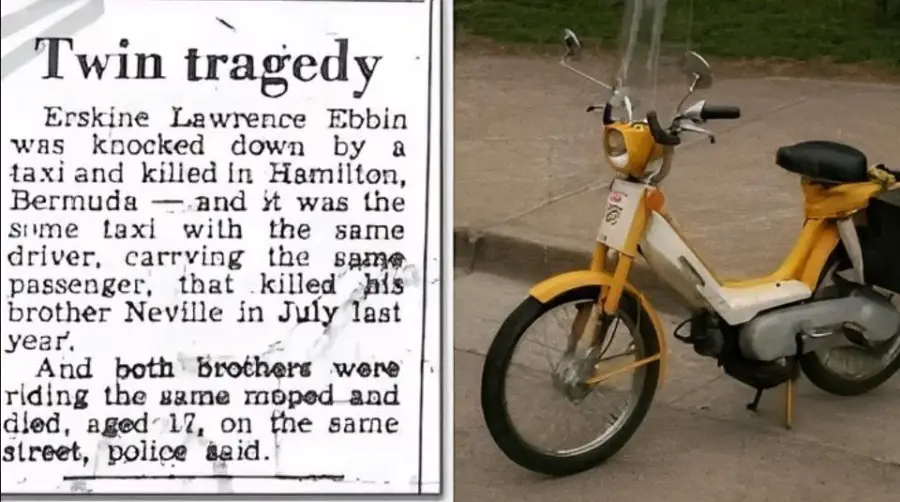
Erskine Lawrence Ebbin and his brother Neville were young teenagers living on the island of Bermuda who lost their lives in a manner that completely shattered the mathematical laws of probability. In July 1975, seventeen-year-old Neville was riding his small moped down a busy local road when he was tragically struck and killed by a passing taxi cab. Exactly one year later, his brother Erskine was riding the exact same moped down the very same street when he was also struck and killed. The investigation revealed that they were not only hit by the same taxi driver, but the vehicle was additionally carrying the very same passenger who had witnessed the first brother’s accident twelve months prior.
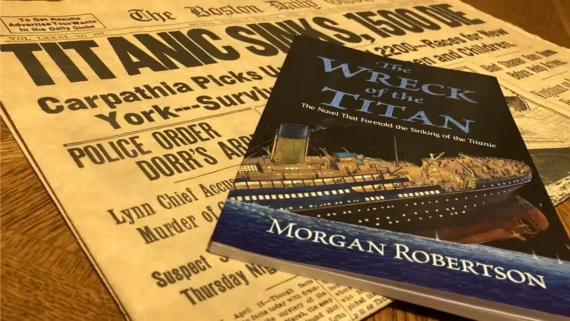
3. Morgan Robertson’s literary prophecy of the Titanic disaster
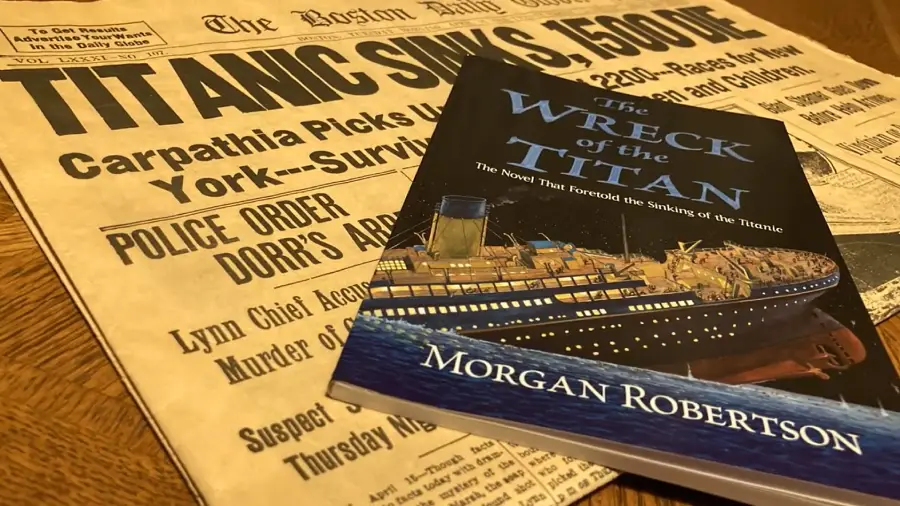
Fourteen years before the modern luxury liner Titanic struck an iceberg and sank in the North Atlantic, a struggling American author named Morgan Robertson penned a fictional novella titled Futility. The 1898 story detailed the tragic maiden voyage of a massive, supposedly unsinkable British luxury steamship that was celebrated as the largest human vessel ever constructed. In his fictional narrative, Robertson named the doomed ship the Titan, meticulously describing how it struck a massive iceberg during a cold April voyage and sank due to a complete lack of available lifeboats for the passengers. The structural dimensions, passenger capacities, and physical top speeds of the fictional vessel matched the real-world Titanic with an accuracy that continues to deeply terrify modern maritime historians.
4. The bizarre synchronization of Thomas Jefferson and John Adams
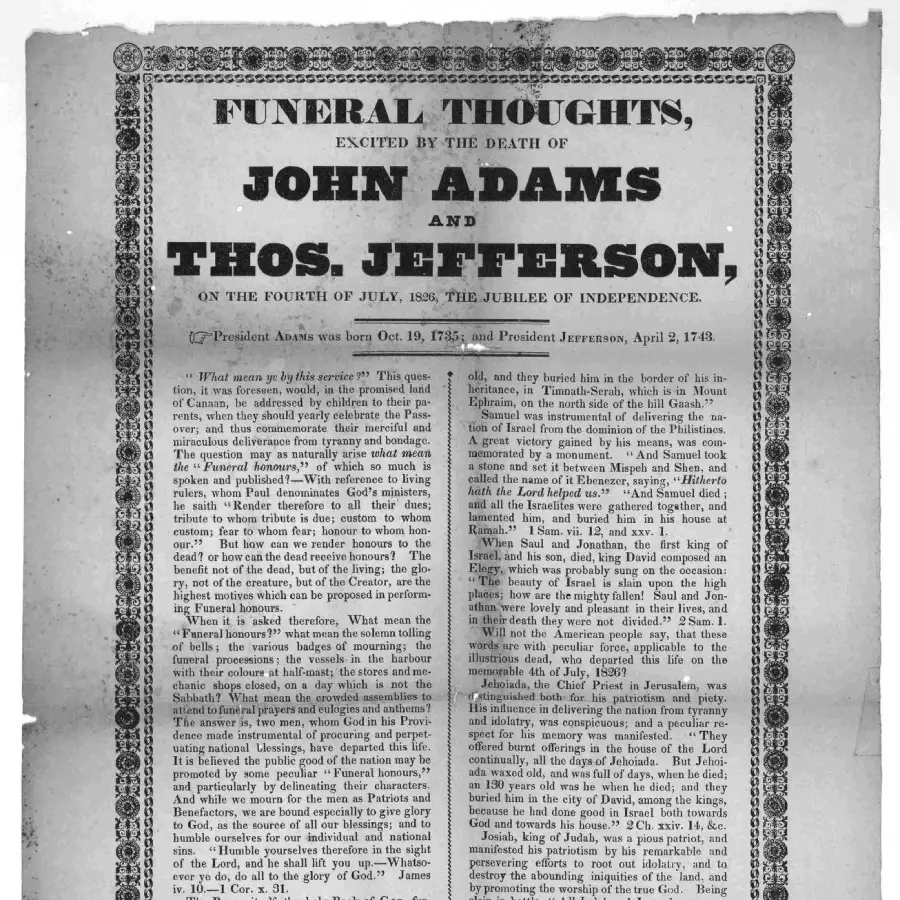
These two legendary American Founding Fathers spent their long, volatile adult lives alternating between close revolutionary partnership and fierce, bitter political rivalry. After decades of shaping the young republic’s ideological foundations, they fortunately managed to fully reconcile their deep friendship during their quiet retirement years through an extensive correspondence. On July 4, 1826, the United States celebrated the absolute milestone of its fiftieth anniversary of independence from British rule. In an incredible twist of biological synchronicity that completely stunned the public, both aging statesmen passed away on that exact afternoon within just five hours of one another. Adams’s famous last words were a tribute to his peer, completely unaware that his great rival had already expired across the country.
5. Mark Twain’s celestial arrival and departure via Halley’s Comet
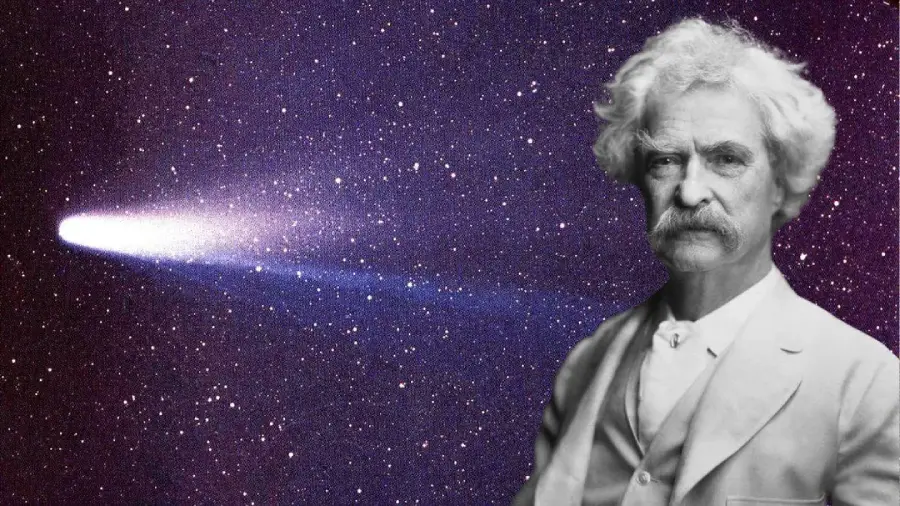
The legendary American author and humorist Samuel Clemens, universally recognized by his pen name Mark Twain, lived his entire life in lockstep with a famous cosmic phenomenon. Twain was born in November 1835, precisely two weeks after Halley’s Comet made its highly publicized, periodic visibility pass across the Earth’s night sky. In 1909, the aging author publicly made a bold, seemingly erratic prediction, stating that he came into the world with the comet and fully expected to go out with it upon its next return. His intuition proved to be mathematically flawless, as he suffered a fatal heart attack on April 21, 1910, exactly one day after the bright comet reached its absolute closest orbital point to the planet.
Trending on The Scroller


6. Edgar Allan Poe’s prophetic cannibalism narrative
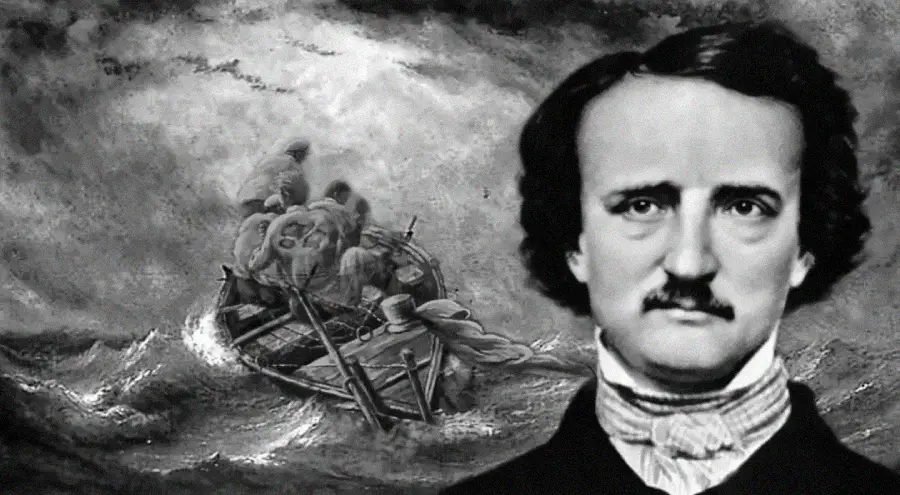
In 1838, the master of dark psychological fiction published his only complete novel, The Narrative of Arthur Gordon Pym of Nantucket, detailing a disastrous maritime expedition. In one gruesome chapter, a severe ocean storm leaves four shipwrecked sailors starving on a damaged hull, forcing them to draw straws to determine who will be sacrificed to sustain the others. The unfortunate lot falls to a young cabin boy explicitly named Richard Parker, who is subsequently killed and consumed by his desperate companions. Forty-six years later, a real-world yacht named the Mignonette foundered in the South Atlantic, leaving four crew members starving in a tiny lifeboat without resources. The real sailors eventually made the desperate choice to consume their youngest companion to survive, and when the authorities rescued them, the world was horrified to discover the real victim’s name was Richard Parker.
7. The first and last British soldiers killed in World War I
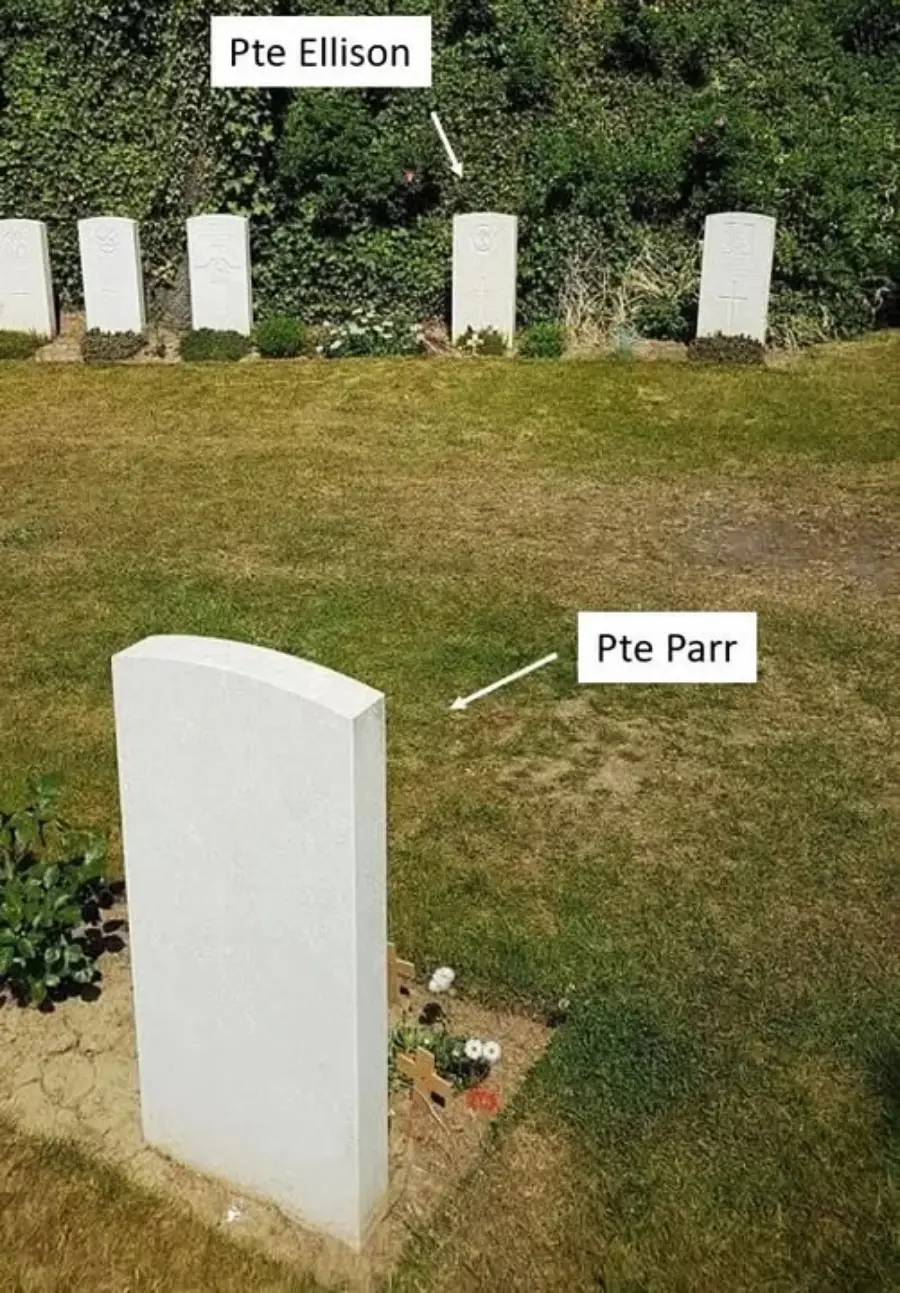
Private John Parr and Private George Edwin Ellison were two working-class British soldiers whose individual sacrifices beautifully bracketed the immense tragedy of the Great War. Parr was a young seventeen-year-old reconnaissance cyclist who became the very first British casualty of the global conflict when he was killed near Mons, Belgium, in August 1914. Ellison was a seasoned veteran who survived years of brutal trench warfare, only to be fatally struck by a sniper just ninety minutes before the definitive armistice took effect in November 1918. Decades later, when historians mapped out the graves inside the St. Symphorien Military Cemetery, they discovered that due to completely random battlefield burial layouts, Parr and Ellison were laid to rest directly facing each other, separated by a mere seven yards of green turf.
8. The unbelievable survival story of Violet Jessop
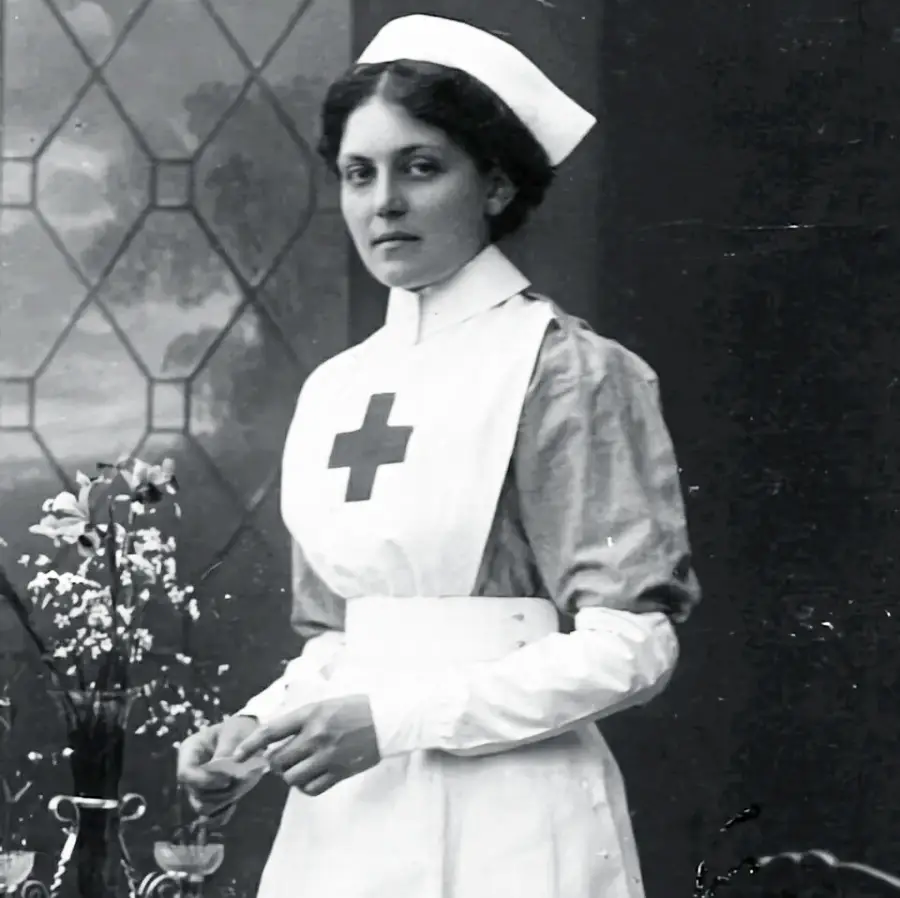
This professional maritime stewardess earned the permanent nickname of Miss Unsinkable after successfully surviving three separate, catastrophic luxury liner disasters on the open ocean. In 1911, she was working aboard the Olympic when it suffered a violent, structural collision with a British warship that nearly sank the vessel. Undeterred, she transferred to the Titanic just in time for its ill-fated 1912 maiden voyage, successfully navigating the freezing waters to secure a spot on Lifeboat 16. During World War I, Jessop volunteered to serve as a nurse aboard the HMHS Britannic, which struck a hidden marine mine and sank rapidly in the Aegean Sea. She leaped into the water, suffered a severe skull fracture against the ship’s moving keel, but still managed to survive and live a long life.
Sign up for our newsletter
9. Anthony Hopkins and the forgotten book search
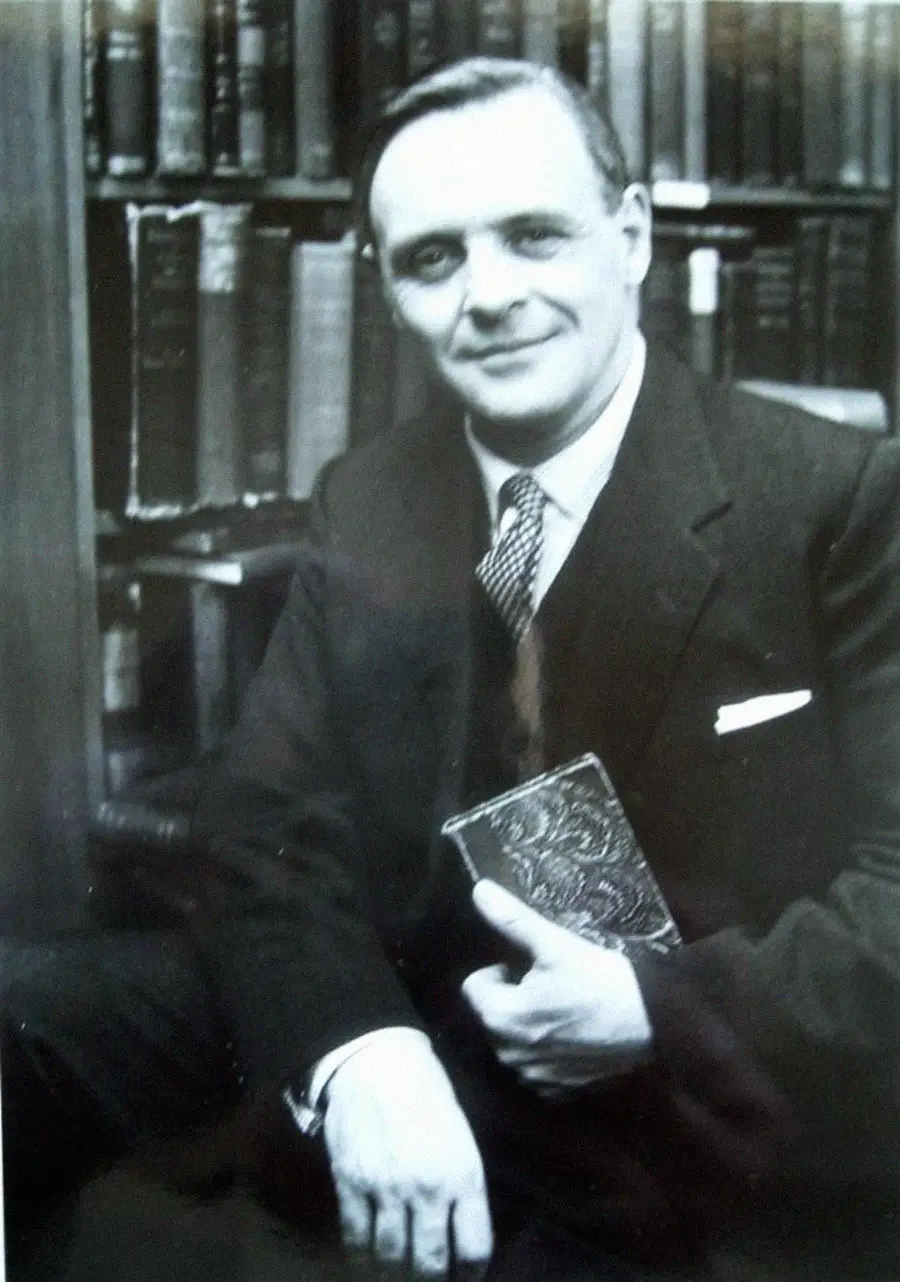
While preparing to star in a cinematic adaptation of George Feifer’s novel The Girl from Petrovka, British actor Anthony Hopkins spent days desperately searching London bookstores to locate a copy of the text. Frustrated by his complete lack of success, he sat down on a bench inside a local train station, only to discover a clean, discarded copy of the exact book resting directly next to him. The strange anomaly escalated months later when Hopkins met the author on the movie set and mentioned his lucky station discovery. Feifer was completely stunned, explaining that he had lost his own personal copy of the book years prior when a friend accidentally left it inside a London train car after modifying it with handwritten notes. Hopkins opened his found book, confirming that the notes inside belonged directly to the author himself.
10. The mysterious monks of the Meselcsu Monastery
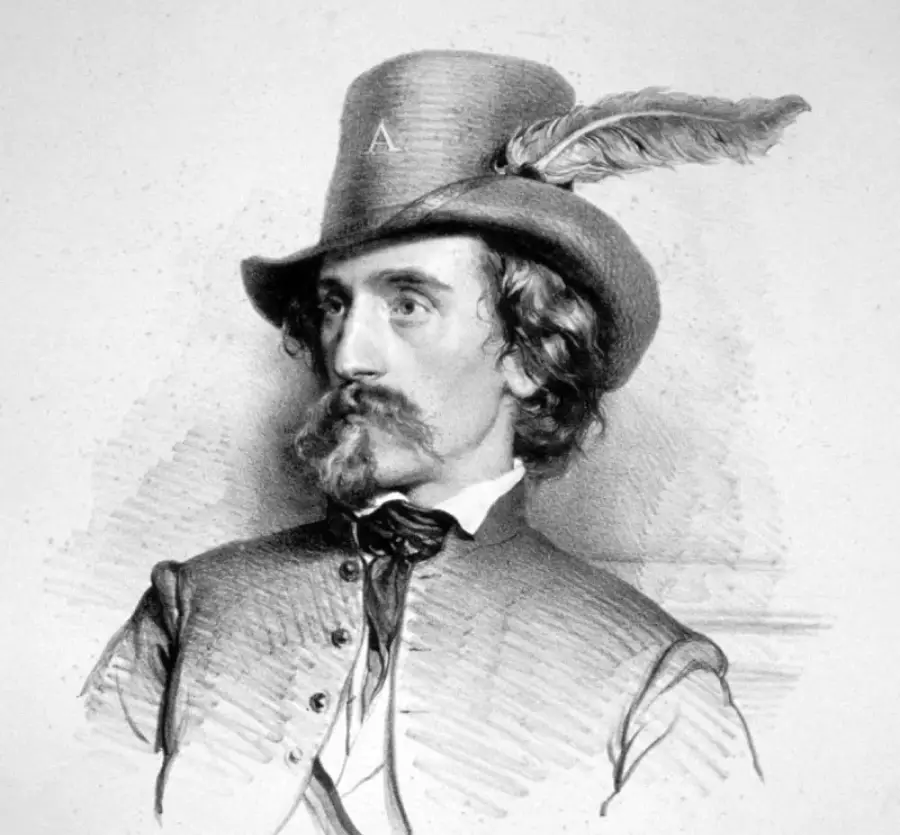
In the late 19th century, a prominent European painter named Joseph Aigner suffered from severe, recurring bouts of deep psychological depression that led him to attempt suicide on multiple occasions. During his first desperate attempt at age eighteen, he was abruptly interrupted and talked down by a mysterious, passing Capuchin monk who randomly entered his studio. Exactly four years later, Aigner attempted to hang himself a second time, only to be rescued at the absolute eleventh hour by the very same religious figure appearing out of nowhere. The artist was eventually sentenced to execution by political authorities during a period of civil unrest, but his life was spared when that identical monk intervened with a powerful judicial appeal. Aigner eventually passed away by his own hand at age sixty-eight, and his official funeral service was conducted by that exact same monk, whose identity remains a complete historical mystery.
11. The Lincoln and Kennedy assassinations
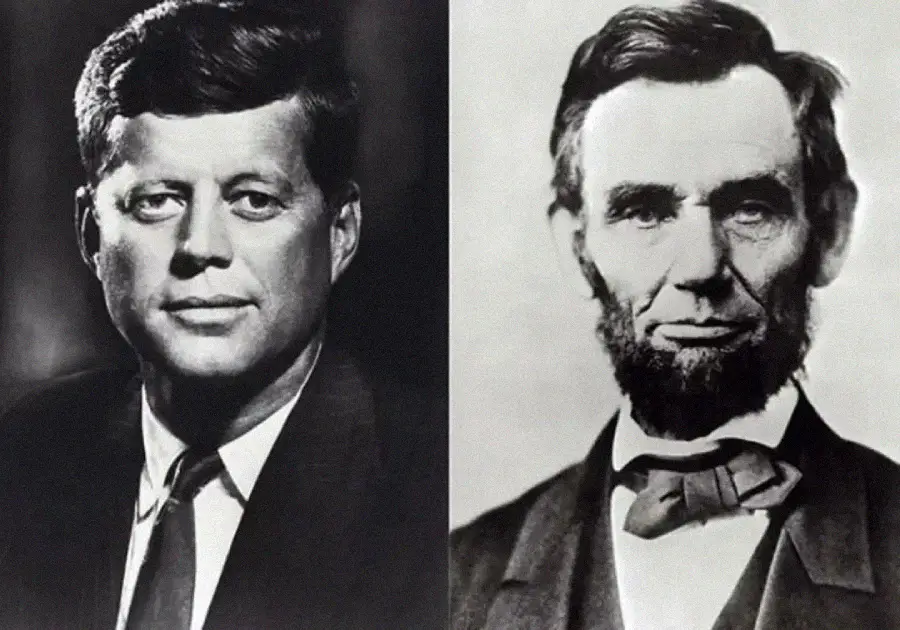
The historic connections running parallel between the tragic deaths of Abraham Lincoln and John F. Kennedy represent a treasure trove of structural historical anomalies. Lincoln was officially elected to the United States Congress in 1846, while Kennedy secured his congressional seat exactly one hundred years later in 1946. Both men were assassinated on a Friday by gunshot wounds to the back of the head while sitting directly next to their wives. To make the physical details even more bizarre, Lincoln’s personal secretary was explicitly named Kennedy, while Kennedy’s private secretary was named Lincoln. Furthermore, both of their presidential successors were Southern Democrats named Johnson who were born exactly one century apart.
12. The tragic coincidence of the Hoover Dam construction
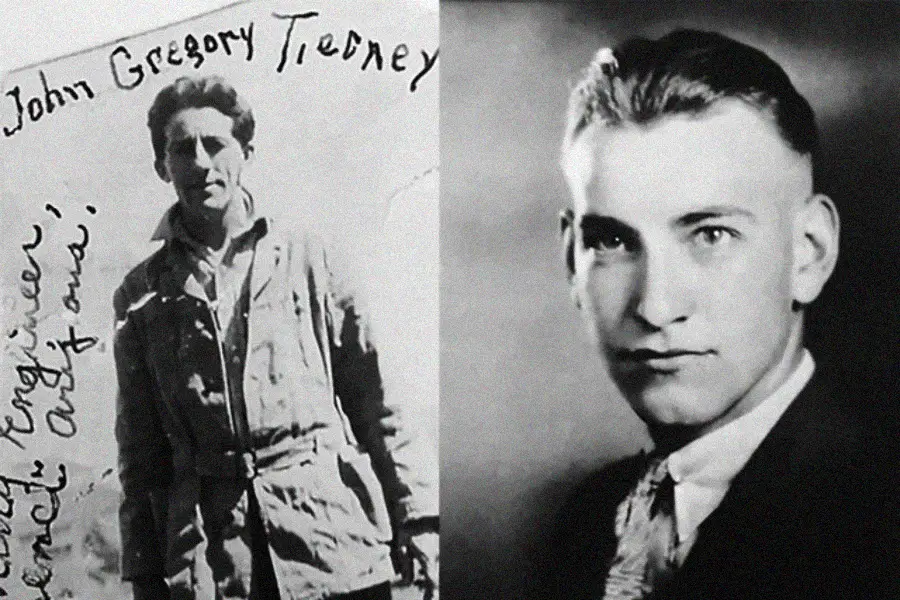
The engineering triumph of the Hoover Dam project was permanently marred by a tragic, generational coincidence that deeply affected the local construction community. On December 20, 1921, a rugged surveyor named J.G. Tierney became the very first official casualty of the preparatory operations when he accidentally drowned in the volatile Colorado River during a survey mission. The massive project continued for over a decade, employing thousands of desperate workers during the height of the Great Depression. On December 20, 1935, exactly fourteen years to the absolute day of the original tragedy, an electrician fell from a high intake tower during the final construction phase. The victim was Patrick Tierney, the only son of the original surveyor, marking the definitive first and last deaths of the historic project.
13. The Catherine Eddowes double identity mystery
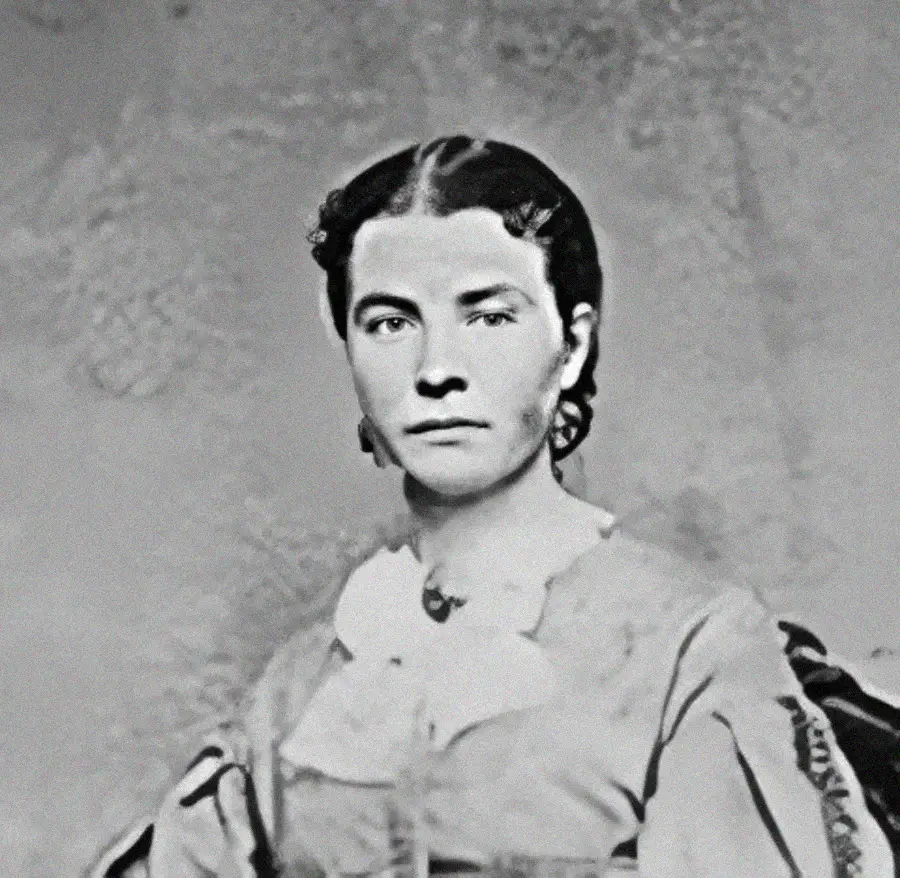
In September 1888, London police officials arrested a heavily intoxicated woman found shouting in the streets of Aldgate, booking her under the fake name Mary Kelly to avoid public embarrassment. She was held inside a secure holding cell until she sobered up completely, officially releasing her from custody at roughly one o’clock in the morning. Just forty-five minutes after stepping back out into the dark London fog, her real identity was uncovered when she became the fourth victim of the infamous Jack the Ripper murders. Her actual name was Catherine Eddowes, a detail that turned terrifyingly prophetic weeks later when the elusive killer struck a final time, brutally assassinating a fresh victim whose actual legal name was Mary Kelly.
14. The unbelievable bullseye of the two bullets
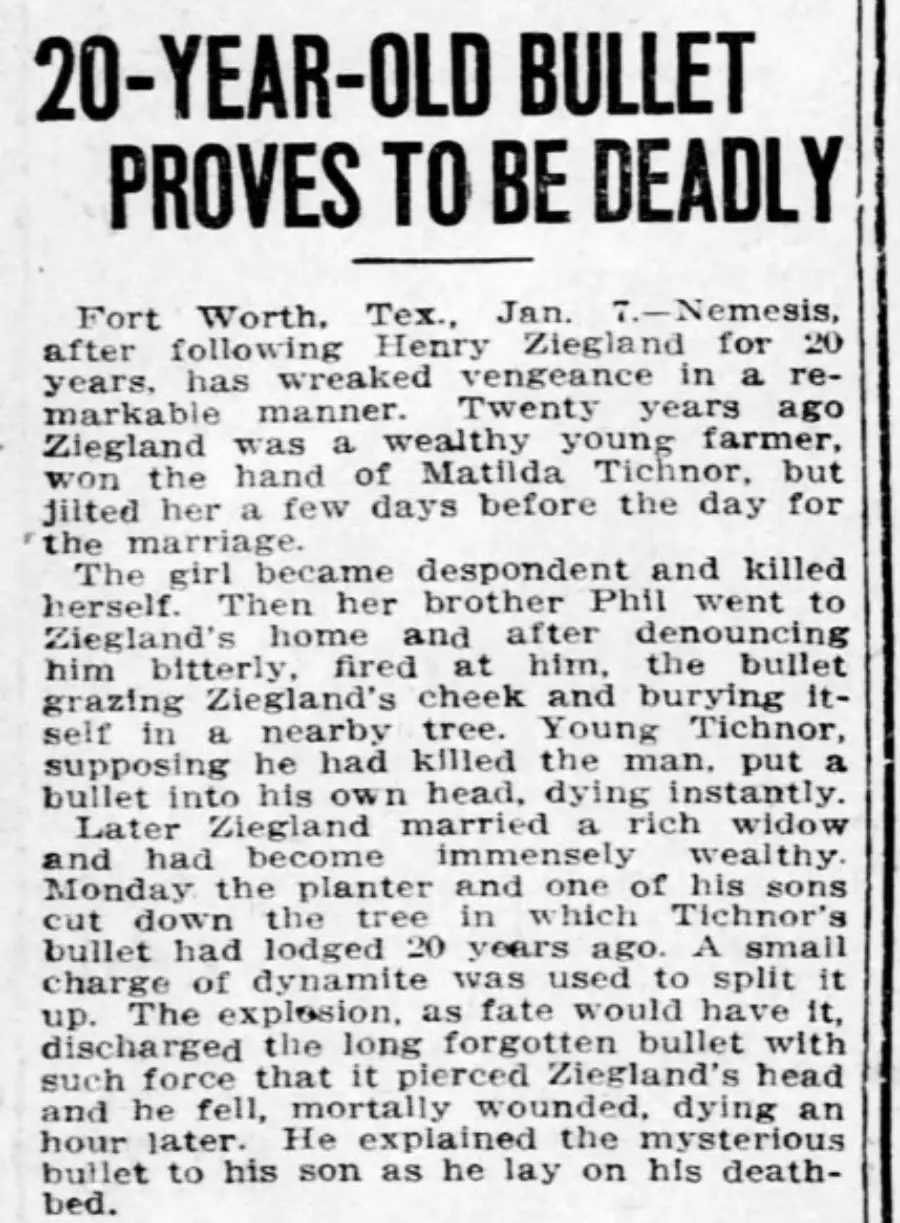
In 1893, a frustrated young man named Henry Ziegland abruptly ended a romantic relationship, prompting his devastated ex-girlfriend to take her own life in a fit of despair. Her furious brother sought immediate vengeance, tracking Ziegland down to his rural farm and firing a pistol shot directly at his head. The bullet miraculously missed Ziegland’s skull, slicing through his earlobe before embedding itself deeply into the trunk of a large oak tree nearby. Believing he had successfully executed his target, the brother turned the firearm on himself. Twenty years later, Ziegland decided to clear the old tree from his property using dynamite, unleashing a massive explosion that launched that identical, forgotten bullet straight out of the wood chips and directly into his temple, killing him instantly.
Want more fascinating historical facts?
The incredible mathematical anomalies detailed in these historic case files serve as a chilling reminder that the universe frequently operates under laws that transcend our traditional understanding of cause and effect. Long after historians file away the official facts and figures, it is these striking, unexplainable intersections of fate that continue to capture our collective imagination. If you enjoyed this illuminating dive into the most bizarre mysteries of the past, make sure to explore these 15 Famous Groups of Siblings Who Rewrote the Past, or 15 Historical Wars Started for Ridiculous Reasons. You may also like these 15 Mid-Century Inventions That Failed to Change the World.