When we sit down for a meal, we usually expect a certain level of predictability, savory meats, fresh vegetables, and perhaps a sweet dessert to finish. However, as you travel across the globe, you quickly realize that food traditions are shaped by history, geography, and a survivalist instinct that has turned some of the most “unplayable” ingredients into prized delicacies. What one person considers a nightmare on a plate, another sees as a sacred cultural heritage or a sophisticated treat reserved for special occasions. These culinary customs prove that the definition of “delicious” is entirely subjective and often rooted in ancient necessity.
Some of the world’s most fascinating food traditions involve preservation methods that go far beyond simple refrigeration or salting. We are talking about fermentation processes that last for years, the consumption of insects as high-protein snacks, and the preparation of toxic animals that require surgical precision to become edible. These dishes are more than just sustenance; they are a test of courage for the adventurous eater and a deep connection to the land for those who prepare them. Let’s take a trip through the global pantry and look at eighteen traditions that might just make you lose your appetite, or at least make your tuna sandwich look incredibly boring.
1. Hákarl: Fermented shark – Iceland
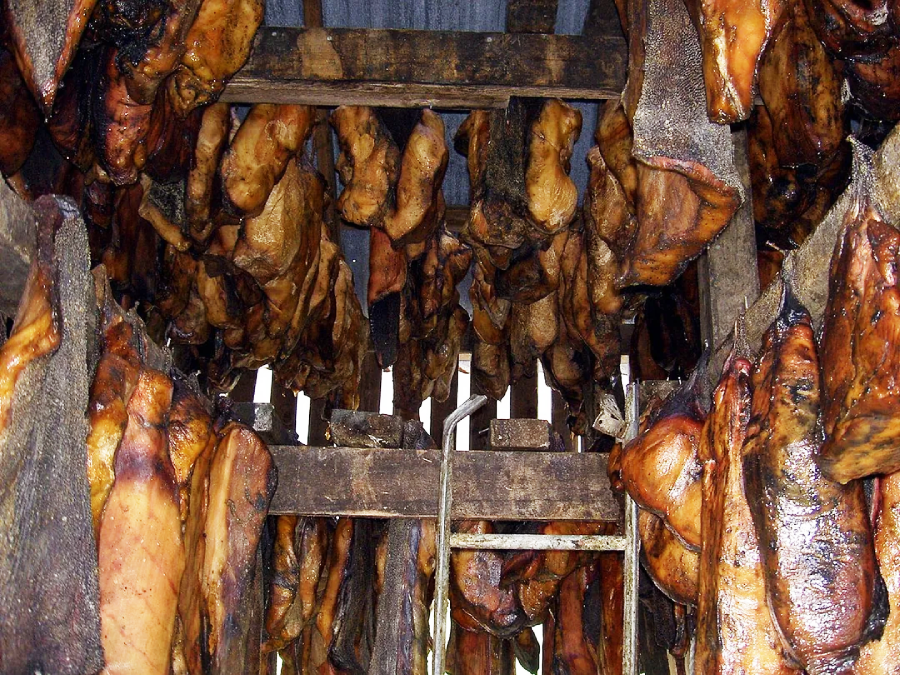
In Iceland, a tradition dating back to the Vikings involves taking the meat of the Greenland shark, which is toxic when fresh, and burying it underground for several months to ferment. The meat is then hung to dry for half a year, developing a pungent aroma that has been famously compared to industrial cleaning fluid or strong ammonia. It is served in small cubes and is often chased with a shot of local schnapps to help the “fragrance” pass. Despite the intense smell, it remains a proud symbol of Icelandic resilience and a mandatory rite of passage for visitors.
2. Casu Marzu: The “maggot cheese” – Italy
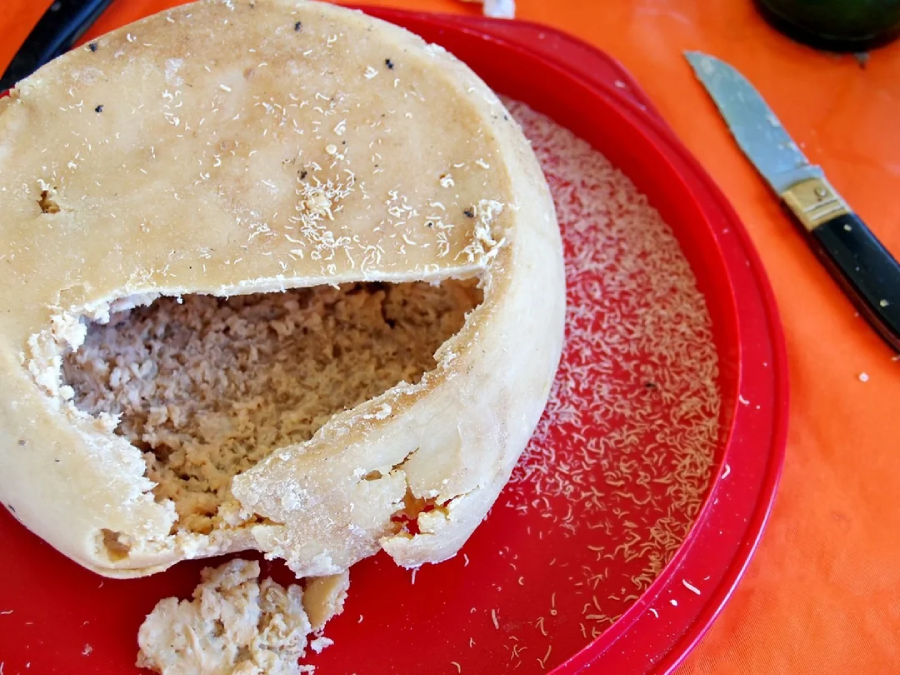
This Sardinian sheep’s milk cheese takes the concept of fermentation to a terrifying extreme by introducing live cheese fly larvae into the ripening process. The maggots digest the fats, creating a texture so soft it’s almost liquid, and the cheese is traditionally eaten while the larvae are still alive and wiggling. Because the maggots can jump up to six inches when disturbed, many diners wear eye protection while eating it to avoid a “biological” accident. It is technically illegal to sell for health reasons, but it remains a highly sought-after delicacy on the black market for those who crave its intense, burning flavor.
3. Balut: The developed duck egg – Philippines
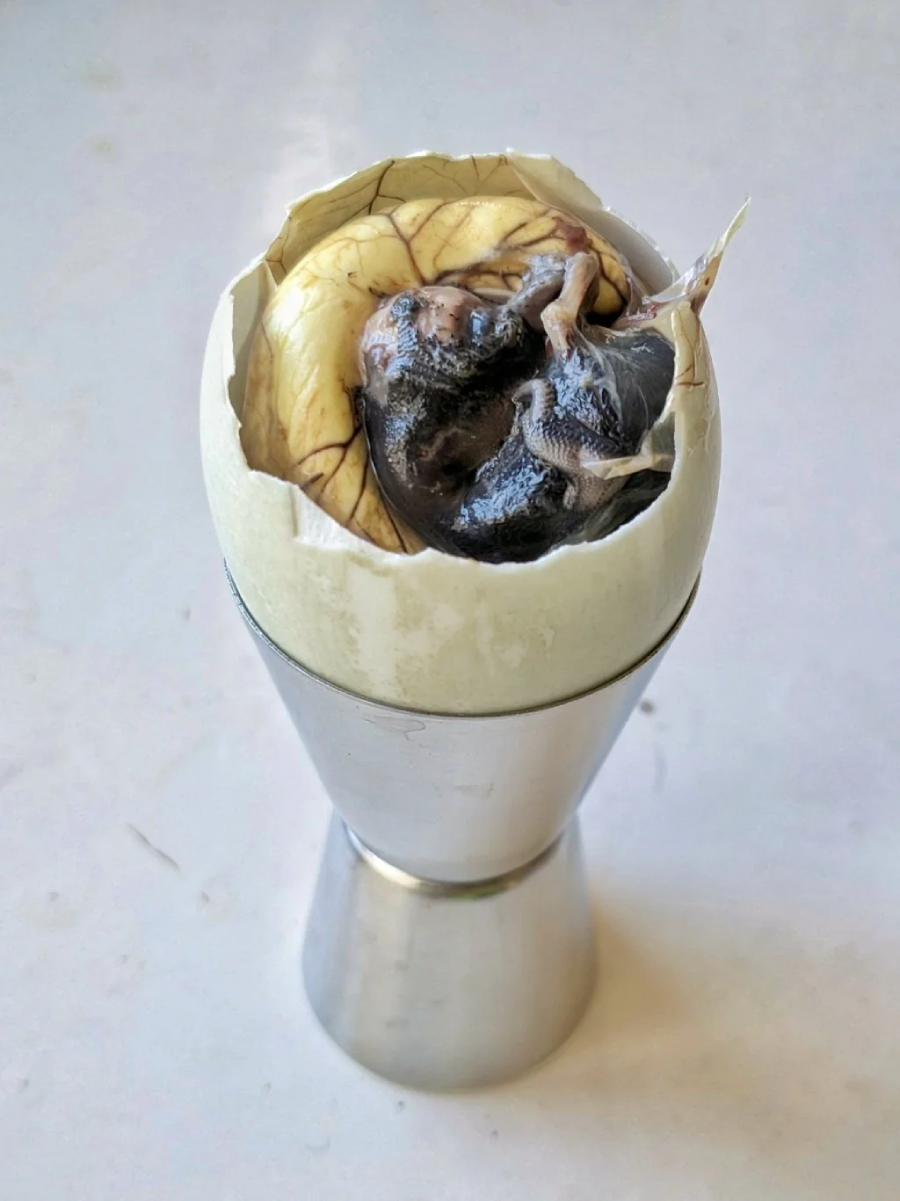
Balut is a popular street food in the Philippines consisting of a fertilized duck egg that has been incubated for about 14 to 18 days. Unlike a regular hard-boiled egg, the inside contains a partially developed embryo, complete with tiny feathers, a beak, and soft bones. To eat it, you crack the shell, sip the warm “soup” (amniotic fluid), and then consume the entire contents with a dash of salt and vinegar. It is considered a powerful energy booster and a beloved late-night snack, though the visual experience is often a hurdle for uninitiated travelers.
4. Fugu: The lethal pufferfish – Japan
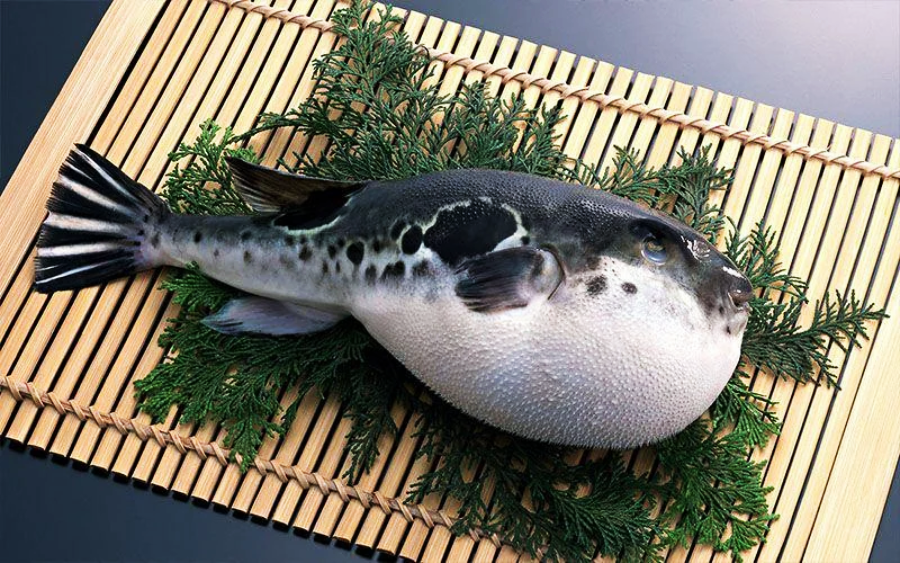
Fugu is perhaps the most dangerous dish in the world, as the pufferfish contains tetrodotoxin, a poison that is 1,200 times more deadly than cyanide. Japanese chefs must undergo years of rigorous training and obtain a special license to legally prepare the fish, carefully removing the toxic liver and ovaries. The goal is often to leave a trace amount of toxin in the meat to provide a slight, numbing tingling sensation on the diner’s lips. A single mistake during preparation can lead to total paralysis and death, yet thousands of people pay a premium every year for the thrill of this high-stakes meal.
5. Surströmming: The world’s smelliest fish – Sweden
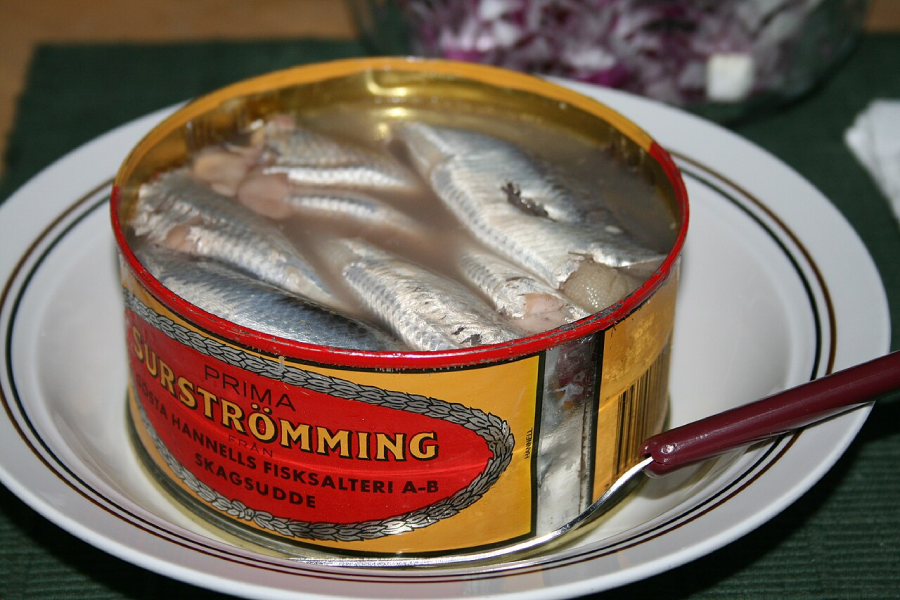
This Swedish tradition involves Baltic Sea herring that has been fermented with just enough salt to prevent it from rotting while it sits in cans for months. The fermentation produces so much gas that the cans often bulge into a pressurized dome shape, and they are usually opened outdoors or underwater to prevent the smell from sticking to the furniture. The odor is so powerful that several airlines have banned the cans on flights, fearing a “gas leak” scenario. When eaten correctly on flatbread with potatoes and onions, fans claim the taste is surprisingly sophisticated and salty, though the initial blast is legendary.
Trending on The Scroller
6. Century Eggs: The three-month preservation – China
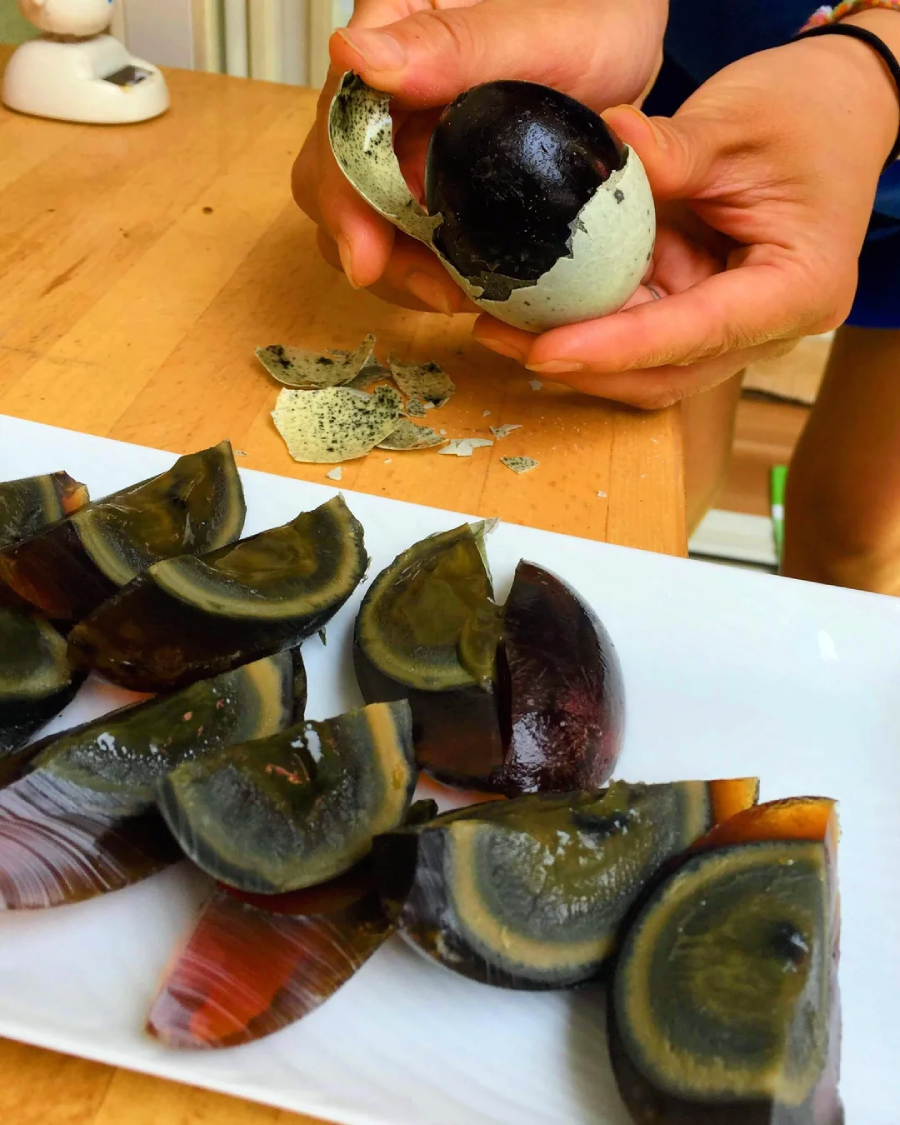
Despite the name, these eggs aren’t actually a hundred years old, but they certainly look like they’ve seen a few decades. They are made by preserving duck, chicken, or quail eggs in a mixture of clay, ash, salt, and quicklime for several months until the yolk turns dark green and the white becomes a translucent brown jelly. The process gives the egg a strong sulfur and ammonia flavor that is an acquired taste for most. It is often served as a side dish or chopped into congee, offering a creamy, complex texture that is highly prized in Chinese cuisine.
7. Fried Tarantulas: The survivalist snack – Cambodia
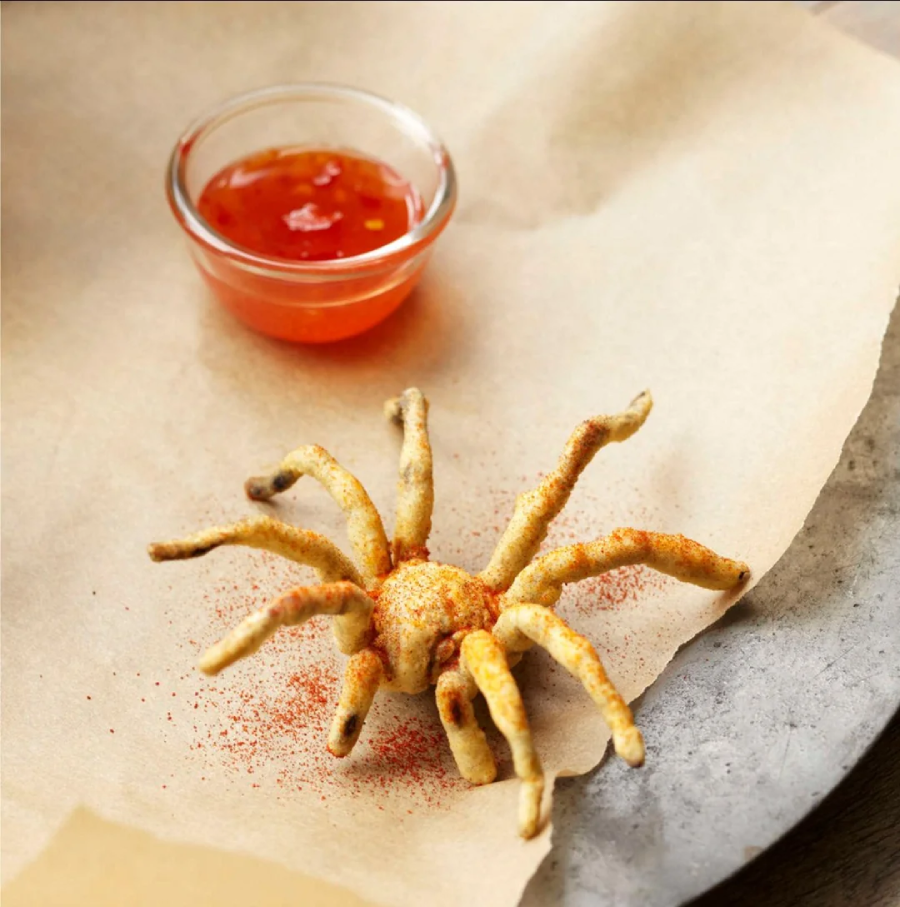
In the town of Skuon, Cambodia, crispy fried tarantulas have gone from a desperate source of food during the Khmer Rouge era to a popular delicacy for locals and tourists alike. These fist-sized spiders are seasoned with garlic and salt before being deep-fried until the legs are crunchy and the abdomen is soft. The flavor is often described as a mix between chicken and cod, with a slightly nutty aftertaste from the chitin. While the idea of eating an eight-legged predator is terrifying to some, it’s a sustainable and high-protein snack that has helped revitalize the local economy.
8. Escamoles: “Ant larvae” caviar – Mexico
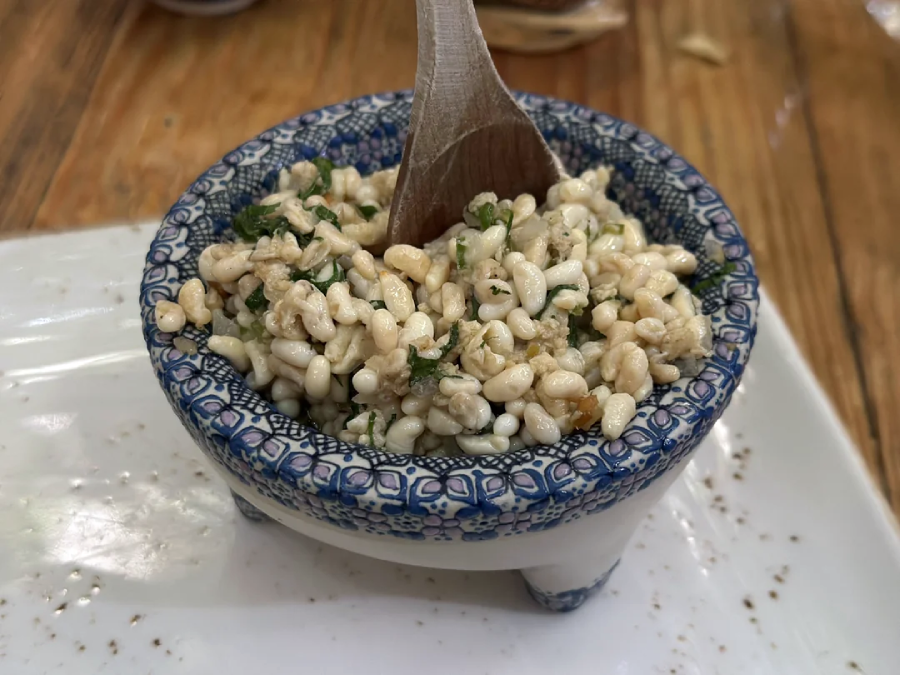
Known as “desert caviar,” Escamoles are the edible larvae and pupae of ants harvested from the roots of agave or maguey plants. They have a buttery, nutty flavor and a texture similar to cottage cheese, making them a high-end ingredient in omelets, tacos, or even on their own. Harvesting them is a dangerous job because the ants are highly aggressive and will swarm anyone trying to reach their underground nests. It is a tradition that dates back to the Aztecs, who considered these “insect eggs” to be a sacred and energizing luxury.
Sign up for our newsletter
9. Kiviak: Birds fermented in a seal skin – Greenland
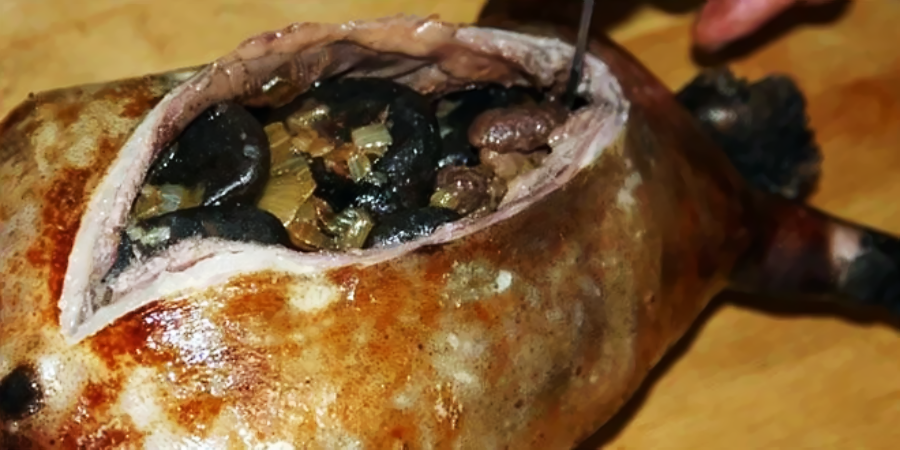
Kiviak is a traditional wintertime Inuit food that involves stuffing about 500 whole little auk birds into a hollowed-out seal skin. The skin is sewn shut, sealed with grease, and buried under a large rock for three to eighteen months to allow the birds to ferment in the seal’s blubber. The fermentation process tenderizes the meat so much that it can be eaten raw, bones and all, usually during celebrations or weddings. It is a masterclass in Arctic preservation, though the intense, pungent aroma is enough to stop most outsiders in their tracks.
10. Witchetty Grubs: The Outback protein – Australia
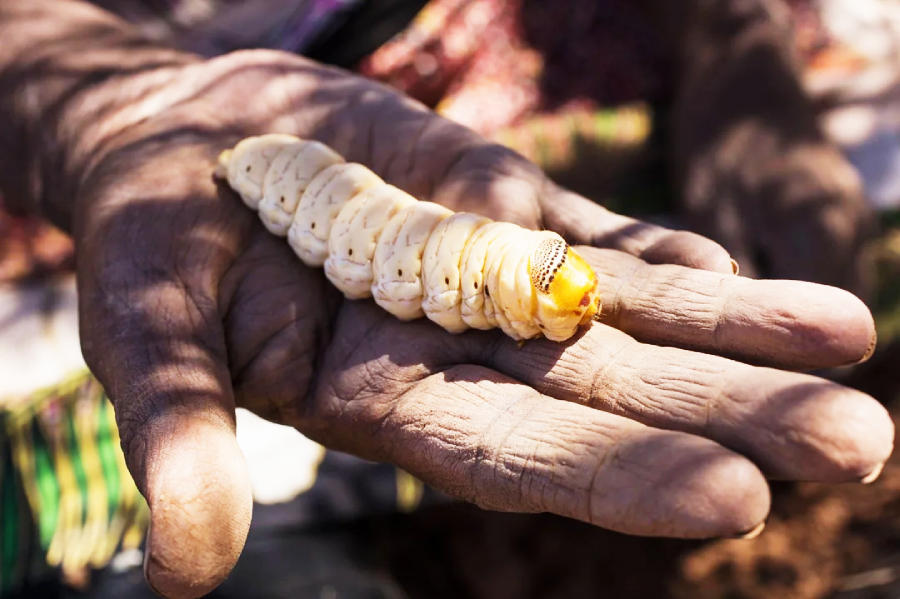
For thousands of years, the large, white, wood-eating larvae of the cossid moth have been a staple of the Indigenous Australian diet. When eaten raw, the grubs have a watery, nutty taste, but when roasted over coals, the skin becomes crispy and the inside takes on the texture of scrambled eggs or roasted chicken. They are incredibly rich in protein and healthy fats, making them the ultimate survival food in the harsh Australian bush. Finding one requires digging into the roots of the Witchetty bush, a skill that is still passed down through generations today.
11. Bird’s Nest Soup: Edible saliva – China
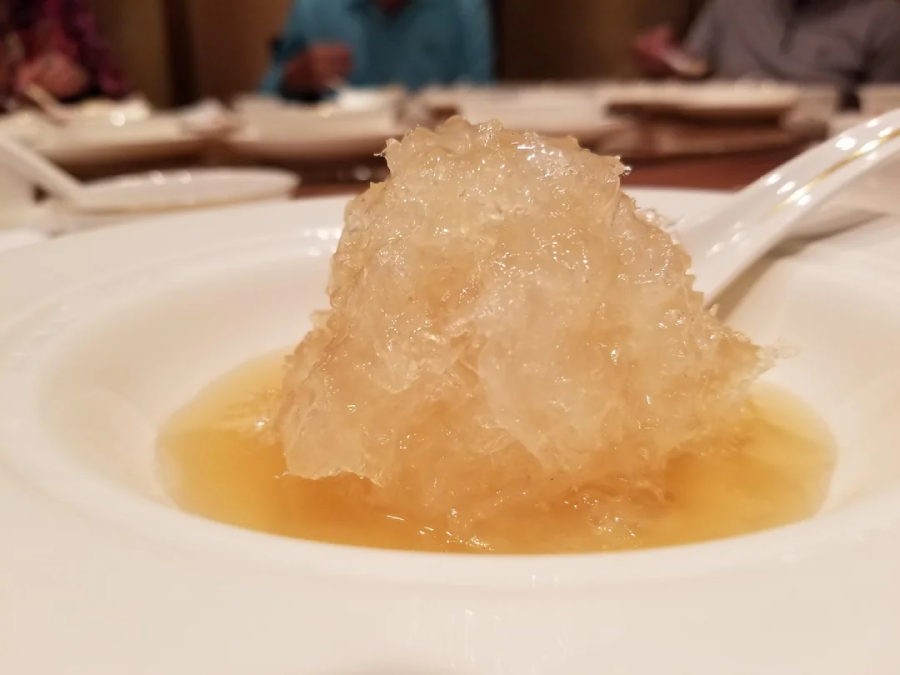
This world-famous delicacy isn’t made of twigs and feathers, but rather the dried, solidified saliva of the swiftlet bird. These birds build their nests against the walls of caves, using their spit as a glue that hardens into a translucent, rubbery shell. Once harvested and cleaned, the nest is dissolved in water to create a soup with a gelatinous texture that is believed to aid digestion and skin health. Because the nests are difficult and dangerous to harvest, a single bowl can cost hundreds of dollars, making it one of the most expensive animal products in the world.
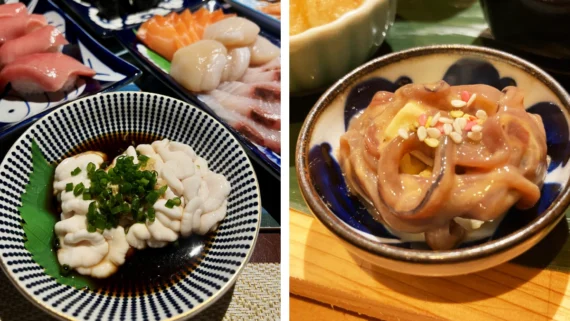
12. Shirako: Cod sperm sacs – Japan
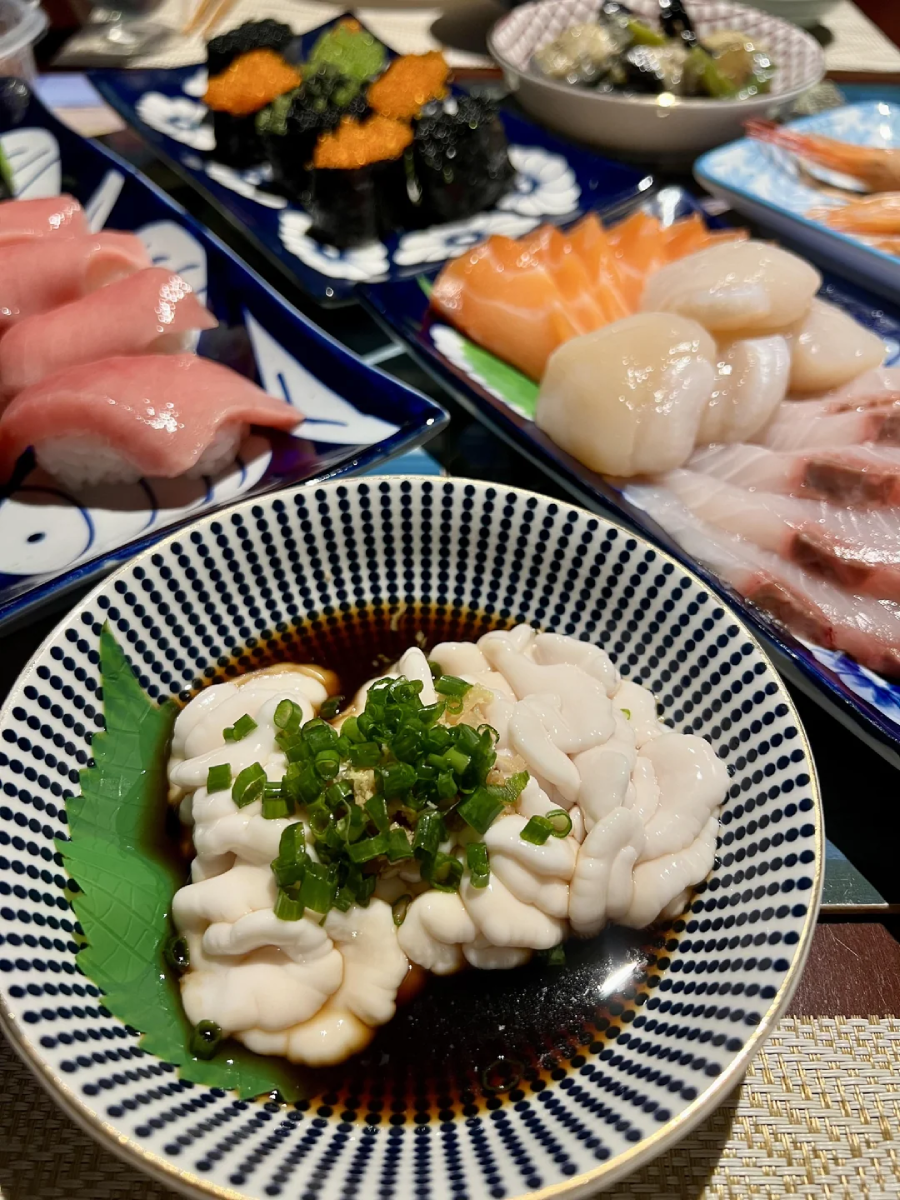
Shirako translates literally to “white children,” and it refers to the milt, or sperm sacs, of various fish, most commonly cod. It has a soft, creamy, custard-like consistency and is served either raw with ponzu sauce or lightly grilled to bring out its delicate, milky flavor. While the source might be shocking to some, it is considered a peak winter delicacy in Japan for its rich, buttery mouthfeel. It is often compared to the texture of a soft-poached egg or a very fine brain, though with a much cleaner, oceanic finish.
13. Sannakji: Wiggling octopus tentacle – South Korea
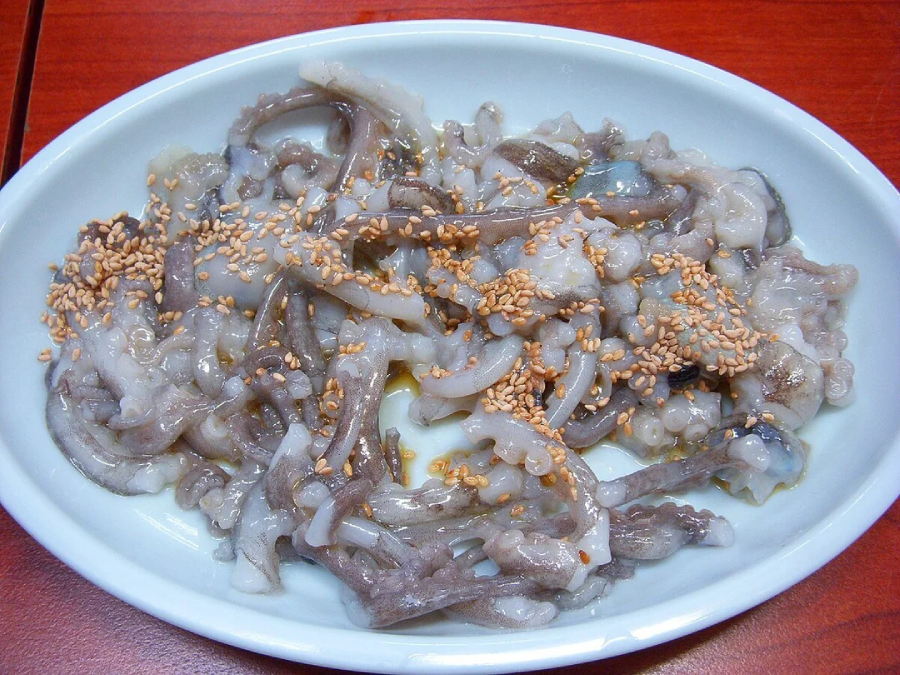
Sannakji is a dish of “live” octopus, where a small octopus is chopped into pieces and served immediately, still squirming on the plate. Because the octopus’s nervous system is so complex, the tentacles continue to move and the suction cups remain active even after being detached. This makes it a high-risk meal, as the suckers can stick to the diner’s throat and cause choking if not chewed thoroughly. It is a thrilling culinary experience that is less about the mild flavor and more about the strange, pulsing sensation in your mouth.
14. Haggis: The savory pudding – Scotland

Scotland’s national dish is a hearty pudding made of a sheep’s “pluck” (the heart, liver, and lungs) minced with onions, oatmeal, suet, and spices. Traditionally, this mixture is encased in the animal’s stomach and simmered for several hours until it becomes a rich, crumbly meal. It is famously celebrated by the poet Robert Burns and is the centerpiece of “Burns Night” dinners across the world. While the ingredients list might sound like a butcher’s scrap bin, the resulting flavor is peppery, nutty, and incredibly comforting on a cold Scottish night.
15. Lutefisk: The lye-soaked whitefish – Norway
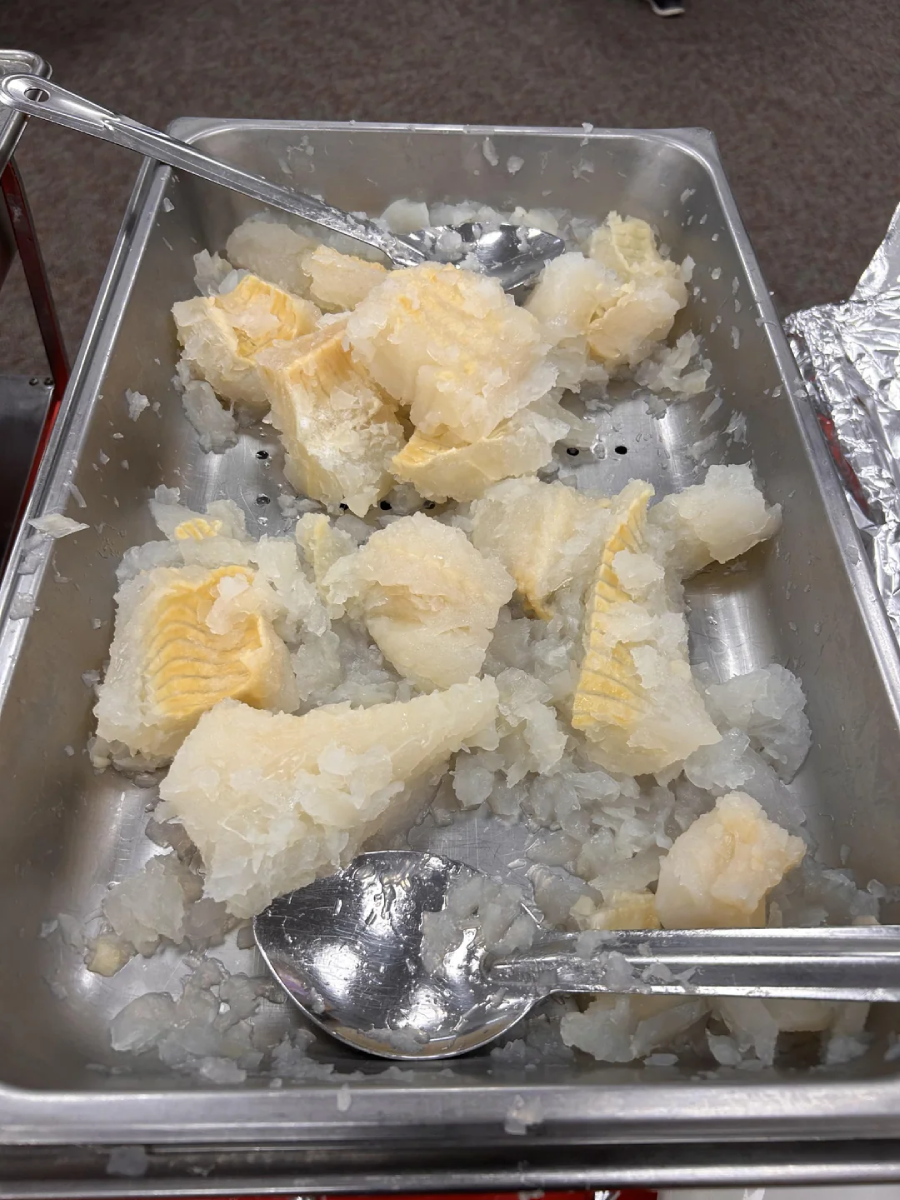
Lutefisk is an ancient Nordic dish made from dried whitefish (usually cod) that has been treated with lye, a highly caustic chemical. The lye gives the fish a translucent, jelly-like consistency and a very distinct, soapy smell that has polarized families for centuries. Before eating, the fish must be soaked in fresh water for several days to remove the lye, otherwise, it would be toxic to consume. It is a Christmas tradition that survived from a time when lye was the only way to preserve fish for long winters without it rotting.
16. Shiokara: Salted fish viscera – Japan
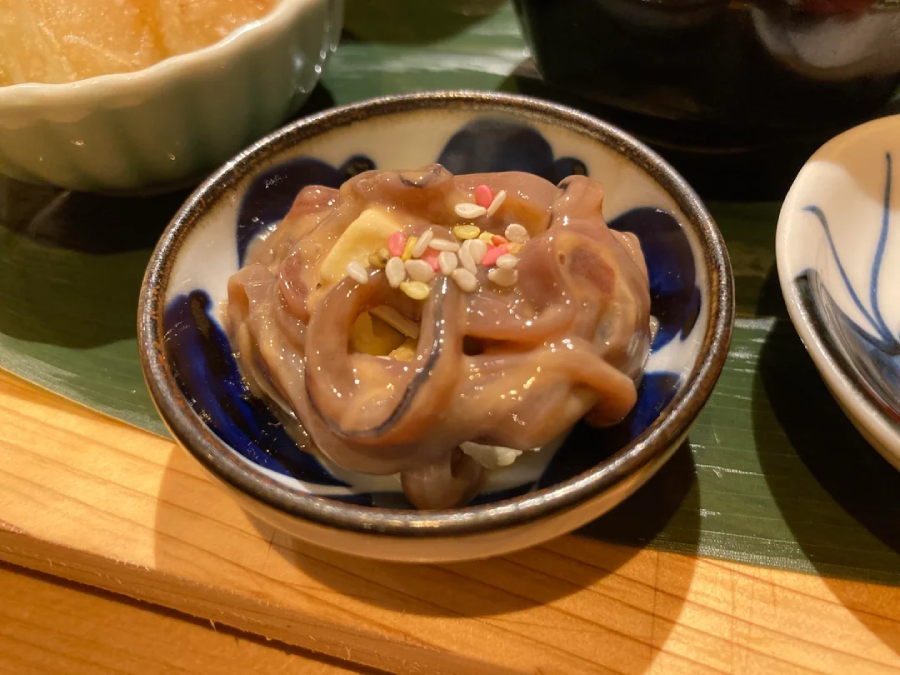
Shiokara is a “chinmi” (rare taste) made by mixing small pieces of seafood, usually squid, with a brown paste of its own fermented intestines and salt. The mixture is left to age for up to a month, resulting in a flavor that is intensely salty, funky, and extremely pungent. It is traditionally served in small portions alongside a cold beer or a glass of sake to cut through the richness. Most westerners find it to be one of the most challenging dishes in Japanese cuisine, but for many, it is the ultimate umami bomb.
17. Mopane Worms: The crunchy caterpillar – Zimbabwe

The Mopane worm is actually a large, colorful caterpillar that feeds on the leaves of the Mopane tree in Southern Africa. Once harvested, they are squeezed to remove their insides, boiled in salt water, and then sun-dried until they become crispy and shelf-stable. They can be eaten as a dry, crunchy snack like potato chips or rehydrated and cooked in a spicy tomato stew. They are a vital source of nutrition in rural areas, containing three times the protein of beef by weight, making them a literal “superfood” of the savannah.
18. Khash: Boiled cow’s feet and head – Georgia
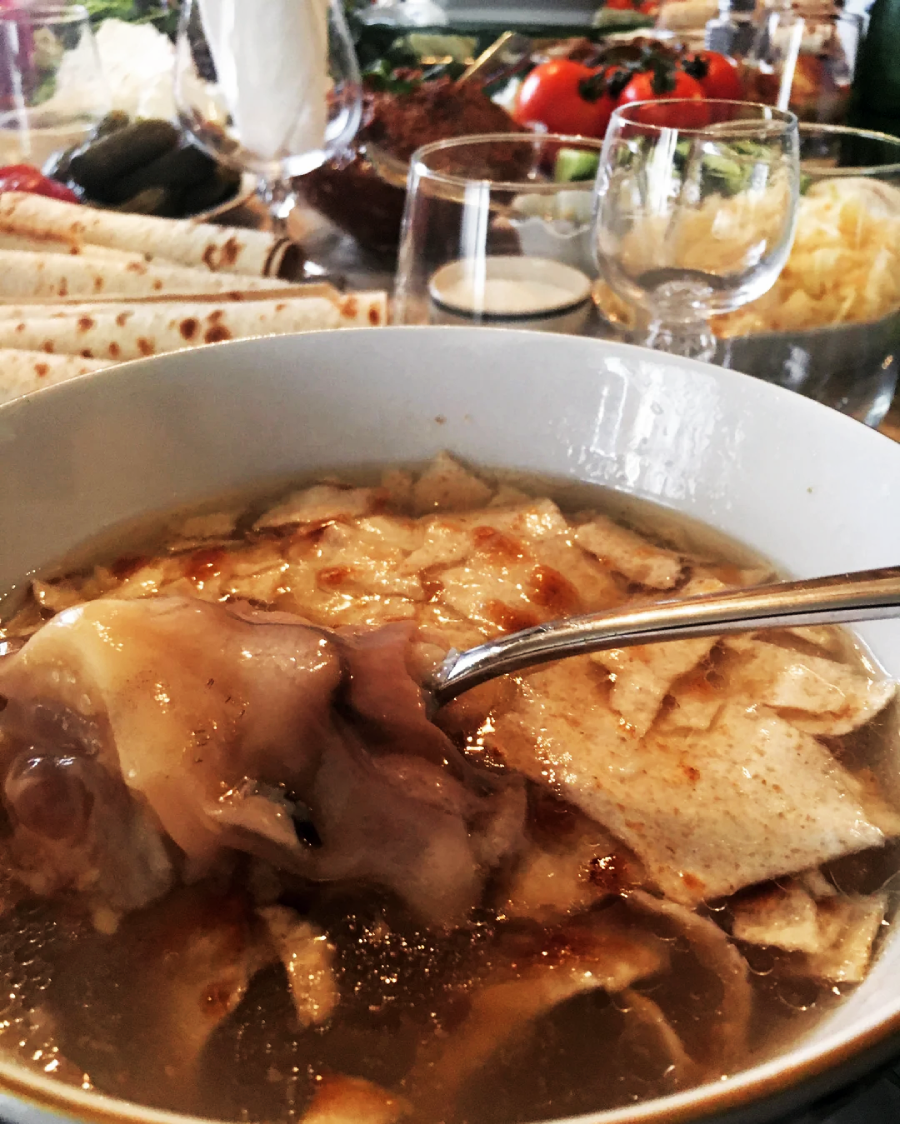
Khash is a traditional “hangover cure” soup made by slow-boiling cow’s hooves and head overnight until the broth is thick and gelatinous. It is strictly a morning meal, eaten at dawn with large amounts of garlic, salt, and vodka to revive the body after a long night of celebration. The dish is so culturally significant that it even has its own set of rituals, including covering the bowl with a piece of flatbread to keep the steam in. It is a communal, messy, and deeply satisfying tradition that turns a humble cow’s foot into a legendary feast.
Explore more bizarre cuisine:
It is clear that what we find “normal” on our dinner plates is largely a matter of where we were born and what our ancestors had to do to survive. These food traditions remind us that human culture is incredibly diverse, daring, and sometimes just a little bit stomach-turning. If you’re hungry for more “impossible” facts or want to explore the stranger side of our world, don’t miss these 20 Fast Food Fails That Should Never Have Left the Kitchen, or these 20 Food Plating Fails From ‘Fancy’ Restaurants. You can also check these 20 Fast Food Fails That Should Never Have Left the Kitchen.