

Tax Season is the time of year when everyday citizens suddenly become amateur forensic accountants, scouring their receipts for any possible way to lower their bill to Uncle Sam. While most people are just trying to write off a home office or a few charitable donations, there is a bold subset of the population that takes “creative deductions” to a legendary level. From business owners trying to write off their family pets to celebrities attempting to deduct their entire designer wardrobes, the IRS has seen it all.
The secrets of Tax Season often lie in the gray areas of the tax code, where “ordinary and necessary” business expenses are left up to interpretation. However, some attempts are so brazen and bizarre that they end up in tax court, becoming cautionary tales for the rest of us. These stories prove that while the IRS might be a massive bureaucracy, they definitely have a sense of humor, or at least a very high tolerance for nonsense. Let’s take a look at fifteen of the most outrageous things people actually tried to deduct, and find out exactly where the taxman draws the line between a savvy business move and a total fantasy.
1. The “guard cat” food

One business owner tried to deduct the cost of cat food, claiming the feline was an essential part of his “security team” to keep mice away from his inventory. While the IRS does sometimes allow deductions for legitimate guard dogs, they weren’t convinced that a house cat qualified as a professional security asset. The deduction was ultimately clawed back because the owner couldn’t prove the cat was “working” full-time or that it was anything other than a pampered pet. It remains a classic example of how “purr-sonal” expenses rarely fly in tax court.
2. A private “getaway” jet for stress relief

A highly stressed corporate executive once tried to deduct the purchase and maintenance of a private jet, claiming it was a “medical necessity” to escape the pressures of his job. He argued that his doctor had prescribed vacations to manage his blood pressure, and therefore, the jet was essentially a piece of medical equipment. Unsurprisingly, the IRS ruled that while vacations are nice, a multi-million dollar aircraft is a luxury, not a prescription. This case is often cited as the gold standard for “trying your luck” during Tax Season.
3. A wedding as a “marketing event”

A business consultant attempted to write off the entire cost of his daughter’s lavish wedding by claiming it was a networking event for his top clients. He argued that because he invited several business associates and discussed potential deals over the cake, the flowers and the band were legitimate business expenses. The tax court disagreed, pointing out that a family wedding is inherently a personal event, regardless of how many business cards are swapped. It turns out you can’t make the government pay for the “Electric Slide.”
4. Cosmetic surgery for “brand imaging”

An exotic dancer attempted to deduct her breast implants as a necessary business expense, arguing the increase was an “asset” that directly boosted her income. Surprisingly, in this specific case, the Tax Court actually agreed with her because the size was so extreme it couldn’t be considered a “personal” improvement for daily life. It was classified as specialized work equipment, much like a uniform or a stage prop. It remains one of the few instances where a “beauty” expense actually won against the IRS.
5. Ostrich farming as a hobby loss

A businessman tried to deduct massive losses from his ostrich farm, claiming it was a legitimate commercial venture and not just a hobby. The IRS became suspicious when they realized the “farmer” had no business plan, no actual sales, and basically just enjoyed having giant birds on his property. To deduct losses, you must prove you are trying to make a profit, not just collecting exotic animals. In the end, the court decided his love for ostriches was a personal expense that would cost him dearly in back taxes.
Trending on The Scroller


6. Arson for a “loss deduction”

In one of the most desperate moves in history, a property owner burned down his own building to try and claim a “casualty loss” deduction. The plan was simple: if the building was gone, the loss in value would drastically reduce his tax burden for the year. However, the IRS has a very clear rule that you cannot deduct a loss if you caused the damage yourself on purpose. The man not only lost the deduction but ended up facing criminal charges for arson, proving that tax fraud can lead to more than just a fine.
7. A swimming pool for “physical therapy”

A taxpayer tried to deduct the construction of a luxury swimming pool in his backyard, claiming his doctor prescribed it to treat a degenerative disease. While medical expenses are deductible, the IRS ruled that the cost of the pool far exceeded what would be considered an “ordinary” treatment. The general rule is that you can only deduct the portion of the cost that does not add value to your property. Basically, if the pool makes your house worth more, the IRS considers it an investment in your home, not your health.
8. Designer suits for a TV personality

A well-known news anchor tried to deduct thousands of dollars in designer suits, arguing they were his “uniform” for appearing on camera. The court rejected the claim, establishing a rule that is still used today: if the clothes can reasonably be worn on the street, they are not deductible. To be a uniform, it must be something you wouldn’t wear to a normal dinner, like a wetsuit or a mascot costume. The anchor had to pay for his own style, as his Armani suits were “too fashionable” to be considered tools of the trade.
Sign up for our newsletter
9. A yacht to “entertain” potential leads

A luxury real estate agent tried to deduct the maintenance of his 60-foot yacht, claiming it was his “floating office” where he closed deals with millionaire clients. The problem was that he couldn’t provide logs of which meetings occurred or how many sales were directly generated on the boat. The IRS is extremely strict with entertainment expenses and requires detailed diaries to prevent family vacations from being disguised as business. Without proof of “direct profit,” the yacht was deemed a personal toy rather than a professional necessity.
10. Commuting by helicopter to avoid traffic

An executive who hated Los Angeles traffic decided to lease a helicopter to get from his home to the office and then tried to deduct it as a business travel expense. The IRS was blunt: the commute from your home to your primary place of work is never deductible, regardless of whether you go by bike or private chopper. It is considered a personal expense based on where you choose to live. The executive learned the hard way that the sky isn’t the limit when it comes to the basic rules of the daily commute.
11. Beer as a “business fuel”

A truck driver tried to deduct his annual beer expenses, arguing it was a necessary expense to “wind down” after long days on the road, which allowed him to work better the next day. Needless to say, the IRS does not view alcohol as a productivity supplement or a professional tool. Furthermore, admitting to a massive alcohol consumption habit to tax authorities isn’t the best legal strategy for a professional driver. The claim was rejected instantly, leaving the driver with a tax bill much more bitter than his drink.
12. Dog grooming for a “mascot”

A shop owner tried to deduct the grooming bills for his dog, claiming the animal was the “official mascot” of the business and attracted customers. While marketing expenses are valid, the IRS ruled that the dog’s haircuts and paw-dicures were personal benefits for the owner. Unless the dog is trained for a specific security or service task, its physical appearance is the owner’s responsibility, not the government’s. “Mascot marketing” has clear limits, and the canine spa is definitely on the wrong side of that line.
13. A $5,000 “business” trip to Disney World

One entrepreneur tried to write off a family trip to Disney World because he spent thirty minutes handing out business cards near the Space Mountain line. He claimed the entire week of hotels and park passes was a “marketing expedition” designed to find new leads. The IRS quickly pointed out that for a trip to be deductible, the primary purpose must be business, not meeting Mickey Mouse. Handing out a few flyers between rides doesn’t turn a family vacation into a corporate retreat.
14. Depreciating a “professional” Rolex
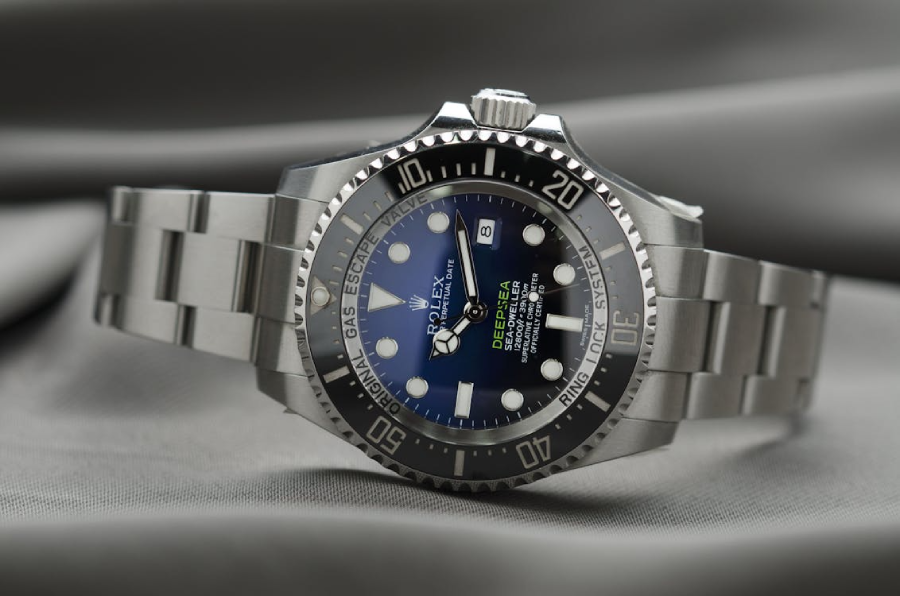
A freelancer tried to “depreciate” his luxury Rolex watch over five years, arguing that as a consultant, “time is money” and he needed a high-end timepiece to maintain his professional image. The IRS noted that a $10,000 watch tells the same time as a $20 one and that jewelry is almost always considered a personal asset. Since the watch doesn’t physically wear out like a piece of factory machinery, it doesn’t qualify for depreciation. He was told that while his watch was impressive, his tax logic was significantly behind the times.
15. The “toga party” as a cultural seminar

A college town landlord tried to deduct the cost of a massive, booze-filled toga party he hosted for his tenants, labeling it a “cultural community seminar.” He argued that the party improved tenant retention and was a necessary expense for his property management business. The IRS agents, who have seen every party trick in the book, ruled that the event was purely social and provided no “ordinary or necessary” business value. The landlord ended up footing the bill for the sheets and the kegs himself.
Explore more fun facts:
Navigating the murky waters of Tax Season requires a balance of ambition and common sense, something these taxpayers clearly lacked. While it’s tempting to try and turn your daily Starbucks run into a “consultation fee,” the IRS is usually three steps ahead of the game. If you’re ready for more stories about people pushing the limits, don’t miss these 20 Ridiculous Things Celebrities Actually Wasted Their Money On, or these 15 Highest-Paid Athletes from the NFL. You can also check these 15 Most Expensive Pets You Can Own (Some Cost a Fortune).