Property holdouts can turn even the biggest development plans into elaborate puzzles. A developer may have millions of dollars, an entire construction crew, and almost every parcel on the block, but one owner saying “no” can still change the shape of everything.
These 18 cases show what happened when homes, shops, farms, and other properties remained exactly where planners wanted to build. Sometimes construction wrapped around them. Sometimes roads split apart. In a few extraordinary cases, the standoff affected projects on a scale far larger than the property itself.
1. Edith Macefield’s House – Seattle, Washington
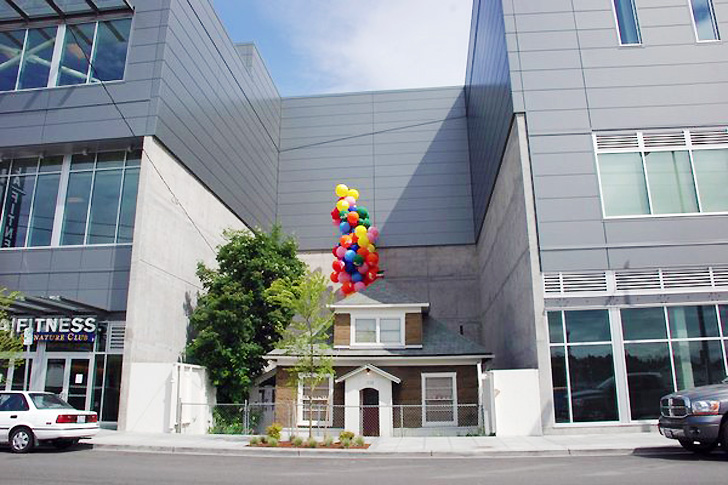
Edith Macefield’s little home became dramatically smaller once the neighborhood around it began changing. She refused a major offer for the property, so construction simply continued around her. A five-story commercial development eventually rose along three sides of the house, leaving the modest home tucked into the middle of a much larger modern complex. One stubbornly unchanged piece of Seattle had suddenly become impossible to miss.
2. Spiegelhalter’s Jewelry Shop – London, England
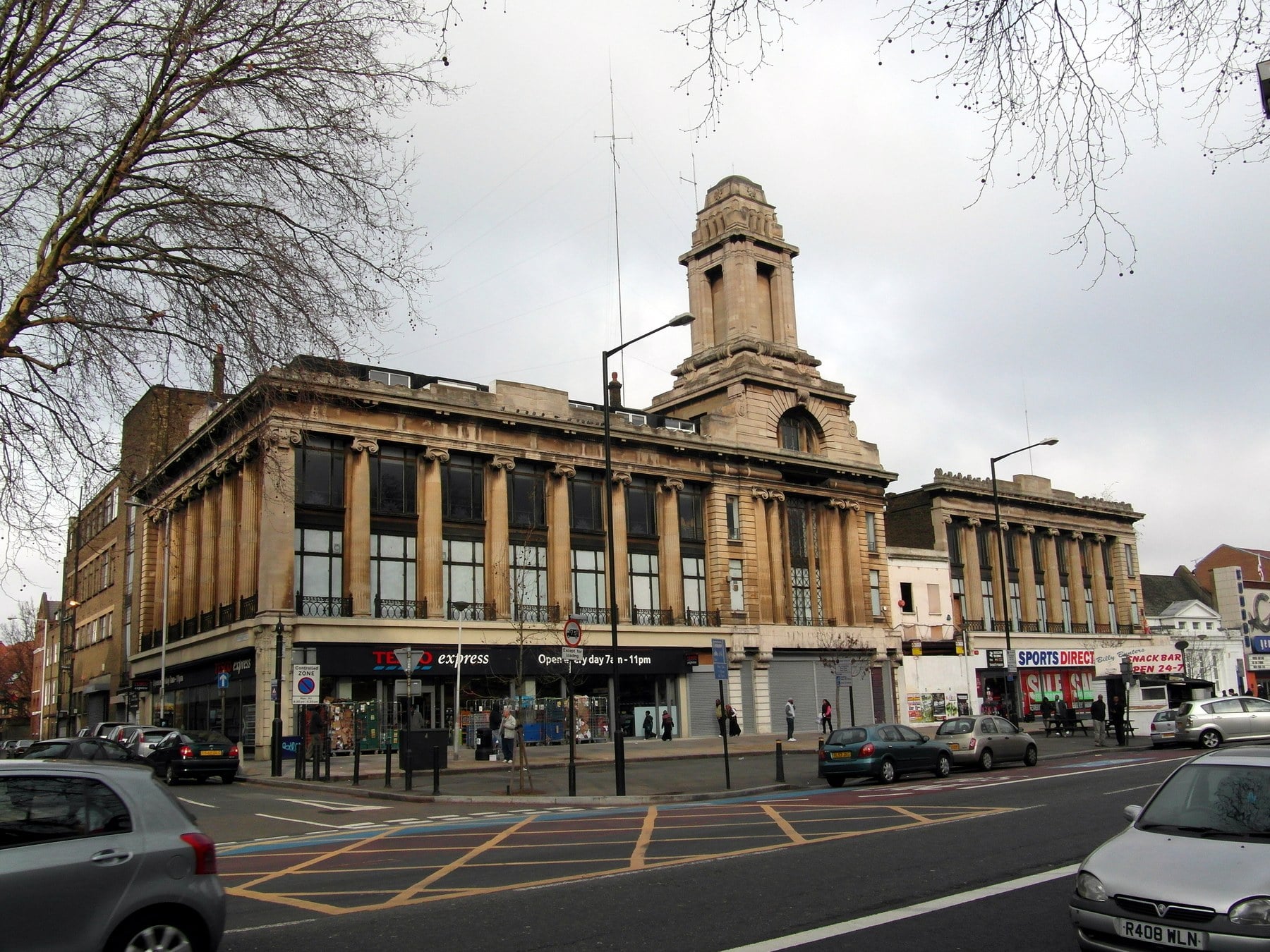
Look at the old Wickhams department store facade and something immediately seems off. In the 1920s, the company acquired nearly the entire block for its grand new building, but the Spiegelhalter family refused to sell their narrow jewelry shop. Wickhams built around it instead, leaving a conspicuous gap in the otherwise monumental facade that became known for its “missing tooth” appearance.
3. Vera Coking’s Boarding House – Atlantic City, New Jersey
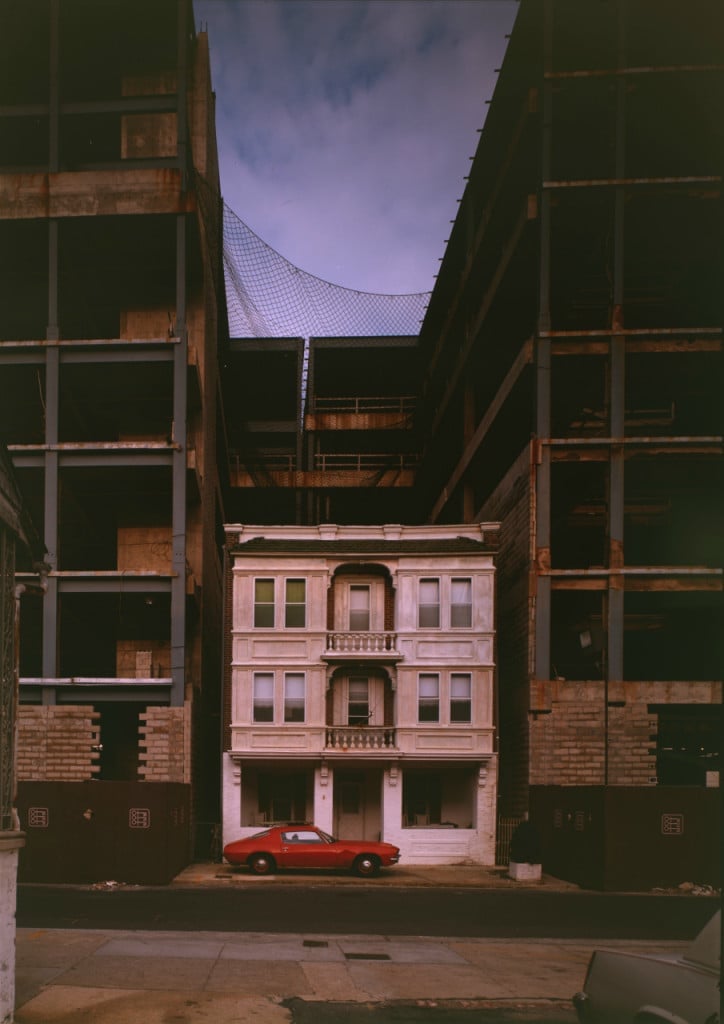
Casino development transformed the blocks surrounding Vera Coking’s Atlantic City boarding house, but her property proved remarkably difficult to dislodge. Coking repeatedly resisted developers, including Donald Trump, who later unsuccessfully tried to acquire the property through eminent domain. Steel from an earlier casino project even rose around the building. How surreal must it have felt to watch enormous developments appear while your own house remained exactly where it had always been?
4. The Little Tavern That Refused to Disappear
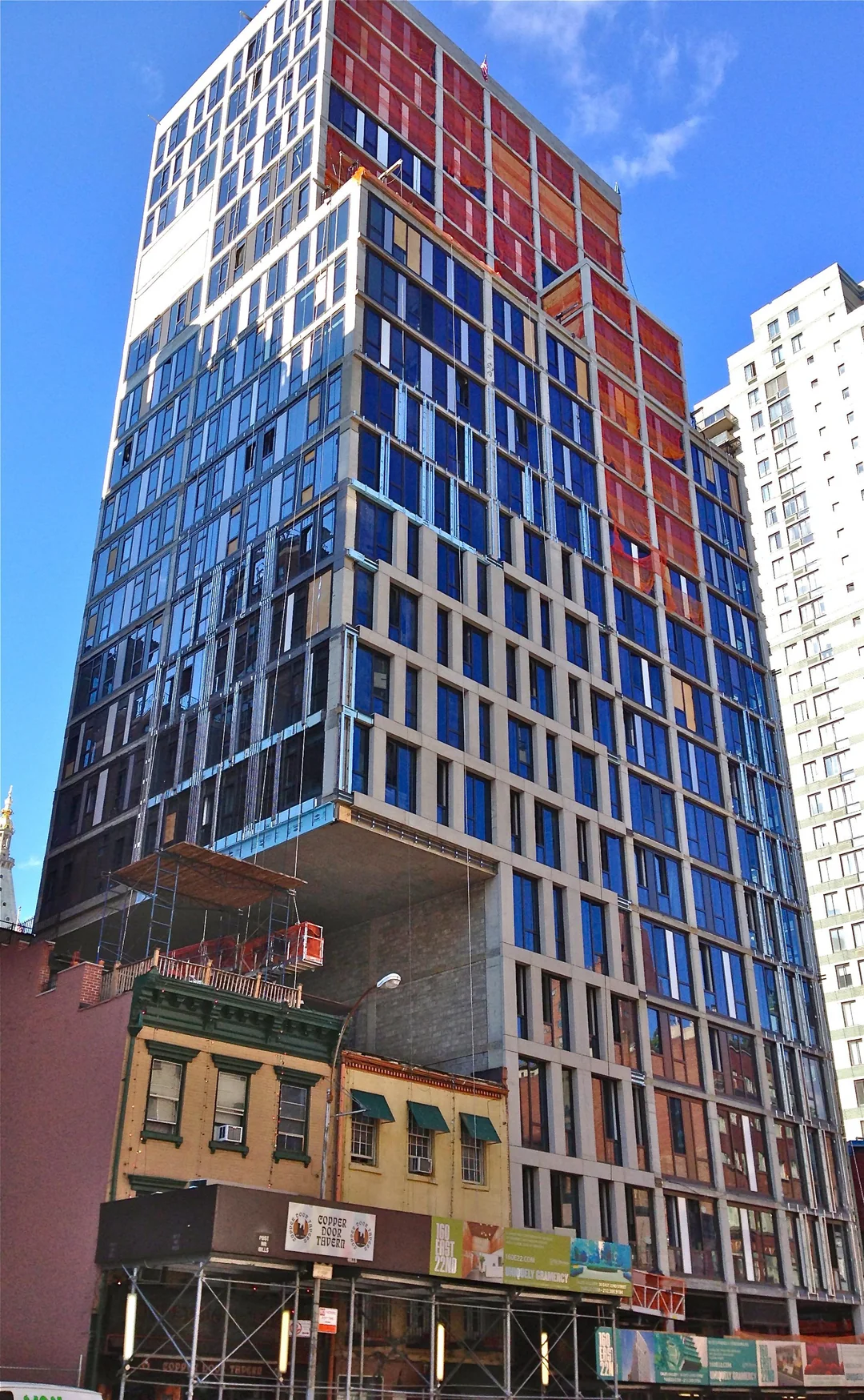
Imagine running a neighborhood tavern while an enormous skyscraper rises right above your roof. That’s the striking scene here, where a modest two-story building sits beneath a towering wall of glass and steel. The contrast is almost comical: one property looks like a piece of old New York, while the other belongs to an entirely different century. Whether the little building survived through stubborn negotiations or simply an unusual property arrangement, the result is unforgettable. Sometimes, the smallest building on the block steals the entire show.
5. The Figo House – Portland, Oregon
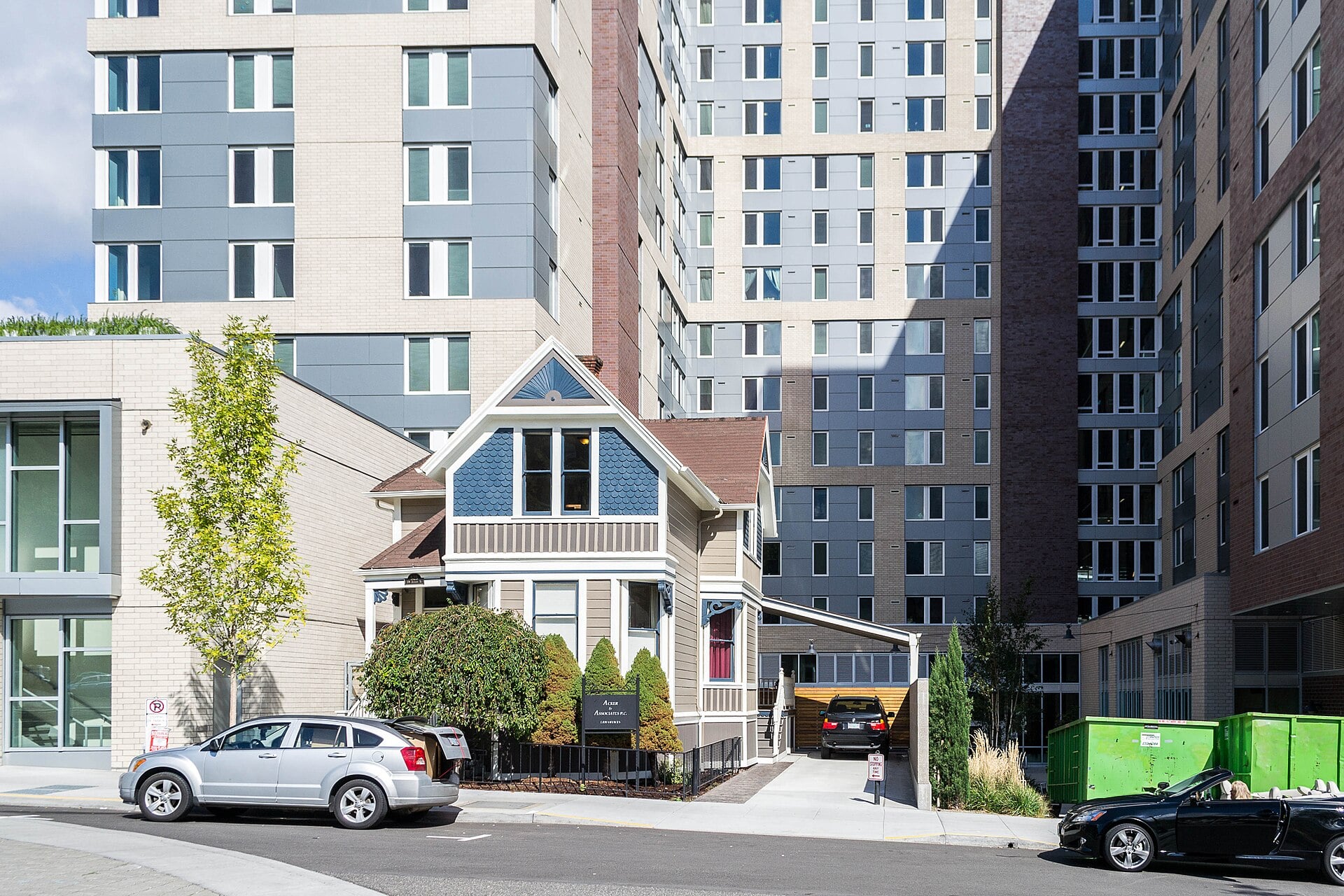
Preservation took a different form at Portland’s Figo House. Attorney Randal Acker fought an attempt by TriMet to acquire the 1894 Queen Anne property, and the house ultimately survived while major development continued around it. A 16-story dormitory was designed to accommodate the historic structure, allowing a building from the 19th century to remain beside a dramatically larger neighbor.
Trending on The Scroller


6. Macy’s “Million Dollar Corner” – New York City
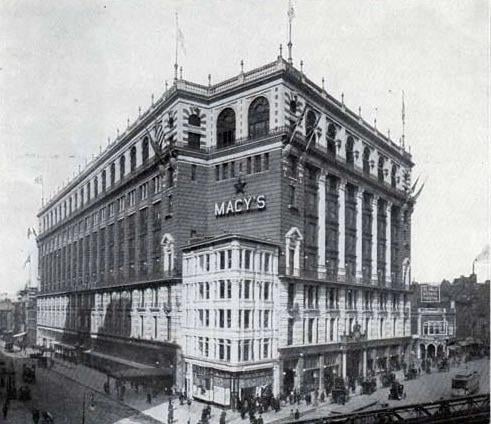
Even one missing corner can reshape an enormous building. When Macy’s assembled land for its Herald Square flagship, a rival-controlled parcel prevented the company from securing the entire block. Rather than abandon its plans, Macy’s constructed the store around the holdout. The result became one of New York’s classic examples of how a relatively tiny piece of real estate can dictate the geometry of something massive.
7. Narita Airport Farmers – Chiba, Japan
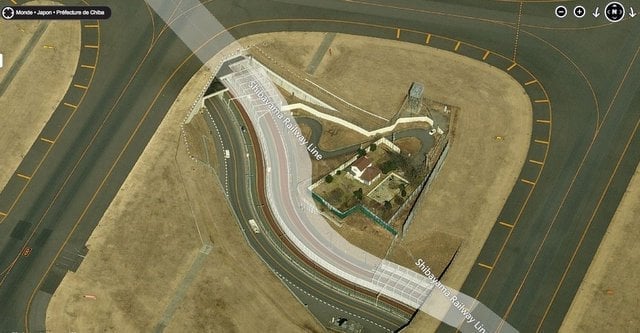
This time, the holdouts didn’t alter a building. They affected an airport. Farmers resisted selling land after the site for Narita International Airport was announced without local consultation, and the conflict continued for decades. Remaining parcels contributed to runway plans being delayed, shortened, and relocated. If one house can complicate a development, imagine what scattered privately held land can do to an airport.
8. The Tiny House Caught Between Two Giants
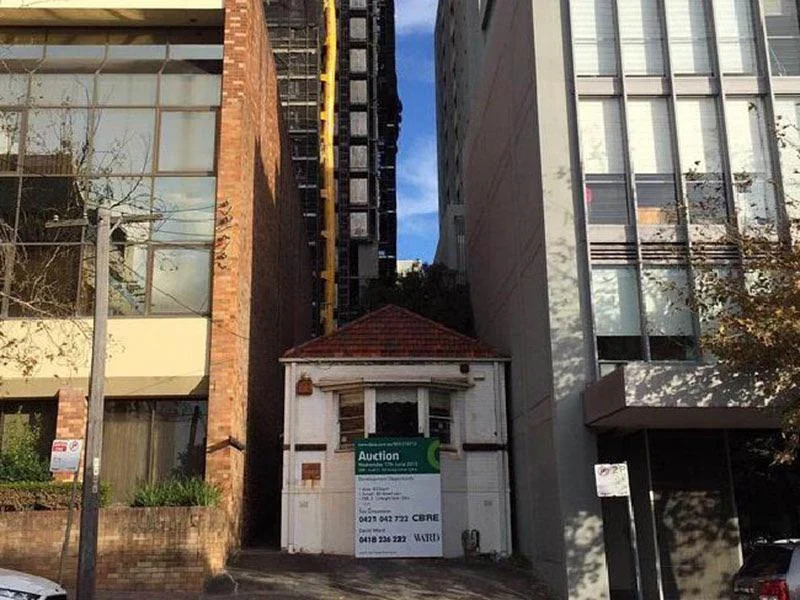
Somewhere along the way, this little house ended up with two very intimidating neighbors. Wedged between towering modern buildings, its white facade, red-tiled roof, and old-fashioned entrance look almost absurdly out of place. There’s barely any breathing room on either side, yet the building remains a curious reminder of what the street might have looked like before everything grew taller. It’s the kind of architectural contrast that makes you wonder: did the city grow around this house, or did someone simply refuse to let it go?
Sign up for our newsletter
9. The Brick Building That Refused to Disappear
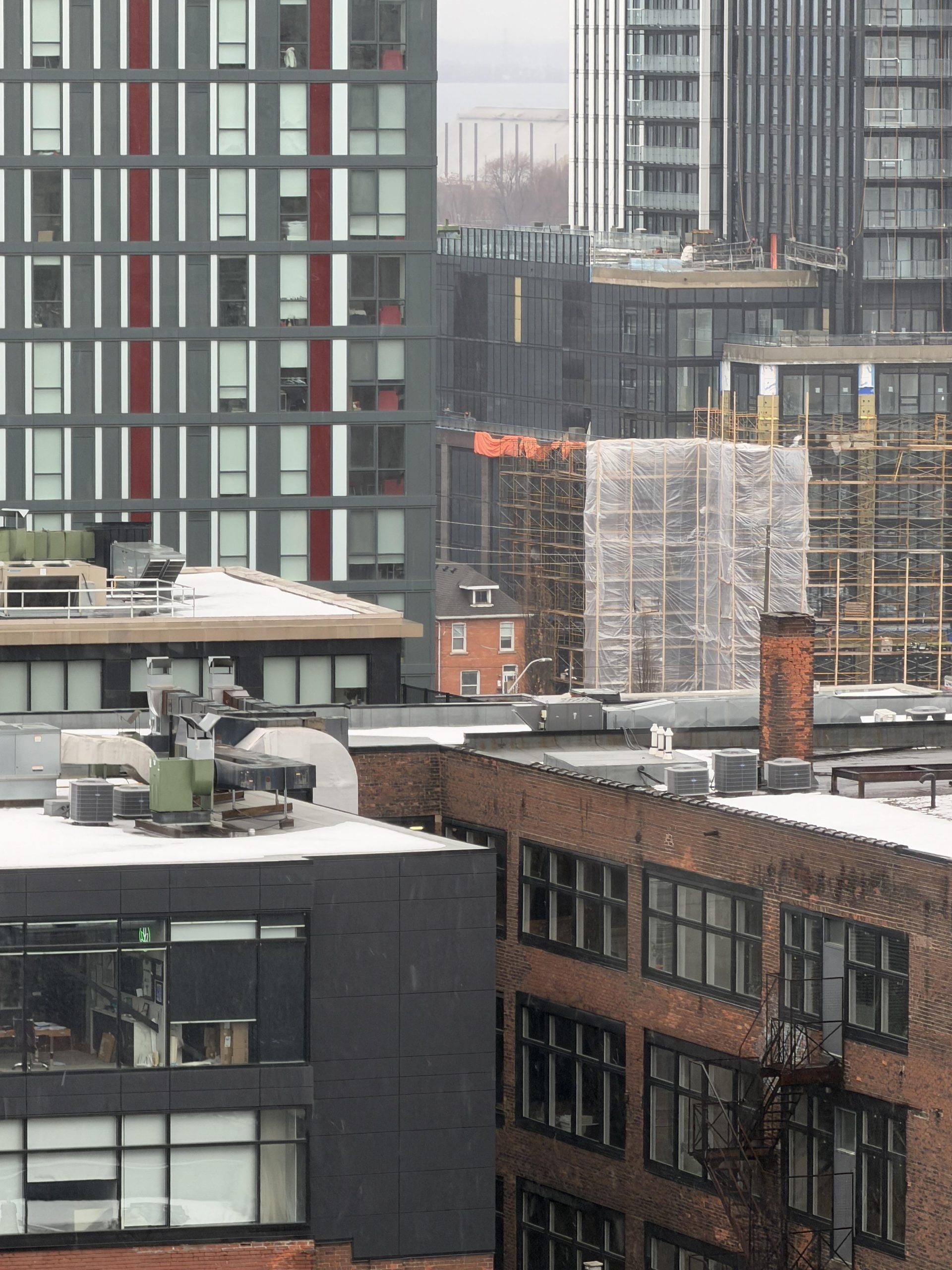
Surrounded by sleek glass towers and construction sites, this old brick building looks like it belongs to an entirely different city. Its weathered walls, tall industrial windows, and rusty fire escape stand in sharp contrast to the modern skyline rising around it. While everything nearby seems to be getting taller and shinier, this little piece of the past is still holding its ground. Whether by preservation, ownership, or sheer coincidence, it’s a striking example of how a city can change dramatically without completely erasing what came before.
10. The Little Apartment Building That Stayed Put
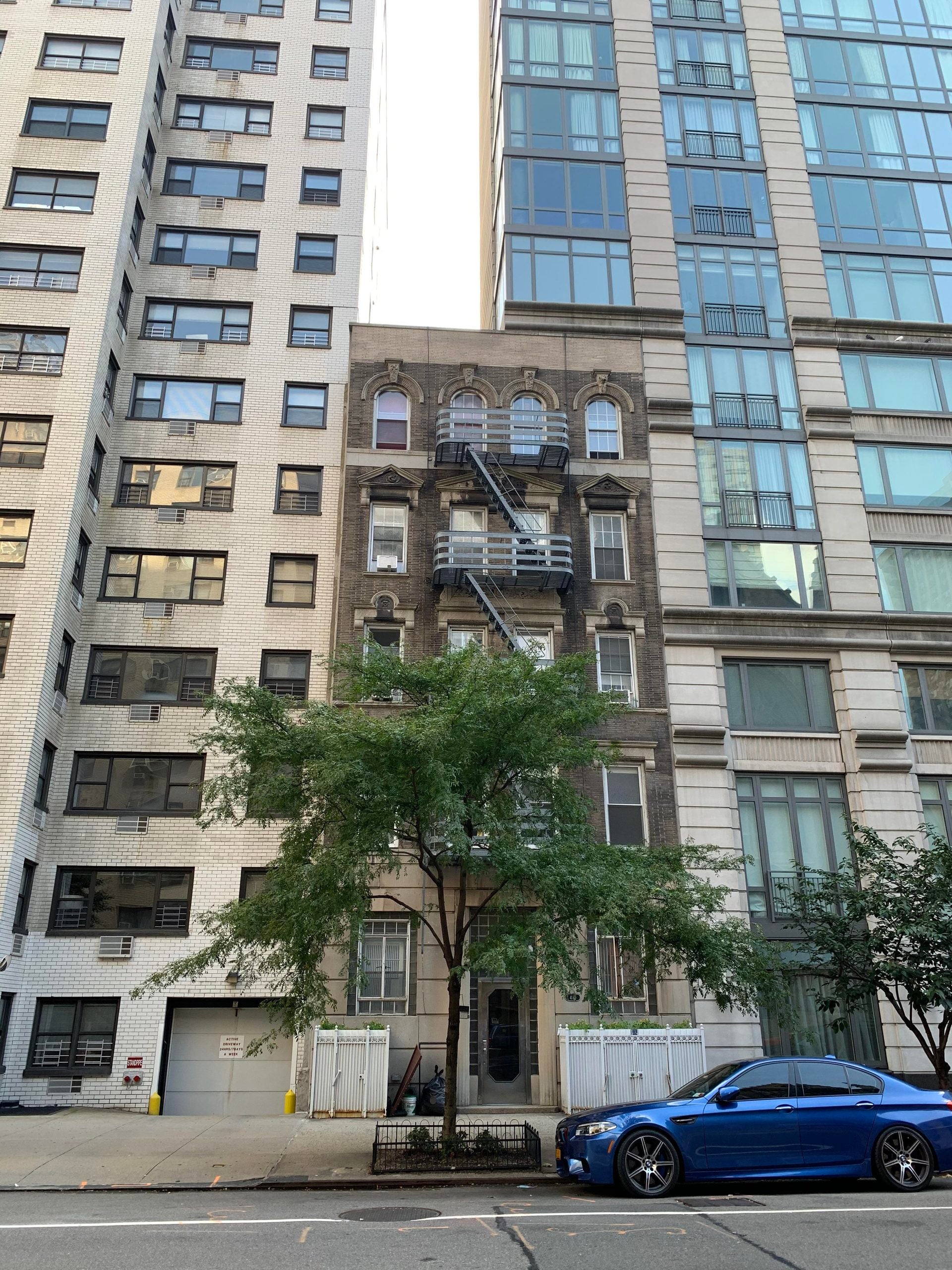
Some buildings simply refuse to blend in, and this one has every reason not to. Wedged between two much taller apartment towers, this charming old building still shows off its decorative windows, dark brickwork, and classic fire escapes. Its neighbors may have embraced modern architecture, but this narrow survivor seems perfectly comfortable being the odd one out.
11. Luo Baogen’s Highway House – Wenling, China

Imagine looking out your window and discovering that the new road doesn’t stop at your house. It simply divides around it. Luo Baogen and his wife rejected compensation they considered insufficient, and construction proceeded with traffic lanes running around their five-story building. The bizarre arrangement didn’t last forever: the couple later reached an agreement and the building was demolished.
12. The Tiny Brick House in the Middle of the Road
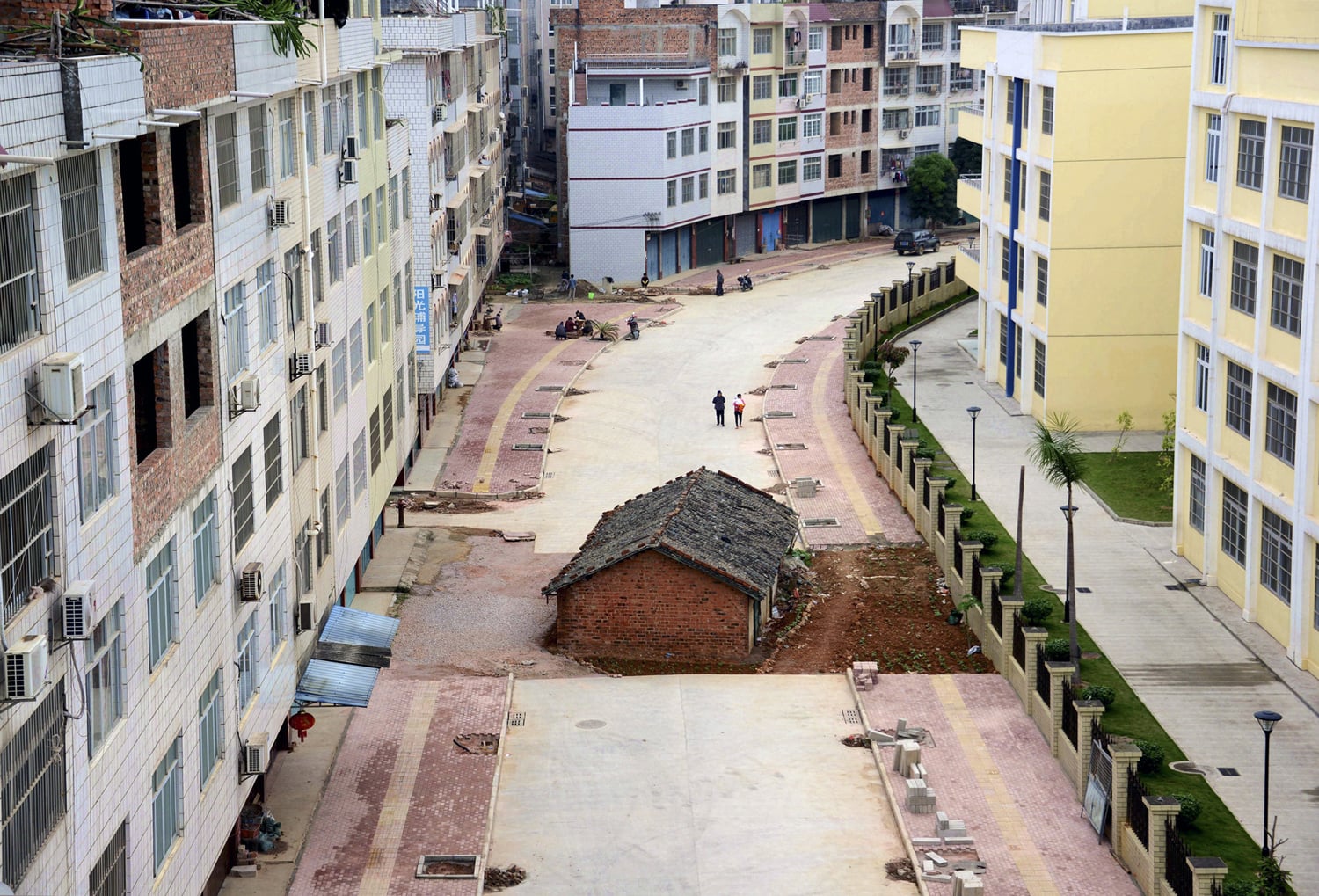
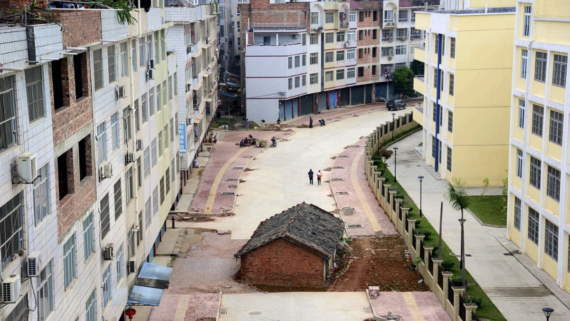
Imagine looking out your front door and realizing the entire neighborhood has been redesigned around your house. That’s practically the scene here, where a small brick home with a traditional tiled roof sits right in the middle of a newly developed street. Modern apartment buildings rise on both sides, and the pavement curves around the little structure as if it were always part of the plan. It’s an extraordinary contrast between old and new, and a reminder that sometimes progress has to take a detour.
13. The Tiny Red Brick House Dwarfed by Concrete
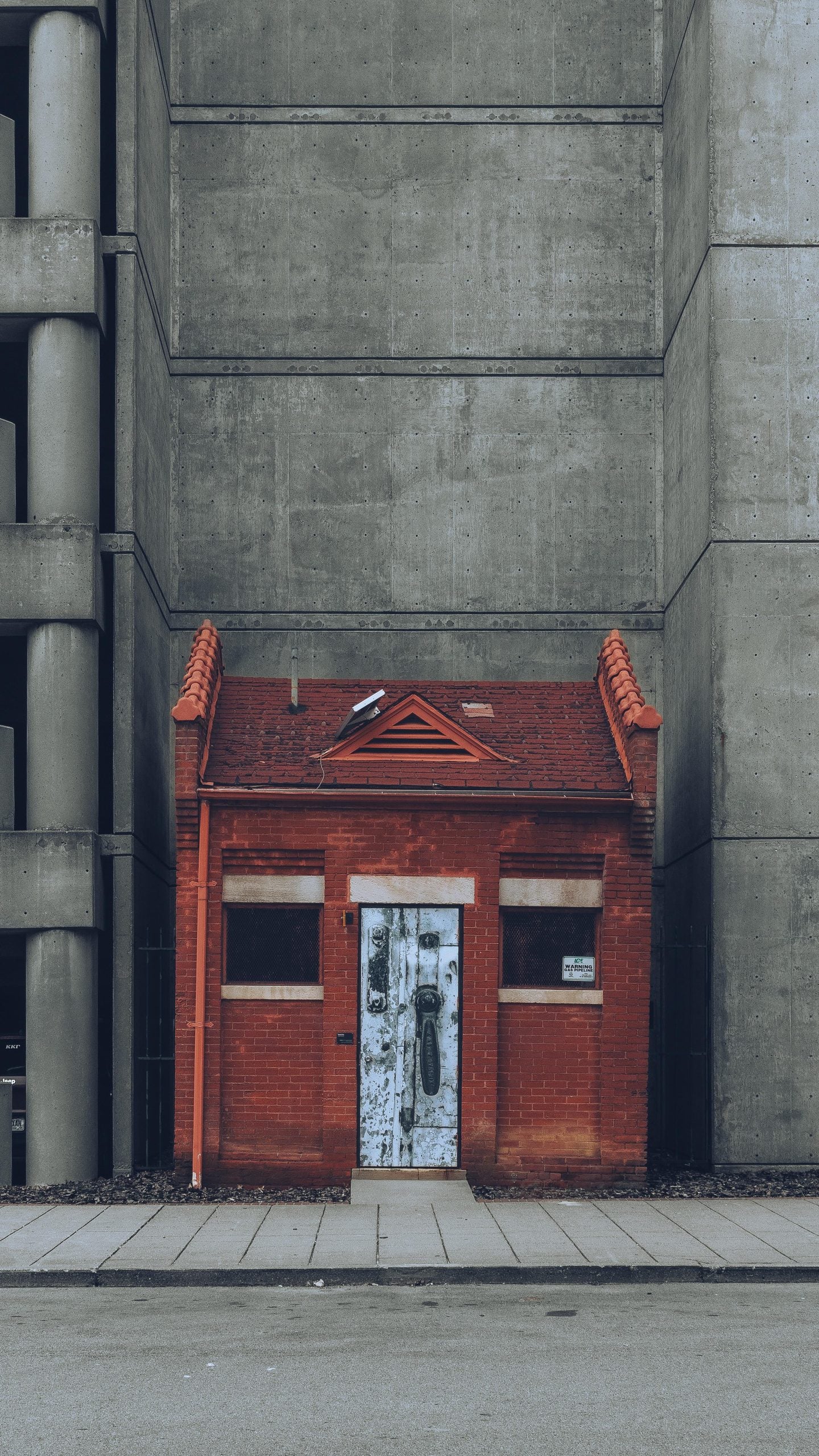
It’s hard to imagine a bigger architectural mismatch. This tiny red brick building, complete with a pitched tile roof and a weathered metal door, sits beneath an enormous wall of gray concrete. The contrast is almost comical, as though someone dropped a cozy little cottage into the middle of a parking garage. Whatever circumstances allowed it to remain, the result is unforgettable: a small piece of traditional architecture surrounded by a structure that seems determined to swallow it whole.
14. The Suburban House That Became the Odd One Out
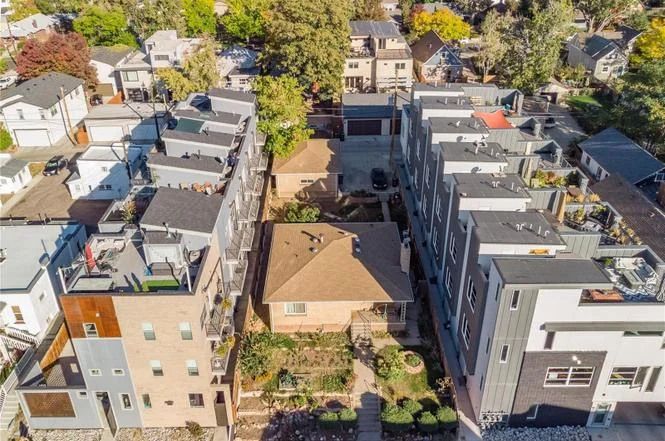
One look at this aerial photo, and it’s pretty clear which house didn’t get the neighborhood makeover. A modest, single-story home with a brown roof and a leafy front yard sits between two rows of towering modern townhouses, looking almost miniature by comparison. While the surrounding properties have traded backyards for balconies and extra floors, this little house still occupies its original-looking patch of suburban space. It’s a fascinating snapshot of urban development, where an ordinary family home can suddenly become the most extraordinary property on the block.
15. The Old Walk-Up That Modern Development Left Behind
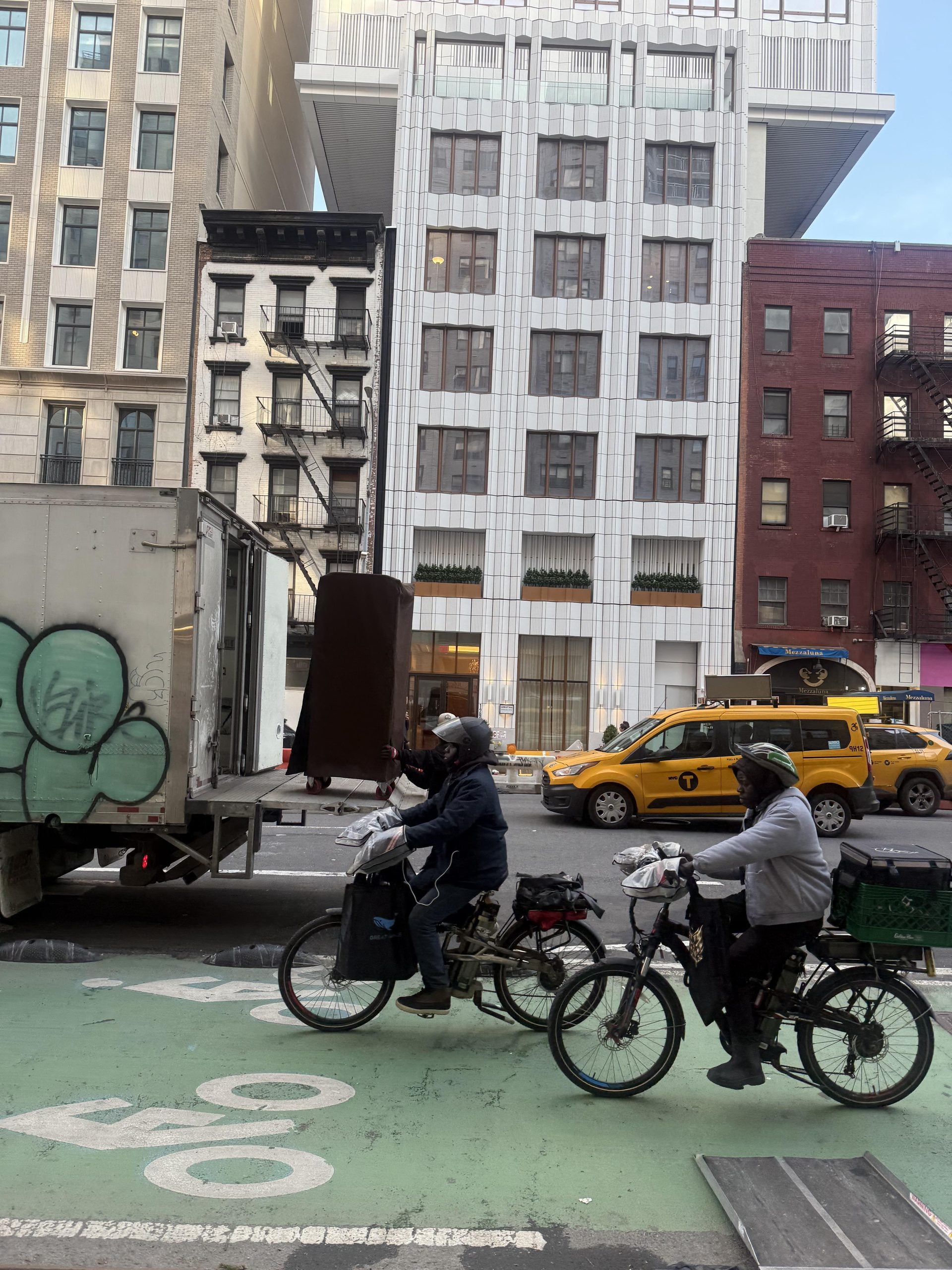
Blink, and you might miss this narrow old building squeezed between two much larger neighbors on a busy New York street. With its white brick facade, black fire escapes, and old-fashioned windows, it looks like a postcard from another era. The modern building beside it even extends overhead, making the contrast especially striking. Down below, taxis, cyclists, and delivery trucks carry on as usual, while this little architectural survivor quietly reminds everyone that New York doesn’t always build over its past. Sometimes, it builds right around it.
What makes property holdouts so fascinating isn’t simply that someone refused an offer. It’s what happens next. Buildings develop strange gaps, highways bend, bridges split, construction pits form around houses, and even airport plans can change. One small piece of land can force an enormous project to reveal just how complicated the word “no” can become.
Keep Exploring The Scroller
One stubborn property can redraw an entire neighborhood. Keep exploring The Scroller for more strange architecture, unlikely survivors, engineering workarounds, and the wonderfully complicated stories hiding inside the places we pass every day:
19 Construction Mistakes That Make Zero Sense to Anyone