When we think of the animal kingdom, we usually picture vibrant furs, colorful scales, or thick hides, but nature has a much ghostlier side that defies logic. Some of the most fascinating creatures on our planet have evolved to be completely transparent, acting like living x-rays that allow us to see their internal organs and skeletal structures in real-time. This incredible biological feat isn’t just for show; it is a masterclass in survival, providing the ultimate camouflage in environments where there is nowhere to hide. Whether they are floating in the deep ocean or clinging to a leaf in a rainforest, these see-through wonders prove that being invisible is one of the most effective ways to stay alive.
Seeing a transparent animal in its natural habitat is a surreal experience that feels like looking at a glitch in the matrix. Scientists believe that this lack of pigment helps these animals blend into the light filtering through the water or the sky, making them nearly impossible for predators to spot. From delicate butterflies with wings like windowpanes to deep-sea fish with clear skulls, the variety of these “glass” creatures is staggering. We’ve searched the corners of the globe to find fifteen of the rarest and most visually impactful animals that prove you don’t need color to be absolutely breathtaking.
1. The Cystisoma (giant transparent amphipod)
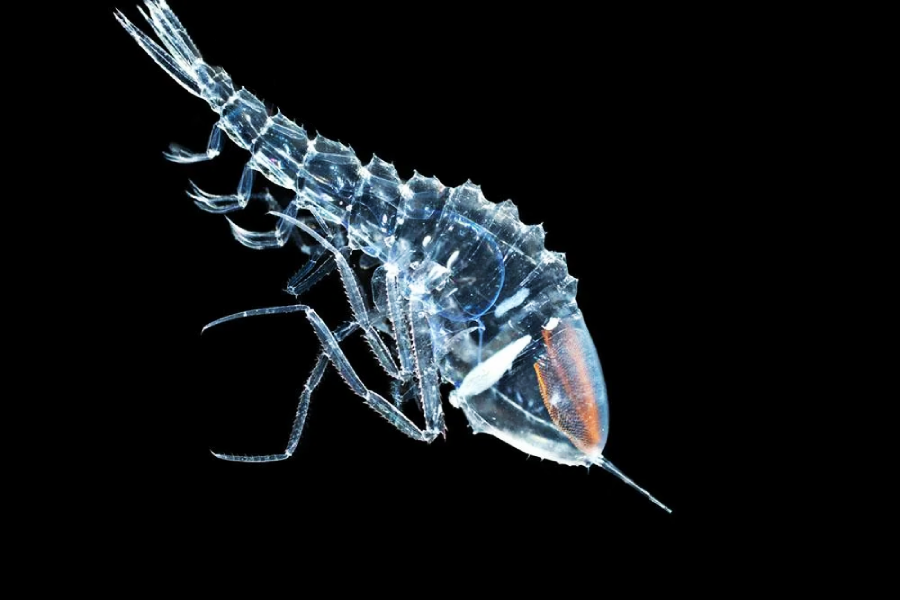
This crustacean looks like a shrimp that has been made entirely out of crystal, and it can grow up to several inches long. Its entire body is transparent, including its massive eyes, which take up a huge portion of its head to catch the faintest light in the deep sea. Being clear avoids being seen by predators that hunt by looking for shadows from below. It is a fragile-looking hunter that proves that even in the coldest, darkest parts of the ocean, nature finds a way to be beautiful.
2. The Glass Frog (centrolenidae)
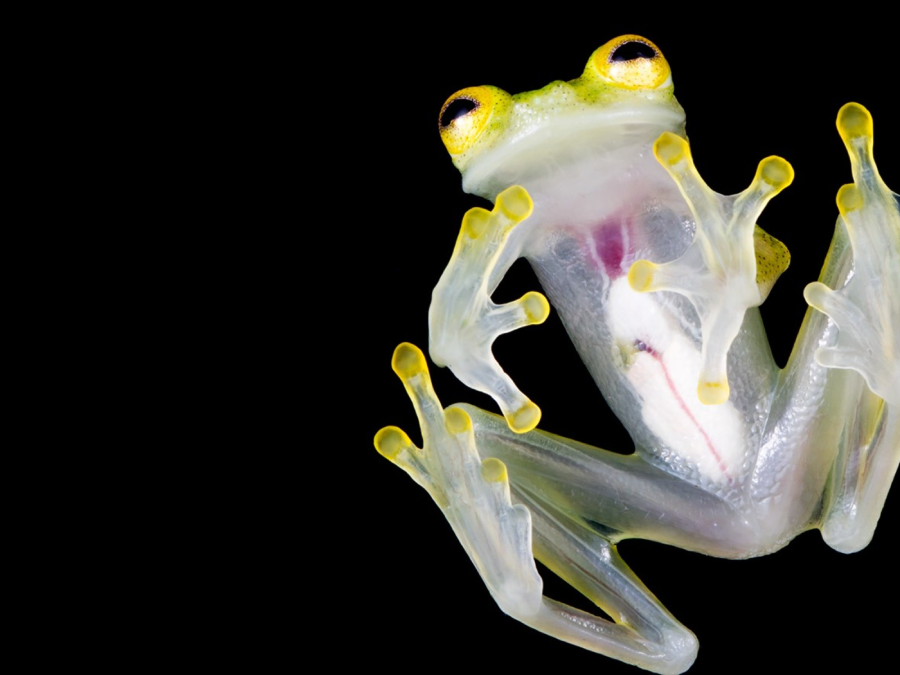
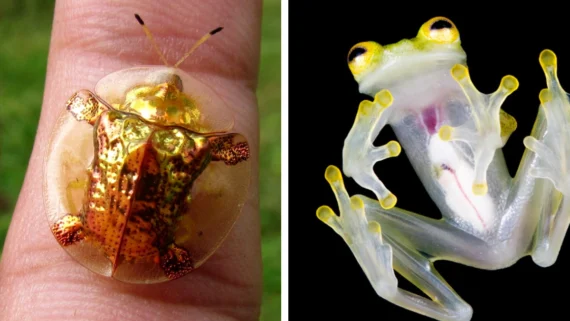
Native to the cloud forests of Central and South America, the Glass Frog looks like a standard lime-green amphibian from above, but its belly is a different story. If you flip it over, its skin is so perfectly transparent that you can see its beating heart, winding intestines, and even its tiny red blood vessels. Interestingly, researchers have found that these frogs can hide about 90% of their red blood cells inside their liver to become even more see-through while they sleep. This “cloaking” ability makes them almost invisible to hungry birds resting on the same branch.
3. The Greta Oto (glasswing butterfly)
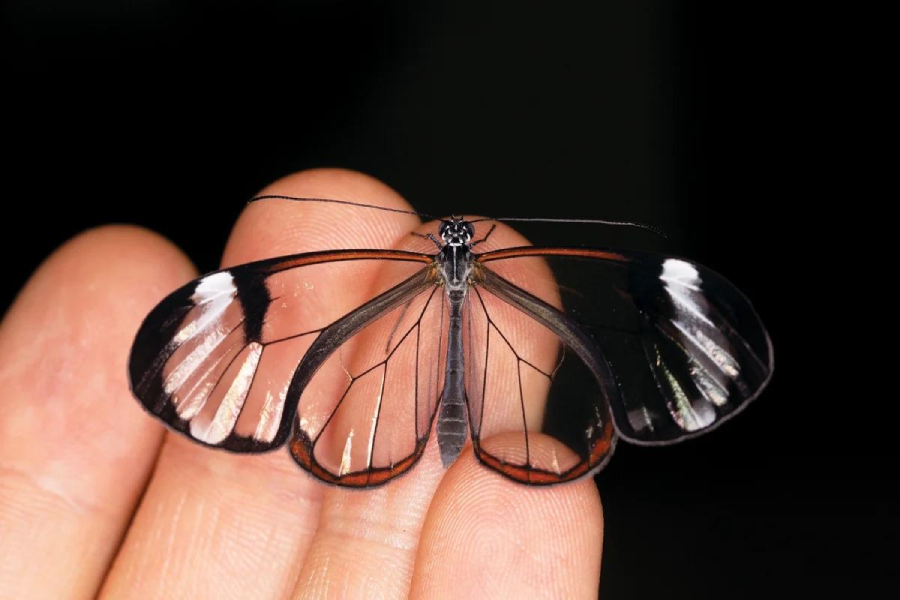
Unlike most butterflies that use bright colors to warn predators, the Greta Oto relies on its stunningly transparent wings to disappear into the forest. The tissue between the veins of its wings lacks the tiny scales that give other butterflies their color, leaving them looking like clear glass. These wings are also anti-reflective, meaning they don’t glint in the sunlight, which would otherwise give away the butterfly’s position. It is a delicate marvel of engineering that allows it to fly through the jungle like a tiny, winged ghost.
4. The Sea Salp (salpidae)
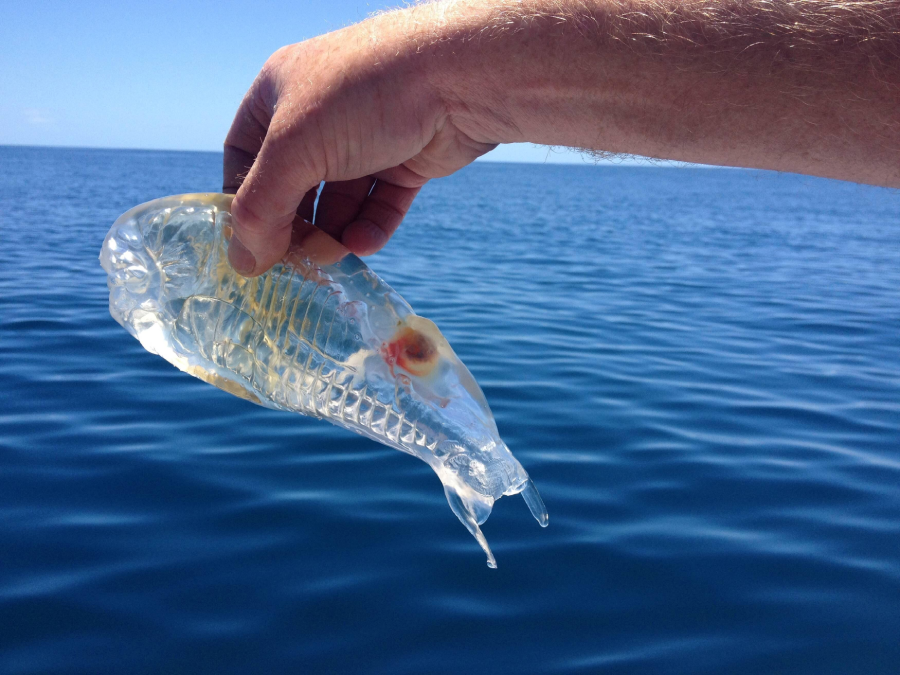
Looking like a floating tube of jelly, the Sea Salp is a barrel-shaped tunicate that moves by pumping water through its transparent body. They often link together to form massive chains that can reach several meters in length, glowing slightly as they drift through the open ocean. Despite their simple appearance, they are surprisingly complex and are actually more closely related to humans than to jellyfish because they possess a primitive spinal cord. These creatures are also vital for the environment, as they consume massive amounts of carbon and poop it out in heavy pellets that sink to the ocean floor.
5. The Ghost Shrimp (Palaemonetes paludosus)
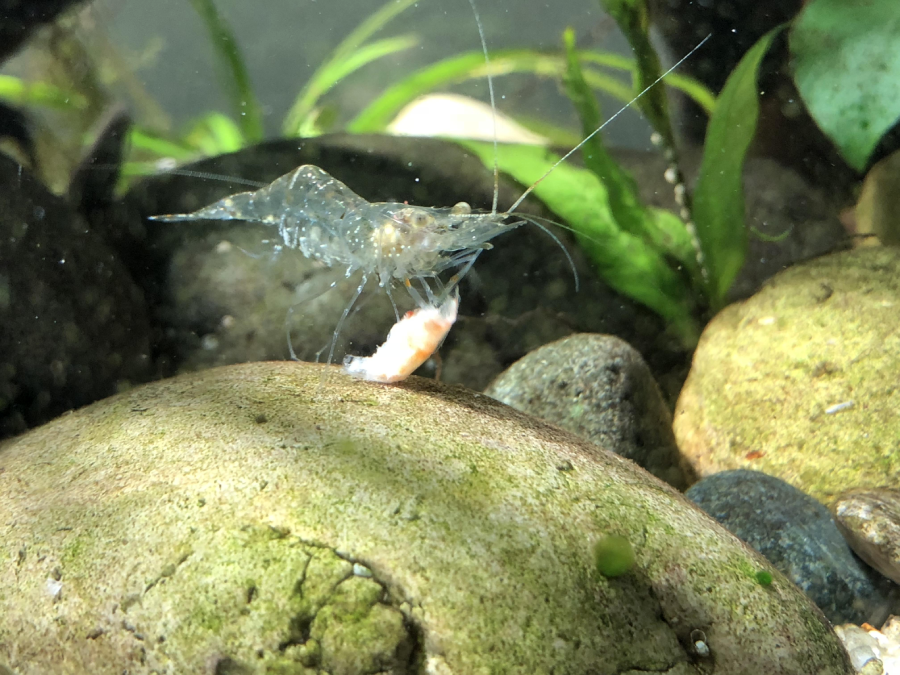
Commonly found in freshwater lakes and streams, the Ghost Shrimp is so clear that it often looks like a swimming skeleton. You can easily track its digestive process as food moves through its body, which is a fascinating and slightly gross sight to behold. Their transparent shells act as a perfect defense against fish, as they blend seamlessly into the sandy or rocky bottoms of their habitats. They are also incredibly popular in home aquariums because they act as a cleanup crew, scavenging for leftovers while remaining almost invisible.
Trending on The Scroller
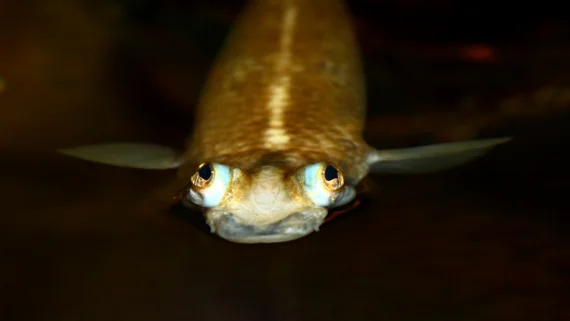

6. The transparent sea cucumber
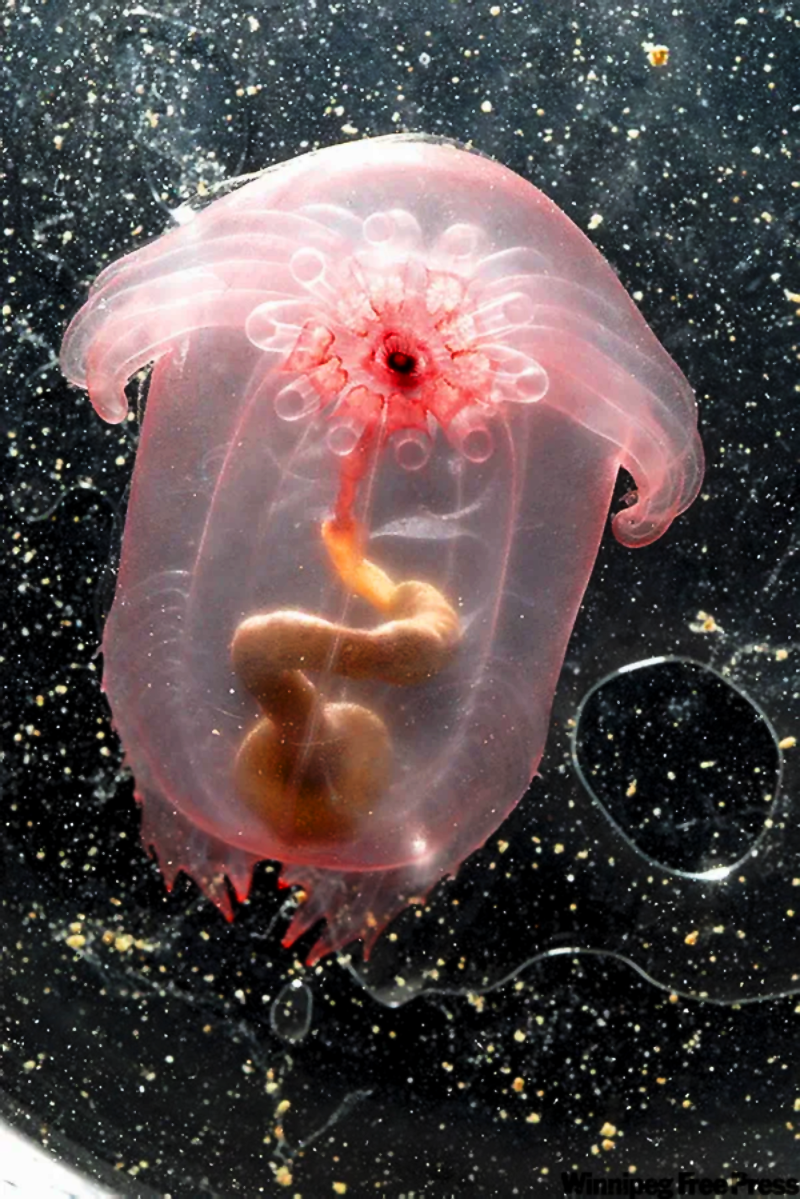
Found at extreme depths in the Gulf of Mexico, this bizarre creature was only discovered recently and looks like a floating, pinkish internal organ. Its skin is so thin and transparent that you can see its entire digestive tract coiled up inside as it slowly crawls along the ocean floor. It moves at a snail’s pace, using its tentacle-like feet to scoop up nutrient-rich mud. Because it lives in total darkness, its transparency is less about camouflage and more about the extreme biological efficiency required to survive in the deep sea.
7. The Glass Squid (cranchiidae)
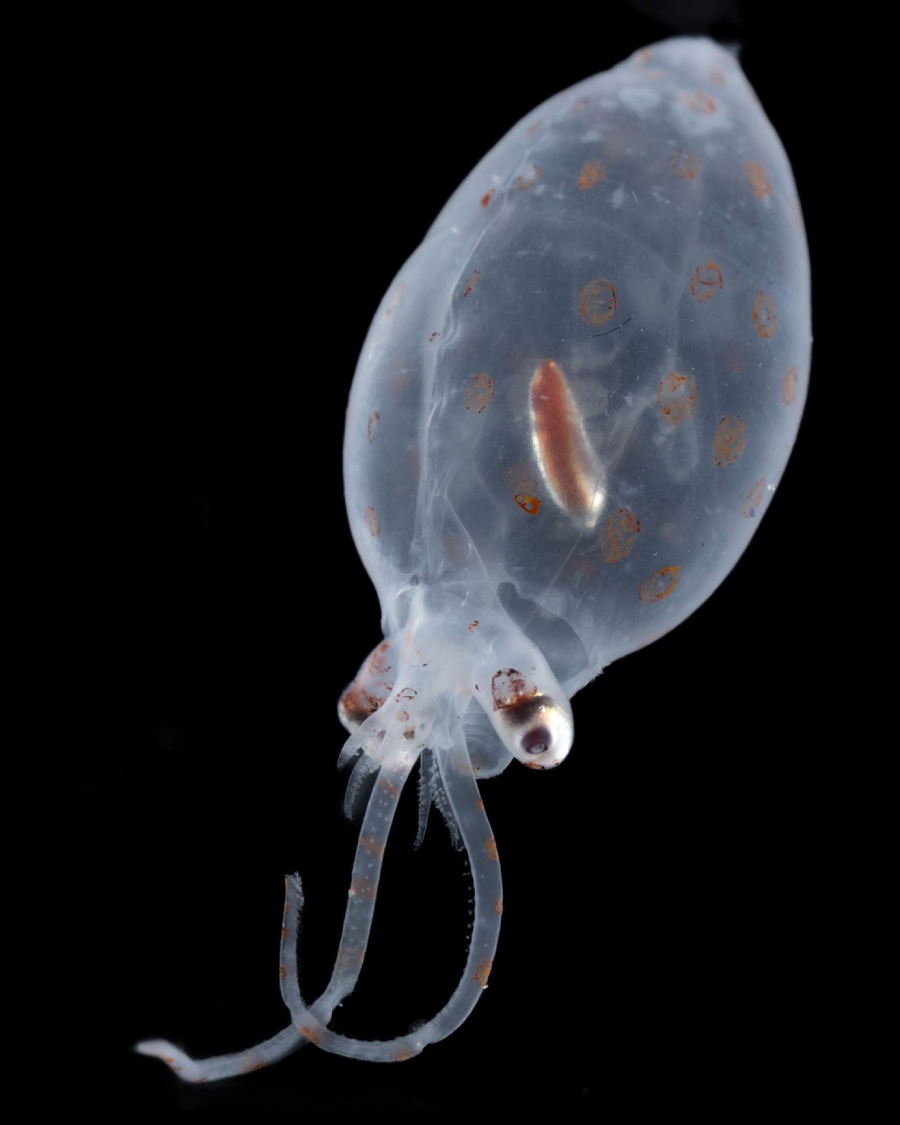
There are about 60 species of Glass Squid, and most of them spend their lives in the “twilight zone” of the ocean, where light is very dim. Their bodies are almost entirely transparent, with the exception of their cigar-shaped liver and their eyes. To avoid casting a shadow that predators below could see, many species have light-emitting organs on the undersides of their eyes that act as counter-illumination. When they feel threatened, some species can even pull their head and tentacles inside their body cavity to look like a clear, floating ball.
8. The Tortoise Beetle (aspidimorpha sanctaecrucis)
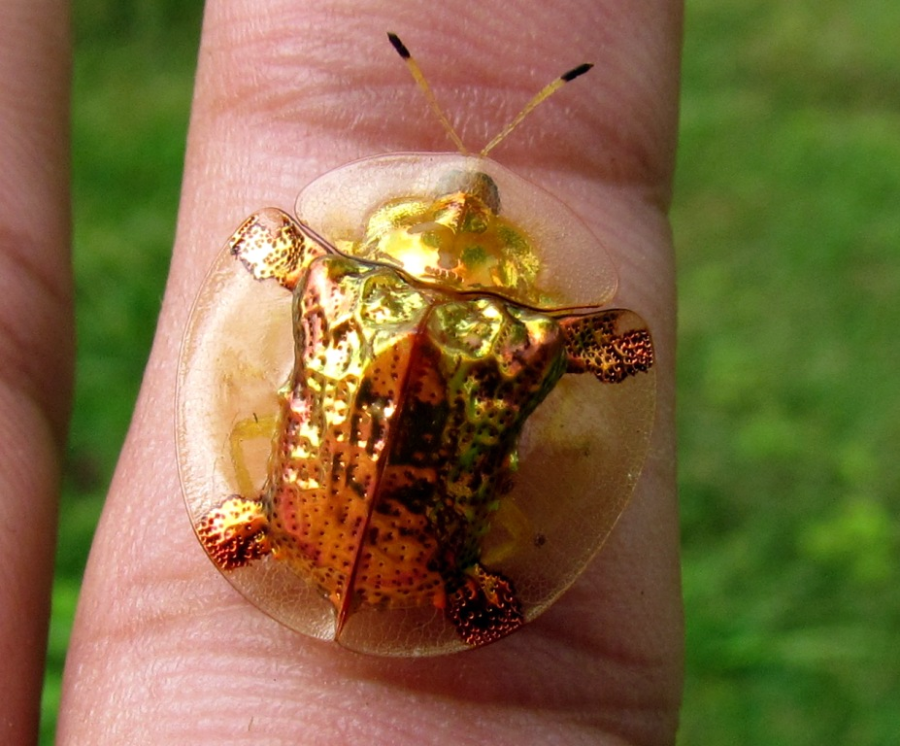
This beetle isn’t entirely see-through, but it features a remarkable transparent outer shell that looks like a protective plastic bubble. This clear carapace protects the colorful, often metallic-looking body underneath while making the beetle look much larger and less appetizing to predators. Some species can even change the color of their inner body by shifting the levels of fluid beneath their shell. It looks like a tiny, futuristic piece of jewelry crawling on a leaf, blending high-tech aesthetics with natural survival.
Sign up for our newsletter
9. The Glass Octopus (vitreledonella richardi)
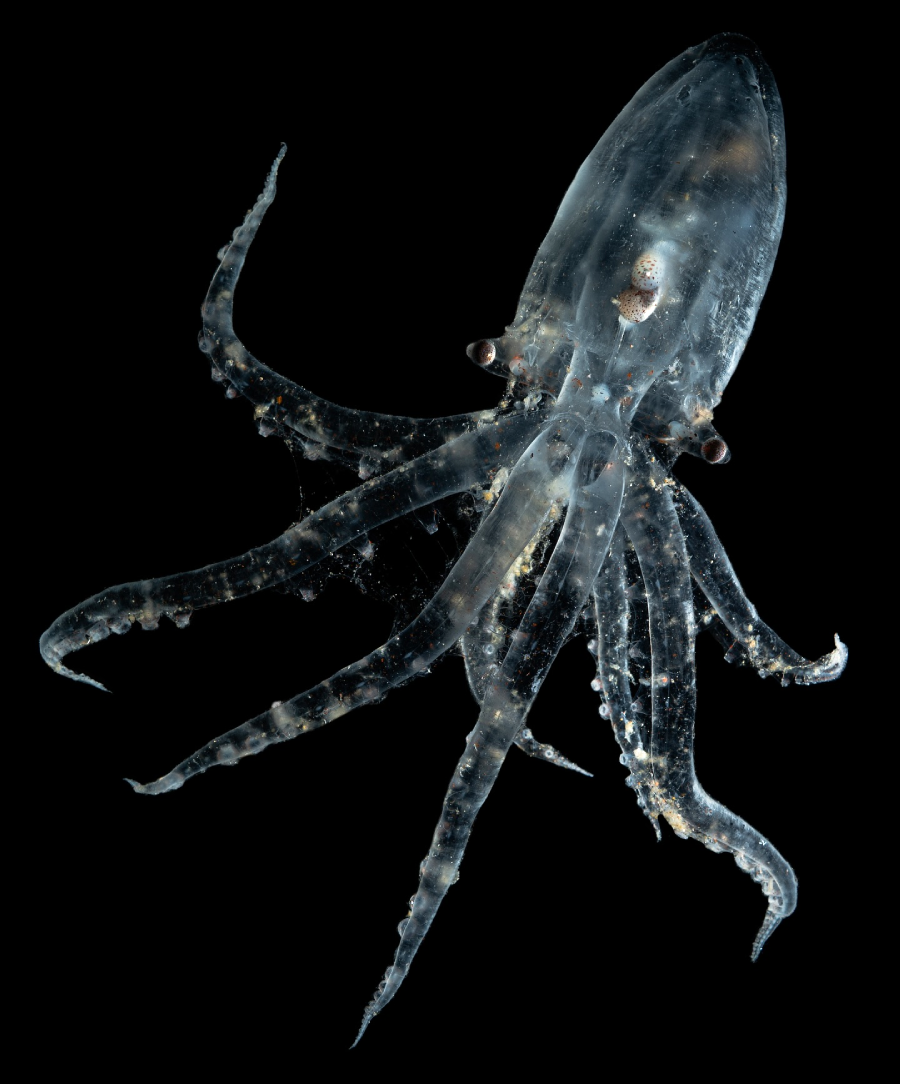
The Glass Octopus is one of the rarest sightings in the ocean, living in tropical and subtropical waters at incredible depths. Its body is so transparent that the only visible parts are its optic nerves, its eyes, and its digestive tract. Unlike most octopuses that have round eyes, this species has elongated, rectangular eyes that help minimize its silhouette from below. It drifts through the dark water like a spectral phantom, a true masterpiece of deep-sea evolution that few humans will ever see in person.
10. The Sea Walnut (Mnemiopsis leidyi)
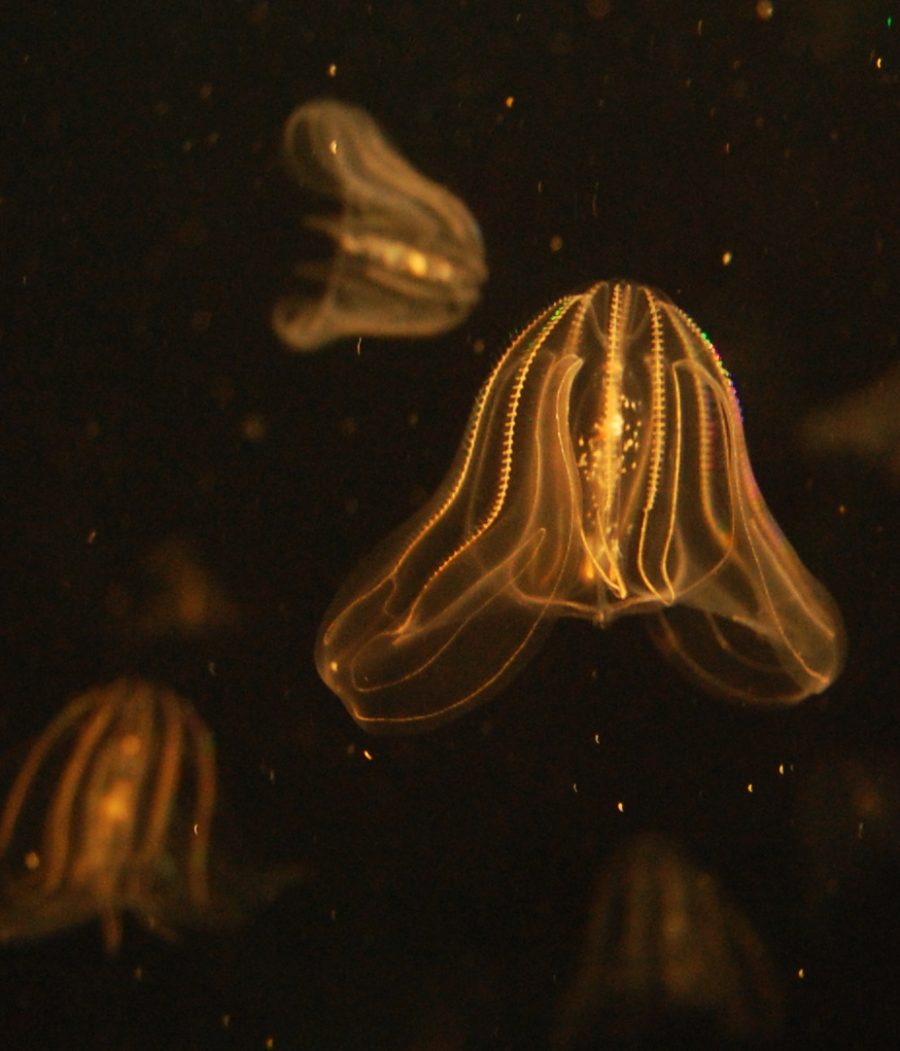
Despite looking like a jellyfish, this creature is actually a comb jelly that drifts through ocean currents. Its body is nearly 100% transparent, but what makes it truly spectacular are the rows of cilia (tiny hairs) it uses to move. When these cilia beat against the water, they refract light to create a pulsing rainbow effect that travels down their translucent body. It is like watching an organic, neon spaceship traveling through the dark vacuum of the deep ocean.
11. The transparent juvenile Surgeonfish (Acanthridae)
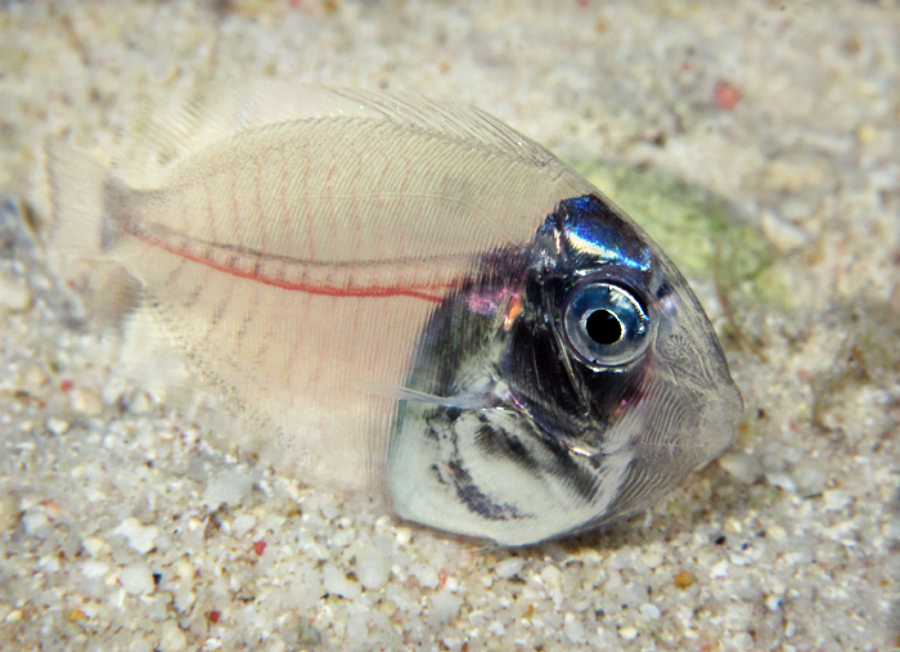
Before becoming the vibrant, colorful fish we all recognize from movies like Finding Nemo, this fish goes through a larval stage called acronurus. During this phase, its body is completely flat and transparent, allowing it to hide in plain sight from predators on the reef. As it matures, its skeleton strengthens and its skin begins to gain those iconic, vibrant blue or yellow pigments. It is a magical transformation that proves invisibility is the ultimate armor for the smallest residents of the sea.
12. The ghost glass catfish (kryptopterus vitreolus)
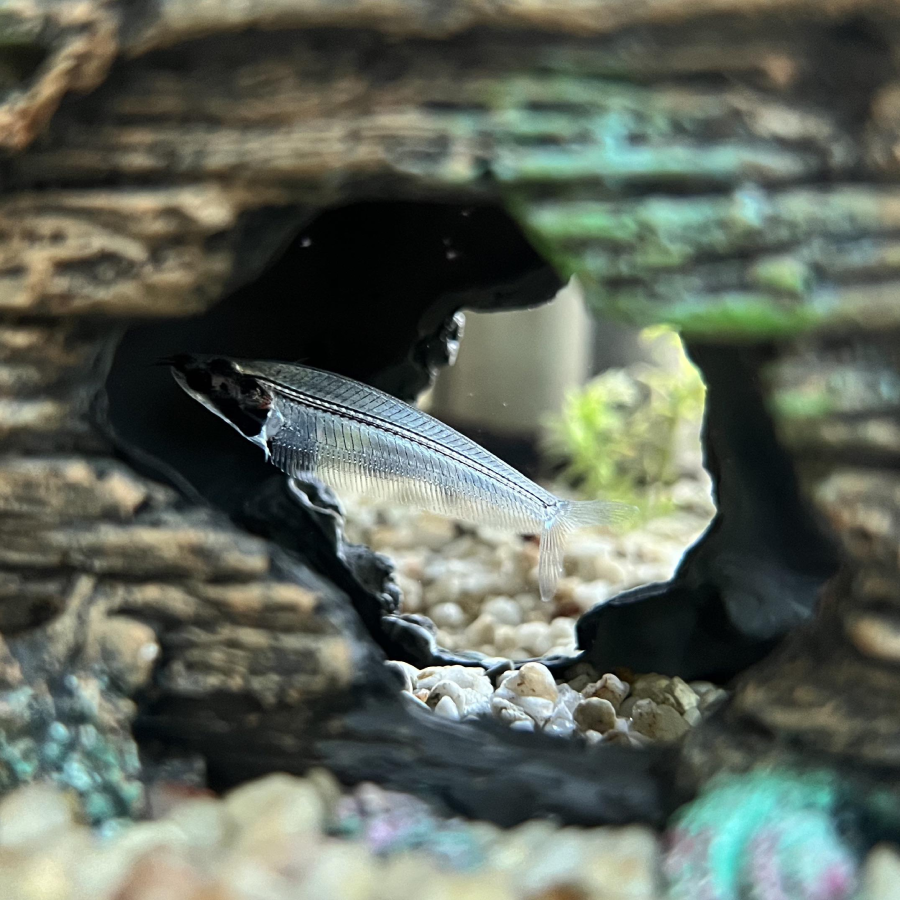
This freshwater fish, native to Thailand, is one of the most transparent vertebrates on the planet. Unlike other fish, its muscles lack pigmentation, which allows you to see its spinal column and swim bladder with total clarity. When light hits its body from certain angles, it can emit iridescent flashes similar to a glass prism. It is incredibly popular in home aquariums because it looks like a tiny, motorized ghost swimming elegantly through the water plants.
13. The clear slug (glandina rosea juvenile)
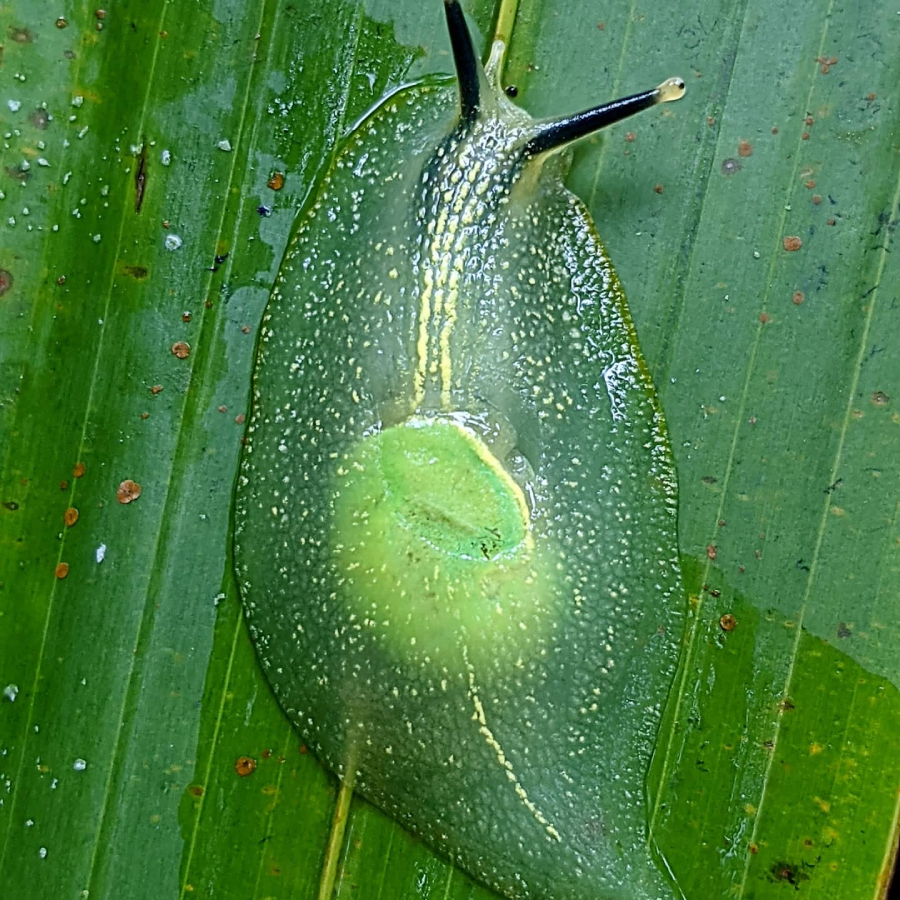
In its early stages, this terrestrial mollusk features a shell so thin and transparent that it looks like it was crafted from liquid resin. Through this clear casing, you can observe the rhythmic movements of its internal organs as it slides across damp foliage. While its appearance is delicate and almost celestial, it is actually a fierce predator that tracks down other snails. Watching this invisible hunter stalk its prey is a fascinating reminder that nature can be as beautiful as it is ruthless.
14. The immortal jellyfish (turritopsis dohrnii)
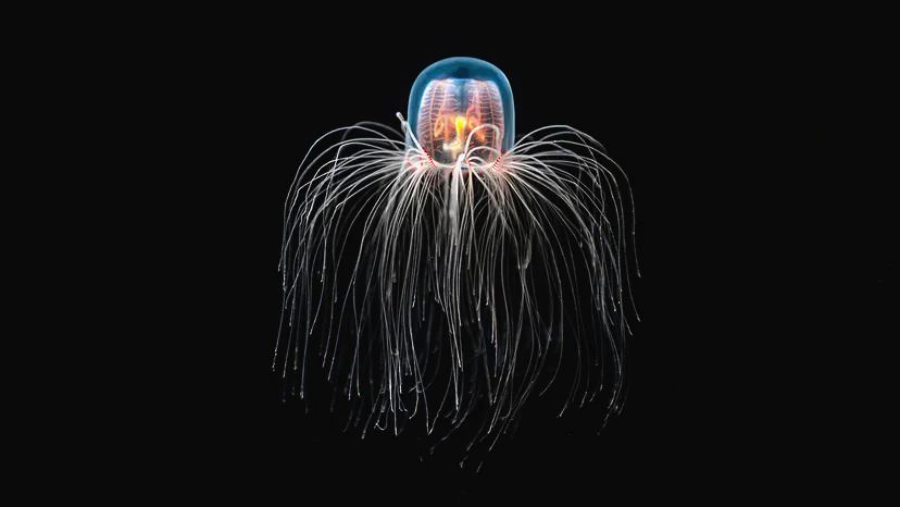
This tiny creature is famous not just for being transparent, but for its ability to cheat death by reverting to its polyp stage after reaching maturity. Its body is shaped like a glass bell with delicate white tentacles hanging from it, allowing you to see its bright red digestive system in the center. Because it is nearly invisible, it can float through the world’s oceans undetected, resetting its life cycle over and over again. It is the only known animal that possesses the biological key to eternal life.
15. The transparent larval eel (leptocephalus)
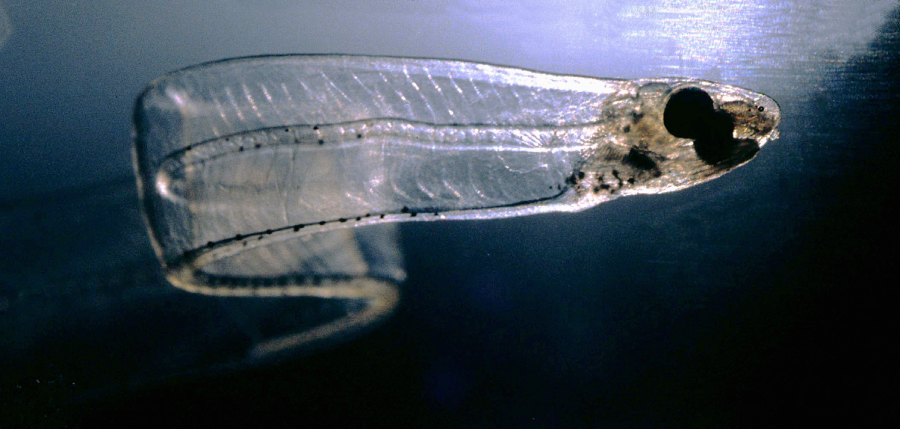
Before they transform into the long, snake-like eels we recognize, these creatures spend a stage of their lives looking like floating leaves made of crystal. Their bodies are extremely thin, laterally compressed, and totally transparent, making them nearly impossible to see for any fish swimming below them. They actually lack red blood cells during this stage, which increases their clarity and allows them to travel thousands of miles through the ocean without being eaten. It is one of the most effective and elegant disguises in the entire animal kingdom.
Want more weird animals?
Nature never ceases to amaze us with its ability to adapt, and these transparent wonders are the ultimate proof that sometimes the best way to stand out is to disappear. Their ghostly forms remind us of how much mystery still exists in the oceans and forests of our world. If you’re ready to dive into more animal world discoveries, don’t miss these 20 Animals That Look Like Nature Ran Out of Budget, or 20 Wacky Hybrid Animals People Created on the Internet. You can also enjoy these 20 Animals That Made Themselves Actual Criminals.