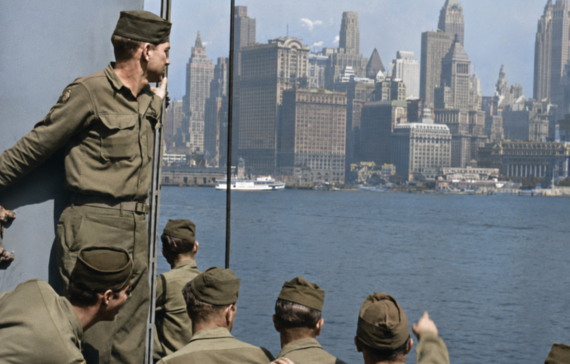
There is something strange about seeing World War II homecomings in color. The scenes are incredible: soldiers on ships, families at stations, crowded piers, but the color makes them feel less frozen in the past. You start noticing small things: the shade of a coat, the tired faces, the way someone is standing and waiting for a hug. These photos are about victory, yes, but they are also about waiting, confusion, relief, and people trying to return to normal life.
The First Look at Land
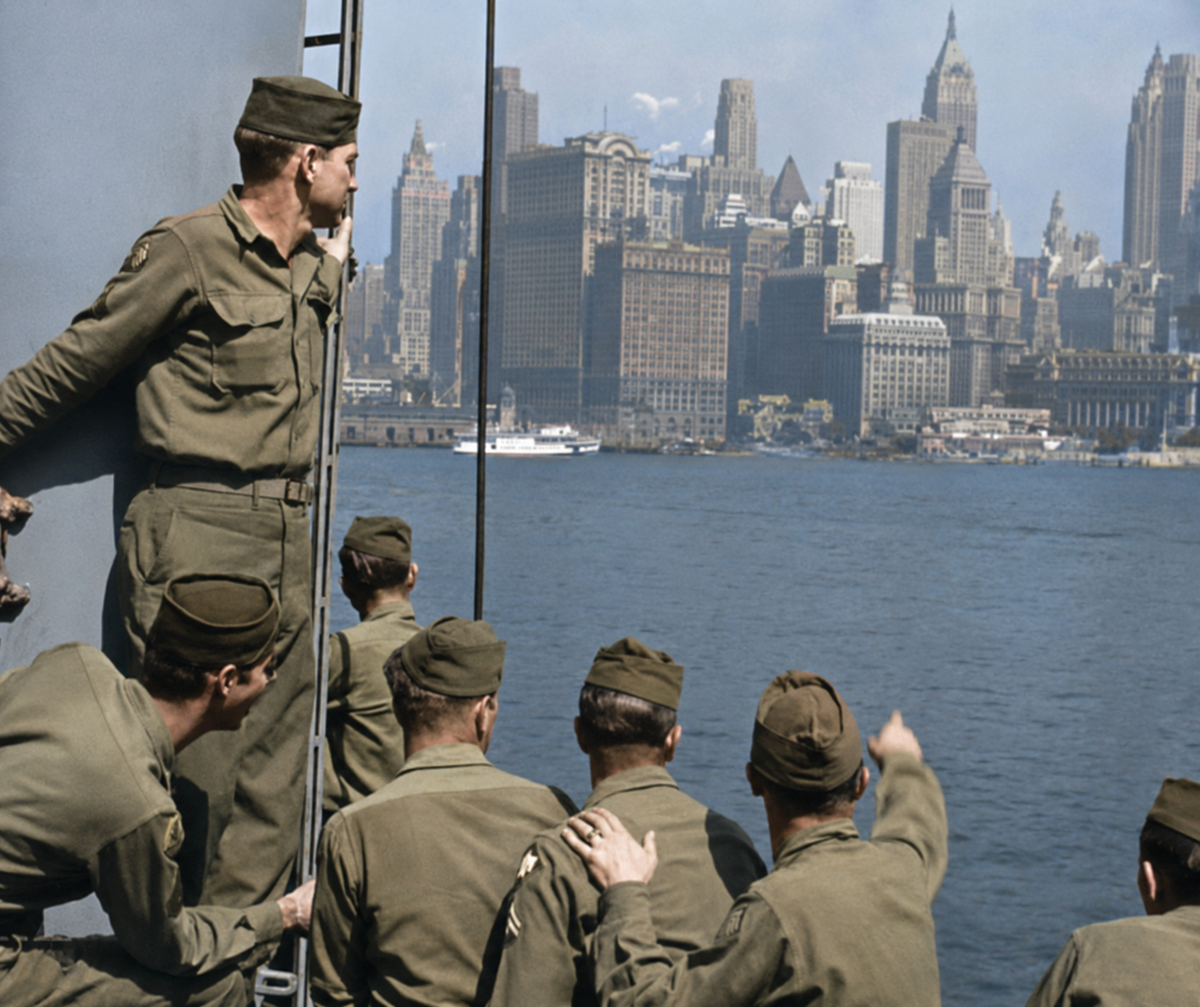
For a lot of soldiers, home did not arrive all at once. It appeared first as a strip of shoreline, a harbor wall, or a city skyline seen from the deck of a ship. After years of camps, bases, mud, heat, cold, and noise, even an ordinary dock could look like something out of a dream.
Ships So Crowded They Barely Look Real
VIA WIKIMEDIA COMMONS
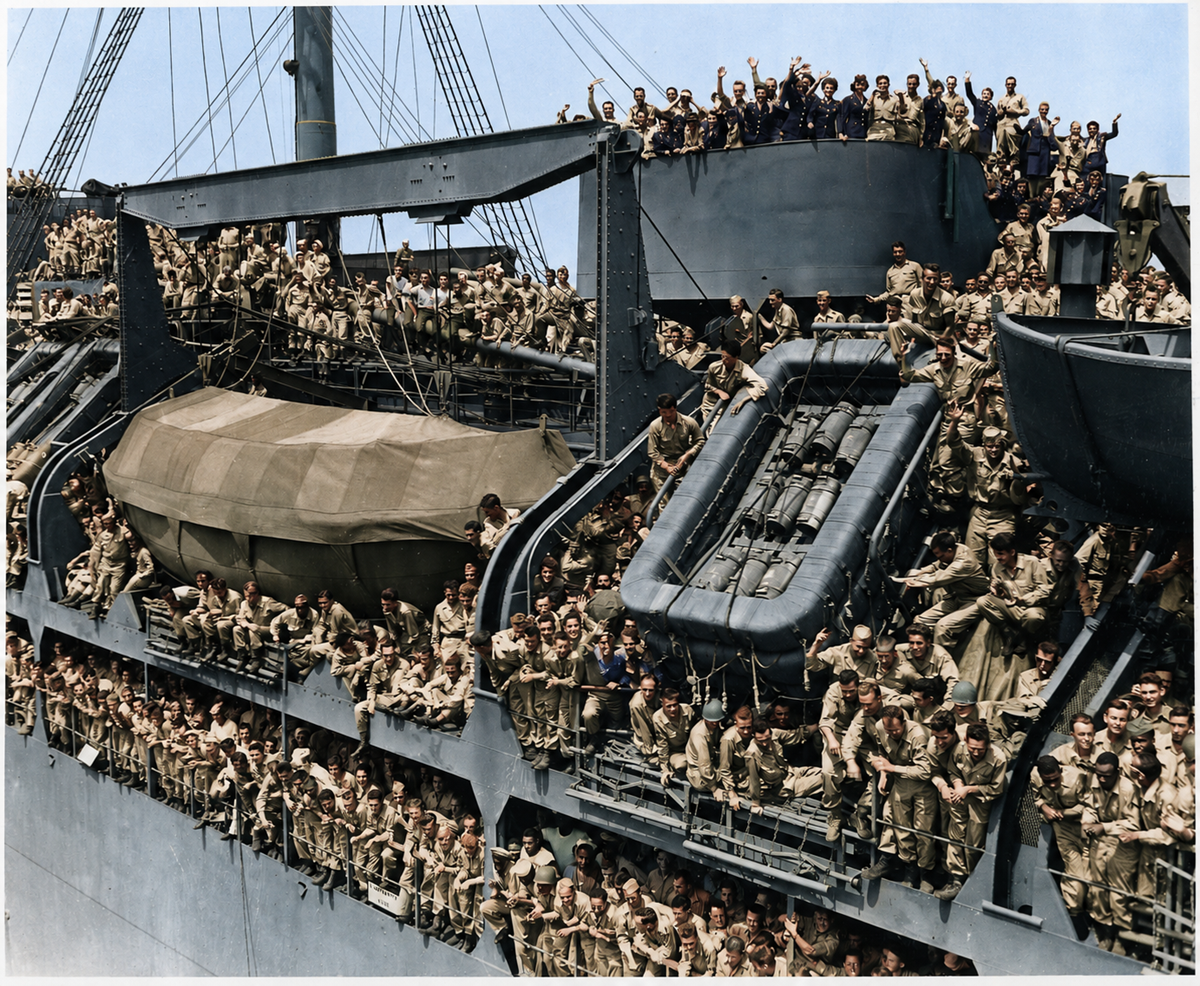
Some return photos almost look staged until you remember they were not. Troop ships came home packed with men standing shoulder to shoulder on open decks, waiting for the slow process of docking and disembarking. The color brings out the clutter of it all: canvas bags, dark rails, caps, coats, pale faces, hands gripping anything nearby. It was not a clean movie ending. It was crowded, loud, and probably smelled like sea air, cigarettes, and old wool.
The Smile That Does Not Tell the Whole Story
WWIIPICS / VIA REDDIT.COM
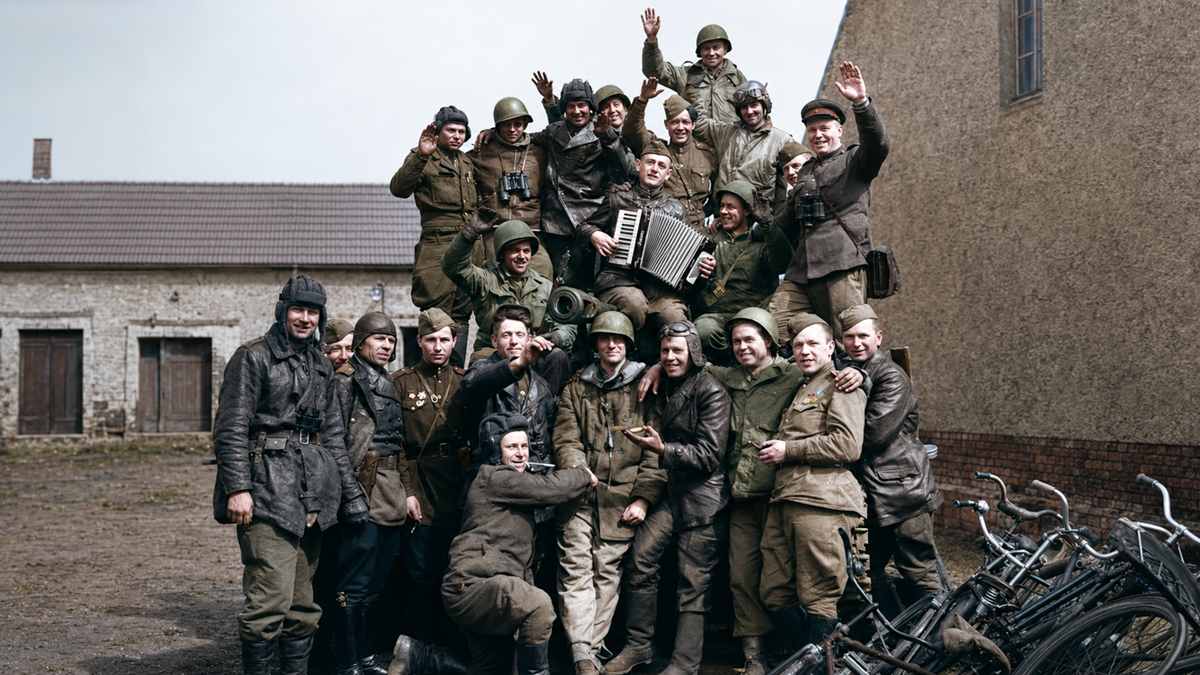
A soldier smiling for a homecoming photo can still look completely worn out. That is one thing these images make very clear. Some faces show relief before they show happiness, as if the body has arrived before the mind has caught up. Color makes those tired expressions harder to miss.
Families Searching the Crowd
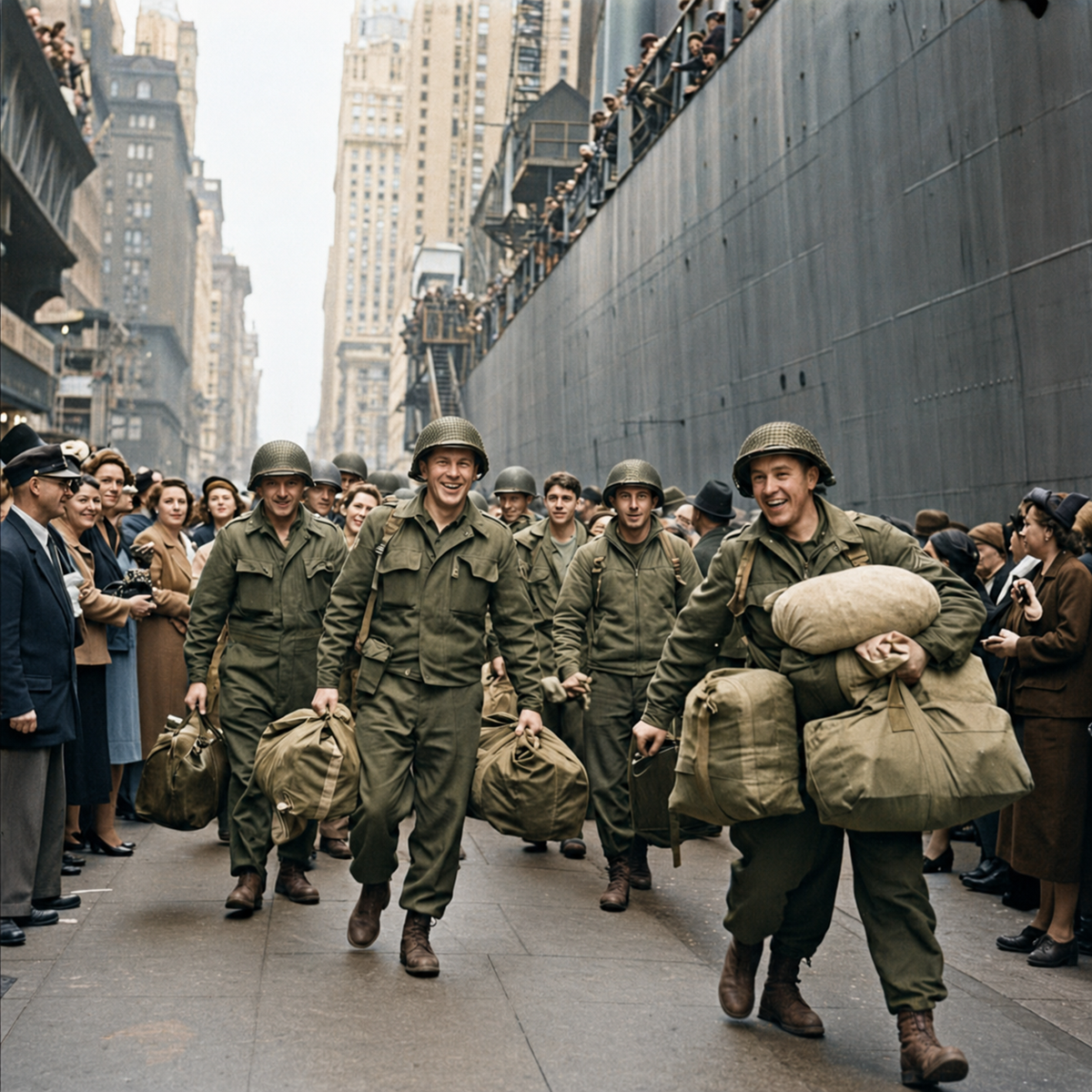
OLD AESTHETICS HISTORY / VIA FACEBOOK.COM
The pier scenes have their own kind of suspense. Families waited behind barriers, on sidewalks, or near station platforms, trying to pick out one familiar face in a moving wall of uniforms. Everyone knew the war was over, but for that one family, it was not really over until they found the right person.
The Long Wait After the Long War
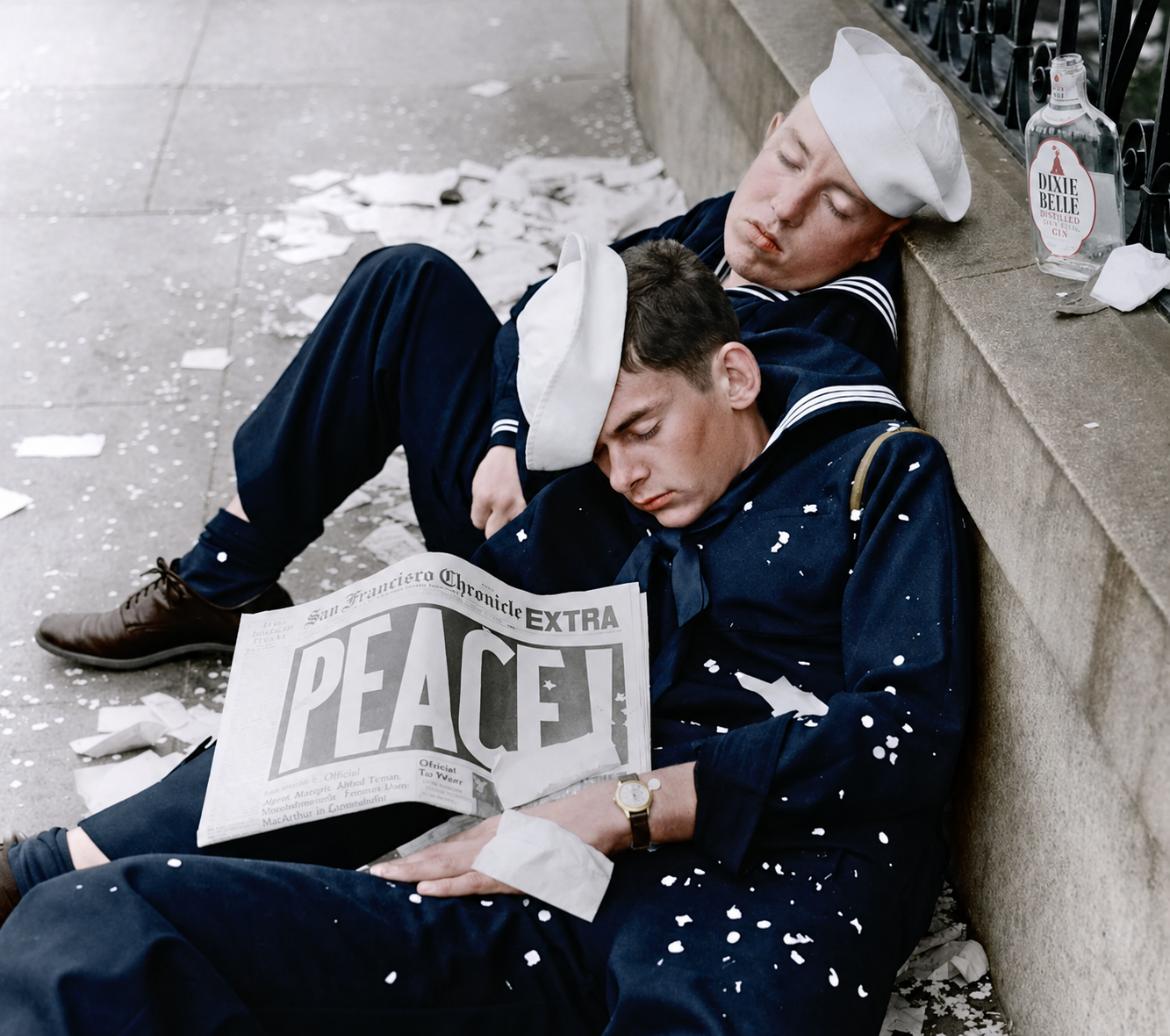
OLDSCHOOLCOOL / VIA REDDIT.COM
Getting home often meant waiting, then waiting again. A soldier might leave a combat zone, board a transport, sit through delays, reach a port, wait for processing, then take a train or bus across the country. Peace had been announced, but the trip back to ordinary life still came with queues, paperwork, and a lot of standing around.
Trending on The Scroller
Children Meeting Fathers Again
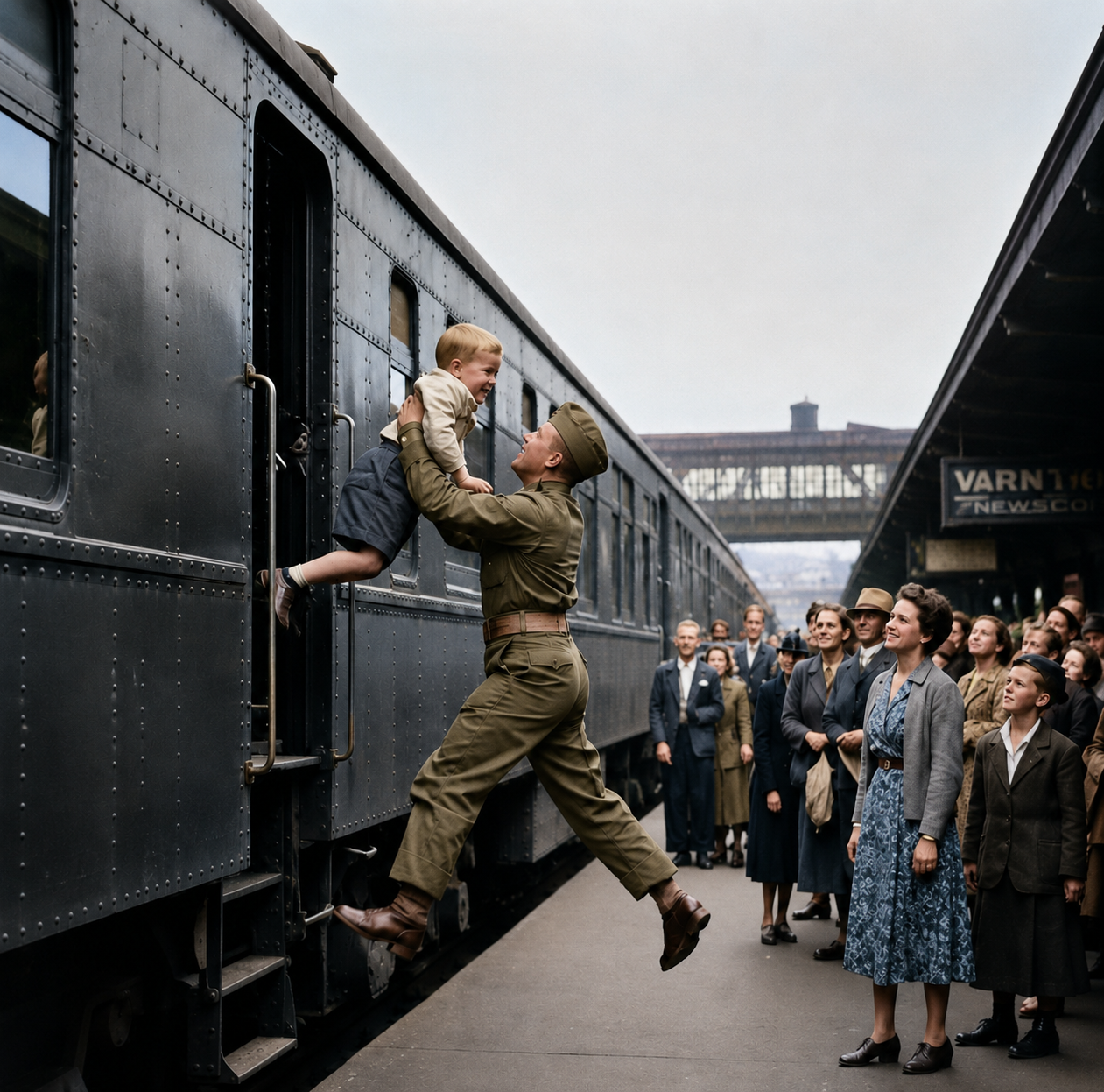
PICS / VIA REDDIT.COM
Some children in these photos were meeting fathers they barely remembered. Others were meeting them for the first time. That gives the sweetest images a slightly complicated edge, because the hug is real, but so is the gap that came before it. A soldier hugging a child can look joyful and uncertain at the same time, and that small uncertainty is what makes the picture stay with you.
The Hug Everyone Had Been Holding Back
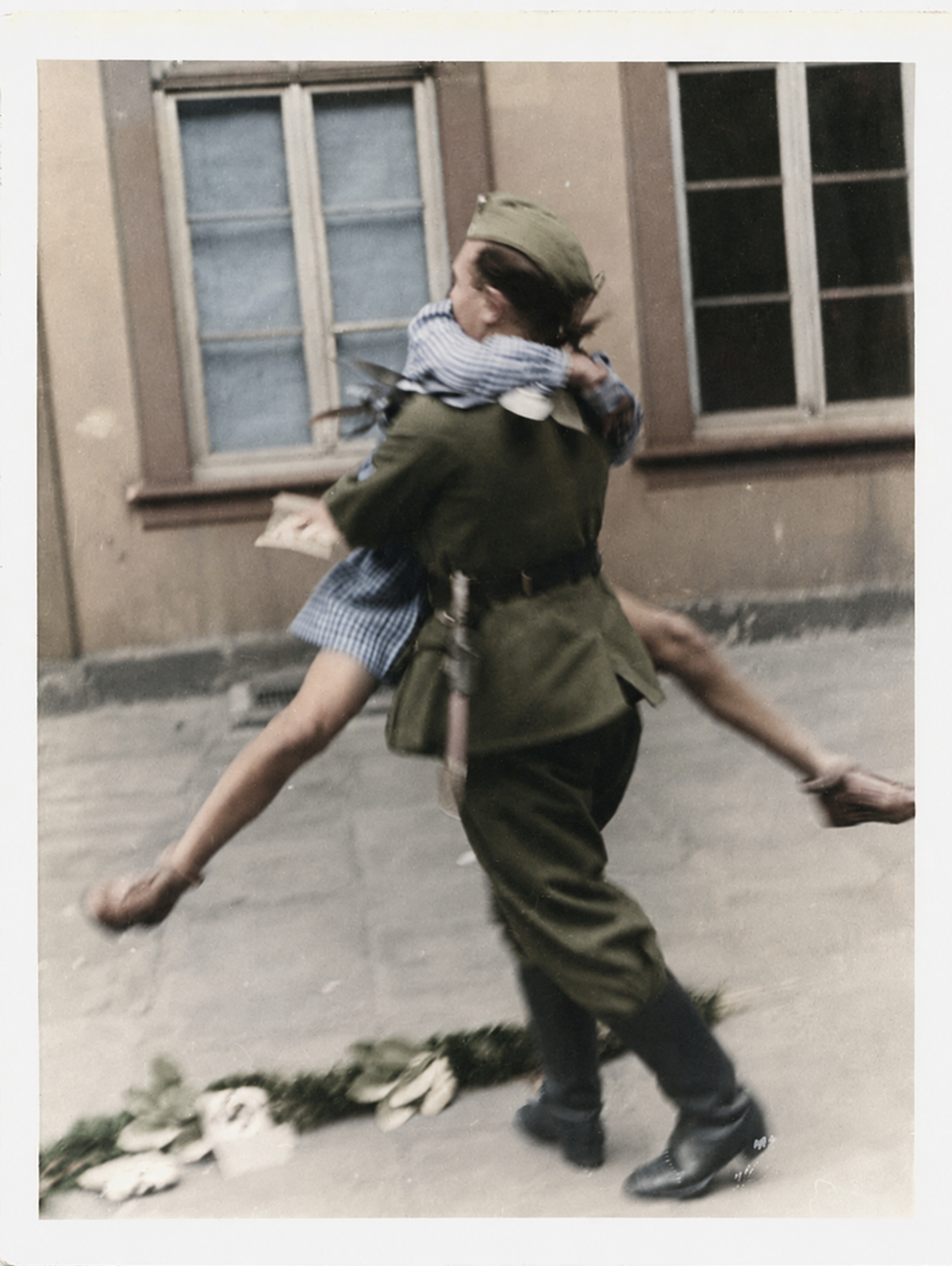
OLDSCHOOLCOOL / VIA REDDIT.COM
There are homecoming hugs that look almost too tight. Not graceful, not posed, just two people grabbing each other in the middle of a platform. It is a public photograph of something that clearly belongs to the people inside it.
A Kiss on a Platform
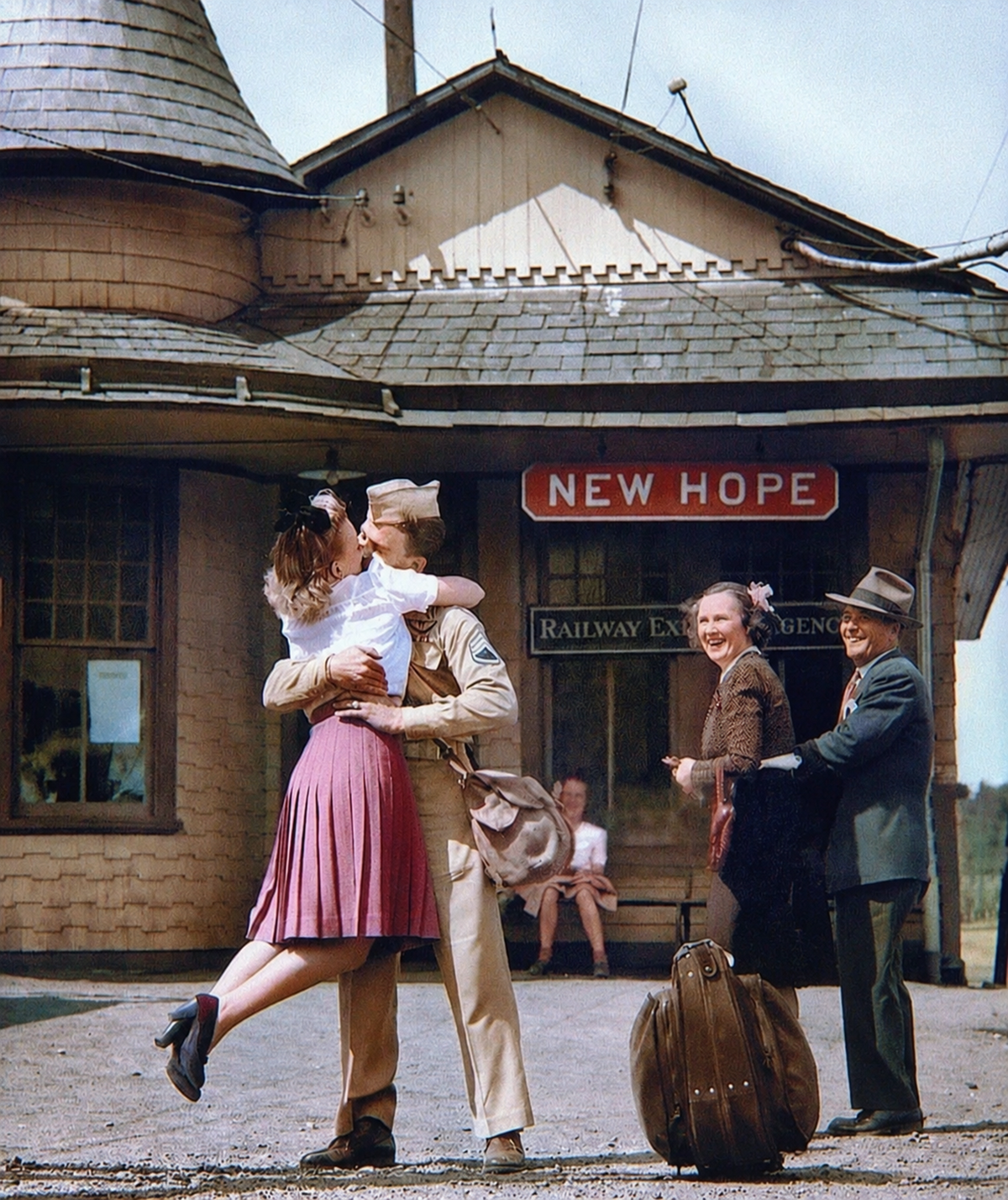
OLDSCHOOLCOOL / VIA REDDIT.COM
The soldier’s kiss became one of the familiar images of the war’s end, but not every kiss looked like a poster. Many were quick, awkward, half-hidden by bags or crowds or the rush to move along. That is what makes some of these colorized photos feel more honest. The romance is there, but so is the platform, the schedule, the noise, and the people waiting behind them.
Sign up for our newsletter
Duffel Bags Everywhere
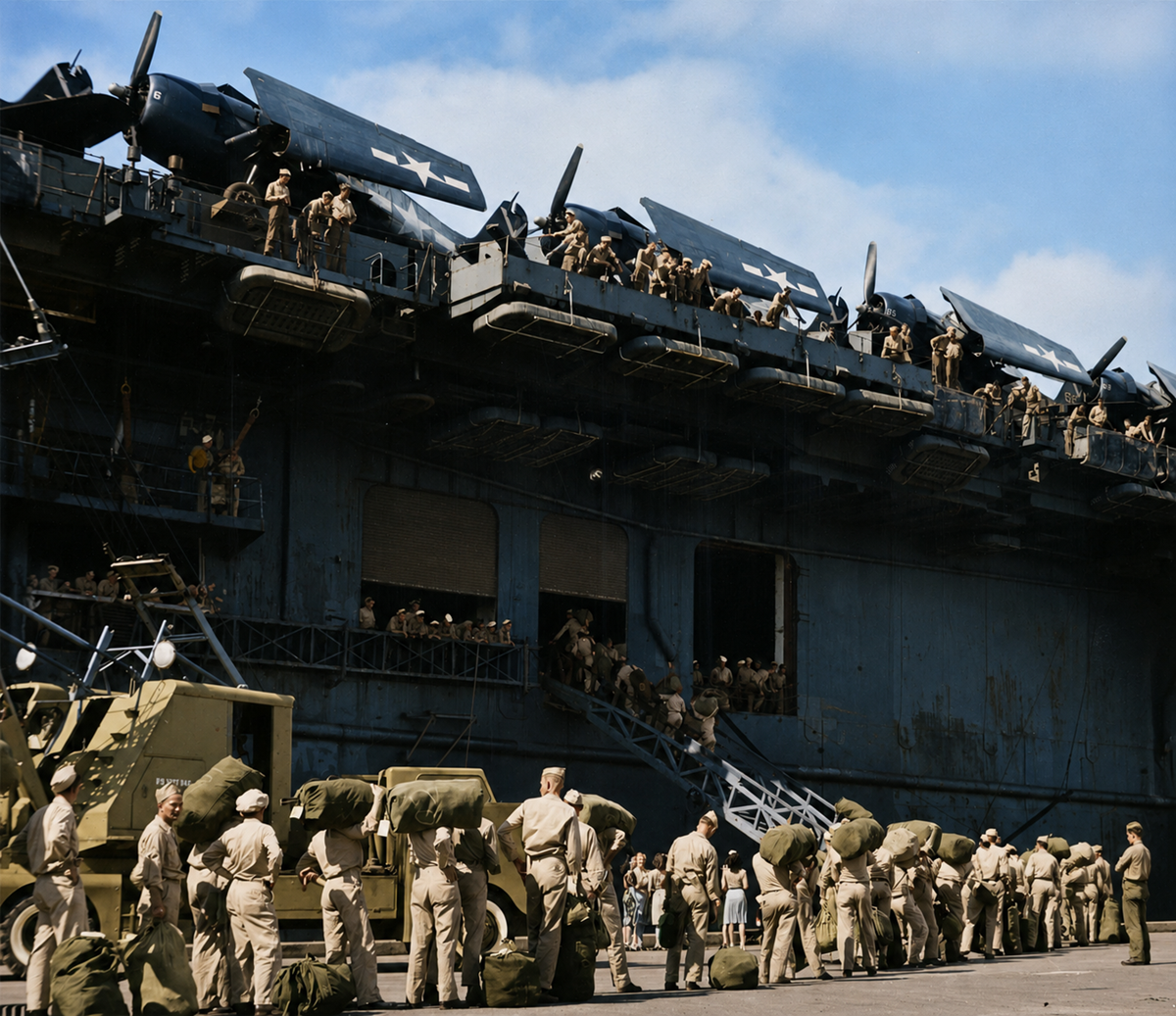
U.S. NAVAL INSTITUTE
The duffel bag might be the quiet star of half these photos. It sits on docks, hangs from shoulders, gets dragged across station floors, and seems to contain everything a soldier has left from years away. Before anyone could sit at a kitchen table again, they had to carry that bag through one more crowd.
Welcome Signs That Could Only Say So Much
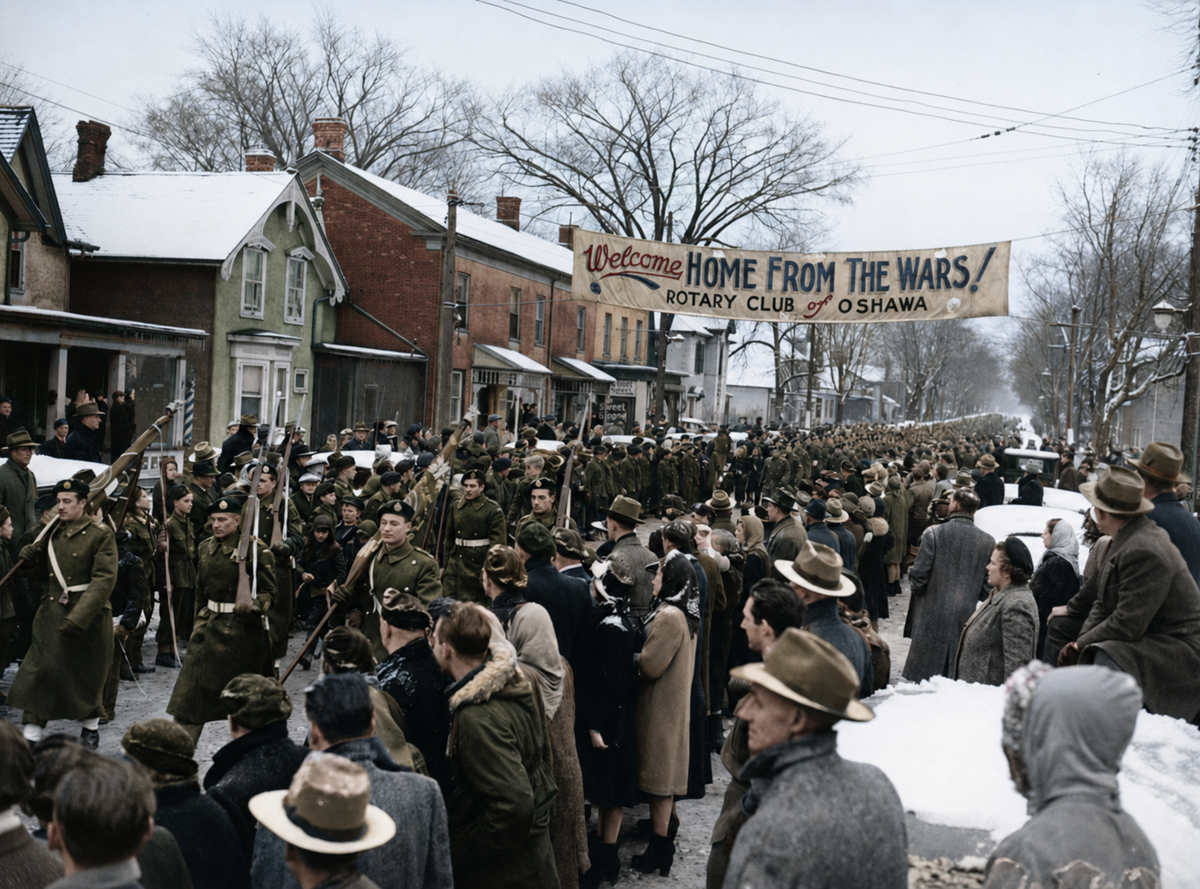
CMHC / VIA TWITTER
“Welcome Home” signs were everywhere, and of course they were. What else could people write? The phrase was simple, maybe too simple for what the moment held, but it did the job. In colorized photos, those signs often feel handmade and human, with uneven lettering, bright bunting, and people standing below them who probably had far more to say than the cardboard could manage.
Soldiers Who Came Back Later
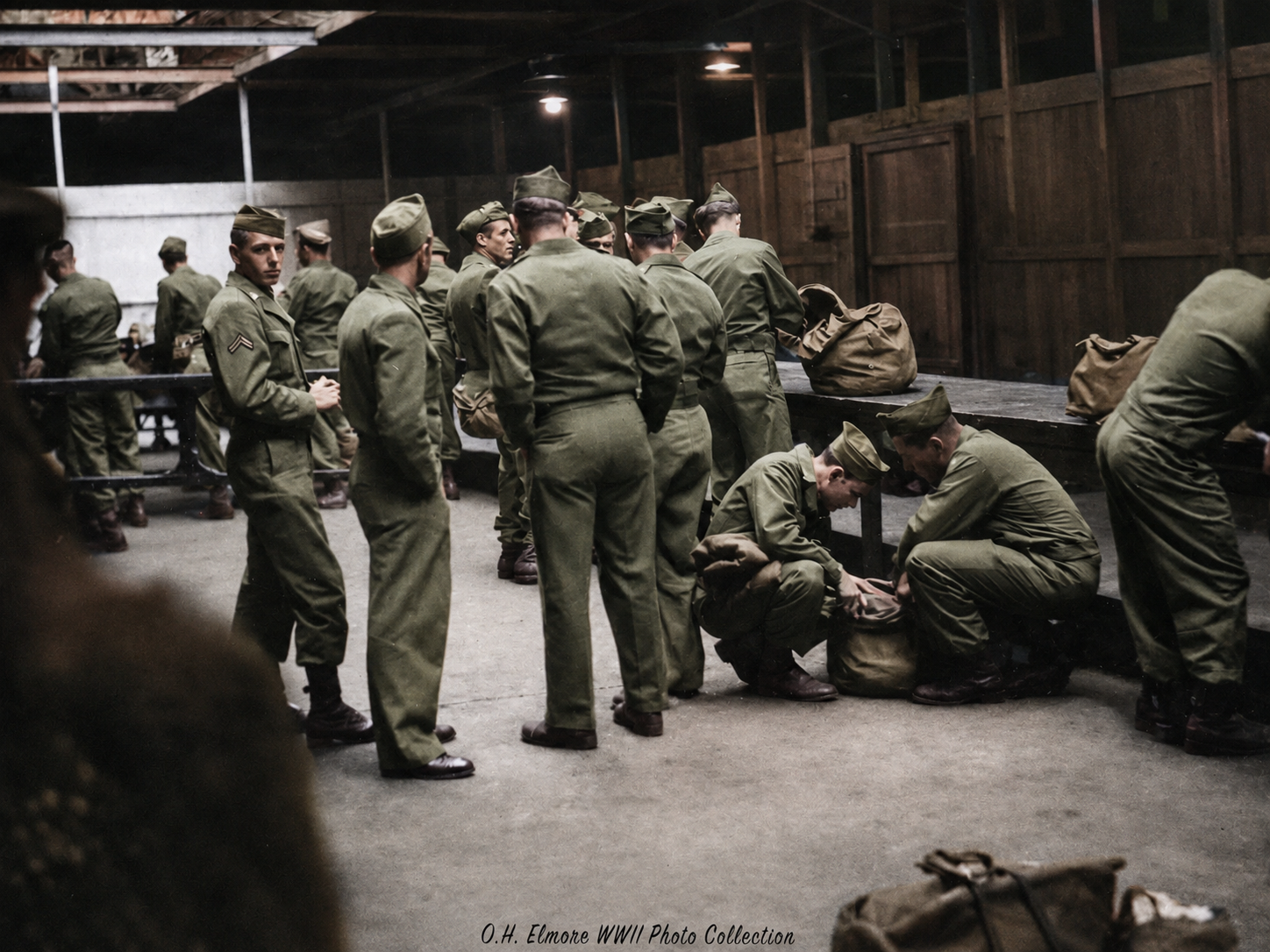
WW2 / VIA REDDIT.COM
Not every soldier returned in the first wave of celebration. Some were kept overseas for occupation duty, transport delays, medical reasons, or the slow machinery of demobilisation. Photos from those later returns can feel a little different, quieter and less explosive. The welcome is still there, but the world has already started moving on, which makes the man arriving with his bag seem slightly out of step.
Warships Turned Into Rides Home
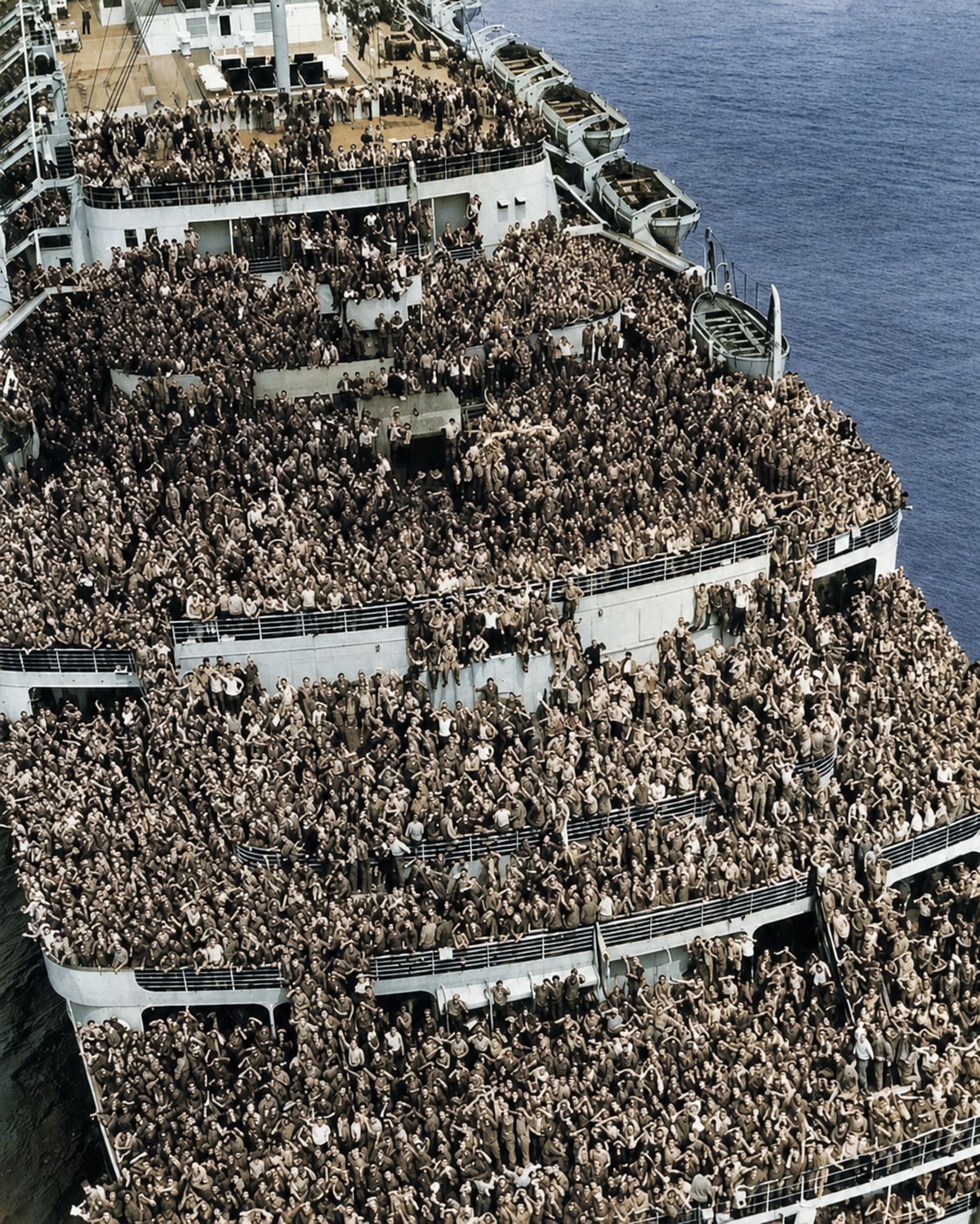
OLDSCHOOLCOOL / VIA REDDIT.COM
One strange postwar detail is how quickly ships built for fighting became ships for going home. Carriers, cruisers, and other vessels were adapted to carry men back across the sea, often in crowded and uncomfortable conditions. The machinery of war had not disappeared; it had simply been given a different job.
Trying to Look Like a Family Again
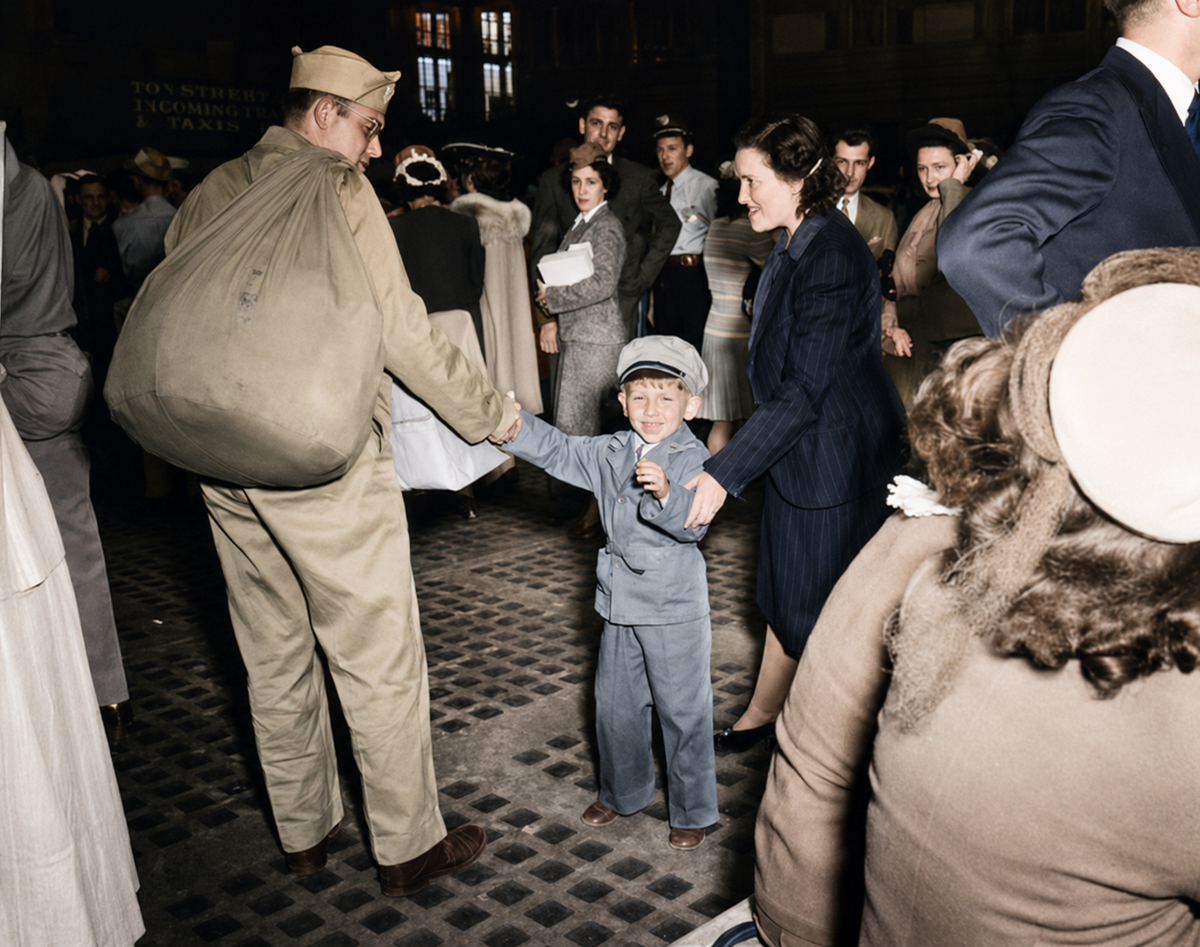
THEWAYWEWERE / VIA REDDIT.COM
Family photos after the war can look happy and a little stiff at the same time. People stand close, smile, pose on porches or sidewalks, and try to make the picture say that everything has returned to normal. But normal was not a switch anyone could flip. Color makes the setting feel familiar enough that the awkwardness becomes easier to notice.
The Faces That Bring the Distance Down
PICS / VIA REDDIT.COM
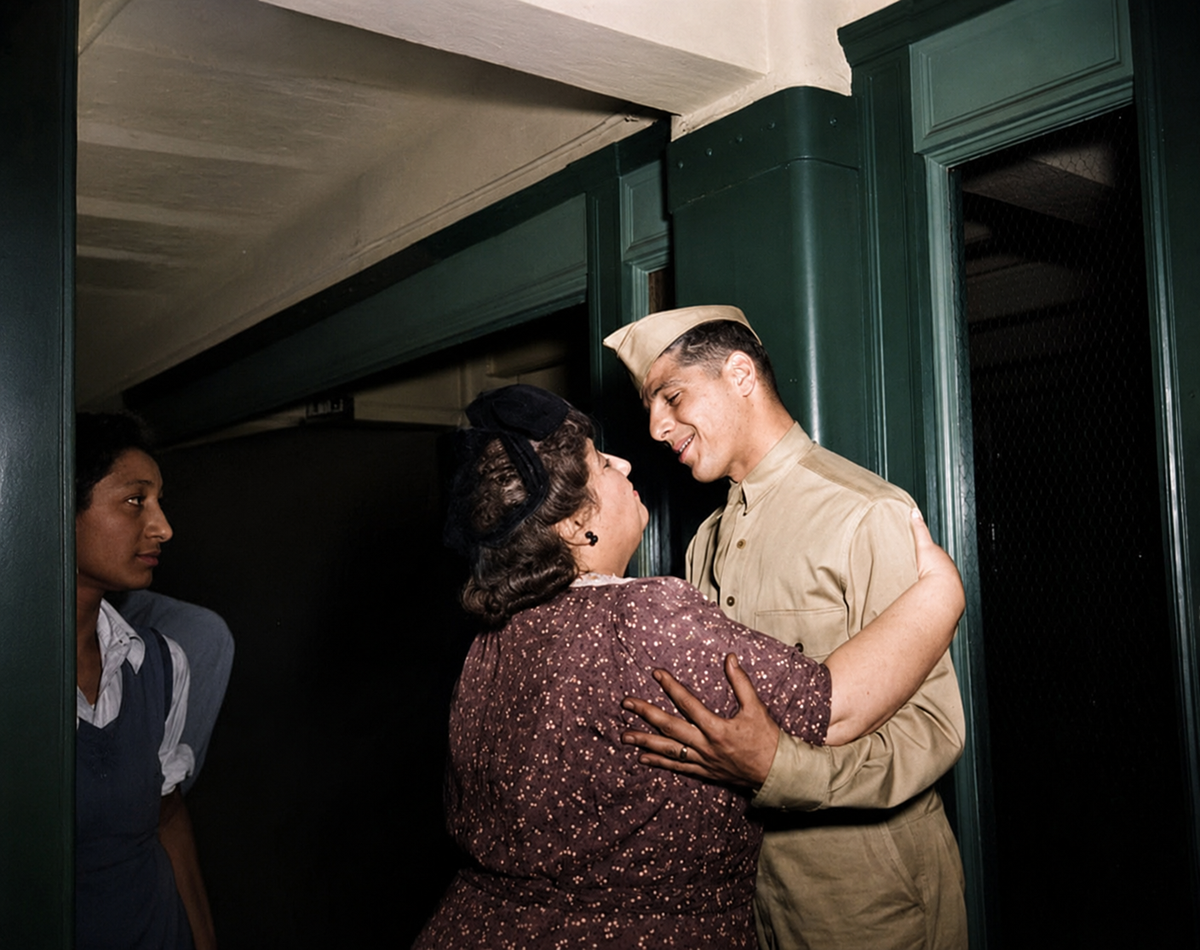
The strongest thing about colorized World War II homecoming photos is not the color itself. It is what the color helps you notice. A soldier’s hand resting on his mother’s back, the close look between two faces that have waited too long, the softness of a uniform against a familiar dress, someone watching quietly from a distance. These were not symbols stepping back into history. They were people returning to the ones who had kept holding their place.
Photos like these make the end of World War II feel less like one clean closing scene and more like thousands of separate returns. Keep looking through old archives and family albums, and the small moments often end up being the ones that feel the most real.
Want to see more WWII content?
Check out 14 Wintertime Habits from WWII America That Feel Almost Unreal, or take a look at 15 Celebrities That Served in WWII. If you want to see more colorized photos, you can check out 25 Colorized Images from the Late 1890s or 20 Colorized Images of Steelworkers and Miners in the Early 1900s.