Some hoaxes survive for a few hours, while others manage to fool scientists, newspapers, governments, and the public for decades. The most successful ones usually arrive at exactly the right moment, when people are already eager to believe the story being offered. A blurry photograph, an impressive fossil, or a conveniently discovered document can be surprisingly persuasive when experts appear to support it. These deceptions became famous not only because they were false, but because so many people accepted them as real.
1. The Piltdown Man
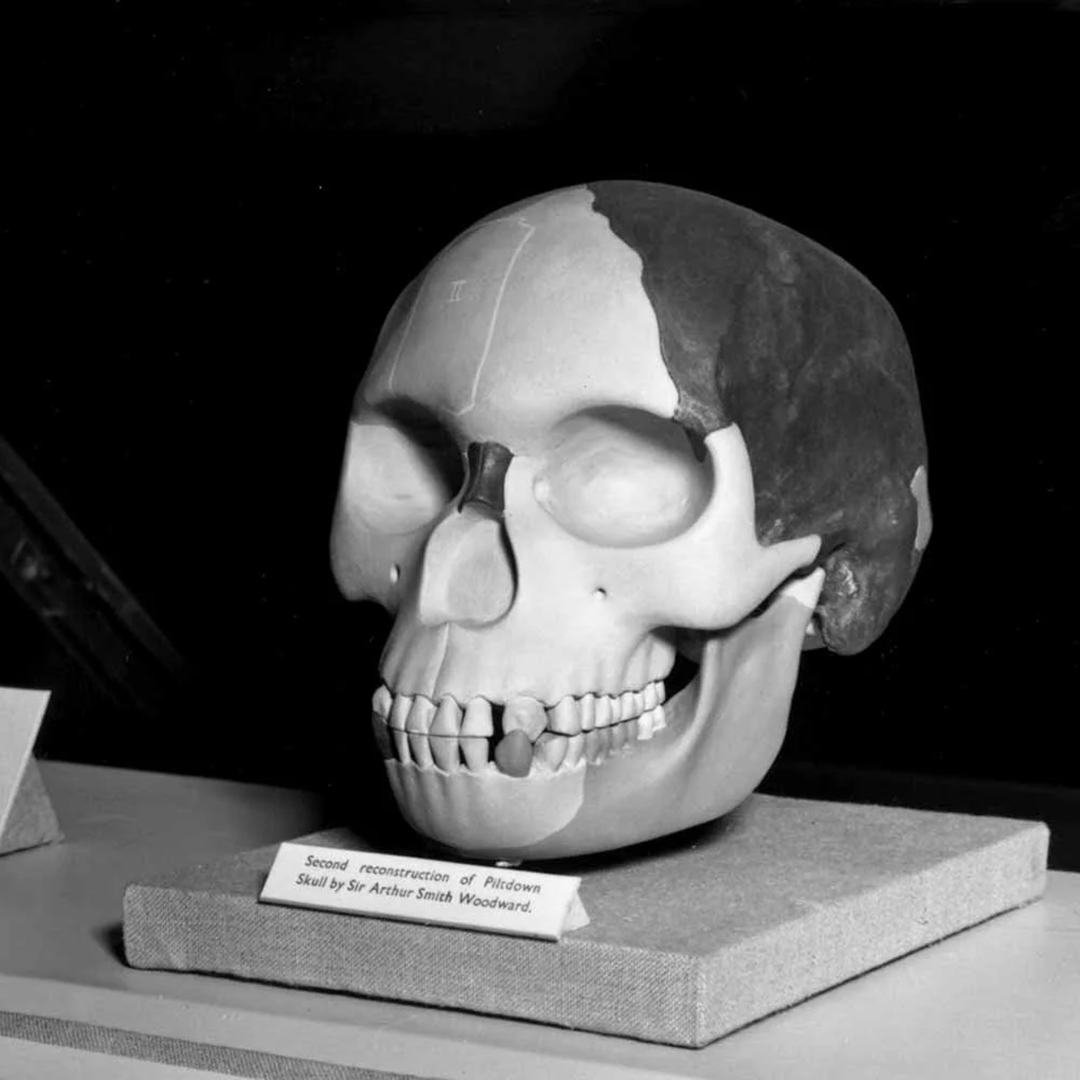
In 1912, Charles Dawson announced the discovery of an ancient human ancestor in Piltdown, England. The skull combined a human-like cranium with an ape-like jaw and influenced scientific debate for decades. Tests in the 1950s revealed that it was a fake made from a medieval skull, an orangutan jaw, and deliberately altered teeth.
2. The Great Moon Hoax
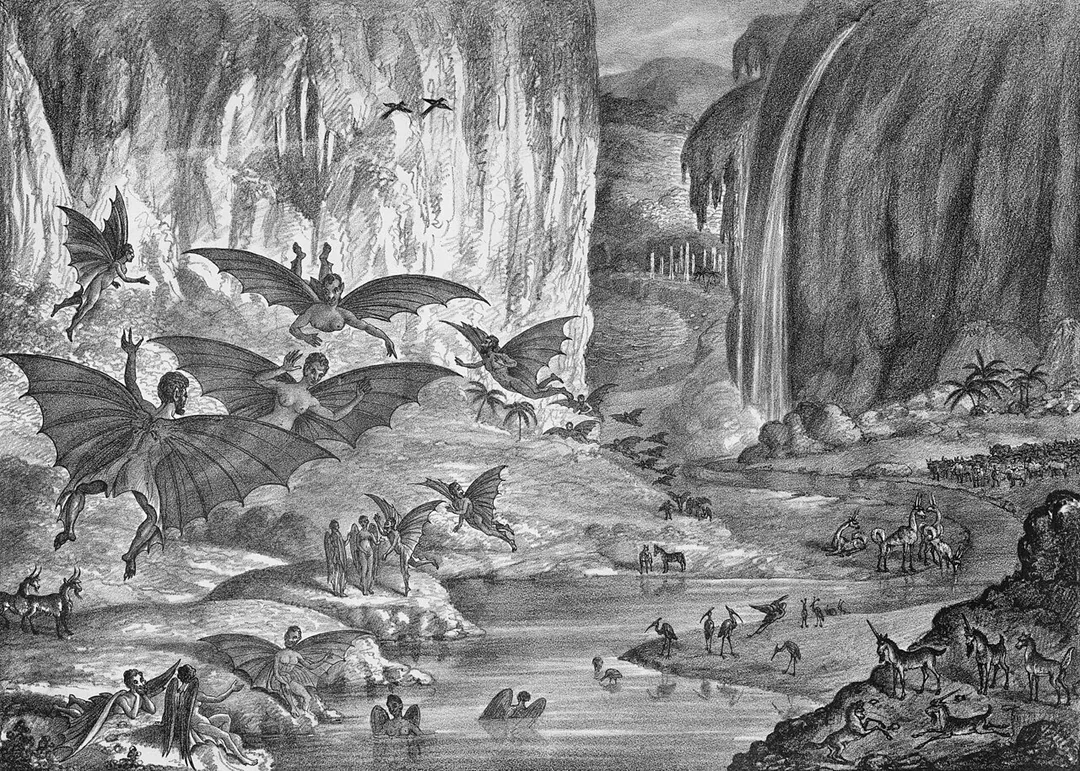
Readers of The Sun newspaper in New York opened their papers in August 1835 to find astonishing reports about life on the Moon. A series of articles claimed that astronomer John Herschel had observed winged humanoids, strange animals, forests, beaches, and elaborate lunar temples through an enormously powerful telescope. The stories were presented with enough technical detail to sound like legitimate scientific reporting, and circulation climbed rapidly. Herschel knew nothing about the articles, but the fantasy had already spread well beyond New York by the time the deception became obvious.
3. The Cardiff Giant
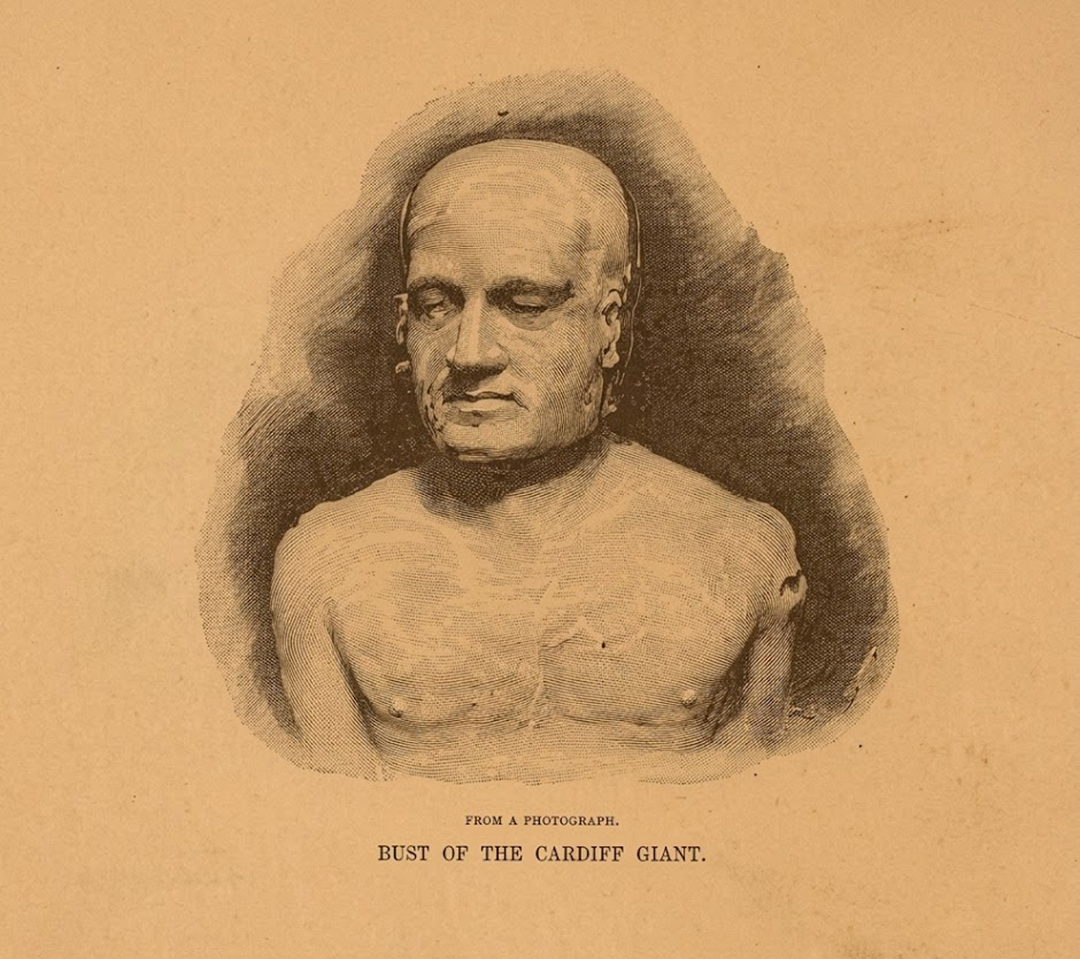
When workers digging a well in Cardiff, New York, uncovered a ten-foot stone figure in 1869, crowds paid to see what many believed was a petrified prehistoric man. The giant was actually the work of George Hull, an atheist who had argued with a minister about whether biblical giants had literally existed. Hull commissioned the figure, had it artificially aged, and secretly buried it on a relative’s farm. Even after experts called it a sculpture, the public continued lining up. Showman P. T. Barnum later created his own copy, which led to the strange situation of a fake giant competing against a fake version of itself.
4. The Cottingley Fairies
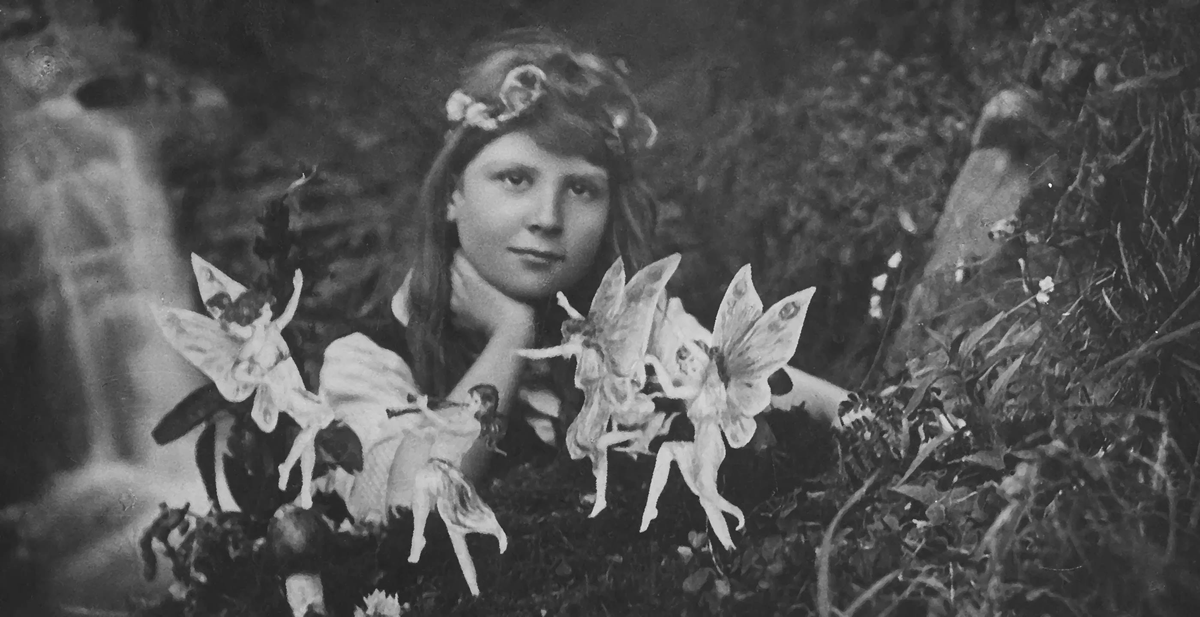
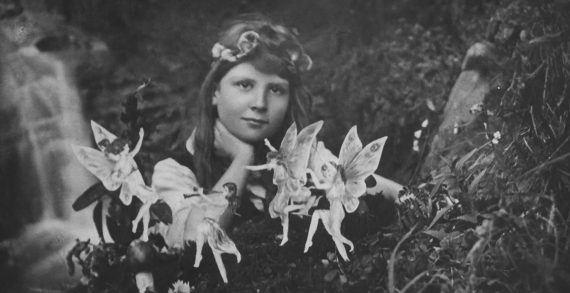
Two young cousins, Elsie Wright and Frances Griffiths, took photographs near a stream in Yorkshire that appeared to show them interacting with tiny fairies. The images reached author Arthur Conan Doyle, who believed they offered genuine evidence of supernatural beings and published them in 1920. The fairies were actually paper illustrations held in place with hatpins. The cousins admitted the trick decades later, although Frances continued to insist that one of the five photographs was real.
5. The Hitler Diaries
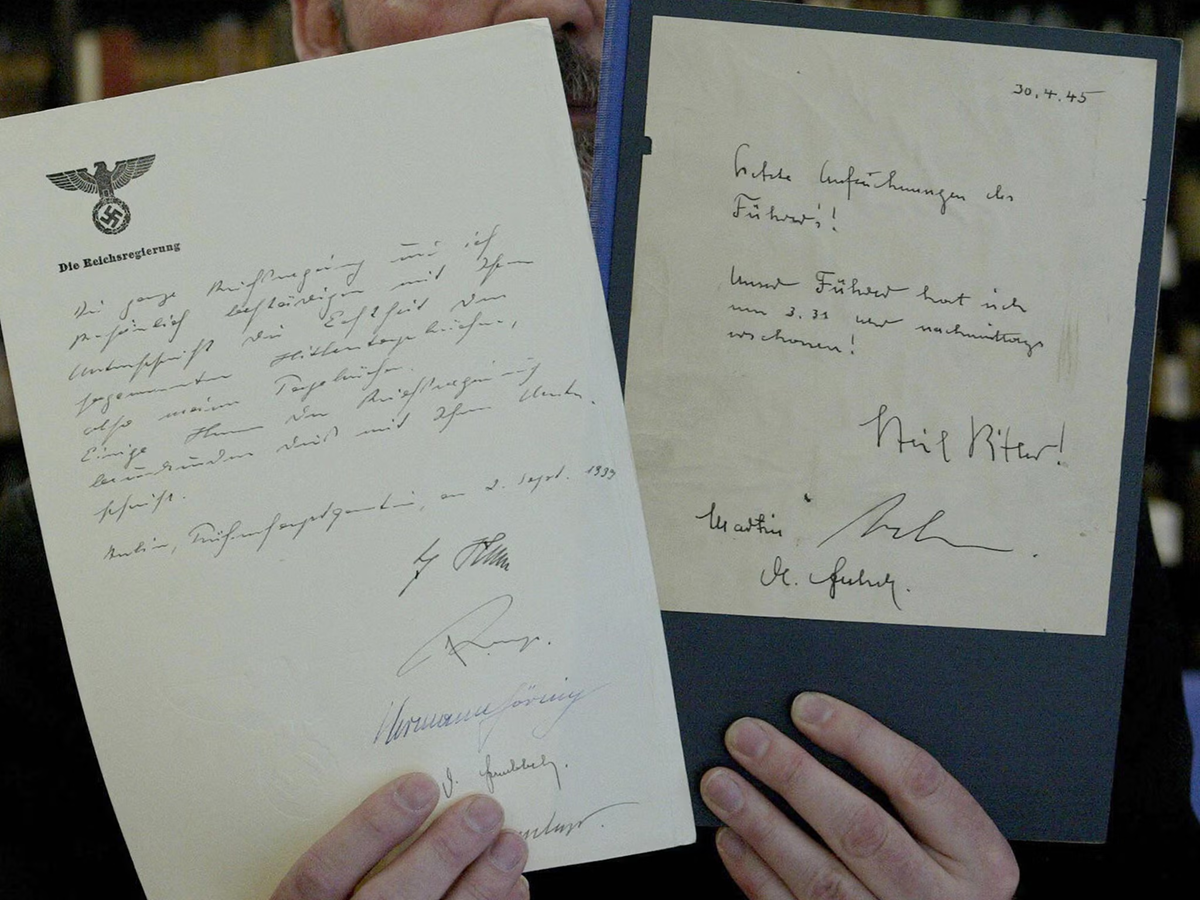
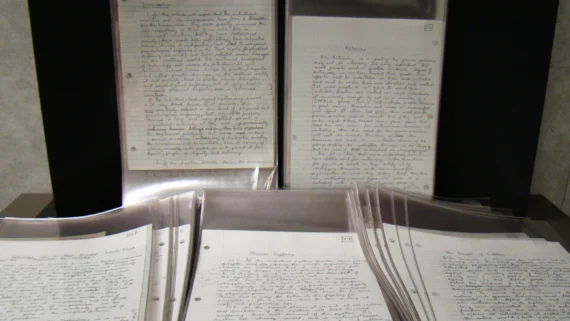
In 1983, the German magazine Stern announced that it had obtained Adolf Hitler’s private diaries, supposedly recovered from a plane crash at the end of World War II. The publication paid millions of marks for dozens of handwritten volumes and arranged an international press conference before completing proper authentication. British historian Hugh Trevor-Roper initially supported the discovery, giving it an enormous boost. Within days, forensic testing revealed modern paper, ink, glue, and binding materials. The diaries had been created by Konrad Kujau, a skilled forger with a long history of selling fake Nazi memorabilia.
Trending on The Scroller
6. The Surgeon’s Photograph of the Loch Ness Monster
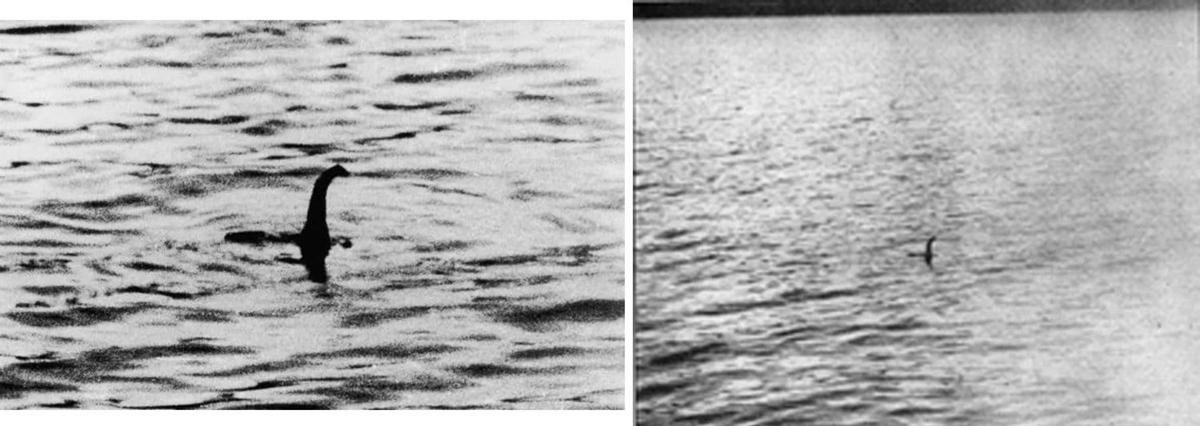
For decades, one photograph defined the public image of the Loch Ness Monster. Published in 1934 and associated with respected London doctor Robert Kenneth Wilson, it appeared to show a long neck rising from the Scottish lake. The object was later revealed to have been a small model attached to a toy submarine. Its apparent size came largely from the tight crop, which removed the wider view of the water and made the creature seem much larger than it was.
7. The Fiji Mermaid
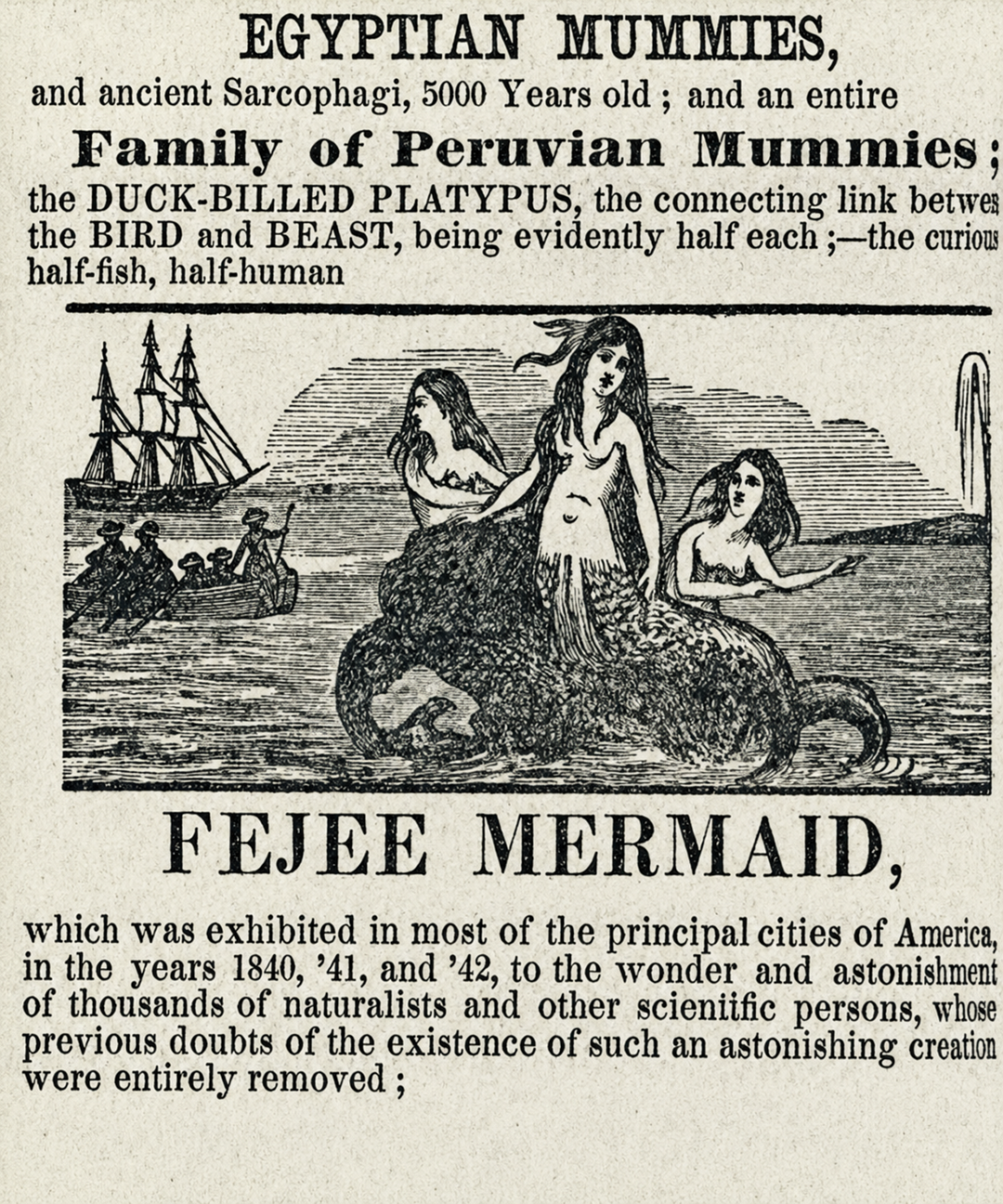
P. T. Barnum knew that disappointment could still sell tickets. In 1842, he promoted a supposedly preserved mermaid with posters showing a beautiful woman beneath the water, although the actual exhibit was a disturbing little creature with a monkey-like torso attached to a fish’s body. Such objects were commonly assembled by craftsmen in parts of Asia and sold as curiosities. Barnum encouraged arguments over whether the creature was genuine because every newspaper dispute brought more visitors through the door.
8. The BBC’s Spaghetti Tree

On April 1, 1957, the BBC news program Panorama aired footage of a Swiss family harvesting strands of spaghetti from trees. Pasta was still unfamiliar enough to many British viewers that the report did not immediately seem absurd. Some people reportedly contacted the broadcaster to ask how they could grow their own spaghetti trees. The BBC advised them to place a strand of spaghetti in tomato sauce and hope for the best.
Sign up for our newsletter
9. The Alien Autopsy Film
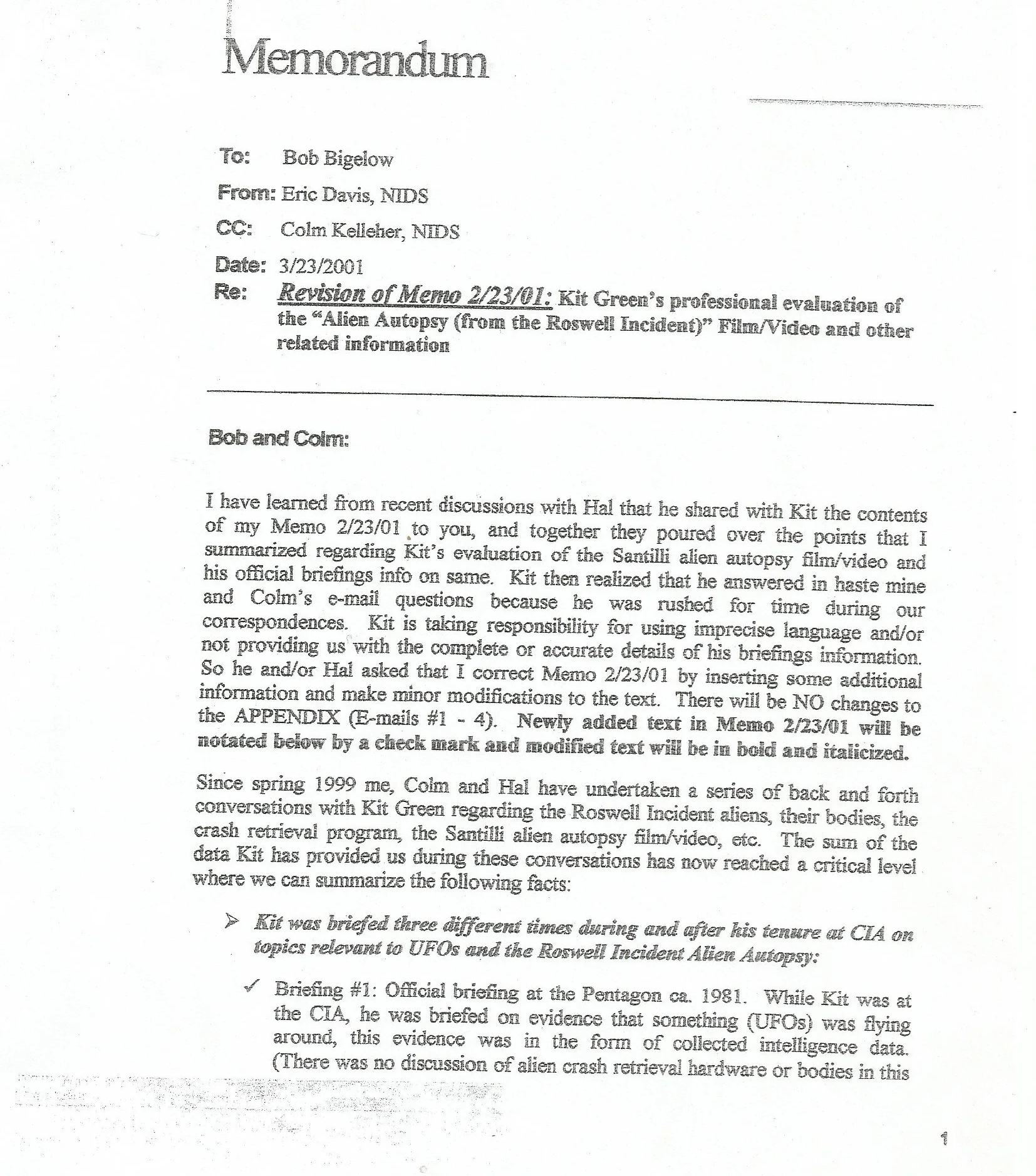
A grainy film released in 1995 claimed to show military doctors examining the body of an extraterrestrial recovered after the Roswell incident. It was broadcast internationally and became one of the most widely recognized pieces of UFO “evidence” of the decade. Producer Ray Santilli later acknowledged that the footage viewers had seen was a reconstruction, although he maintained that it was based on an earlier film that had deteriorated. The alien body was reportedly made using plaster, animal organs, and a sheep’s brain.
10. The Archaeoraptor Fossil
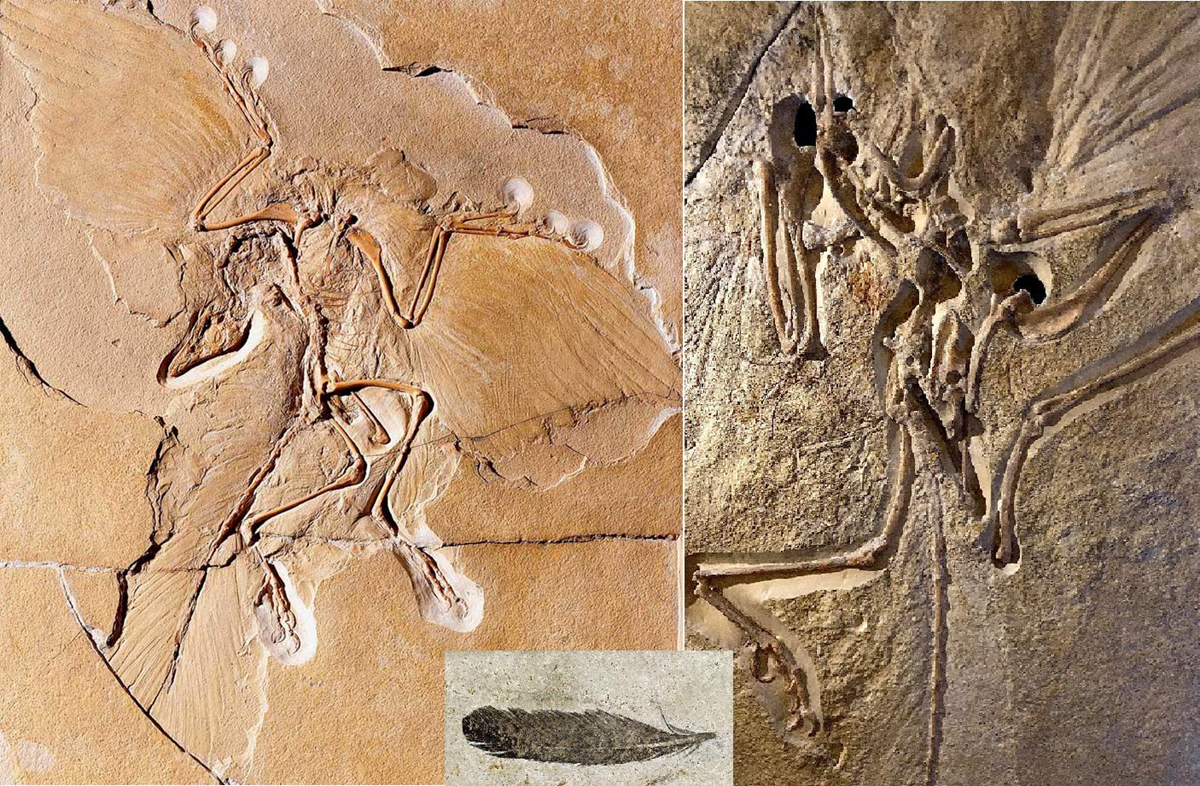
National Geographic unveiled Archaeoraptor in 1999 as a potentially important link between dinosaurs and birds. The fossil had feathers, a dinosaur-like tail, and the kind of dramatic appearance that seemed perfect for a major evolutionary discovery. Researchers soon found that it had been assembled from pieces belonging to different animals. It was not simply a mistaken identification, but a composite fossil built to look more complete and valuable on the commercial market.
11. Balloon Boy
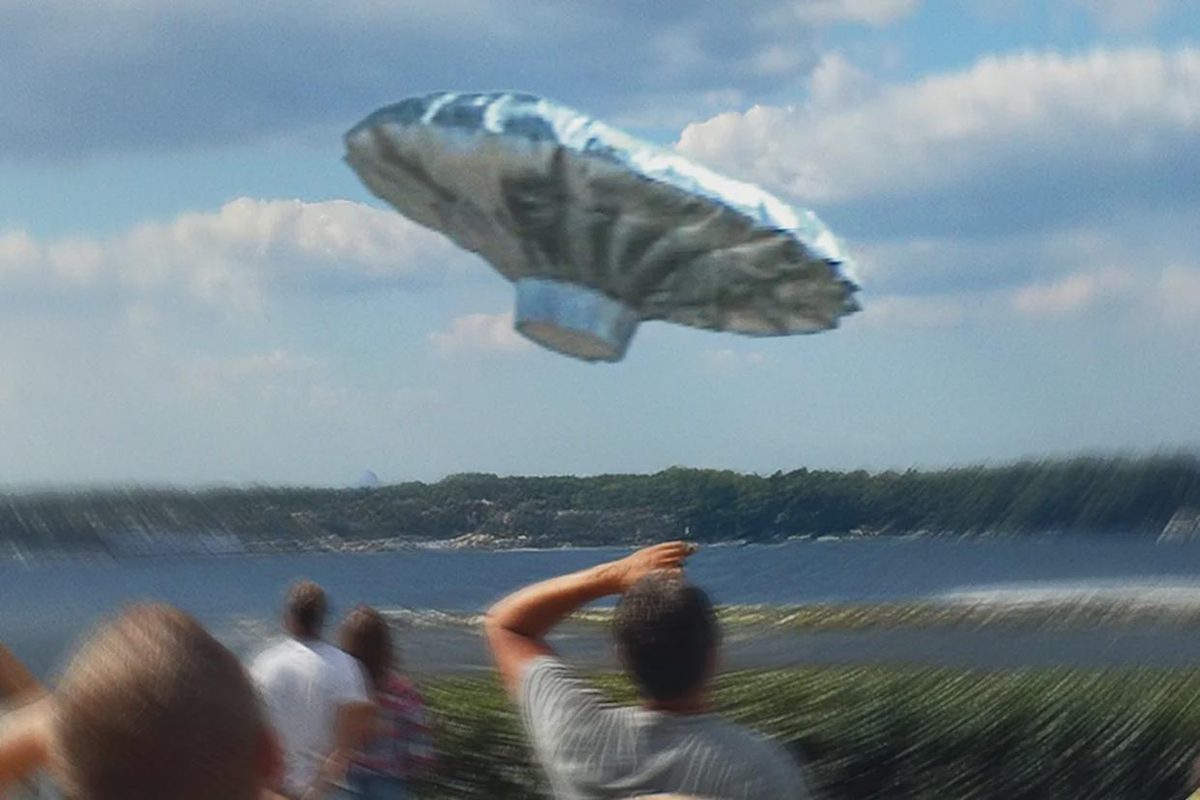
In October 2009, television networks followed a homemade silver balloon drifting across Colorado because six-year-old Falcon Heene was believed to be trapped inside it. Emergency crews tracked the craft while viewers watched the situation unfold live. Falcon was later found hiding safely at home. During a television interview, he told his father, “You guys said that we did this for the show,” a comment that immediately raised suspicions. Authorities concluded that the event had been staged as a publicity stunt, although the family continued to dispute parts of that account.
12. The Tasaday “Stone Age” Tribe

In the early 1970s, the Tasaday were presented as an isolated Stone Age tribe living in caves in the Philippines. After Ferdinand Marcos’s regime fell, reporters found members living in houses and wearing modern clothing, and some said they had been pressured to perform for visitors. Later evidence suggested they may have been partly isolated, but the original story had clearly been exaggerated.
13. The Drake’s Plate of Brass
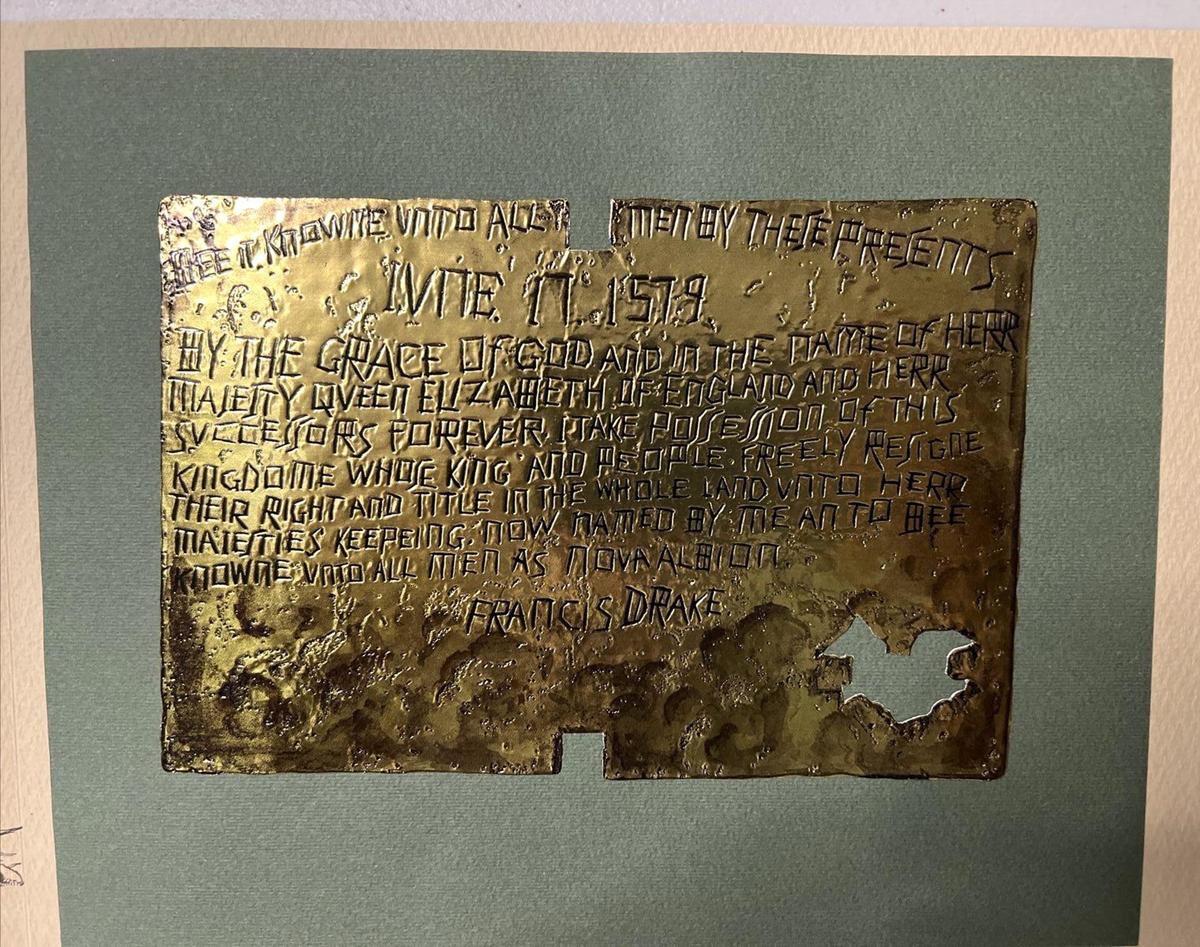
A brass plate discovered in California in the 1930s appeared to confirm that English explorer Francis Drake had claimed the region for Queen Elizabeth I in 1579. Historians celebrated the object, and it was displayed for years by the University of California. The plate had actually been created as a practical joke aimed at historian Herbert E. Bolton, who had repeatedly encouraged people to search for Drake’s missing marker. The prank escaped its creators’ control when Bolton accepted the object enthusiastically and helped turn it into a respected artifact.
14. The Calaveras Skull
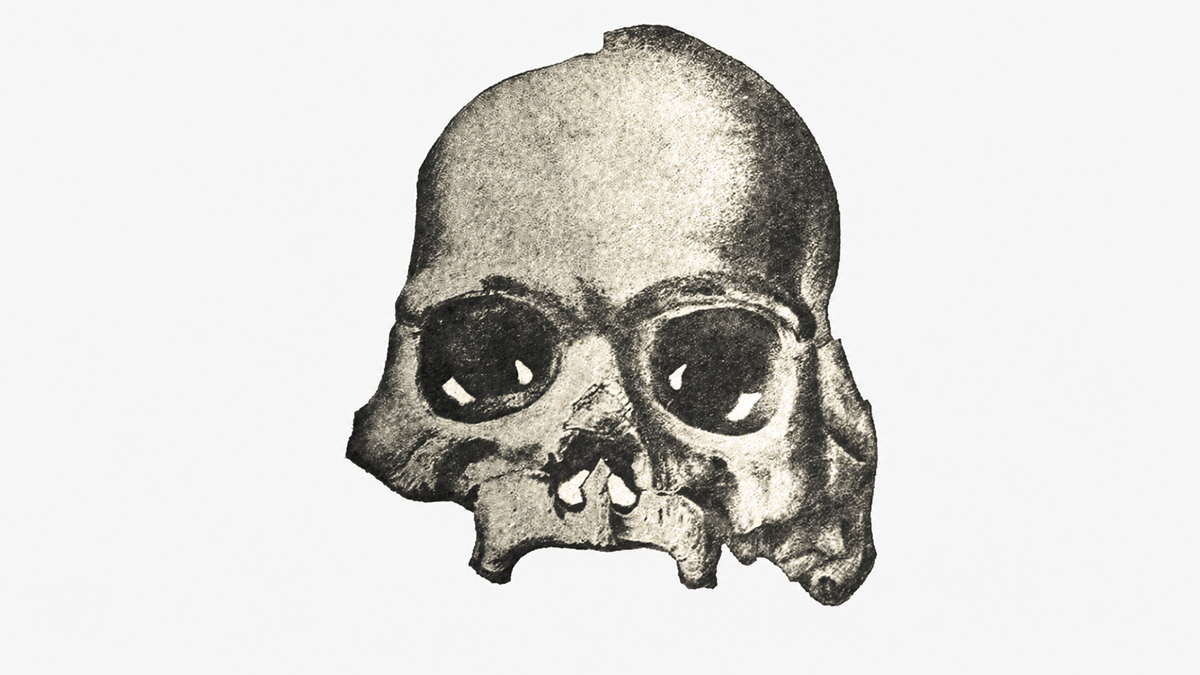
A human skull found in a California mine in 1866 seemed to prove that people had lived in North America during the Pliocene era, millions of years earlier than accepted evidence suggested. It attracted the attention of prominent geologists and became part of a fierce argument over human origins. The skull was modern and had apparently been planted by miners as a joke. Despite mounting doubts, discussion around it continued for years because the object had become useful to competing scientific theories.
15. The Donation of Constantine
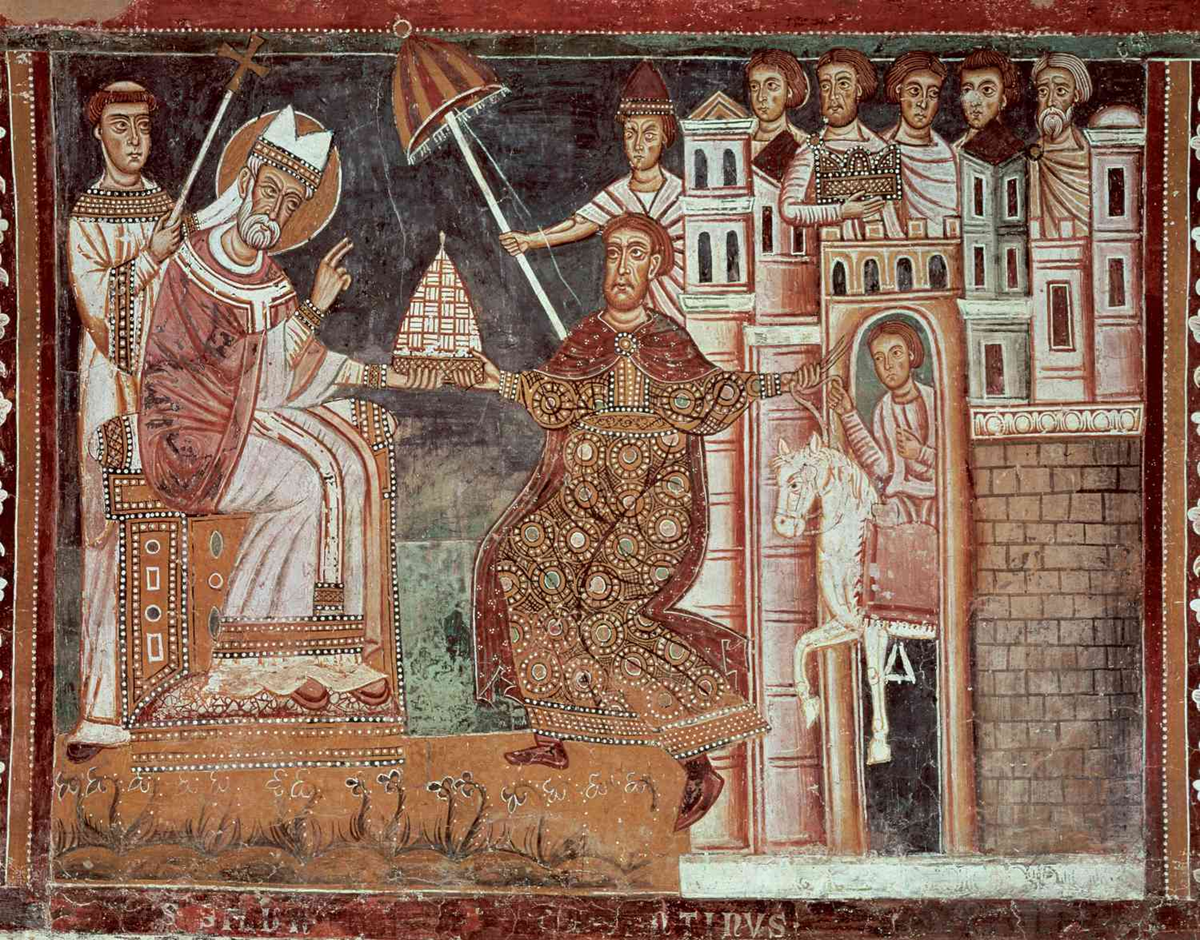
Few forged documents have enjoyed a longer or more influential life. The Donation of Constantine claimed that Roman emperor Constantine had granted extensive political authority and territory to Pope Sylvester I in the fourth century. European rulers and church officials treated it as authentic for hundreds of years. In the 15th century, scholar Lorenzo Valla demonstrated through language and historical details that the text had been written much later, probably in the eighth century. By then, the forgery had already been used in arguments about power, land, and the authority of the papacy across medieval Europe.
In the mood for more?
Check out 15 Online Hoaxes That Fooled People Who Should Have Known Better, or take a look at 15 Hoaxes People Actually Believed. If you want to see more superstition stories, check out 14 Old Superstitions and Why People Once Believed Them.