
Good manners are supposed to make social situations easier, but they do not always travel well. A gesture that shows respect in one country can look cold, insulting, or strangely overfamiliar somewhere else. Even simple habits involving food, conversation, gifts, and body language can carry completely different meanings across borders. These customs are a reminder that politeness often depends less on what you do than on where you happen to be doing it.
1. Finishing Everything on Your Plate

A completely clean plate can send opposite messages depending on where dinner is taking place. In many Western households, finishing every bite shows that the food was enjoyed, while leaving a large amount behind may seem wasteful. In some Chinese dining settings, however, leaving a little food has traditionally suggested that the host served more than enough. Customs vary between families, but the safest-looking gesture in one home can carry a different meaning in another.
2. Making Direct Eye Contact

Direct eye contact is often associated with honesty and confidence in the United States and much of Europe. Looking away during a conversation may be interpreted as nervousness or disinterest. In several Asian, African, and Indigenous cultures, prolonged eye contact with an elder or authority figure can instead feel confrontational. Lowering the gaze may be a deliberate sign of respect rather than an attempt to avoid the conversation.
3. Tipping After a Meal
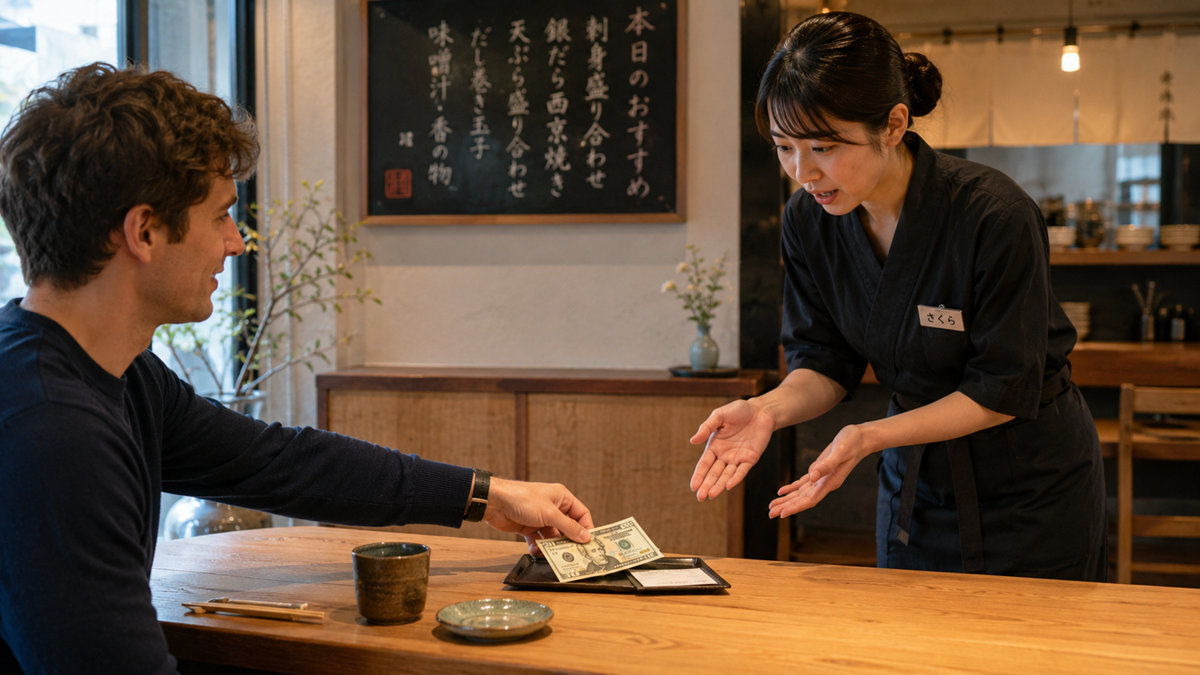
In the United States, leaving a tip is an expected part of restaurant service, and skipping it can feel insulting to the server. In Japan, good service is generally treated as part of the job rather than something requiring an extra payment. A waiter may even return money left on the table because it appears to have been forgotten. What looks generous in one country can create confusion in another.
4. Refusing a Gift Before Accepting It

Immediately taking a gift may seem natural in many Western countries. In parts of East Asia and the Middle East, a polite recipient may refuse it once or twice before accepting, showing modesty rather than disinterest. Someone unfamiliar with the custom might take the first refusal literally and put the gift away. That can leave both people wondering what just happened.
5. Opening a Gift in Front of the Giver

Birthday parties in the United States often include opening presents in front of everyone so the giver can see the reaction. Elsewhere, gifts may be set aside and opened privately to avoid drawing attention to their price or quality. Waiting until later is meant to reduce embarrassment and comparison. To someone expecting instant excitement, however, it can look surprisingly ungrateful.
Trending on The Scroller


6. Arriving Exactly on Time

In Germany, Switzerland, and Japan, punctuality is often treated as a sign that you respect another person’s time. For an informal dinner or party in parts of Latin America or the Mediterranean, arriving at the exact stated hour may catch the host still preparing. Guests are sometimes expected to appear a little later. Business appointments usually follow stricter rules, so the meaning of “on time” can change with the event.
7. Saying “No” Directly

A clear refusal is valued in cultures where direct speech is associated with efficiency and honesty. In societies that place greater importance on preserving harmony, a blunt “no” may embarrass the listener or feel unnecessarily harsh. Phrases such as “that may be difficult” or “we will think about it” can carry a negative answer without stating it openly. Visitors who take every sentence literally may completely misread the outcome of a conversation.
8. Asking About Age, Salary, or Marriage

Questions about income, age, family, or relationship status can feel invasive in countries where private life is carefully separated from casual conversation. In other places, these questions help people understand someone’s background and position within a community. They may be asked with genuine friendliness rather than judgment. The difference between personal interest and nosiness is far from universal.
Sign up for our newsletter
9. Blowing Your Nose in Public
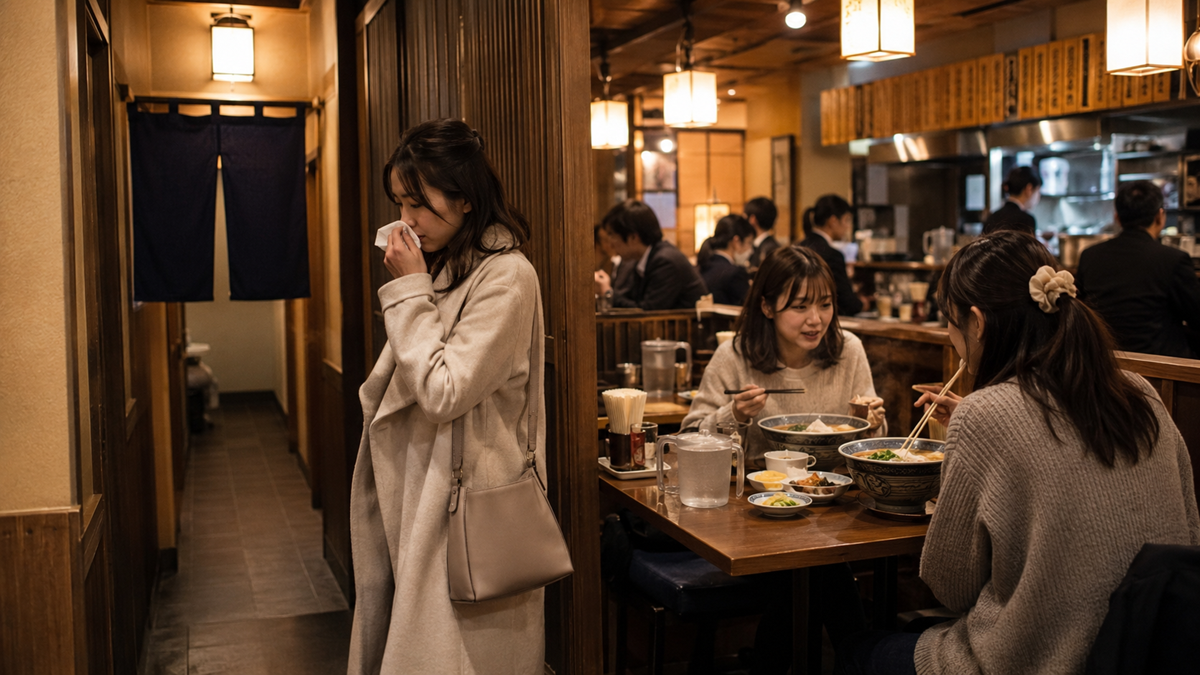
Using a tissue at the table may seem more considerate than repeatedly sniffing in many Western countries. In Japan and some other East Asian settings, loudly blowing your nose around other people can be viewed as unpleasant, especially during a meal. Stepping away is usually the more discreet option.
10. Eating or Passing Food With Your Left Hand

Choosing one hand over the other rarely matters at a European or North American table. In parts of South Asia, the Middle East, and Africa, the left hand has traditionally been associated with personal hygiene and may be avoided when eating, greeting someone, or passing an object. Offering food with it can therefore appear careless or disrespectful. Visitors may not even realize they have made a social mistake.
11. Calling Someone by Their First Name

First names are introduced quickly in countries such as Australia and the United States, where informality can make an interaction feel warmer. In cultures with stronger expectations around age, rank, and professional titles, switching too soon may seem overly familiar. A surname and title can remain appropriate even after several meetings. Trying to sound friendly can accidentally suggest that you are ignoring the social hierarchy.
12. Smiling at Strangers

A passing smile is a routine gesture of friendliness in parts of North America. In countries where smiles are usually tied to a genuine interaction, doing it without a clear reason may seem artificial, flirtatious, or slightly strange. A neutral expression is not necessarily unfriendly. It may simply be the normal way of sharing public space.
13. Giving a Thumbs-Up

The thumbs-up commonly means approval, agreement, or “everything is fine” across much of the Western world. In parts of the Middle East and elsewhere, the gesture has historically carried a much more offensive meaning. Media and international travel have softened that interpretation in some places, but context still matters. A familiar sign of encouragement is not guaranteed to be harmless everywhere.
14. Wearing Shoes Inside the House

Walking straight into someone’s home with your shoes on is normal in many households in the United States and parts of Europe. In Japan, South Korea, Scandinavia, and numerous other places, outdoor shoes are removed near the entrance to keep dirt away from the living area. Ignoring that boundary can feel as inconsiderate as placing muddy shoes on the furniture. Guests may be offered slippers, although those can come with their own rules about where they should be worn.
15. Sitting With the Soles of Your Feet Visible

Crossing your legs and pointing the bottom of a shoe toward someone rarely attracts attention in many Western settings. In Thailand, parts of the Middle East, and several other cultures, the soles of the feet are considered unclean or disrespectful to display toward another person. Pointing them at a person, religious object, or image can be particularly offensive. A comfortable sitting position can suddenly become a social problem.
In the mood for more?
Check out 16 Countries That Surprise Americans With How Differently Everyday Life Works, or take a look at 16 Bizarre Traditions Around the World That Locals Take Very Seriously. If you want to see more planet earth facts, you can check out 20 Things That Happen Every Second Around the World.
Images generated by AI