The ocean has always been good at producing animals that seem designed by someone ignoring the usual rules. What is stranger is how recently some of the most unusual examples entered the scientific record. Over the past two decades, remotely operated vehicles, deep-sea expeditions, genetic work, and a few very surprised divers have revealed creatures with branching bodies, transparent skin, glowing organs, and anatomy that barely looks practical. Some live miles below the surface, while others were hiding in water shallow enough for people to swim through.
1. The Squidworm
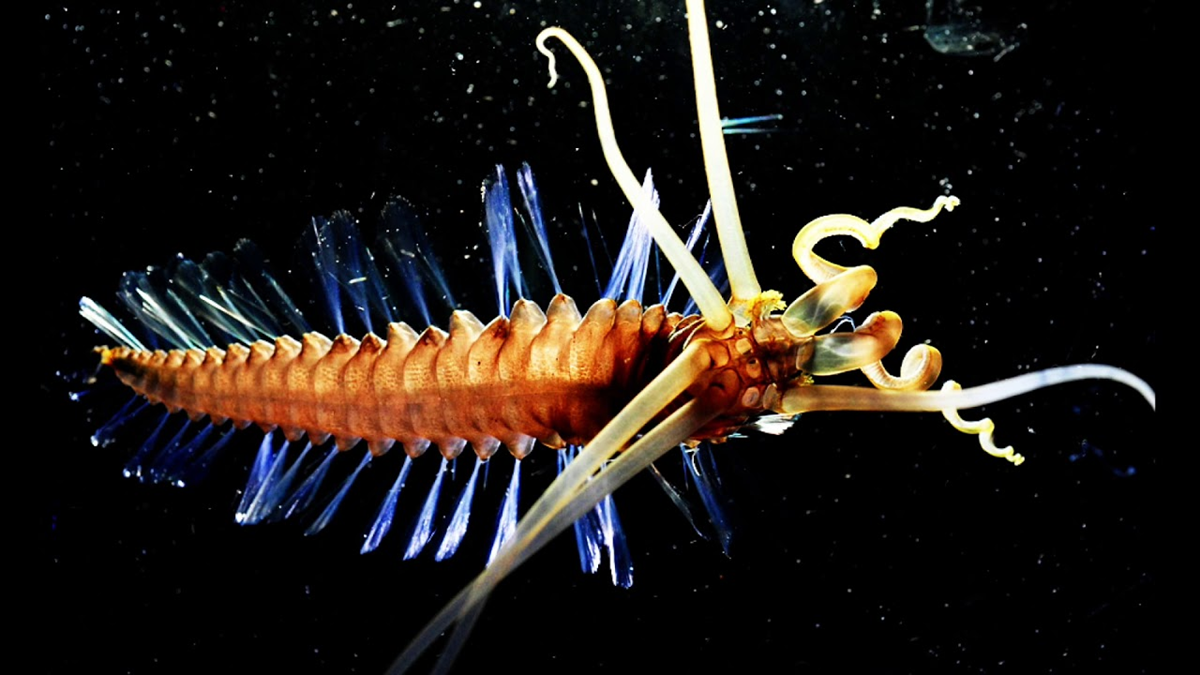
When researchers sent a remotely operated vehicle into the Celebes Sea in 2007, they encountered something that looked less like a worm than a rough first draft of an alien. Teuthidodrilus samae, later nicknamed the squidworm, is a swimming polychaete with 10 long appendages projecting from its head and rows of feathery structures along its body. Seven specimens were collected from deep water during that expedition, roughly 2,000 to 3,000 meters down. Despite the squid-like silhouette, it is an annelid worm, and researchers think it feeds on drifting particles of marine snow. Even its scientific description noted how surprising it was that such a conspicuous animal had avoided collection for so long.
2. The Psychedelic Frogfish
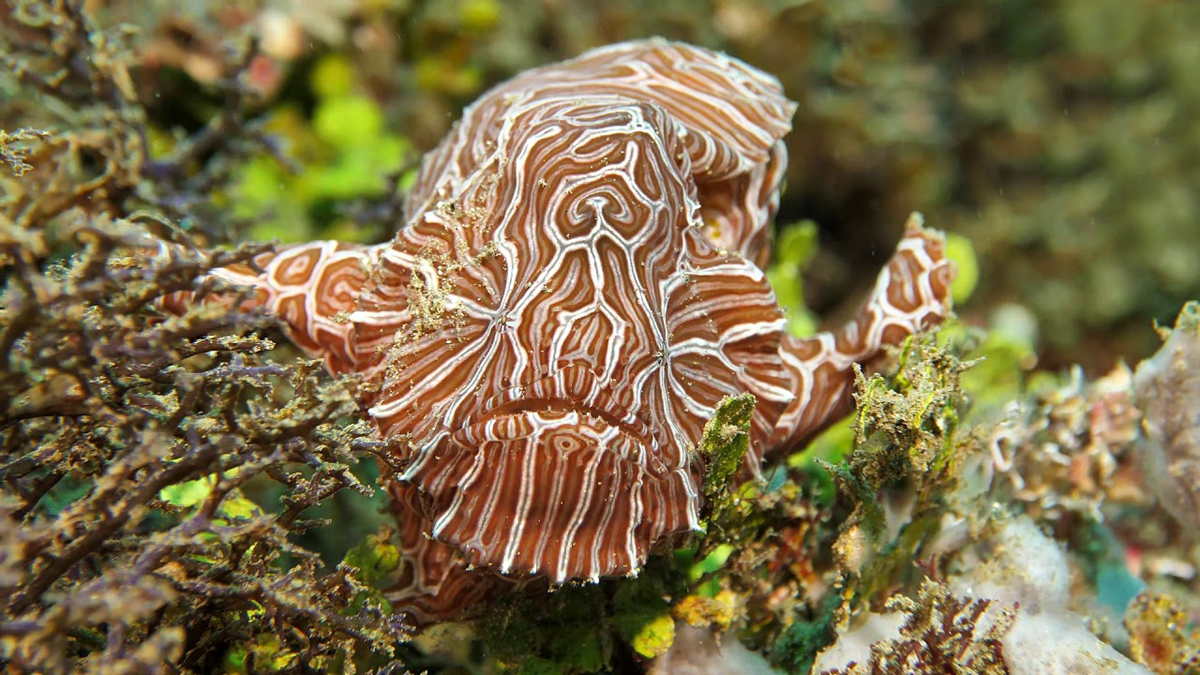
There are fish with unusual camouflage, and then there is Histiophryne psychedelica. Divers began photographing the strange frogfish in Ambon Bay, Indonesia, in 2008, where its peach, white, and pinkish maze-like markings immediately stood out. Instead of swimming gracefully through the water, it often moves along the bottom with its arm-like pectoral fins, giving it the slightly awkward appearance of a creature learning how legs work. Scientists described it as a new species in 2009 after examining specimens from Ambon and Bali. Its flattened face, forward-looking eyes, fleshy body, and swirling pattern make the name “psychedelic” unusually literal by taxonomic standards.
3. The Hoff Crab
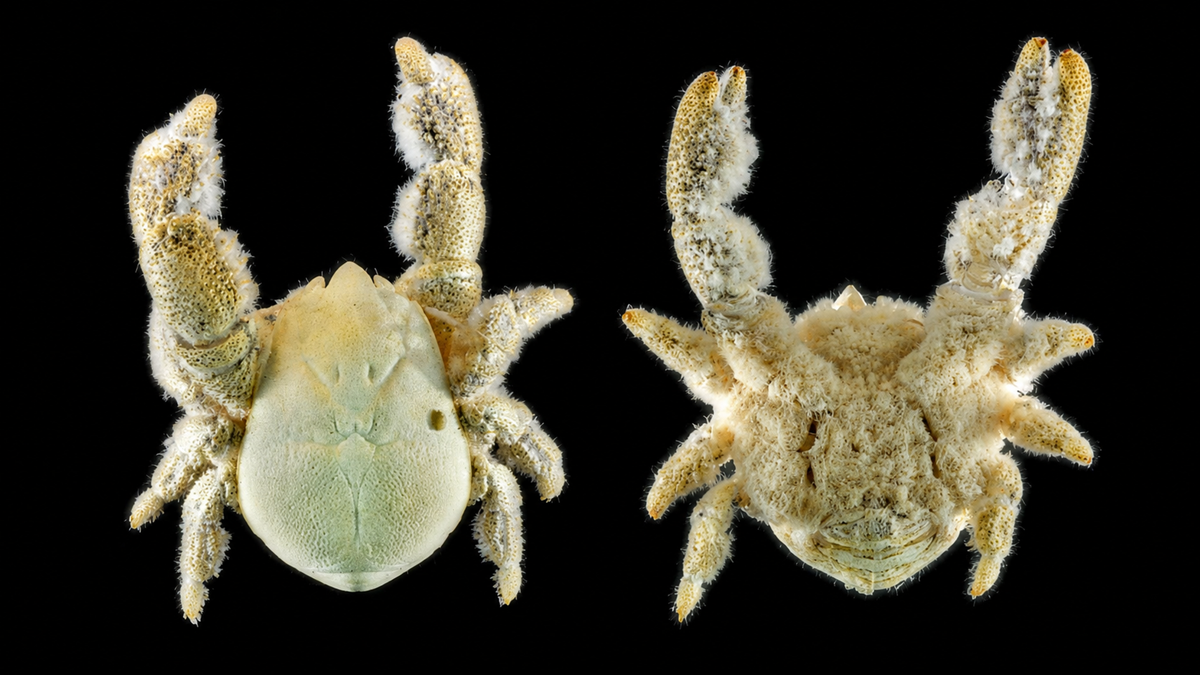
Deep around hydrothermal vents on the East Scotia Ridge, researchers found pale crabs packed together in enormous numbers during expeditions that began exploring the area in 2009. The species, formally named Kiwa tyleri in 2015, belongs to the yeti crab family and has dense bristles on its underside that host bacteria. Those microbes are especially useful in an ecosystem where sunlight never reaches, and chemical energy from hydrothermal vents drives the food web. The hairy chest-like appearance quickly earned the animal the nickname “Hoff crab,” after David Hasselhoff, although the joke undersells how strange its habitat is. These crabs live around warm vent structures surrounded by Southern Ocean water that can hover close to freezing.
4. The Ninja Lanternshark
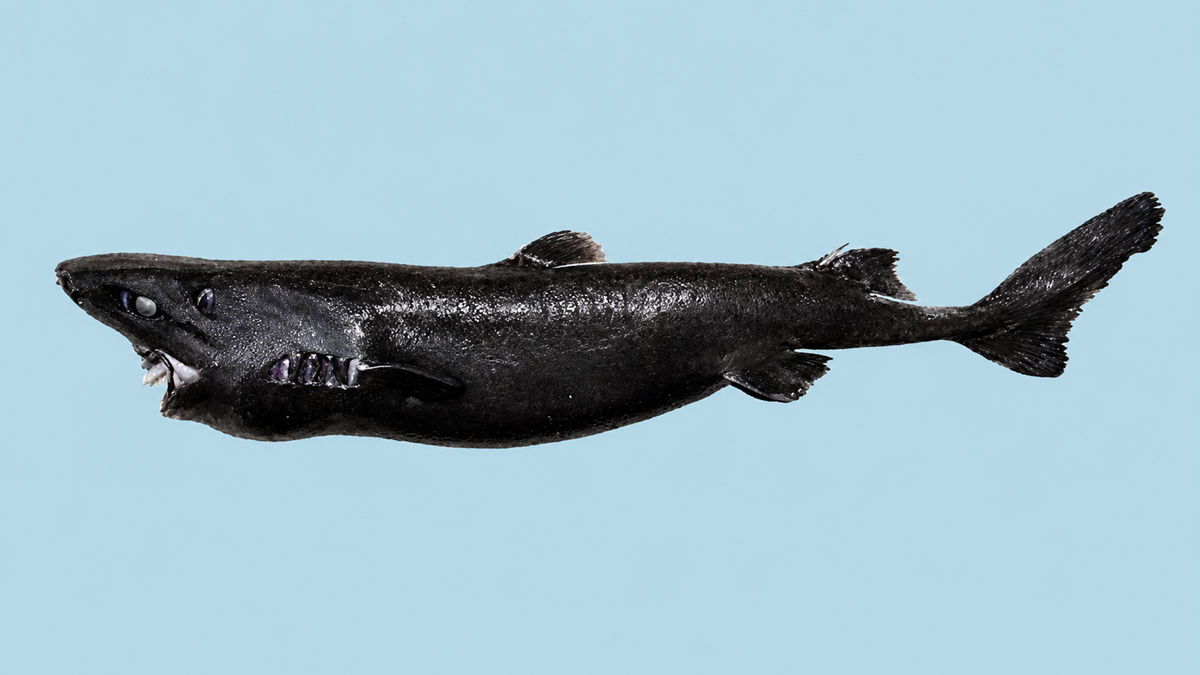
A black shark that can produce light sounds suspiciously like something created for a late-night creature feature. In 2010, a research survey off the Pacific coast of Central America collected several unfamiliar lantern sharks at depths reaching well beyond 1,000 meters. They were eventually described in 2015 as Etmopterus benchleyi, the ninja lanternshark, a name partly honoring Jaws author Peter Benchley. The species is nearly uniform black, with tiny light-producing organs called photophores and dense patches of tooth-like dermal denticles around the eyes and gill openings. The largest specimen in the original group measured just over half a meter, so this is less giant movie monster and more pocket-sized stealth aircraft with teeth.
5. The Mariana Snailfish
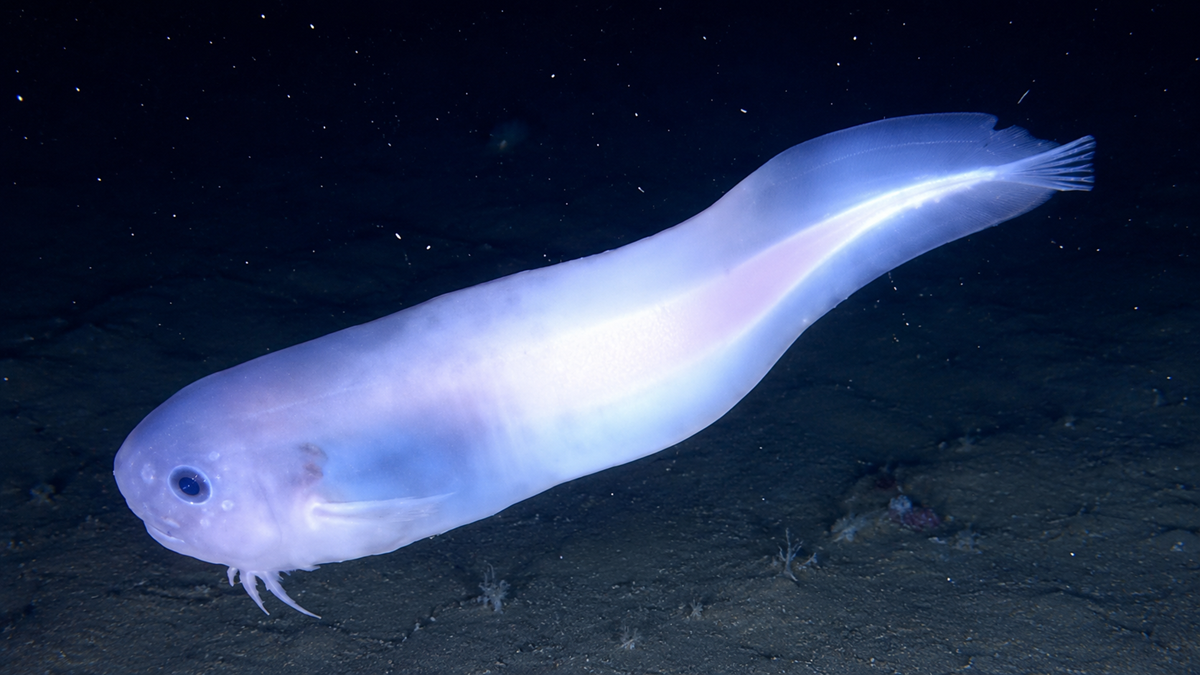
It is easy to imagine the deepest parts of the ocean being occupied by heavily armored monsters. The Mariana snailfish went in the opposite direction. Pseudoliparis swirei is soft, pale, almost translucent, and vaguely tadpole-shaped, yet researchers collected specimens in the Mariana Trench at depths of 6,898 to 7,966 meters during expeditions in 2014. The species was formally described in 2017 from 37 individuals. Its delicate appearance seems completely wrong for an environment where the pressure is immense, which is precisely what makes photographs of it so odd. Rather than looking built to survive one of Earth’s harshest habitats, it looks like something that might dissolve if handled too firmly.
Trending on The Scroller

6. The Ruby Seadragon
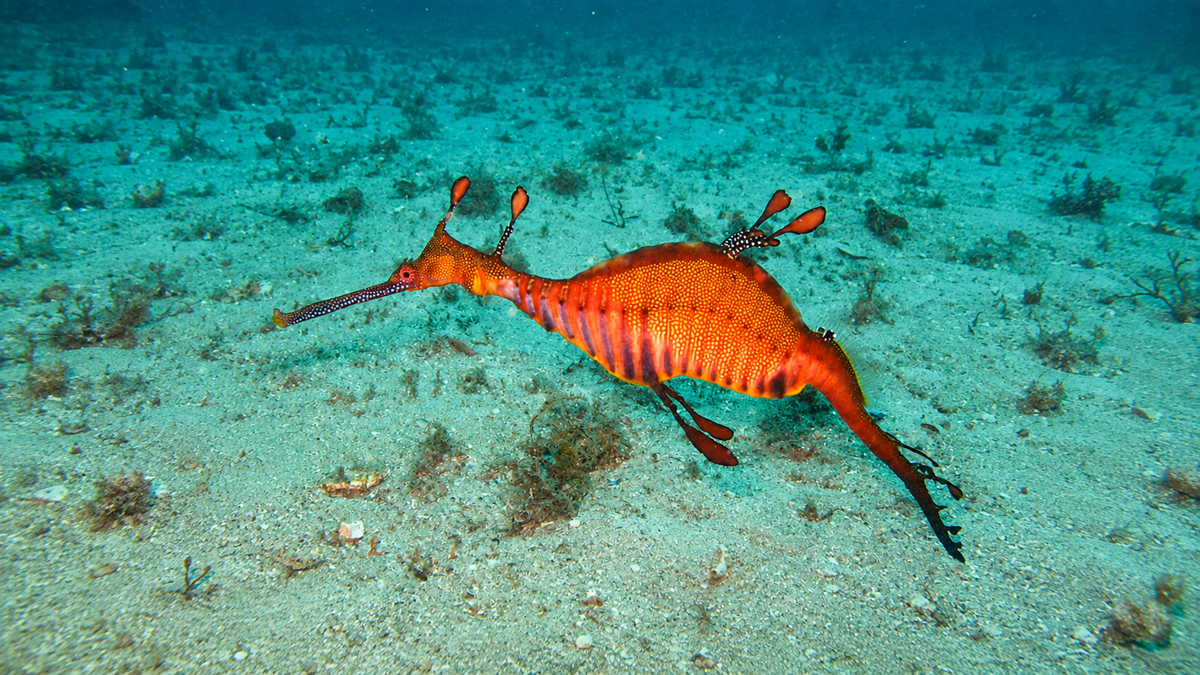
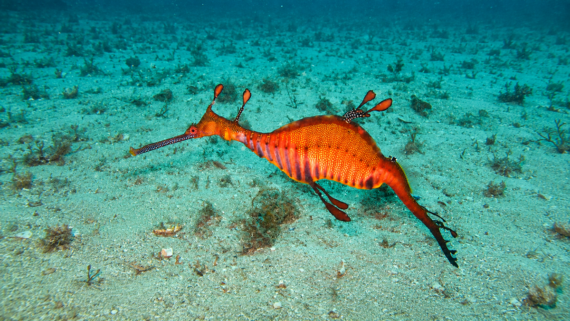
For generations, science recognized only two species of seadragon. Then researchers described Phyllopteryx dewysea in 2015, a deep red Australian species with an appearance somewhere between a seahorse, a piece of coral, and a ceremonial dragon from a fantasy game. Scientists did not record the ruby seadragon alive in its natural habitat until 2017, when a remotely operated vehicle filmed it off Western Australia.
7. Duobrachium sparksae
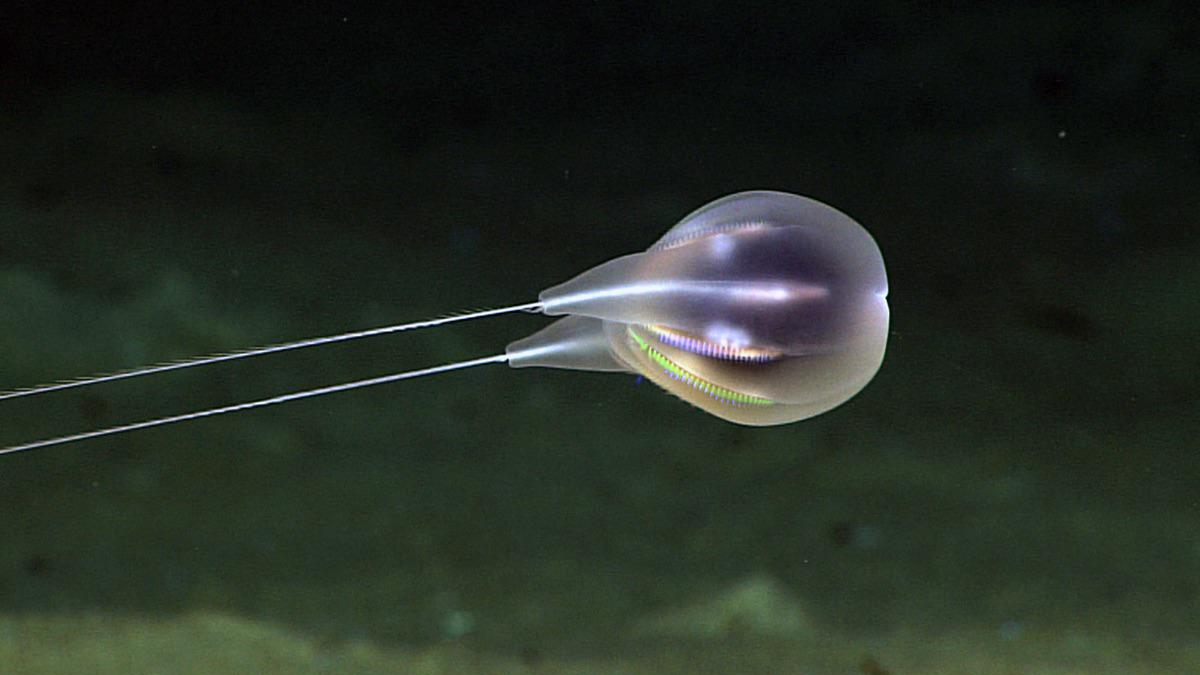
Three strange shapes drifting near the seafloor off Puerto Rico caught the attention of scientists watching video from NOAA’s Deep Discoverer in 2015. They were comb jellies, but not ones anyone recognized. Later named Duobrachium sparksae, the animal has a translucent body, two prominent arms, and long filament-like structures that make it resemble a tiny living spacecraft hovering on invisible cables. The encounter happened roughly 4,000 meters below the surface, and no specimen was collected. Instead, researchers established the new genus and species using detailed high-definition video. Gelatinous animals are notoriously difficult to preserve, so in this case the camera was not just documenting the discovery; it effectively became the specimen cabinet.
8. The Casper Octopus
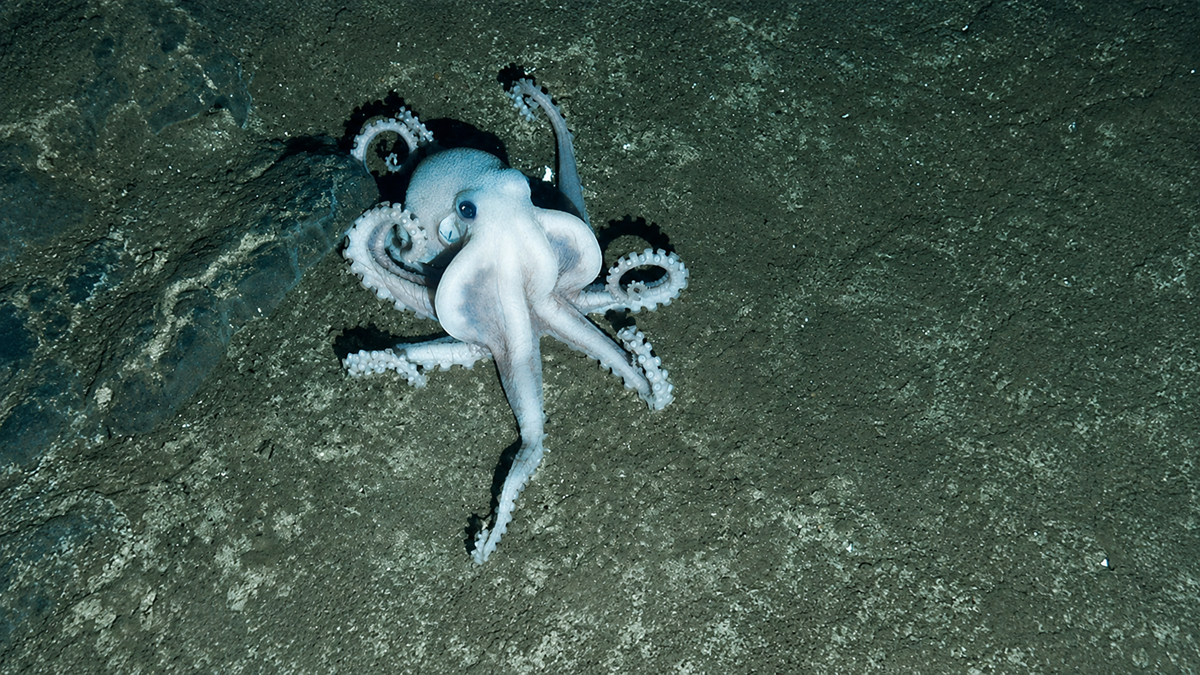
In 2016, an ROV exploring more than four kilometers beneath the Pacific near Hawaii found a tiny pale octopus sitting on the seabed. Its nearly translucent body immediately reminded viewers of Casper the Friendly Ghost, and the nickname stayed. The animal has yet to receive a formal scientific species name because researchers have not collected a physical specimen, leaving one of the internet’s most recognizable deep-sea discoveries taxonomically unresolved.
Sign up for our newsletter
9. The E.T. Sponge
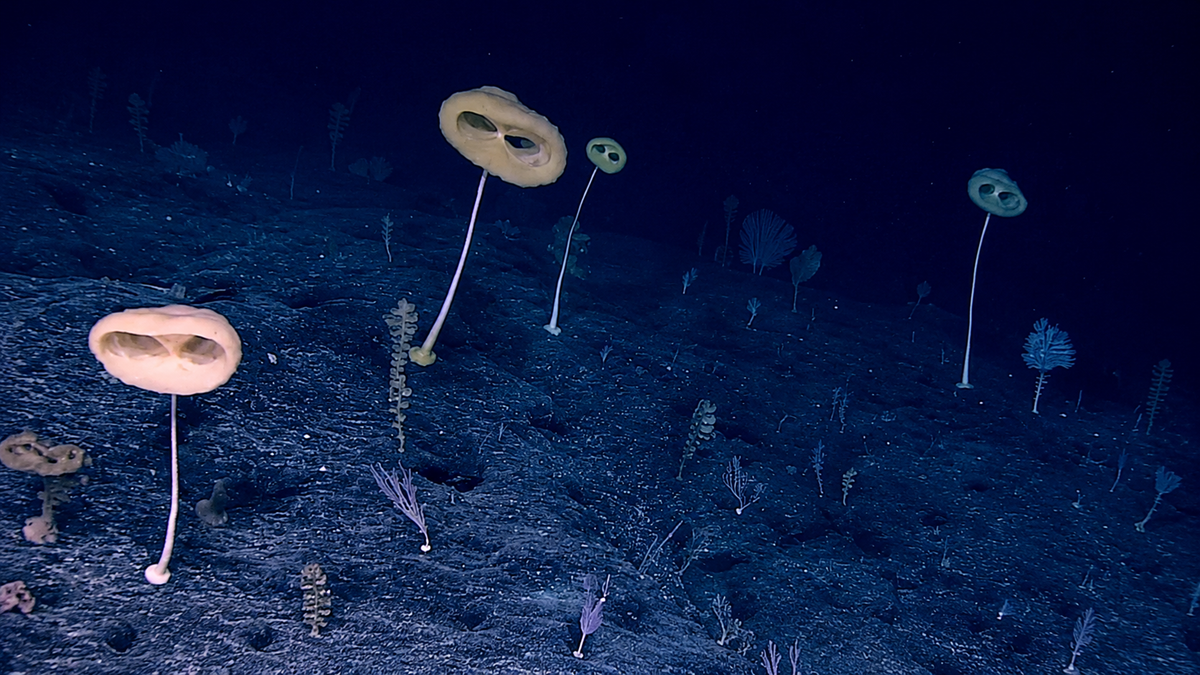
Sometimes scientists do not have to invent the extraterrestrial comparison because the animal practically supplies it. A strange glass sponge collected in the Pacific in 2016 had a stalk supporting a rounded body with two large openings that looked remarkably like enormous eyes. Researchers later identified it as both a new species and a new genus, naming it Advhena magnifica, which roughly means “magnificent alien.” More examples appeared during later Pacific expeditions, including among a bizarre collection of deep-sea sponges that researchers nicknamed the “Forest of the Weird.” Despite the face-like appearance, those two openings are not eyes. They are oscules, outlets through which the sponge pumps filtered seawater.
10. The Emperor Dumbo Octopus
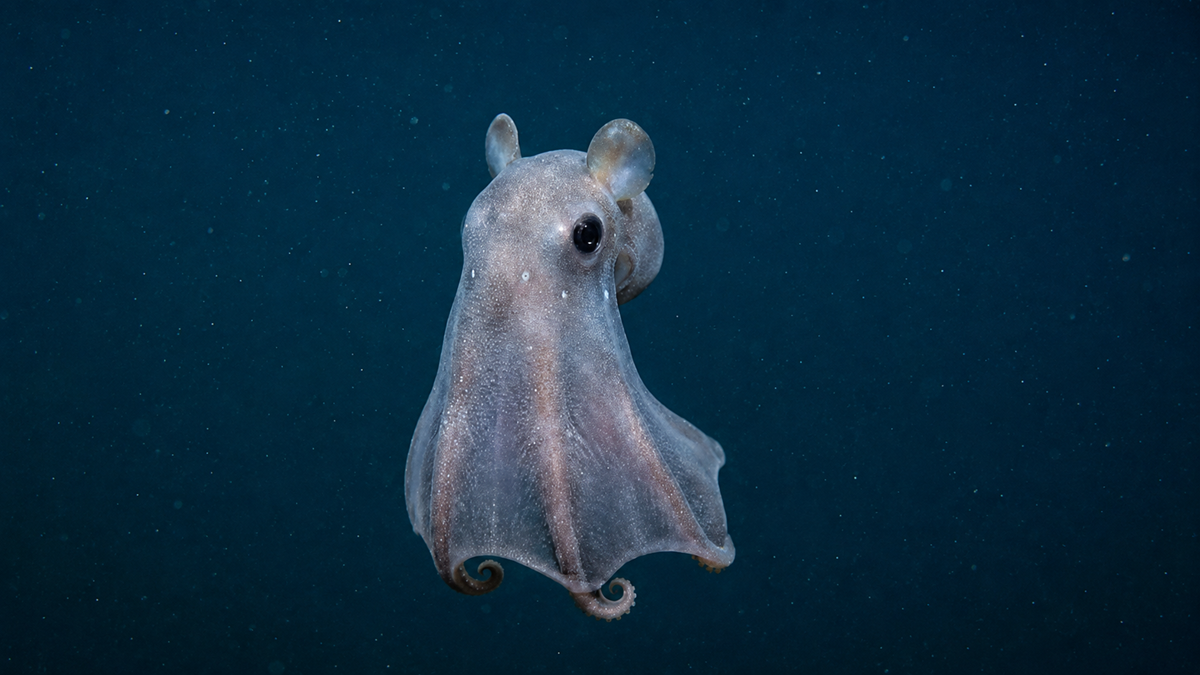
A deep-sea expedition in the North Pacific pulled up an unusual dumbo octopus from almost four kilometers below the surface in July 2016. Rather than cutting apart the rare specimen to figure out what it was, researchers later combined photography, DNA barcoding, MRI, and micro-CT scanning to study much of its internal anatomy while minimizing damage. The result was Grimpoteuthis imperator, described as a new species in 2021. Like other dumbo octopuses, it carries a pair of broad fins above its eyes that resemble ears and uses a web of tissue between its arms to help move and feed. Seen floating in dark water, it has the improbable geometry of a creature designed for a world with different physics.
11. Atolla reynoldsi
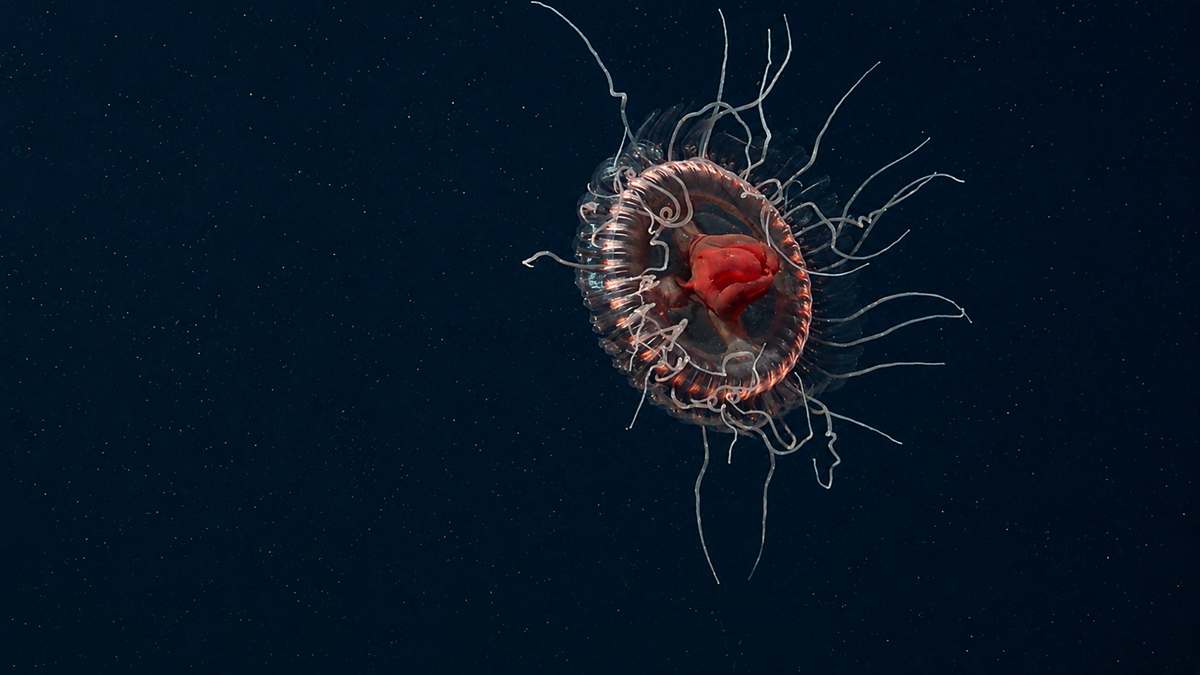
Deep-sea crown jellies are already strange-looking animals, but Atolla reynoldsi managed to stand out from the group. MBARI researchers first encountered the unfamiliar jelly in the eastern North Pacific years before formally describing it in 2022, noticing that it lacked the long trailing tentacle associated with typical Atolla species. Its deep red bell is surrounded by curled tentacles and pointed projections that give the animal the silhouette of some elaborate underwater spacecraft. Researchers have observed individuals reaching considerably larger sizes than many related crown jellies.
12. The Elvis Worm
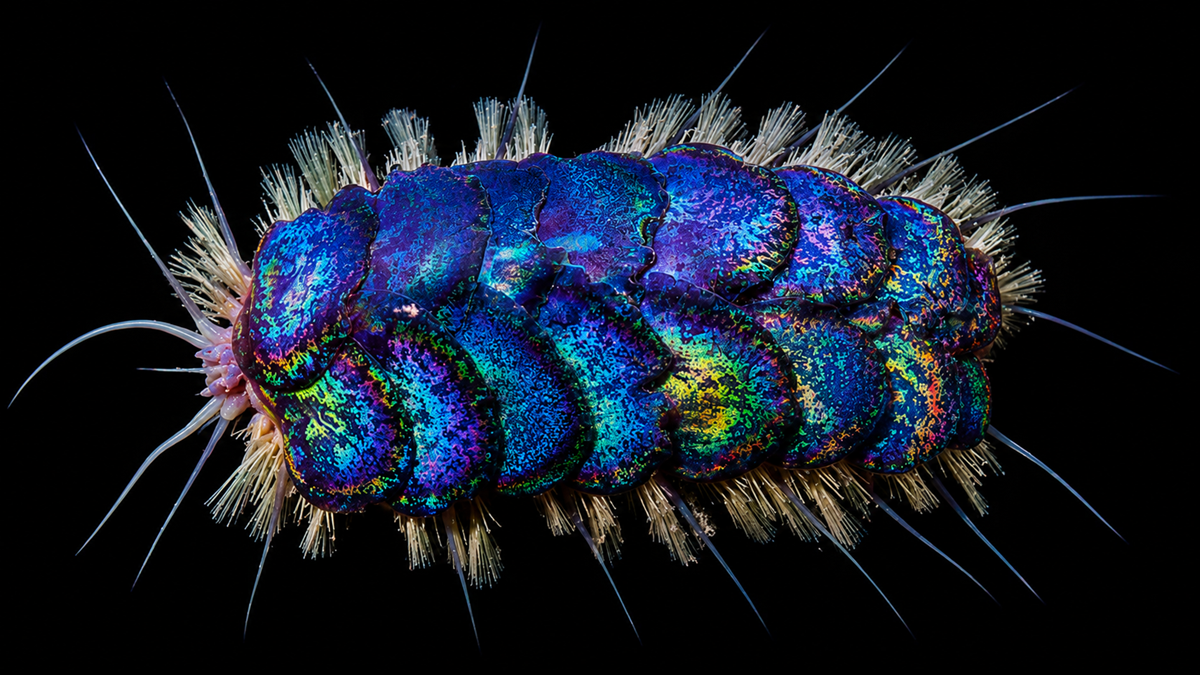
Sequins apparently exist in the abyss. Peinaleopolynoe elvisi is a deep-sea scale worm covered in shimmering pink and gold structures that reminded researchers of the extravagant costumes worn by Elvis Presley. Specimens came from the deep waters of Monterey Canyon, and the species was formally described in 2020 as one of four newly named members of its genus. It lives around environments such as whale falls, where large carcasses create temporary islands of food on the otherwise sparse seafloor. Under ROV lighting, the worm’s iridescent scales look metallic enough to seem artificial.
13. The King Ghidorah Branching Worm
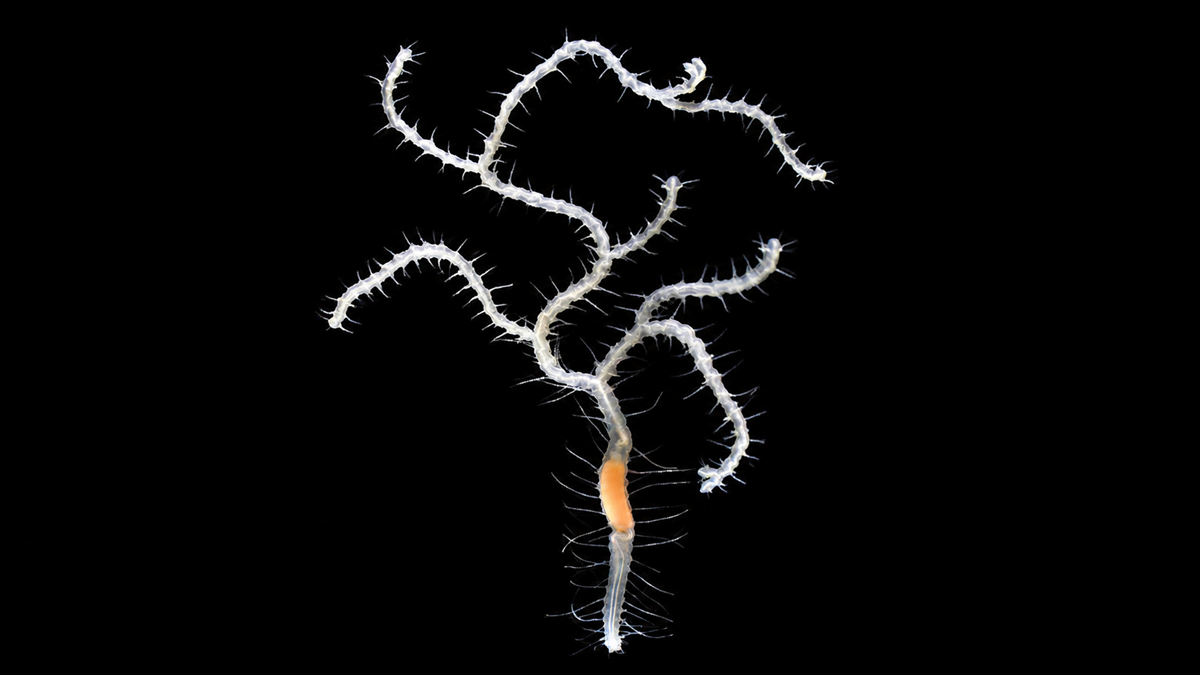
Most animals have a fairly straightforward answer to the question, “How many bodies do you have?” Ramisyllis kingghidorahi makes that question less useful. Researchers collected the species from sponges off Sado Island, Japan, in 2019 and described it in 2022. The worm lives inside the maze-like canals of its sponge host, and its body repeatedly branches as it spreads through them, producing multiple posterior ends from a single head. Scientists named it after King Ghidorah, the multi-headed monster from the Godzilla universe, which is one of those rare cases where pop culture seems almost restrained compared with the biology.
14. The Deep-Sea Spaghetti Worm
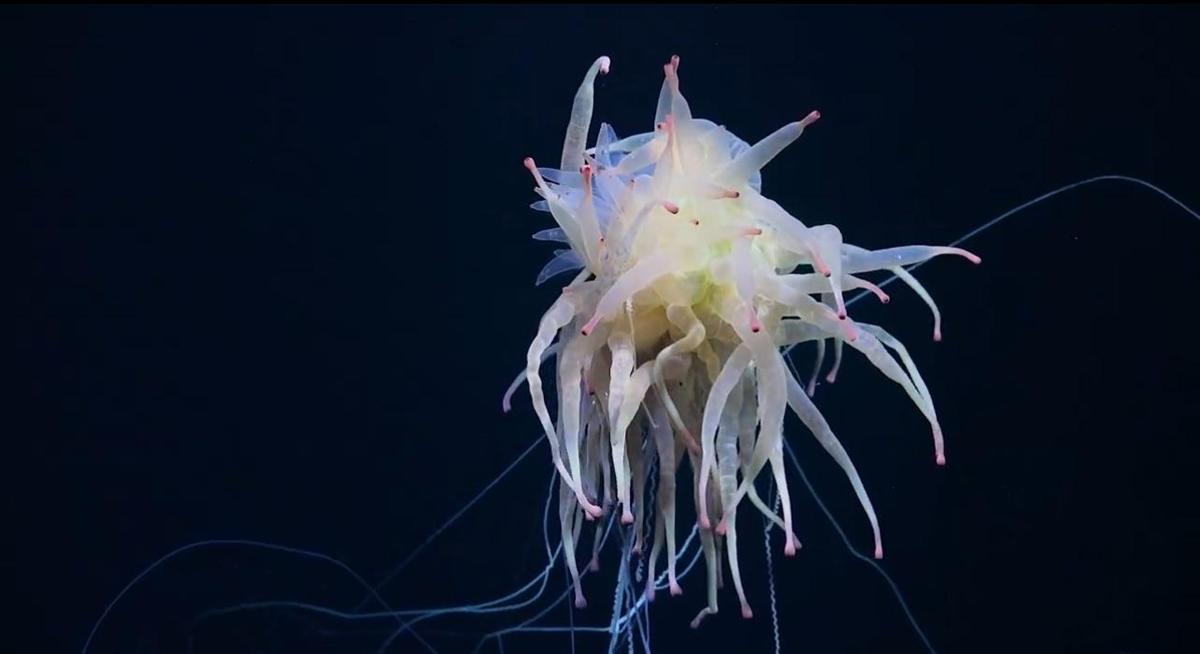
Imagine a pom-pom with dozens of loose strings drifting across a completely dark seafloor. MBARI researchers studying the Gulf of California encountered an unusual Biremis spaghetti worm whose swollen feeding tentacles create exactly that impression. The creature has no eyes or gills and can crawl along the bottom or swim just above it while sweeping up particles of marine snow. DNA work showed that it represents a previously unknown species, although researchers have not yet formally named it. Most observations have come from deeper than 2,000 meters.
15. Dulcibella camanchaca
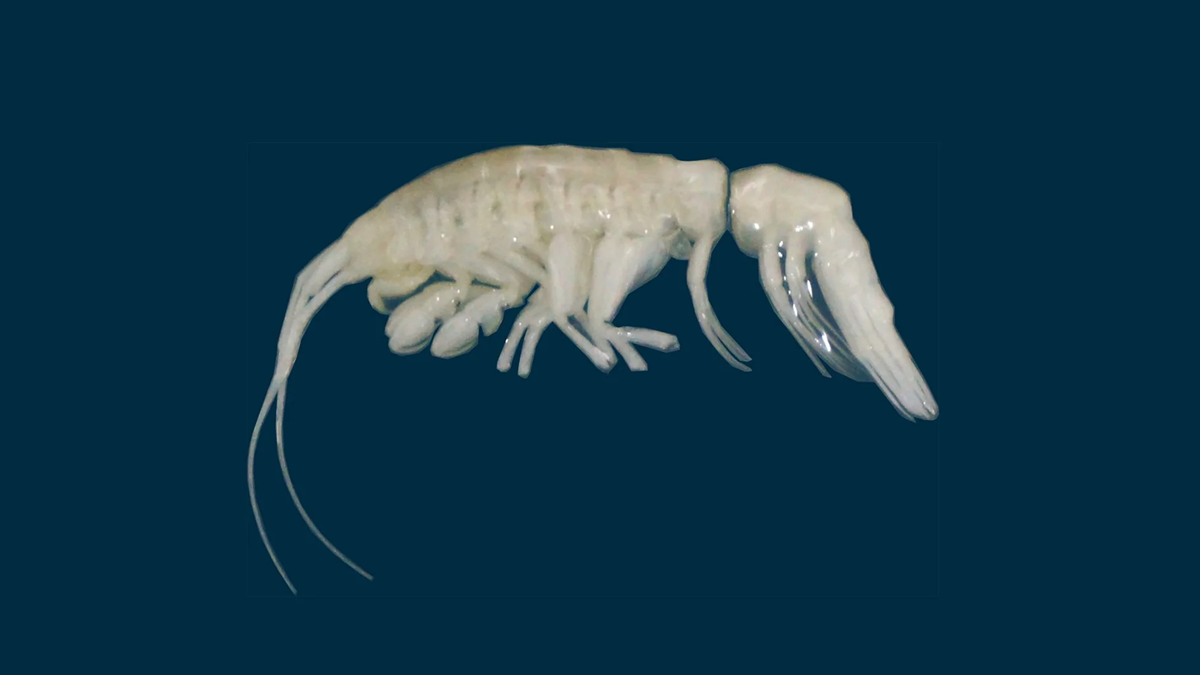
At 7,902 meters down in the Atacama Trench, scientists recovered four pale crustaceans during a 2023 expedition. They turned out to belong not only to a new species but a new genus, Dulcibella camanchaca, a roughly four-centimeter amphipod equipped with specialized appendages for grabbing smaller crustaceans. It is an active predator living in permanent darkness, which makes its ghostly white body and grasping limbs look appropriately unsettling.
16. The Bumpy Snailfish
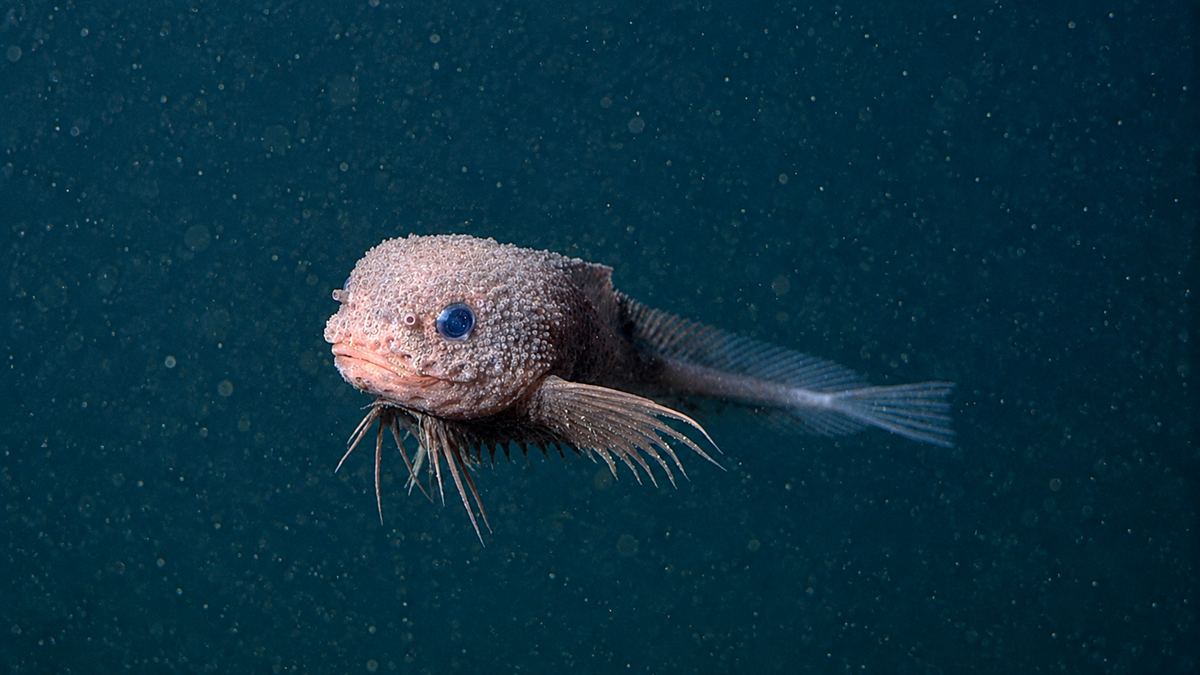
The bumpy snailfish does not look threatening. If anything, Careproctus colliculi has the round face and slightly bewildered expression of a deep-sea creature that has just been told it is famous. MBARI researchers encountered and collected the pink fish in Monterey Canyon in 2019 at a depth of 3,268 meters, but it took years of comparison, imaging, genetic analysis, and anatomical work to establish exactly what they had found. The species was formally described in 2025 alongside two other new abyssal snailfishes. Its textured skin, large eyes, broad fins, and soft body give it a strangely manufactured appearance, somewhere between a tadpole and a squishy robot prototype.
In the mood for more?
Check out 18 Terrifying Creatures Found at the Bottom of the Ocean That Look Like Aliens, or take a look at 20 Ocean Facts That Might Spark Thalassophobia. If you want to see more unusual marine stories, you can check 20 “Impossible” Structures Found Deep in the Ocean That Science Can’t Explain.