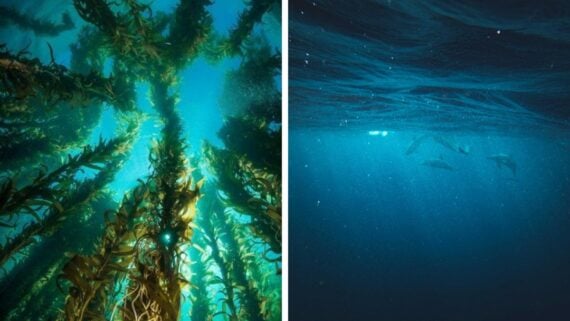
Side-by-side images: on the left, sunlight filters through tall underwater kelp; on the right, a deep blue ocean scene with dolphins swimming and light streaming through water from above.

The ocean covers most of our planet, yet so much of it is still a mystery. Beneath the surface is a massive, dark world where the depths are crushing, the creatures are enormous, and the unknown feels endless. While some people find the sea calming, others experience thalassophobia, the deep fear of vast open water, and a fear of what might be hiding below.

It isn’t just what we know about the ocean that’s unsettling, but how much remains unknown. These 20 facts might make you feel small, uneasy, and think twice about venturing into the ocean. Let’s dive into 20 ocean facts that might spark thalassophobia.

1. More than 80% of the ocean is unexplored

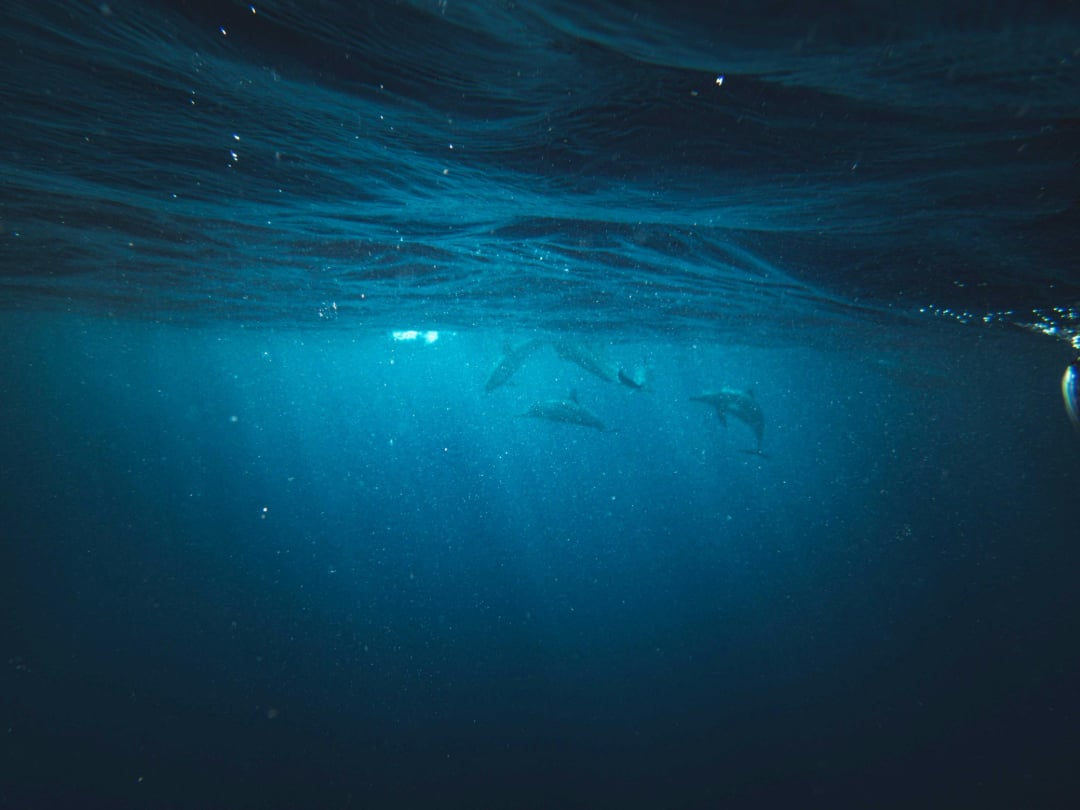
Underwater view of the ocean with rays of light filtering through the surface. Several dolphins are visible swimming in the distance, partially obscured by the blue water.
via pexels.com

Despite all of our technology, the vast majority of our ocean remains a mystery. We have only explored a small fraction of what lies beneath the surface, leaving countless landscapes and creatures deep in the unknown.

2. The deepest part of the ocean is around 7 miles deep

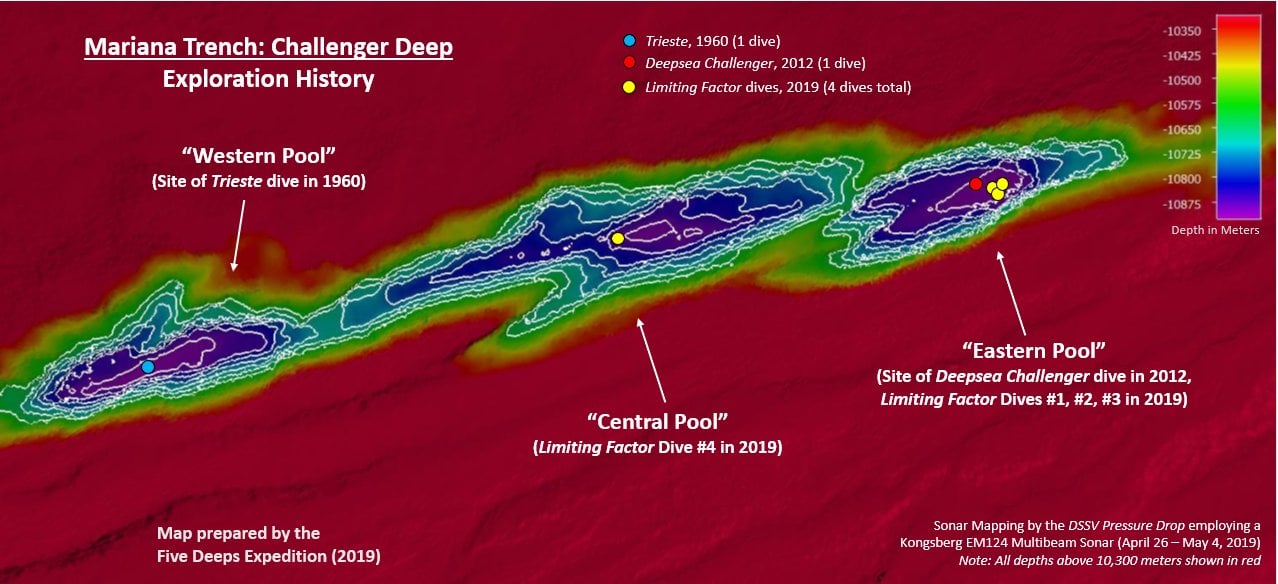
Colorful topographic map of the Mariana Trench shows labeled "Western," "Central," and "Eastern Pools" with site names, dive years, and depth contours; depth indicated by color gradient from green (shallow) to pink (deep).
via Wikimedia commons

The Mariana Trench plunges so deep that Mount Everest could sit inside of it and still not reach the surface. It is a place of complete darkness, crushing pressure, and conditions unlike anywhere else on Earth.

3. The ocean contains 97% of Earth’s water
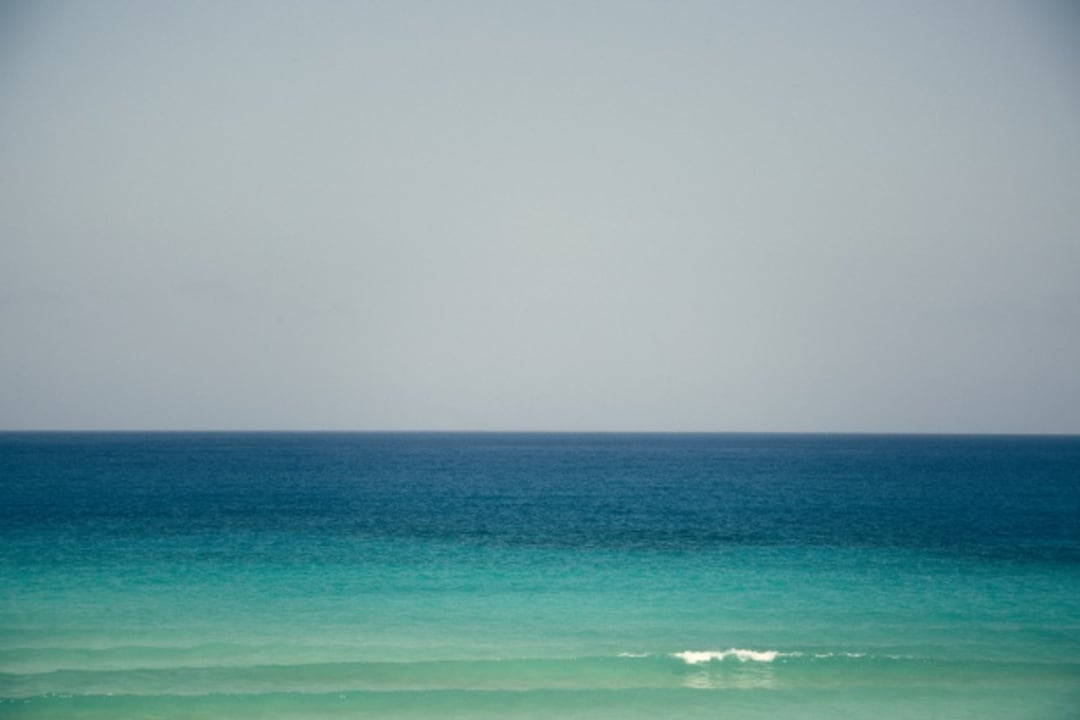
A calm, turquoise ocean stretches to the horizon under a pale blue sky, with gentle waves and no visible land or objects.
via publicdomainpuctures.net

Nearly all the water on our planet is found in the ocean. Freshwater lakes, rivers, and glaciers make up only a tiny fraction of Earth’s total water supply.

4. The ocean produces over half of Earth’s oxygen

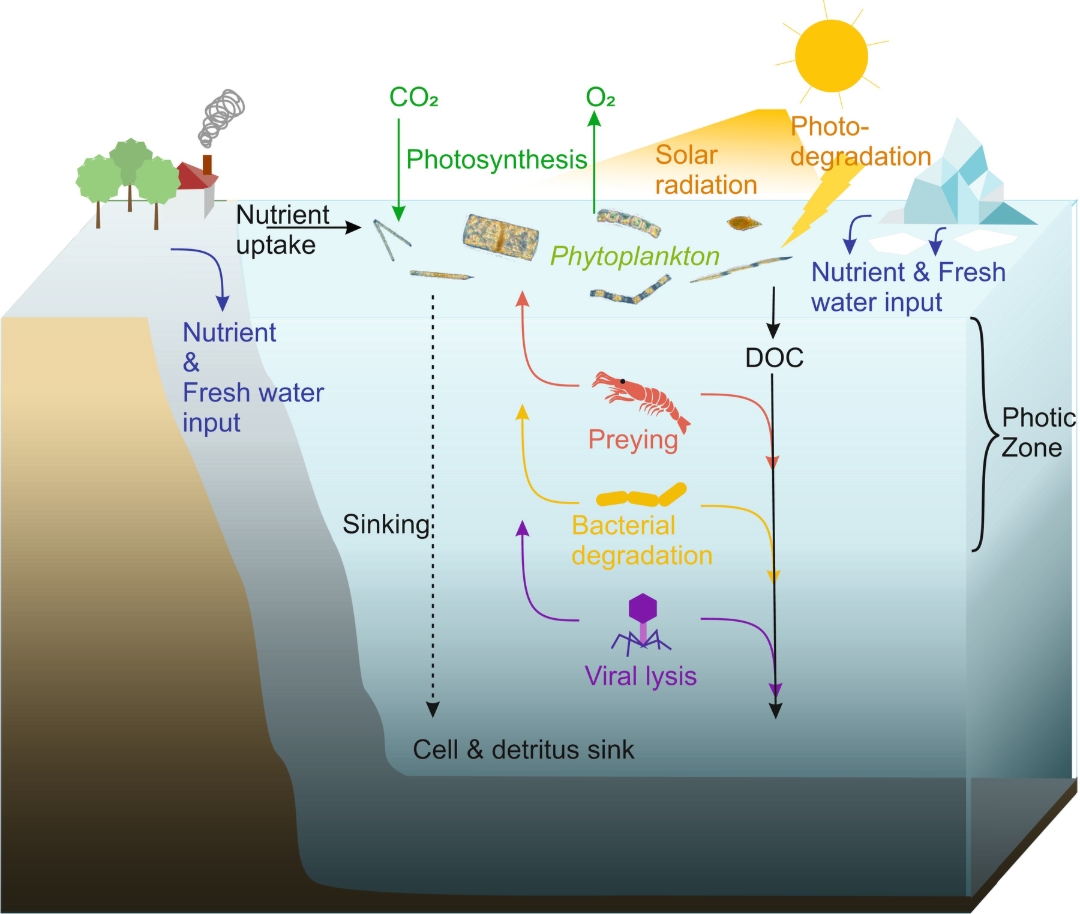
Diagram showing aquatic nutrient and carbon cycling: Solar radiation powers photosynthesis in phytoplankton, while nutrient, freshwater, and DOC inputs, preying, bacterial degradation, and viral lysis affect ecosystem processes.
via Wikimedia Commons

Tiny organisms called phytoplankton float near the ocean’s surface and quietly produce enormous amounts of oxygen. Every second breath you take is likely thanks to the ocean.

5. There are underwater lakes and waterfalls
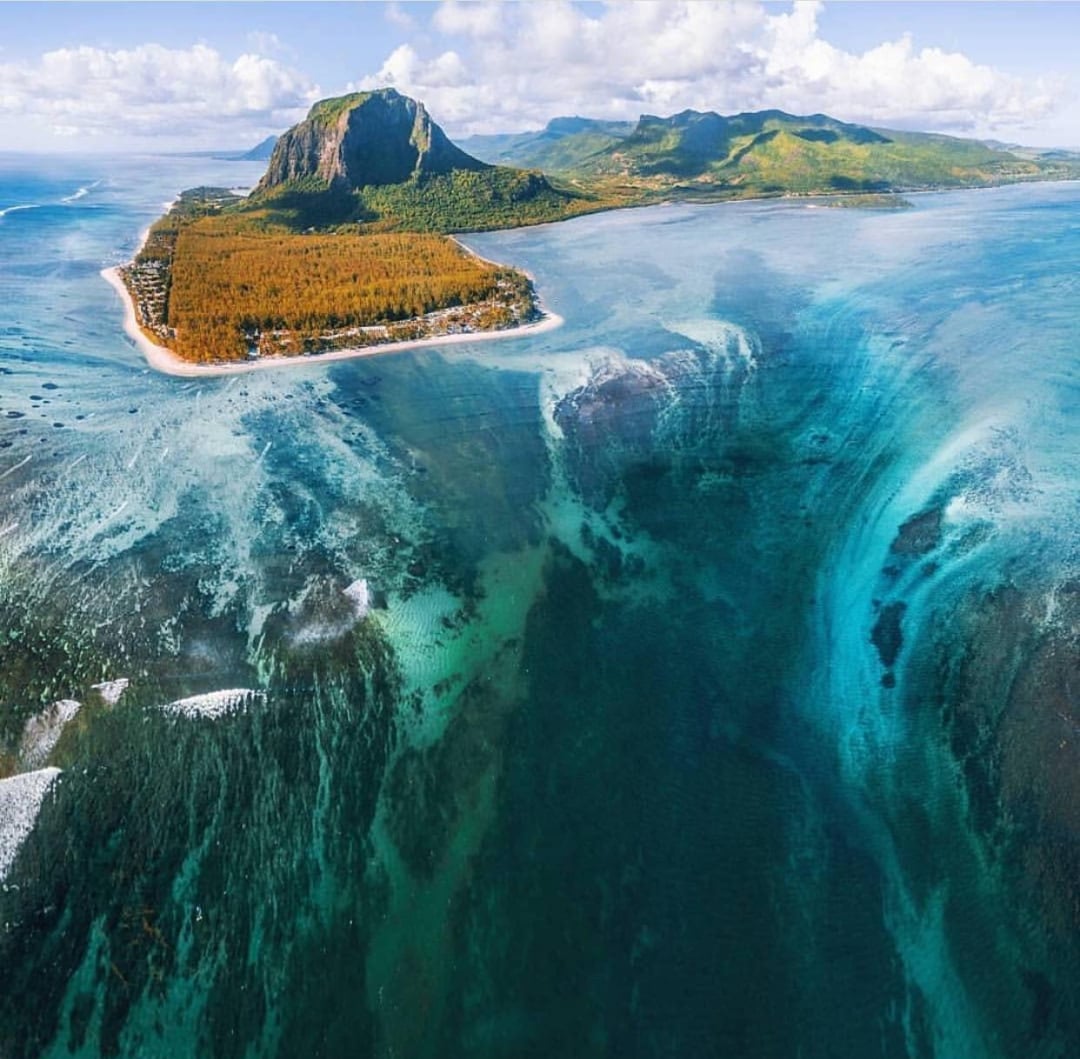
Aerial view of a tropical island with lush greenery, a prominent mountain, and turquoise waters. An underwater waterfall illusion appears near the shore, created by sand and silt patterns beneath the ocean’s surface.
bnasty1998/VIA reddit.com

Deep below the surface, differences in temperature and salinity cause water to flow like waterfalls. These underwater currents can be bigger than the tallest waterfalls on land.

6. Sound travels faster in the deep ocean than in the air

Line graph showing sound speed (m/s) on the x-axis and depth (km) on the y-axis. Sound speed increases with depth, starting near 1480 m/s at the surface and reaching about 1540 m/s at -5.5 km.
via Wikimedia Commons

Water carries sound extremely well, allowing whale calls to travel across entire oceans. Some animals rely on sound more than sight to survive in the deep.

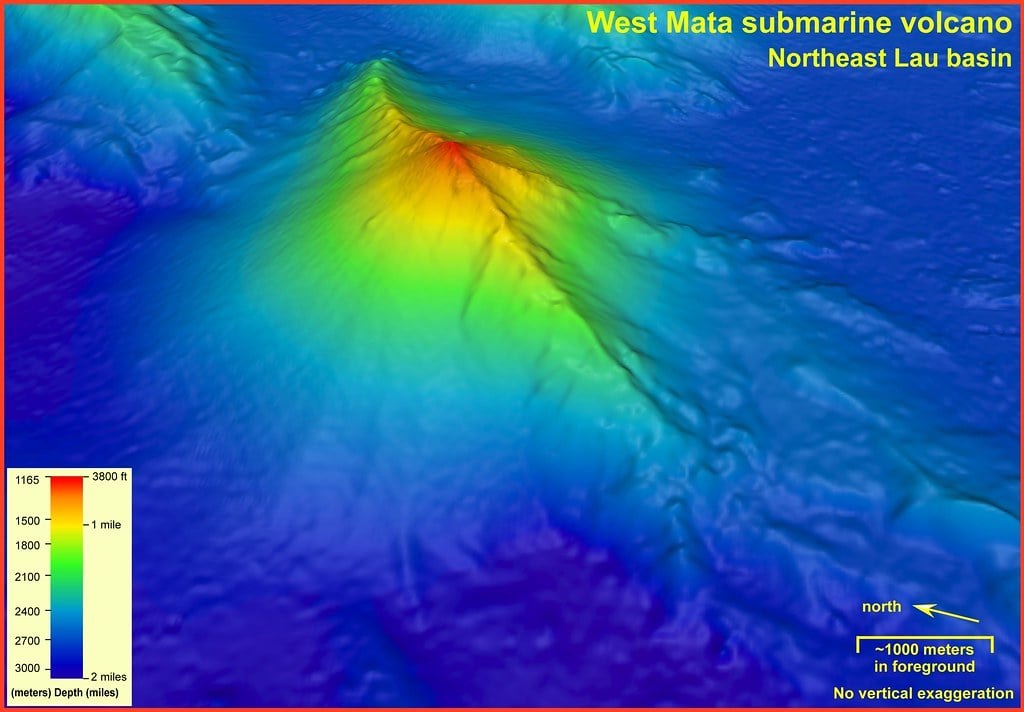
7. The ocean has underwater mountains and volcanoes

3D topographic map of West Mata submarine volcano in the Northeast Lau basin, showing depth with colors from red (shallow) to blue (deep). A yellow arrow points north; depth and distance scales are included.
via flickr.com

Huge mountain ranges and active volcanoes stretch across the ocean floor. In fact, most of Earth’s volcanic activity happens beneath the sea.

8. Giant squids were once thought to be myths
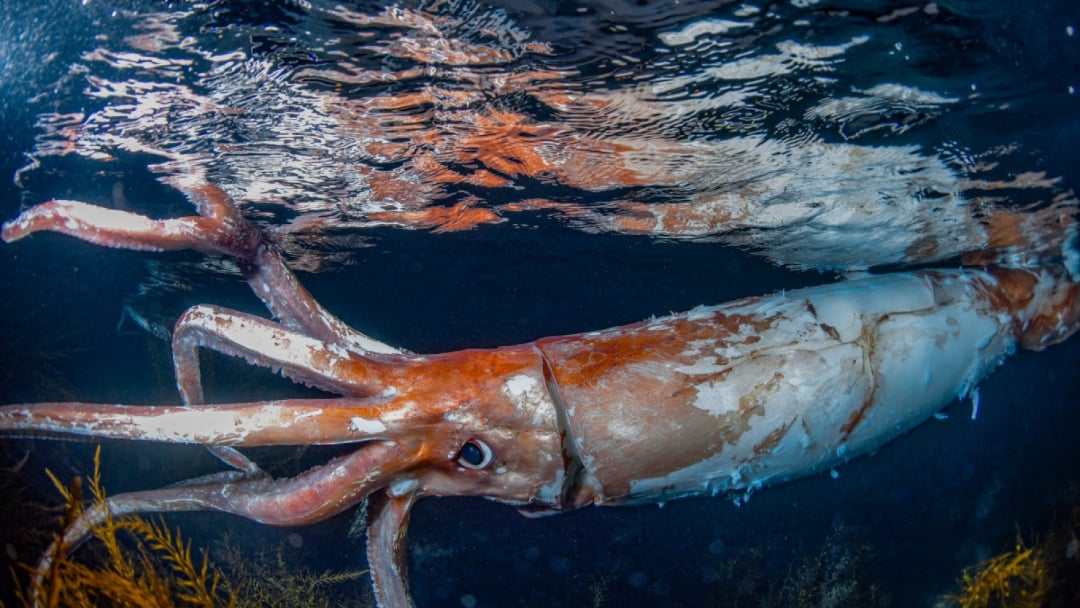
A giant squid with long tentacles swims near the water’s surface, its reddish body and large eye visible. Brown seaweed floats below it, and the dark water reflects the squid’s shape above.
jurassicpark9265/VIA reddit.com

For centuries, sailors told stories of massive squids dragging small ships into the depths. It wasn’t until modern times that scientists confirmed these enormous creatures truly exist.

9. There are shipwrecks all over the ocean floor
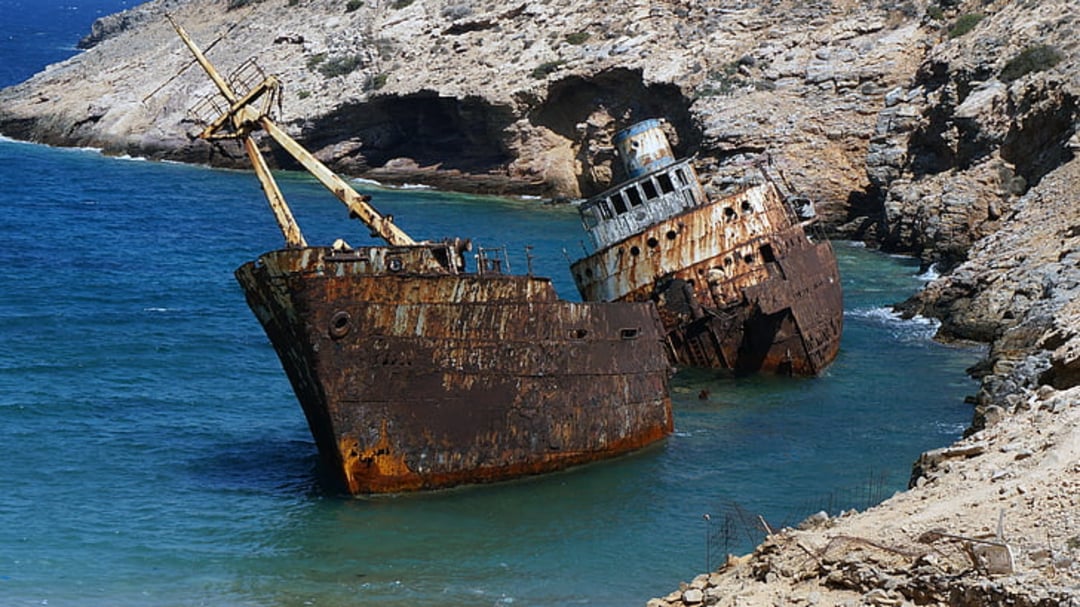
A large, rusted shipwreck rests partially submerged in clear blue water near a rocky coastline, with cliffs and sparse vegetation in the background.
via pickpik.com

Millions of ships have sunk throughout history. Many still lie undiscovered, slowly becoming artificial reefs down on the ocean floor.

10. There are areas in the ocean that are completely silent

Underwater scene with a clear blue tint, showing faint sunlight filtering from above and a rocky seabed barely visible below. The image has a calm and tranquil atmosphere, with no marine life present.
via freerangestock

At extreme depths, there is no light and no sound. Deep in the ocean is one of the most isolated and quiet environments on Earth.

11. There are storms in the ocean

A close-up underwater view of a swirling, cylindrical whirlpool or vortex. Bubbles and water currents create spiral patterns, with light filtering through the blue water.
auro026/VIA reddit.com

Below the surface, known as benthic storms or deep eddies, are massive, slow-moving underwater systems that stir up sediments and currents, acting like internal weather.

12. Many deep-sea creatures don’t have eyes
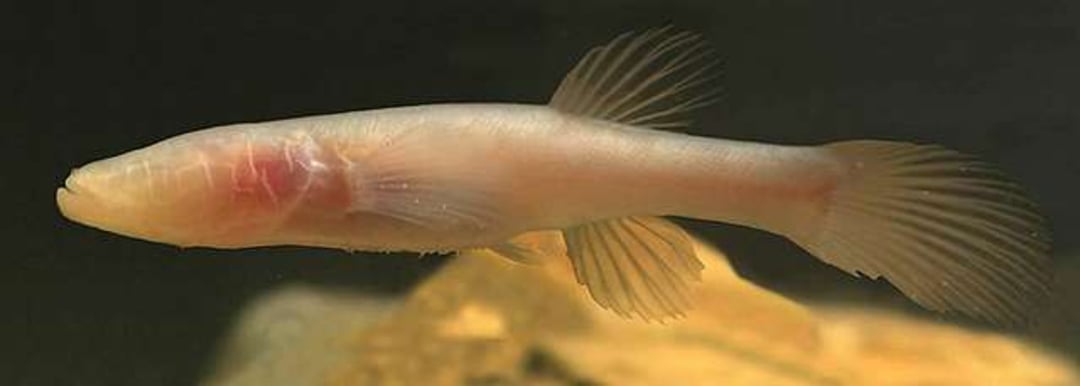
A pale, eyeless cavefish with translucent skin, visible internal structures, and elongated fins swims in dark water with a blurred yellowish background.
via picryl.com

In total darkness, eyes are useless. Some creatures never develop them at all and rely on touch and vibration instead.

13. There are ancient forests underwater

Underwater view looking up through tall, dense kelp forest with sunlight streaming through the blue water, illuminating twisting green-brown seaweed fronds reaching toward the surface.
purplesprite69/VIA reddit.com

Deep in the ocean, kelp forests can grow as tall as buildings and support entire ecosystems.

14. The ocean has its own version of snow

A close-up view of snowflakes falling against a vibrant blue sky, creating a textured, almost abstract pattern. The snow appears to be swirling, giving a sense of movement and cold weather.
via publicdomainpictures.net

Marine snow is made of tiny organic particles that slowly drift down from the surface. This “snow” feeds deep-sea life and other tiny organisms.

15. The ocean has natural oil and gas leaks
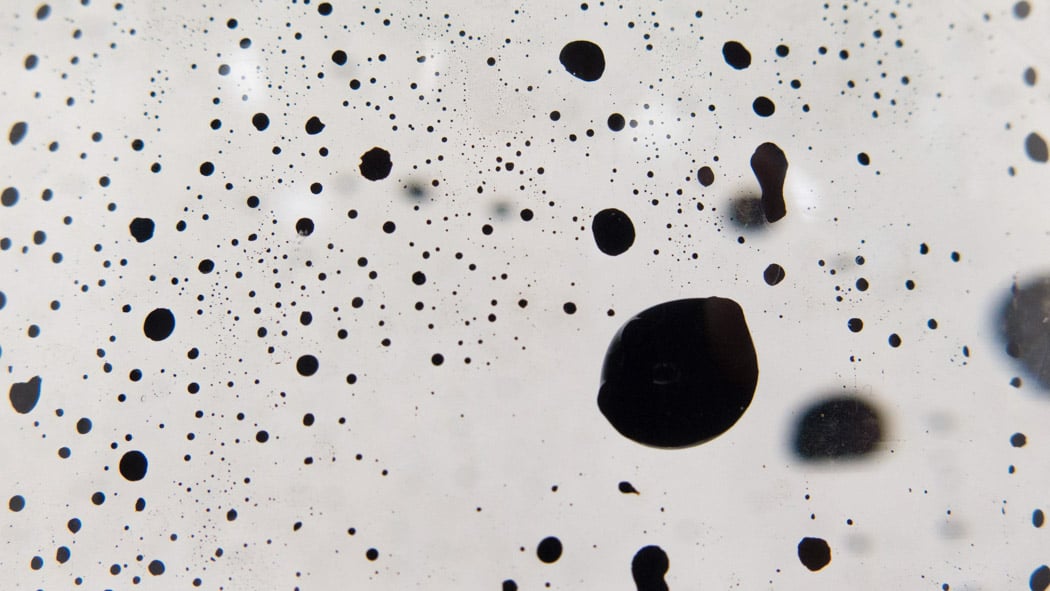
Black ink droplets of various sizes scattered randomly on a white background, creating an abstract, speckled pattern.
via aims.gov.au

These leaks account for nearly half of the total oil entering the ocean annually. Oil seeps naturally from the seafloor, and ecosystems have formed around these leaks long before humans drilled for oil.

16. The ocean floor holds ancient footprints

A grayscale image showing a grainy, textured surface with numerous small, dark, irregularly shaped craters scattered across it. Thin vertical lines stretch from the top, resembling scratches or data artifacts.
frivolousfrank/VIA reddit.com

Preserved tracks of early humans and even dinosaurs have been found beneath coastal waters.

17. Hydrothermal vents support life without sunlight

A black smoker hydrothermal vent on the ocean floor emits dark, smoky mineral-rich fluid, surrounded by rocky formations with orange and yellow mineral deposits.
via sci.news

Chemosynthetic bacteria use chemicals instead of sunlight to produce energy, forming the base of unique underwater ecosystems.

18. The ocean contains 320 million cubic miles of water
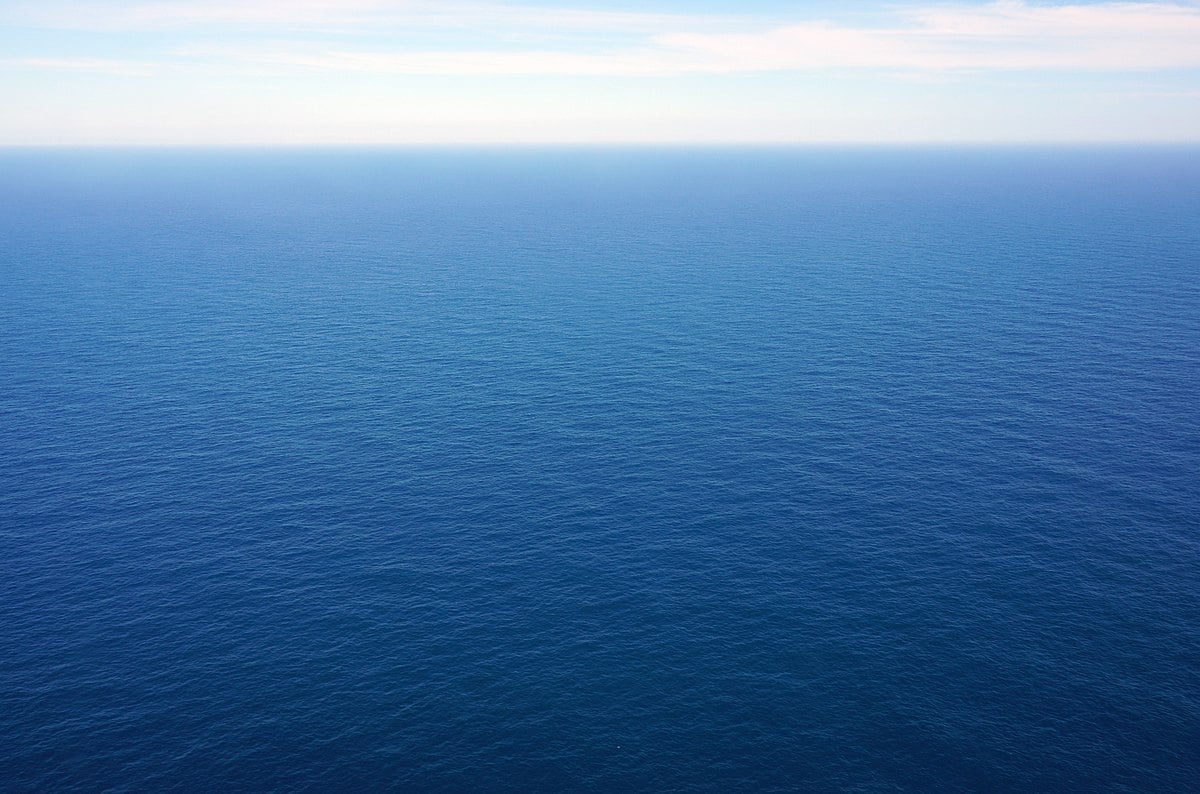
Calm, endless blue ocean stretching to the horizon under a light blue sky with a few wispy clouds.
via Wikimedia Commons

Just to put that into perspective, that’s 202 quadrillion above-ground swimming pools. That’s a lot of water.

19. The deepest photosynthesis occurs at 200 meters
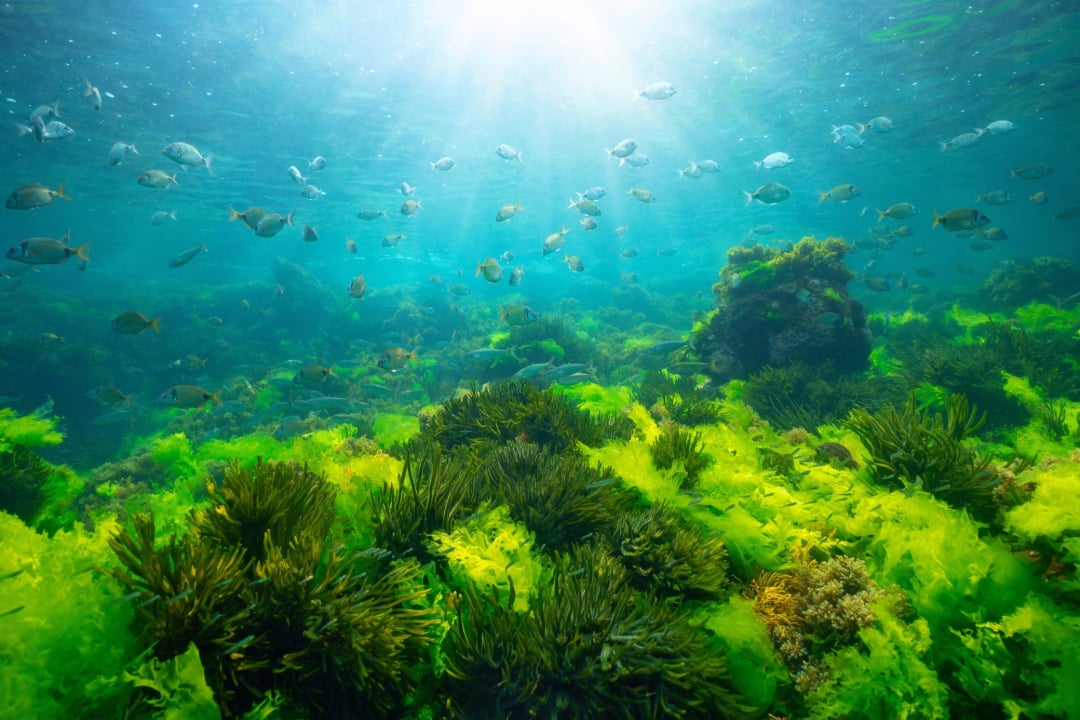
Sunlight filters through clear blue water, illuminating a vibrant underwater scene with green seaweed, various coral, and a school of small fish swimming above a lush ocean floor.
via padi.com

200 meters is the deepest point at which plants can grow in the ocean. Below this depth, light levels are too low to support photosynthetic life.

20. The ocean contains over 230,000 discovered species
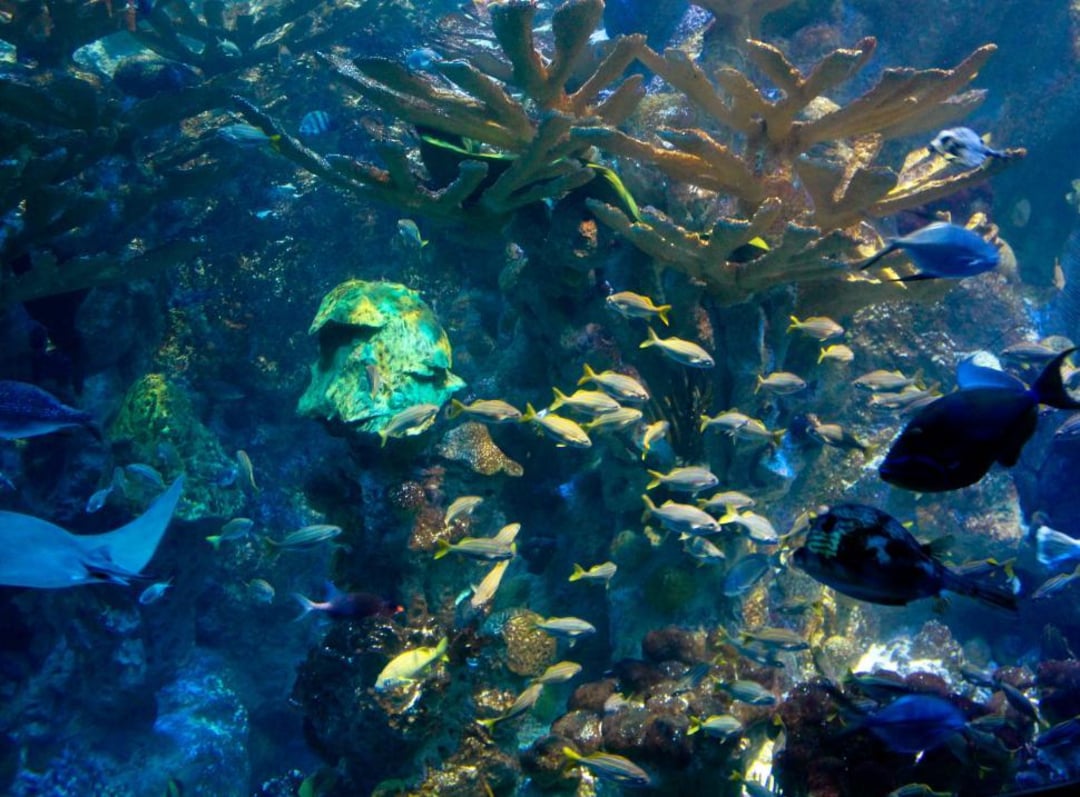
A vibrant underwater scene showing various types of tropical fish swimming among colorful coral reefs and marine plants in blue-lit water.
via freerangestock.com

And scientists believe that millions more remain undiscovered.

Want to see more fun facts?

Check out 20 Animal Facts That Prove Our World Is More Mysterious Than We Thought, or take a look at 20 Photos and Facts From WWI. Finally, if you want to see facts about the human brain, take a look at 20 Mind-Bending Facts About The Human Brain That Most People Don’t Know.

Meet the Writer

Patrick is a writer based in upstate New York, where he grew up and still calls home. Over the past year, he’s been diving deep into storytelling, especially tales rooted in history, the Wild West, lost treasures, and ancient artifacts. He’s also drawn to unsolved mysteries and whatever the internet can’t stop talking about.

Whether it’s a centuries-old legend or a bizarre internet rabbit hole, Patrick is always chasing the threads of a compelling story. When he’s not chasing stories, Pat’s probably hiking mountain trails with his dog, exploring new corners of the U.S., or doom-scrolling between hangouts with friends and family. He finds inspiration in nature, forgotten places, and random conversations—anything that sparks curiosity. Whether it’s city streets or backcountry paths, Patrick’s always on the lookout for the next great story.