Cheapism is editorially independent. We may earn a commission if you buy through links on our site.

Split image: Left side shows a brain wearing headphones surrounded by colorful musical notes. Right side is an illustration of a person standing at a ship’s wheel on top of a brain, looking through a telescope.

The human brain is a small organ with an enormous reputation. It shapes every thought, memory, emotion, and decision, yet scientists are still working to uncover how it truly operates. Even with all we have learned, the brain continues to surprise researchers with abilities and behaviors that feel almost otherworldly. It is powerful, unpredictable, and filled with peculiar features that most people never hear about.

What we do understand reveals just how remarkable this organ really is. Within its tangled networks are hidden patterns, unusual reactions, and clever tricks that influence the way we see ourselves and the world around us. Let’s dive into 20 mind-bending facts about the human brain that most people don’t know.

1. The brain uses about 20 percent of the body’s energy
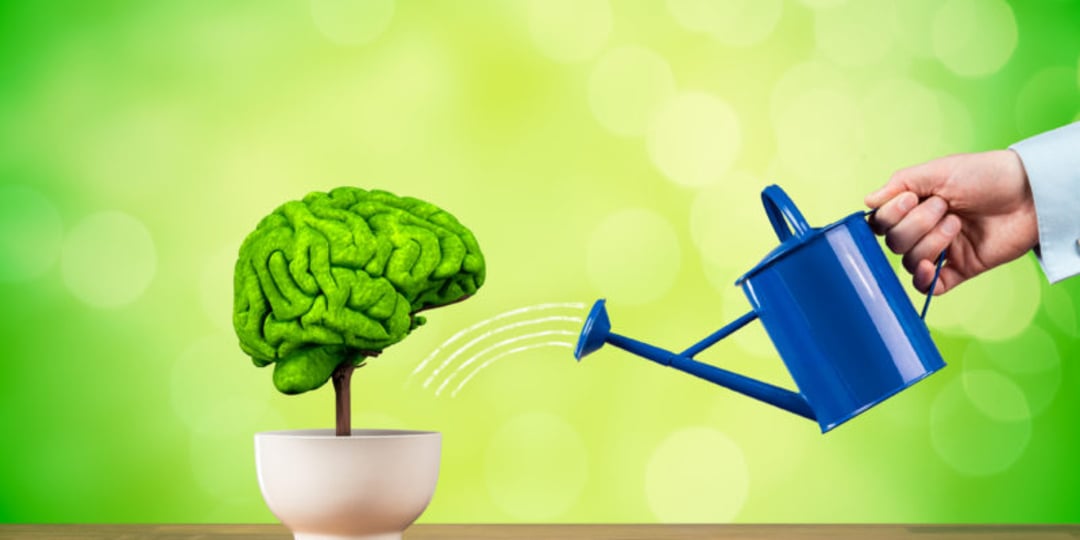
A hand waters a small tree in a white pot, but the tree’s foliage is shaped like a green human brain, symbolizing growth and nurturing of the mind, against a bright green bokeh background.
vi neurocenternj.com

Even at rest, it burns a surprisingly high amount of fuel. Most of this energy goes toward maintaining connections between billions of neurons.

2. Your brain generates enough electricity to power a light bulb

A realistic human brain is depicted inside a clear light bulb against a blue gradient background, symbolizing the concept of creativity, intelligence, or ideas.
via picryl.com

Neurons communicate through tiny electrical signals. When combined, these signals create enough electrical activity to power a small LED light.

3. The brain is made mostly of fat

Illustration of a human brain, showing detailed folds and grooves. The drawing is in shades of pink and black, emphasizing the brain’s complex structure and texture.
via picryl.com

About 60% of the brain is fat, making it the fattiest organ in the body.

4. The brain doesn’t feel pain

A digital illustration of a person holding their head in pain, with a highlighted, glowing area in the brain suggesting a headache or migraine. The image shows the brain and parts of the skull in a semi-transparent style.
via physicalachievementcenter.com

There are no pain receptors in brain tissue. This is why surgeons can operate on the brain while a patient is awake.

5. You have a unique “brainprint”
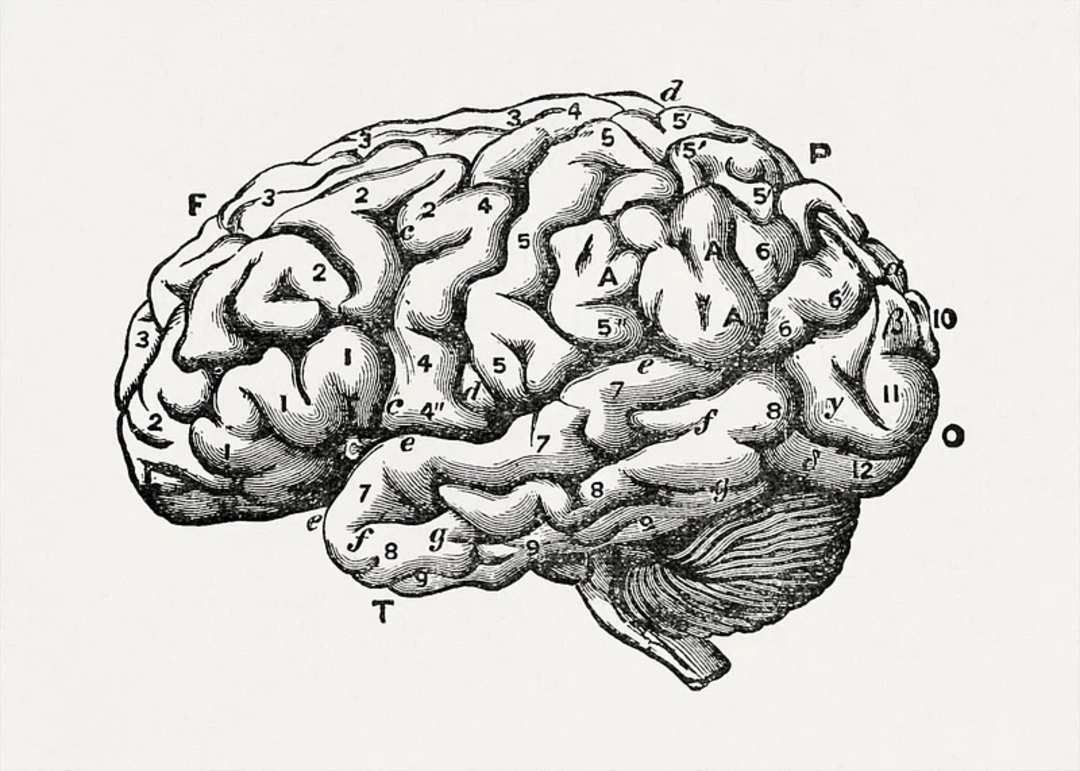
Black and white vintage illustration of a human brain in profile view, labeled with numbers and letters to indicate different regions and areas.
via rawpixel.com

Just like fingerprints, brain activity patterns are unique to each person.

6. Your brain is extremely active while you sleep
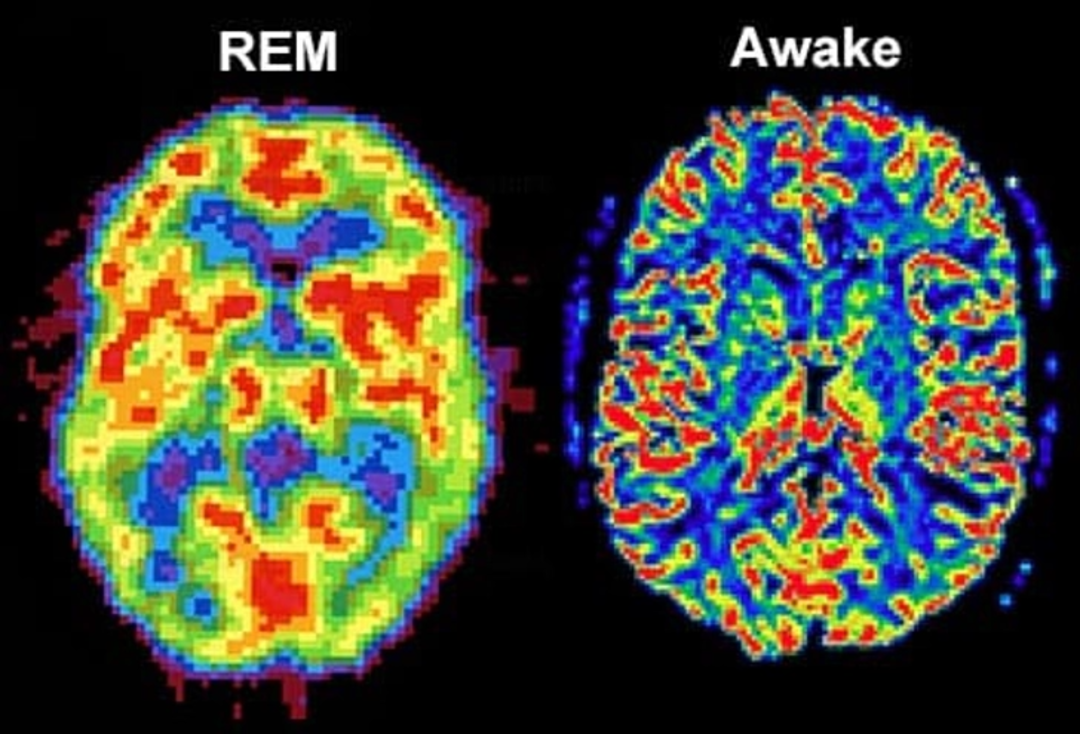
Two brain scans side by side: the left labeled "REM" shows more red and yellow areas, while the right labeled "Awake" shows more blue and green areas, indicating different brain activity patterns.
medspiration/via youtube.com

Your brain sorts through the day’s events, strengthening important memories and pruning unimportant ones while you sleep.

7. Contrary to popular belief, you can grow new neurons
Illustration of a brain with arms and legs, lifting two dumbbells against a yellow background, symbolizing mental strength or brain training.
via soundrelief.com

A process called neurogenesis occurs in certain brain areas. Learning, exercise, and healthy habits can support this growth.

8. Your brain shrinks as you age

Rows of realistic brain models are arranged closely together on shelves, creating a repeating pattern. The image is in black and white, highlighting the intricate details of the brain structures.
via flickr.com

This is a natural part of aging. Fortunately, mental activity and physical exercise can help slow the decline.

9. The brain can “rewire” itself

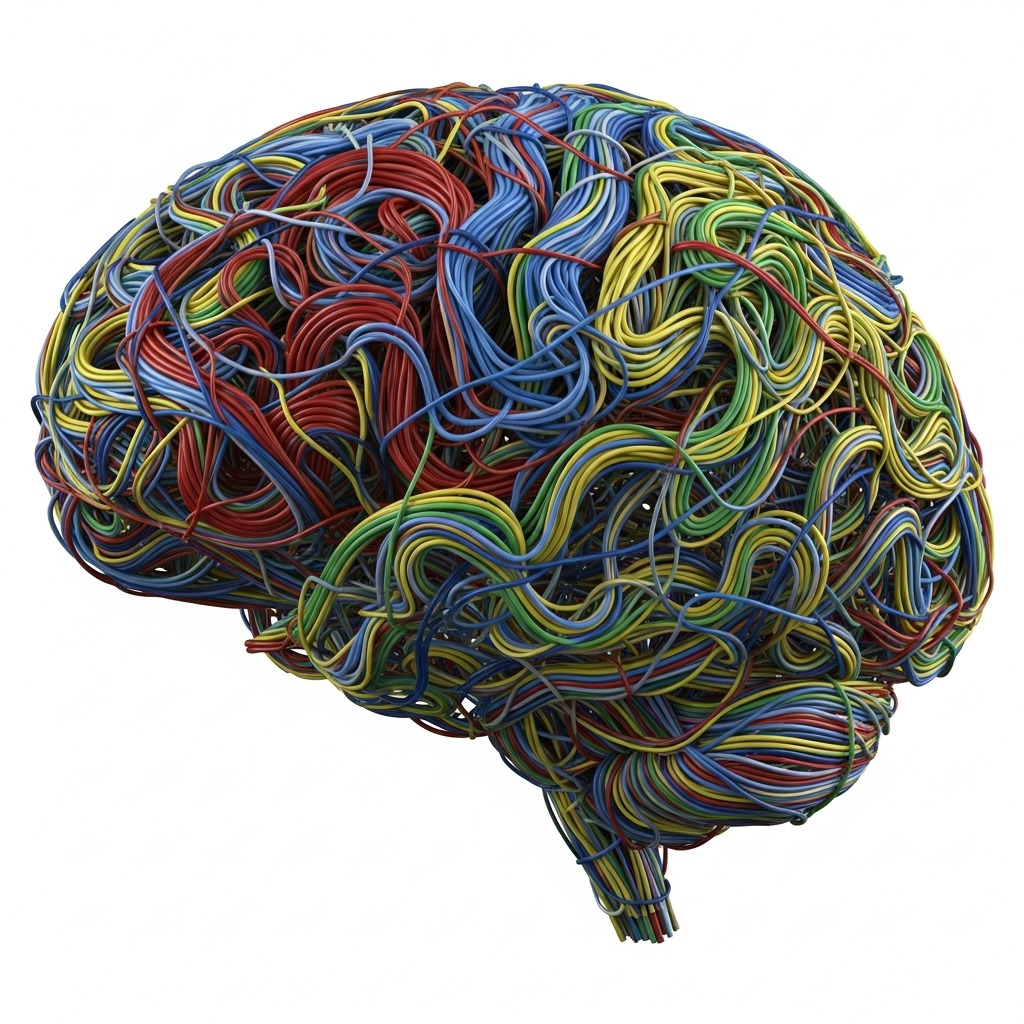
A brain-shaped structure made from bundles of colorful wires, including red, blue, yellow, and green, intricately twisted and woven together on a white background.
via easy-peasy.com

This ability is known as neuroplasticity, and it allows the brain to learn new skills and recover from injury. It is one of the most remarkable features of the human mind.

10. Your brain filters out most sensory information

A colorful, digitally rendered brain is surrounded by swirling data, graphs, icons, and symbols related to marketing, the reticular activating system, and personalization, representing concepts of focus and targeted advertising.
via scotchmarketing.com

We receive far more input than you can consciously notice. The brain keeps only what it considers important.

11. Memories are reconstructed, not replayed
A glowing human brain inside a silhouette head, surrounded by swirling galaxies, stars, and floating photographs, symbolizing memory, imagination, and the universe within the mind.
via keystonetherapy.com

Each time you remember something, the memory is rebuilt. This means memories change over time.

12. Your brain craves patterns

A close-up of a human eye is blended into a red brick wall, with only the right side of the face visible. The eye appears to be looking outward, creating a surreal and striking visual effect.
via pickpik.com

Your brain is constantly searching for something to do. This is why you sometimes see faces in random objects.

13. Laughter activates multiple areas of the brain

A smiling family of four, two adults and two children, enjoy a playful moment together outdoors, surrounded by trees and greenery on a sunny day.
via freerangestock.com

Humor engages emotion, movement, and social processing. This is why laughter feels so mentally refreshing.

14. Music can alter brain chemistry

A human brain wearing black headphones is surrounded by colorful, swirling musical notes, symbolizing the connection between music and the mind.
via thejinglewriter.com

Listening to music releases dopamine, a feel-good neurotransmitter. This is why your favorite song can literally lift your mood.

15. Multitasking is basically a myth

A person sits at a white desk with an open laptop, holding a smartphone in one hand and a notebook in the other. The background is plain and the scene suggests multitasking or remote work.
via freerangestock.com

Your brain doesn’t do multiple things at once; it switches rapidly between tasks instead of doing them simultaneously. This switch reduces accuracy and increases mental strain.

16. You never stop using your brain

A glowing, digital brain is surrounded by data charts, graphs, and arrows. Circuit-like lines enter from the left, symbolizing technology and data flow. Two hands shaking is visible inside the brain, representing collaboration.
vi braintrustgrowth.com

When sleeping, resting, or daydreaming, the brain remains active. Its default mode sparks creativity, reflection, and imagination.

17. Your brain processes images in as little as 13 milliseconds
A colorful, digital illustration of a human brain with neural connections extending outward, surrounded by abstract symbols including an upward arrow and a laurel wreath, in a futuristic, white laboratory setting.
via braintrustgrowth.com

This is faster than the blink of an eye. Your visual system is incredibly efficient at recognizing shapes and scenes almost instantly.

18. Stress can physically change the structure of the brain

A woman stands with her eyes closed, fingers pressed to her temples, looking tense. The background is filled with the word “stress” repeated in various sizes and directions, symbolizing mental pressure.
chestnutdental.com

Chronic stress affects areas of the brain involved in memory and emotional regulation. These changes can be improved with relaxation and healthy habits.

19. Your brain is always predicting the future

Illustration of a man in a suit standing at a ship's wheel on top of a large human brain, looking through a telescope, with clouds in the background.
via publicdomainpictures.net

It constantly makes guesses about what you will hear, see, or feel next. This predictive processing helps you move through the world more smoothly.

20. Habits are stored in a special part of the brain

Coronal brain section diagram labeling the basal ganglia structures: cerebral cortex, caudate nucleus, putamen, thalamus, globus pallidus, subthalamic nucleus, and substantia nigra, with color-coded regions.
via wikimedia commons

The basal ganglia automates repeated behaviors. This is why habits can be hard to break, but also helpful for efficiency.

Want to see more fun facts?

Check out 20 Animal Facts That Prove Our World Is More Mysterious Than We Thought, or take a look at 20 Bizarre Facts Science Can Actually Back Up. Finally, if you want to see facts from WWI, take a look at 20 Photos and Facts From WWI.


Meet the Writer

Patrick is a writer based in upstate New York, where he grew up and still calls home. Over the past year, he’s been diving deep into storytelling, especially tales rooted in history, the Wild West, lost treasures, and ancient artifacts. He’s also drawn to unsolved mysteries and whatever the internet can’t stop talking about.

Whether it’s a centuries-old legend or a bizarre internet rabbit hole, Patrick is always chasing the threads of a compelling story. When he’s not chasing stories, Pat’s probably hiking mountain trails with his dog, exploring new corners of the U.S., or doom-scrolling between hangouts with friends and family. He finds inspiration in nature, forgotten places, and random conversations—anything that sparks curiosity. Whether it’s city streets or backcountry paths, Patrick’s always on the lookout for the next great story.