The 1940s were a strange moment for car design. Wartime shortages, aircraft technology, postwar optimism, and a wave of small independent manufacturers pushed engineers in directions that Detroit’s biggest companies rarely considered. Some of the results were remarkably clever, while others looked like experiments that somehow escaped onto public roads.
From transparent electric eggs to three-wheeled sedans and cars with aircraft-style cockpits, the decade produced machines that still seem unusual today.
1. Davis Divan
CLASSICCARS / VIA REDDIT
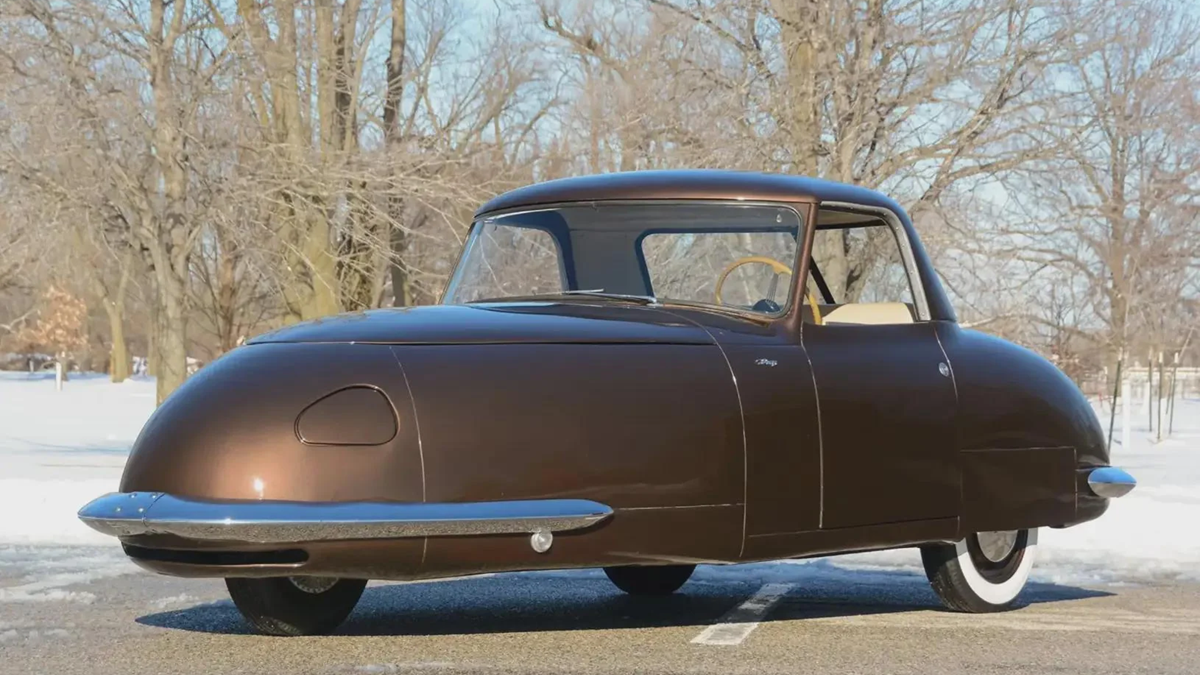
The Davis Divan had the length and presence of a conventional American sedan, right up until you noticed that it had only three wheels. Gary Davis promoted the aluminum-bodied car in the late 1940s as an advanced, economical alternative to ordinary automobiles, with a single front wheel and a remarkably wide bench seat capable of holding four people side by side. Only 16 running Davis vehicles were built, including prototypes and military-style versions, before the company collapsed. The Divan somehow managed to look both enormous and slightly unstable at the same time.
2. Paul Arzens’ L’Œuf Électrique
WEIRDWHEELS / VIA REDDIT
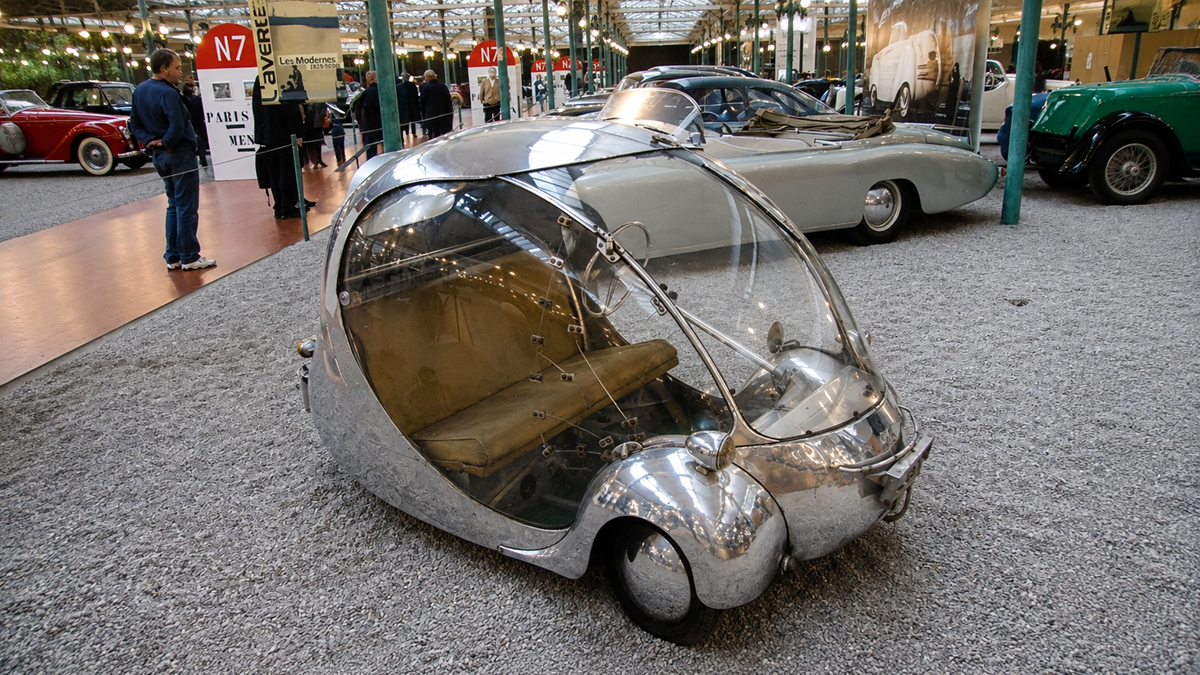
Parisian designer Paul Arzens built something in 1942 that would look experimental even in a modern city. L’Œuf Électrique, or the Electric Egg, wrapped its two-seat cabin in curved Plexiglass and aluminum, creating a nearly transparent bubble on three tiny wheels. Five batteries provided roughly 100 kilometers of range, an especially useful idea during wartime fuel shortages. After the war, Arzens replaced the electric system with a small Peugeot gasoline engine, but the astonishing egg-shaped body remained.
3. Norman Timbs Special
CARS / VIA REDDIT
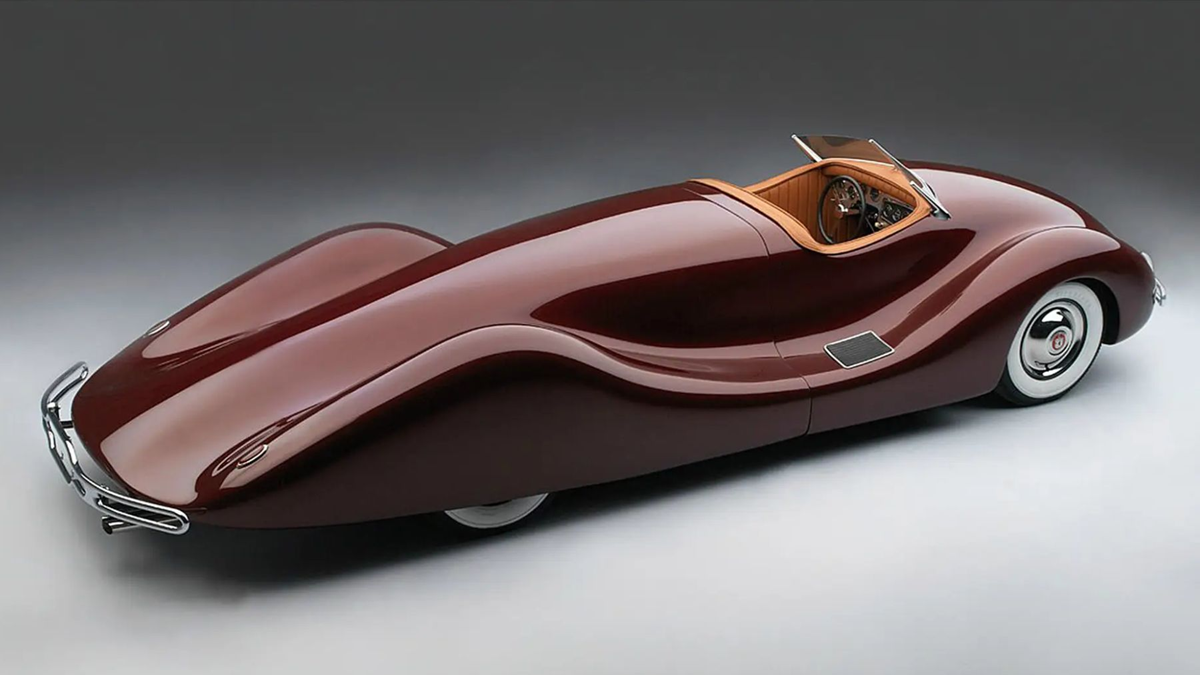
Mechanical engineer Norman Timbs did not simply customize an existing automobile. He spent more than two years developing his own sweeping aluminum streamliner, shaping the body over a full-size wooden buck after working through drawings and clay models. The finished 1947 Special had no doors and virtually no conventional trunk or hood lines, just two enormous flowing sections surrounding a tiny open cockpit. Seen from the side, the rear bodywork seems to continue for an almost unreasonable distance behind the driver.
4. 1948 TASCO
WEIRDWHEELS / VIA REDDIT
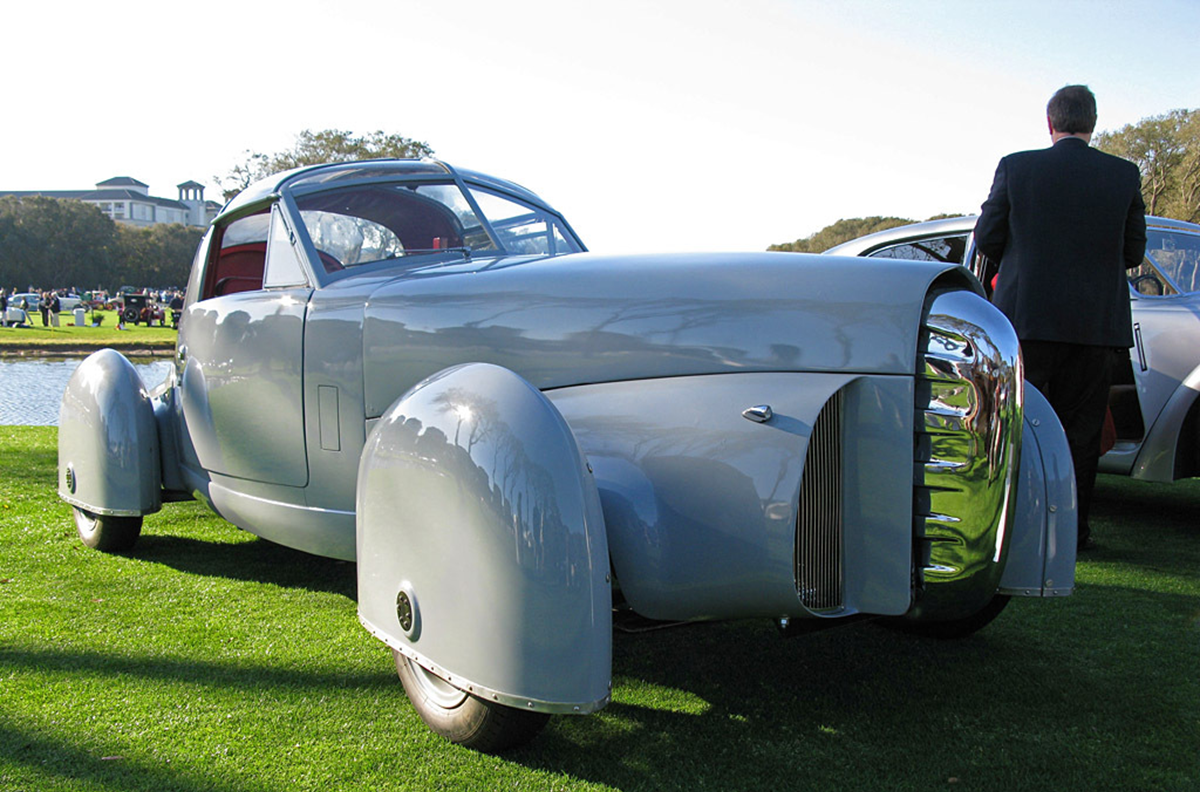
Gordon Buehrig had already designed sophisticated cars such as the Cord 810 when he turned his attention to the TASCO in 1948. This time, the inspiration was unmistakably aviation. Its fiberglass front fenders moved with the wheels, the dashboard resembled an aircraft instrument panel, and the occupants sat beneath transparent removable roof panels in what felt more like a cockpit than a conventional cabin. Buehrig’s unusual roof arrangement is generally regarded as an early T-top design, decades before that feature became familiar on American sports cars.
5. Gatso 4000 Aero Coupé
WEIRDWHEELS / VIA REDDIT
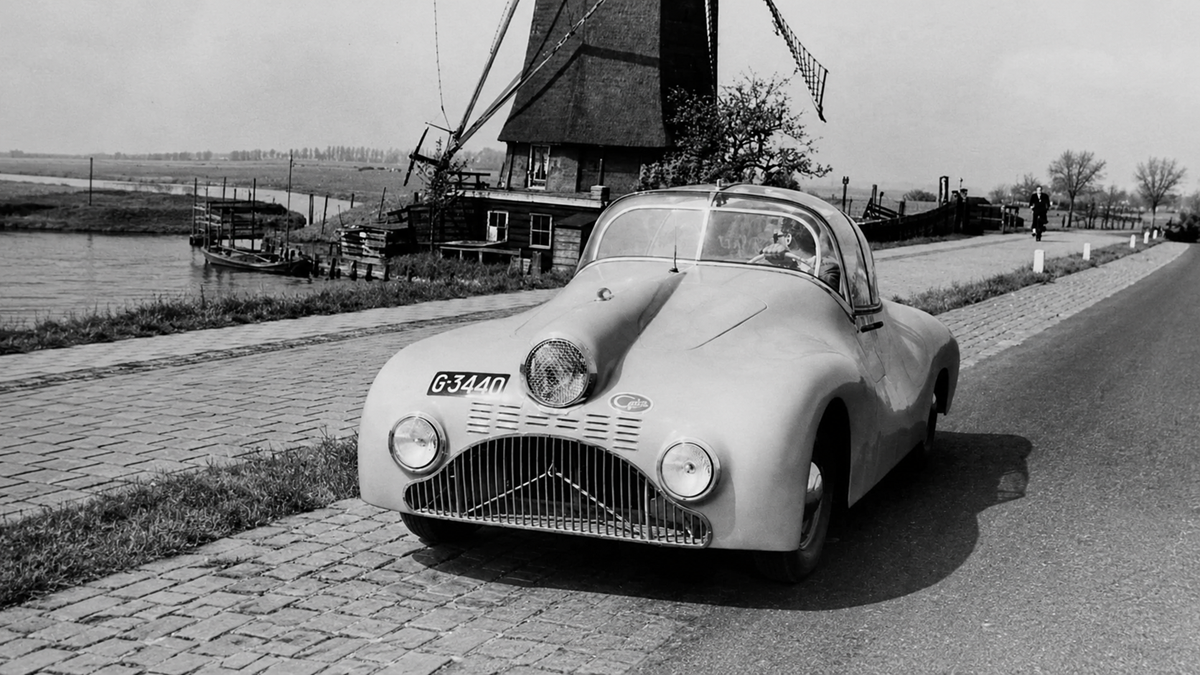
Dutch rally driver Maurice Gatsonides wanted to build sports cars, and his 1948 Aero Coupé showed that subtlety was not part of the plan. Its duralumin body carried a rounded transparent canopy and three headlights, including one perched dramatically in the middle of the nose. Underneath was a Matford-based chassis and a Mercury V8. Very few Gatso cars were built, leaving the Aero Coupé as one of the stranger footnotes in postwar European performance-car history.
Trending on The Scroller
6. Tucker 48
WEIRDWHEELS / VIA REDDIT
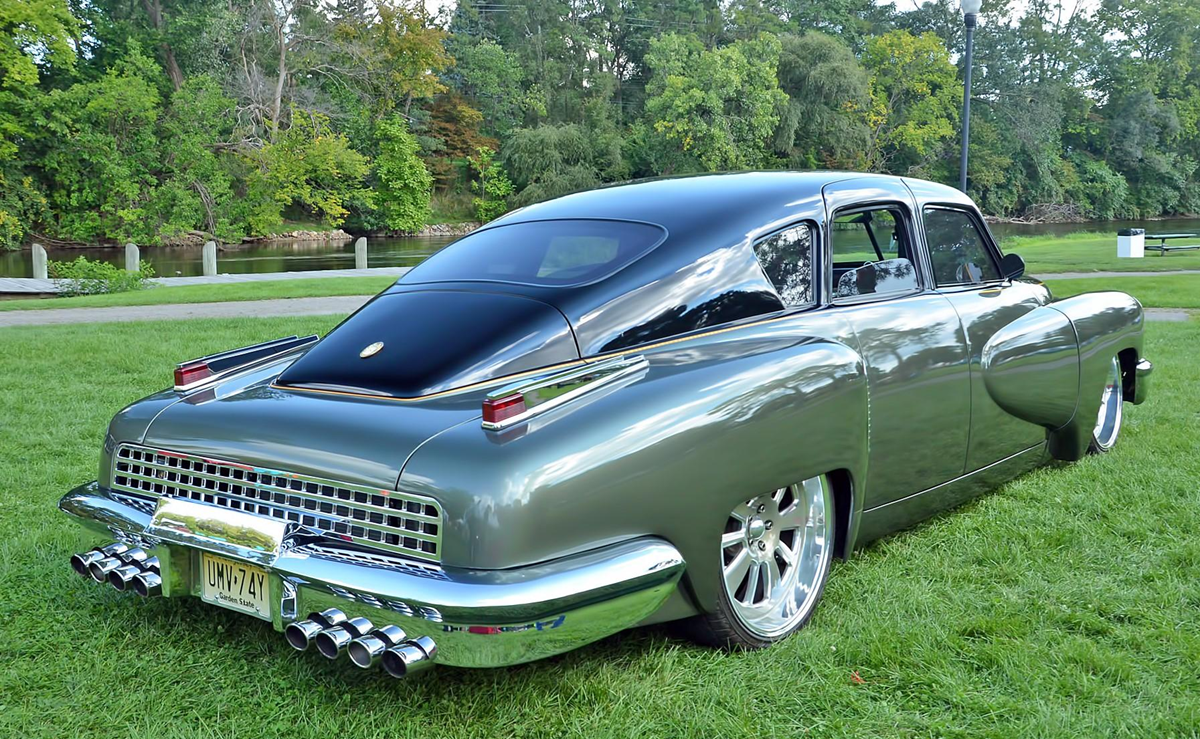
The Tucker 48 was not weird simply for the sake of looking different. Preston Tucker’s rear-engined sedan incorporated an unusual collection of ideas, including a padded dashboard, a windshield designed to pop out during a crash, independent suspension, and the famous center-mounted “Cyclops Eye” headlight that turned with the steering. Its doors also extended into the roof to make getting inside easier. Only 51 chassis were completed, which helped turn Tucker’s futuristic sedan into one of the most recognizable automotive experiments of the decade.
7. Saab Ursaab
CONCEPTCARS / VIA REDDIT
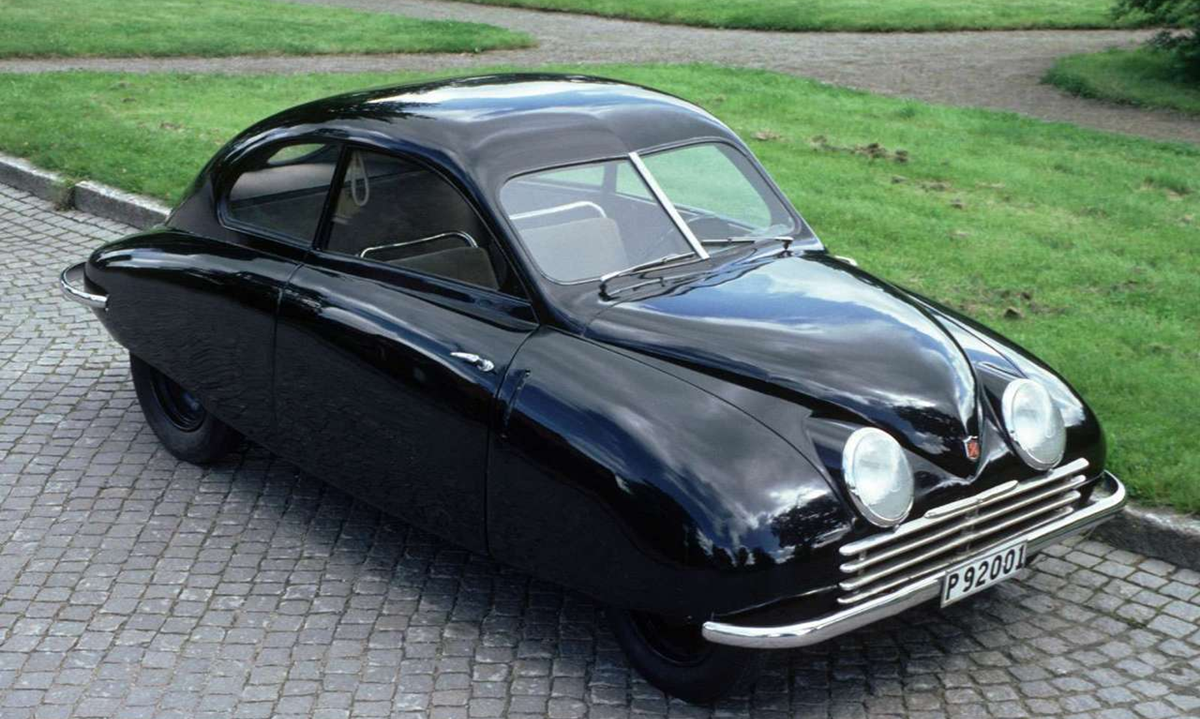
When Saab decided to build a car after World War II, many of the people working on it came from an aircraft company rather than an established automobile manufacturer. The result was the Ursaab prototype, completed in 1946, with a smooth body so rounded that Saab engineer Gunnar Ljungström reportedly defended its unusual appearance by arguing that fuel savings mattered more than looking like a frog. Its aerodynamic shape, front-wheel drive, two-stroke engine, and monocoque construction made it an unconventional package for the period.
8. Volkhart V2 Sagitta
WEIRDWHEELS / VIA REDDIT
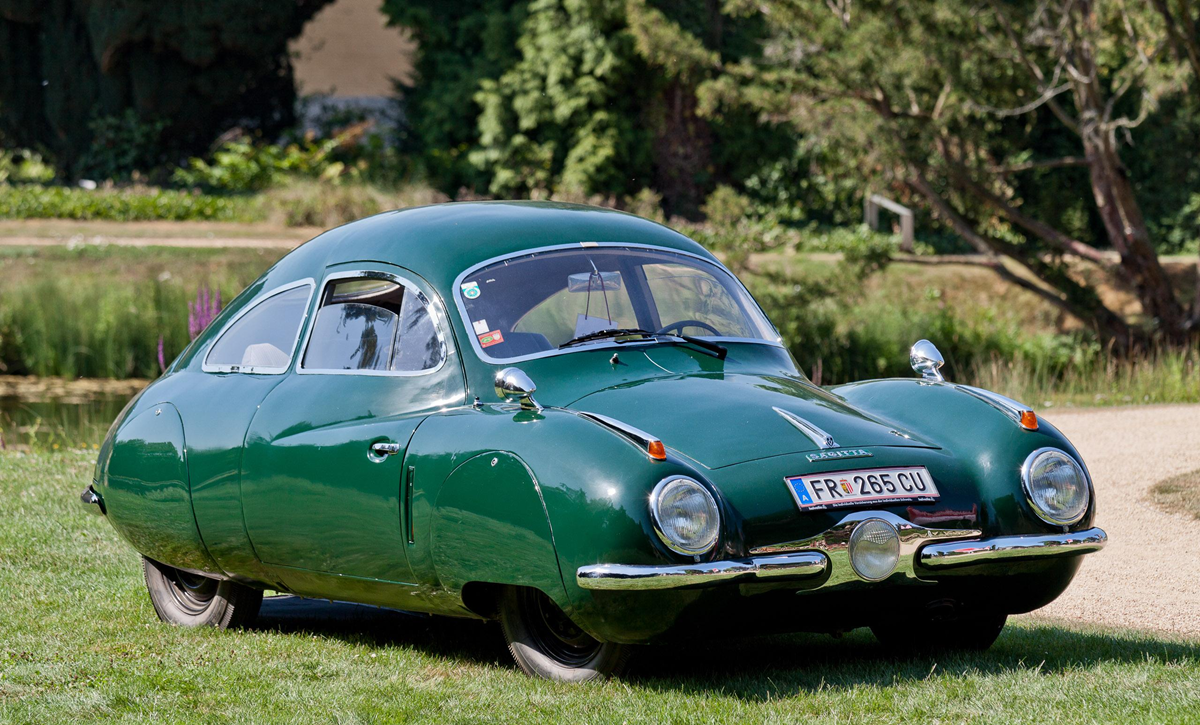
The Volkhart V2 Sagitta looked as though someone had taken the basic ingredients of an early Volkswagen and pushed them through a wind tunnel until almost nothing familiar remained. Built in 1947 by engineer Kurt Volkhart, the one-off aluminum car enclosed its wheels and wrapped a KdF-Wagen chassis in an extraordinarily slippery body. Volkhart reported a drag coefficient of just 0.165 from his aerodynamic testing. Even with only about 24 horsepower available, the shape was intended to let the car reach speeds above 80 mph.
Sign up for our newsletter
9. Stout Scarab Experimental
WEIRDWHEELS / VIA REDDIT
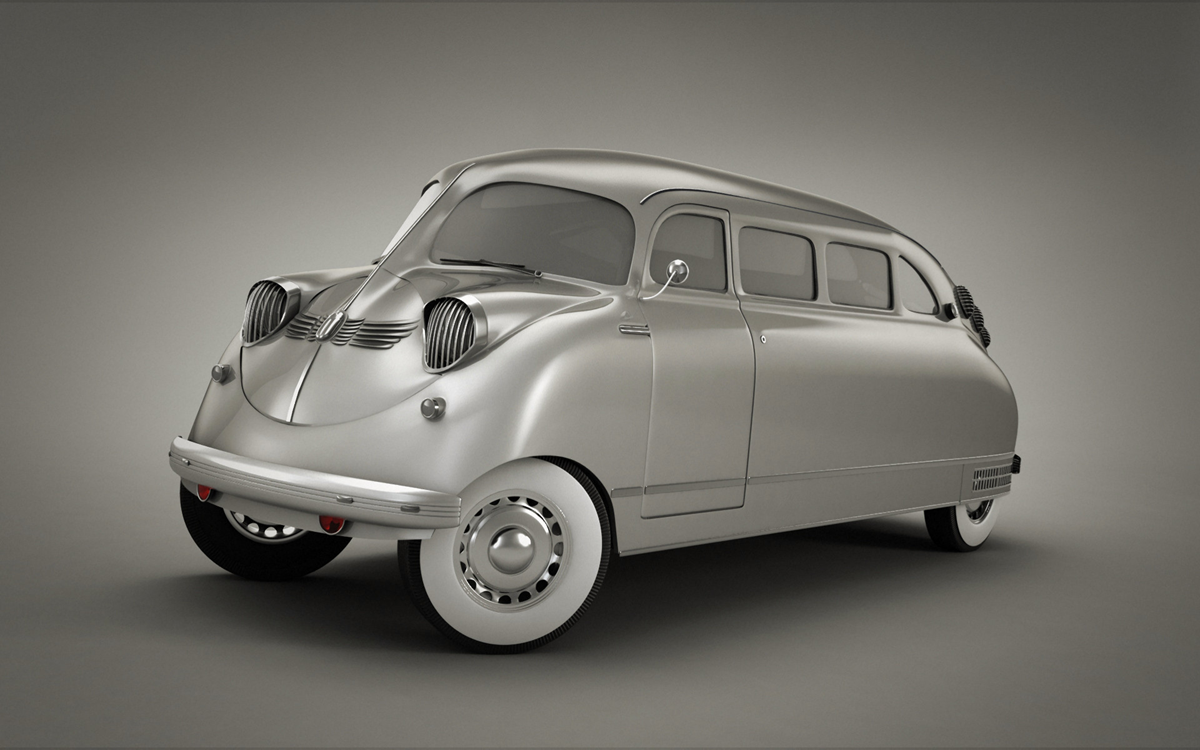
William Stout had been experimenting with unconventional automobiles since the 1930s, but his 1946 Scarab Experimental was still an oddity. The two-door prototype combined a rear-mounted Ford V8, a wraparound windshield, fiberglass bodywork, and fully pneumatic suspension. It never reached production, which is probably why it feels less like a normal postwar sedan and more like an alternate version of what American cars might have become.
10. ALCA Volpe
WEIRDWHEELS / VIA REDDIT
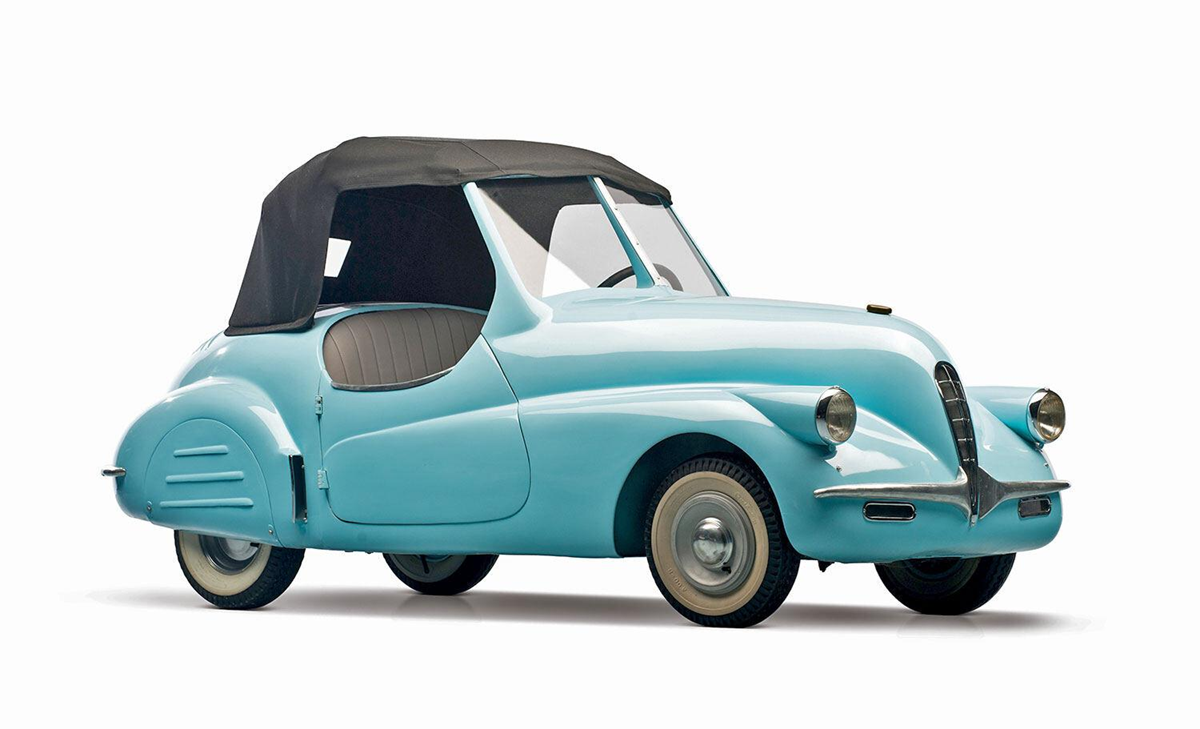
Italy’s tiny ALCA Volpe was presented in Rome in 1947 as an inexpensive alternative to the Fiat Topolino. The little open car had a rear-mounted 124 cc two-stroke engine and bodywork so compact that it resembled a child’s pedal car that had somehow acquired license plates. Plans were ambitious, even including entries for specially prepared versions in the Mille Miglia, but the project quickly ran into financial trouble. The Volpe’s brief existence only adds to its peculiar appeal.
11. Playboy A48
WEIRDWHEELS / VIA REDDIT
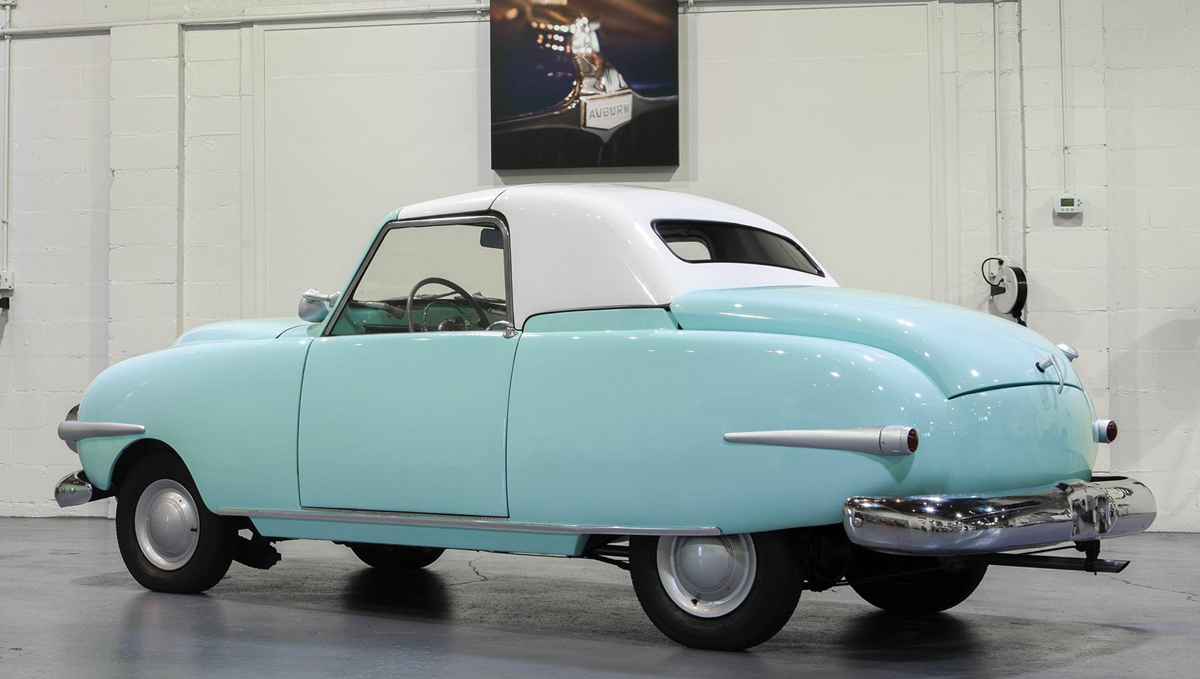
Before the name Playboy was associated with a magazine, it appeared on a very unusual little car built in Buffalo, New York. The 1948 A48 was intended as an affordable second car for postwar families and seated three people across a single bench, but its most interesting trick was overhead. Its multi-piece hardtop could be manually folded and stored flush with the rear deck, an unusually sophisticated feature on such a tiny automobile. Fewer than 100 serial-numbered examples were produced before the company disappeared.
12. Citroën 2CV
CARS / VIA REDDIT
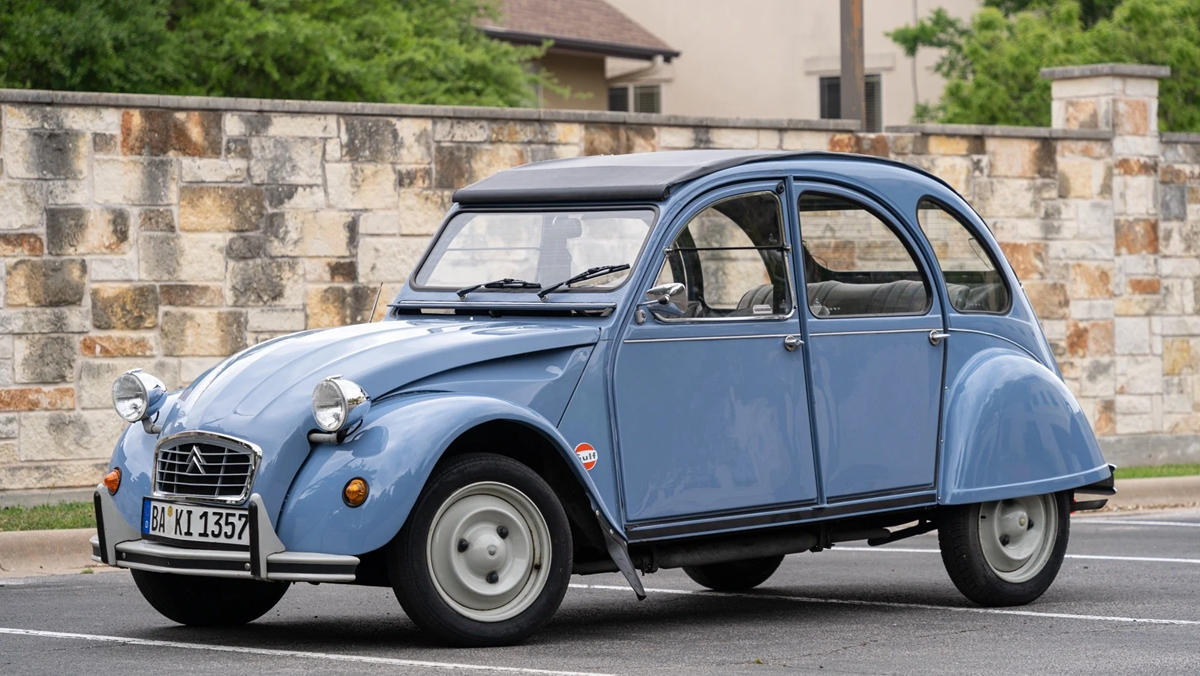
The original 1948 Citroën 2CV was deliberately stripped down to what its designers thought motorists actually needed. Early examples combined skinny tires, a corrugated 23-rib hood, flip-up windows, removable body panels, and a huge fabric roof that could be rolled backward. The result looked almost agricultural next to contemporary luxury cars, but that simplicity was very much the point.
13. Kleinschnittger’s 98 cc Prototype
WEIRDWHEELS / VIA REDDIT
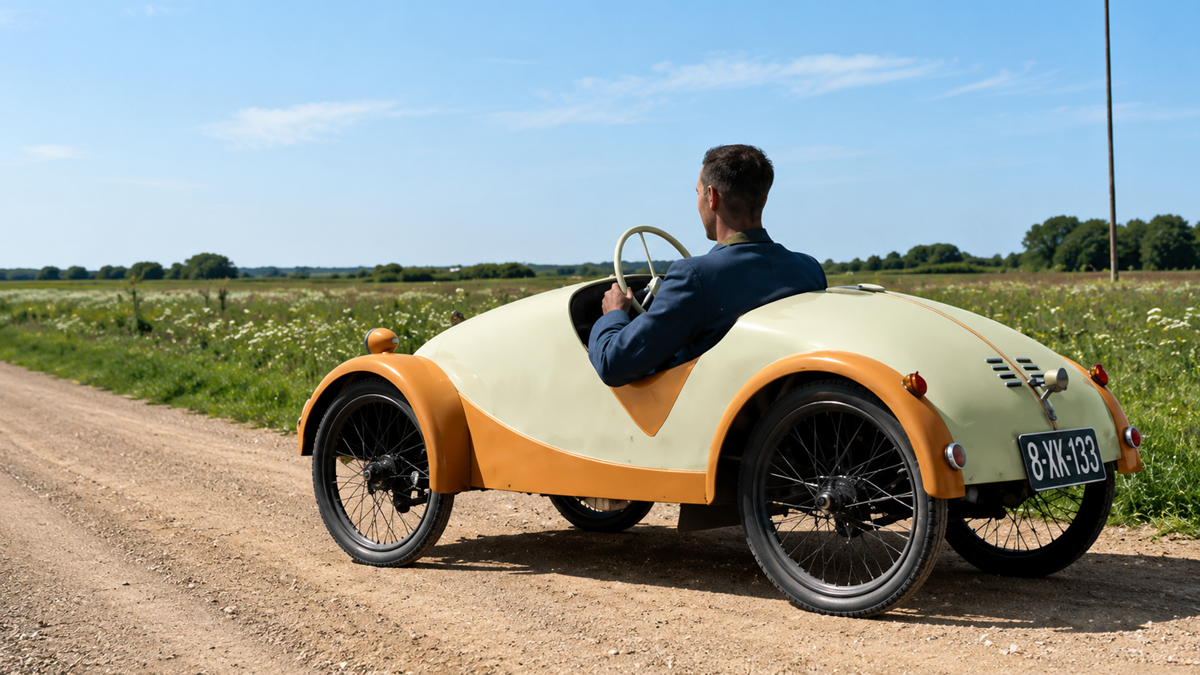
Postwar shortages encouraged European engineers to reconsider exactly how much automobile a person really required. Paul Kleinschnittger’s tiny prototype, completed around 1949, pushed that question unusually far, using salvaged material from aircraft and military vehicles, motorcycle-style fenders, a Plexiglass windshield from a crashed fighter plane, and a 98 cc DKW engine. With one headlight and proportions closer to a four-wheeled scooter than a normal car, it became the starting point for the slightly more civilized Kleinschnittger F125 of the 1950s.
14. Bond Minicar Mark A
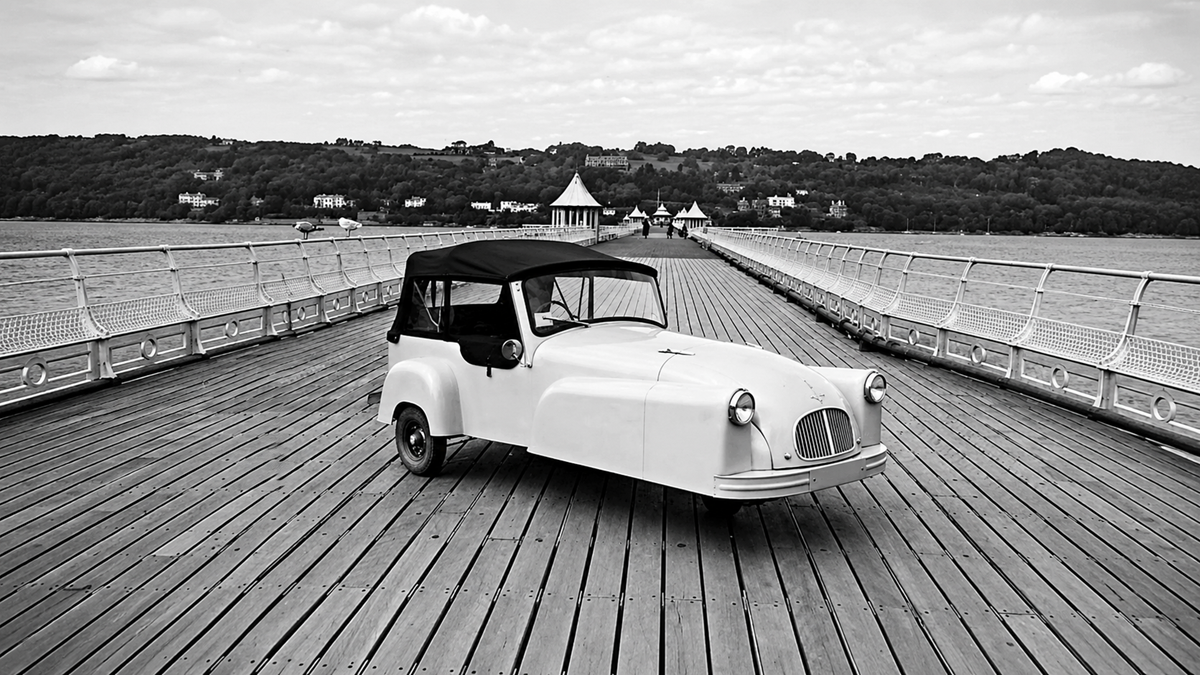
NAMETHATCAR / VIA REDDIT
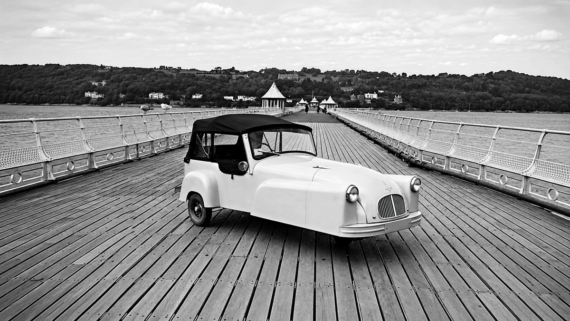
Britain’s original Bond Minicar arrived in 1949 with three wheels, an aluminum body, a 122 cc Villiers motorcycle engine, and no reverse gear. Starting it involved a modified kick-start mechanism connected to a handle, while early cars even used cable-operated steering. It was basic transportation reduced to an almost comic minimum, but in austere postwar Britain, that simplicity made economic sense.
15. Tatra 87
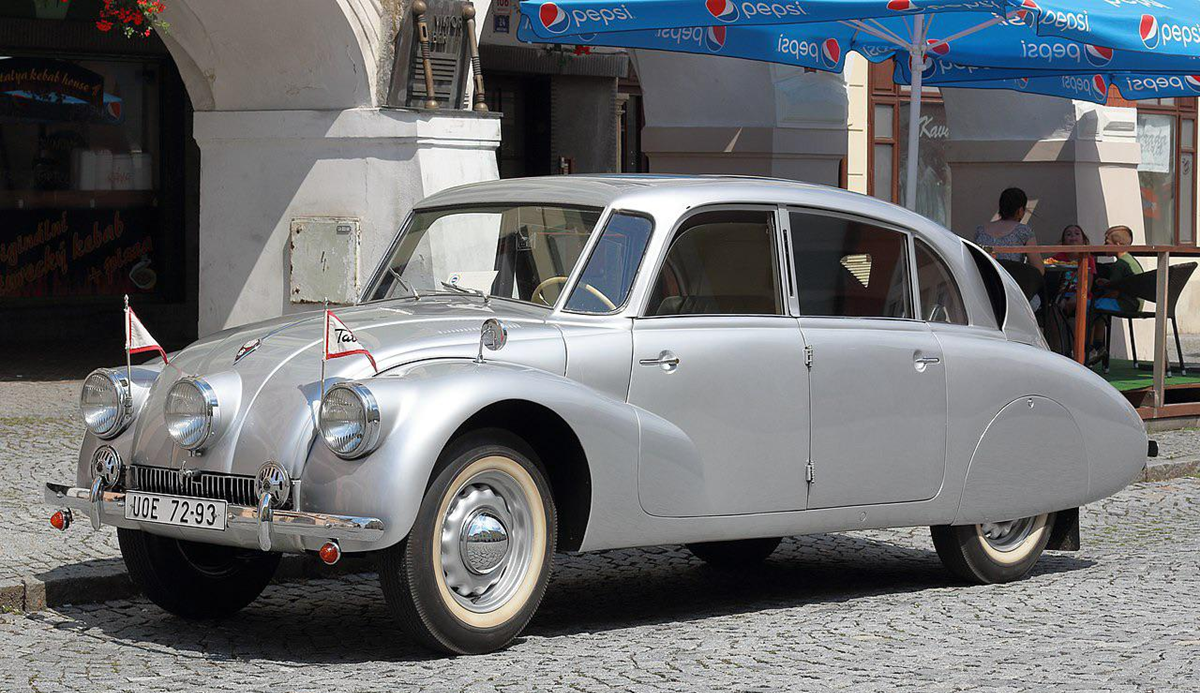
WEIRDWHEELS / VIA REDDIT
The Tatra 87 had already appeared before the war, but the model remained in production throughout much of the 1940s and received an updated appearance in 1948. Its layout still looked extraordinary: a streamlined body with three headlights, a prominent fin running down the rear, and an air-cooled V8 mounted behind the passengers. The combination gave the big Czechoslovakian sedan the profile of something halfway between a luxury car, a fish, and a small aircraft.
In the mood for more?
Check out 14 Unusual Cars From the Mid 1960s That Stood Out on the Road, or take a look at 20 Cool Cars from the Nineties. If you want to see more unusual automotive history, you can check out 20 Ugly Cars from the 1970s.