Airports before 9/11 could feel surprisingly open by today´s standards. Friends and relatives could often accompany travelers all the way to the gate, smoking was still part of airport life, and many routines now associated with flying simply did not exist yet. The terminal was not security-free, but the boundaries between traveler and visitor were far less rigid.
These photos capture that transition particularly well. Some scenes look unmistakably vintage, while others could almost pass for a modern airport until one small detail gives the era away. Together, they show how flying changed gradually, then dramatically, as security, technology, and everyday habits reshaped the airport experience.
1. Families Waiting Right at the Gate
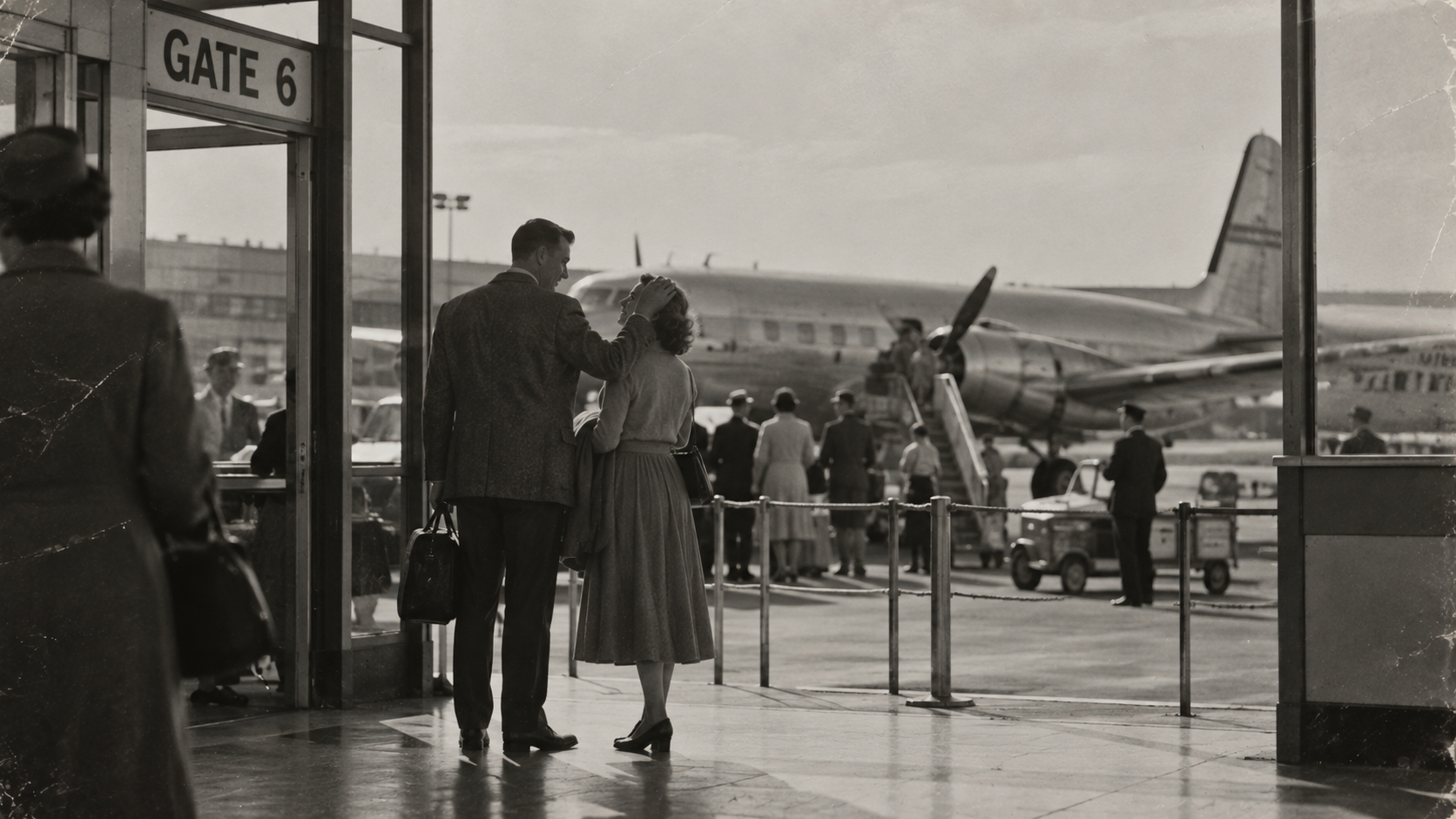
A tearful airport goodbye once really could happen steps from the aircraft. Non-ticketed relatives were commonly able to pass through screening and accompany passengers into gate areas, turning departures into family events rather than quick curbside hugs. The emotional scene in this photo captures something that has largely disappeared from American airports: saying goodbye at the very last possible moment.
2. A Checkpoint Without a TSA Uniform in Sight
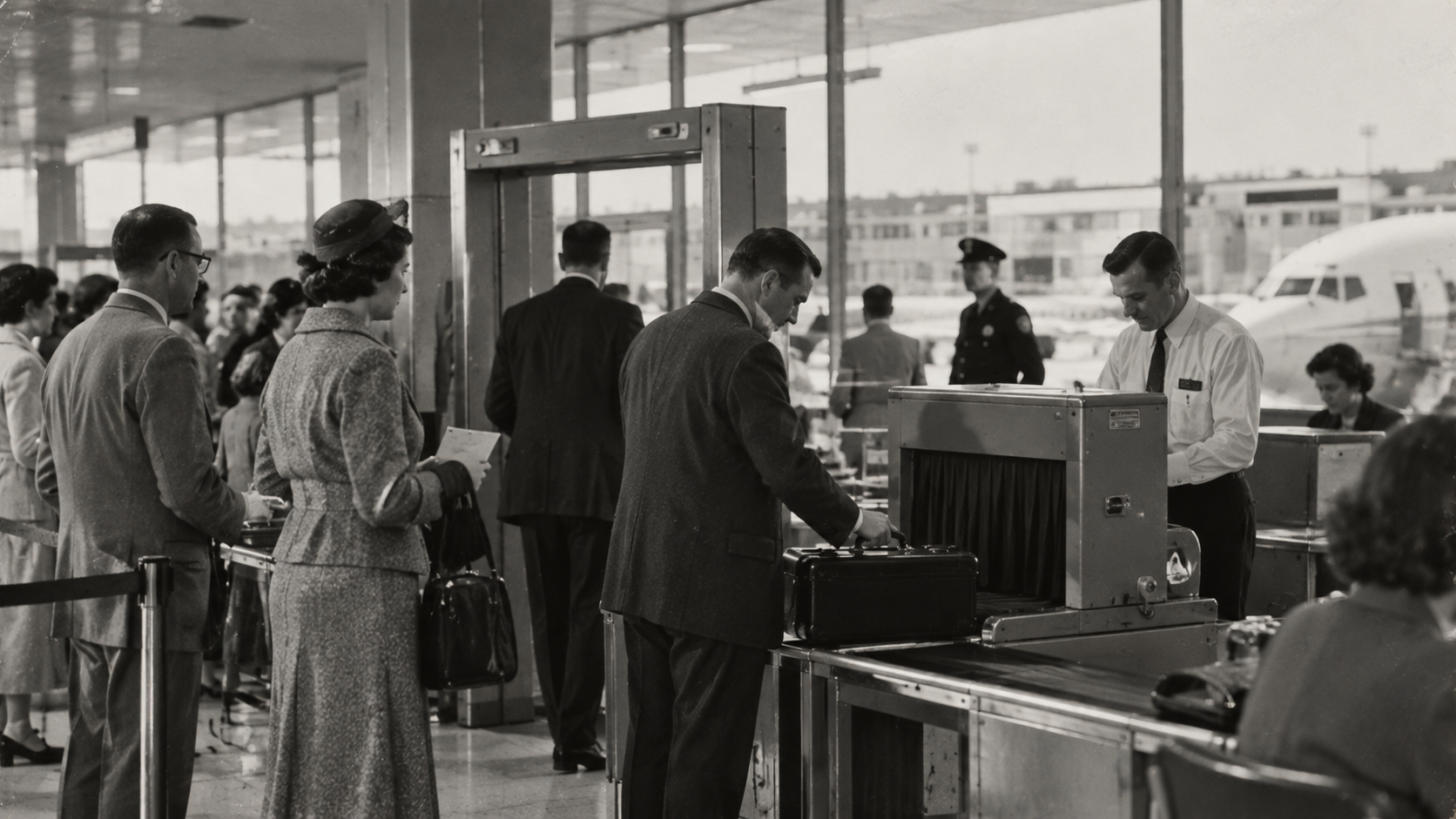
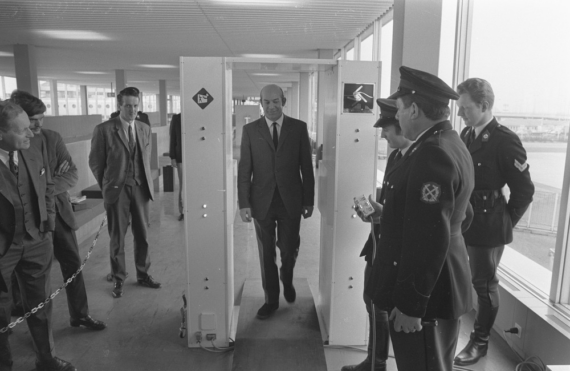
The checkpoint existed, but the TSA did not. Before the agency was created in November 2001, passenger screening in U.S. airports was generally handled by private contractors working for the airlines. That makes old checkpoint photos deceptively familiar: the basic idea is recognizable, yet the uniforms, staffing, and system behind the operation belonged to a completely different security structure.
3. Metal Detectors Were Already There
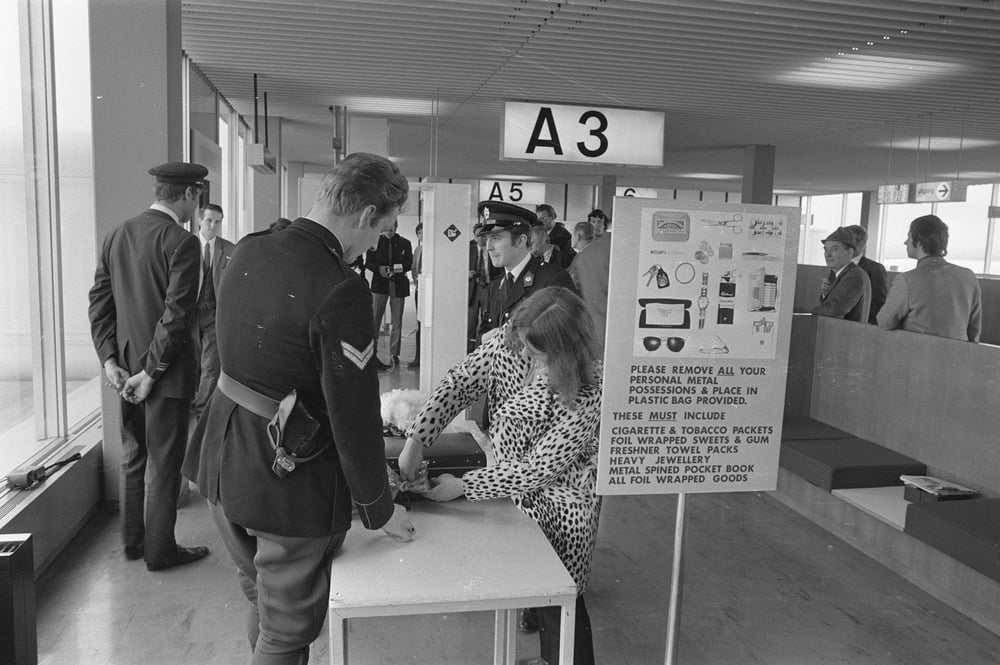
One persistent myth is that airport screening suddenly appeared after 9/11. It didn’t. Walk-through metal detectors had already been part of U.S. passenger screening for decades, which is why a vintage scene like this one can look strangely modern at first glance. The major transformation after 2001 was not the invention of screening, but a much broader federalization and tightening of the system.
4. Carry-On X-Ray Machines Before 9/11
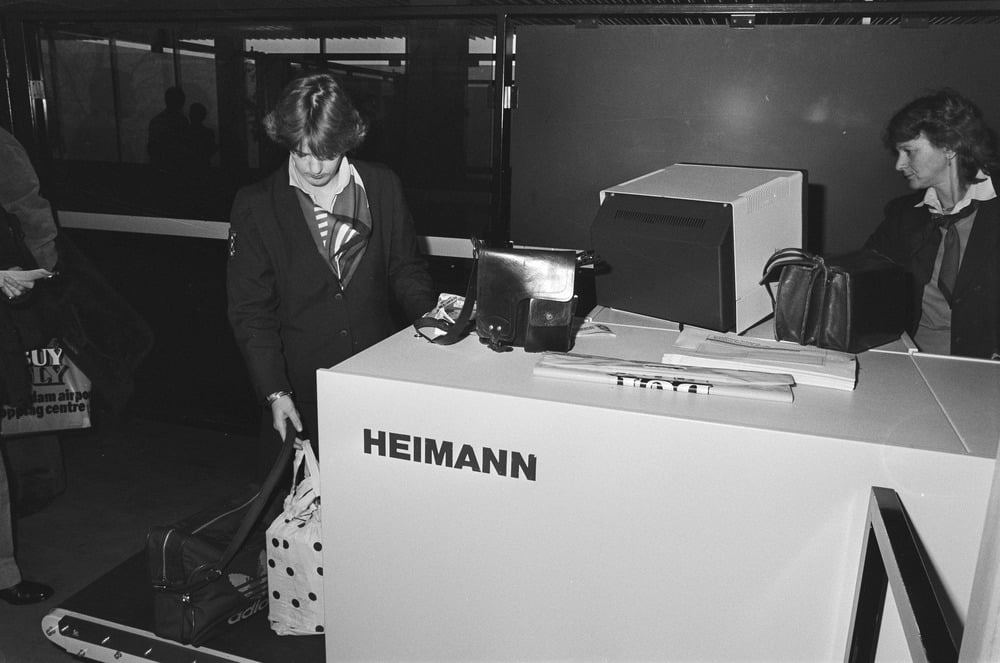
Even carry-on X-rays are older than many travelers realize. Bags were already being screened before 9/11, and machines like the bulky unit pictured here were part of the checkpoint experience. What changed were the rules surrounding that screening, including what passengers could carry and how closely certain items were scrutinized. The technology has evolved considerably, but its basic job would have been familiar decades ago.
5. No Shoe-Removal Ritual
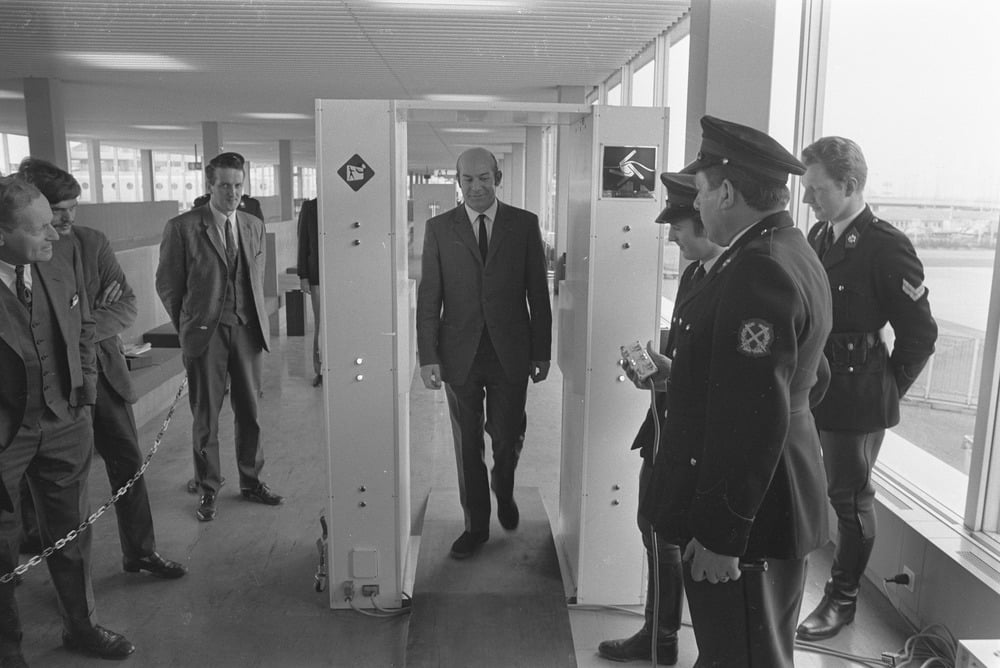
What would airport security feel like if everyone simply kept walking with their shoes on? Before late 2001, that was ordinary. The familiar shoe-removal routine came after the attempted shoe bombing in December of that year, meaning it was not actually one of the immediate changes introduced after 9/11. For millions of earlier passengers, footwear barely entered the security conversation at all.
Trending on The Scroller
6. Full-Size Toiletries in Carry-Ons
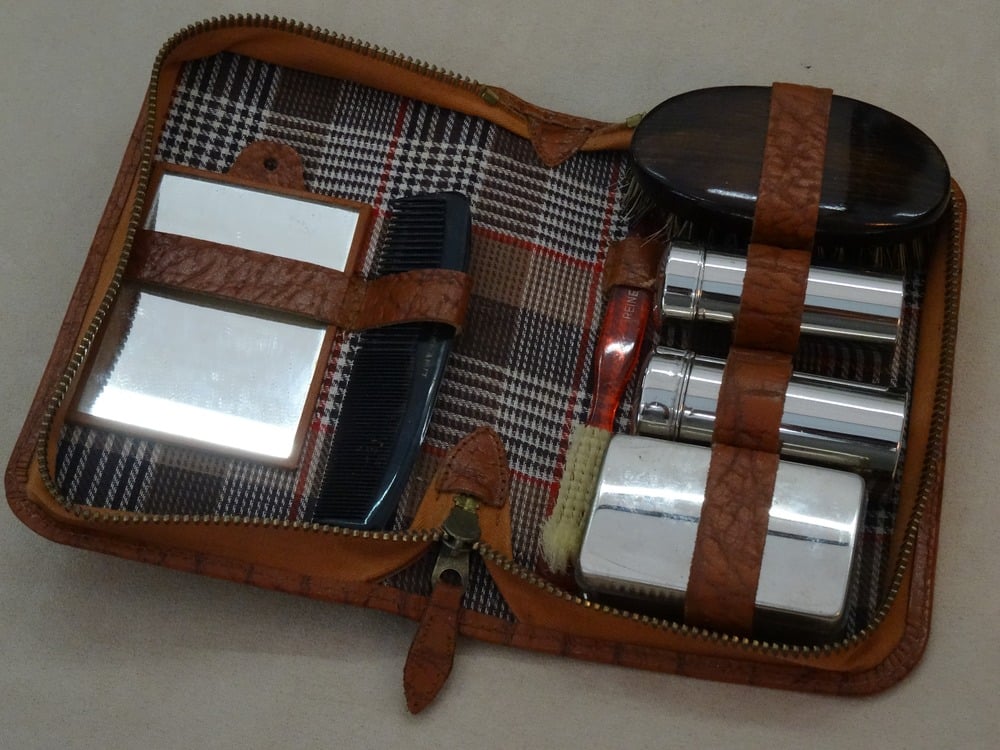
Packing toiletries once required considerably less arithmetic. Bottles did not have to be squeezed into the tiny liquid limits familiar to modern travelers, making an old-fashioned toiletry kit like this perfectly ordinary carry-on material. Restrictions on liquids arrived years after 9/11, following the disrupted 2006 transatlantic liquid-explosives plot. The modern airport rulebook accumulated in layers rather than appearing all at once.
7. Paper Tickets and Ticket Jackets
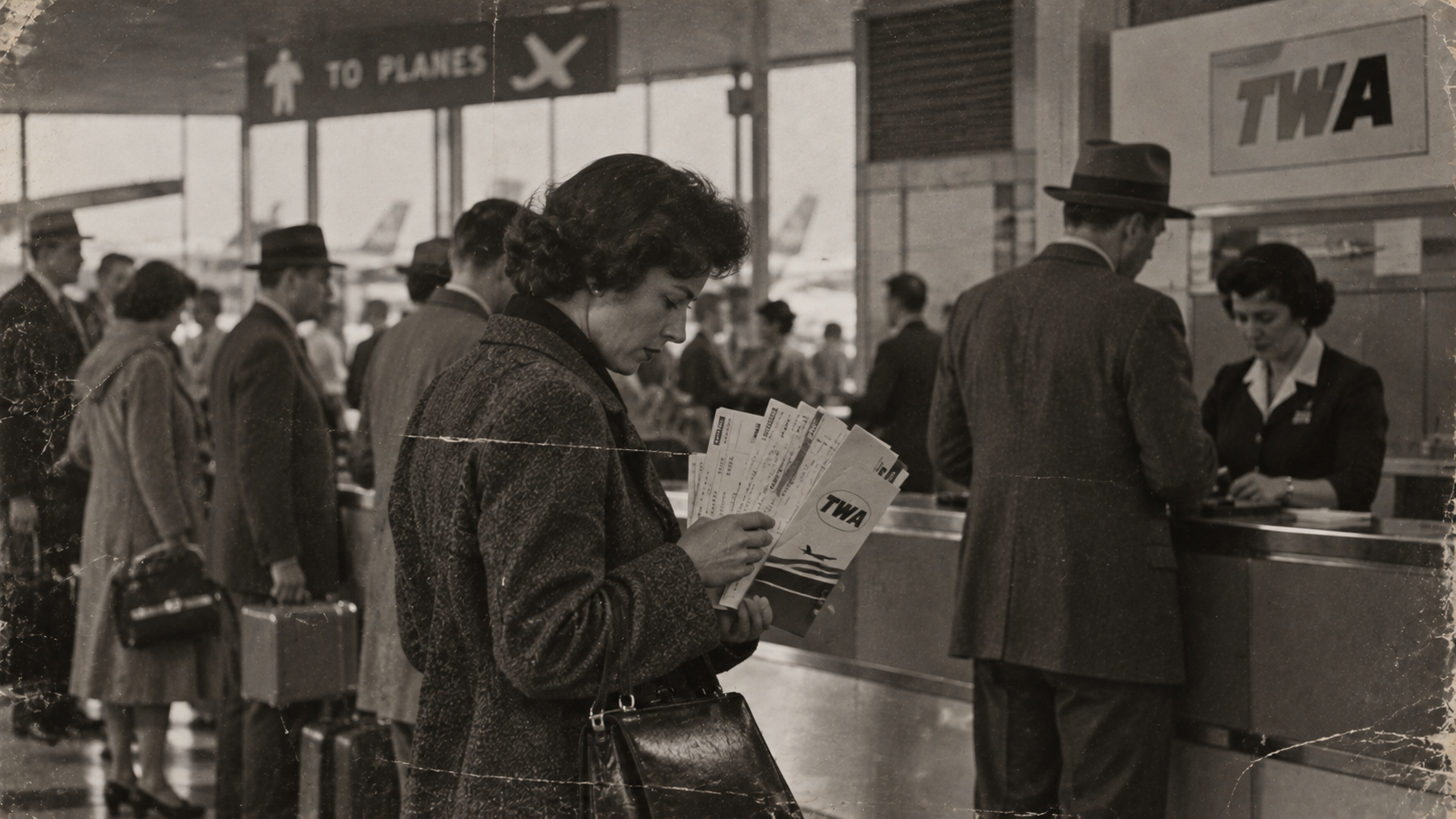
Before boarding passes lived inside phones, air travel produced an impressive little stack of paper. Tickets, boarding cards, and airline-branded jackets were tangible parts of the journey, sometimes tucked carefully into purses or jacket pockets for the entire trip. Losing one could create genuine panic. Today, the same information can disappear when a phone battery hits zero, so perhaps some forms of travel anxiety simply changed format.
8. Ticket Counters Packed With Human Agents
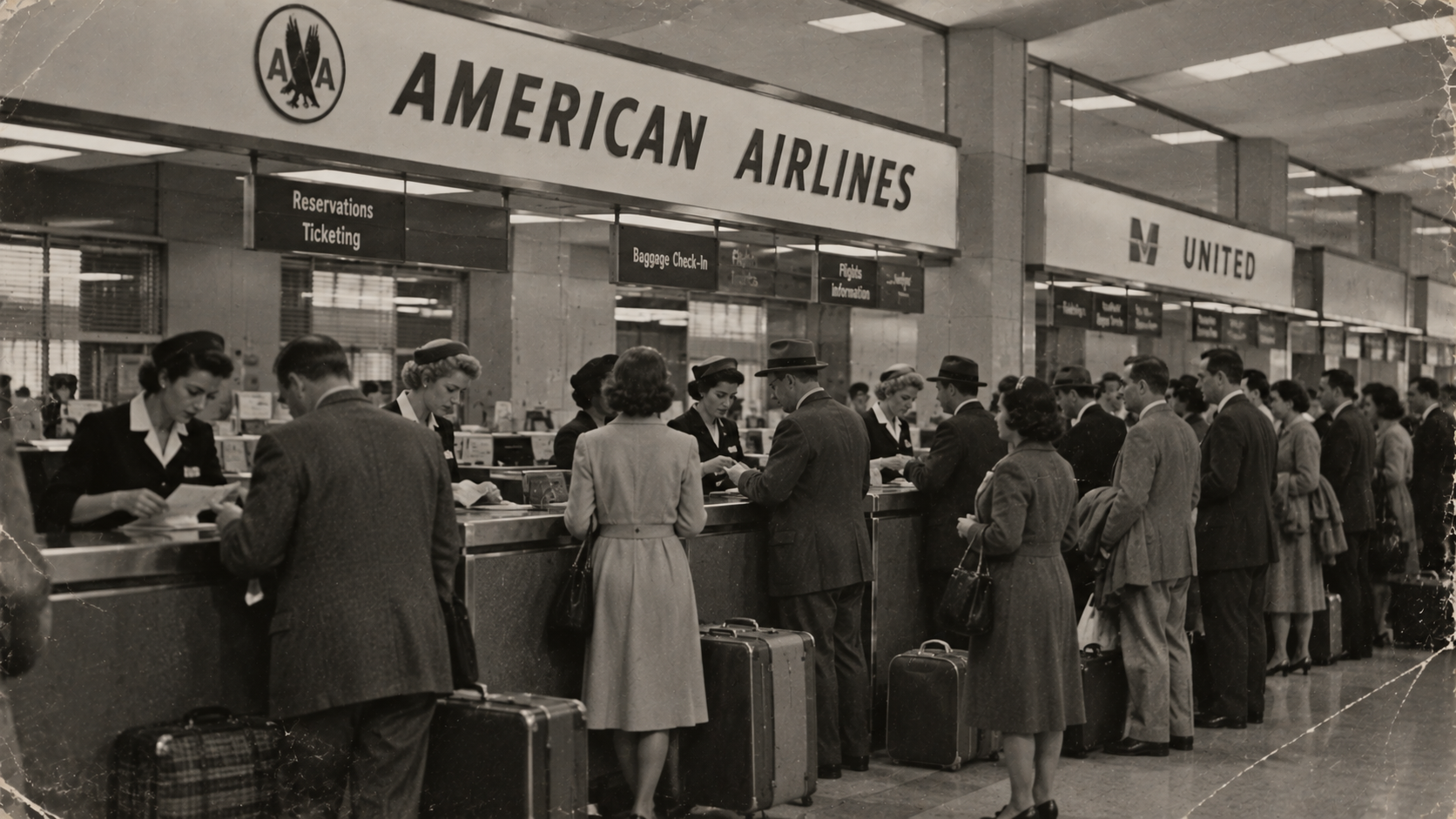
Rows of staffed airline counters once dominated the front of the terminal. Travelers checked in with an actual person, handed over luggage, collected paper documents, and asked questions face-to-face. Self-service kiosks, online check-in, and airline apps gradually changed that landscape. A busy old counter therefore captures more than vintage interior design; it shows an airport built around human transactions rather than screens and self-service.
Sign up for our newsletter
9. Curbside Check-In With Minimal Barriers
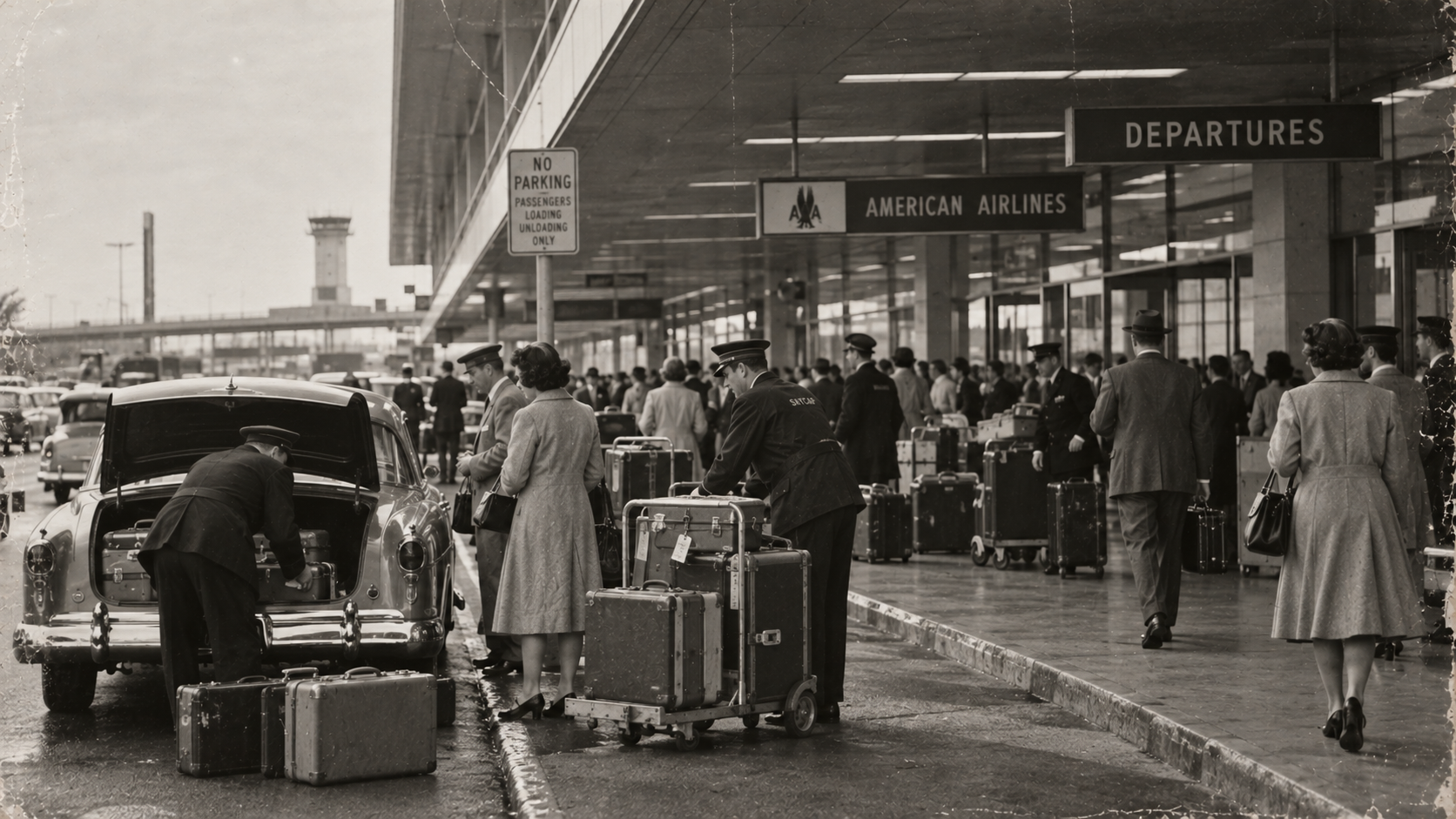
The curb outside the terminal once looked more like a hectic loading zone. Skycaps handled luggage while cars, carts, travelers, and piles of suitcases crowded surprisingly close to terminal entrances. Would that jumble of unattended-looking bags attract a little more attention today? Modern curbside security is more layered, which makes vintage scenes of baggage sitting casually beside the roadway especially revealing.
10. Smoking Areas Inside the Terminal
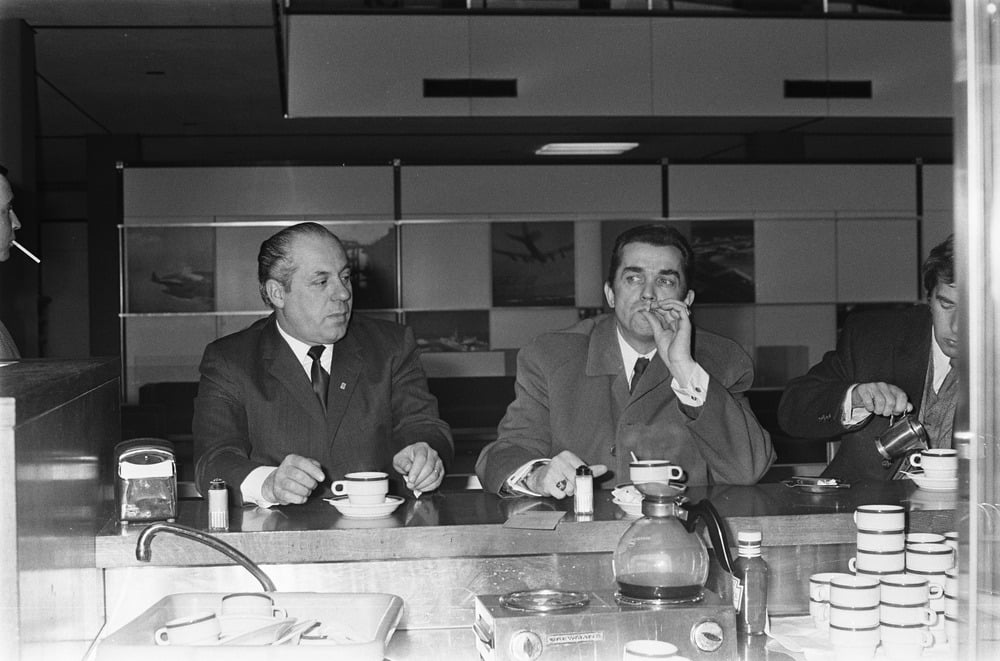
Airports before 9/11 were also airports from an era when lighting a cigarette indoors could be completely unremarkable. Designated smoking areas existed in many terminals, and older photographs sometimes show passengers smoking over coffee while waiting for flights. The cigarette in this image dates the scene almost as effectively as the suits and décor. Security was not the only cultural force transforming the airport experience.
11. Smoking Sections on Airplanes
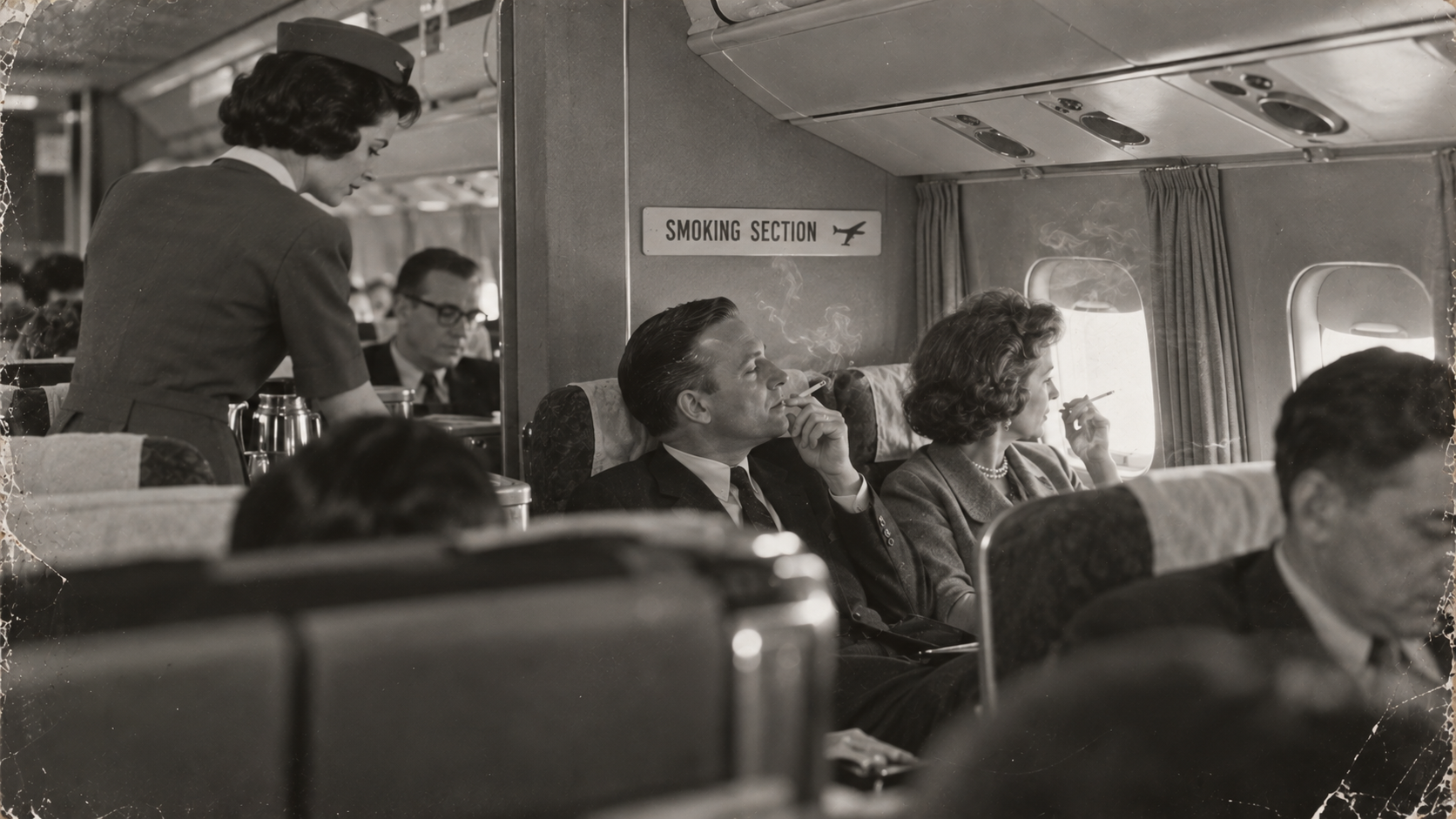
The smoke did not necessarily stop at the gate. Aircraft once had designated smoking sections, a concept that sounds almost surreal from the perspective of modern commercial aviation. Importantly, this particular change largely predates 9/11 on U.S. domestic service. The disappearance of onboard smoking is a useful reminder that the old airport experience was already evolving long before security became the defining dividing line.
12. Gate Lounges With Friends Who Weren’t Flying
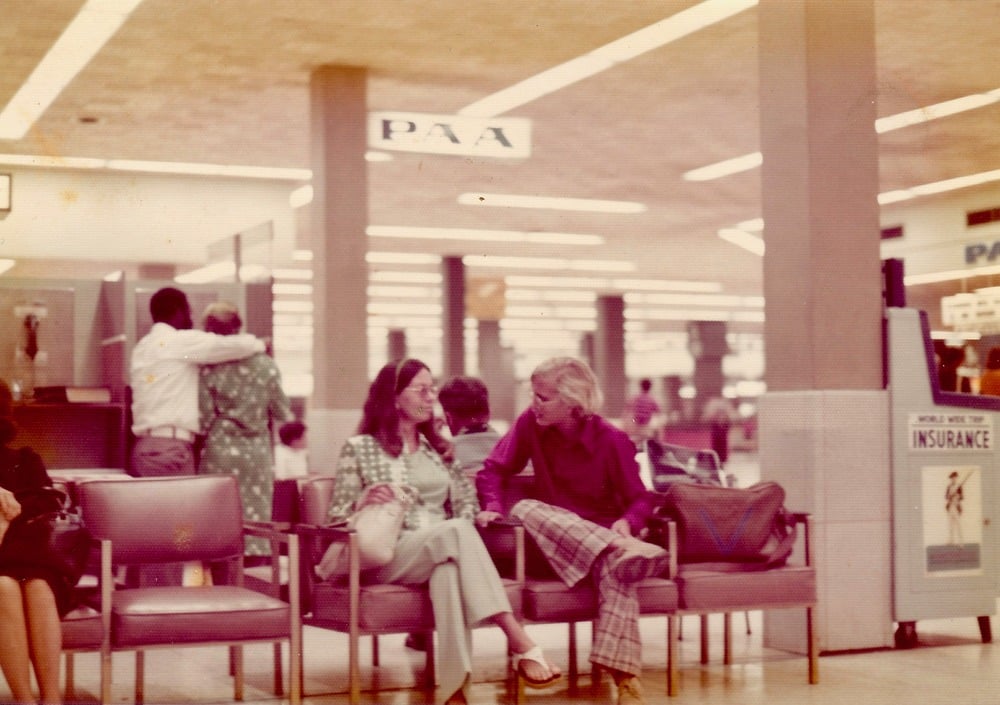
Look closely at an old gate lounge, and not everyone sitting there necessarily had a boarding pass. Friends and family could often remain with passengers through the wait and much of the boarding process. That made gate areas far more socially mixed than they are today. It raises a curious question: without a flight to catch, how many people today would voluntarily spend an hour sitting at Gate 23 just to keep someone company?
13. Small Knives Were Not Universally Banned
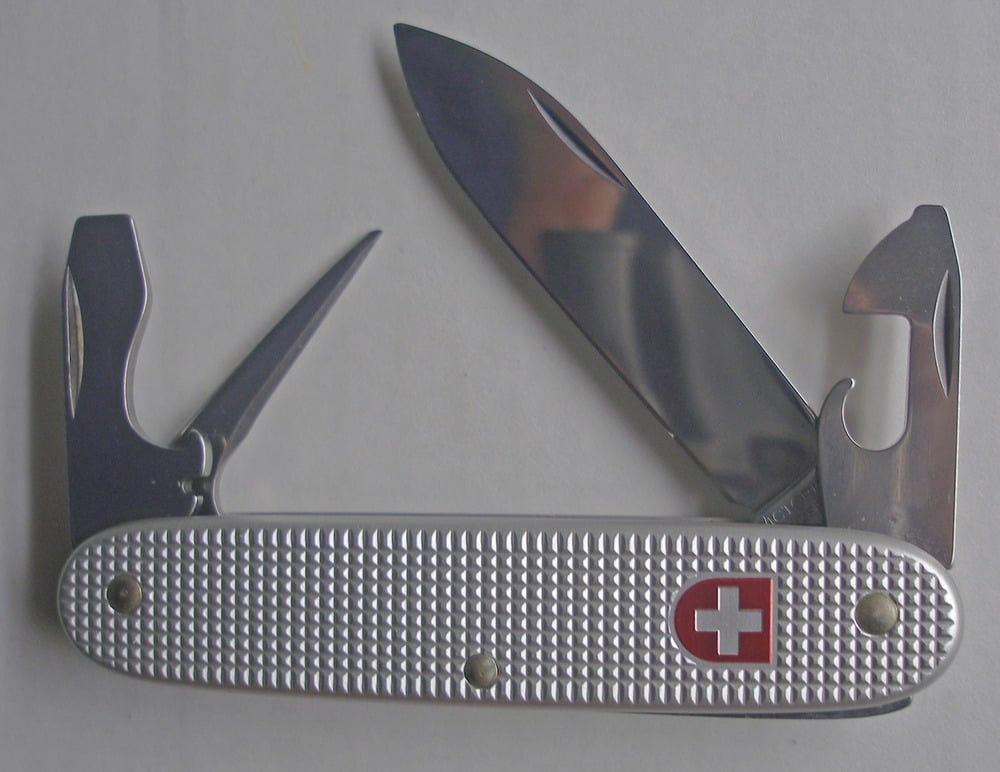
Here is a detail that can stop a modern traveler cold: small knives and box cutters were permitted under pre-9/11 rules. TSA’s historical material specifically notes that such items were allowed before the attacks. A pocketknife, therefore, did not automatically carry the airport implications it does today. The rules were built around a very different understanding of aviation threats, making yesterday’s acceptable carry-on item one of today’s obvious security problems.
14. Checked Bags Without Today’s Universal Explosives Screening
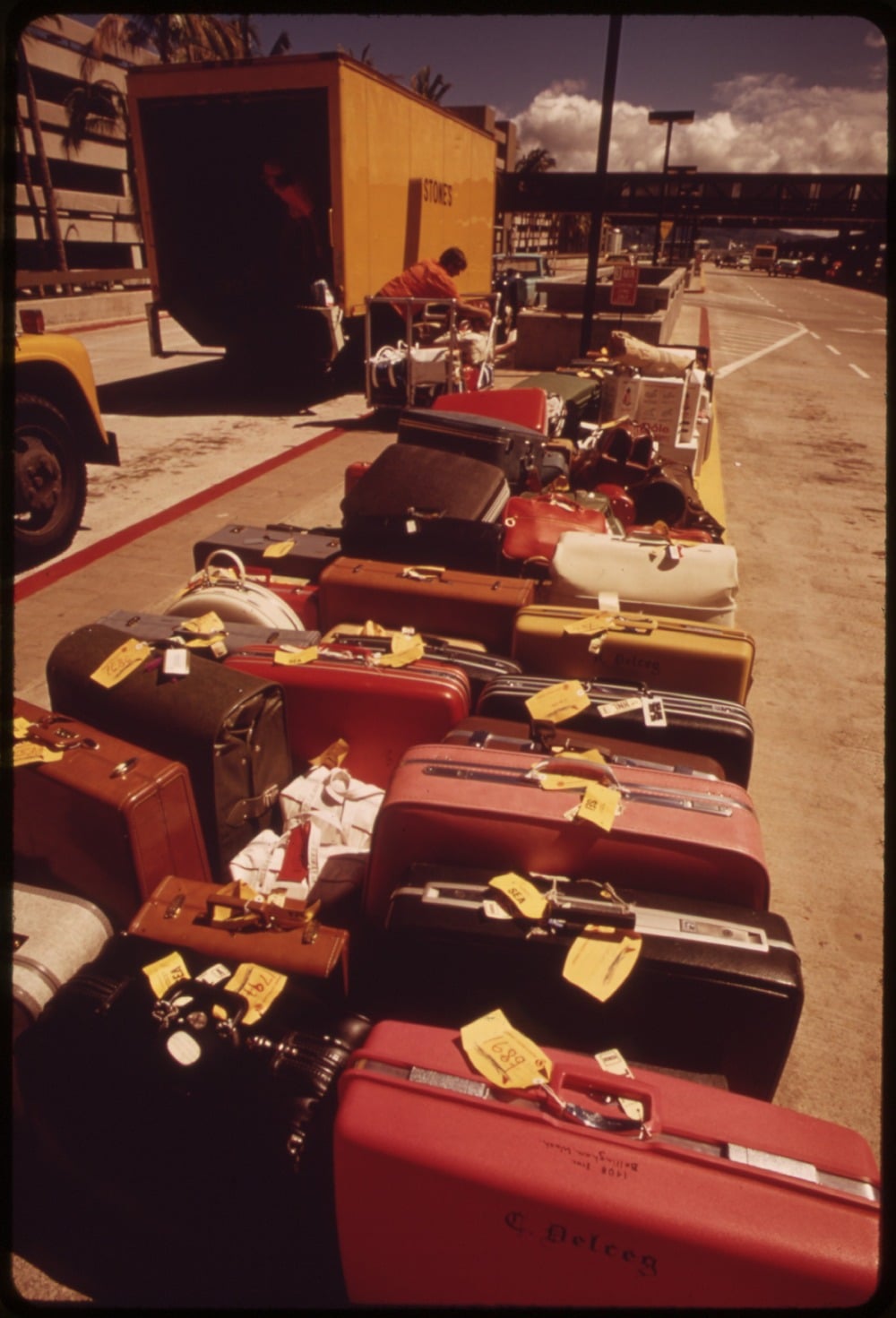
How much of modern airport security happens where passengers never see it? Checked baggage is a perfect example. After 9/11, screening of checked luggage for explosives expanded dramatically, adding a major security layer behind the scenes. The mountains of tagged suitcases in older airport photographs may look familiar, but what happened to those bags after they disappeared from view operated under a different system.
15. Cockpit Doors Before Fortification
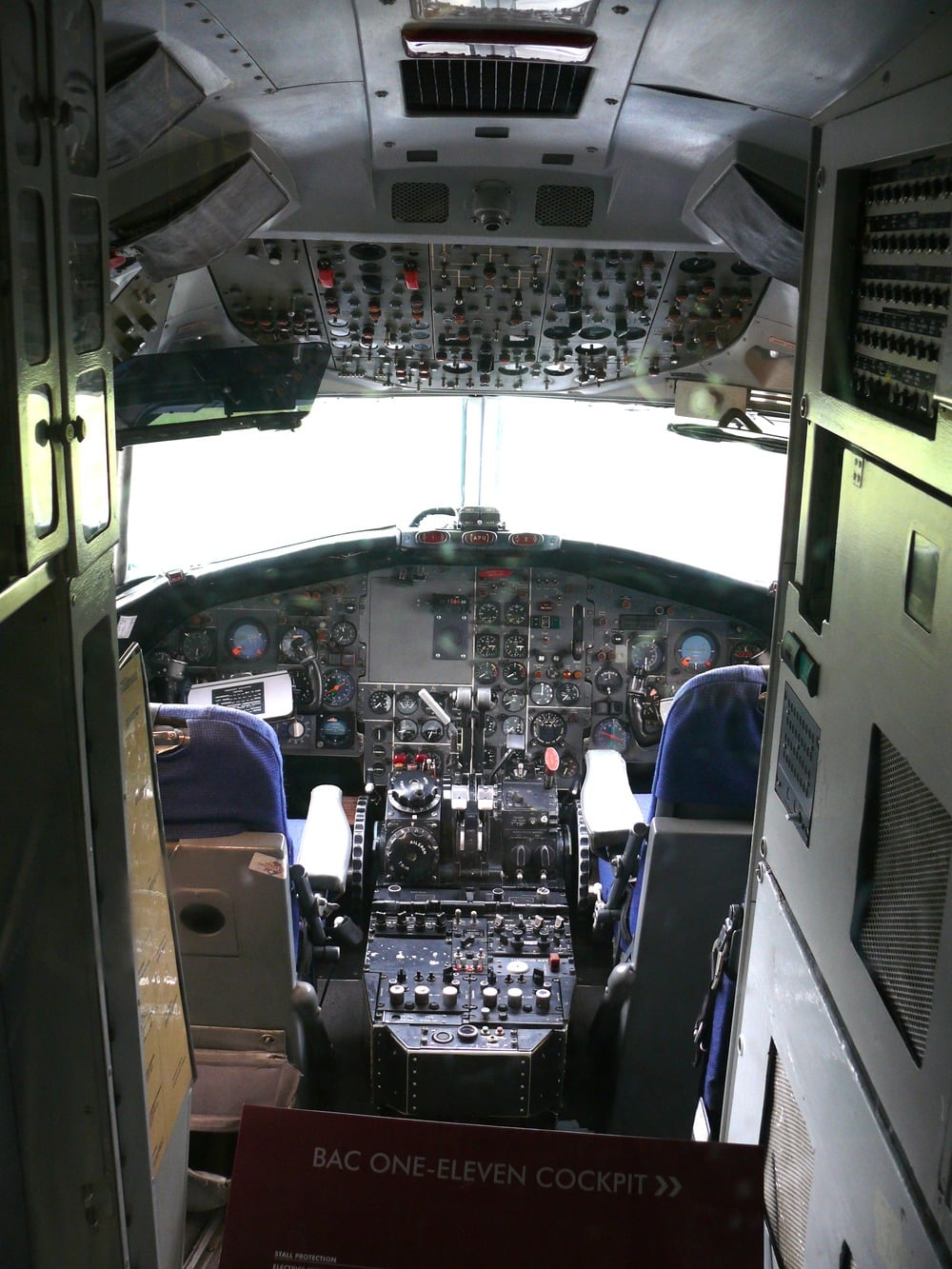
An older aircraft cabin could offer a much less fortified boundary between passengers and the flight deck. That does not mean cockpit doors were simply left open on every flight, but the security model surrounding them was different before 9/11. Reinforced cockpit protections became part of the post-attack transformation. Looking into an older cockpit now feels almost like looking into another philosophy of aviation, one built around threats authorities understood very differently.
16. Airport Police Without the Post-9/11 Security Layering
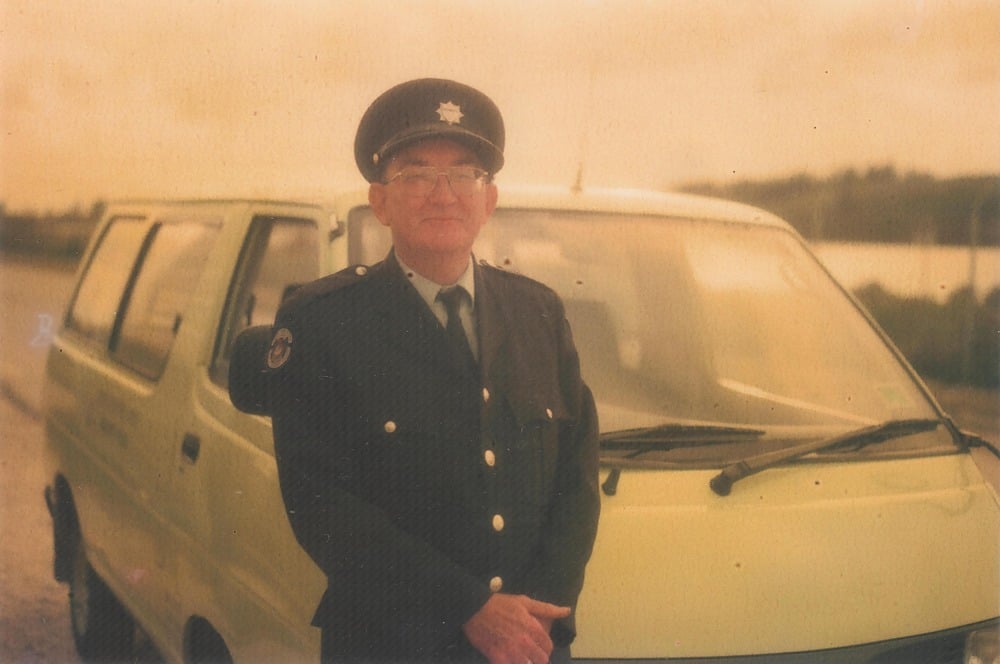
Uniformed security personnel is not a post-9/11 invention either. Airports already had police and security officers, as vintage photographs readily demonstrate. What changed was the number and organization of the layers surrounding aviation security, including the arrival of a federal screening agency. The modern system can involve multiple overlapping forms of protection, making the comparatively straightforward presence of an older airport officer only one piece of a simpler-looking puzzle.
17. Friends Meeting Arrivals at the Jet Bridge Door
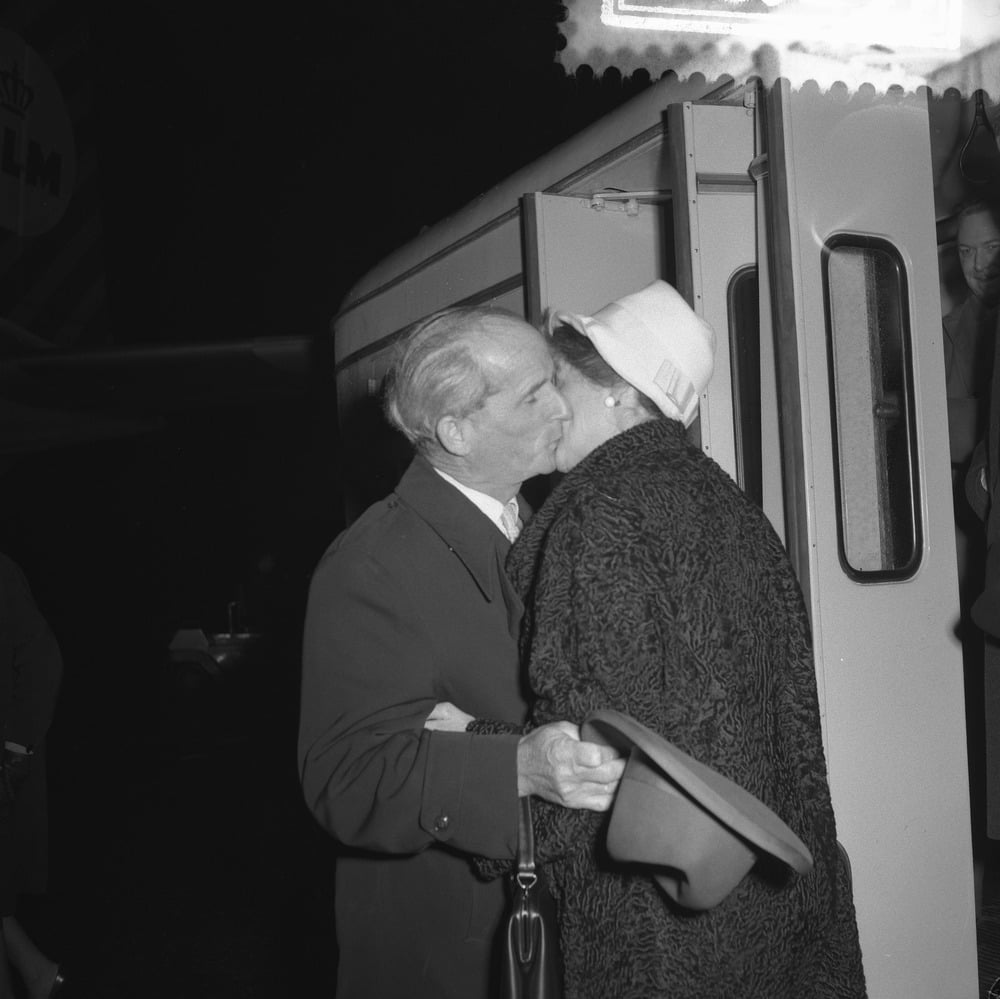
Imagine finishing a long flight, stepping through the jet bridge door, and immediately finding family waiting there. Some airport reunions once happened almost that quickly because non-ticketed visitors could reach the gate. Today, the arriving passenger usually has another terminal trek ahead before the reunion happens. Vintage images of embraces beside aircraft doors capture a small emotional ritual that security restrictions quietly relocated.
18. Baggage Claim as the Second Goodbye
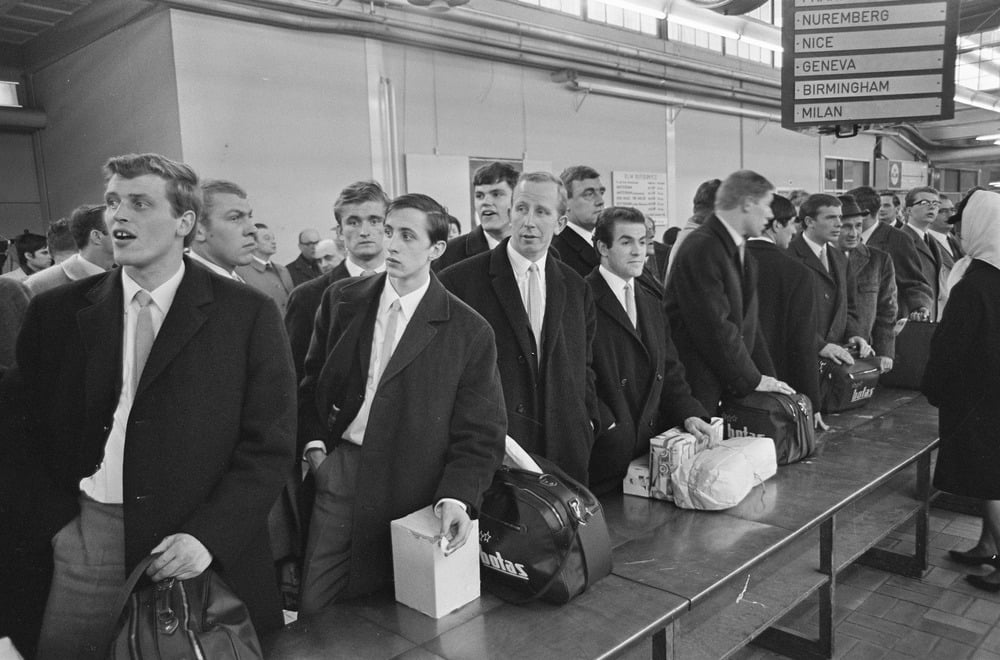
Baggage claim occupied an interesting middle ground. Travelers and non-travelers mixed around the carousel, but it could also become the second stage of a goodbye after companions had already spent time together near the gate. Modern restrictions have shifted much more of that social activity into public arrivals areas. The luggage carousel itself looks familiar in old photographs; who was allowed to accompany travelers before reaching it is where the real difference emerges.
19. Airport Restaurants Beyond Security for Everyone
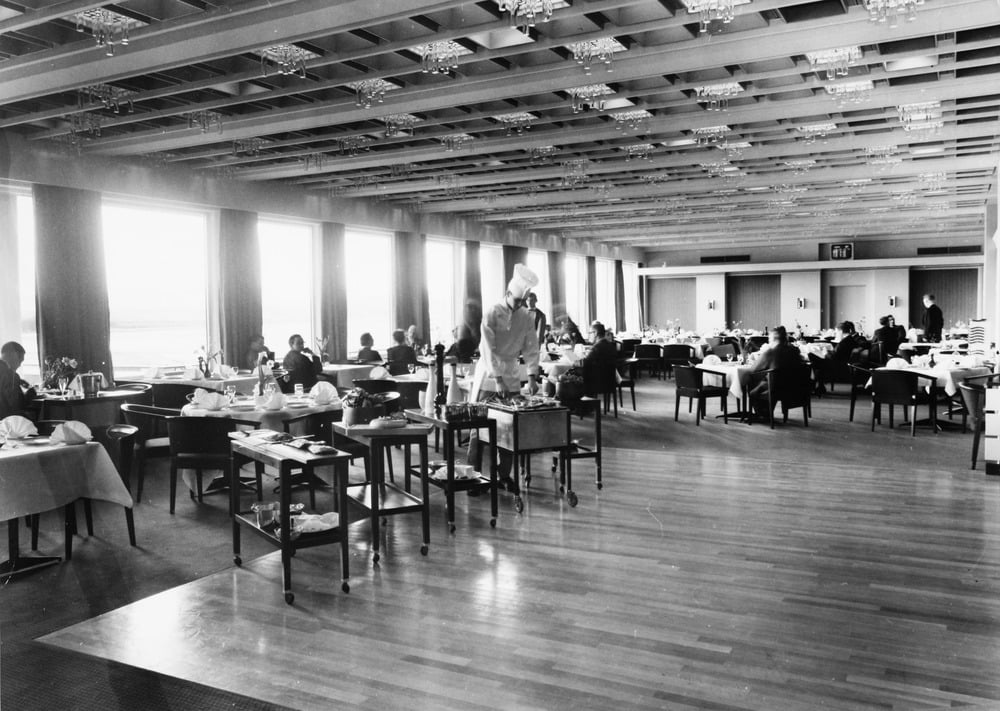
Dinner at the airport did not necessarily require a flight. When visitors had broader access to terminals and gate areas, airport restaurants and bars could serve people who were there to meet travelers, see them off, or simply spend time watching aircraft. Vintage dining rooms could look surprisingly formal too, complete with tablecloths and full service. The airport restaurant was not always merely a place to inhale a sandwich before boarding.
20. The First Post-9/11 Security Lines
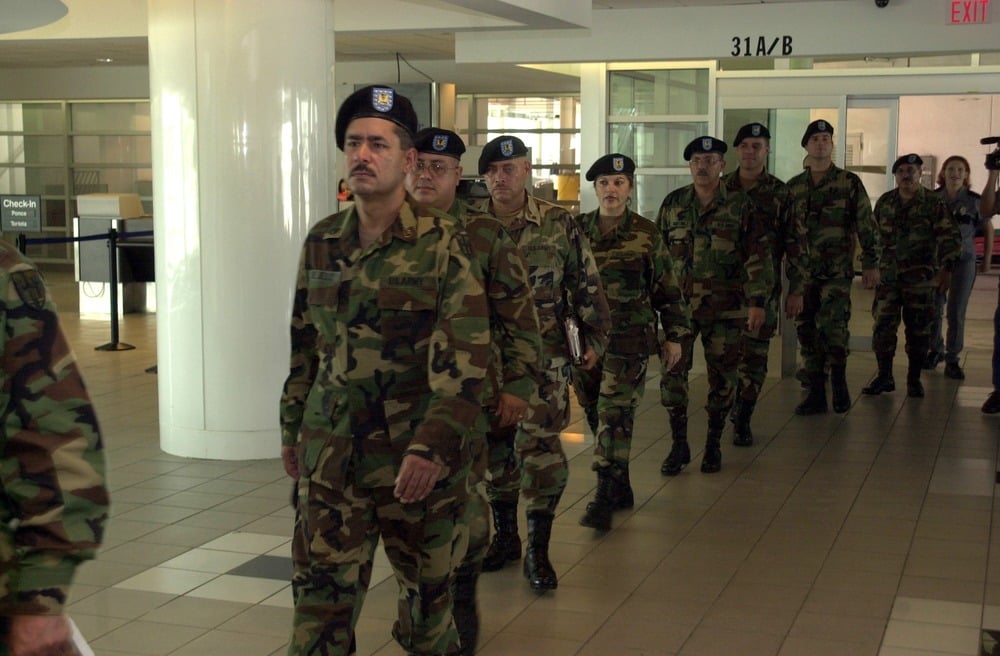
Then the visual language of the airport changed almost overnight. Photographs from late 2001 and 2002 show National Guard personnel, new restrictions, and the emergence of federalized screening, making the divide between eras unusually visible. The Aviation and Transportation Security Act was signed on November 19, 2001, creating the TSA, with federalization rolling out during 2002. The airport had always contained security. After 9/11, security increasingly became the architecture around which the airport experience was organized.
Looking back at these scenes, the biggest difference is not that airports once had no rules. They did. What changed was the scale, visibility, and philosophy of those rules, alongside cultural and technological shifts that transformed everything from smoking to ticketing. That is what makes old airport photos so fascinating: the terminal is instantly recognizable, yet the experience happening inside it belongs to another era.
Keep Exploring The Scroller
The airport is only one familiar place that becomes surprisingly strange when the clock runs backward. Keep exploring The Scroller for more vintage photos, vanished everyday rituals, and glimpses of ordinary life that reveal just how much can change while nobody is keeping score:
20 Largest Airports in the World That Feel Like Entire Cities