World War I trench inventions were often far simpler than the machines usually associated with the conflict. Along the Western Front and elsewhere, soldiers faced problems that were brutally ordinary: mud, collapsing walls, darkness, lice, broken communication lines, exposure to snipers, and days spent in wet clothing.
Many solutions relied less on technological breakthroughs than on adaptation. Wooden boards kept boots out of standing water. Mirrors made observation safer. Fabric offered early protection against gas. Animals carried messages when wires failed. The ingenuity of trench warfare was often found in small responses to immediate problems, where even a modest improvement could make daily survival more manageable.
1. Problem: Trenches Filled With Mud | Solution: Duckboards
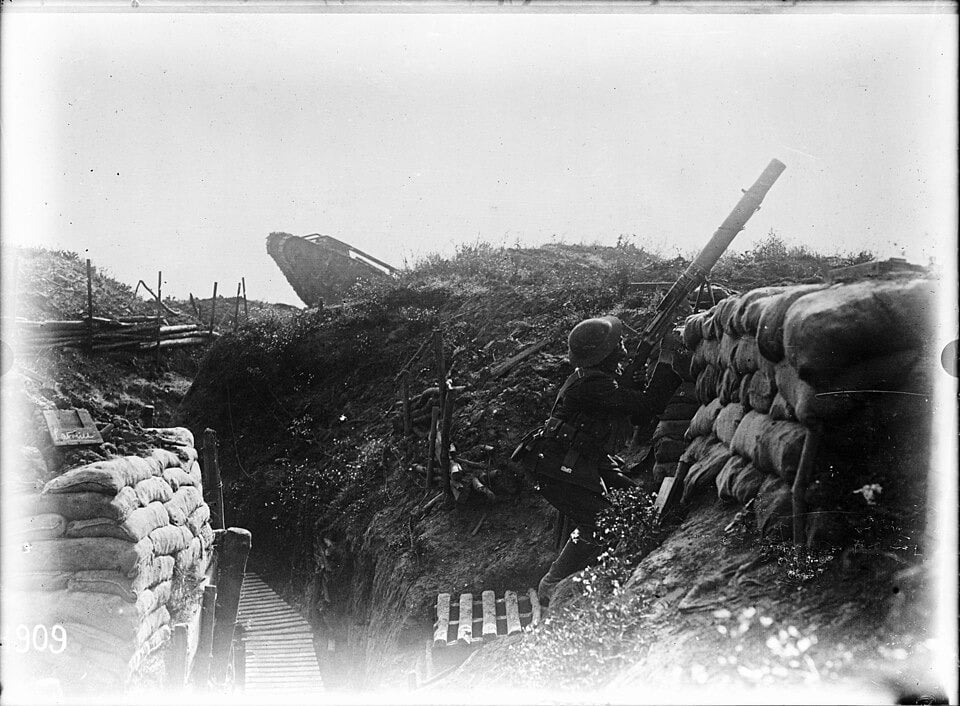
Water collected easily in trenches, turning their floors into deep mud and leaving soldiers’ feet wet for prolonged periods. Wooden duckboards provided a remarkably basic answer: raised walkways that kept men above some of the standing water while giving them firmer footing. They did not make trench conditions comfortable, but they reduced constant immersion, one of the conditions associated with trench foot.
2. Problem: Walls Collapsed | Solution: Sandbags and Woven Revetments
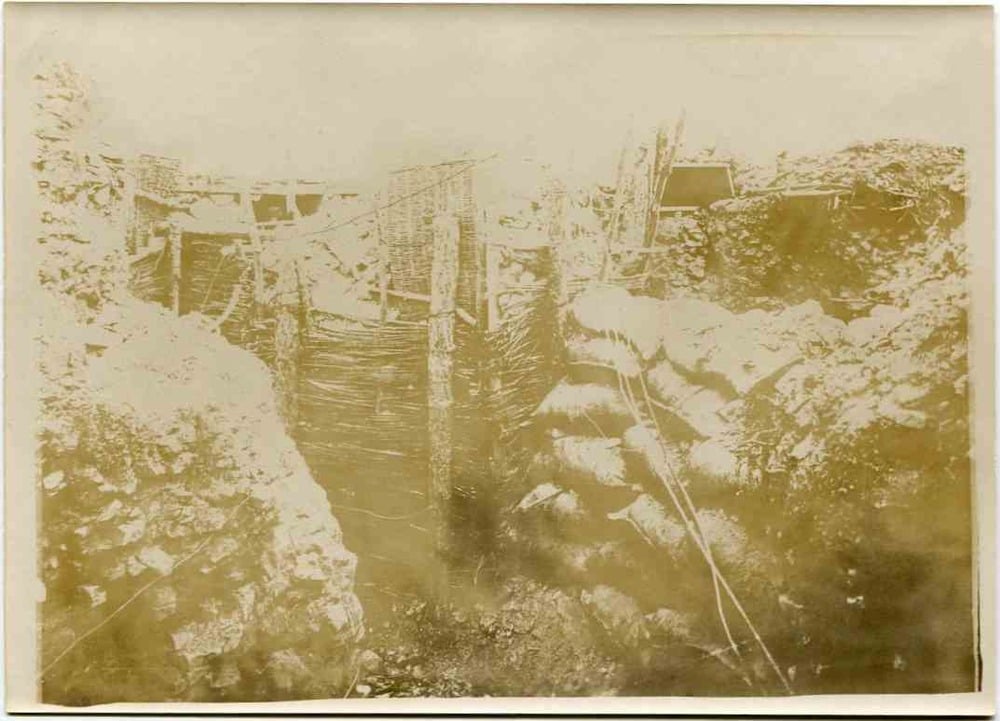
A trench was only useful as long as its walls remained standing. Rain, unstable soil, and battlefield damage could cause the sides to crumble, so troops reinforced them with materials that were relatively easy to transport and replace. Sandbags became one of the most recognizable features of trench warfare, while timber and woven hurdles helped hold earth in place and strengthen parapets.
3. Problem: Looking Over the Parapet Could Get You Shot | Solution: Periscopes
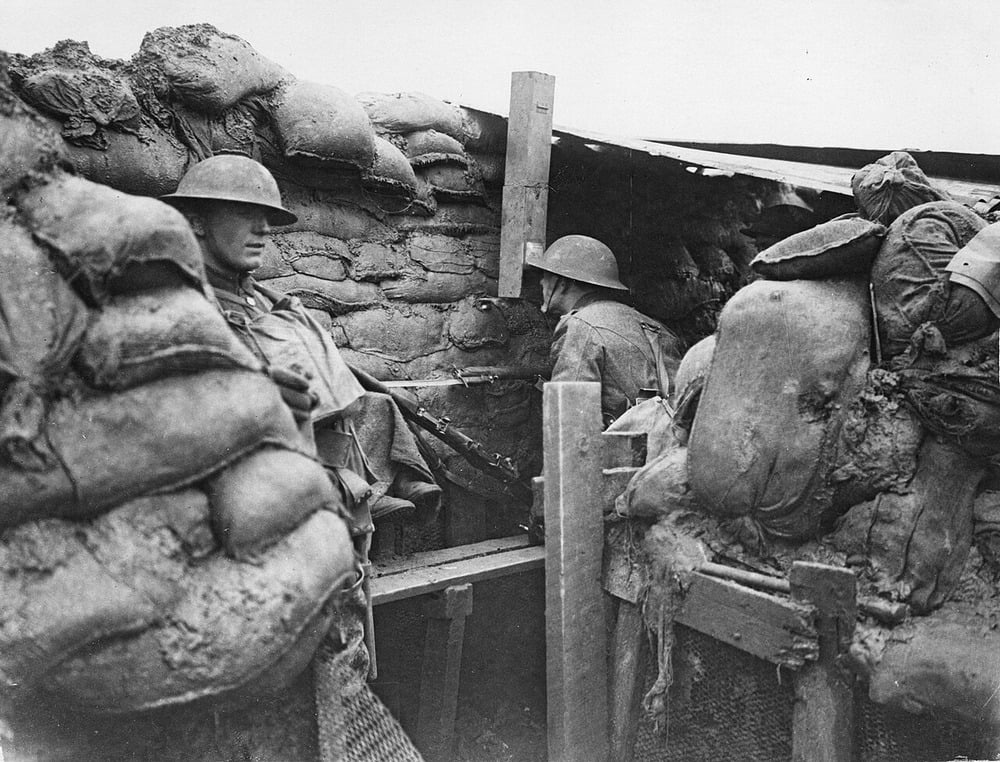
Observation created a deadly contradiction: soldiers needed to know what was happening beyond the trench, but raising a head above the parapet could expose it to enemy snipers. The trench periscope solved much of that problem with mirrors. A soldier could remain below cover while looking across no-man’s-land, turning a familiar optical principle into a practical battlefield safeguard.
4. Problem: Firing Exposed the Shooter | Solution: Periscope Rifles
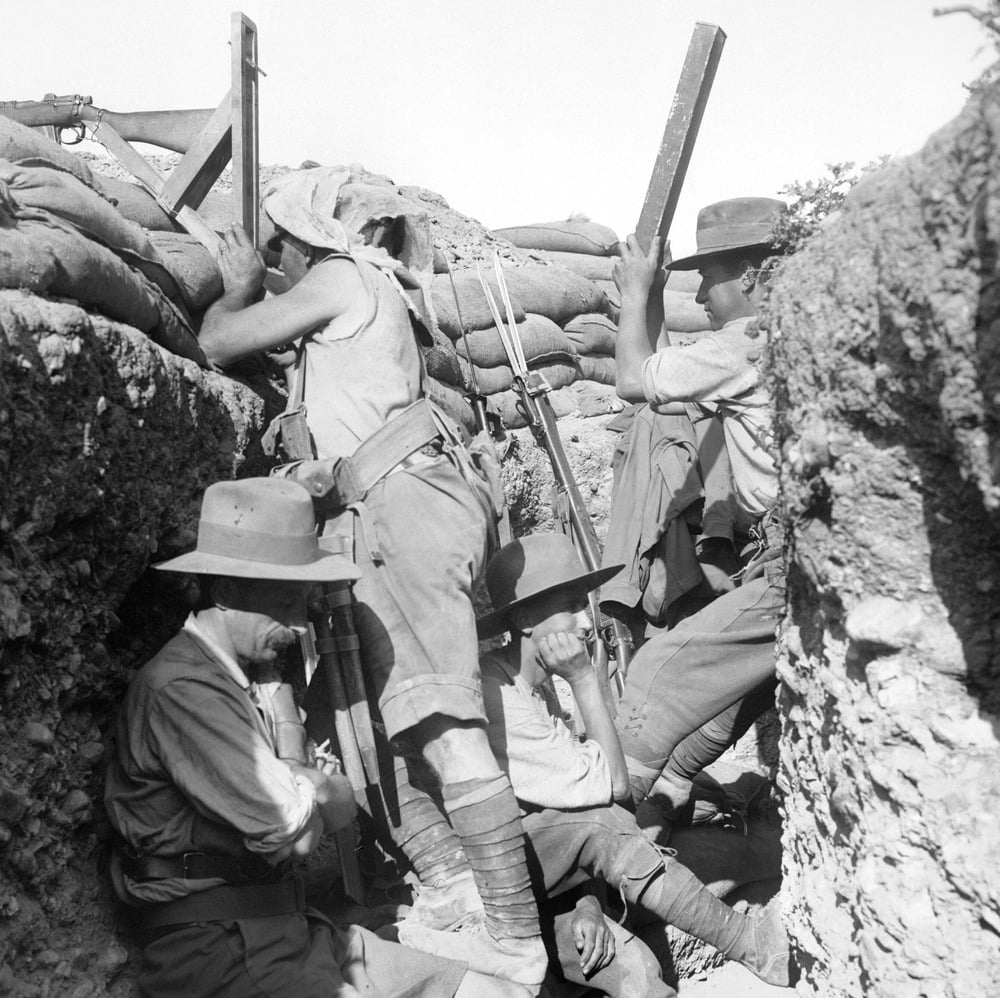
At Gallipoli, soldiers pushed the same principle further. What if a rifle could be aimed while its operator remained below the trench edge? Periscope rifles allowed troops to do precisely that, using an adapted arrangement that let the soldier sight and fire without assuming the normal exposed firing position. The Anzac Portal specifically documents Lance Corporal William Beech’s 1915 example.
5. Problem: Poison Gas Arrived Fast | Solution: Loud Rattles and Gongs
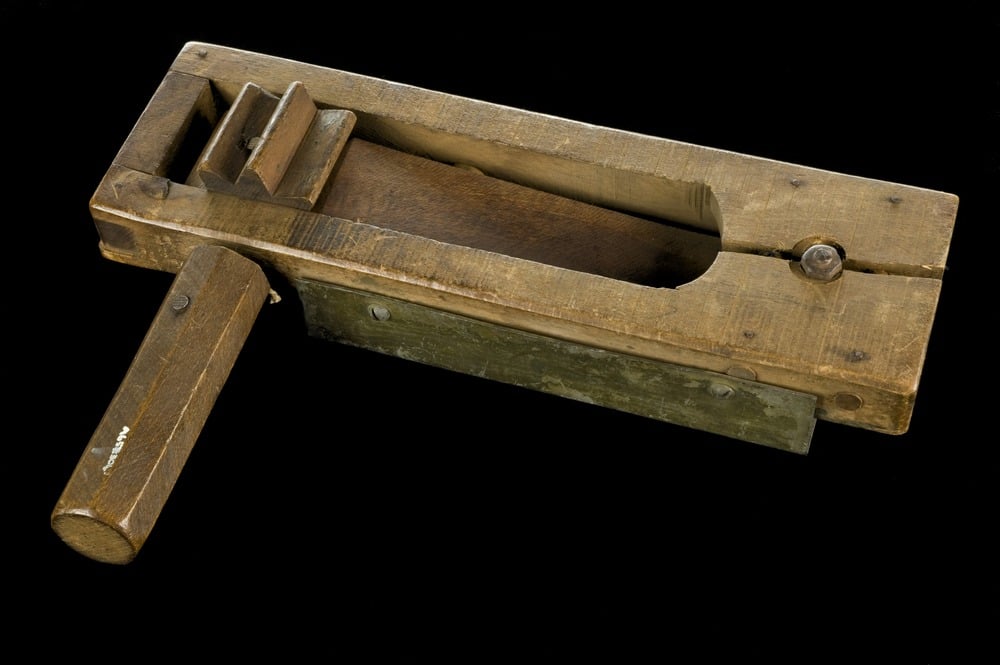
Chemical warfare created a problem measured in seconds. Once gas was detected, troops needed a warning that could travel quickly through a noisy battlefield without electricity or a complicated communication system. Mechanical rattles, bells, gongs, horns, and similar alarms produced distinctive sounds that signaled soldiers to put on protective equipment. The devices were simple because the message had to be unmistakable: gas was coming.
Trending on The Scroller
6. Problem: Early Gas Protection Was Scarce | Solution: Treated Fabric Hoods
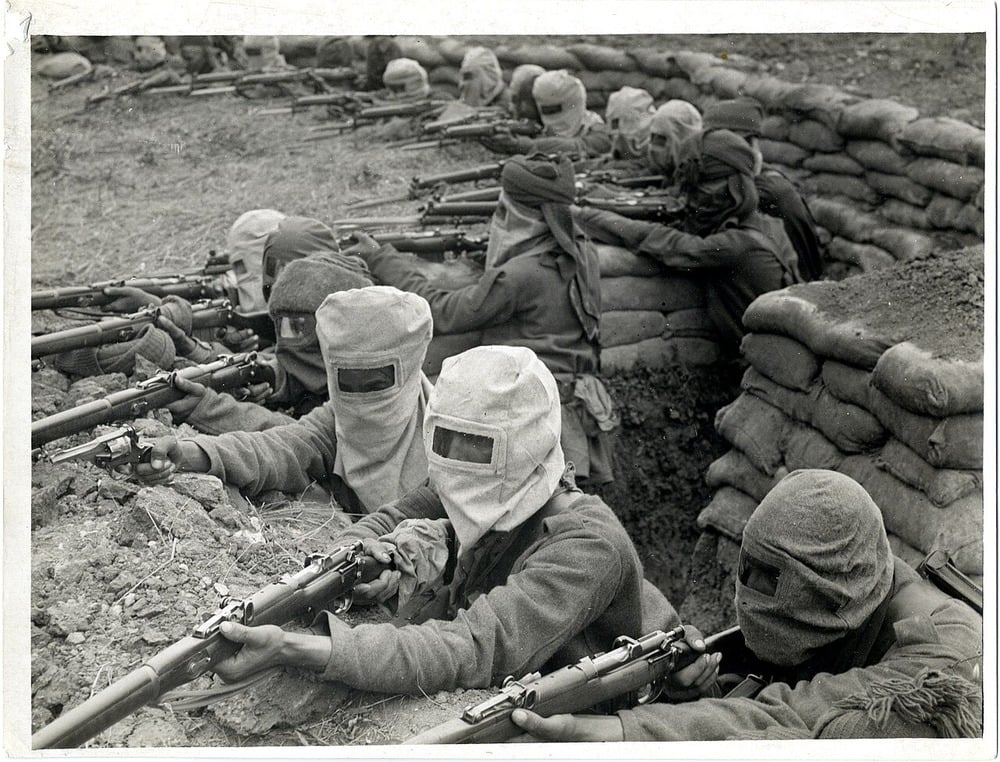
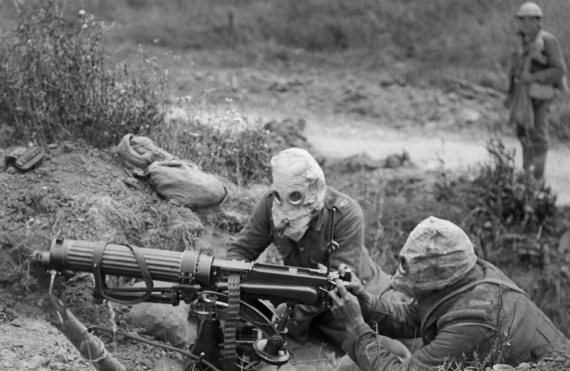
Before increasingly sophisticated respirators appeared, armies needed something that could be produced and issued quickly in response to chemical attacks. Early protective equipment included chemically treated fabric helmets or hoods, creating a barrier between the wearer and contaminated air. Photographs of troops wearing these coverings can look primitive today, but they represent an early stage in the rapid evolution of wartime respiratory protection.
7. Problem: Shrapnel Hit Heads From Above | Solution: Steel Helmets
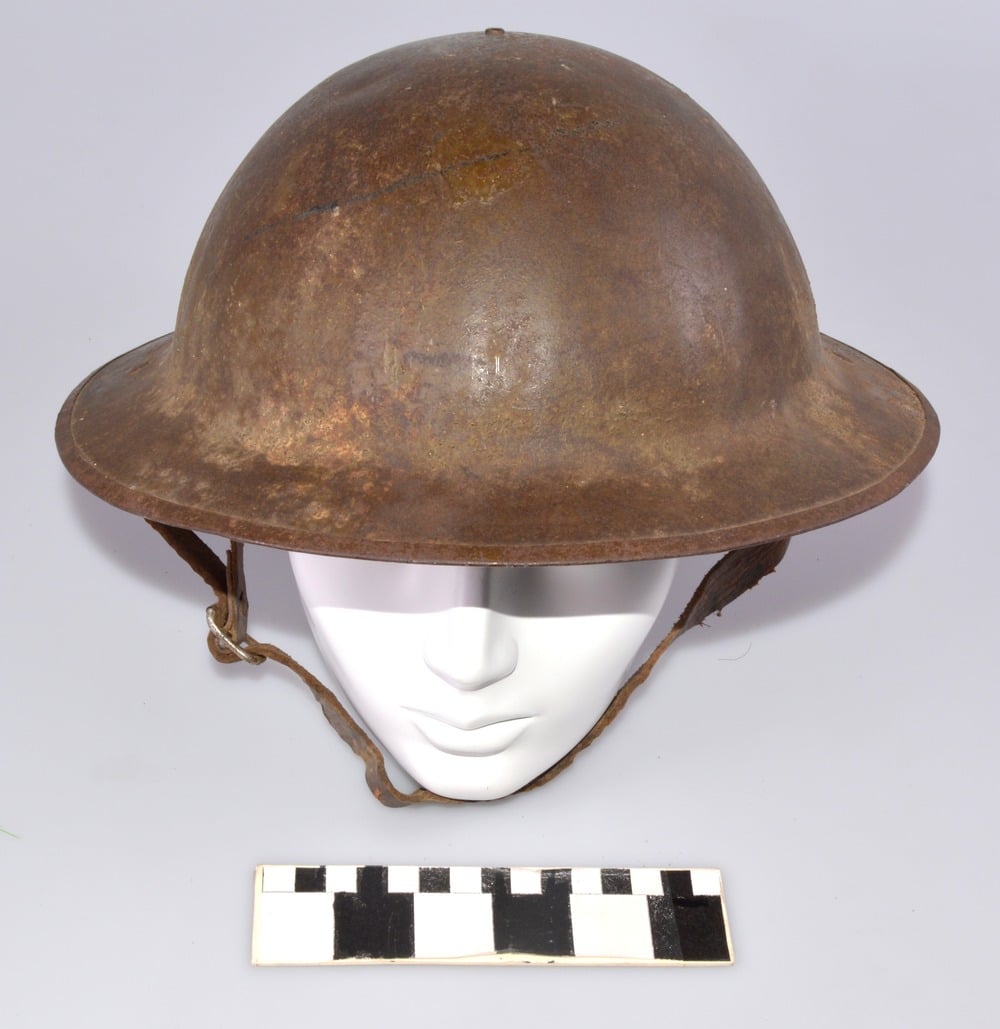
Soldiers entered World War I wearing headgear that offered little protection from battlefield debris. As trench warfare produced large numbers of head wounds, armies adopted steel helmets such as the French Adrian, British Brodie, and German Stahlhelm. Their designs differed, but the reasoning was similar: a comparatively simple layer of steel could provide protection against fragments and debris striking one of the body’s most exposed areas. 04_WWI_Simple_Solutions_SEO_Res…
8. Problem: Water-Soaked Feet for Days | Solution: Foot Rotations and Dry Socks
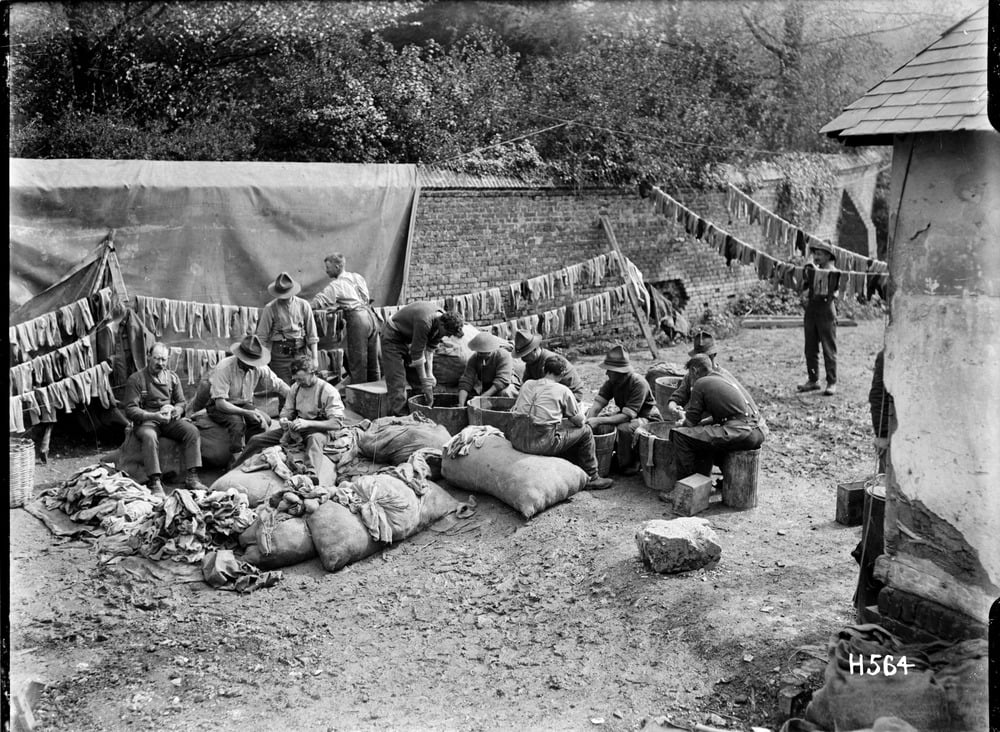
Not every important trench solution was a piece of equipment. Soldiers living in persistently wet conditions faced trench foot, making basic routines around foot care essential. Armies responded with practices that included changing socks, drying feet, inspections, and attempts to limit prolonged wet exposure. Could something as ordinary as a dry pair of socks matter in an industrial war? Under trench conditions, it could become part of the effort to keep soldiers fit for duty.
Sign up for our newsletter
9. Problem: Trenches Needed Heat | Solution: Small Braziers and Stoves
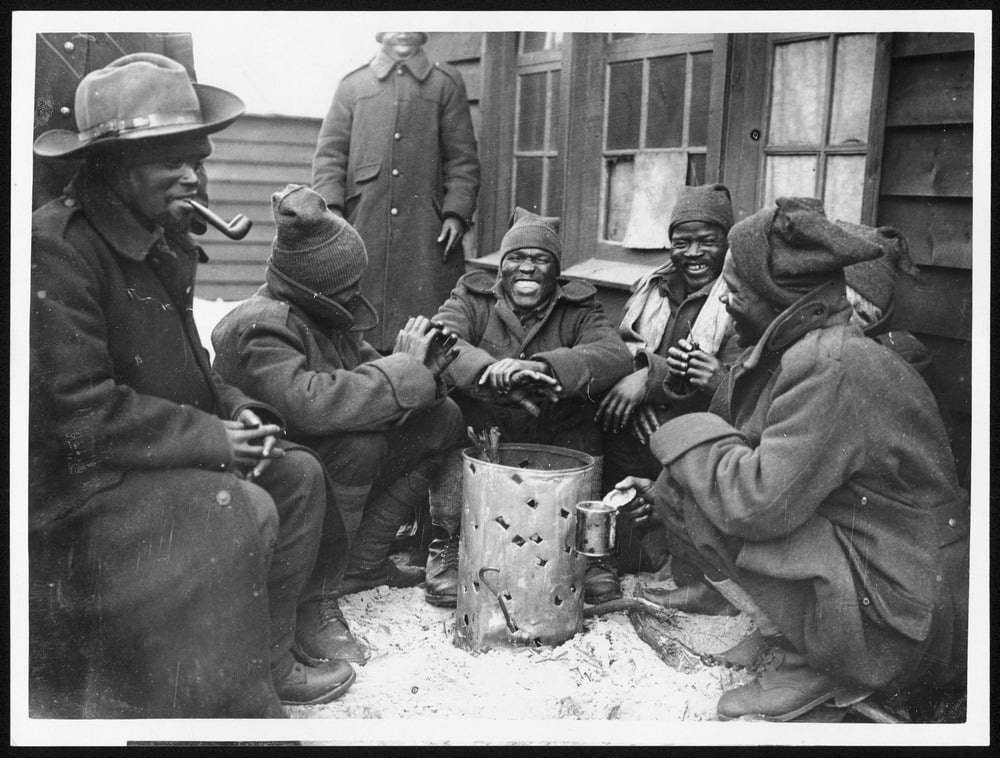
Cold compounded almost every other hardship of trench life. Small braziers and improvised stoves offered limited warmth inside dugouts and could also provide hot water, without requiring the sort of large, exposed fire that was impractical near enemy positions. The historical photograph accompanying this entry captures the modest scale of the solution: several soldiers gathered around a small metal brazier, extracting what warmth they could from a compact heat source.
10. Problem: Night Work Needed Low Light | Solution: Shielded Candles and Lamps
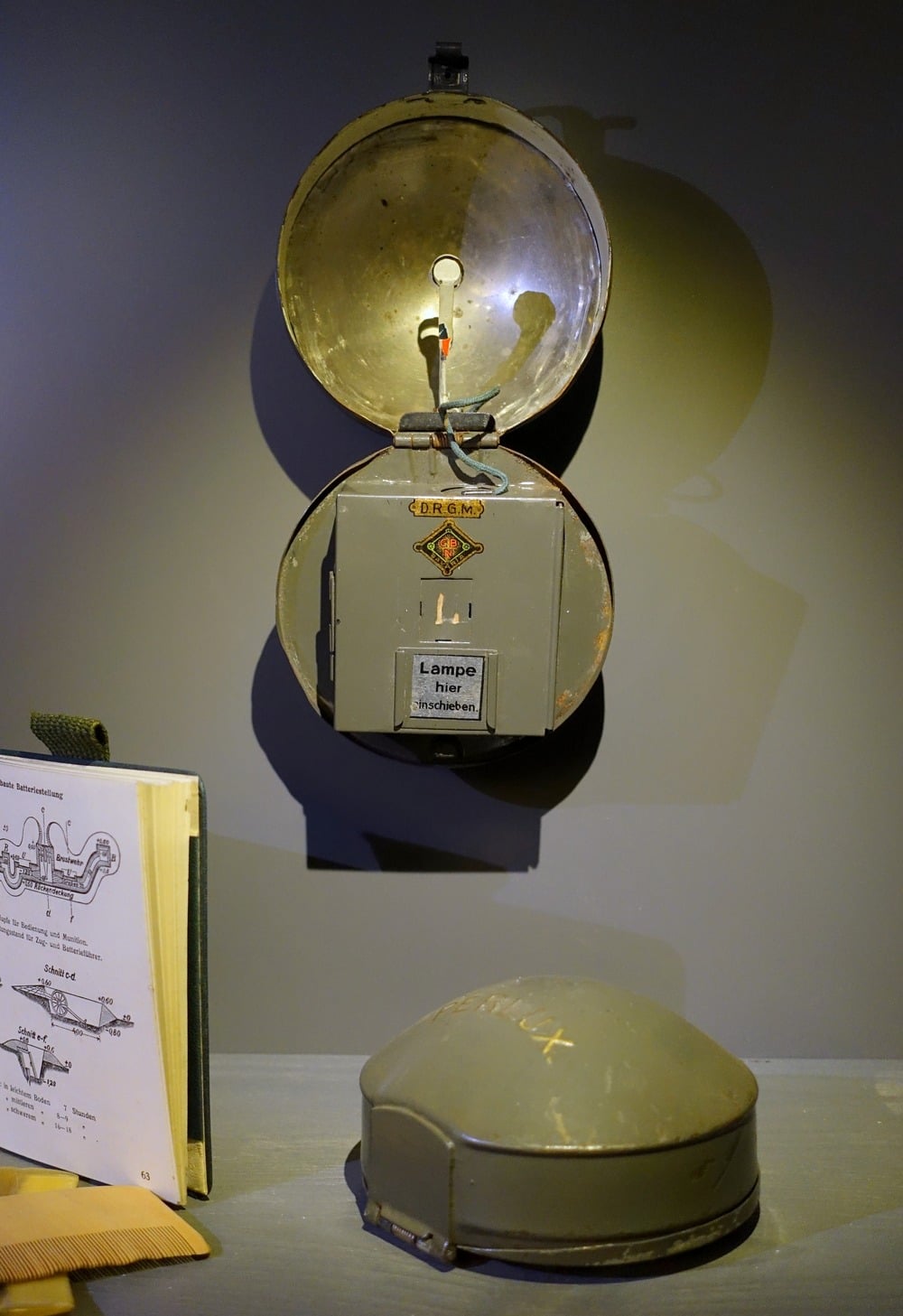
World War I trench inventions did not need to be mechanically complicated to solve a dangerous problem. Soldiers still had to work, move, read, and organize equipment after sunset, yet visible light could reveal a position to the enemy. Small lamps and candles used within dugouts offered necessary illumination, while shielding helped prevent that light from becoming an unintended signal across the battlefield.
11. Problem: Uniforms and Bedding Crawled With Lice | Solution: Delousing Stations
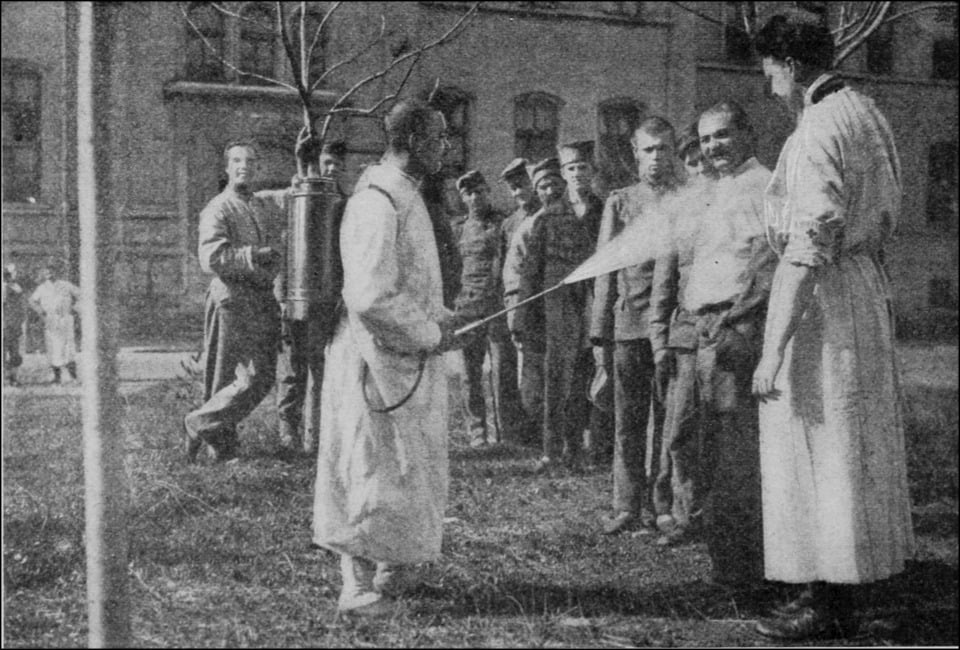
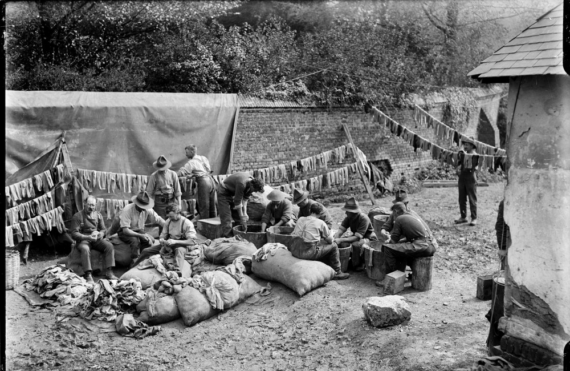
Lice were an enduring feature of trench life, infesting clothing and bedding despite soldiers’ efforts to remove them. Individual troops manually picked them from seams in a practice sometimes called “chatting,” but armies also developed larger-scale delousing routines. Hot water, steam, and clothing treatments attacked the infestation more systematically, turning hygiene into another logistical problem that had to be managed behind the lines.
12. Problem: Messages Couldn’t Depend on Telephone Wires | Solution: Carrier Pigeons
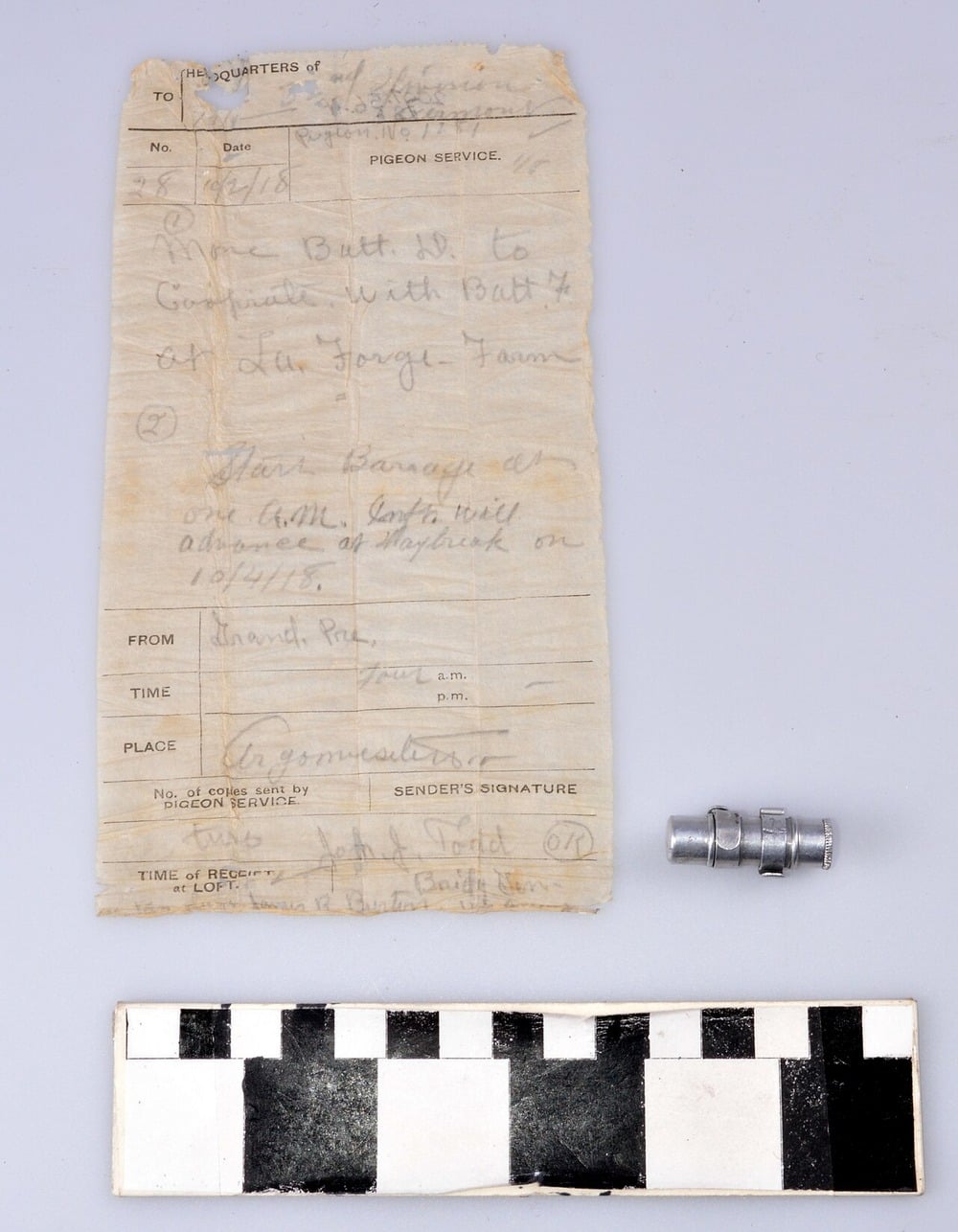
Telephone lines provided valuable communication until shellfire cut them. When that happened, an ancient messenger acquired renewed military importance. Carrier pigeons could transport written messages one way between positions when conventional communications failed. Surviving artifacts, including pigeon-service message forms and small message containers, show how a very old method of communication remained useful in a war filled with modern machinery.
13. Problem: Runners Were Vulnerable | Solution: Message Dogs
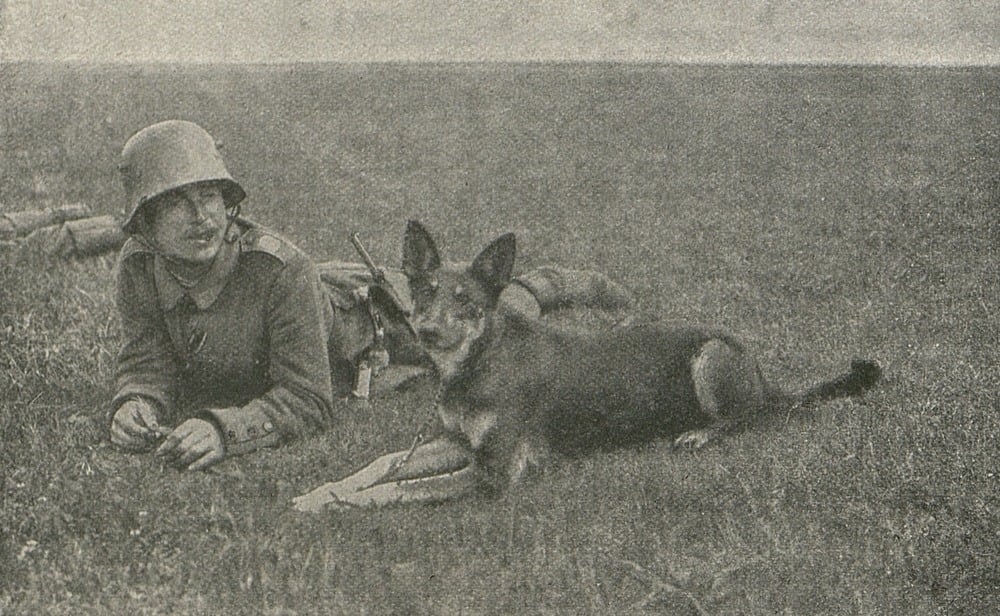
Human runners could carry information where telephone wires could not, but crossing exposed or damaged ground placed them in considerable danger. Trained message dogs offered another option. In some circumstances, they could move between positions faster and less conspicuously than a person. The solution depended not on a new machine but on training an animal to perform a specific battlefield communication role.
14. Problem: Soldiers Needed to Tell Friend From Foe at Night | Solution: Passwords and Recognition Signals
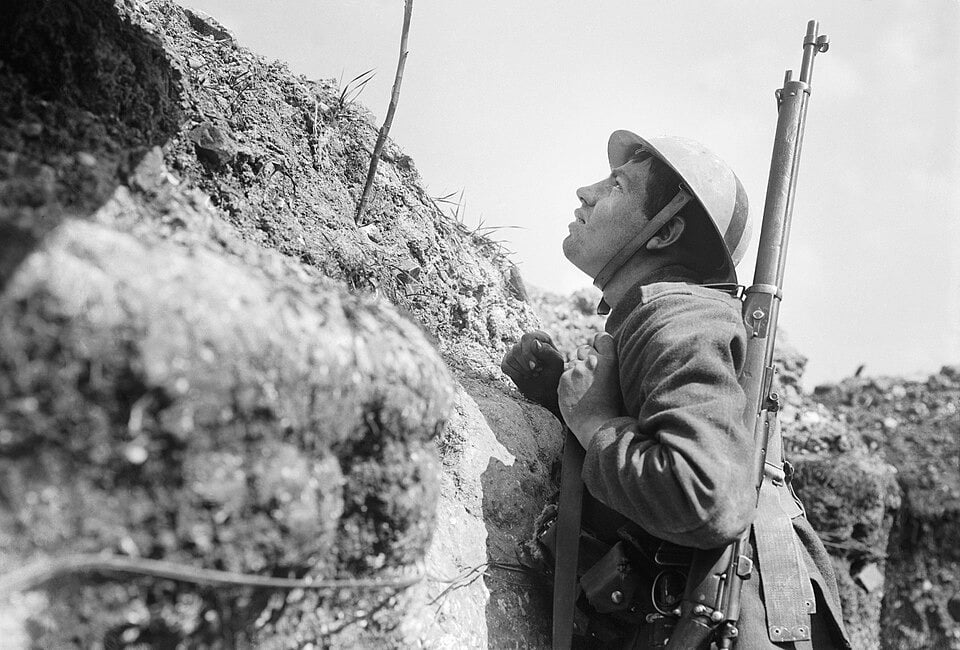
Darkness concealed soldiers from the enemy, but it also made identification difficult among friendly forces. How could a sentry decide who was approaching without illuminating the position? Changing passwords, challenge-and-response routines, and locally established recognition signals offered an answer requiring almost no equipment. Security depended instead on shared information and disciplined procedure, particularly when troops moved through positions at night.
15. Problem: Aerial Observation Made Positions Obvious | Solution: Camouflage Netting
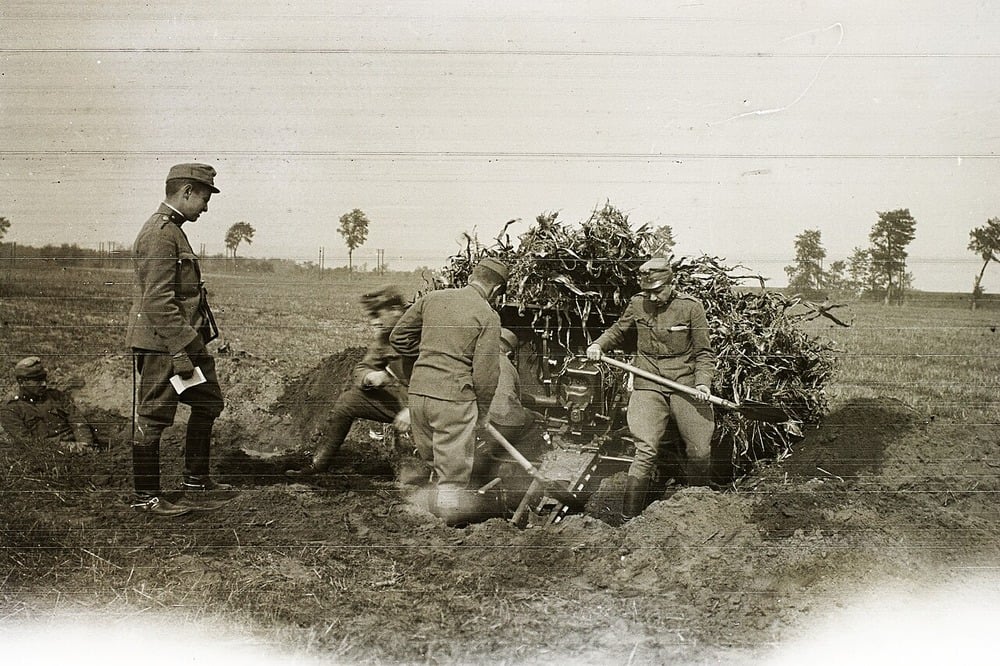
Aircraft transformed concealment into a three-dimensional problem. A gun position that appeared hidden from ground level could still stand out clearly when viewed from above. Camouflage netting, paint, branches, and other natural materials helped break up recognizable shapes, making artillery, stores, and military positions more difficult for aerial observers to identify. The principle was straightforward: rather than making an object invisible, make its outline harder to interpret.
16. Problem: Snipers Watched Familiar Gaps | Solution: Armored Loopholes and Dummy Heads
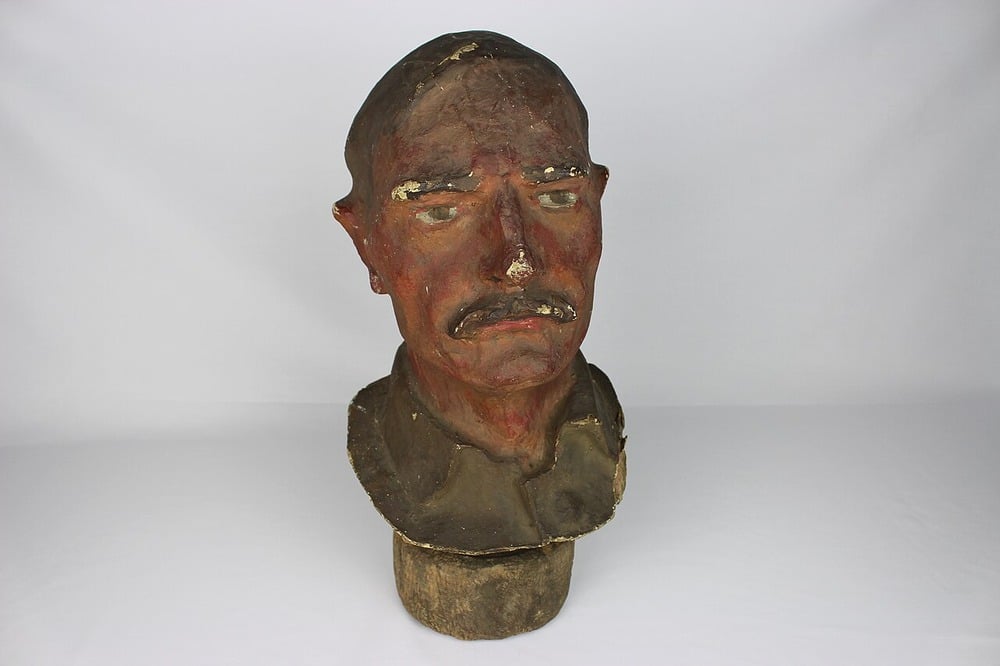
A sniper who learned where soldiers habitually appeared could turn even a small opening into a dangerous place. Armored loopholes offered protected points for observation or firing, while dummy heads could be raised above a parapet without exposing a real soldier. Some decoys were used to provoke enemy fire and reveal a sniper’s response. The unsettling dummy head preserved in the accompanying image shows how deception could be reduced to an object almost unnervingly simple.
17. Problem: Barbed Wire Blocked Raids | Solution: Hand Wire Cutters
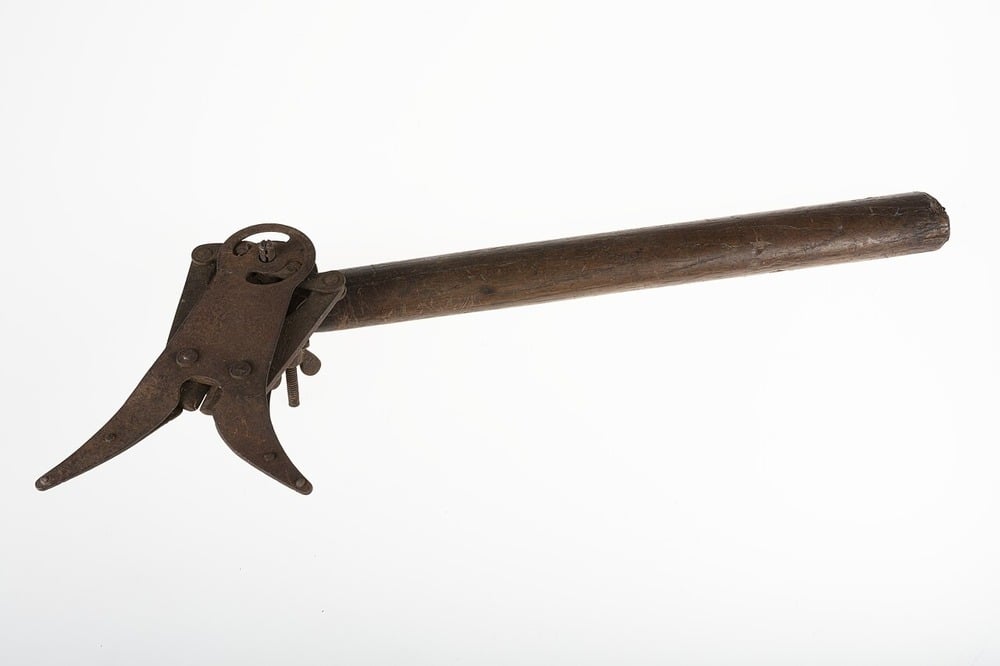
Barbed wire could stop or slow troops before they ever reached an enemy trench. Artillery bombardments were intended to clear obstacles, but they did not always create usable gaps. Infantry therefore carried compact wire cutters as a direct, low-tech alternative. There was nothing technologically revolutionary about the tool itself. Its importance came from addressing a very specific obstacle at the exact place where larger battlefield systems could fail.
18. Problem: Grenades Were in Short Supply | Solution: Improvised Tin Bombs
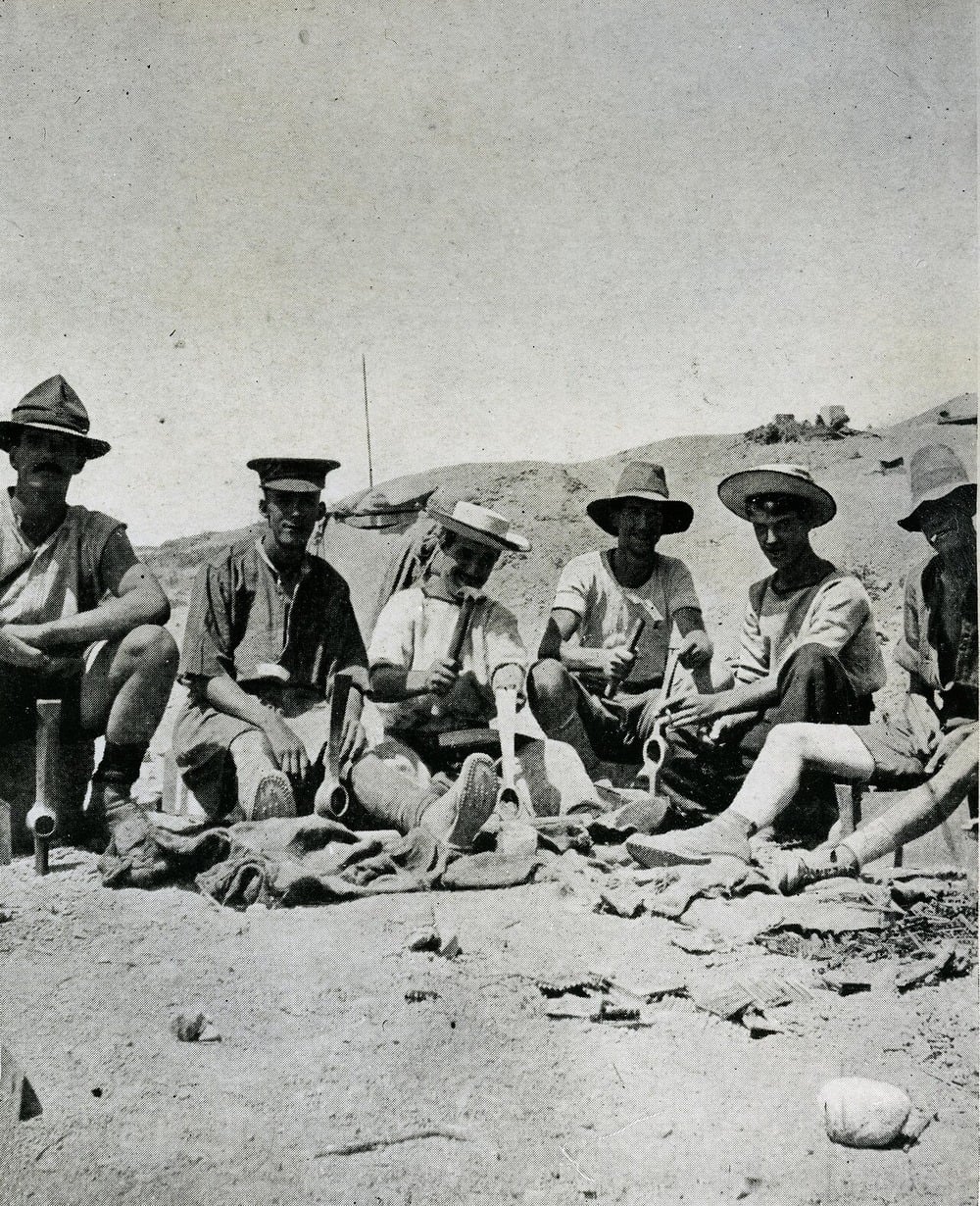
Early wartime shortages forced troops to improvise before standardized grenades became widely available. Soldiers fashioned makeshift explosive devices from food tins and other available materials, examples of which became associated particularly with the fighting at Gallipoli. Their historical significance lies less in their construction than in what they reveal about supply shortages: when purpose-built equipment was unavailable, troops adapted whatever materials were already within reach.
19. Problem: Close Trenches Made Long Rifles Awkward | Solution: Short Trench Tools
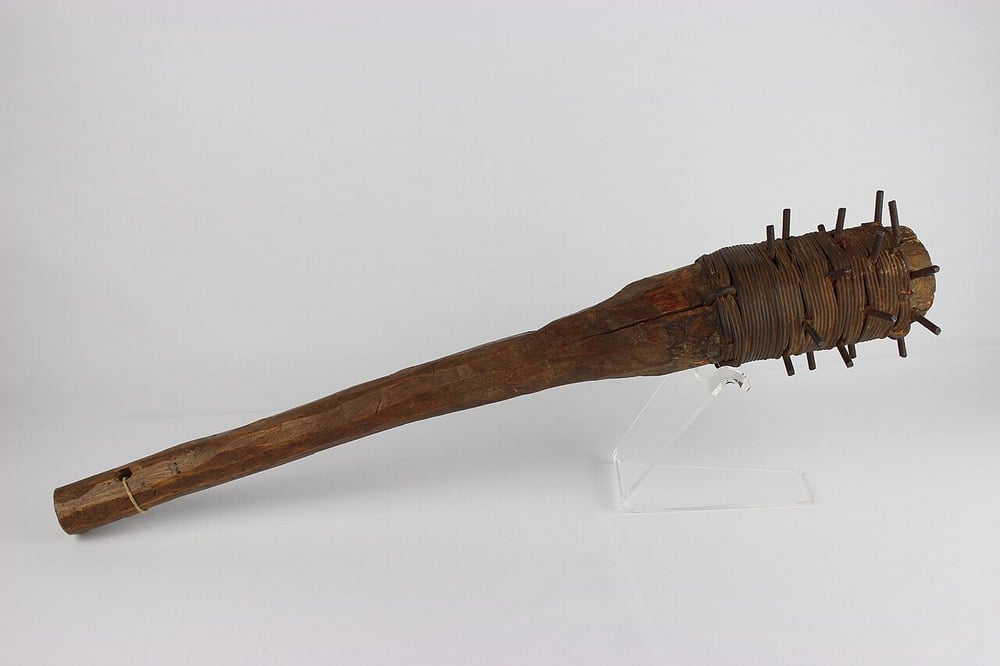
Weapons designed for open battle could become cumbersome inside narrow trenches. During raids and close fighting, troops therefore used shorter equipment, including clubs, knives, and entrenching tools, where full-length rifles and fixed bayonets were difficult to maneuver. Why did such basic objects persist alongside machine guns and artillery? Trench warfare repeatedly compressed combat into spaces where size and simplicity could matter as much as technological sophistication.
20. Problem: Troops Needed News and Morale | Solution: Trench Newspapers
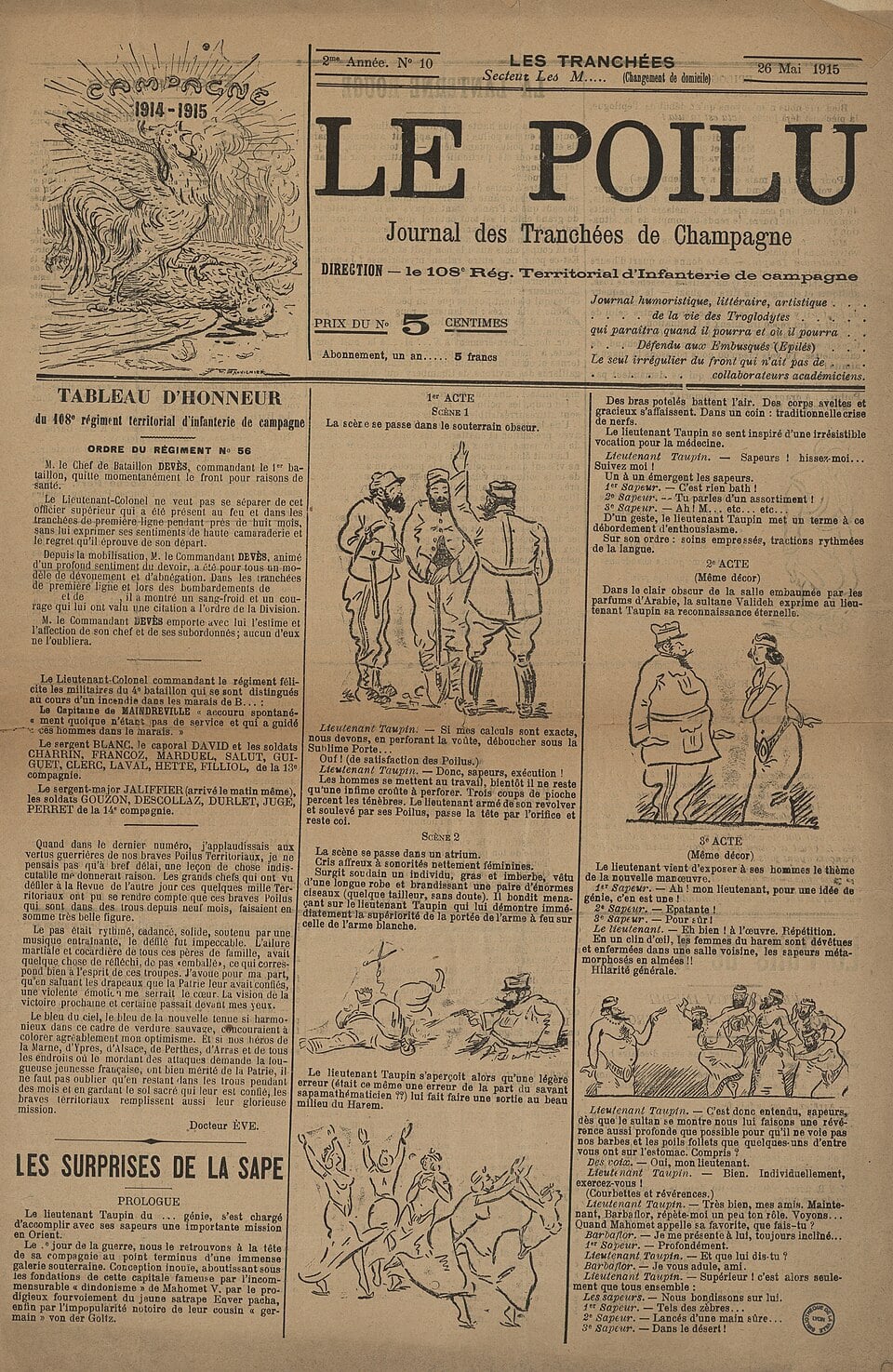
Some trench problems could not be solved with sandbags, steel, or wood. Soldiers also needed information, distraction, and ways to make sense of an exhausting war. Units produced small newspapers, cartoons, notices, and satirical publications close to the front. The Wipers Times, whose March 1916 cover survives in the accompanying image, became a famous example. Simple printing and shared humor created a form of morale support in circumstances where psychological relief was itself valuable.
The technological history of World War I is often told through tanks, aircraft, artillery, and chemical weapons. Yet trench life depended just as heavily on modest solutions to repetitive problems. A plank over mud, a mirror above a parapet, a coded password, or a small stove could not change the course of the war alone. Together, such adaptations reveal another side of military history: survival often depended on recognizing an immediate problem and finding the simplest workable response.
Keep Exploring The Scroller
History is filled with innovations that never looked revolutionary at the time. Keep exploring The Scroller for more stories from the trenches, forgotten wartime objects, unusual historical adaptations, and the everyday details that reveal how people actually lived through extraordinary events:
World War I Soldier Rules: 17 Strange Orders From the Trenches
34 Vintage Images from World War II
20 Colorized Vintage Photos That Perfectly Capture World War I