Iconic American taxis have done more than carry passengers from one address to another. For more than a century, they have quietly helped define what American cities looked like, from strange electric carriages rolling through 1890s New York to enormous sedans, hybrid hatchbacks, and compact vans threading through modern traffic.
The evolution is surprisingly easy to see through the cars themselves. Some were built specifically for taxi duty, others were ordinary fleet vehicles that proved nearly indestructible, and a select few became so recognizable that a glimpse of their silhouette can practically date a street photograph.
1. Electric Vehicle Company Electrobat Cabs: New York’s Electric 1890s
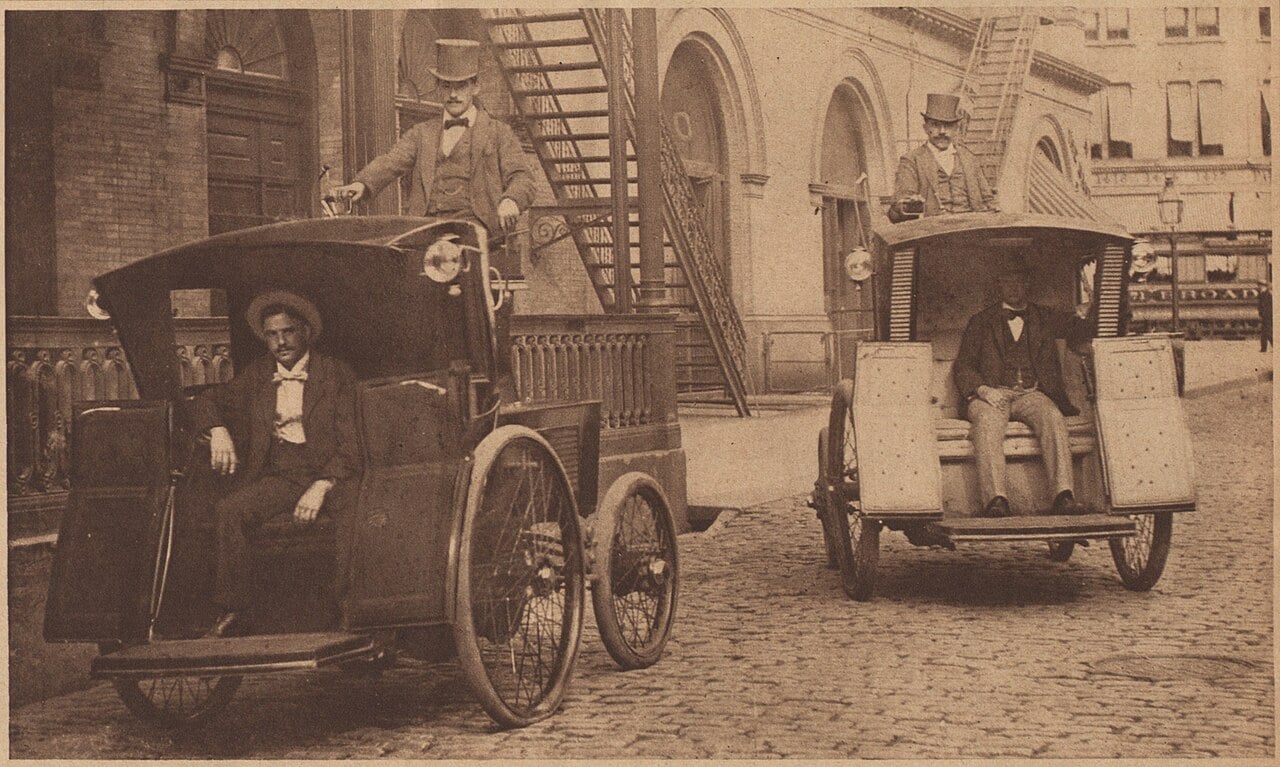
Electric taxis are not nearly as modern an idea as they sound. Battery-powered cabs operated in New York before 1900, during a brief period when electricity was competing with gasoline and steam for the future of the automobile. Their tall, carriage-like bodies still belonged visually to the horse-drawn age, but what moved them was already pointing toward a transportation debate that would return more than a century later.
2. French Darracq Taxis: Harry Allen’s 1907 New York Fleet
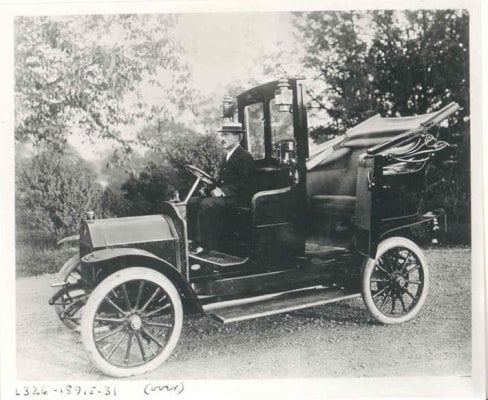
New York’s motorized taxi era began taking a more recognizable shape in 1907, when Harry N. Allen imported gasoline-powered taxis from France for his new fleet. These early Darracqs still looked remarkably delicate compared with the hulking cabs that would eventually dominate city streets, but they helped establish the automobile as a practical replacement for horse-drawn hacks. Could passengers at the time have guessed what the taxi would eventually become?
3. Thomas Taxicabs: Chicago Before Yellow Became the Brand
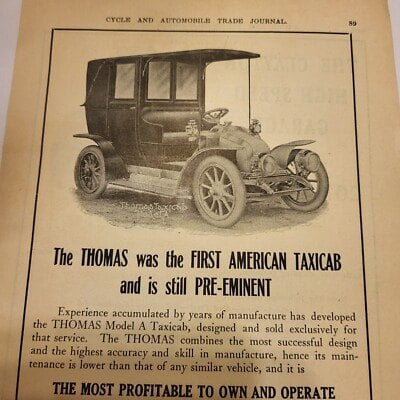
Before yellow became practically synonymous with the word taxi, Chicago’s streets included metered Thomas cabs operated by Walden W. Shaw and John Hertz. These early vehicles belonged to an era when the American taxi still lacked a standardized visual identity, making them an intriguing snapshot of the industry before fleets learned just how powerful a recognizable color could be.
4. Yellow Cab Model J: The Purpose-Built Chicago Taxi
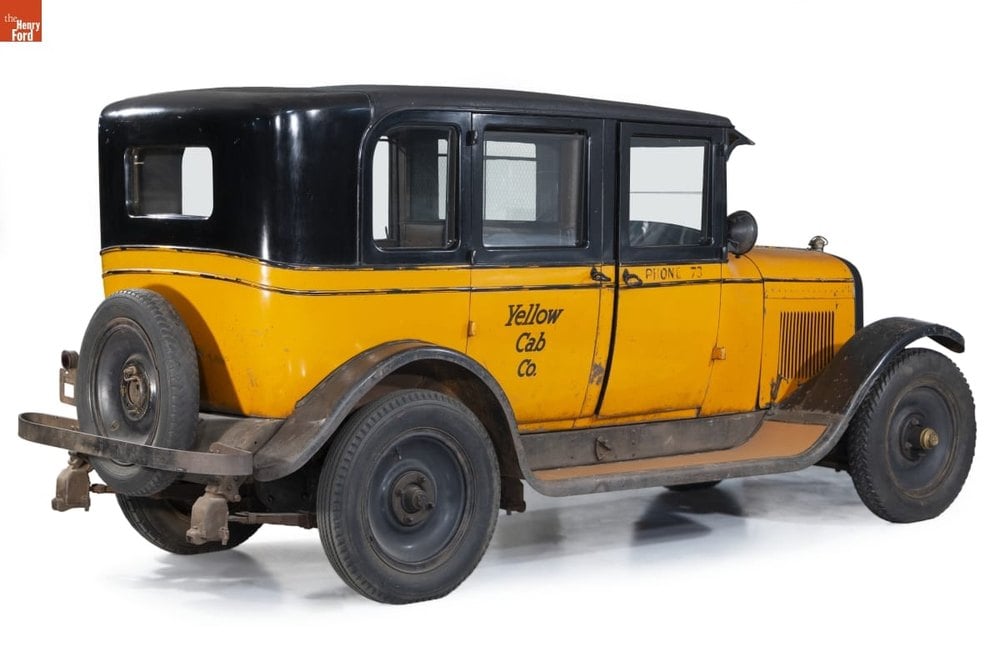
Then came one of the simplest branding ideas in transportation history: make the cab instantly recognizable. Purpose-built vehicles from the Yellow Cab Manufacturing Company helped establish yellow as a taxi identity in Chicago before the color became familiar much farther beyond the city. The car itself mattered, but so did the realization that a passenger scanning a crowded street should be able to identify a cab almost instantly.
5. Checker Model H: The Boxy Cab Takes Shape
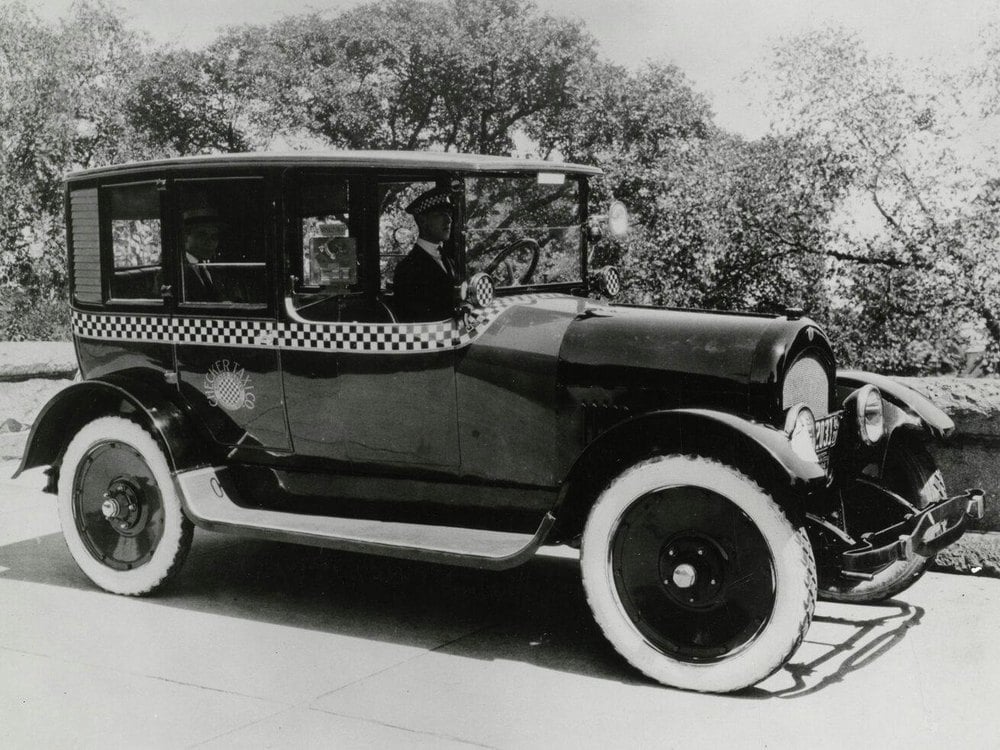
Checker’s early taxis started moving the American cab away from something resembling a repurposed passenger car and toward something that looked built for a job. The Model H helped establish the company’s reputation for rugged, purpose-built vehicles, particularly in cities such as Chicago. That practical, upright philosophy would eventually become the foundation for one of the most recognizable taxi shapes ever built.
Trending on The Scroller
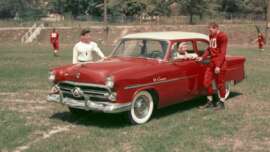

6. DeSoto Taxicab: The Cab With a Sky-View Roof
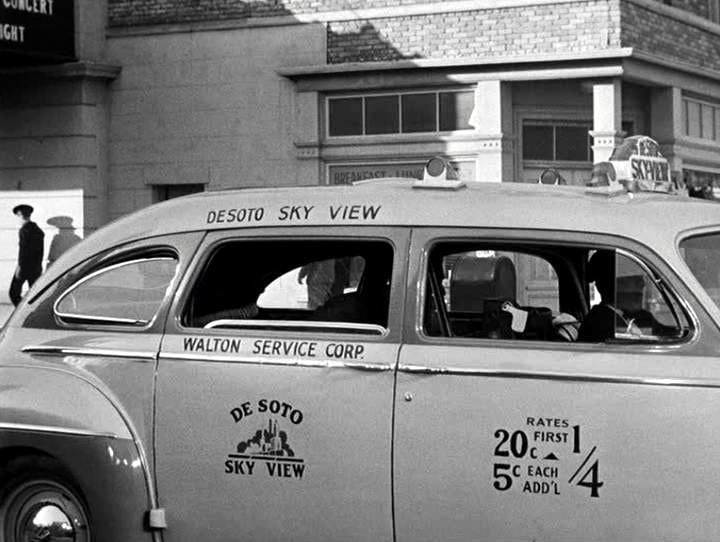
A taxi with sightseeing windows in the roof sounds almost too charmingly specific to be real, yet DeSoto’s Sky-View cabs offered exactly that. Roof windows gave passengers an upward view of skyscrapers while traveling through the city, turning an ordinary ride into a miniature architectural tour. In an age before everyone could simply point a phone upward, it was an unexpectedly clever solution to one very urban problem.
7. Packard Taxicab: When a Cab Could Look Like a Luxury Car
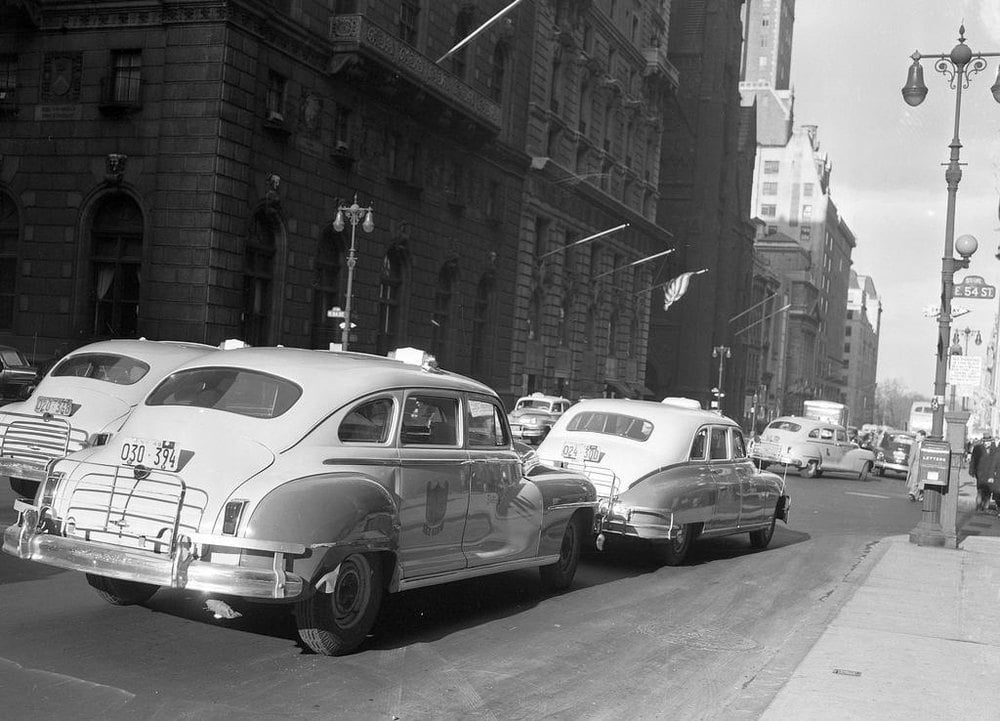
There was a period when stepping into a taxi could mean climbing into something bearing the Packard name. Roomy Packards appeared among the cabs serving major American cities before one standardized taxi silhouette took over, giving mid-century streets a much more varied automotive landscape. Looking at period traffic, the distinction between prestigious private automobile and hardworking cab could sometimes be surprisingly thin.
8. Checker A8: The Immediate Ancestor of the Classic Checker
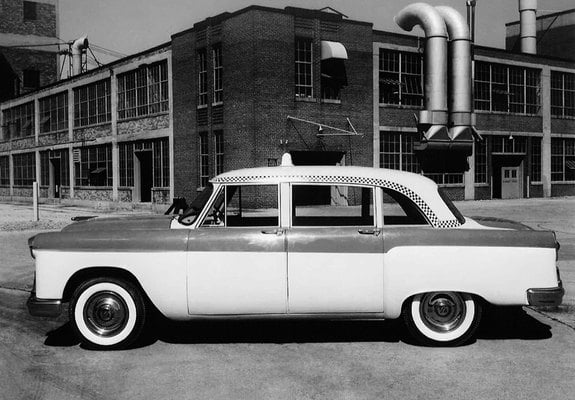
By the late 1950s, the taxi was beginning to acquire a shape that millions of Americans would later recognize immediately. The Checker A8 established many of the squared-off proportions that would evolve through the company’s famous A-series. Gone was much of the visual ornament of earlier cabs. In its place was something unapologetically practical, spacious, and increasingly difficult to mistake for anything else.
Sign up for our newsletter
9. Checker A11 / Marathon: The Taxi That Became a Pop-Culture Symbol
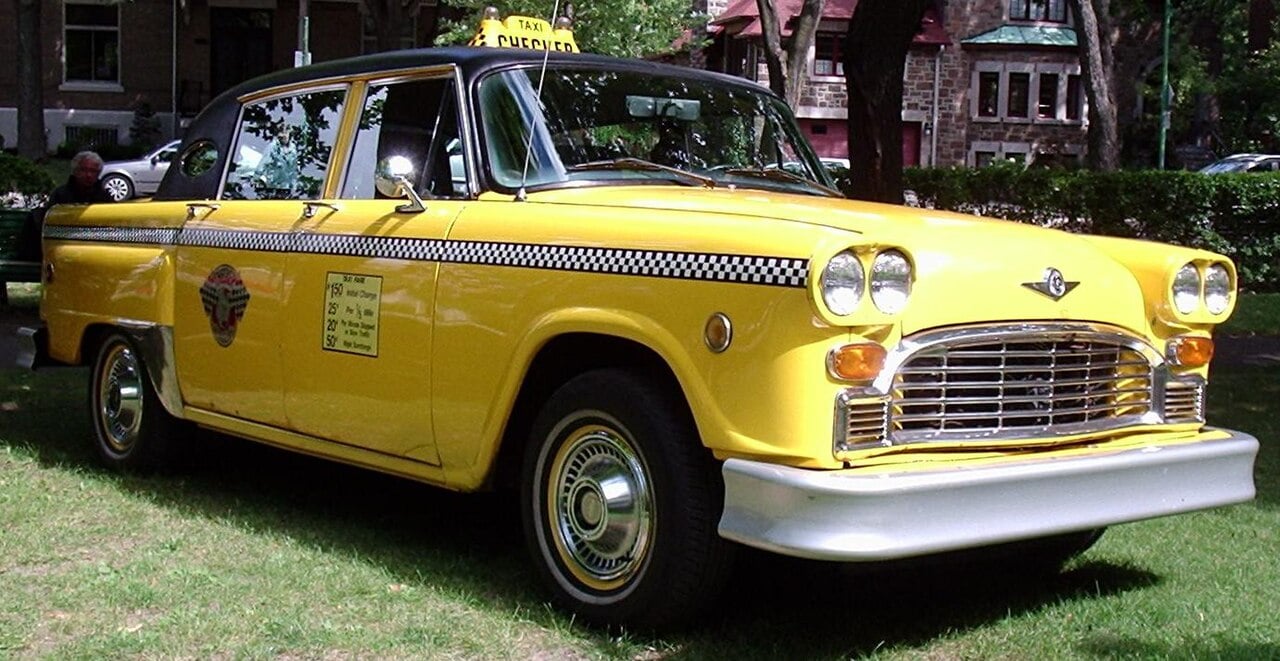
This is the cab that escaped transportation history and entered American iconography. Checker’s A-series changed relatively little over decades, offering generous passenger room and jump seats while becoming deeply associated with New York and other U.S. cities. Production ended in 1982, yet New York’s last legal Checker remained in service until 1999. How many cars can disappear from production and still look completely natural on the street almost two decades later?
10. Checker Aerobus: The Extra-Long Airport Taxi
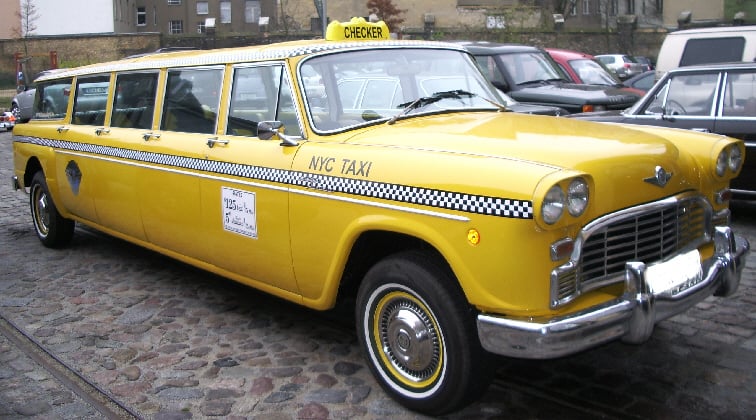
Iconic American taxis did not always fit the familiar four-door formula. The Checker Aerobus stretched the company´s recognizable design into a remarkably long, multi-door vehicle intended for airport, hotel, and group transportation. It was less a conventional city cab than a taxi and a shuttle fused into one machine, with a silhouette strange enough to make even an ordinary airport pickup look memorable.
11. Plymouth Fury / Gran Fury: The Square Sedan Cab Era
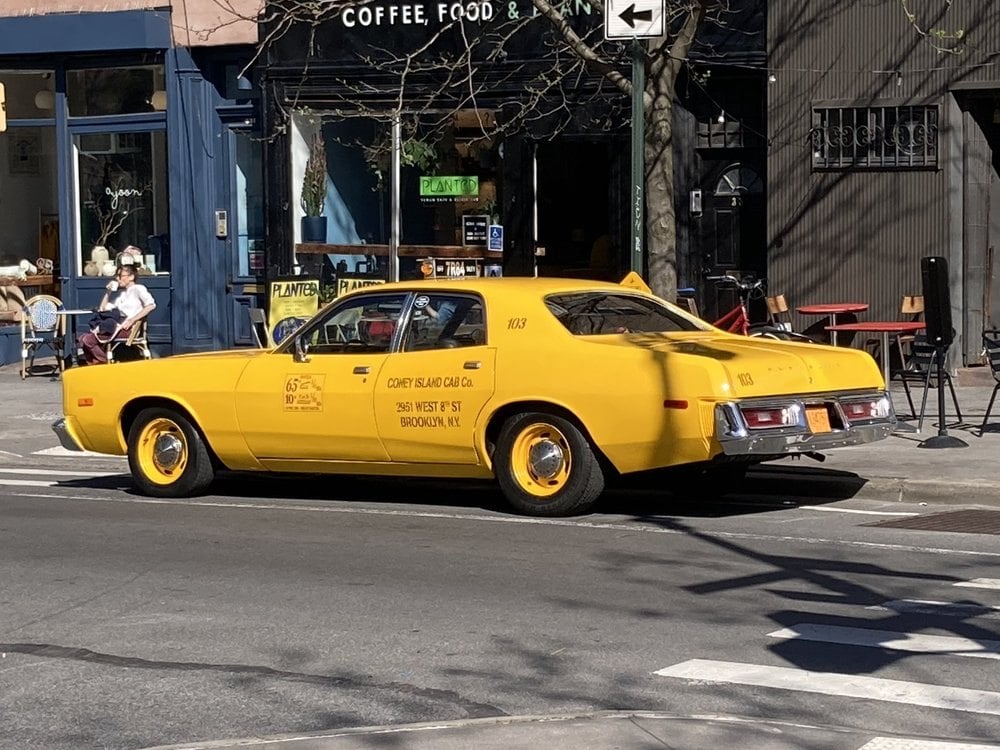
Once purpose-built Checkers began fading away, full-size American sedans increasingly filled the gap. Plymouth’s Fury and Gran Fury represented the wonderfully square fleet-car aesthetic of the era: practical proportions, simple interiors, and plenty of sheet metal. Taxi design was shifting away from cars engineered specifically as cabs and toward mass-produced sedans durable enough to survive the job.
12. Dodge Diplomat: The Workaday 1980s Fleet Cab
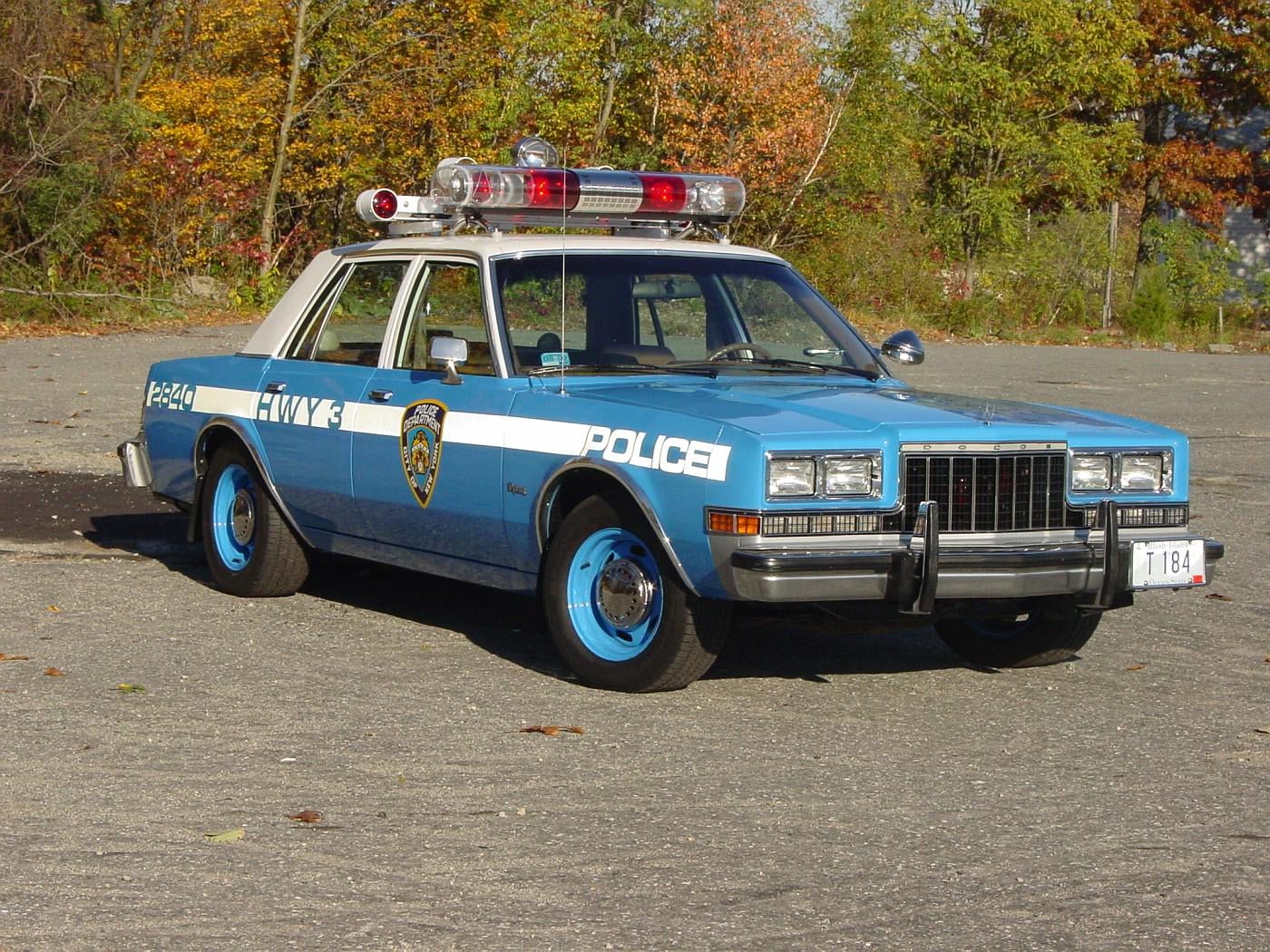
Few vehicles capture the visual vocabulary of an American 1980s street quite like the Dodge Diplomat. Its squared headlights and upright sedan body belonged to the same fleet-oriented world as police cars and other municipal vehicles. Put a roof sign on top and drop it into dense downtown traffic, and the entire decade seems to materialize around it.
13. Ford LTD Crown Victoria: Before the Crown Vic Became the Crown Vic
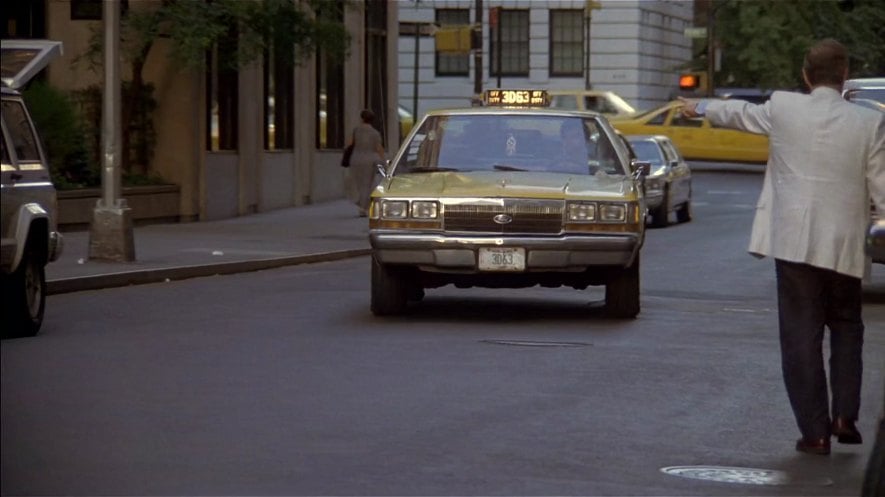
Before the later Crown Victoria became an institution in its own right, Ford’s full-size LTD family was already establishing the formula. Large, conventional, and well suited to fleet use, these cars created a visual bridge between the angular taxis of the 1980s and the familiar yellow sedans of the following decade. The taxi was becoming less specialized mechanically, yet somehow more standardized visually.
14. Chevrolet Caprice: New York’s Early-1990s Mainstay
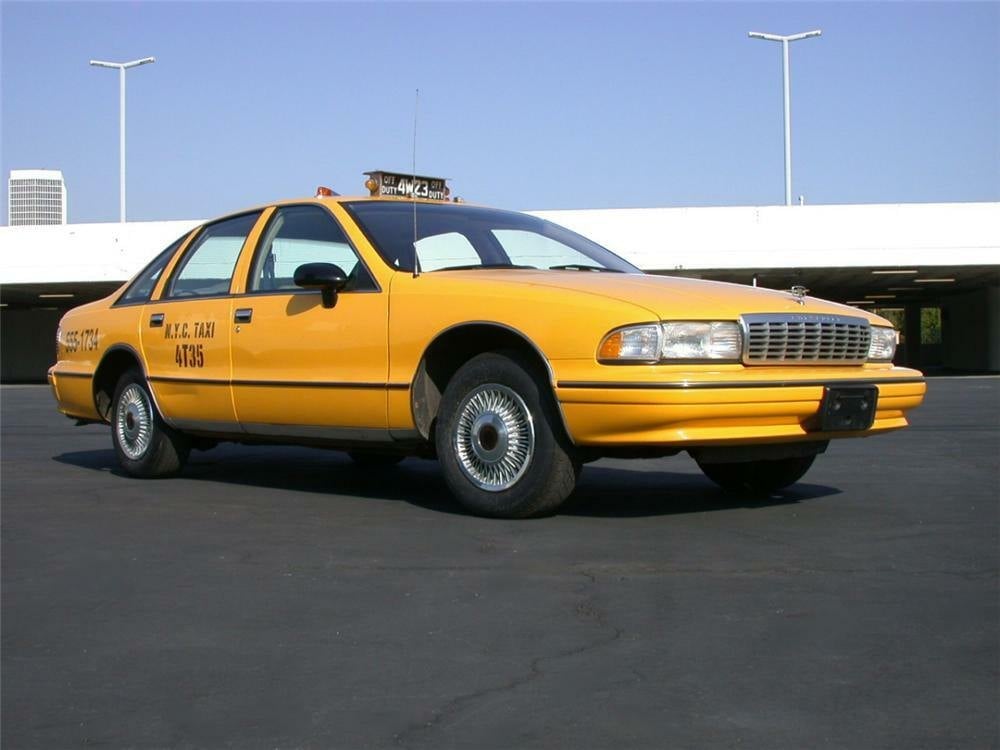
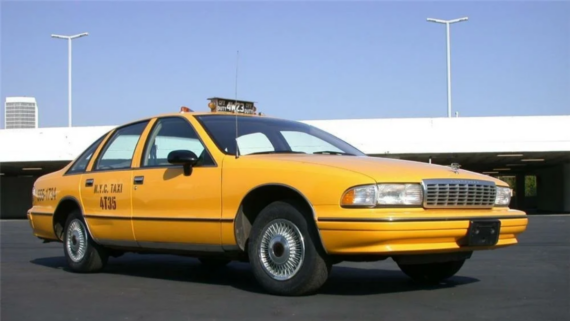
By the 1990s, the Chevrolet Caprice had become a mainstay of New York’s yellow fleet, and its later rounded body marked a noticeable departure from the rigid geometry of earlier taxi sedans. Suddenly the city’s cabs looked softer and more aerodynamic. Does any vehicle shape summon early-1990s street scenes quite as quickly once a taxi light is placed on the roof?
15. Ford Crown Victoria: The Modern American Taxi Archetype
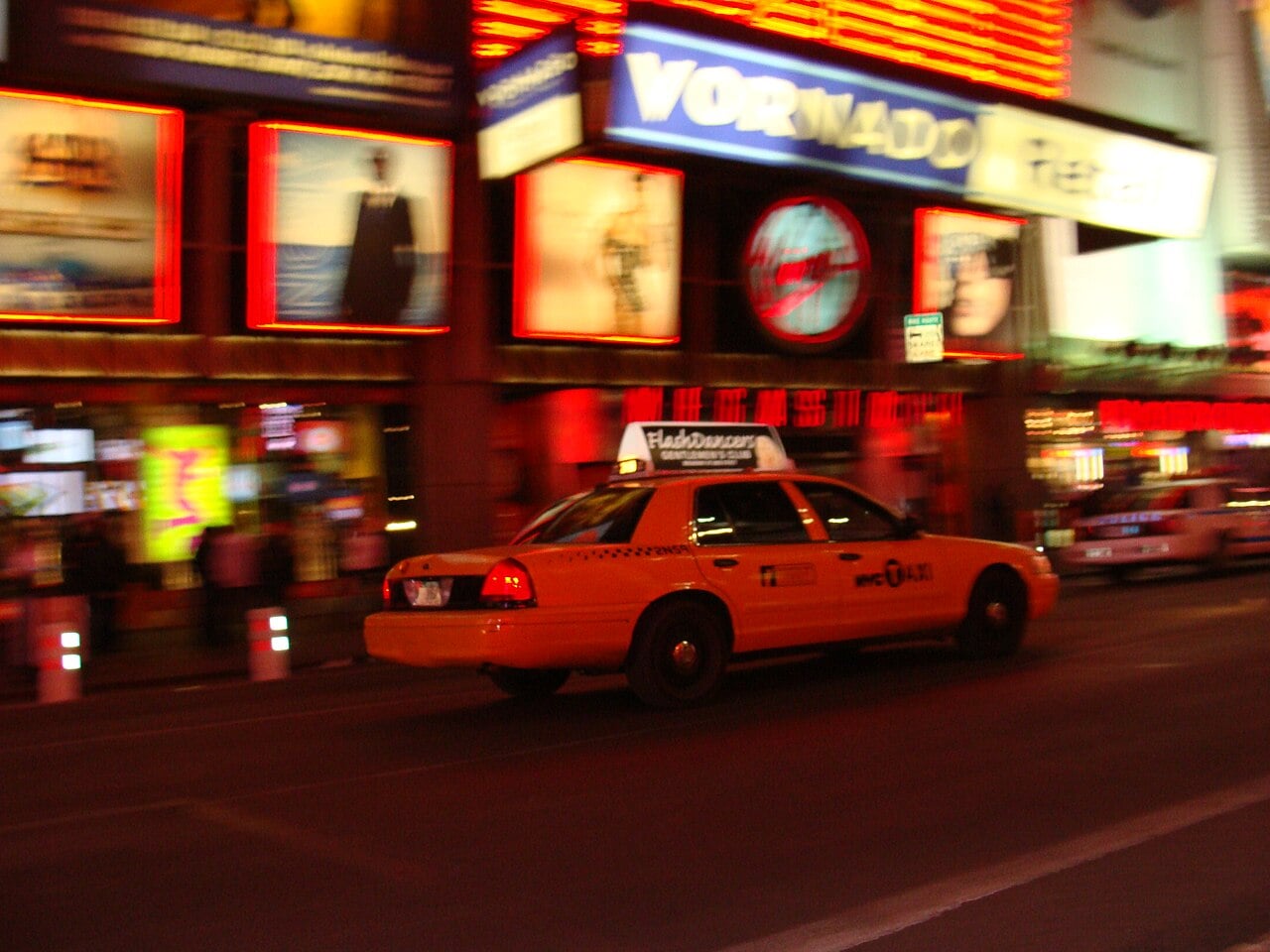
If the Checker defined the classic cab, the Crown Victoria inherited the throne. By the 2000s, Ford’s enormous rear-wheel-drive sedan had become a workhorse of New York’s yellow fleet while appearing extensively in taxi service across other American cities. Its long hood, broad body, and unmistakable proportions became so embedded in urban life that the same basic car could read as a taxi, police cruiser, or fleet sedan with little more than a change of paint.
16. Mercury Grand Marquis: The Crown Vic’s Softer-Suited Cousin
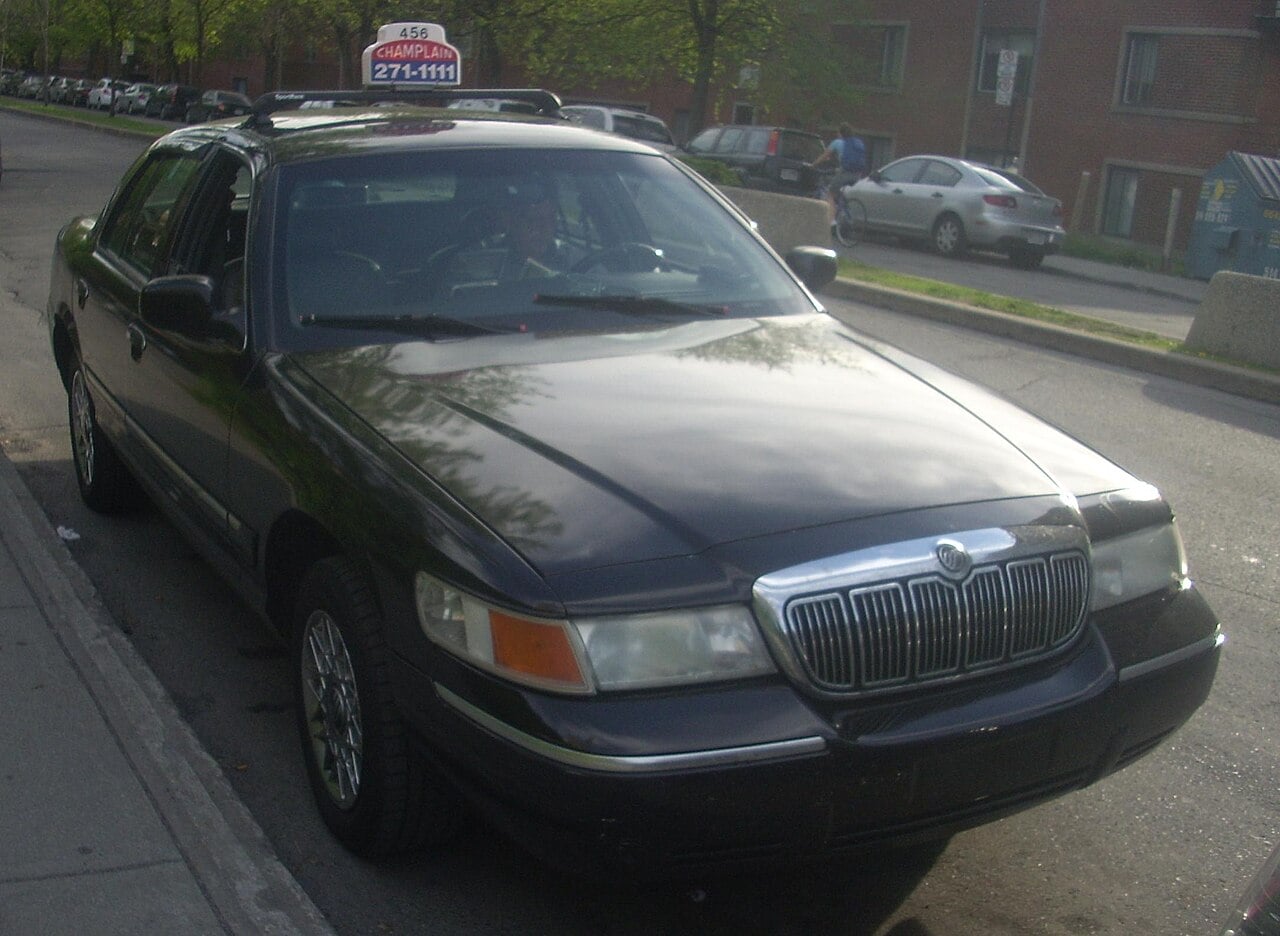
Sharing Ford’s Panther platform with the Crown Victoria gave the Mercury Grand Marquis much of the same large-sedan practicality, and examples found their way into taxi and livery service. It never achieved its sibling’s taxi-icon status, but that is precisely what makes it interesting: American fleets often depended on closely related vehicles that passengers might barely notice were different.
17. Toyota Prius: The Hybrid Cab Changes the Streetscape
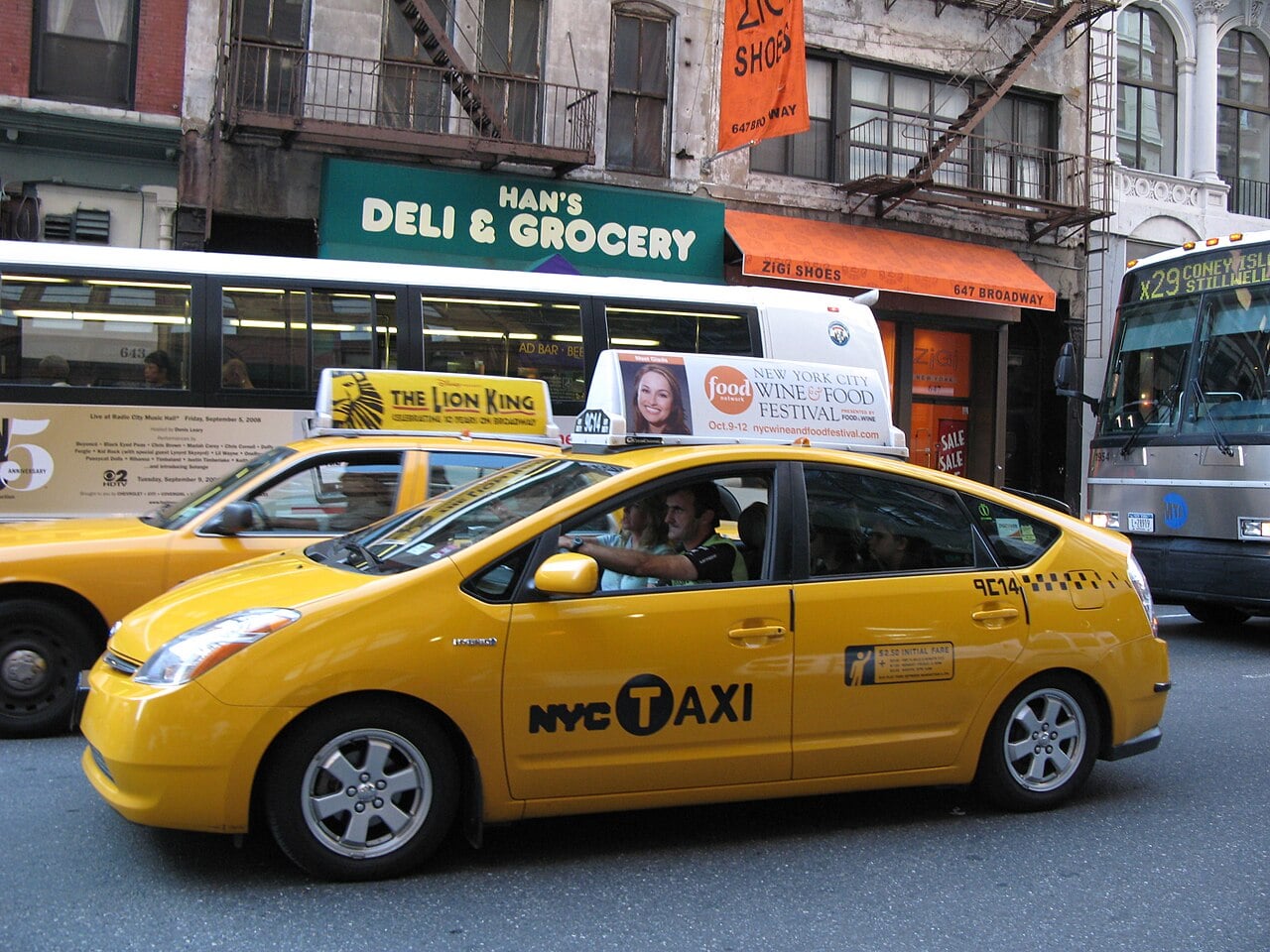
Then the familiar full-size sedan silhouette began to crack. During the 2000s and 2010s, Toyota Prius taxis became highly visible symbols of the move toward more fuel-efficient fleets. The compact hatchback looked radically different beside a Crown Victoria, signaling that taxi design was beginning to prioritize a new set of concerns. For the first time in decades, the future of the American cab suddenly looked smaller.
18. Ford Escape Hybrid: SUV Shape, Taxi Duty
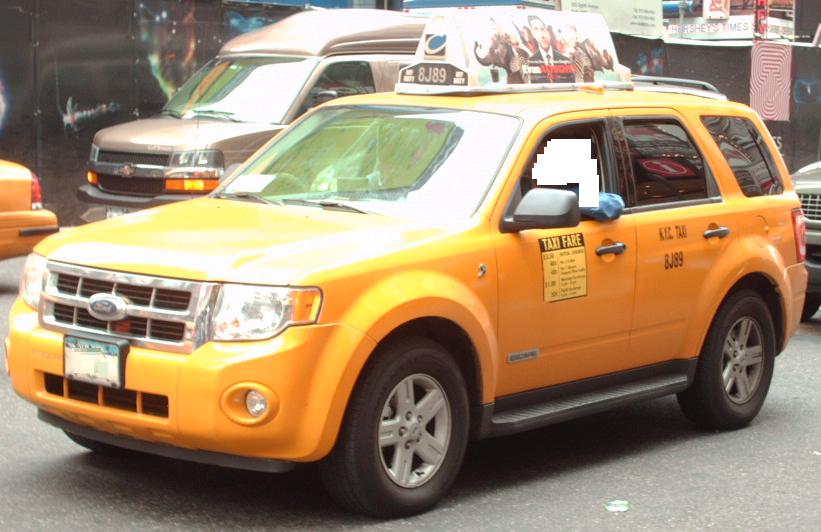
The Ford Escape Hybrid pushed that visual transformation in another direction. Instead of another enormous sedan, passengers increasingly encountered the upright profile of a compact SUV doing taxi duty. Its adoption reflected both changing vehicle preferences and the growing role of alternative-fuel policies. Who decided a taxi had to look like a sedan anyway?
19. Nissan NV200: New York’s “Taxi of Tomorrow”
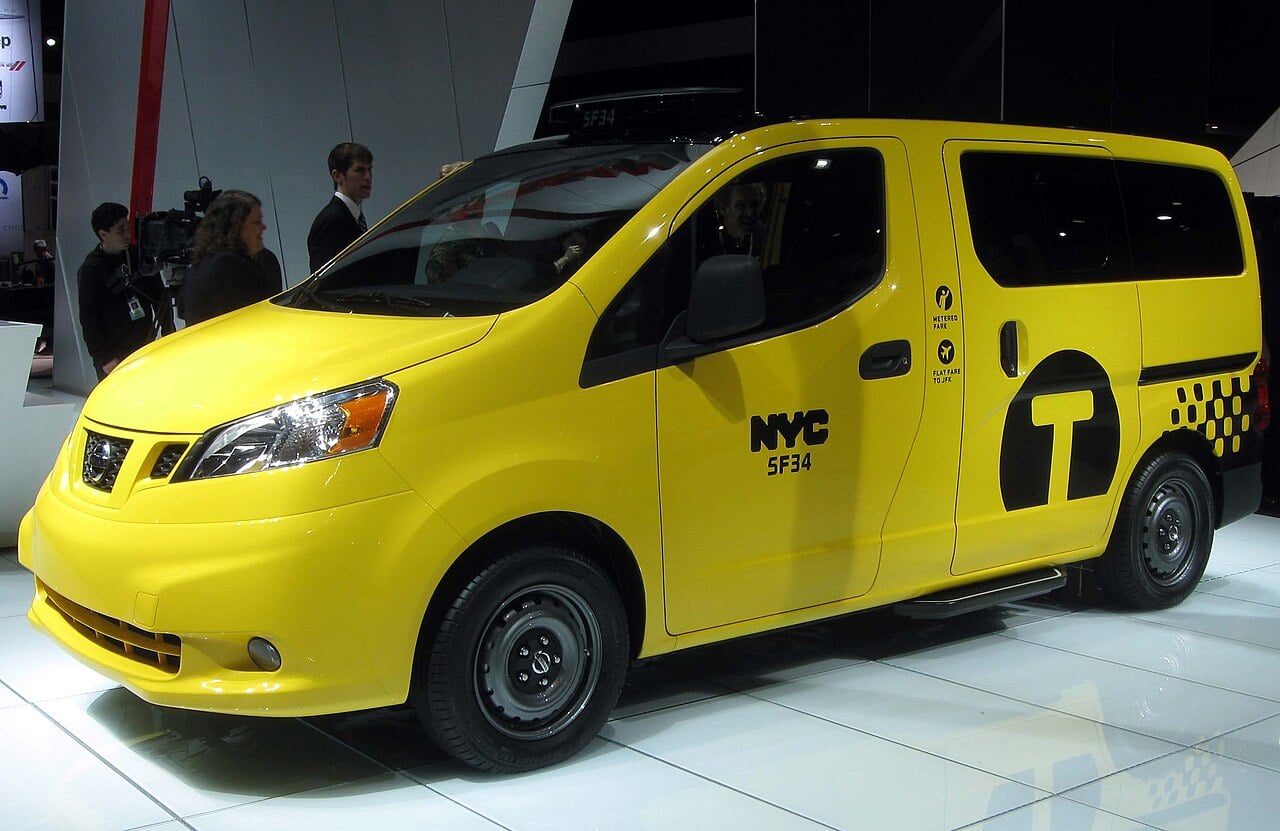
New York’s search for its next standardized cab produced something dramatically different from the Checker and Crown Victoria: a compact van. Selected as the city’s “Taxi of Tomorrow,” the Nissan NV200 emphasized passenger access, luggage space, and the demands of urban service rather than simply adapting another large sedan. It represented an ambitious attempt to rethink what a purpose-oriented modern taxi should be, although it never completely replaced every other model on the streets.
20. The Green Boro Taxi: A New York Icon Defined by Color, Not One Model
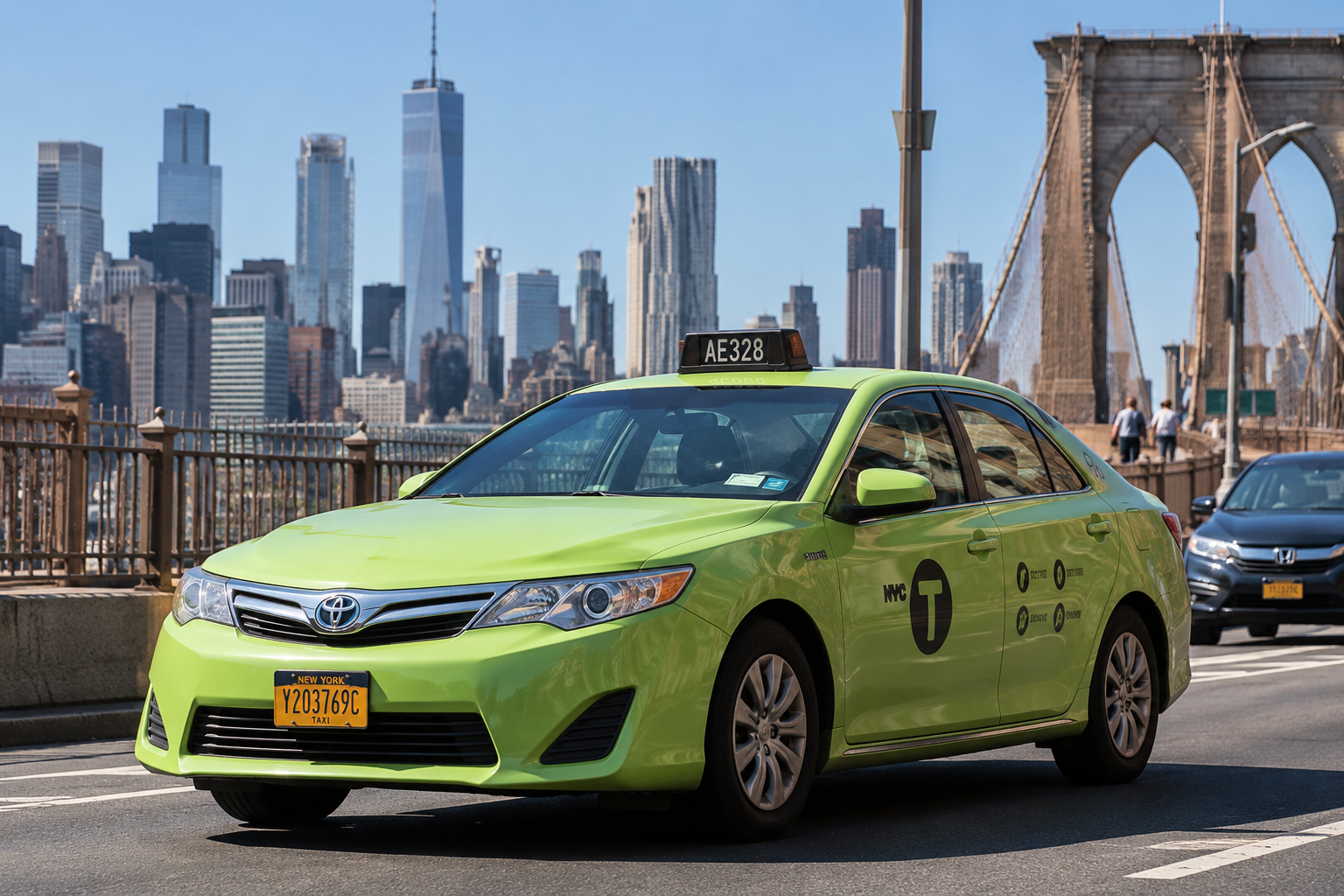
The final chapter isn’t really one car at all. Introduced in the 2010s, New York’s green Boro Taxi program created a new visual category through livery, with multiple approved vehicle models wearing the distinctive color. After more than a century of changing engines, bodies, manufacturers, and technologies, the American taxi had circled back to one of its oldest tricks: sometimes the fastest way to make a cab recognizable is simply to give it a color nobody can miss.
From electric carriages that looked barely removed from the horse-drawn era to hybrids and purpose-oriented vans, American taxis have continuously reflected what cities needed from automobiles at a particular moment. The Checker and Crown Victoria became the legends, but the vehicles around them tell the larger story: a working piece of urban infrastructure constantly changing while somehow remaining instantly recognizable as a cab.
Keep Exploring The Scroller
The meter may have stopped, but the road hasn’t. Keep cruising The Scroller for more forgotten vehicles, vanished streetscapes, and everyday machines that once defined how America moved:
17 Automotive Ideas That Could Have Changed What Cars Look Like Today