For over a century, engineers have been desperately trying to reinvent the heart of the home. The traditional kitchen stove has always been viewed as a bulky, potentially dangerous, and inefficient appliance that demands constant supervision and manual labor. Eager to liberate home cooks from the tyranny of hot burners and endless scrubbing, inventors have continuously promised us a dazzling futuristic cooking experience.
Some of these visionary replacements were incredibly ambitious, relying on emerging technology like focused solar rays or rapid infrared heating. Others were simply bizarre gadgets that tried to turn meal preparation into a completely automated, hands-free scientific process. While we still largely rely on our trusty ranges and ovens today, looking back at these forgotten culinary concepts reveals a fascinating obsession with culinary automation. Here are twelve highly ambitious inventions that promised to make the standard stove obsolete.
1. The Roto-Broil 400
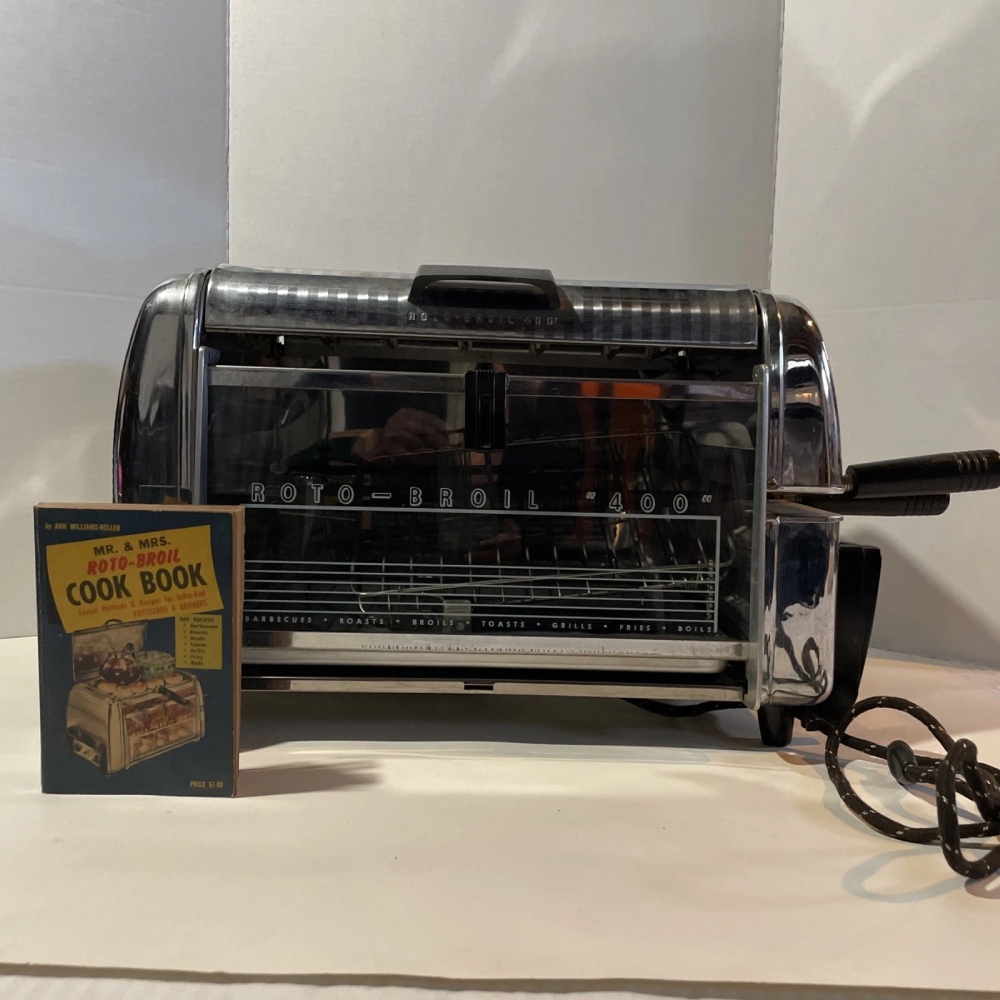
During the early 1950s, the Jay Broiler Company introduced this massive tabletop infrared rotisserie as a complete alternative to traditional oven roasting. Featuring exposed high-intensity electric heating coils, this popular gadget promised to quickly roast entire chickens and bake pies right on the countertop. While millions of American households bought them, the searing exposed heat often left the exterior of the food charred before the inside was fully cooked.
2. The Telkes solar oven
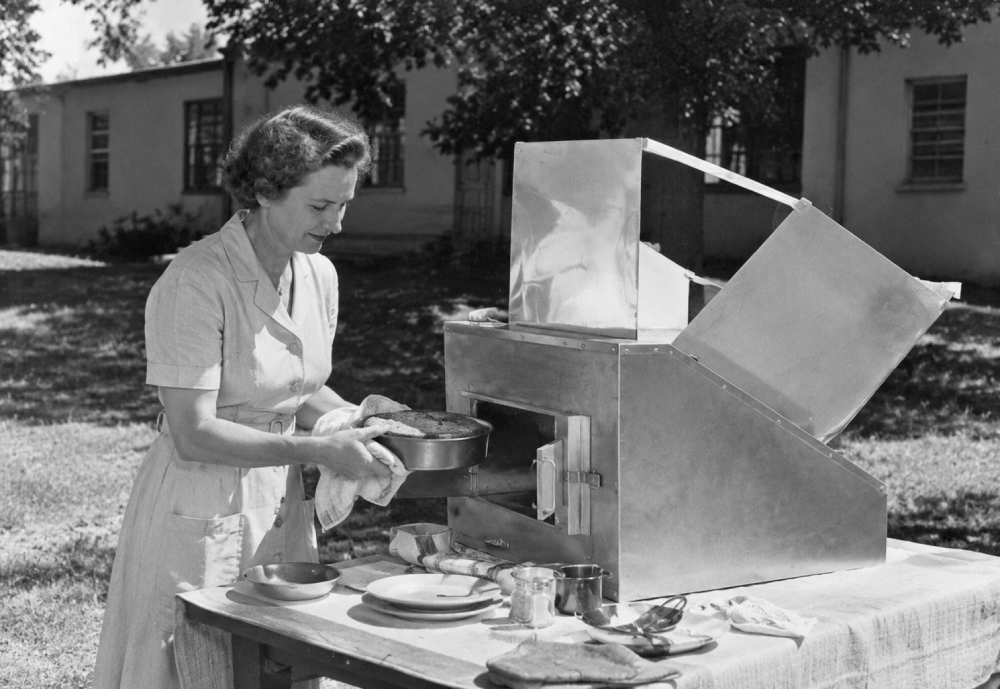
Dr. Maria Telkes, a pioneering biophysicist at MIT, invented a highly publicized box-style solar oven in the early 1950s. Sponsored by the Ford Foundation in 1953, her design utilized four large angled mirrors to direct sunlight into an insulated glass box, reaching temperatures over three hundred degrees Fahrenheit. Although it successfully baked breads and roasted meats without a drop of fossil fuel, cooking dinner strictly depended on having a perfectly cloudless afternoon.
3. Seabrook Farms Boil-in-Bag meals
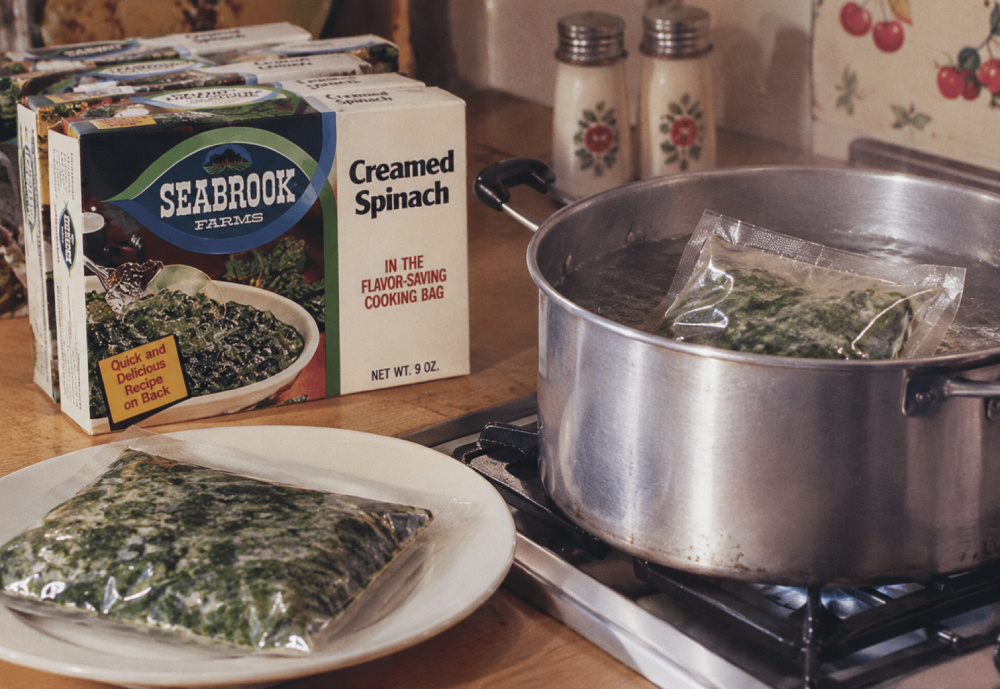
Before microwave dinners dominated the freezer aisle, Seabrook Farms introduced a revolutionary cooking system in 1956 designed to bypass the stove completely. They collaborated with DuPont chemist Eugene T. Sullivan to create specialized Mylar plastic pouches that could withstand boiling water without melting. The concept promised that families could simply drop these vacuum-sealed bags of meat and vegetables into a central vat of hot water, eliminating the need for frying pans and greasy cleanup.
4. The Raytheon Radarange
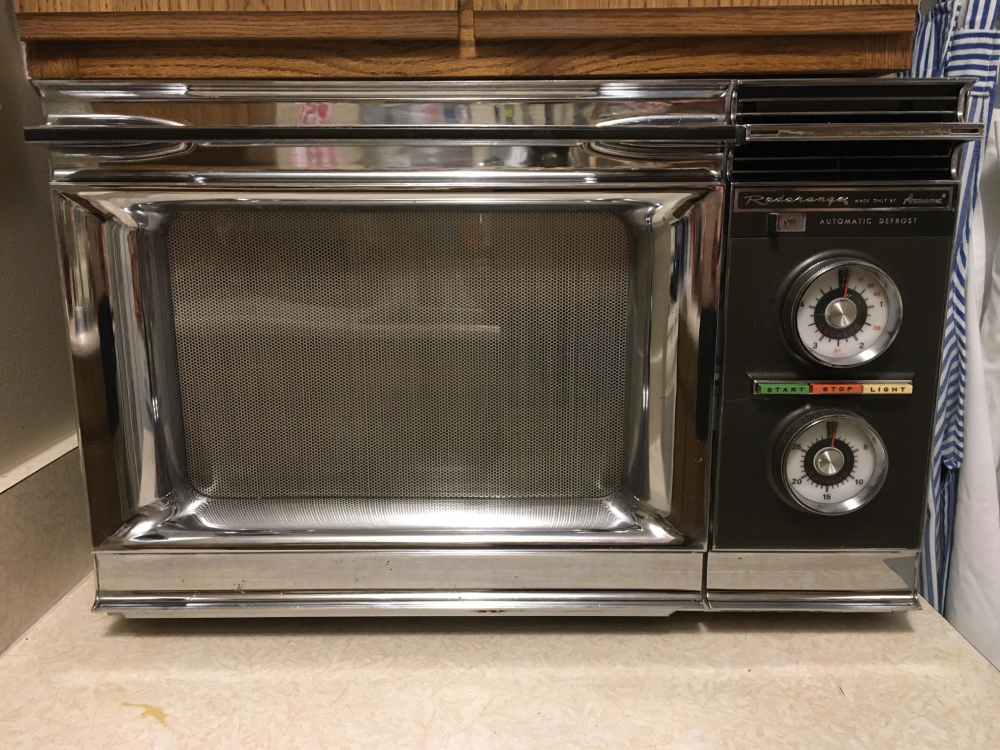
After engineer Percy Spencer accidentally melted a candy bar with active radar waves in 1945, his employer Raytheon patented the very first microwave cooking system. The original 1947 commercial Radarange was an absolute behemoth that stood nearly six feet tall, weighed over seven hundred pounds, and cost roughly five thousand dollars. Because the internal magnetron tubes ran so incredibly hot, these early stove replacements required dedicated plumbing lines just to circulate cooling water through the heavy machine.
5. The RCA Whirlpool Miracle Kitchen table
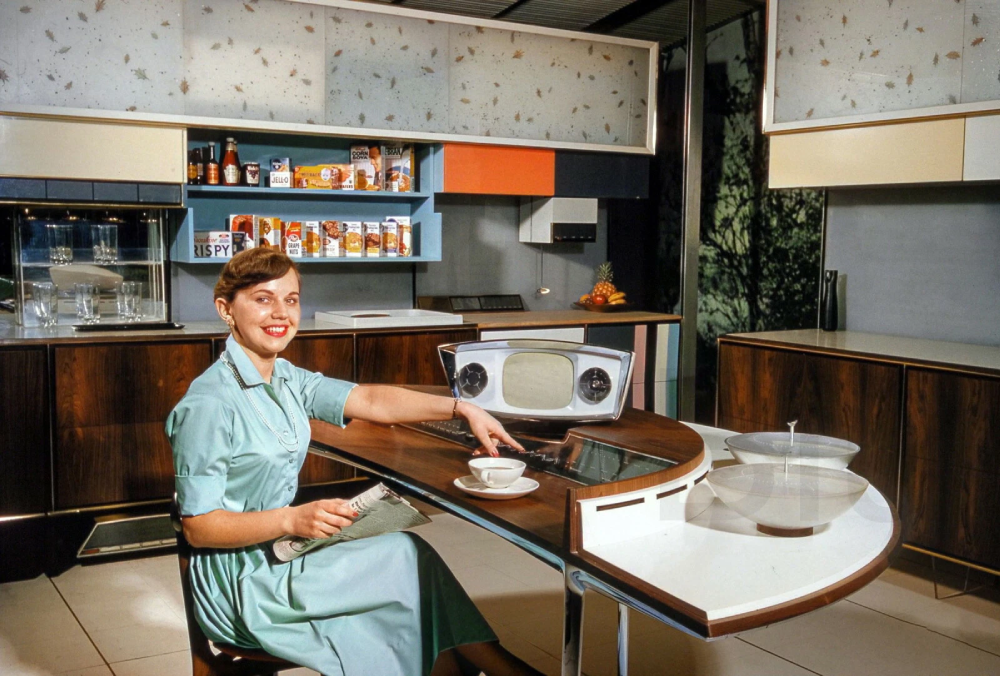
Unveiled at the 1957 American National Exhibition in Moscow, this futuristic concept kitchen completely eliminated the standard stovetop in favor of a magical dining room table. Designers proposed a wooden eating surface featuring invisible, built-in induction heating zones that only activated when specialized pots were placed on top. The idea was that families could cook, serve, and eat their meals simultaneously without ever leaving their chairs, though the concept proved too expensive for immediate mass production.
Trending on The Scroller

6. The Frigidaire Ultrasonic Cooker concept
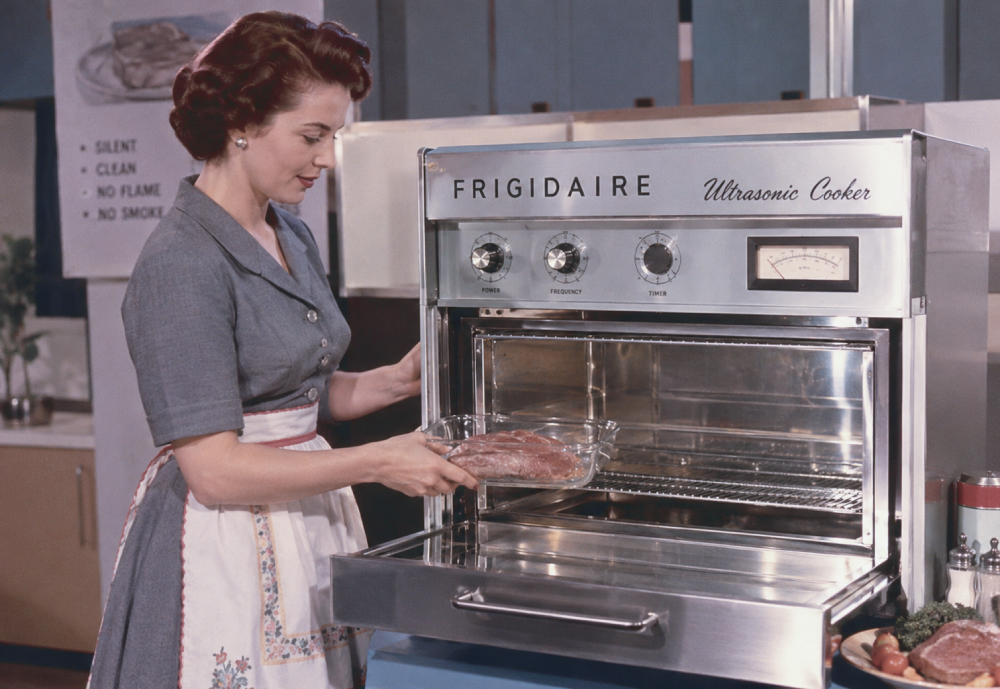
During the late 1950s, appliance manufacturers heavily experimented with using high-frequency sound waves to handle domestic chores. Following the introduction of their experimental ultrasonic dishwasher in 1956, Frigidaire engineers and science magazines theorized that bombarding raw ingredients with intense acoustic waves could instantly generate enough internal friction to cook meat. While the science works in theory, applying it to culinary arts failed miserably because it tended to turn solid proteins into an unappetizing gray mush.
7. The Thermador built-in deep fryer
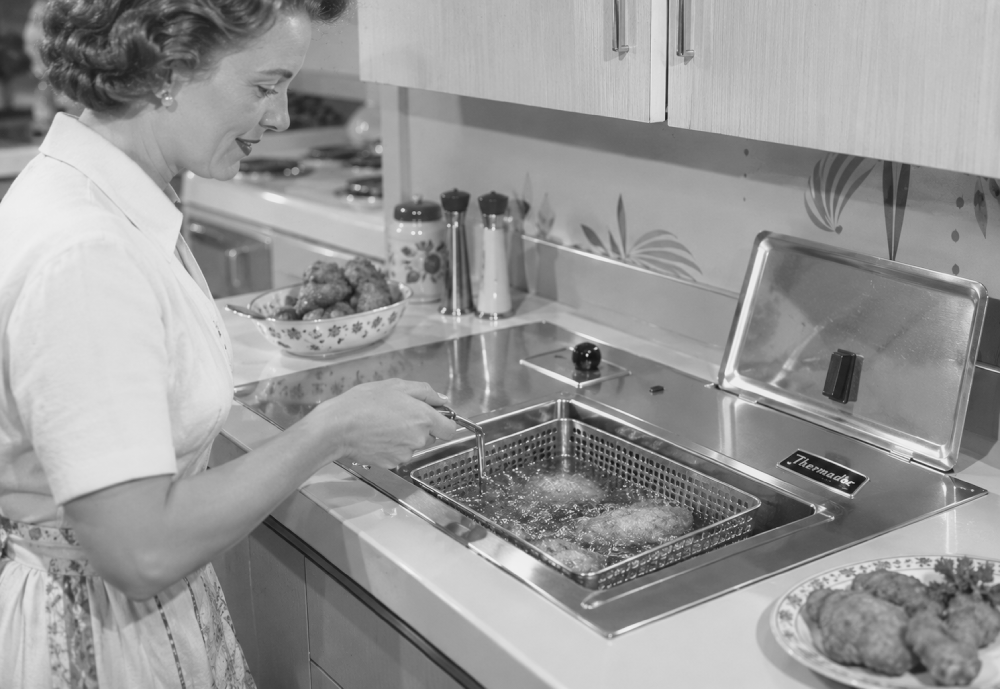
During the post-war suburban housing boom of the 1950s, the Thermador company offered homeowners a way to ditch their standard cast iron skillets. They sold specialized stainless steel deep-fat frying wells that were permanently installed directly into the Formica countertop, completely flush with the surface. Homeowners were supposed to simply lift a metal lid and plunge their meals into boiling oil, but cleaning out the greasy, immovable basin proved to be a total maintenance nightmare.
8. The Insta-Burger King broiler
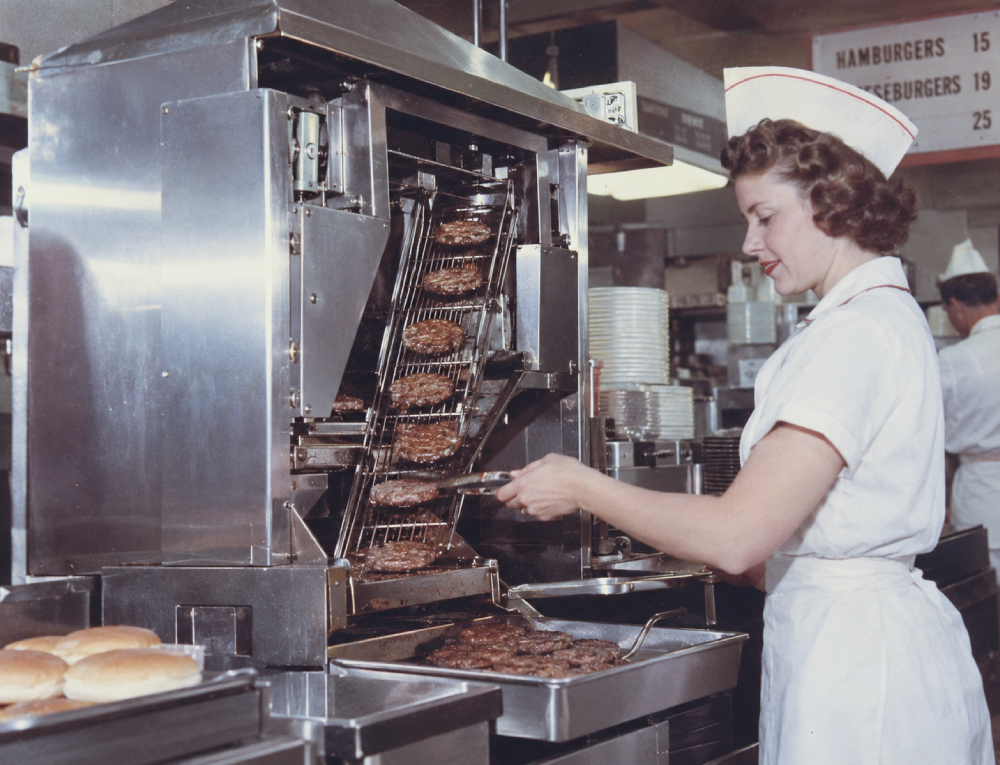
Envisioning a fast-food future for the domestic home, inventor George Read created a massive rotating vertical broiler in 1952. Originally designed to replace standard flat-top griddles in restaurants, the machine automatically carried raw meat patties through internal heating elements, dropping four hundred perfectly cooked burgers out the bottom every hour. While it successfully launched the Burger King empire, its sheer size and inability to cook anything other than ground beef prevented it from entering domestic kitchens.
Sign up for our newsletter
9. The Westinghouse Cool Top 2
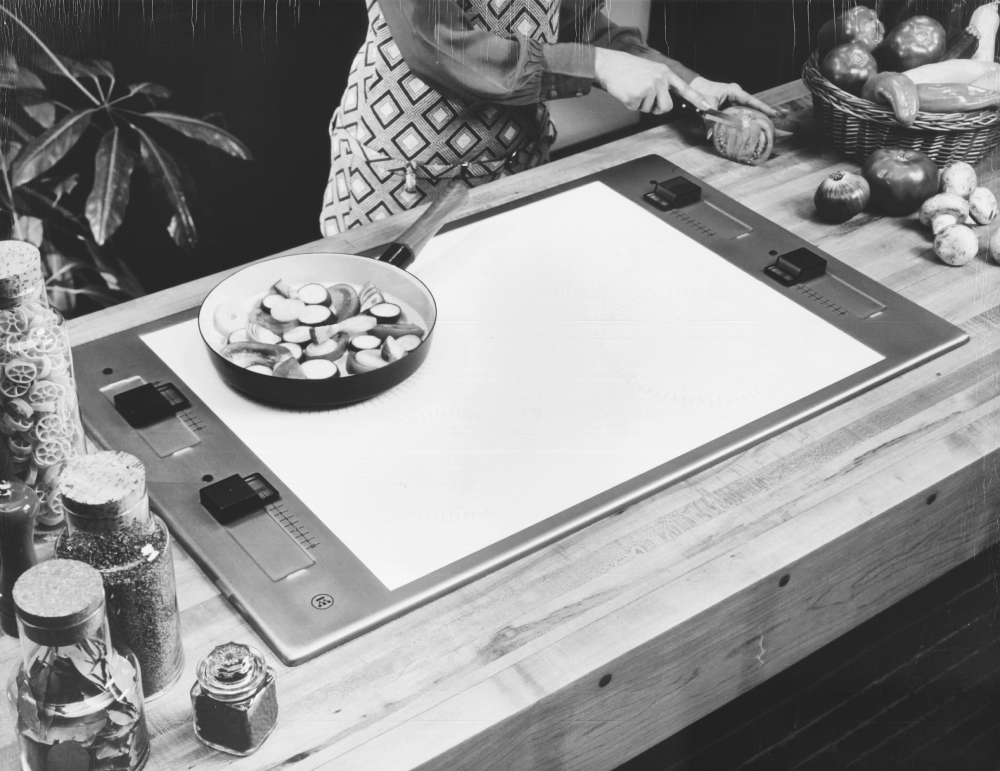
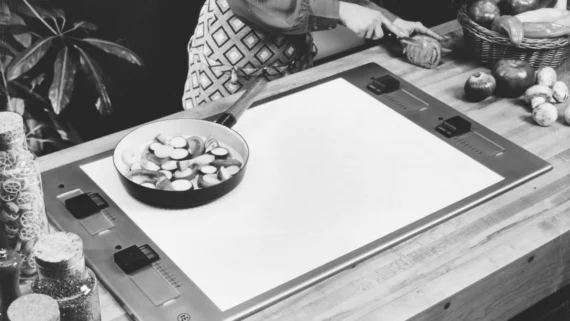
While the earliest magnetic induction stoves were demonstrated at the 1933 Chicago World’s Fair, Westinghouse released the first actual consumer model in 1971. The CT-2 range featured a completely smooth white ceramic surface that remained perfectly cool to the touch while magnetically boiling water inside the pot. Despite being an engineering marvel, the unit cost a staggering fifteen hundred dollars and required buyers to completely replace all their existing aluminum pans with specialized magnetic cookware.
10. The Galloping Gourmet halogen oven
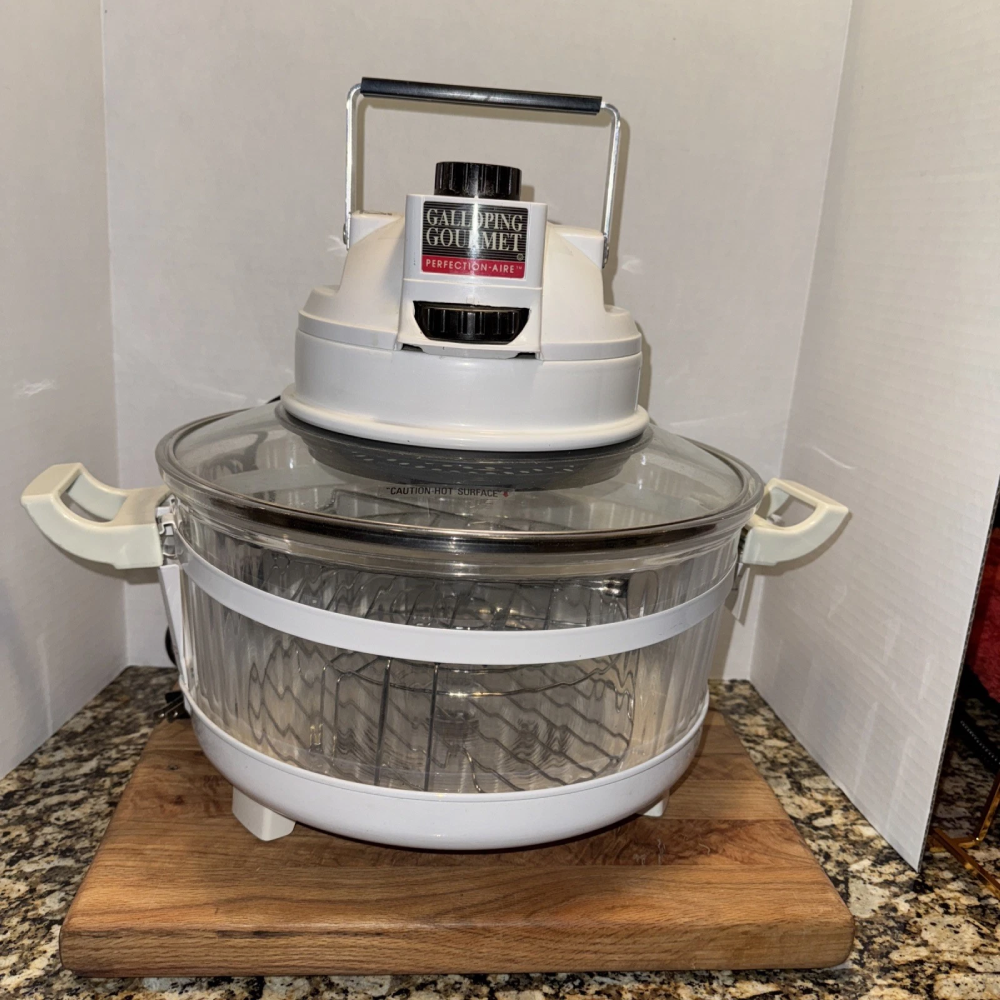
Popularized in the late 1980s by television chef Graham Kerr, this clear countertop appliance utilized incredibly bright halogen utility bulbs encased in a glass dome. The machine promised to replace standard baking by blasting meals with intense visible light and a powerful convection fan. It actually cooked food surprisingly well, but the blinding internal glare required users to practically look away from the counter while checking on their roasting chicken.
11. The Philco-Ford 1999 A.D. concept
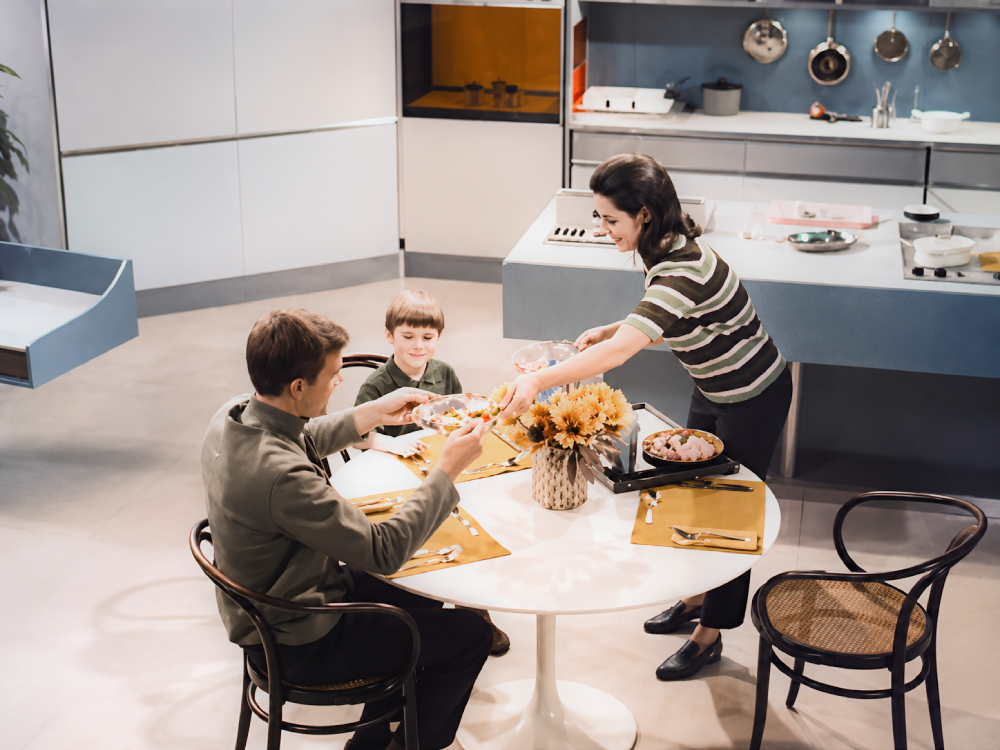
In a 1967 promotional short film titled “1999 A.D.,” the Philco-Ford corporation predicted a future where nobody ever washed a single dish or turned on a traditional burner. They pitched an entire cooking system based on pre-packaged, single-use aluminum foil trays that were fed directly into a wall-mounted central microwave computer. Once the meal was eaten, the entire foil cooking apparatus was simply thrown directly into the trash, rendering the traditional kitchen entirely obsolete.
12. The push-button food synthesizer
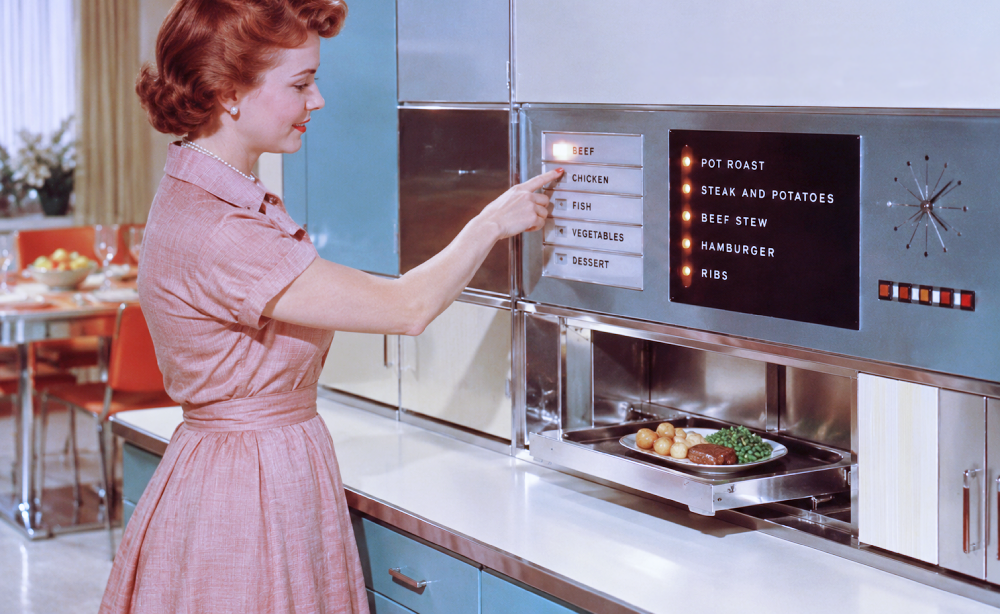
Inspired heavily by science fiction, the famous 1939 New York World’s Fair Futurama exhibit teased a world where traditional cooking was completely automated. This concept evolved into mid-century prototypes like the 1957 RCA Whirlpool Miracle Kitchen, which featured a sleek wall panel where families could punch in codes to dispense hot meals from hidden storage tanks. This fully automated dispenser completely eliminated the traditional cooking space, reducing mealtime to a glorified mechanical vending machine.
Check out more fascinating vintage inventions:
It is fascinating to look back at these ambitious culinary failures and realize that the classic burner and oven combination is incredibly difficult to beat. While we all love the idea of a fully automated meal, there is something deeply satisfying about the traditional cooking process that these wild gadgets could never quite replicate. If you love discovering vintage history, strange inventions, and retro pop culture, make sure to explore these 14 Visionary Inventions Ahead of Their Time or these 16 Everyday Inventions That Took To Much Time to Catch On. You can also check out these 14 Ridiculous Real Inventions That People Actually Patented.