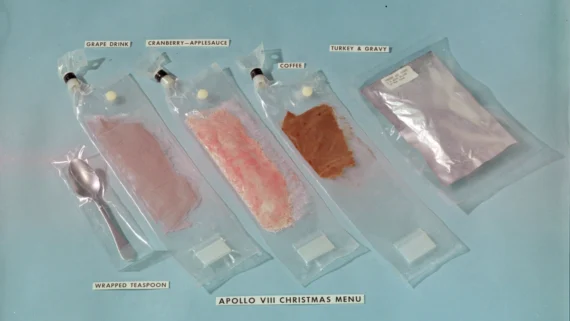
When humanity first ventured beyond Earth’s atmosphere during the Cold War, scientists were deeply concerned about how zero gravity would affect basic human digestion. The earliest meals packed for orbital flight were strictly designed for sheer biological survival rather than culinary enjoyment, resulting in highly processed pastes and unappealing chemical powders. Engineers treated early spacecraft cabins like sterile surgical theaters, absolutely terrified that a single floating breadcrumb could migrate behind a control panel and permanently short-circuit vital navigation systems.
As the space race progressed from brief orbital hops to week-long lunar expeditions, keeping astronauts happy and adequately nourished became a major psychological priority. Food scientists worked tirelessly to bridge the massive gap between strict mechanical safety limits and the basic human desire for a hot, recognizable dinner. Pushing culinary science to its absolute limits, these dietary innovations paved the way for modern freeze-drying and commercial packaging. Here are twelve fascinating space foods consumed by pioneering astronauts and cosmonauts during the early days of cosmic exploration.
1. Yuri Gagarin’s pureed beef and liver – 1961
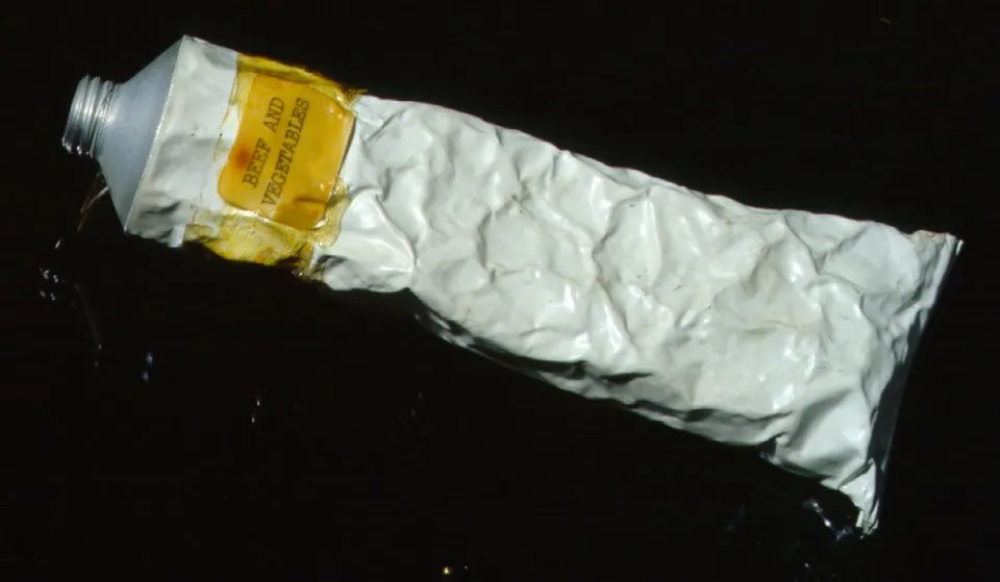
Aboard Vostok 1 in 1961, Soviet cosmonaut Yuri Gagarin made history by becoming the very first human being to consume food outside Earth’s atmosphere. To prove that swallowing in microgravity was biologically possible, he squeezed two aluminum toothpaste tubes of pureed meat directly into his mouth and followed it with a tube of liquid chocolate sauce.
2. John Glenn’s applesauce – 1962
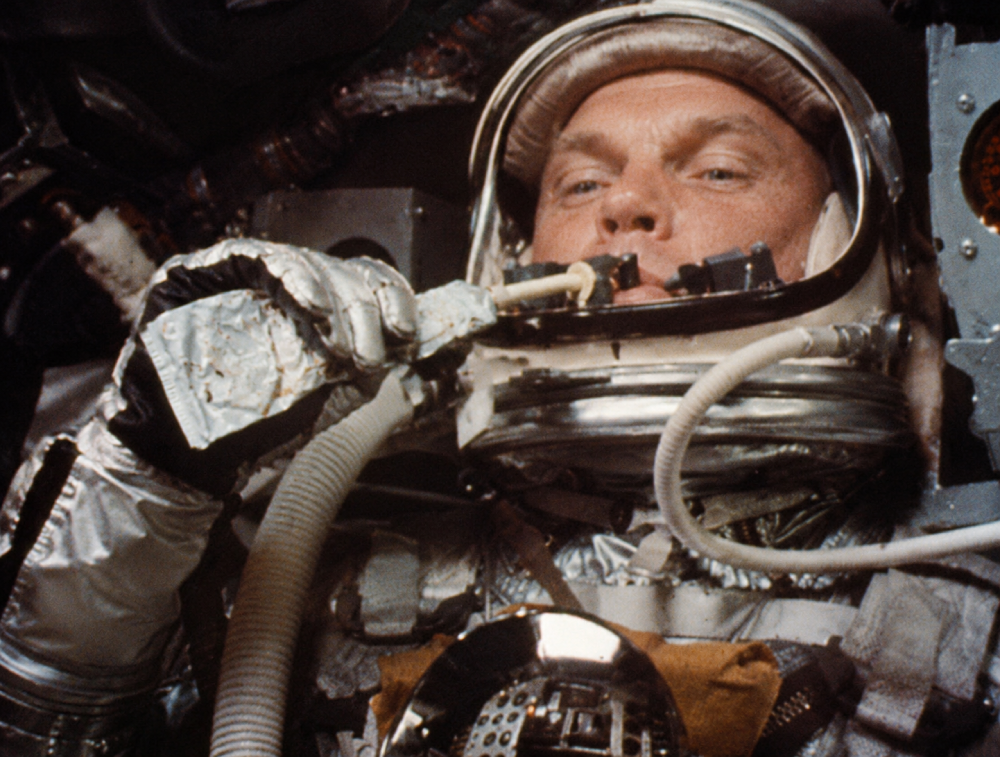
During the monumental Friendship 7 mission in 1962, John Glenn became the first American to eat in orbit to safely test zero-gravity digestion. He carefully squeezed pureed applesauce from a metal tube through a specialized port in his pressurized helmet, successfully proving that food would travel down the human esophagus without the aid of gravity.
3. The contraband corned beef sandwich – 1965
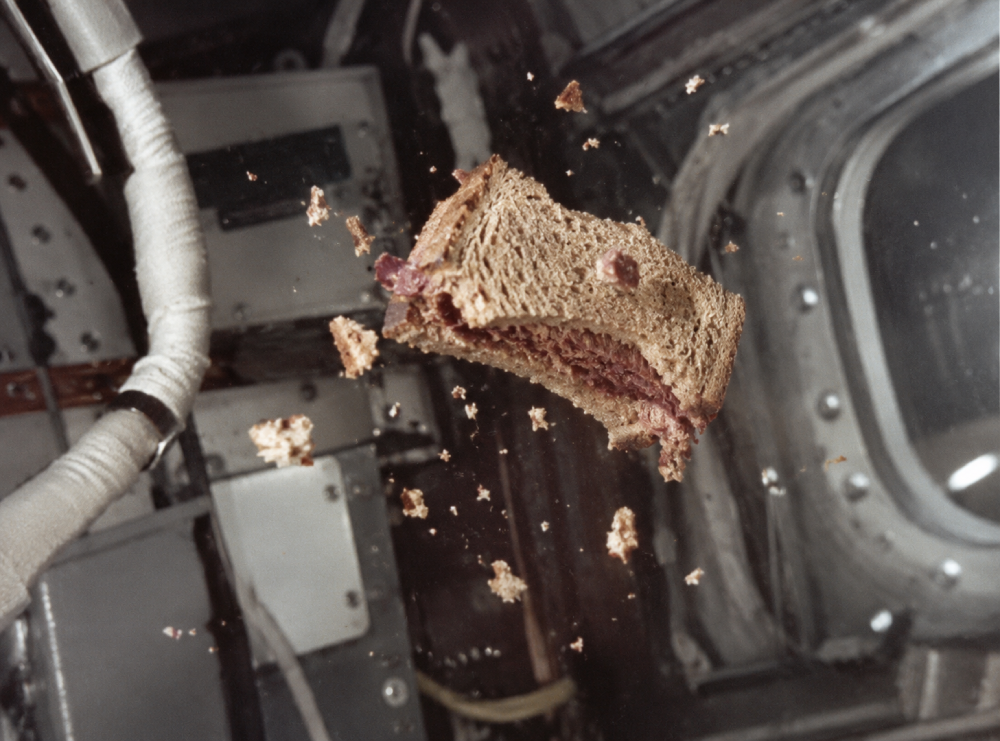
Pilot John Young famously smuggled a two-day-old deli sandwich from Cocoa Beach in his spacesuit pocket right before launching on the Gemini 3 mission in 1965. When he proudly offered a bite to commander Gus Grissom, floating rye bread crumbs quickly filled the tiny cabin, prompting a furious congressional investigation into NASA flight safety protocols.
4. Rehydrated shrimp cocktail – 1965
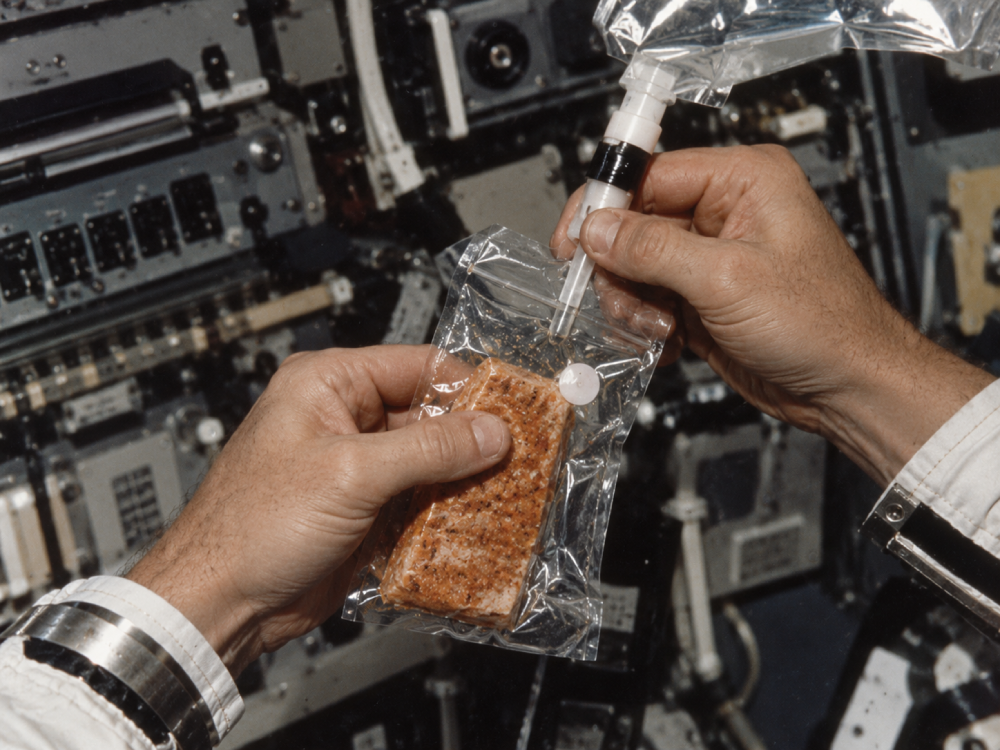
Determined to improve morale and flavor profiles, NASA food scientists introduced freeze-dried shrimp cocktail for the extended Gemini program crews. Astronauts like James McDivitt had to inject cold water into a specialized plastic pouch and knead the contents vigorously, ultimately praising the spicy horseradish sauce for cutting through their severe sinus congestion.
5. Gelatin-coated bacon squares – 1968
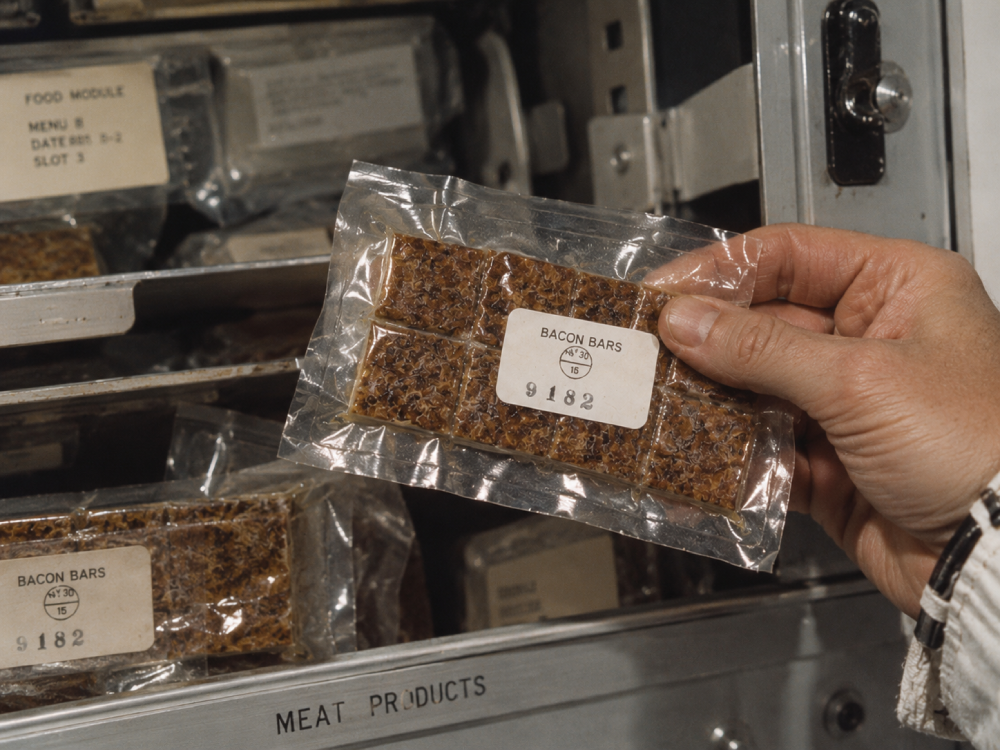
Because floating crumbs could easily short-circuit sensitive electrical panels, Apollo 7 engineers developed highly compressed, bite-sized cubes of real cooked bacon. To keep the meat fragments securely bound together in zero gravity, the savory squares were thickly coated in an edible gelatin glaze that melted away completely once inside the astronaut’s mouth.
Trending on The Scroller

6. The Apollo 8 Christmas turkey – 1968
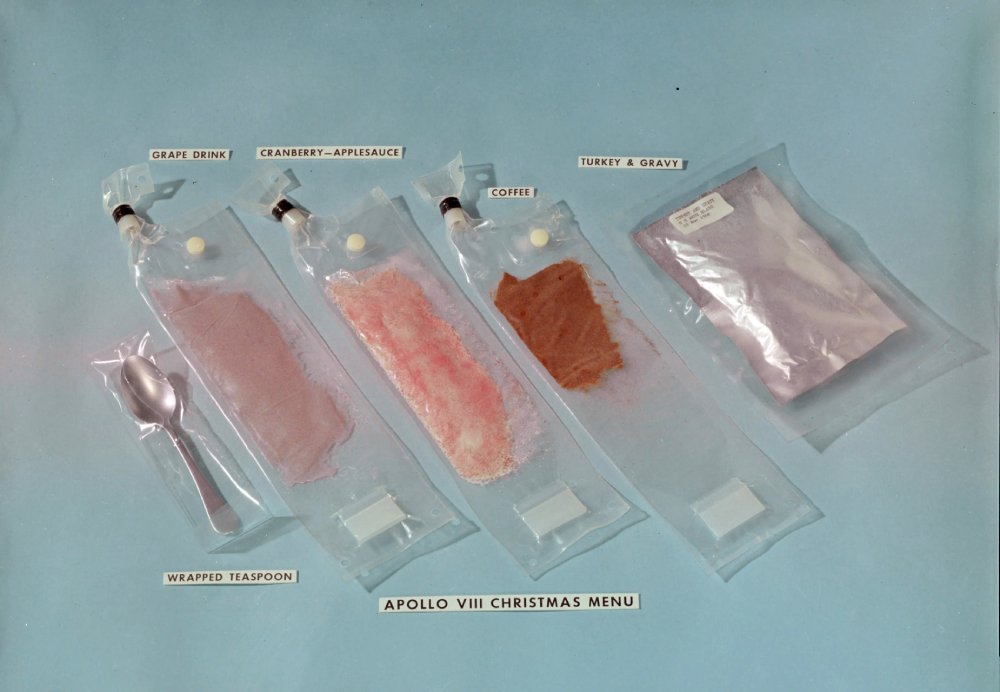
Orbiting the moon on Christmas Eve, astronauts Frank Borman, Jim Lovell, and William Anders were surprised with festive foil pouches wrapped in green and red ribbons. Instead of standard freeze-dried powder, they received thermostabilized wet turkey chunks covered in rich gravy that could be eaten normally with a spoon right out of the open bag.
7. Orange-flavored Tang – 1965
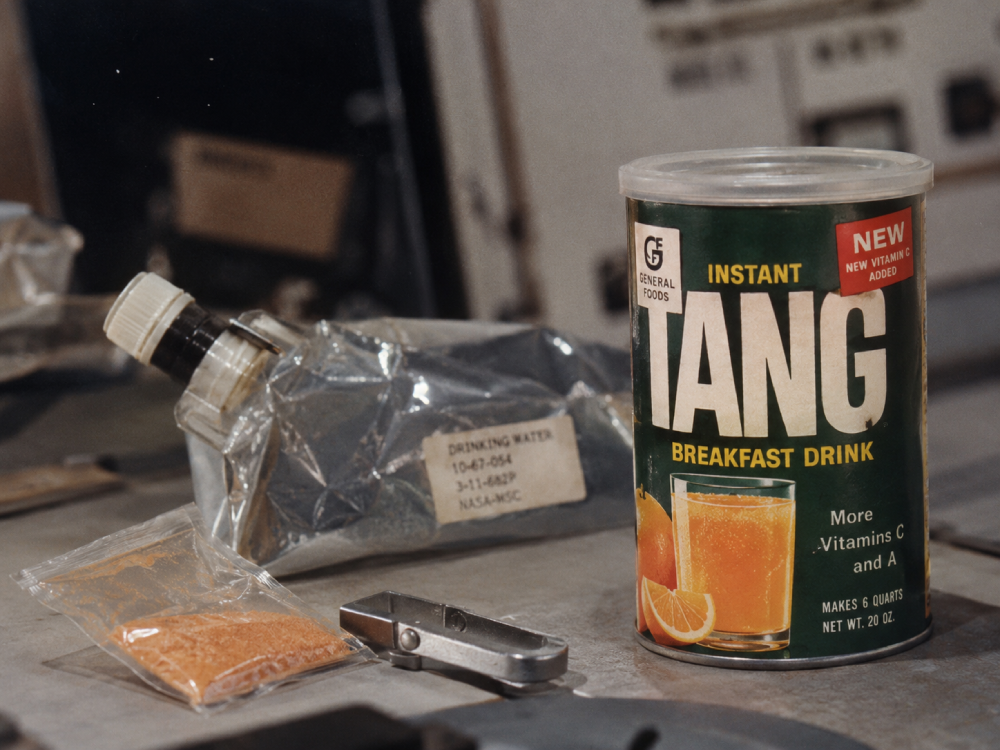
While General Foods invented this powdered citrus drink in 1957, it sat largely ignored on supermarket shelves until John Glenn and the Gemini 4 crew took it into orbit. NASA explicitly used the sugary orange powder to successfully mask the terrible metallic taste of the chemical water produced by the spacecraft’s brand-new life support systems.
8. Gherman Titov’s vegetable soup – 1961
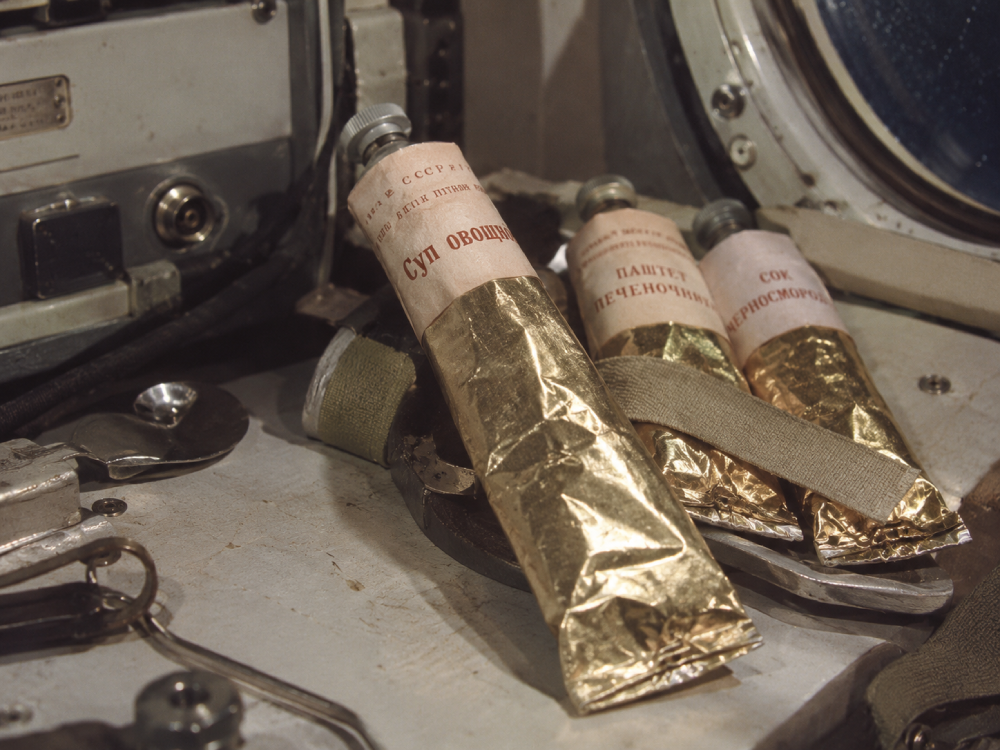
Soviet cosmonaut Gherman Titov launched aboard Vostok 2 in August 1961, carrying three metal tubes containing pureed vegetable soup, liver paste, and blackcurrant juice. Unfortunately, shortly after consuming his liquid lunch, he became the very first human in history to experience severe space motion sickness, leading to decades of specialized vestibular research.
Sign up for our newsletter
9. The first lunar peaches – 1969
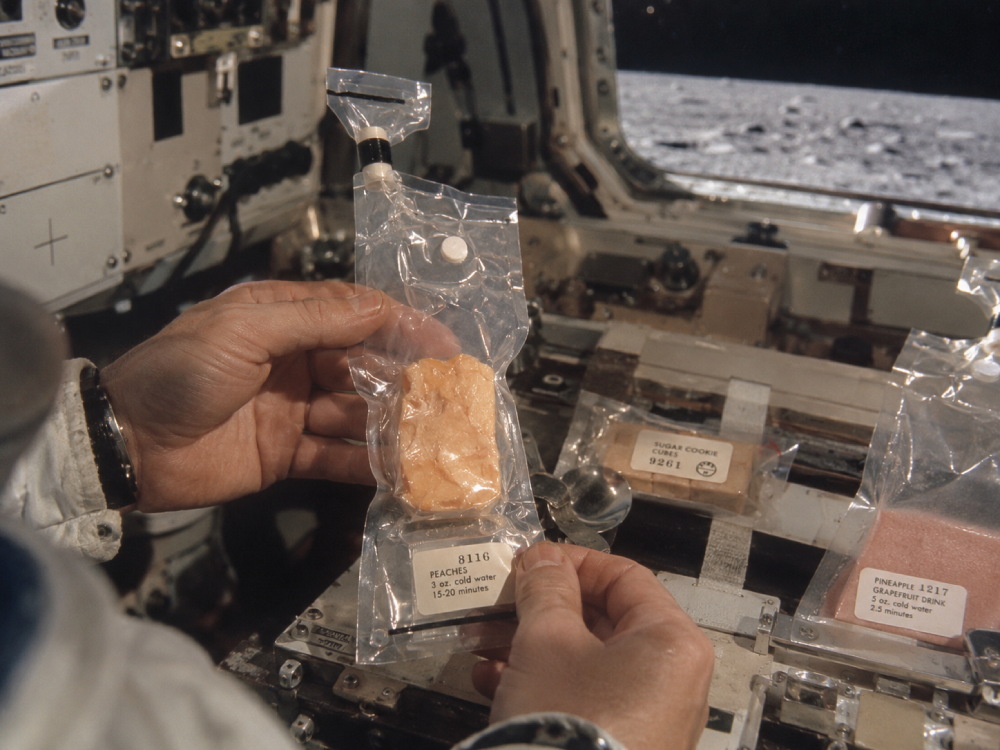
Immediately after landing the Eagle module in the Sea of Tranquility, Neil Armstrong and Buzz Aldrin shared a quiet, historic meal before stepping outside. Their heavily documented lunar surface menu included freeze-dried peaches, sugar cookie cubes, and heavily fortified fruit punch, marking the absolute first time humans dined on another celestial body.
10. In-suit apricot bars – 1971
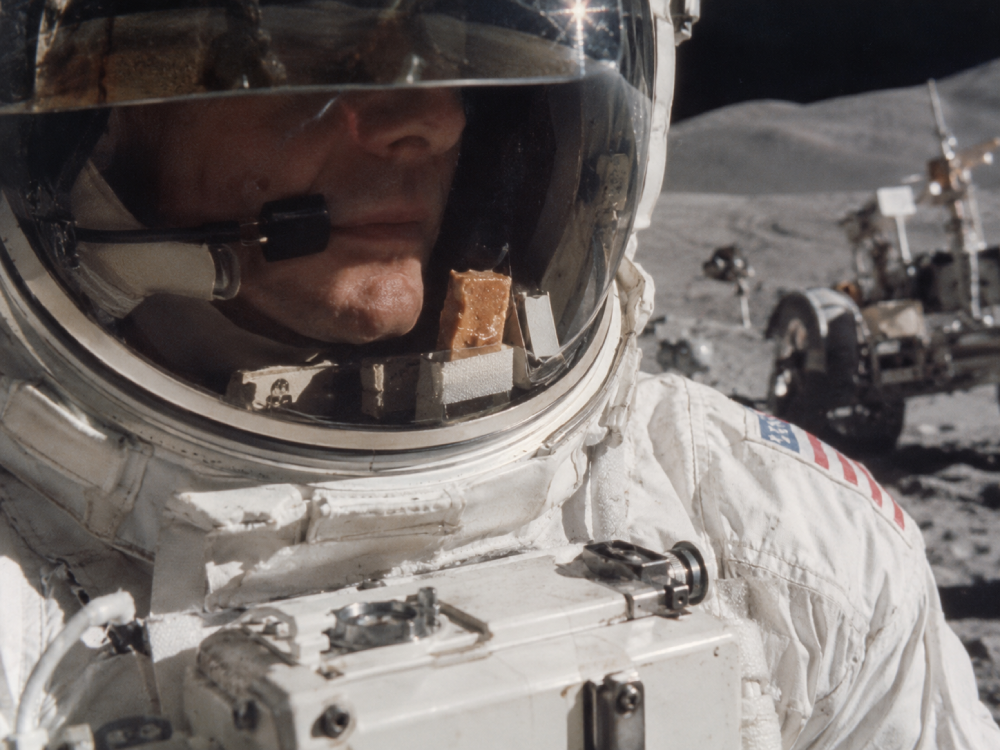
During the Apollo 15 mission, NASA introduced a clever nutritional delivery system for astronauts conducting gruelling, seven-hour moonwalks. Engineers installed a compressed apricot and cereal bar directly inside the neck ring of David Scott’s helmet, allowing him to take quick bites hands-free while driving the lunar rover across the Hadley-Apennine region.
11. Soviet tube Borscht – 1962
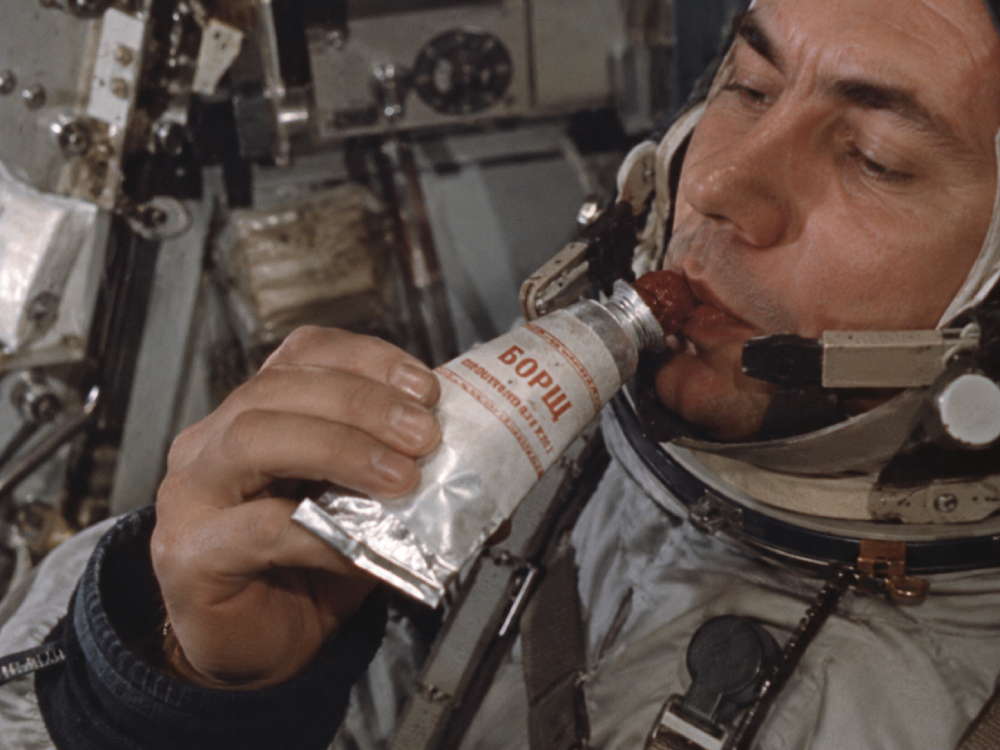
The Soviet space program absolutely refused to compromise on their traditional national cuisine, aggressively engineering ways to puree complex regional soups for orbit. During the dual Vostok 3 and 4 flights in 1962, cosmonauts Andriyan Nikolayev and Pavel Popovich squeezed heavily processed, bright red beetroot borscht directly from aluminum tubes while successfully orbiting the Earth.
12. Pillsbury space food sticks – 1970
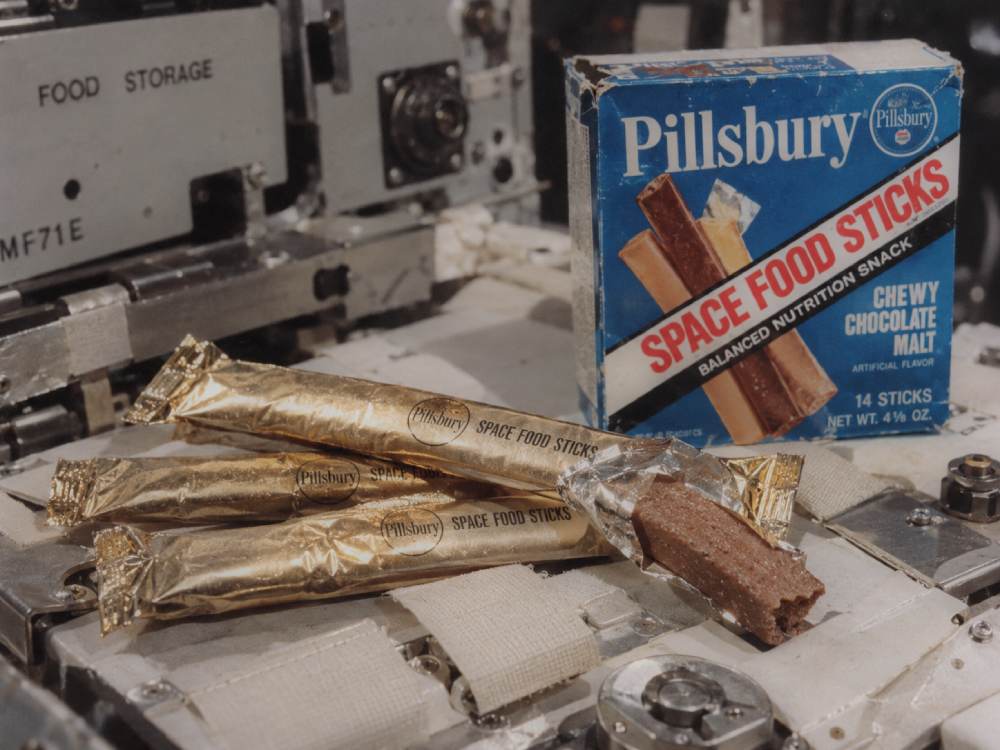
Tasked with creating a perfectly balanced, non-crumbly nutritional snack that could slide through a helmet port, Pillsbury food scientists invented a dense, chewy carbohydrate rod. Originally tested by the Apollo crews in chocolate and peanut butter flavors, these energy sticks were subsequently released to the civilian market and became a massive lunchbox staple throughout the 1970s.
In the mood for more space stories?
Looking back at these heavily engineered tubes and compressed gelatin cubes gives us a massive appreciation for the bravery of early space pioneers. While dining on cold pureed meat from an aluminum pouch sounds completely unappetizing today, these crucial nutritional experiments directly paved the way for the complex orbital kitchens found on the International Space Station. If you love exploring the fascinating history of early technology, bizarre vintage inventions, and intergalactic stories, make sure to check out these Bizarre Things Astronauts Discovered While Exploring Space or these Astronaut Myths: 17 Things They Can and Can’t Do in Space. You can also take a look at these 20 Fascinating Space Race Photos From a Bold New Era.