Human history is absolutely packed with brilliant visionaries who created revolutionary inventions that completely transformed society. However, the official patent archives are also overflowing with completely baffling contraptions designed by eccentric tinkerers who somehow managed to make basic daily tasks incredibly difficult. Instead of solving actual problems, these overengineered gadgets turned simple activities into frustrating, mechanical nightmares.
The United States Patent and Trademark Office has officially approved thousands of hilariously impractical designs over the last two centuries. Inventors spent countless hours and massive fortunes developing bizarre solutions for incredibly minor inconveniences, resulting in products that were far worse than the original problem. Exploring these forgotten mechanical failures reveals a fascinating era of misguided innovation. Here are twelve patented oddities that successfully made everyday life vastly more complicated.
1. The mechanical hat tipper
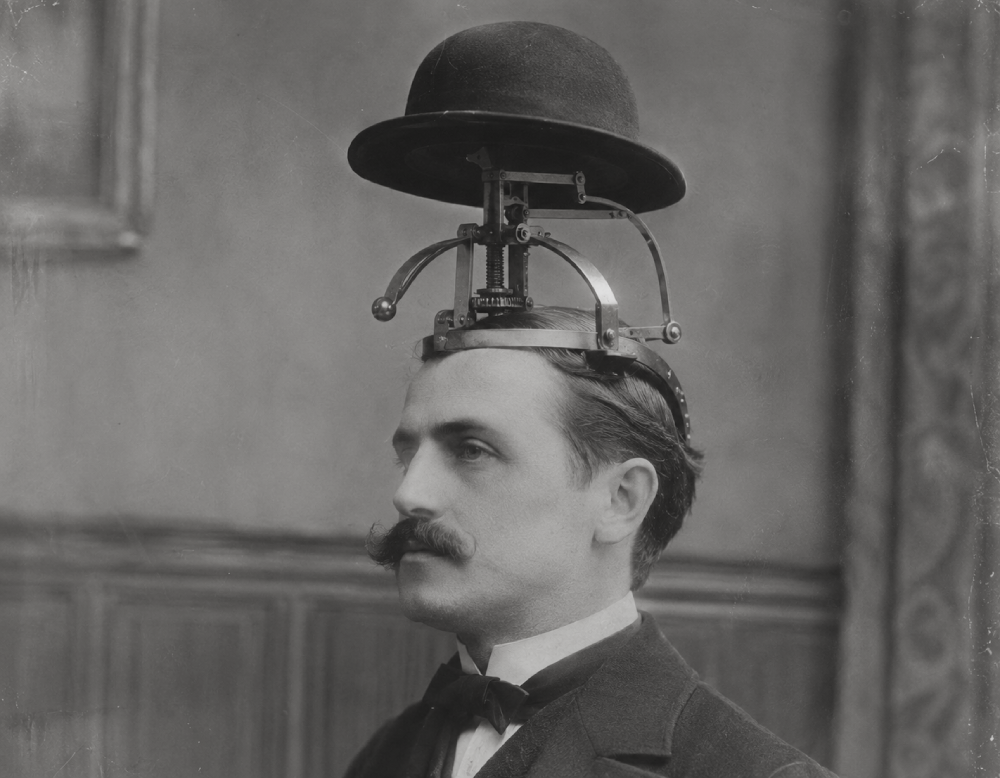
Patented in 1896 by inventor James C. Boyle, this bizarre contraption was designed to save elite gentlemen the exhausting physical effort of touching their own bowler hats. The complex spring-loaded mechanism was mounted directly inside the crown and automatically lifted the hat straight up off the scalp whenever the wearer politely bowed his head to a passing acquaintance.
2. The tapeworm trap
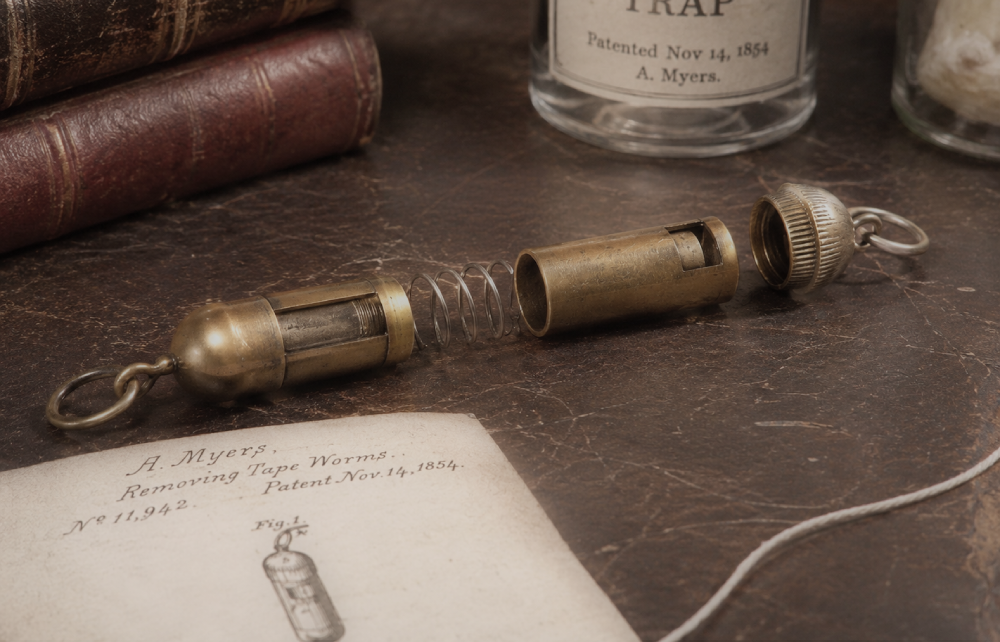
During the mid-nineteenth century, physician Alpheus Myers secured an official 1854 patent for a terrifying gold cylinder designed to extract intestinal parasites. Patients were forced to swallow the heavy metal trap attached to a long string, waiting hours for a hungry tapeworm to stick its head inside to eat the cheese bait before violently pulling the entire device back up their throat.
3. The alarm clock bed
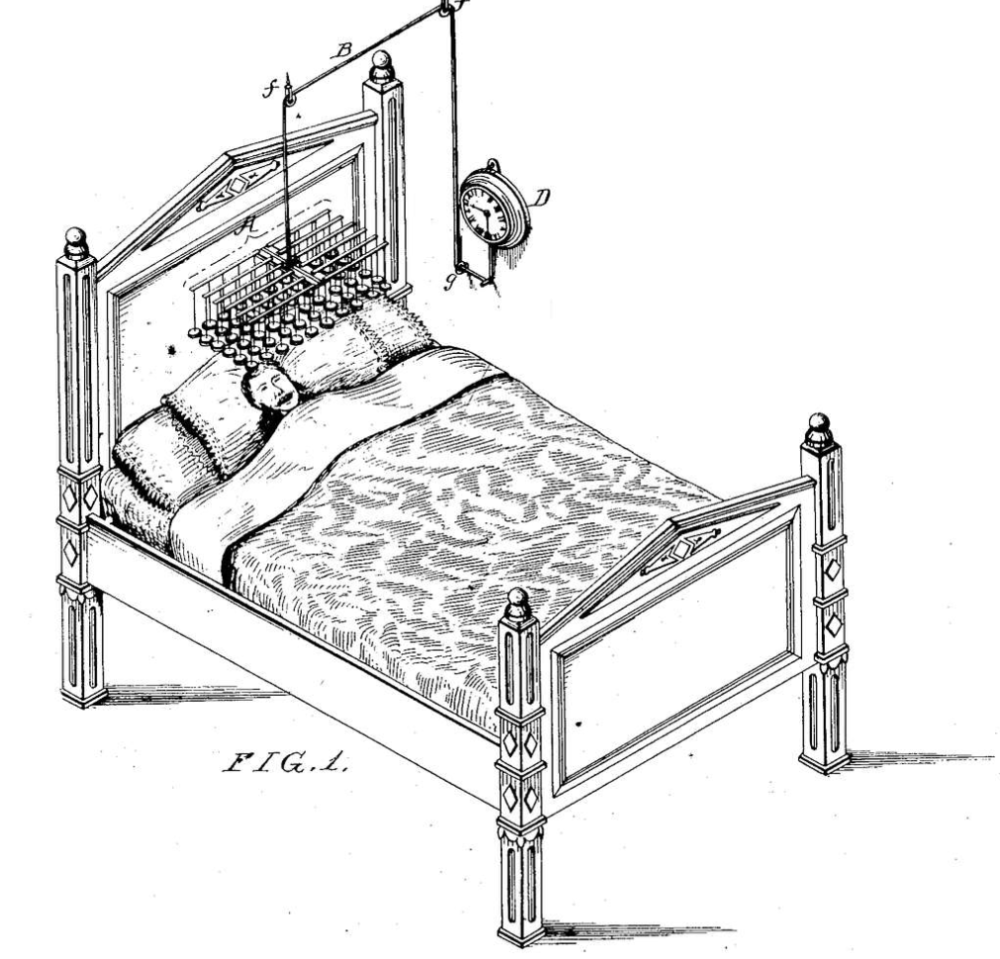
Tired of heavy sleepers ignoring standard ringing bells, Samuel S. Applegate patented a highly aggressive awakening device in 1882. His elaborate wooden contraption suspended a massive frame filled with heavy pine blocks directly above the mattress, releasing the solid weights to crash violently onto the sleeping victim’s face at a preselected morning hour.
4. The dimple maker
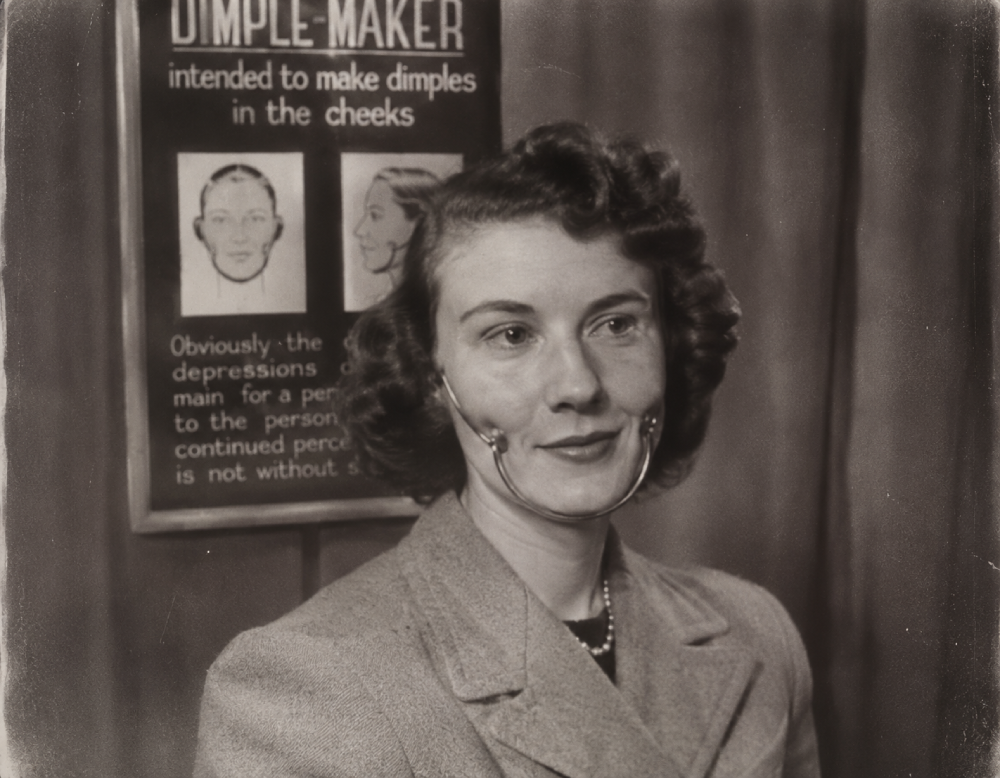
In 1936, Evangeline I.S. Carter secured a patent for a terrifying facial harness that promised to permanently alter a woman’s bone structure. The heavy metal headpiece clamped tightly around the jawline, driving two hard knobs deep into the cheeks to artificially force cosmetic dimples into the skin through hours of continuous daily pain.
5. The anti-eating face mask
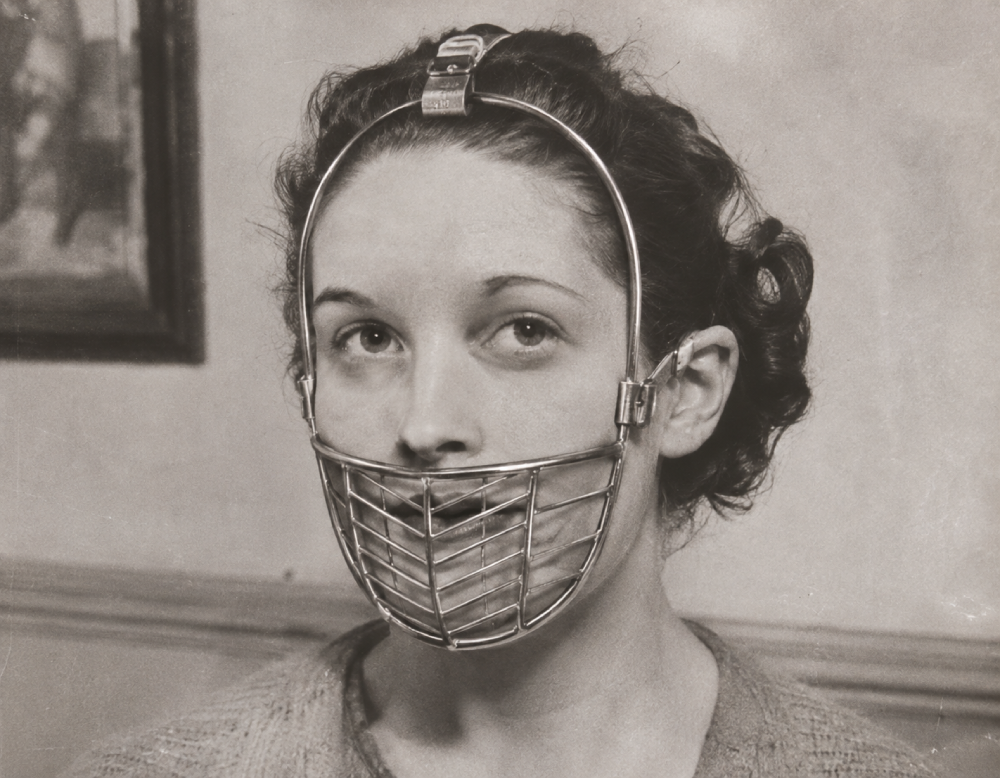
Inventor Lucy Barmby completely abandoned willpower in 1982 when she patented a literal steel cage designed to strap directly over a dieter’s head. The heavy wire mesh completely blocked the mouth and featured a specialized padlock mechanism that required users to surrender the key to a trusted friend just to avoid eating mid-afternoon snacks.
Trending on The Scroller


6. The mustache shield

Victorian gentleman Virgil A. Gates received an 1876 patent for a tiny, highly inconvenient metal guard meant to clip directly onto a standard soup spoon. The awkward attachment was supposedly designed to prevent hot broth from splashing into a well-groomed mustache, completely ignoring the much easier solution of simply wiping your face with a napkin.
7. The baby patting machine
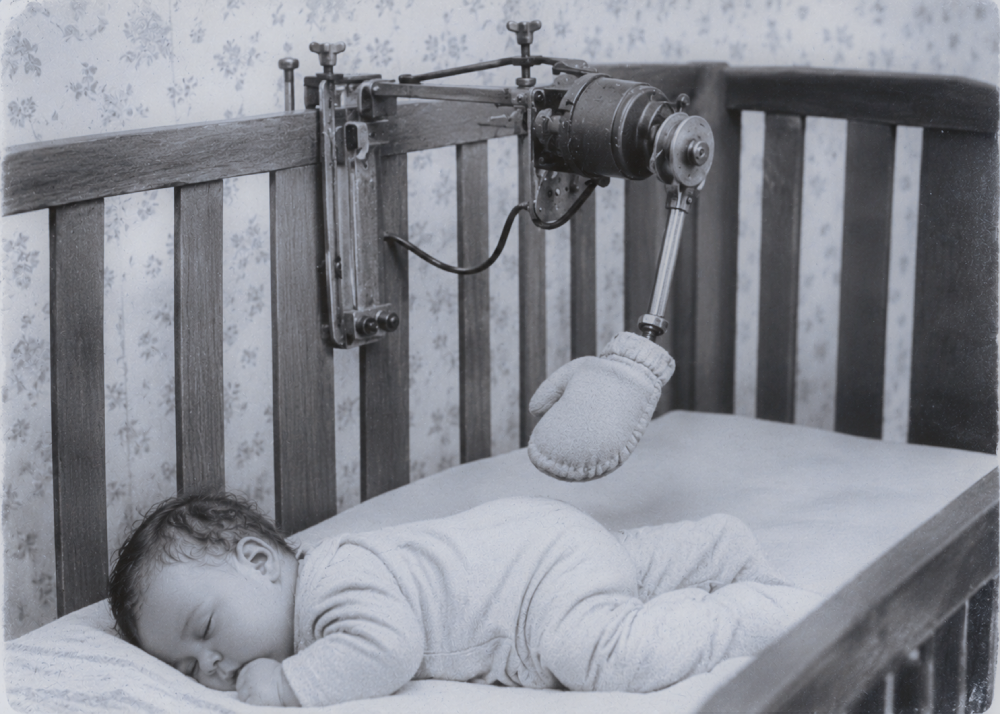
Instead of simply rocking an infant to sleep, inventor Thomas P. Jones patented a wildly creepy motorized arm in 1971 to do the parenting for you. The heavy mechanical device bolted directly to the side of a wooden crib, utilizing noisy electrical gears to repeatedly smack a heavy padded cushion against a crying baby’s bottom.
8. The high-five machine
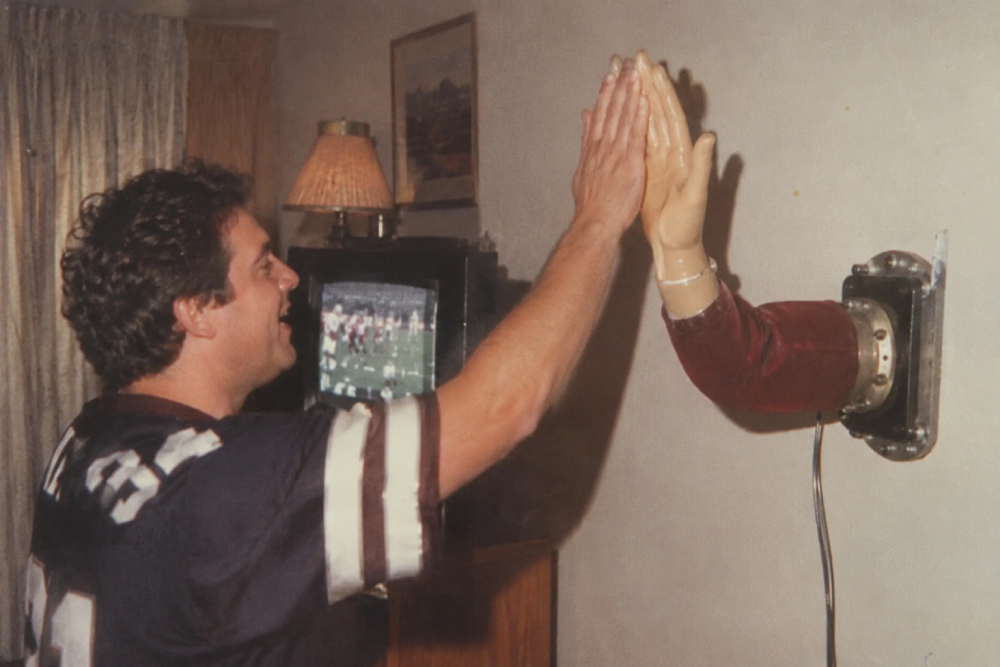
Albert R. Cohen patented the ultimate symbol of extreme loneliness in 1993 by creating a mechanical plastic hand mounted directly to a heavy wall bracket. The spring-loaded fake arm was designed for solitary sports fans to physically slap after a televised touchdown, taking a perfectly spontaneous social interaction and turning it into a sad mechanical chore.
Sign up for our newsletter
9. The spinning spaghetti fork

Rather than simply rotating their wrists, lazy diners in 1968 could purchase Paul R. Mones’s overly complex motorized eating utensil. The thick, battery-powered plastic handle utilized cheap internal gears to slowly rotate the metal prongs, making the fork incredibly heavy, difficult to wash, and wildly prone to breaking mid-meal.
10. The motorized ice cream cone

In 1998, Richard J. Hartman officially patented a chunky plastic cup featuring a battery-powered spinning top designed specifically for eating soft serve desserts. Instead of simply turning the cold treat by hand, the noisy mechanical device rotated the ice cream against a stationary tongue, transforming a relaxing summer snack into a messy mechanical engineering project.
11. The snake walking collar

Pet owner Donald A. Armentrout solved a problem absolutely no one had when he successfully patented an adjustable walking harness for reptiles in 1999. The bizarre elongated tube required owners to carefully thread their angry constrictors through a tight fabric sleeve attached to a standard leash, turning a simple backyard slither into a highly stressful wrestling match.
12. The shoe-fitted pedestrian sweeper
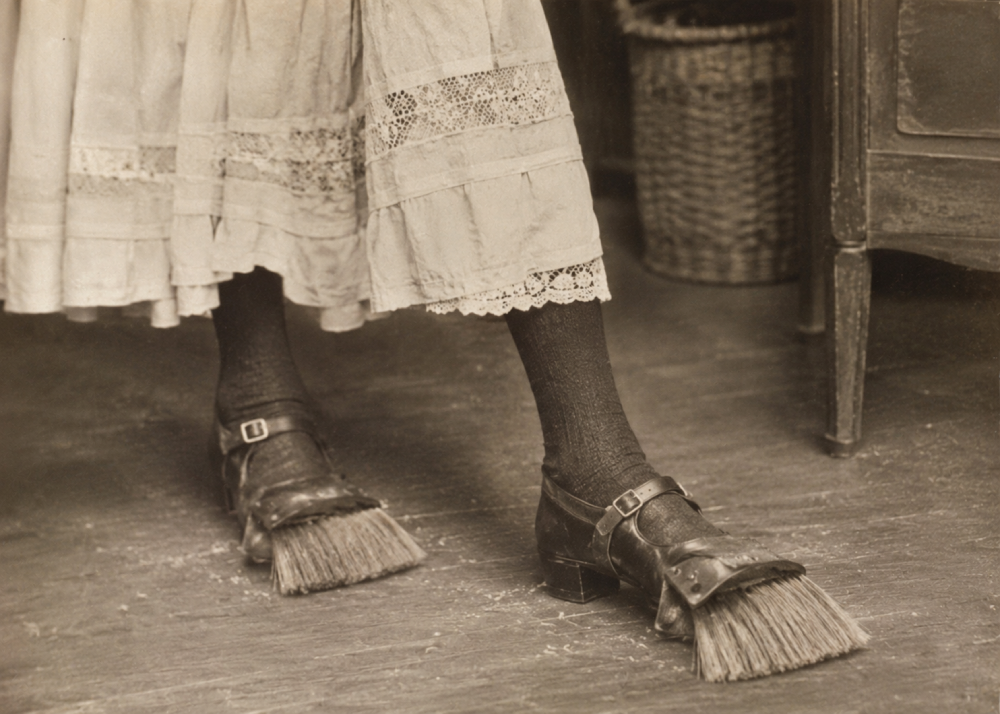
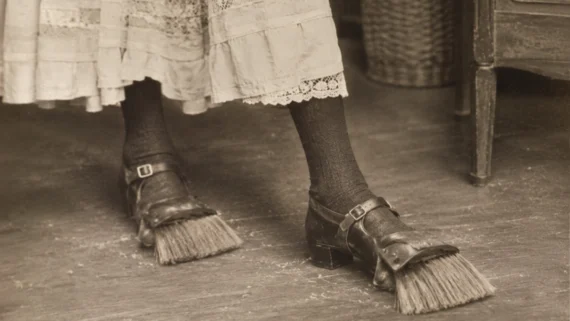
In 1910, Herbert V. Smith thought sweeping the parlor floor with a long wooden handle was far too easy. His official patent featured bulky miniature broom heads that physically strapped directly onto the toe of a standard leather shoe, forcing housewives to perform an exhausting, high-stepping dance routine just to clean up a small pile of kitchen dust.
Want to explore more interesting inventions?
Looking back at these hilariously misguided patents proves that true innovation requires much more than just a wild imagination. Sometimes, the absolute best way to solve a daily problem is to simply leave it alone and stick to the basics. If you love exploring bizarre historical trends and forgotten vintage oddities, make sure to check out these 12 Forgotten Inventions to Make Laundry Easier or these 12 Inventions Meant to Replace the Kitchen Stove. You can also explore these 14 Visionary Inventions Ahead of Their Time.