I can’t believe how far the world of gaming has come. If I were to try to figure out where things stand with some of these games and even how to go about playing them nowadays, it’d take me days to get to the bottom of that. Maybe. Before gaming chairs, RGB lighting, and elaborate desk arrangements, a bedroom gaming setup usually meant a bulky television, a console balanced on a shelf, and a collection of cartridges or floppy disks scattered nearby. Throughout the 1980s and 1990s, young gamers turned ordinary bedrooms into makeshift arcades, computer rooms, and multiplayer hangouts. Some setups were surprisingly sophisticated, while others relied on secondhand equipment and whatever furniture happened to be available. These 15 gaming arrangements capture what playing at home looked like before anyone thought to call it a gaming setup.
1. The Commodore 64 Desk With a Mountain of Floppy Disks
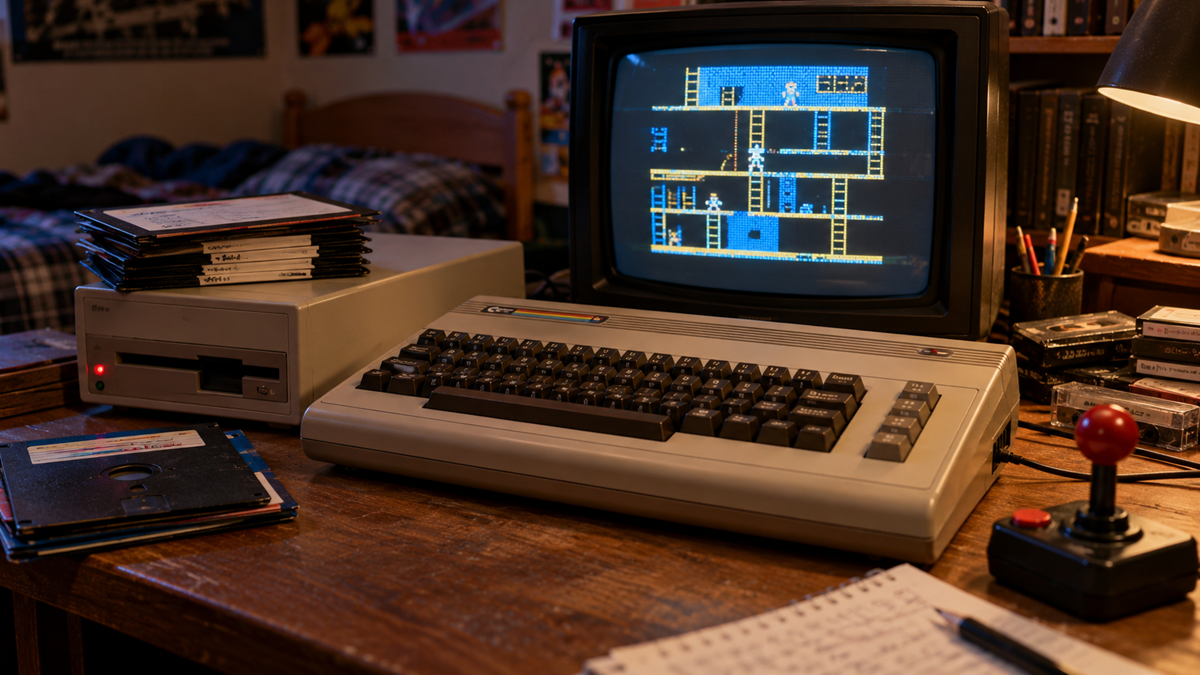
A Commodore 64 sitting on a wooden desk was a familiar sight in gaming bedrooms during the 1980s. Introduced in 1982, the computer connected to a television or dedicated monitor, while games loaded from cartridges, cassette tapes, or 5.25-inch floppy disks. Owners fortunate enough to have the Commodore 1541 disk drive often kept stacks of labeled disks nearby, filled with games such as Impossible Mission, Summer Games, and The Last Ninja. A joystick, preferably something sturdy enough to survive enthusiastic Track & Field sessions, completed the arrangement. It was technically a home computer, which also gave owners a reason to use it for homework.
2. The Nintendo Entertainment System Beneath a Small CRT
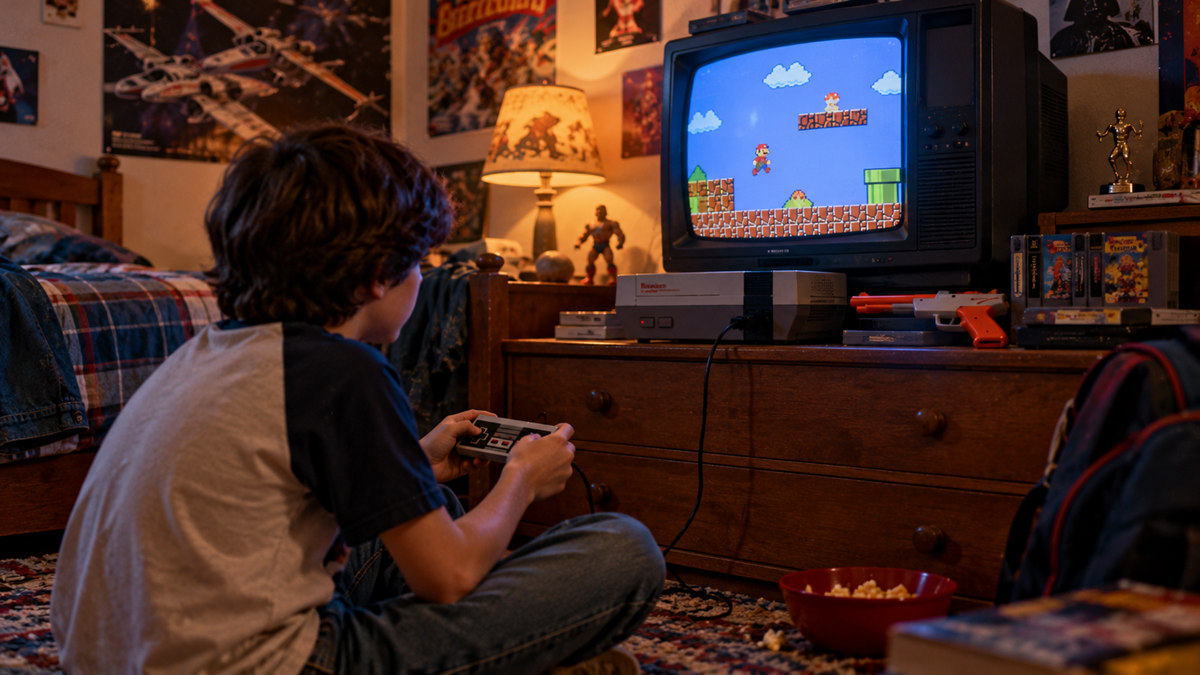
The Nintendo Entertainment System brought console gaming into countless bedrooms during the second half of the 1980s. A typical arrangement featured a compact CRT television on a dresser, the gray NES underneath, and a few cartridges lined up beside it. Super Mario Bros., Duck Hunt, and The Legend of Zelda were regular fixtures. Anyone who owned the orange NES Zapper also needed a compatible CRT screen, since the original light gun relied on the way traditional televisions displayed images. The controller cords were short enough that sitting on the floor often made more sense than finding a chair.
3. The ZX Spectrum Connected to the Family’s Spare Television
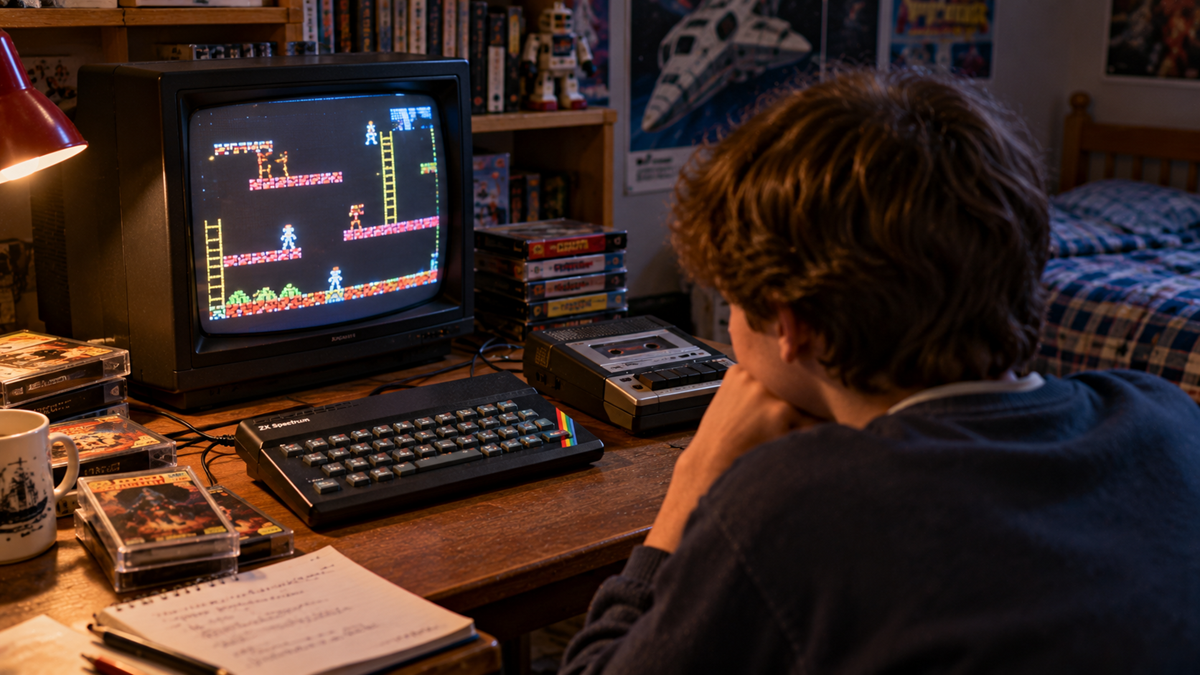
In Britain, the Sinclair ZX Spectrum became one of the defining bedroom computers of the 1980s. Its small black body and distinctive rubber keys took up little space, leaving room for a cassette recorder and piles of game tapes. Loading a game could involve several minutes of screeching electronic noises, followed by the occasional frustrating failure. Titles such as Manic Miner and Jet Set Willy made the inconvenience worthwhile for dedicated players. Some bedrooms had their own televisions, while others depended on borrowing the household set whenever nobody else needed it.
4. The Atari 2600 Corner With Woodgrain Everything
The Atari 2600 had already been around for years when it continued appearing in bedrooms throughout the early 1980s. Earlier versions featured a woodgrain front panel that matched the brown and beige furniture of the period remarkably well. The console’s joystick had a single red button, and a small collection of cartridges could provide hours of entertainment. Space Invaders, Pitfall!, and Adventure were among the games that made a modest television corner feel like a private arcade.
5. The Amiga 500 Setup That Looked Like a Music Studio
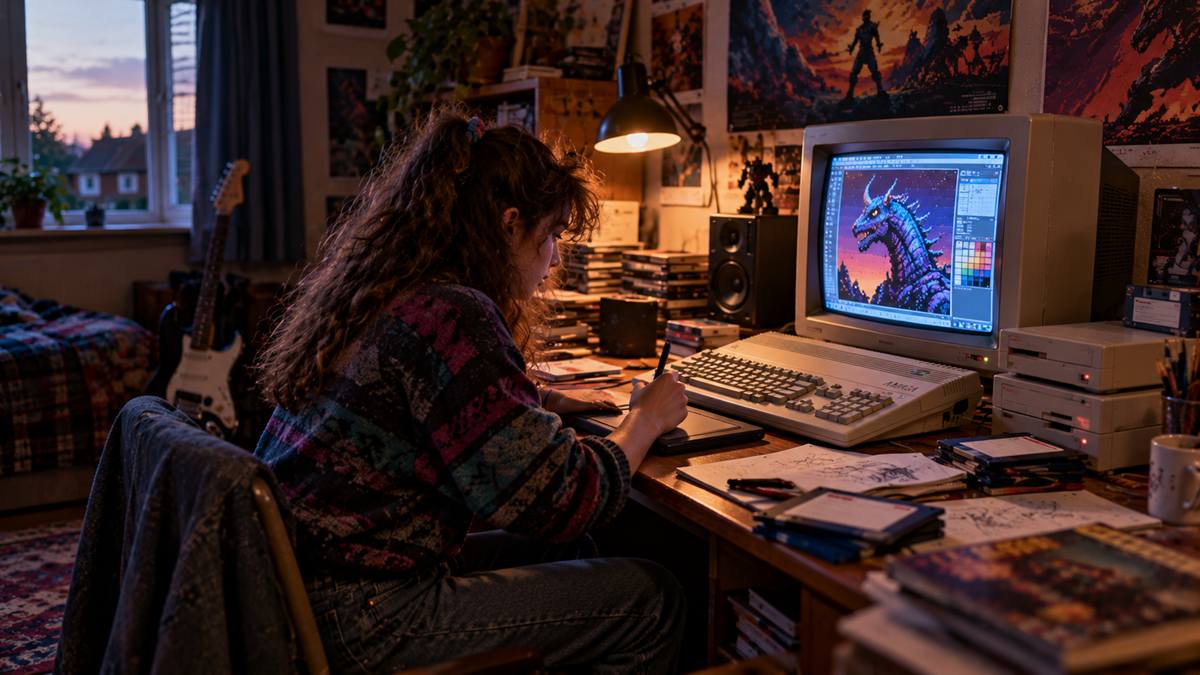
An Amiga 500 bedroom could easily resemble a small production studio, especially when the owner had invested in an RGB monitor, external speakers, and an additional disk drive. Released in 1987, the computer was particularly popular in Europe, where games such as Shadow of the Beast, Lemmings, and The Secret of Monkey Island demonstrated its audiovisual capabilities. Its built-in 3.5-inch floppy drive sat on the right side of the keyboard-shaped computer. Disks frequently ended up spread across the desk, especially when playing titles that required several swaps. For some owners, the same machine also handled drawing, animation, and music creation.
Trending on The Scroller

6. The Sega Genesis Bedroom With Sonic Posters Everywhere
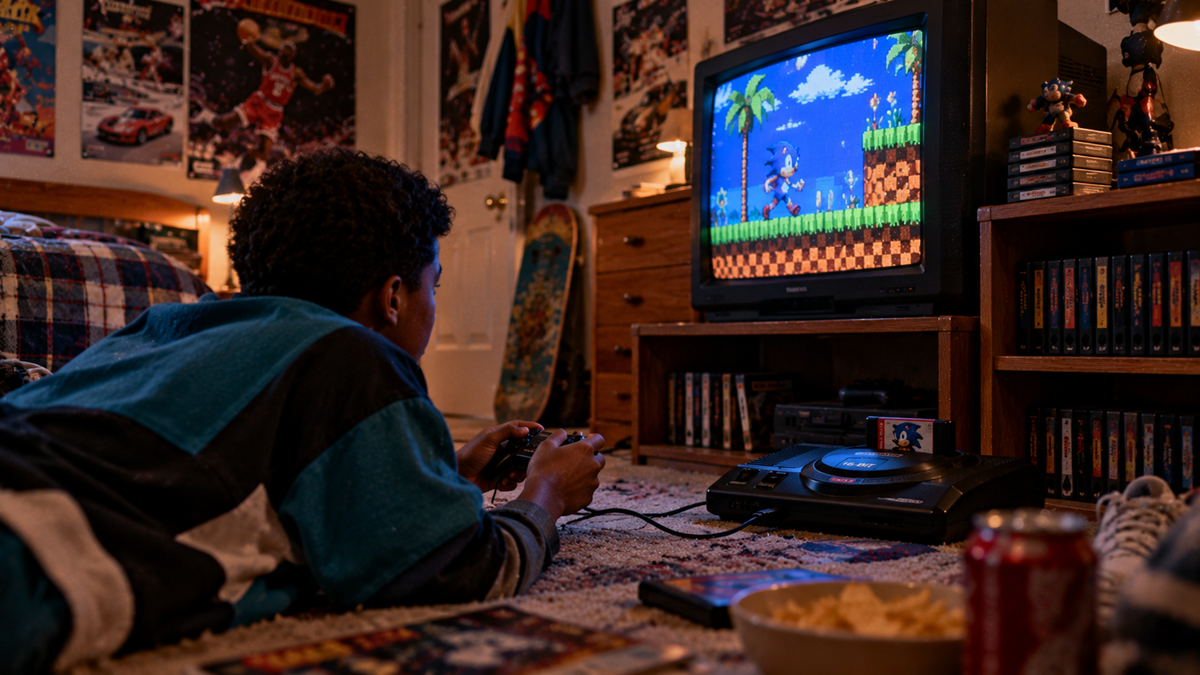
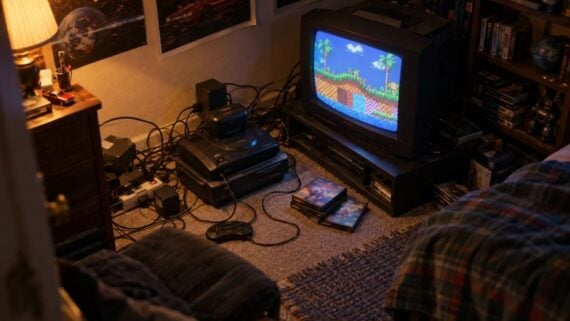
By the early 1990s, a Sega Genesis or Mega Drive connected to a bedroom television made a fairly clear statement about gaming preferences. The black console looked different from Nintendo’s gray hardware, and Sega’s advertising encouraged that distinction. Sonic the Hedgehog cartridges, sports games, and perhaps a six-button controller were common additions as the decade progressed. The setup rarely needed much furniture, although a shelf for the growing collection of cartridges helped.
7. The Super Nintendo Setup With Controllers Always Tangled
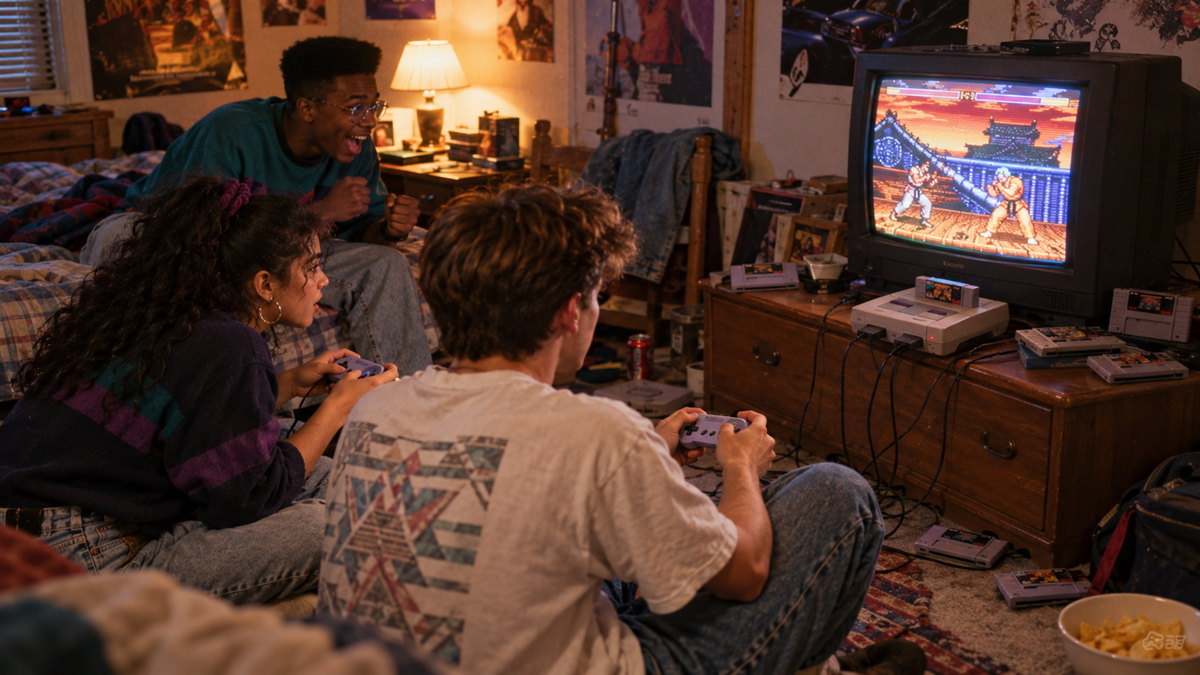
A Super Nintendo, a small CRT, and two controllers were enough to keep a bedroom occupied for an entire afternoon. Released in North America in 1991, the SNES became a favorite for games such as Super Mario World, Street Fighter II, and Donkey Kong Country. Cartridges often accumulated around the television, with their labels turned outward so the next game was easier to find. In homes where the bedroom television had only an RF connection, players sometimes had to deal with adapters and switches before getting a picture. None of that mattered much once a particularly competitive Street Fighter II match began.
8. The MS-DOS Gaming PC With a Giant Beige Monitor
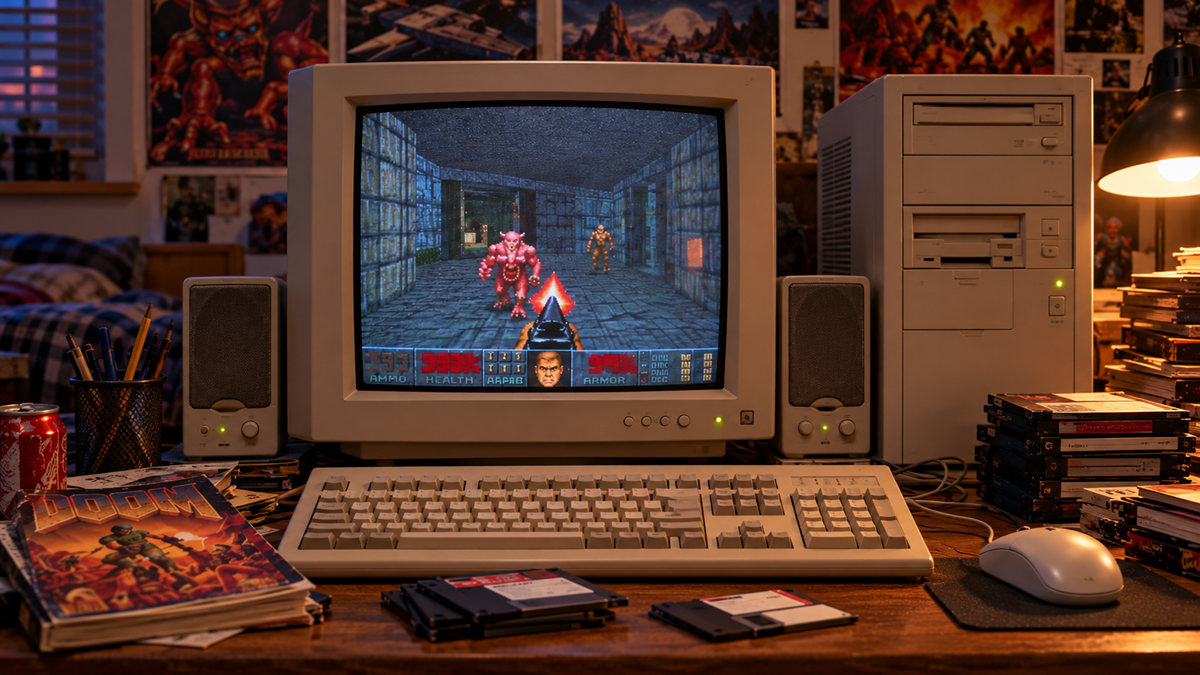
A serious PC gaming bedroom in the early 1990s generally involved a beige computer tower or desktop case, a chunky CRT monitor, and a keyboard that made plenty of noise. Games such as Doom, Wolfenstein 3D, and Commander Keen turned these otherwise ordinary-looking machines into entertainment centers. Installing a new game might mean feeding several floppy disks into the drive and hoping there was enough hard disk space. Getting sound to work properly could require configuring a Sound Blaster card or dealing with IRQ settings. The hardware rarely looked exciting from the outside, but the games were another matter.
Sign up for our newsletter
9. The Sega CD and 32X Setup With Too Many Power Adapters
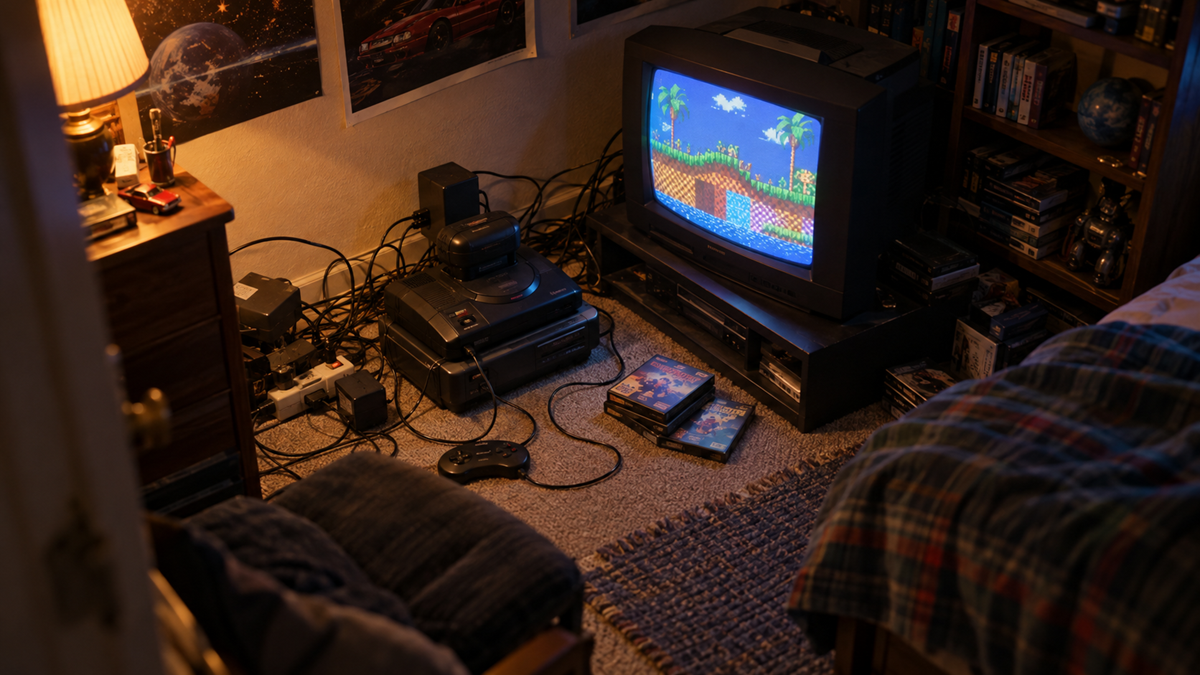
Some Sega fans took hardware collecting considerably further than a single console. By late 1994, it was possible to combine a compatible Genesis, Sega CD, and 32X into one elaborate arrangement, with the Sega CD attached alongside the Genesis and the 32X inserted into its cartridge slot. Getting everything connected meant dealing with multiple cables and three separate power adapters. Each component added its own gaming capabilities, although the expanding collection of hardware became expensive. A setup like this was certainly a conversation starter, even if finding enough electrical outlets was another challenge.
10. The Game Boy Corner With a Reading Lamp and Spare Batteries
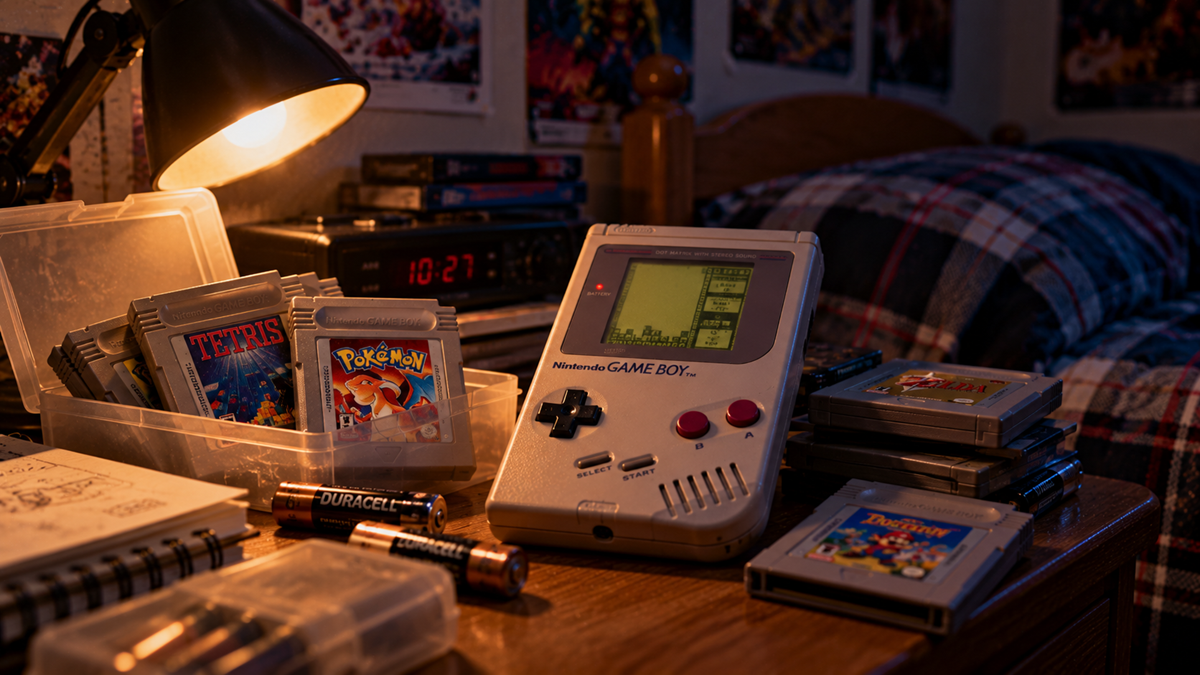
Not every bedroom gaming setup required a television. The original Nintendo Game Boy, released in 1989, often lived on a bedside table surrounded by cartridges, spare AA batteries, and some kind of portable light. Its reflective screen had no built-in illumination, making nighttime gaming difficult without a lamp or an accessory such as the Light Boy. Tetris was an early favorite, while Pokémon Red and Blue joined countless Game Boy collections later in the 1990s.
11. The PlayStation Setup With CD Cases Stacked Everywhere
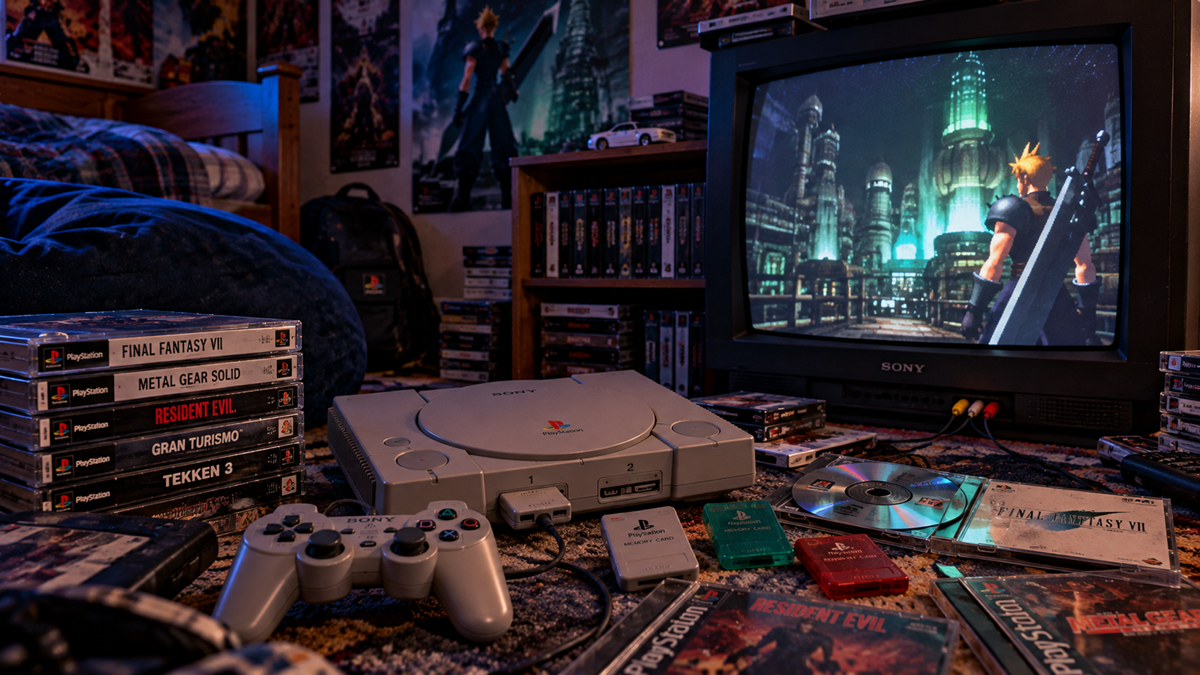
The arrival of the original PlayStation brought a different kind of clutter to gaming bedrooms. Instead of bulky cartridges, players had jewel cases, game discs, and small memory cards to keep track of. By the late 1990s, games such as Final Fantasy VII, Metal Gear Solid, Resident Evil, and Gran Turismo had helped turn Sony’s gray console into a bedroom fixture. Memory cards were especially valuable because losing one could mean losing dozens of hours of progress. Some players even kept separate cards for particular games.
12. The Nintendo 64 Multiplayer Bedroom With Four Controllers
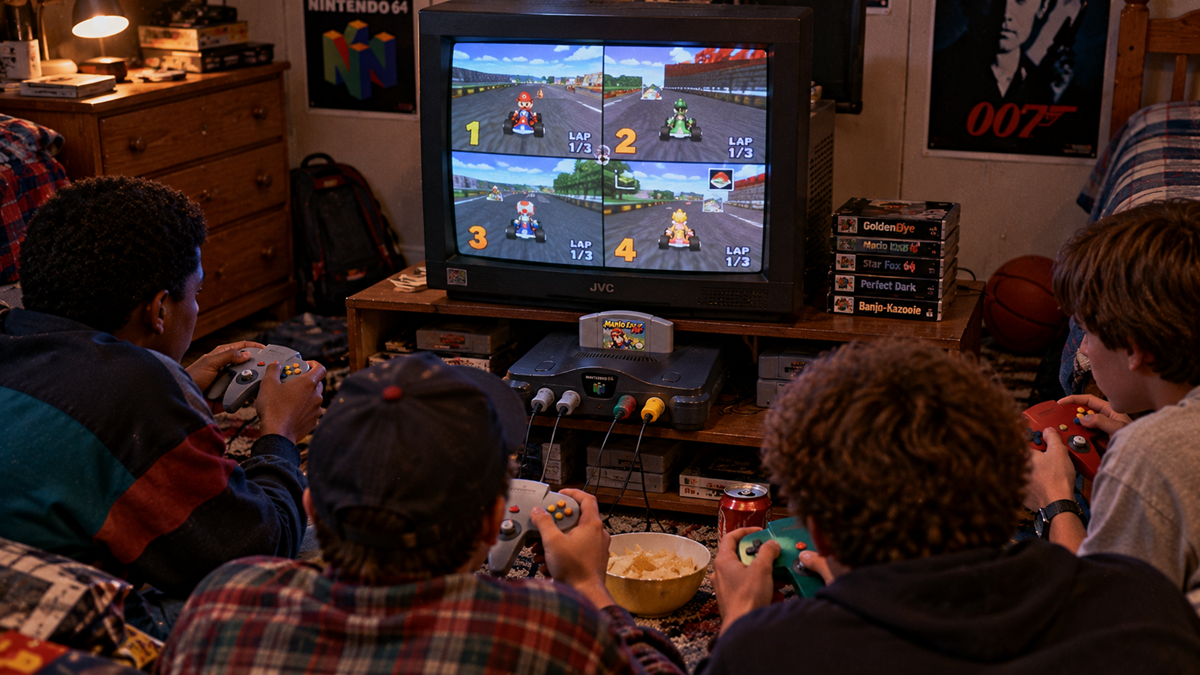
The Nintendo 64 had four controller ports built directly into the console, making it particularly convenient for multiplayer gaming. A bedroom with a decent-sized CRT television, four controllers, and a copy of GoldenEye 007 or Mario Kart 64 could become the busiest room in the house. Introduced in Japan and North America in 1996, the console also had one of the more unusual controllers of its generation, with three grips and a central analog stick. Getting four people comfortably positioned in front of a small television was often more difficult than setting up the hardware.
13. The Racing Game Setup With a Wheel Clamped to the Desk
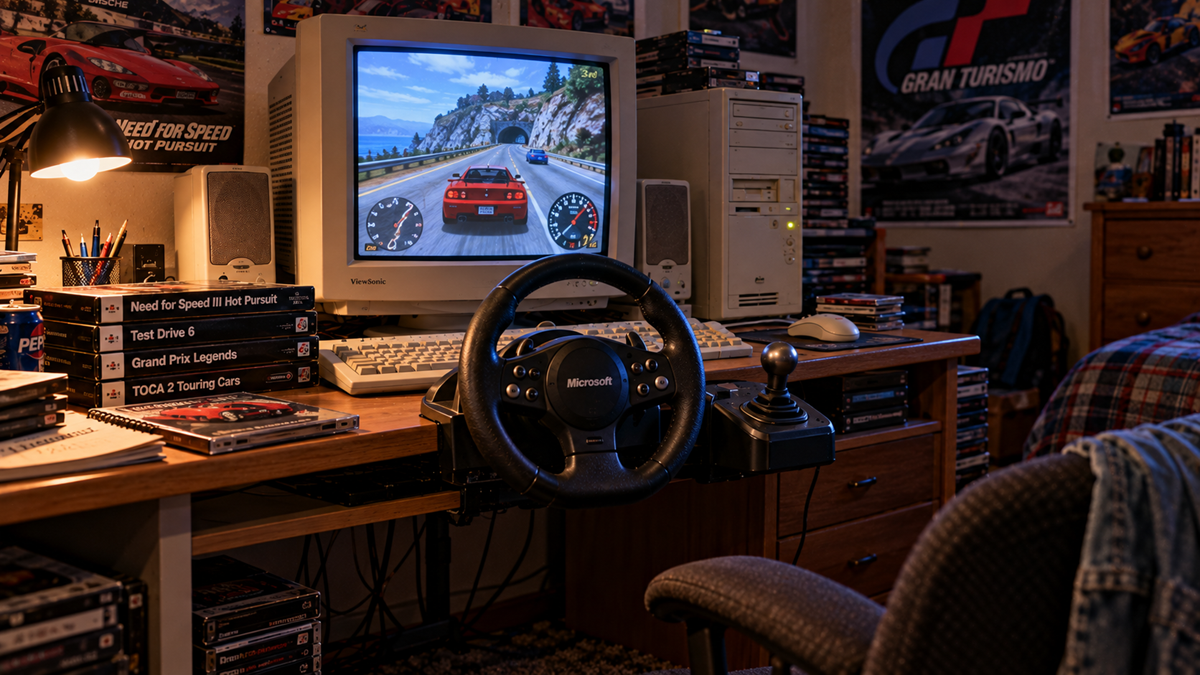
By the late 1990s, some PC gamers were attaching steering wheels and pedal sets to their desks rather than relying on keyboards. Products such as the Microsoft SideWinder Force Feedback Wheel, released in 1998, helped bring a more physical driving experience into the bedroom. Games including Need for Speed III: Hot Pursuit and Grand Prix Legends gave racing enthusiasts plenty of reasons to invest in extra equipment. The pedals usually ended up underneath an ordinary office desk, occasionally sliding out of position during a particularly aggressive corner.
14. The LAN Gaming Bedroom With Multiple PCs and Too Many Cables
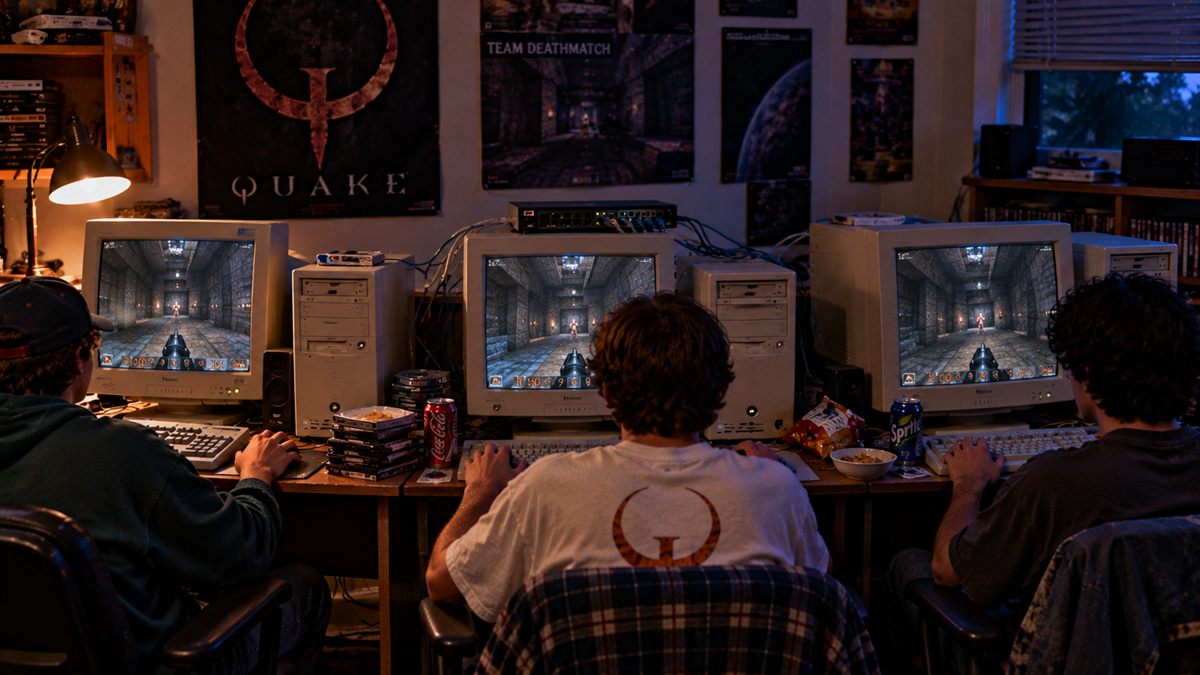
Before internet multiplayer became an everyday feature of home gaming, some dedicated PC players arranged local networks to play together. By the late 1990s, bedrooms and spare rooms could contain multiple PCs connected through Ethernet cables, hubs, or other networking equipment. Quake, StarCraft, and Half-Life were among the games that supported multiplayer sessions over local networks. Moving a complete PC setup to a friend’s house was another option, although transporting heavy CRT monitors was hardly convenient. A desk designed for homework suddenly needed enough room for multiple computers.
15. The Late-’90s Dream Setup With a Console, PC, and Stereo
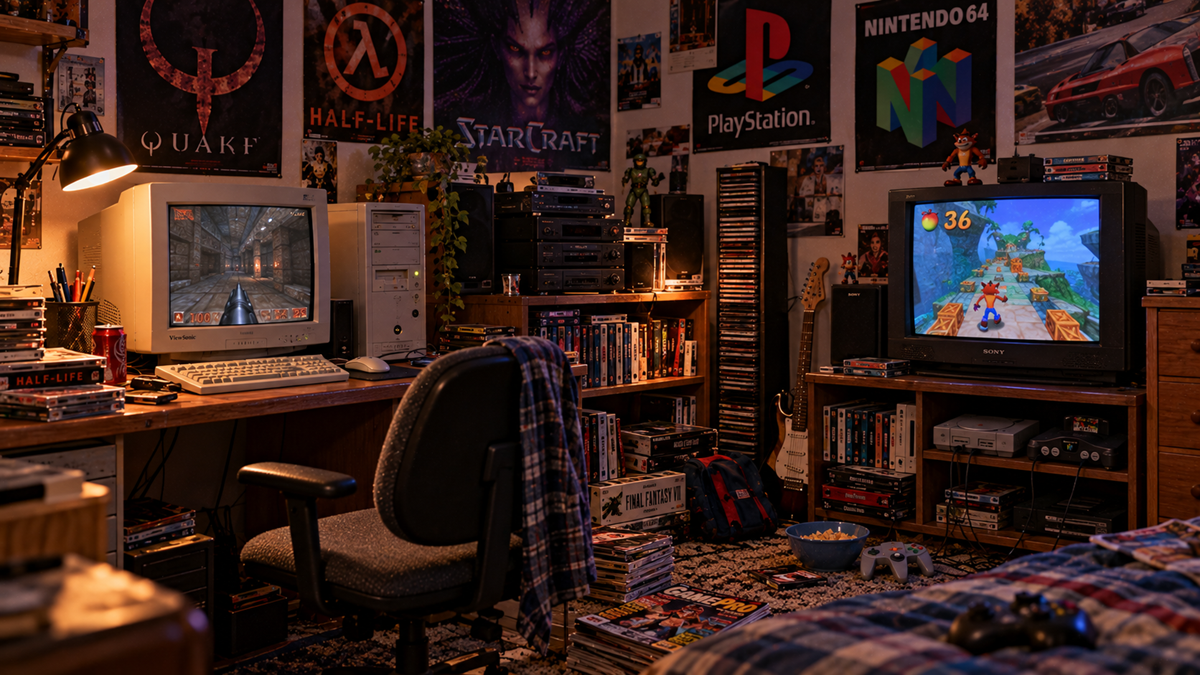
For someone seriously invested in games, an elaborate late-1990s bedroom might contain a Windows PC on one desk, a PlayStation or Nintendo 64 connected to a separate television, and a stereo system squeezed between them. CD racks, game boxes, magazine collections, and posters occupied nearly every available shelf. The computer could handle strategy games and first-person shooters, while the console was reserved for platformers, racing games, or multiplayer sessions. There was no particular design philosophy behind the arrangement. Most of it came together gradually, one birthday, holiday, or secondhand purchase at a time.
In the mood for more?
Check out 21 Retro Gaming Pics That Hit The High Score For Nostalgia, or take a look at 16 Things Every Early 2000s Bedroom Had Before Smartphones Took Over. If you want to see more retro technology, you can check out 17 Old Toys That Became Valuable Collectibles.