Food can be wildly different depending on where you are in the world. What seems unusual or even unappetizing to some is considered a delicacy in other cultures. From pungent cheeses to dishes featuring insects, people have found ways to enjoy flavors and textures that surely surprise others.
Trying unusual foods can be as much about tradition as it is about curiosity. Some dishes have been passed down for generations, while others are eaten purely for the thrill of something different. Either way, the foods that made this are surely shocking. Let’s take a look at 15 strange foods that people actually eat.
1. Surstromming

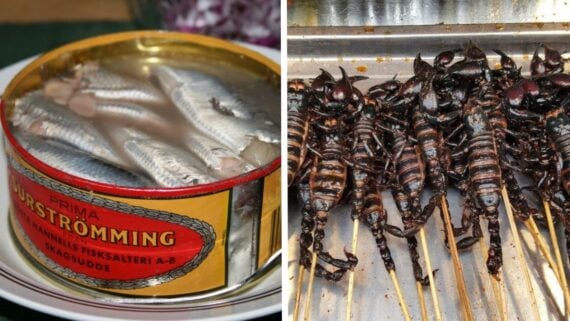
Surstromming is a traditional Swedish dish made from fermented herring. The fish is fermented for several months, resulting in an extremely strong odor that can overwhelm even seasoned foodies. It’s typically eaten outdoors because the smell is so potent that it can linger for days in enclosed spaces. Swedes usually enjoy it with flatbread and onions to balance the intense flavor. Despite the awful smell, locals swear by its complex, tangy taste. Check out an outsider’s reaction to the dish here.
2. Balut

Only certain foods should be fermented, and fertilized duck embryo is not one of them. Balut is a fertilized duck embryo that is boiled and eaten directly from the shell. It is normally seen as a street food and is considered a rich source of protein. Balut is usually seasoned with salt or vinegar and is considered both a delicacy and a test of courage for outsiders.
3. Casu Marzu

Casu Marzu is a Sardinian cheese made from sheep milk that contains live insect larvae. The larvae help break down the cheese, creating a super soft and creamy texture. Here’s the real kicker, though: eating it is illegal in some countries due to health concerns. The flavor is described as strong and spicy, and people say it tastes unlike any other cheese. Well… no duh, no other cheese has insect larvae breaking it down and living in it.
4. Hakarl

Hakarl is fermented shark from Iceland, and it is often made from Greenland sharks. The preparation involves curing the meat for several months to remove toxic compounds, resulting in a food with a smell that matches ammonia. That’s exactly what I like my food to smell like, ammonia. People say it tastes sharp and pungent, challenging even experienced food adventurers. Most visitors struggle with the first bite, though locals treat it as a delicacy.
5. Fugu

Fugu is a pufferfish that is famous for being potentially lethal if made incorrectly. Only licensed chefs in Japan are supposed to prepare it, ensuring the dangerous tetrodotoxin is carefully removed. The meat is prized for its delicate taste and chewy texture. Eaters mostly eat it as sashimi or grilled, and part of its appeal comes from the risk of consuming it. Who doesn’t love the threat of death while eating dinner?
Trending on The Scroller


6. Escamoles

Escamoles are ant larvae harvested from the roots of agave plants, sometimes called “insect caviar.” They are described as having a nutty, buttery taste and a texture similar to cottage cheese. Often prepared with butter and spices, they are served in tacos or omelets. The dish has been eaten in Mexico for centuries, and is still valued for its protein content.
7. Century Eggs

Century eggs are duck, chicken, or quail eggs preserved in a mixture of clay, ash, and salt for several weeks or months. The yolk turns dark green or gray and develops a creamy texture, while the white becomes a translucent brown jelly. Yes, brown jelly. People say the flavor is rich and the smell is pungent, and while the appearance can be off-putting for outsiders, the flavor is cherished in Chinese cuisine.
8. Stink Bugs

In parts of Africa, stink bugs are harvested, roasted, and eaten as a snack. Their flavor is described as spicy and bitter, but beyond taste, they are valued as a high-protein source that is extremely valuable to communities where meat is scarce. Eating them is a communal activity, where children and adults gather to collect and prepare them together. While the idea may sound unusual, they are a traditional and respected food source.
Sign up for our newsletter
9. Huitlacoche

Huitlacoche is a type of fungus that grows on corn, sometimes called “corn smut.” It has a soft texture and a flavor like mushrooms. People put it on quesadillas, on tamales, or in their soup. Though it may look a bit unappetizing, it is highly prized for its unique texture and taste. The world’s most prized culinary experts appreciate it for its subtle flavor and versatility in cooking.
10. Fried Scorpions

Fried scorpions are commonly sold on night market skewers in China. They are deep-fried until crispy and seasoned with salt or chili. People say it tastes slightly bitter, but not at all what you’d expect. Scorpions are eaten whole, including the legs and tail. This food is popular with adventurous eaters and tourists.
11. Bird Nest Soup
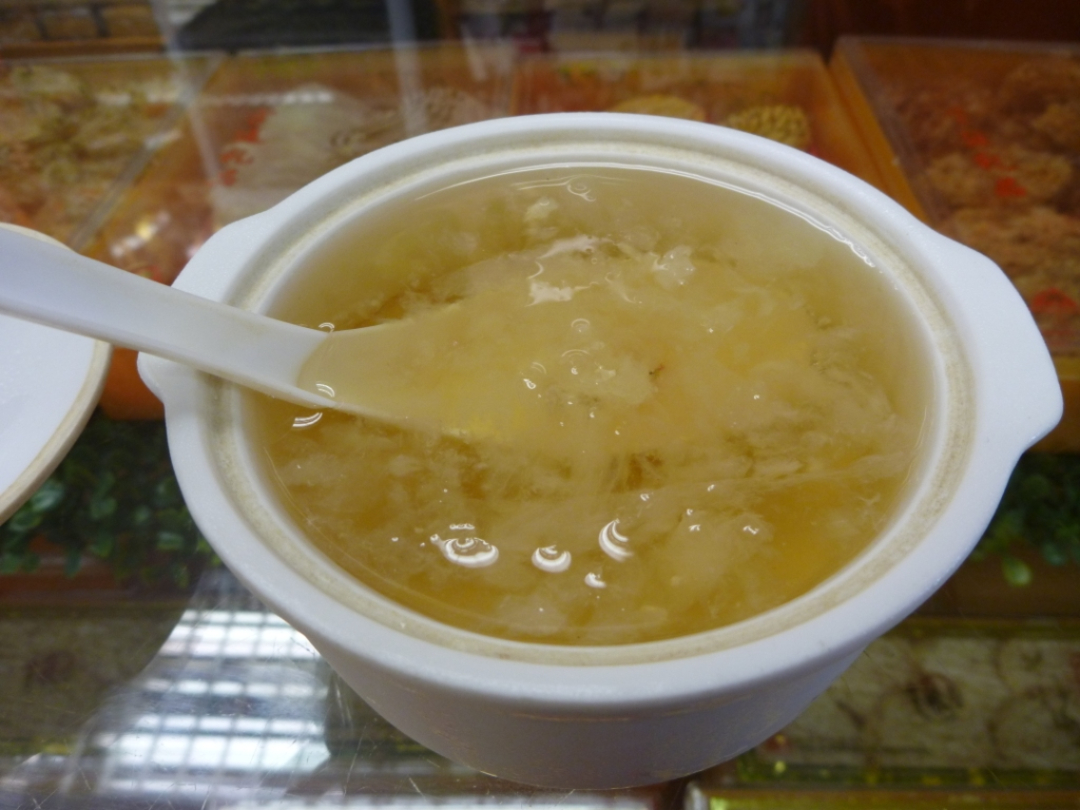
Bird’s nest soup is made from the hardened saliva nests of swiftlets. The nests dissolve when cooked, creating a gelatinous texture. This dish is highly prized and can be very expensive. It is believed to promote health and improve skin. The flavor itself is mild, with the appeal coming from texture and tradition. Harvesting the nests requires skill and careful timing.
12. Ant egg soup

Ant egg soup is made using the eggs of weaver ants. The eggs have a soft texture and a slightly sour taste. They are cooked in broth with herbs and vegetables. This dish is valued for its protein and unique flavor, and is often eaten during festivals or special occasions.
13. Fried Tarantulas

Fried tarantulas are a Cambodian street food that has gained international attention for its shock factor. The spiders are marinated, fried until crispy, and sometimes sprinkled with sugar or salt. The exterior is crunchy while the interior remains soft, offering a unique texture combination. They are eaten whole, legs and all, and are sometimes compared to crab in taste. Originally a famine food, they have become a popular snack among locals and tourists.
14. Chapulines

Chapulines are grasshoppers commonly eaten in Mexico, especially in Oaxaca. They are toasted with garlic, lime, and chili, giving them a crunchy, tangy flavor. These insects are high in protein and are often used as toppings on tacos, in soups, or as snacks. Eating chapulines is a centuries-old practice rooted in both nutrition and cultural heritage. The taste is surprisingly addictive for those willing to try them.
15. Escargots de Bourgogne

While snails may seem tame compared to some of these other foods, escargots are still considered strange to many people. They are prepared with butter, garlic, and parsley, and are eaten directly from the shell. The texture is tender yet chewy, and people love the flavor. Eating snails dates back centuries in France and is considered a gourmet tradition.
Want to see more wacky food content?
Check out 20 Fast Food Fails That Are Too Horrible To Ignore, or take a look at 20 Food Fails That Are Anything But Appetizing. Finally, if you want to see expensive food fails, check out 20 Expensive Food Plating Fails From ‘Fancy’ Restaurants.