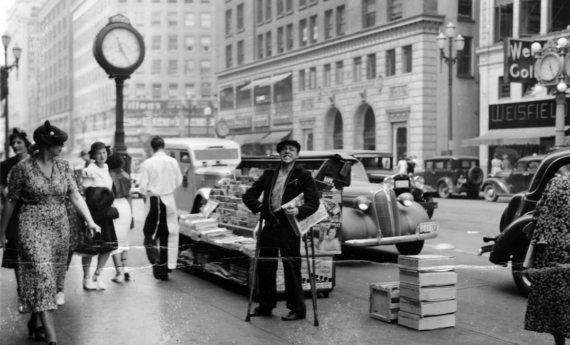
Before news arrived on a phone, picking up a paper was part of the day for millions of Americans. Newsstands made that habit easy, whether someone was heading to work, waiting for a trolley, or passing through an unfamiliar city. They also sold magazines, postcards, and papers from far beyond the neighborhood. These 15 photographs trace the places where people stopped to find out what was happening.
1. The Corner Newsstand, Seattle (1926)
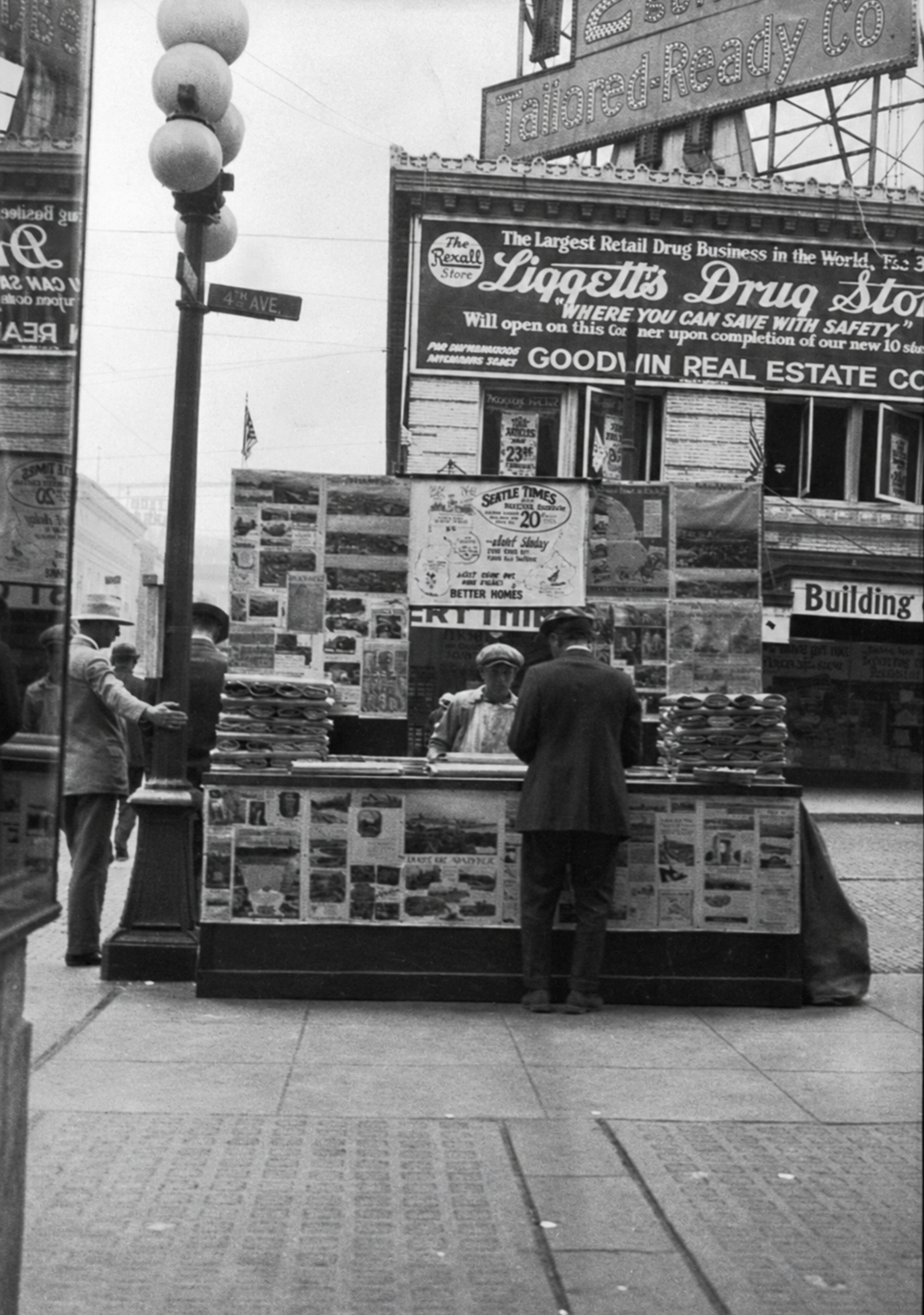
For downtown workers, a newsstand made it easy to pick up a paper on the way to work or catch an evening edition on the way home. Regular customers might return to the same corner every day, turning a quick purchase into a familiar part of the commute.
2. A Young Newsstand Worker, Seattle (1926)
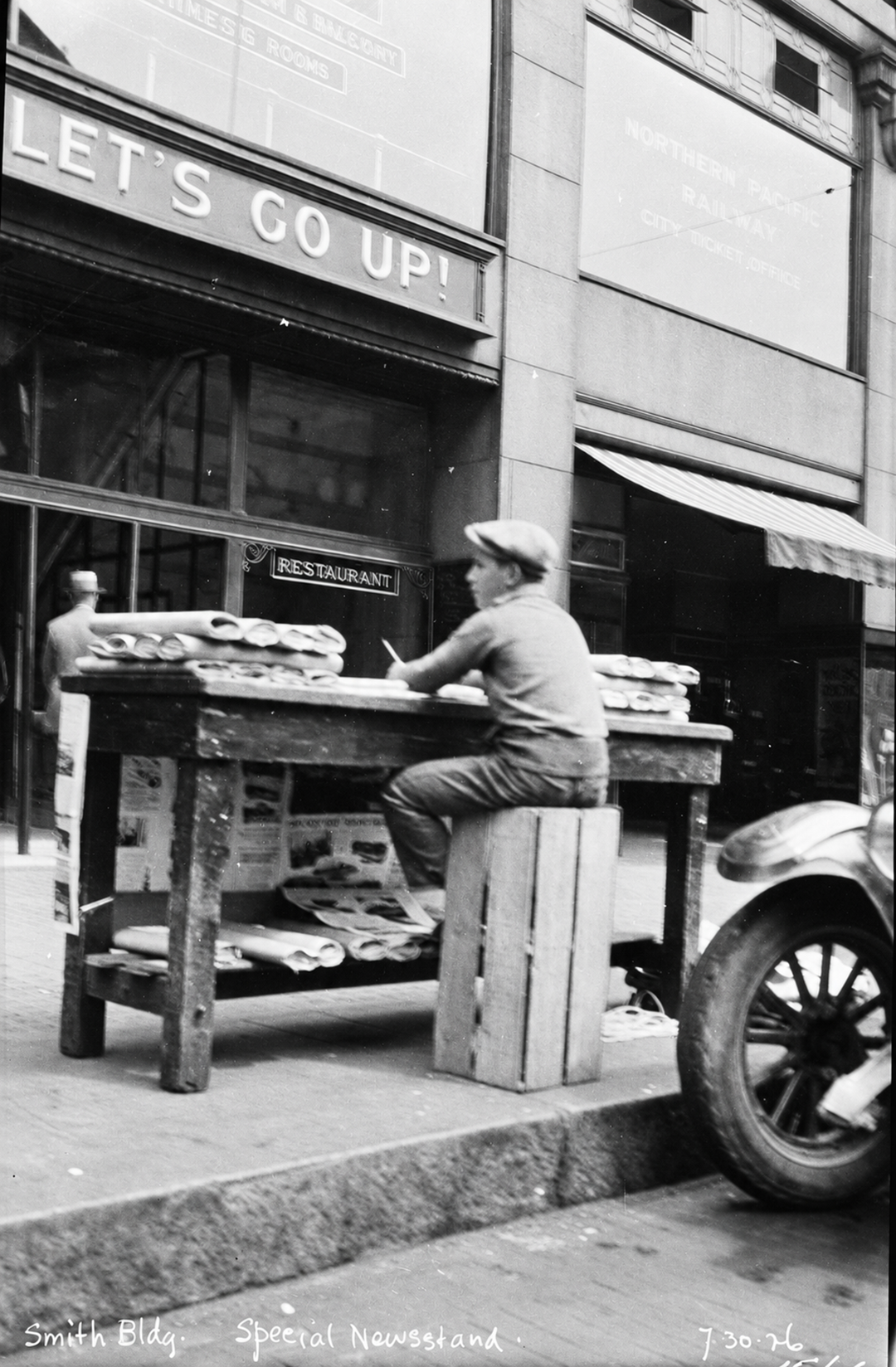
Selling newspapers gave some children a way to earn money in American cities during the early twentieth century. The work meant keeping track of editions, handling payments, and waiting for customers even when business was slow. For this boy in Seattle, the sidewalk was a workplace as well as part of his neighborhood.
3. A Chicago Newsstand (1940)
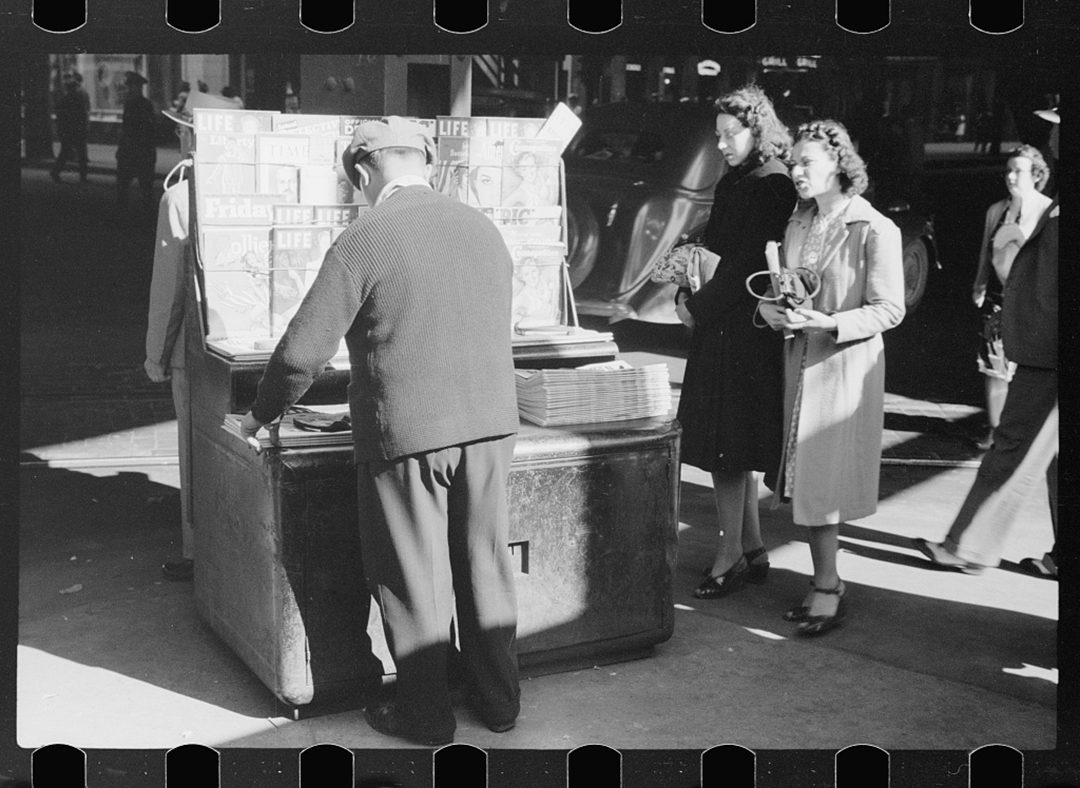
In July 1940, news from the war in Europe gave Chicago readers plenty of reason to check the latest headlines, even as the United States remained outside the fighting. Newspapers offered updates throughout the day; weekly magazines gave people more to read after they got home.
4. A Newsstand on South Broad Street, Philadelphia (1939)
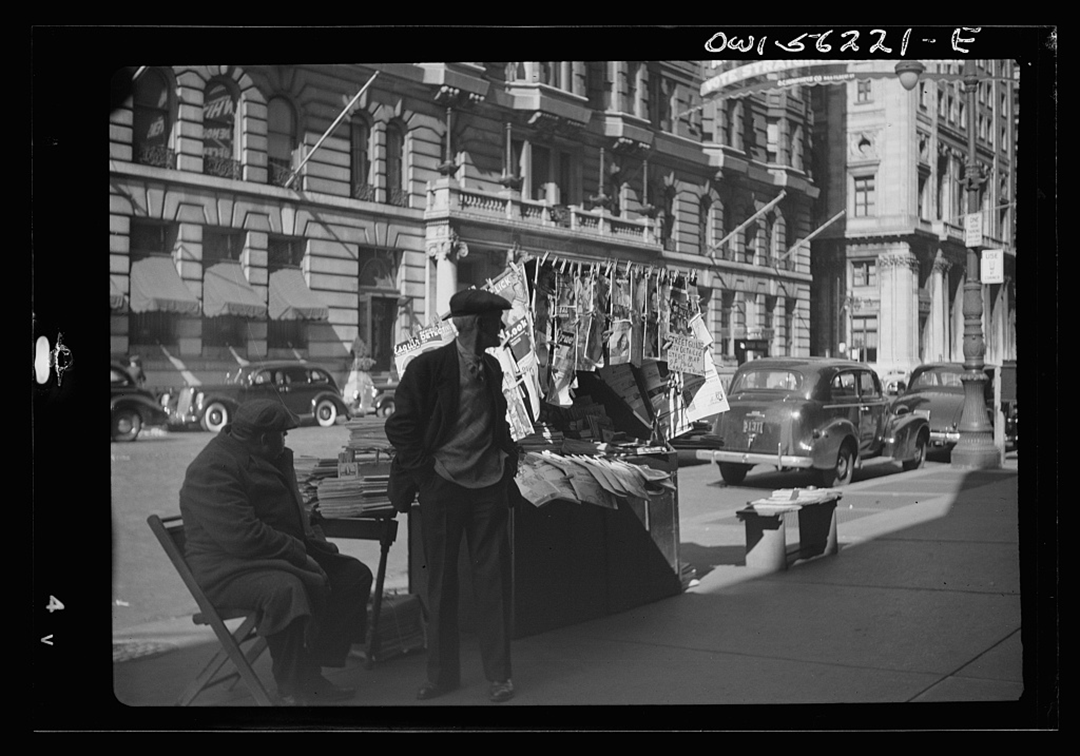
On a busy street like South Broad, a newsstand could reach people who had never planned to enter a shop. A passing headline might be enough to make someone stop, while regular customers knew where to find their usual paper. In spring 1939, a small stretch of sidewalk was valuable retail space.
5. A Minneapolis Newsstand (1937)
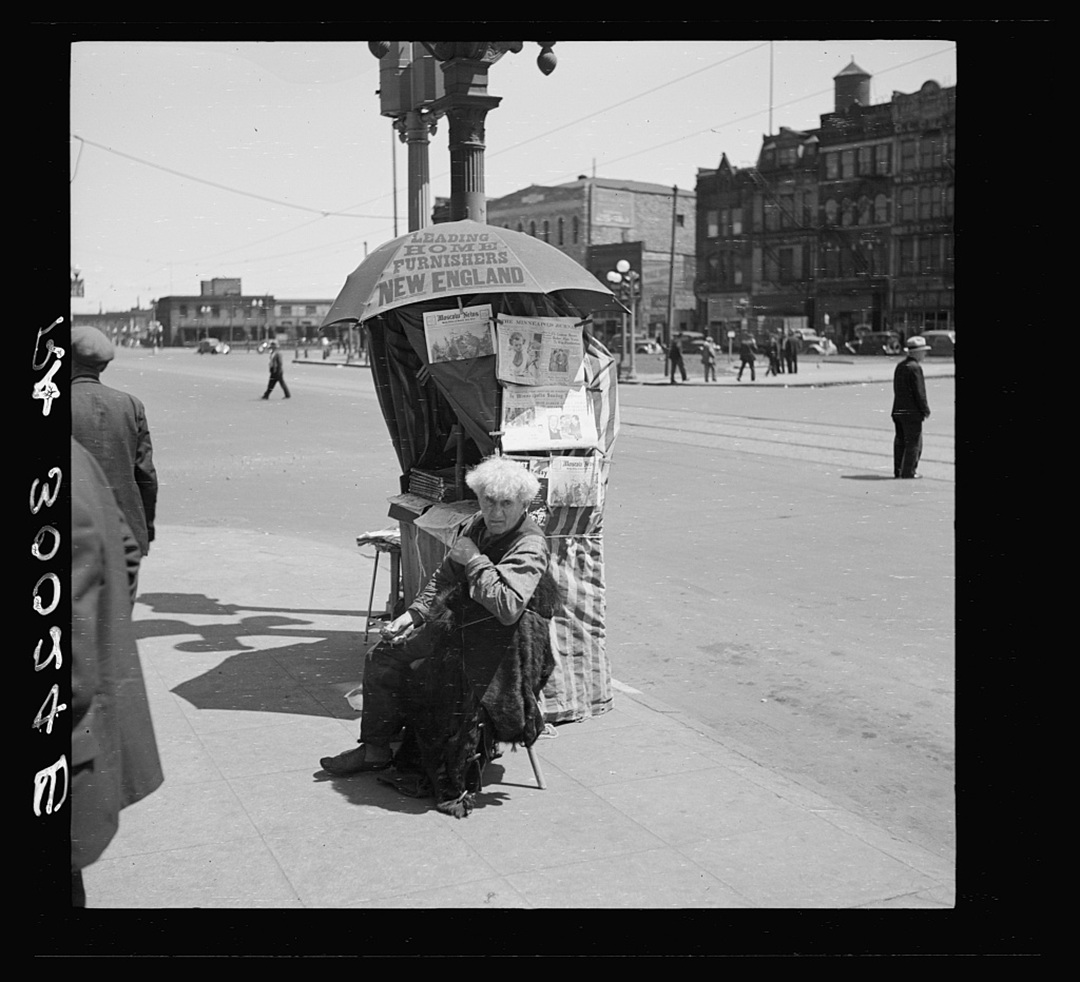
A newsstand was a small business built on small purchases: one paper, one magazine, one customer at a time. In Depression-era Minneapolis, a good location could put a vendor in the path of thousands of people, though passing traffic never guaranteed a sale.
Trending on The Scroller
6. War Headlines in Los Angeles (1942)
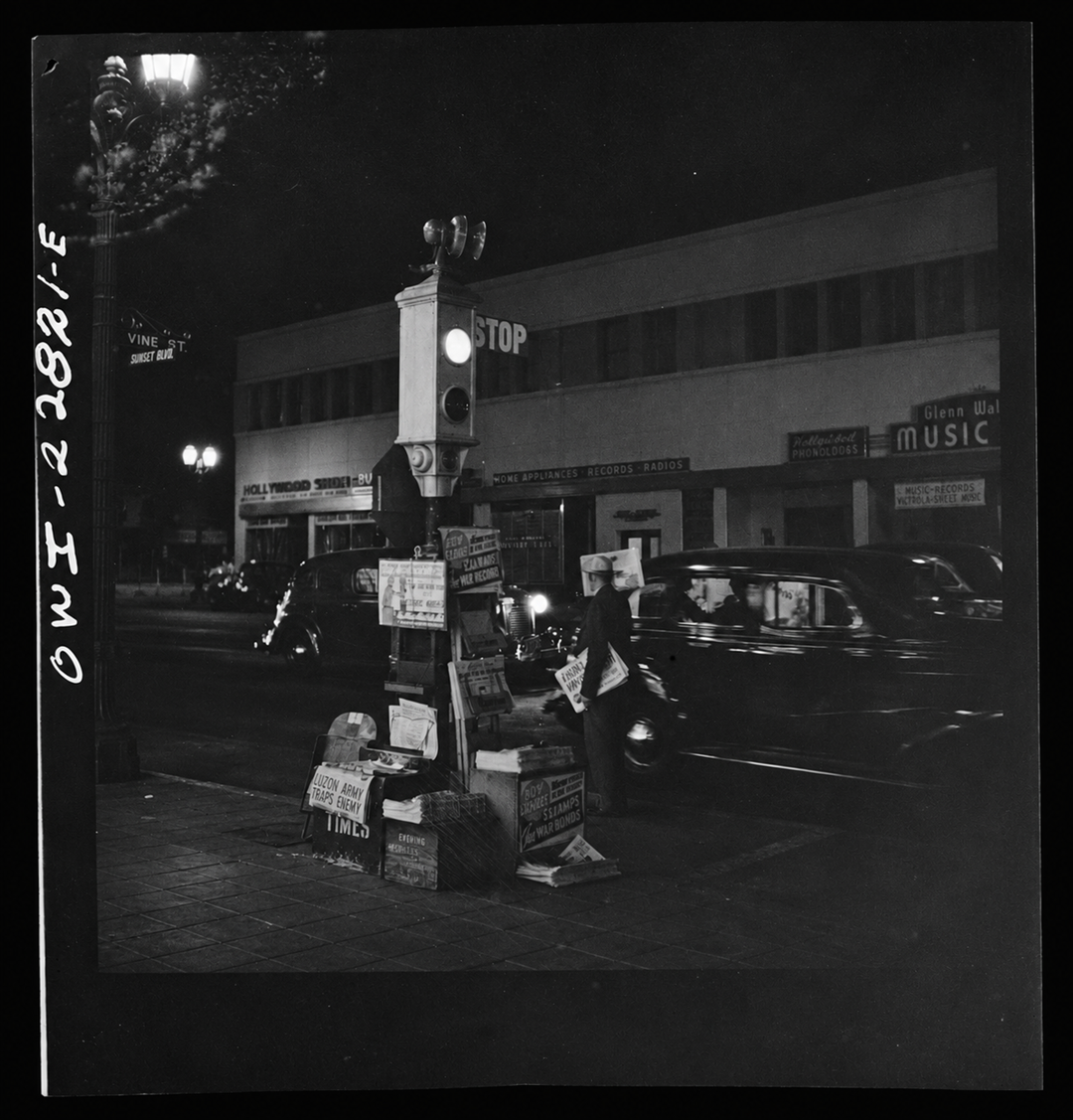
By April 1942, news from the fighting in the Philippines was urgent enough to sell papers after dark. An evening stop at a Los Angeles newsstand could bring readers the latest account from Luzon before the next morning’s edition arrived.
7. Newspapers From Many Countries, New York City (1943)
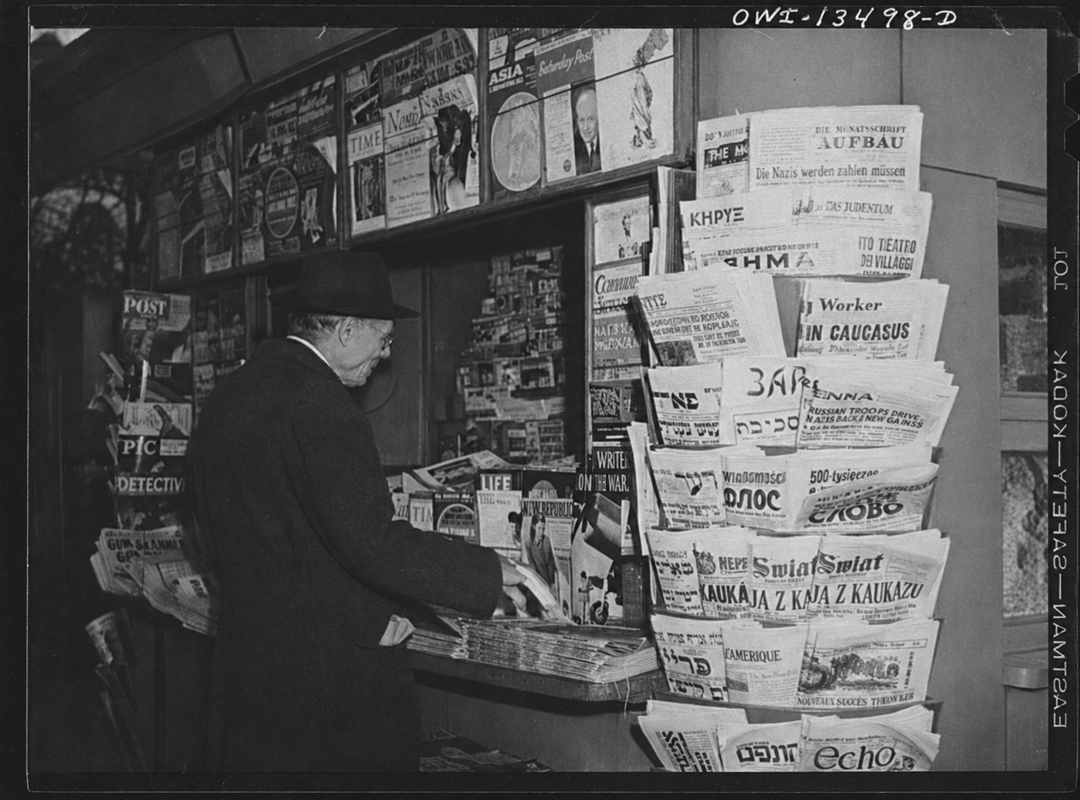
For immigrant New Yorkers, a newspaper in a familiar language could carry news of home alongside local concerns. During World War II, foreign-language papers also offered ways to follow events overseas. A stand at 42nd Street and Sixth Avenue served readers whose interests reached well beyond the city.
8. More Than Headlines in Manhattan (1935)
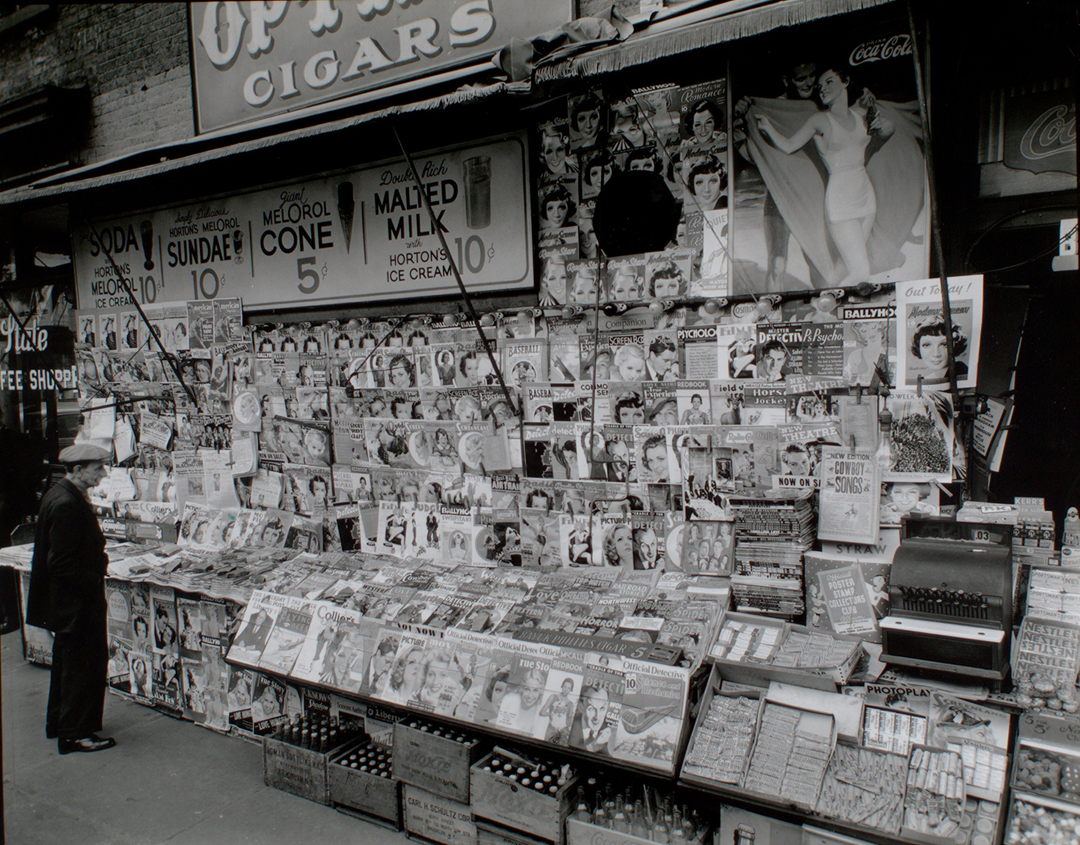
By 1935, a corner newsstand could be a stop for entertainment as much as news. Movie fan magazines, detective stories, sports titles, and radio publications all competed for readers long before television became a household fixture. At 32nd Street and Third Avenue, there were plenty of reasons to browse beyond the daily paper.
Sign up for our newsletter
9. Papers From Other Cities, New York (1913)
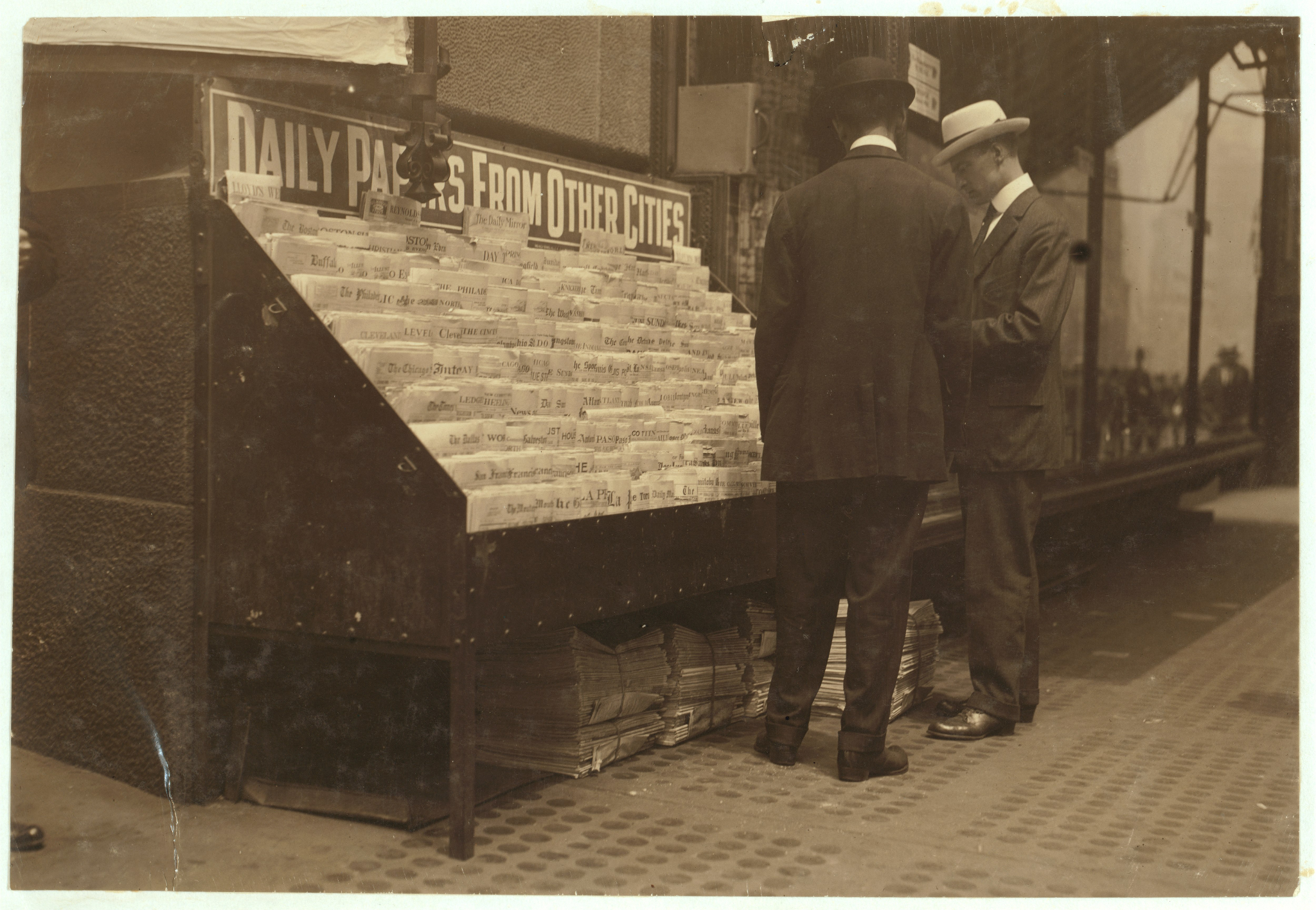
New Yorkers looking for a paper from another city could find more than a summary of its biggest stories. An out-of-town edition carried local sports, politics, and everyday news that might never reach a New York paper. For someone who had moved away, it was a way to keep up with a familiar place.
10. A New York Newsstand (1913)
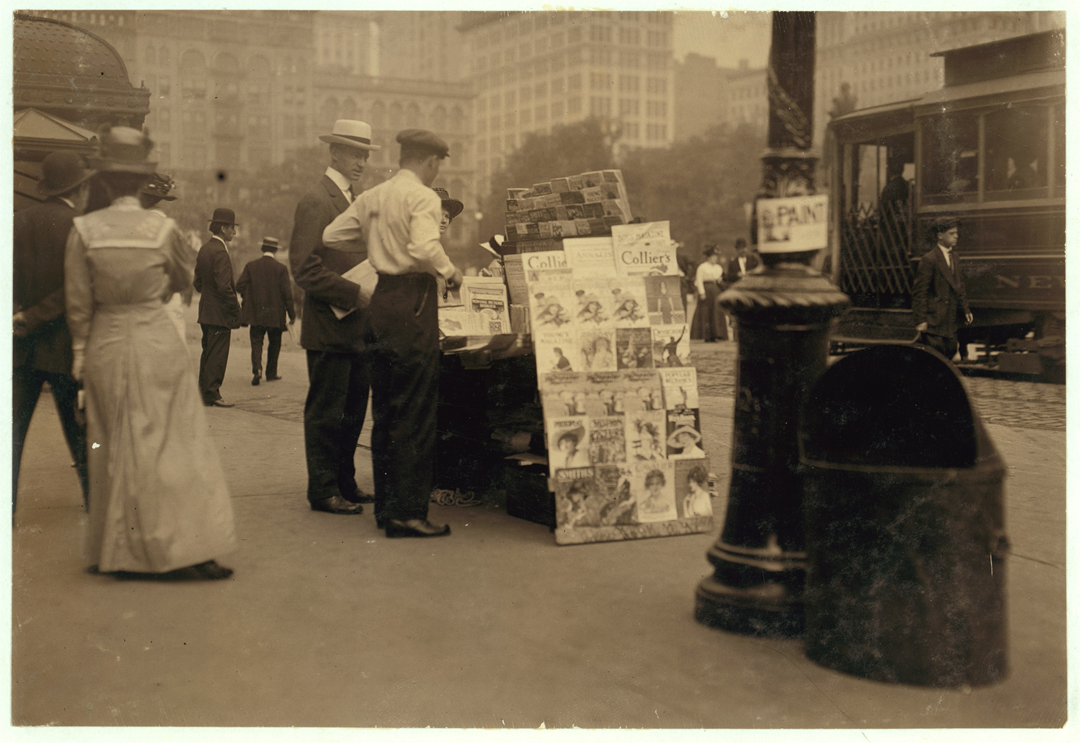
A newsstand let passersby compare papers and magazines before spending a cent. Publishers had to win attention at a glance, from the front page of a daily to the cover of an illustrated weekly. In 1913, that quick decision was part of how New Yorkers encountered the news.
11. Newspapers Reach a Virginia Camp (1863)
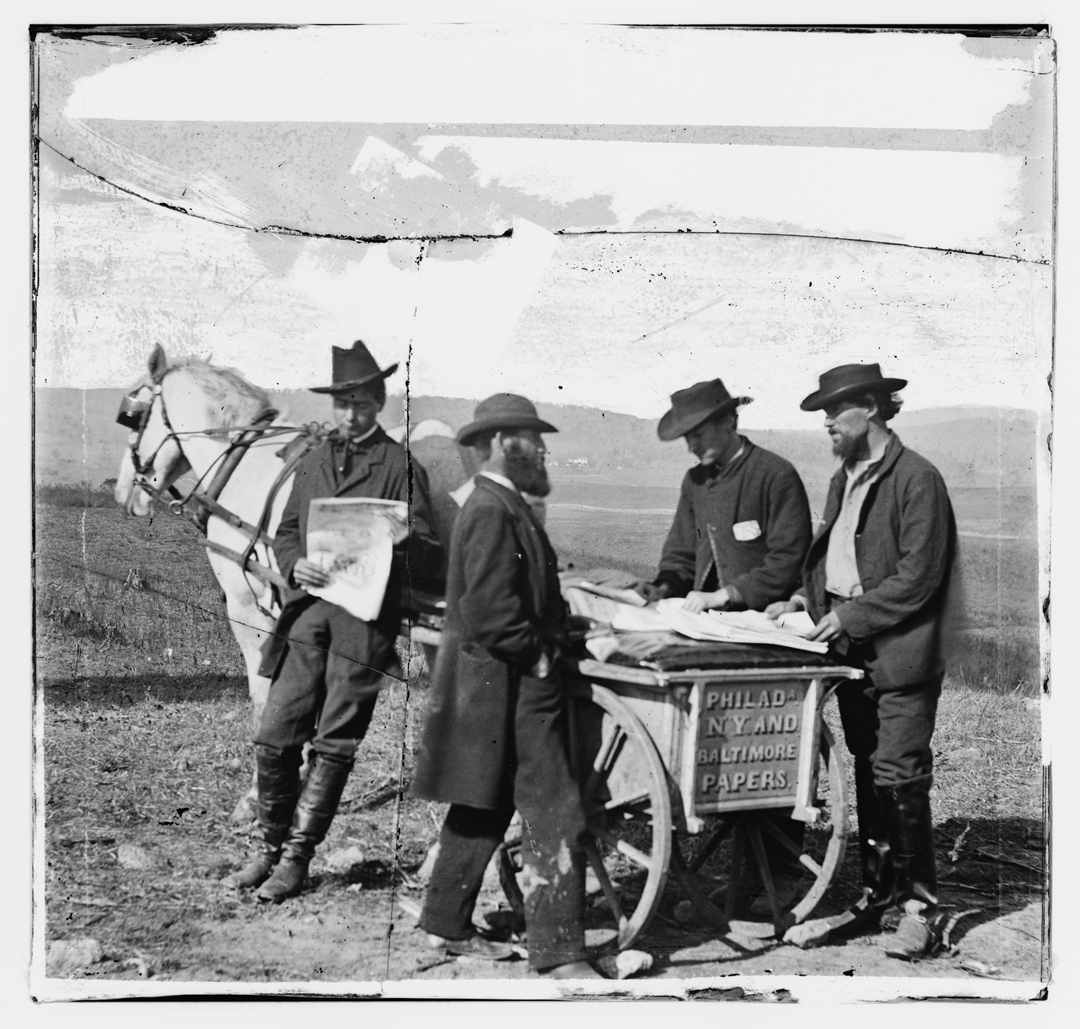
During the Civil War, newspapers brought soldiers reports from other fronts, political arguments, and news from home. A vendor traveling through a Virginia camp in November 1863 could offer papers from several cities, giving readers more than one account of a war they were living through.
12. A Newsstand at Third and Pike, Seattle (1938)
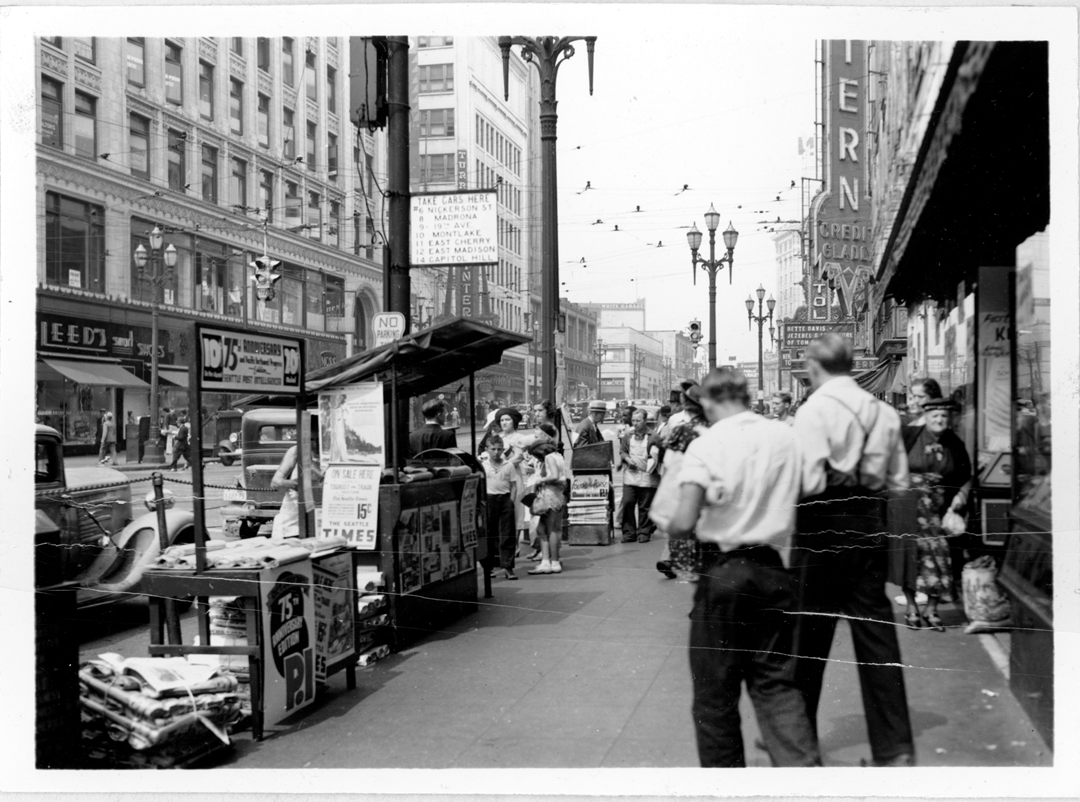
Downtown newsstands fit the pace of streetcar travel. Someone waiting at Third and Pike could pick up a paper in the few minutes before boarding, making the trip across Seattle a chance to catch up on local news. For publishers, those brief stops put their editions directly in the path of readers.
13. A Newsstand Near Pike Place Market (1938)
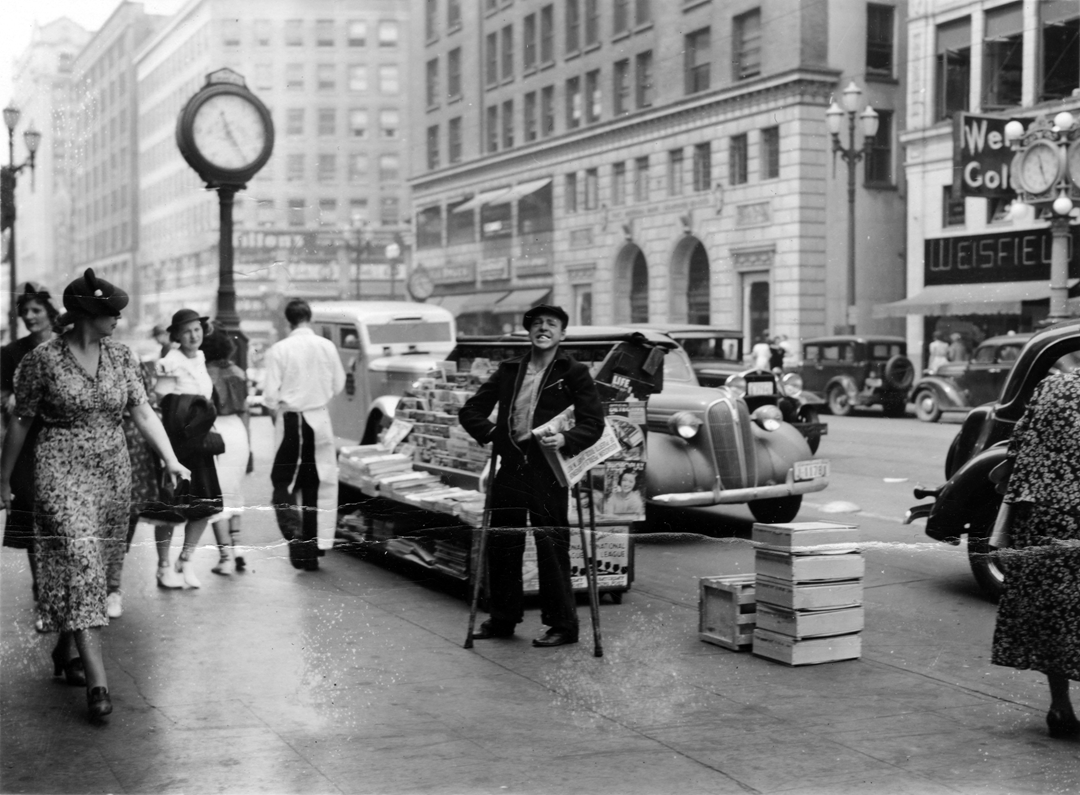
Fifth Avenue and Pike Street lay on a route between downtown shops and Pike Place Market. That gave a newsstand a mix of potential customers, from people running errands to shoppers heading farther down Pike. In 1938, a newspaper could be picked up along the way, wherever the day happened to take someone.
14. Reading the Headlines After Work, Baltimore (1943)
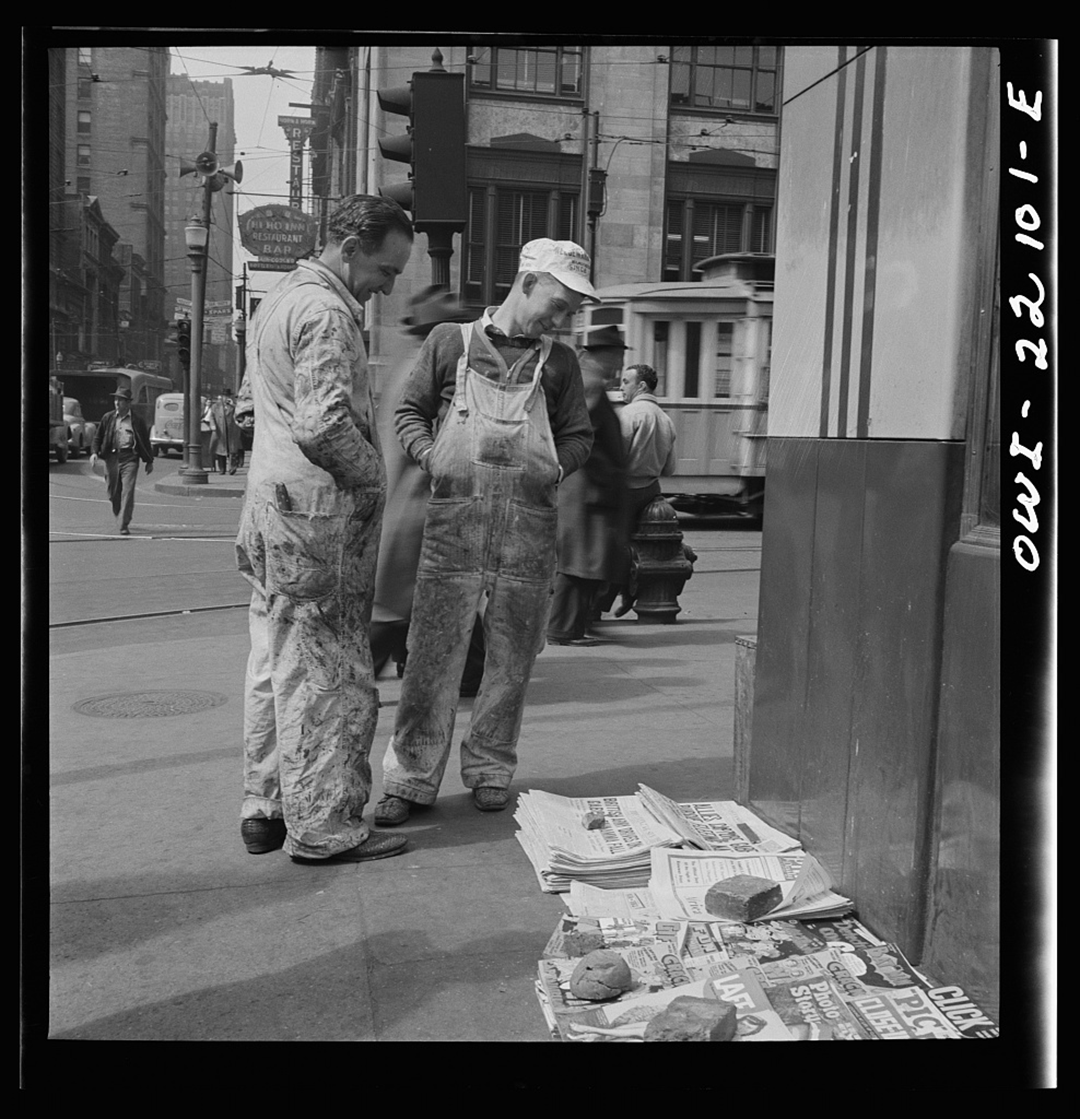
A newsstand offered something to do while waiting for the trolley, even for people who did not buy a paper. In wartime Baltimore, workers could catch the latest headlines on the way home after a shift. Those few minutes between work and the ride back made the news part of an ordinary commute.
15. News and Postcards on Royal Street, New Orleans (c. 1900–1915)
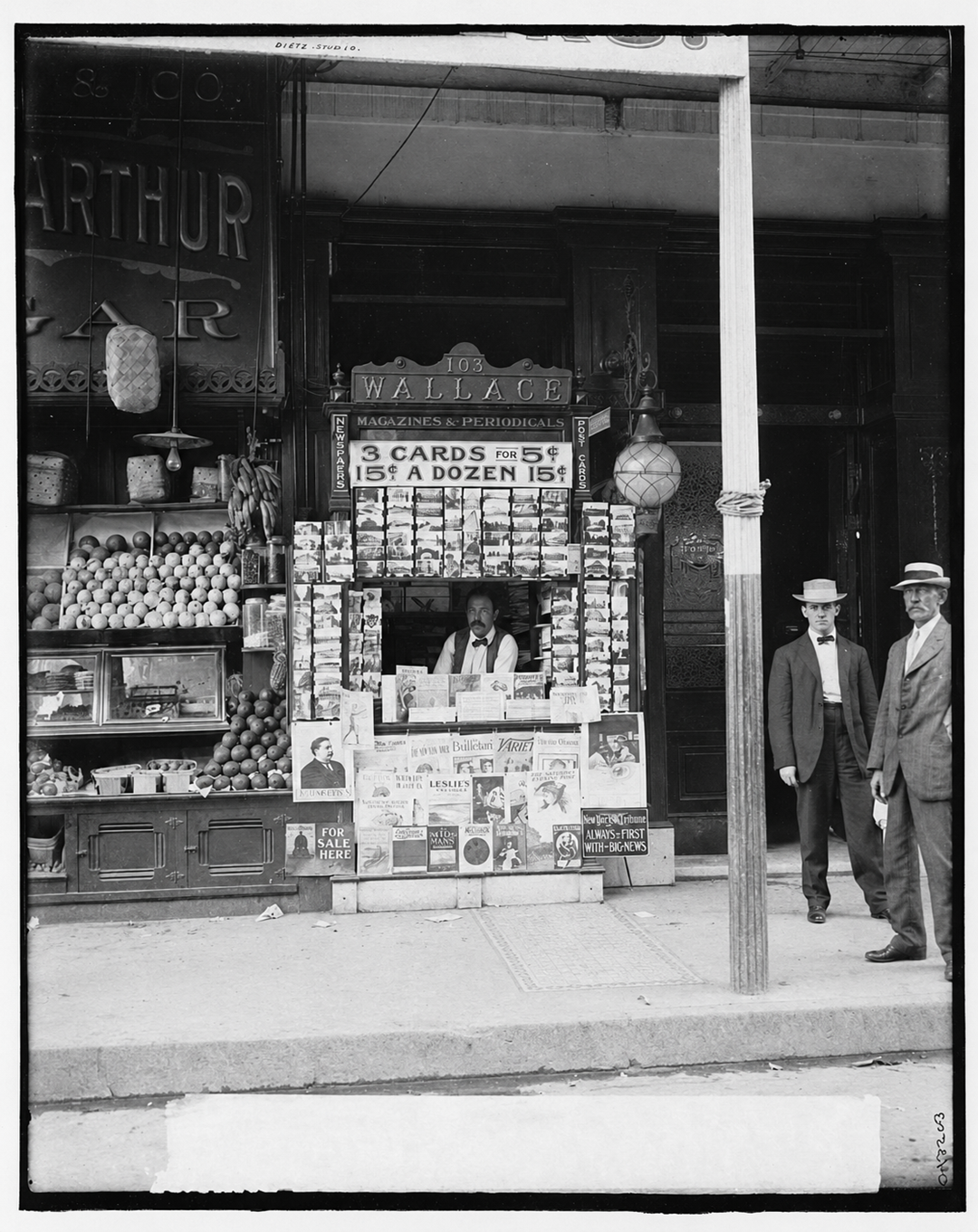
A stop at 103 Royal Street offered two ways to stay connected: a newspaper for the latest news and a postcard to send word home. Picture postcards were enormously popular in the early 1900s, and this stand sold them for three for a nickel. Even a tiny counter could serve both local readers and visitors passing through New Orleans.
In the mood for more?
Check out 15 Charming Vintage Photos of American Hardware Stores From the Past, or take a look at 15 Vintage Photos That Capture the Lost World of Shoemakers. If you want to see more everyday life from another era, you can check out 50 Images of America Then and Now.