We move through the world every day assuming we have a solid grasp on the dimensions of our surroundings, but many common objects are designed to be deceptive. When we see something like a traffic light or a highway sign from the safety of our cars, they look like manageable, handheld items. However, these tools are often scaled up to massive proportions just to ensure they remain visible and functional from hundreds of feet away. This “distance shrink” effect is so powerful that standing directly next to one of these items can feel like stepping onto the set of a giant-sized movie.
The true scale of these objects is often a testament to the sheer power of modern engineering and the vastness of the natural world. Whether it’s a piece of infrastructure built to withstand the elements or a biological wonder that defies belief, seeing a “human for scale” is usually the only way to truly process the size. These photos challenge our spatial awareness and remind us that we are relatively small players in a world filled with gargantuan machinery and massive life forms. Let’s take a look at twenty items that are significantly larger than your brain wants to believe.
1. A standard traffic light

When you’re sitting at an intersection, a traffic light looks no bigger than a cereal box, but it is actually towering pieces of equipment. A standard signal is usually between four and five feet tall, meaning it would reach the shoulders of an average adult. They weigh anywhere from 30 to 50 pounds, which is why they require such heavy-duty metal arms to hold them over the road. Interestingly, the individual lenses are about 12 inches in diameter, roughly the size of a human head.
2. A wind turbine blade
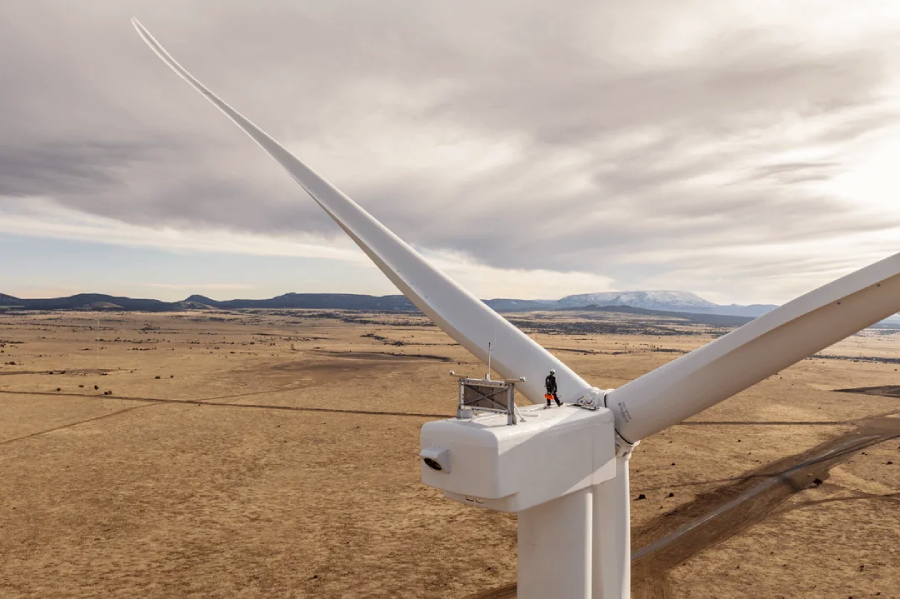
Wind turbines look like elegant, slow-moving fans from a distance, but the blades are among the largest single-piece objects ever transported by road. A single blade can be over 200 feet long, which is longer than the wingspan of a Boeing 747. When you see one lying on the ground next to a person, the person looks like a tiny ant next to a massive white wall. An interesting fact is that the tip of the blade can travel at speeds of over 150 miles per hour during peak operation.
3. A ship’s anchor chain

An anchor chain isn’t just a slightly larger version of the chain you’d use for a swing set; it is a series of massive iron boulders. Each individual link on a large cargo ship or cruise liner can weigh over 500 pounds and be as thick as a grown man’s torso. A human could easily sit inside a single link with room to spare, which is necessary to keep a 100,000-ton vessel from drifting. These chains are so heavy that they don’t even need the anchor to hit the bottom to start slowing the ship down through sheer weight.
4. The heart of a blue whale
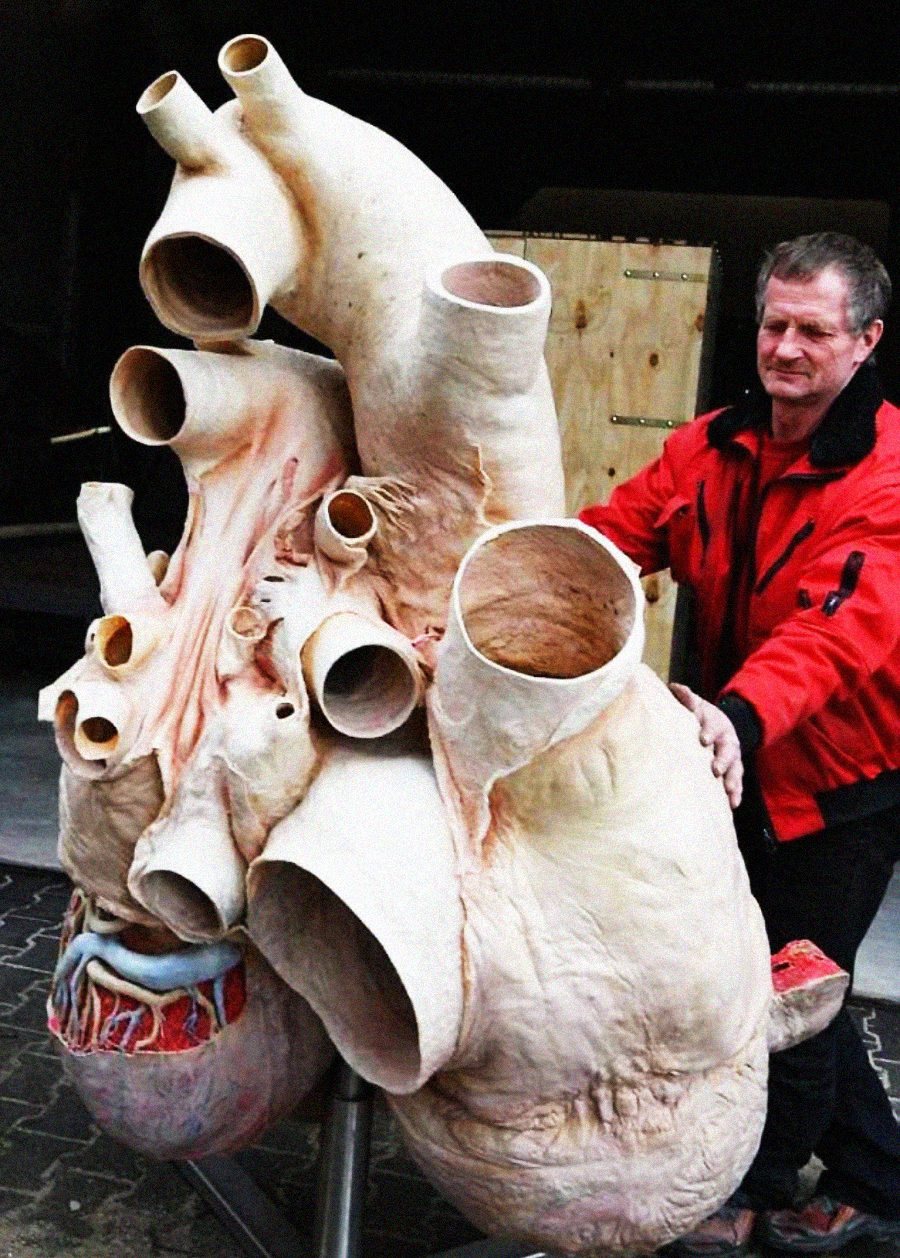
The blue whale is the largest animal to ever live, and its heart is a biological engine of science-fiction proportions. This organ is roughly five feet tall and five feet wide, weighing about 400 pounds, about the same as a small golf cart. A human could technically swim through the whale’s primary arteries, which are about the size of a dinner plate in diameter. Their heartbeat is so powerful that it can be detected by sonar equipment from over two miles away.
5. A mature moose
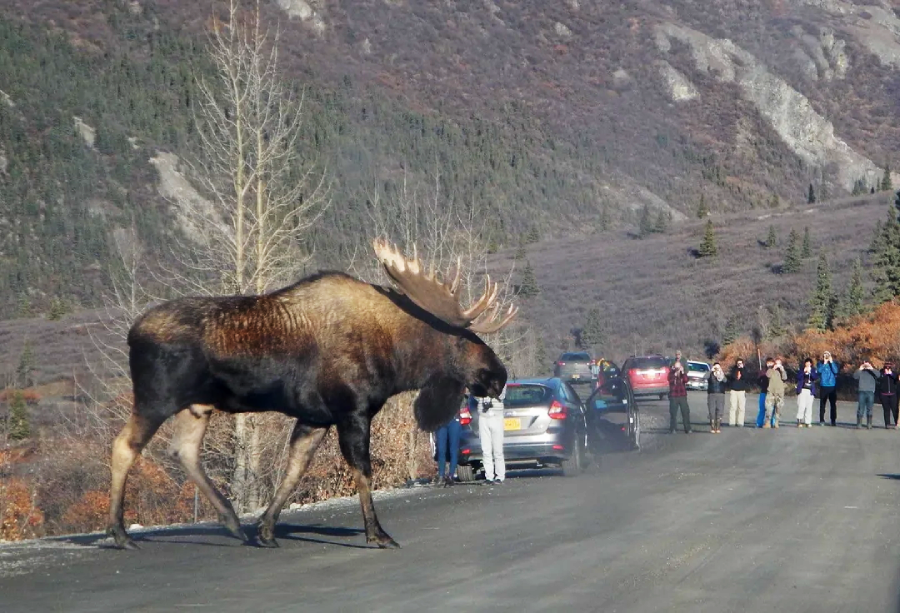
Most people think of a moose as a large deer, but in reality, they are closer in scale to a small house on stilts. An adult male can stand seven feet tall at the shoulder, with their head and massive antlers reaching much higher. If a moose stands next to a mid-sized SUV, its back is often higher than the roof of the car. Despite their goofy appearance, they are incredibly formidable, and their sheer bulk makes them one of the most dangerous animals to encounter on a northern road.
Trending on The Scroller


6. An eagle’s talon

While we often think of eagles as large birds, seeing a golden eagle’s talon next to a human hand is a reality check for our place in the food chain. These claws are roughly the same size as a grizzly bear’s claws, reaching up to four inches in length. They are designed to exert enough pressure to crush the skull of a small deer or a wolf, making them elite biological weapons. Holding a replica of one makes you realize that these birds aren’t just feathered flyers; they are prehistoric-level predators.
7. A great pyramid stone block

From a distance, the pyramids look like smooth triangles, but they are actually composed of massive limestone blocks that tower over a person. Each stone weighs an average of 2.5 tons, with some of the base blocks reaching a staggering 15 tons. When standing at the foot of Khufu’s pyramid, a human adult only reaches the height of the second or third row of stones. It is an incredible feat of ancient engineering that reminds us how much physical labor went into moving these giants across the desert.
8. A highway overhead sign

Those green signs on the interstate look small enough to fit on your bedroom wall, but they are actually the size of a small studio apartment. A standard overhead highway sign is usually 12 to 20 feet wide and nearly 10 feet tall. They are built at this scale so that drivers traveling at 70 miles per hour can read the text from over 800 feet away. If you saw one lying in your backyard, it would take up almost the entire space from fence to fence.
Sign up for our newsletter
9. A giant African land snail

Most snails fit on the tip of a finger, but the Giant African Land Snail is a different beast entirely. These mollusks can grow to be over eight inches long, roughly the size of a large banana or a human hand. They are considered an invasive species in many parts of the world because they are so large and hardy that they can even eat through the stucco on houses for calcium. Seeing one crawling across a person’s palm looks like a scene from a low-budget sci-fi movie.
10. A deep-sea buoy
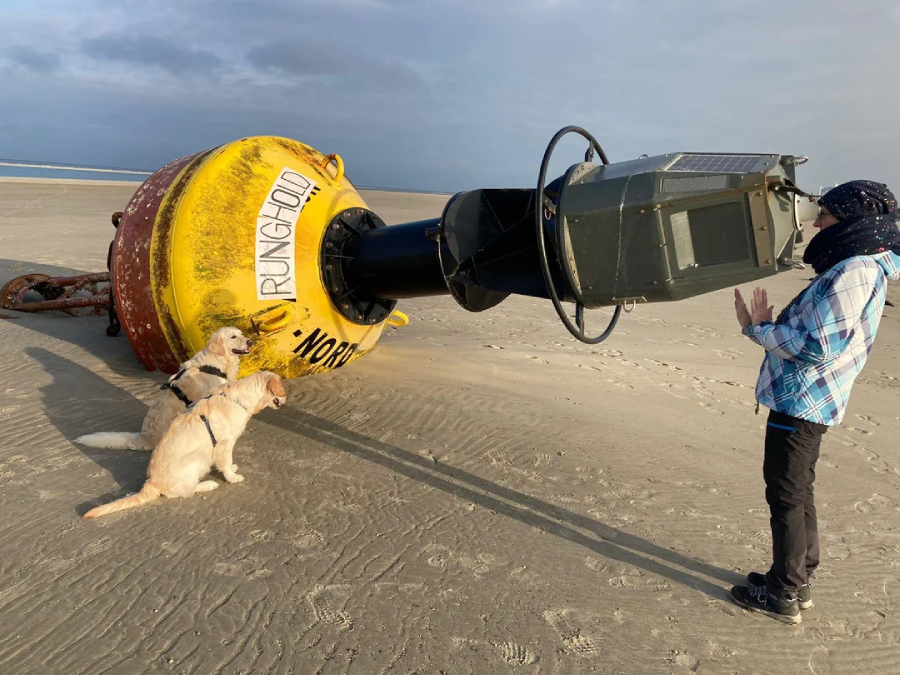
The buoys we see floating near the shore look like small bobbers, but the deep-sea weather buoys are industrial giants. These objects can stand over 20 feet tall and weigh several tons to ensure they stay upright in massive ocean swells. A human standing on the deck of the ship next to one looks like a toy figure next to a piece of space-age technology. They are packed with solar panels and sensors, acting as floating laboratories in the middle of the Atlantic.
11. A sequoia tree trunk

Standing at the base of a General Sherman or a similar Giant Sequoia is a lesson in humility. The diameter of these trunks can exceed 35 feet, meaning it would take about twenty adults holding hands just to circle the tree once. The bark alone can be up to three feet thick, serving as a fireproof armor that has protected the trees for thousands of years. From the ground, you can’t even see the first branches, which are often larger than the trunks of most regular trees.
12. A Saturn V rocket engine
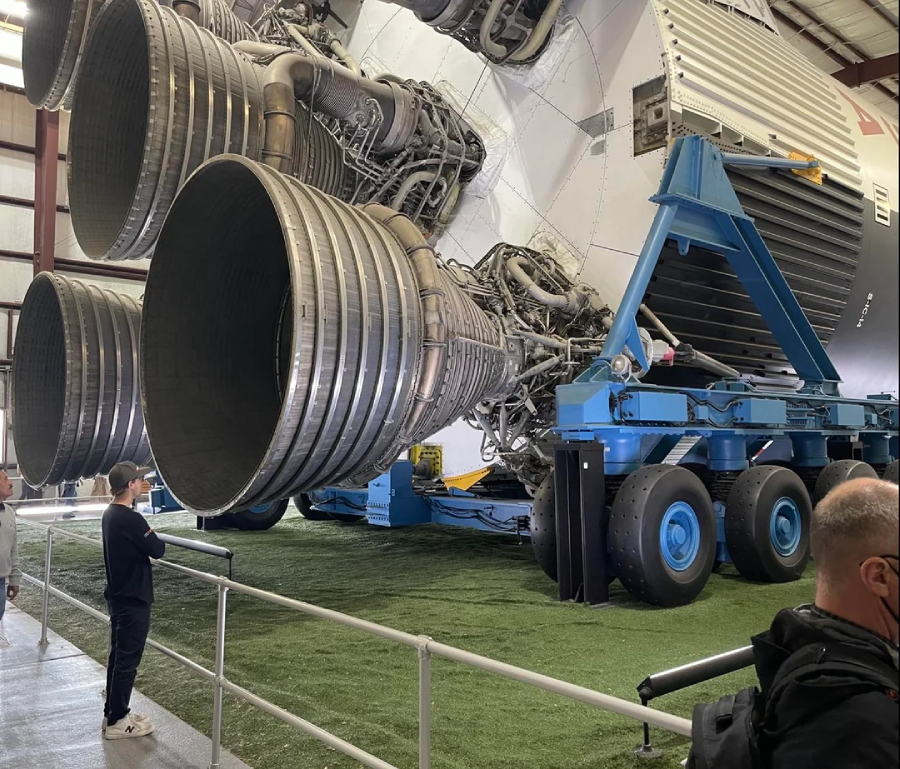
The F-1 engines that powered the Saturn V rocket are masterpieces of gargantuan power. A single engine bell is over 12 feet tall and 12 feet wide, easily large enough to house a small family dinner party inside. There were five of these massive objects at the base of the rocket, together generating 7.5 million pounds of thrust. Seeing a person stand inside the nozzle reveals the sheer scale of the machine required to send humans to the moon.
13. A mining dump truck tire

The tires used on “ultra-class” haul trucks like the Caterpillar 797 are the largest in the world. Each tire stands about 13 feet tall, meaning a tall adult would still be several feet shorter than the rubber rim. These tires cost upwards of $40,000 each and are designed to carry loads of over 400 tons across rocky quarry floors. Seeing a technician standing next to one to change a bolt looks like a scene from Gulliver’s Travels.
14. A wombat (the giant version)

While many think of wombats as small, hamster-like creatures, the Common Wombat is actually a sturdy, boulder-shaped tank. They can grow to be three feet long and weigh nearly 80 pounds, making them much larger than a typical medium-sized dog. When an adult wombat is held by a human, it looks like the person is struggling to lift a heavy, furry ottoman. They are pure muscle and are famous for being able to bowl over a human if they get spooked.
15. A modern cruise ship

We often think of the Titanic as the ultimate “giant” ship, but modern cruise liners make it look like a tiny tugboat. Current “Icon of the Seas” class ships are nearly five times the size of the Titanic in terms of gross tonnage. While the Titanic was about 882 feet long, modern giants stretch over 1,100 feet and are significantly wider and taller. Standing the two side-by-side in a graphic shows just how much our engineering of floating objects has exploded in the last century.
16. A giant manta ray
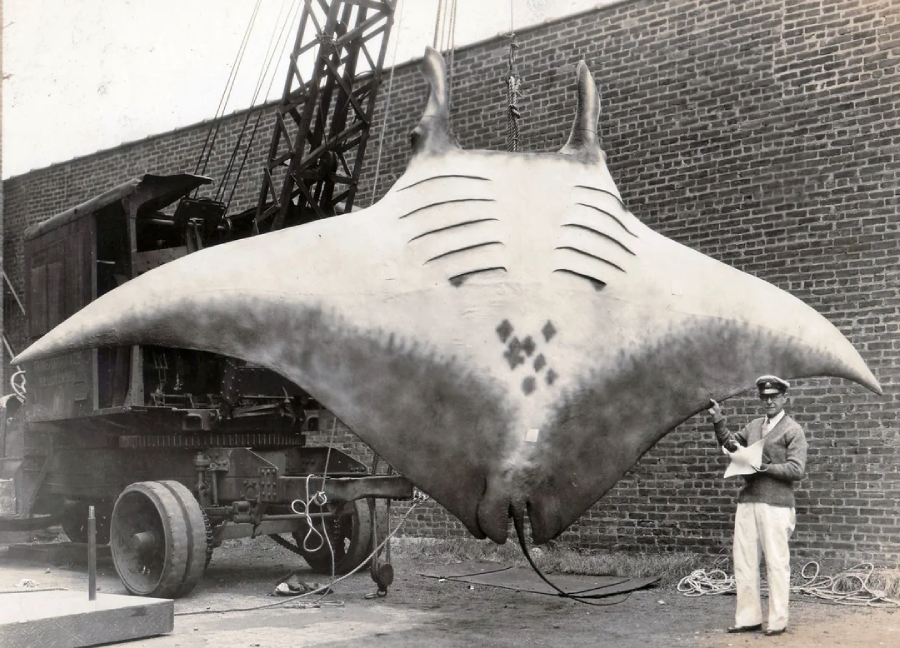
While they look like graceful blankets in the water, a Giant Oceanic Manta Ray can have a wingspan of up to 29 feet. Seeing a diver next to one is a jarring experience, as the ray’s wing is wider than three or four humans lying head-to-toe. Despite their monstrous size, they are gentle filter feeders and have the largest brain-to-body ratio of any fish. They are often described by divers as sentient spaceships because of their calm, observant nature.
17. A telephone pole (before it’s buried)

We see telephone poles every day, but we only see the part that sticks out of the ground. A standard pole is about 40 feet long, with a significant portion buried deep in the earth to provide stability. When you see one lying in a parking lot before installation, it looks like a fallen redwood tree rather than a piece of utility equipment. They are surprisingly thick at the base, often requiring a person to fully wrap their arms around it just to touch their own fingertips.
18. A Leatherback sea turtle

The Leatherback is the largest of all living turtles, and seeing one on a beach is a prehistoric experience. They can grow up to seven feet long and weigh as much as 2,000 pounds, roughly the same as a small car. Unlike other turtles, they don’t have a hard shell, but a leathery skin that covers a matrix of bone. A human sitting next to a nesting Leatherback looks remarkably small compared to this ancient, deep-diving voyager.
19. A cruise ship propeller

When you look at a cruise ship from the pier, the propellers are completely hidden beneath the waterline, but these bronze giants are what make “floating cities” possible. A single propeller on a modern mega-ship can measure up to 20 feet in diameter, making it roughly the height of a two-story house. They are so massive that a human standing next to one in a dry dock looks like a tiny action figure placed in front of a giant desk fan. Interestingly, many modern ships now use “Azipods,” which are rotatable propeller units that weigh as much as a fully loaded Boeing 747 and allow the ship to spin in circles without using a rudder.
20. A telescope mirror
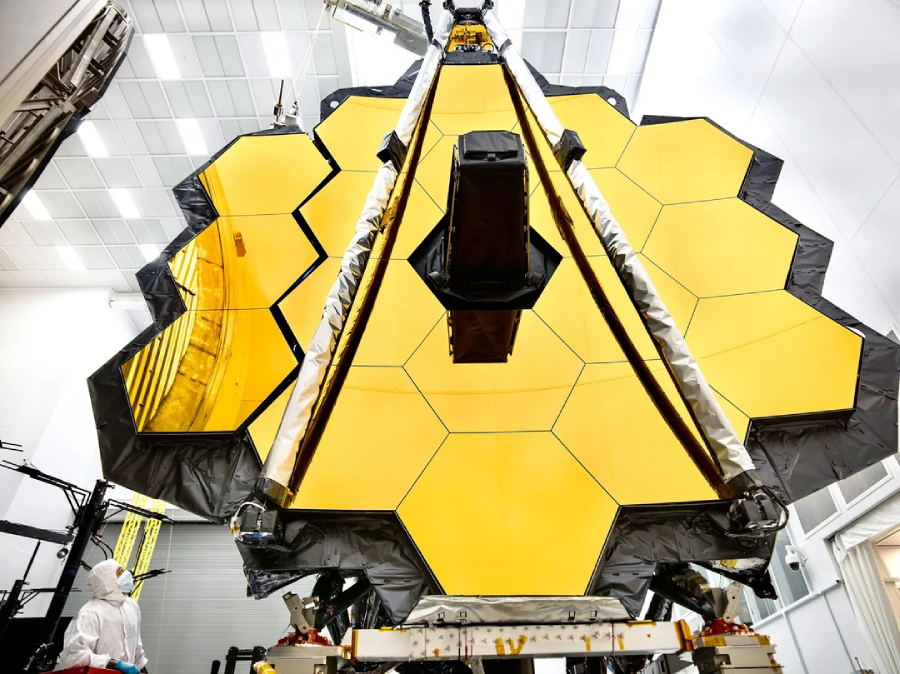
The primary mirror of the James Webb Space Telescope is a collection of 18 gold-plated hexagonal segments that form a massive 21-foot-wide eye. When it was being assembled, the engineers in their white “clean suits” looked like tiny specks against the shimmering gold wall. This mirror is so large that it had to be designed to fold up like origami just to fit inside the rocket for launch. It is one of the most precise and massive objects humans have ever sent into deep space.
Explore more interesting facts:
It’s a humbling reminder that while we look for wonders in the stars or through a telescope, the most incredible technology and biology on Earth are often hiding in plain sight. These massive objects prove that our sense of scale is highly dependent on where we are standing. If you’re ready to dive into more interesting facts, don’t miss these 15 Human Body Facts That Sound Impossible But Are Real, or 18 Microscopic Creatures Quietly Living Inside Most Homes. You can also check out these 20 Fascinating Questions Everyone Wants The Answer To.