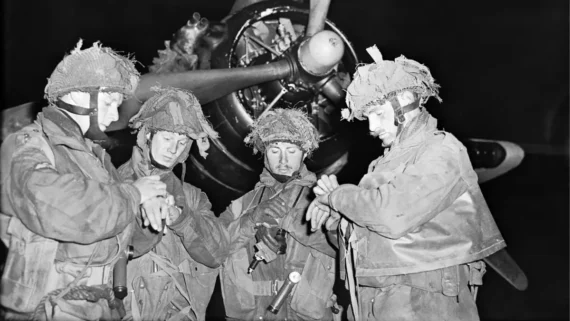
When we examine the catastrophic legacy of global conflicts, our minds naturally focus on the immense destruction, shifting borders, and profound political fallout left in their wake. We tend to view military manufacturing strictly through the lens of weapon systems, combat vehicles, and tactical equipment designed exclusively for destruction. However, the intense pressure of survival during wartime forces military logistics networks and research laboratories to innovate at an unprecedented, breakneck pace. This environment of absolute urgency often results in incredible scientific breakthroughs as engineers scramble to solve complex problems regarding resource scarcity, long-distance communication, and battlefield medicine.
Once a conflict draws to a definitive close, these high-stakes innovations rarely vanish back into the classified military archives from which they came. Instead, enterprise companies and civilian entrepreneurs quickly realize that these advanced tools can be re-engineered to simplify, improve, and elevate the daily lives of ordinary consumers. From the convenient snacks tucked inside our kitchen pantries to the digital architecture that powers our modern wireless connectivity, our daily routines are deeply shaped by solutions born out of necessity. Let’s unmask eighteen remarkable everyday items that were originally engineered to help nations survive the harsh realities of wartime.
1. The microwave oven
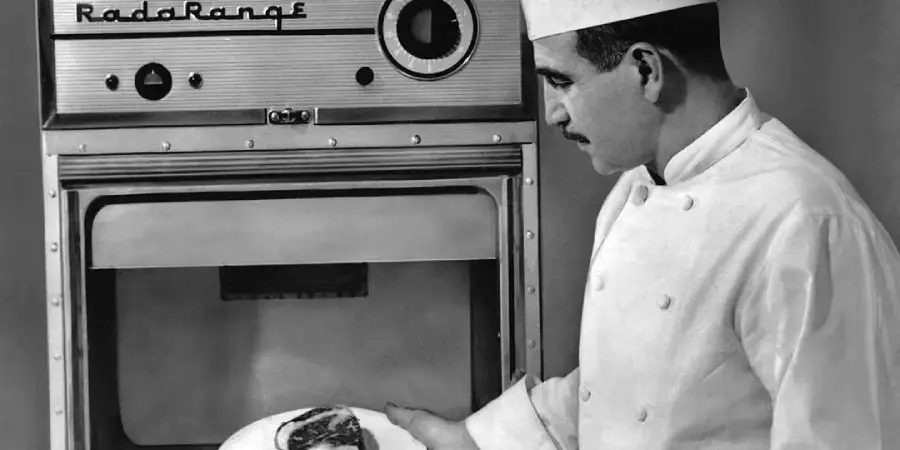
During the height of World War II, a brilliant American engineer named Percy Spencer was working for a defense contractor, actively developing high-powered cavity magnetrons for military radar defense systems. While standing near an operational radar array, he suddenly noticed that a peanut butter candy bar tucked safely inside his pocket had completely melted into a warm, sticky liquid. Intrigued by this accidental thermal reaction, Spencer intentionally placed a handful of raw popcorn kernels directly in front of the active magnetron tube, watching them explode across his laboratory stage. His company immediately recognized the massive commercial potential of using high-frequency radio waves to cook food rapidly, filing the very first patents for the appliance shortly after the Allied victory.
2. Duct tape
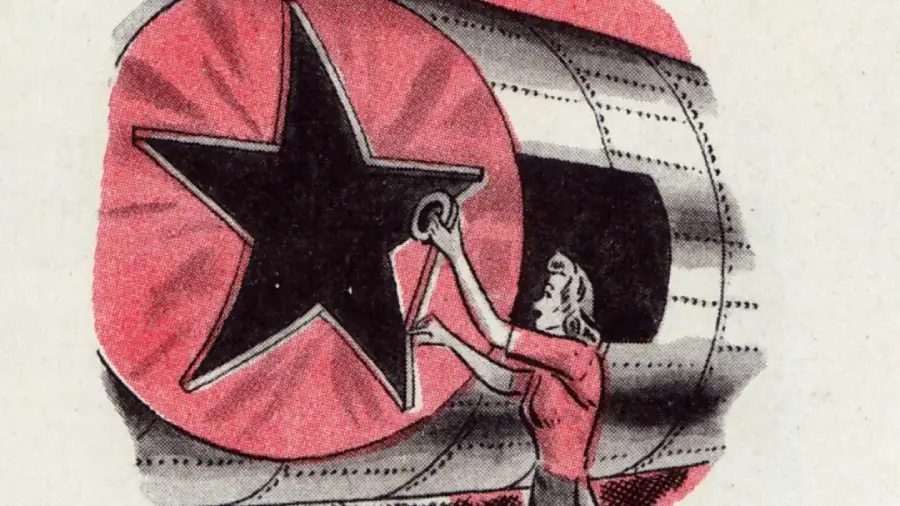
Vesta Stoudt, a patriotic factory worker and mother of two military sailors, realized that the traditional paper tape used to seal ammunition boxes during World War II was dangerously fragile and difficult to open under combat pressure. She wrote a detailed letter directly to President Franklin D. Roosevelt, suggesting a rugged, waterproof cloth adhesive tape that soldiers could quickly rip with their bare hands to accelerate reloading times. Roosevelt was thoroughly impressed by her practical logic, forwarding the concept to industrial engineers who combined a rubber-based adhesive with standard cotton duck fabric. Soldiers instantly fell in love with the olive-drab tape, using it to repair everything from broken firearms to damaged military boots right in the trenches.
3. Slinky
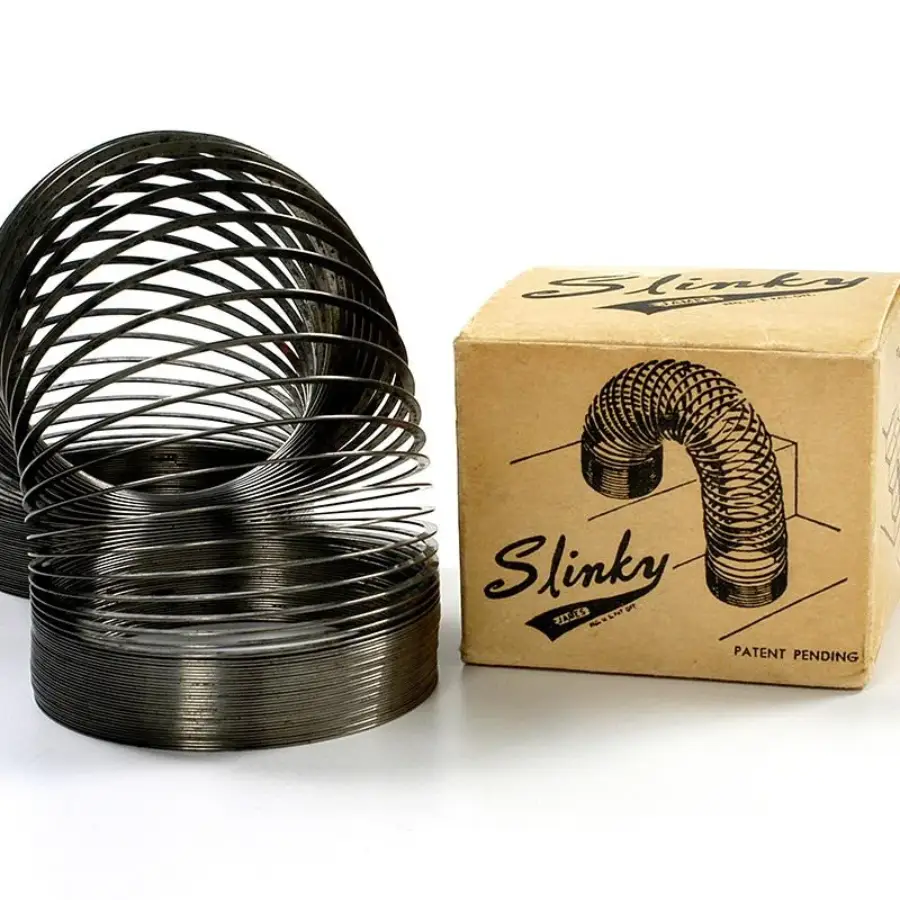
In 1943, a naval mechanical engineer named Richard James was working in a Philadelphia shipyard, attempting to develop a specialized system of torsion springs that could stabilize delicate nautical instruments on warships during turbulent ocean storms. While adjusting his prototype blueprints, he accidentally knocked one of his tightly wound steel coils off a high storage shelf, watching in absolute amazement as it gracefully stepped down a stack of books onto the laboratory floor. He brought the runaway spring home to show his wife, who immediately recognized its mesmerizing potential as a minimalist children’s toy. The couple launched the product during the holiday shopping season of 1945, completely selling out their entire initial inventory of four hundred units in under ninety minutes.
4. Super glue
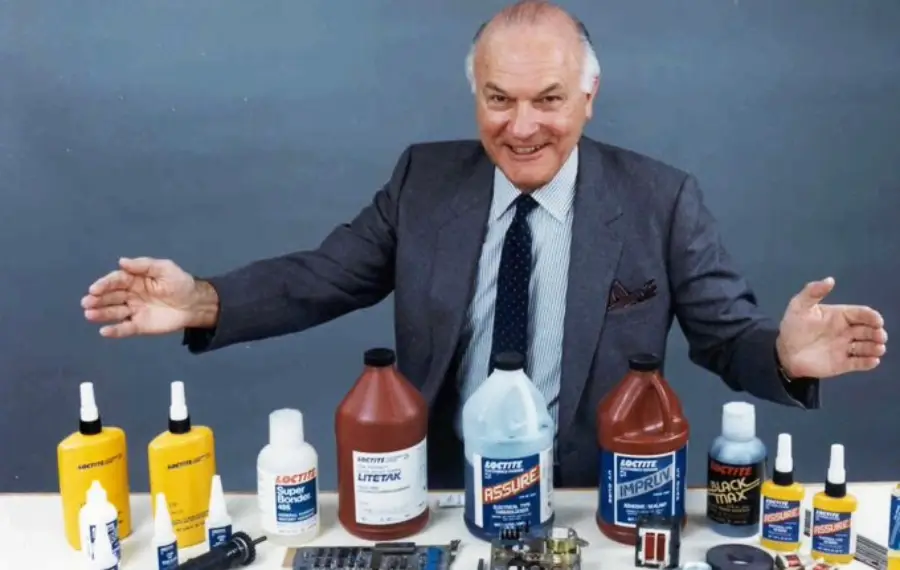
Dr. Harry Coover was leading a team of defense researchers in 1942, attempting to isolate an optically clear plastic compound that could be used to manufacture high-visibility gun sights for Allied infantry rifles. During their chemical experiments, they accidentally synthesized a unique substance called cyanoacrylate, which they immediately rejected because it aggressively bonded to every single laboratory tool and container it touched. Coover completely forgot about the annoying sticky chemical until 1951, when he was working as a researcher for Eastman Kodak and looking for a heat-resistant coating for jet cockpits. He finally recognized the incredible commercial value of an adhesive that required absolutely no heat or pressure to form a permanent bond, rebranding the substance for the public.
5. Silly putty
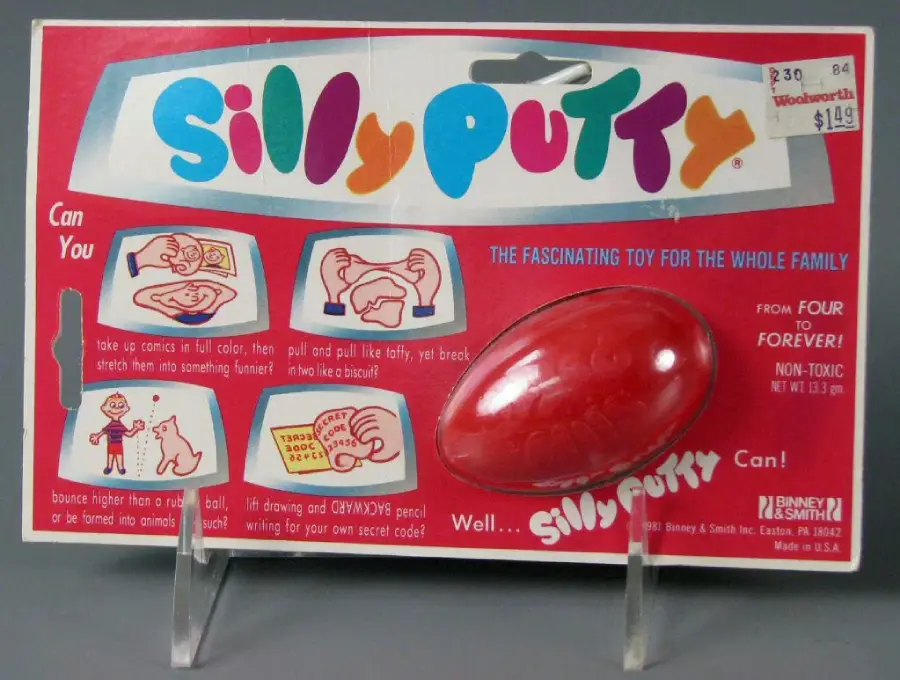
When the Axis powers successfully cut off America’s primary access to natural rubber plantations across Southeast Asia during World War II, the United States government desperately commissioned domestic laboratories to formulate a synthetic rubber alternative. A researcher named James Wright was experimenting with silicone oil and boric acid in a laboratory when he accidentally created a strange, gooey compound that could bounce higher than real rubber and stretch indefinitely without snapping. While the military ultimately rejected the weird substance because it lacked the structural strength required to manufacture heavy truck tires, an entrepreneurial toy salesman purchased the publishing rights for a few hundred dollars. He began packaging the clay inside colorful plastic eggs just in time for Easter, creating a historic toy craze.
Trending on The Scroller

6. Aerosol bug spray
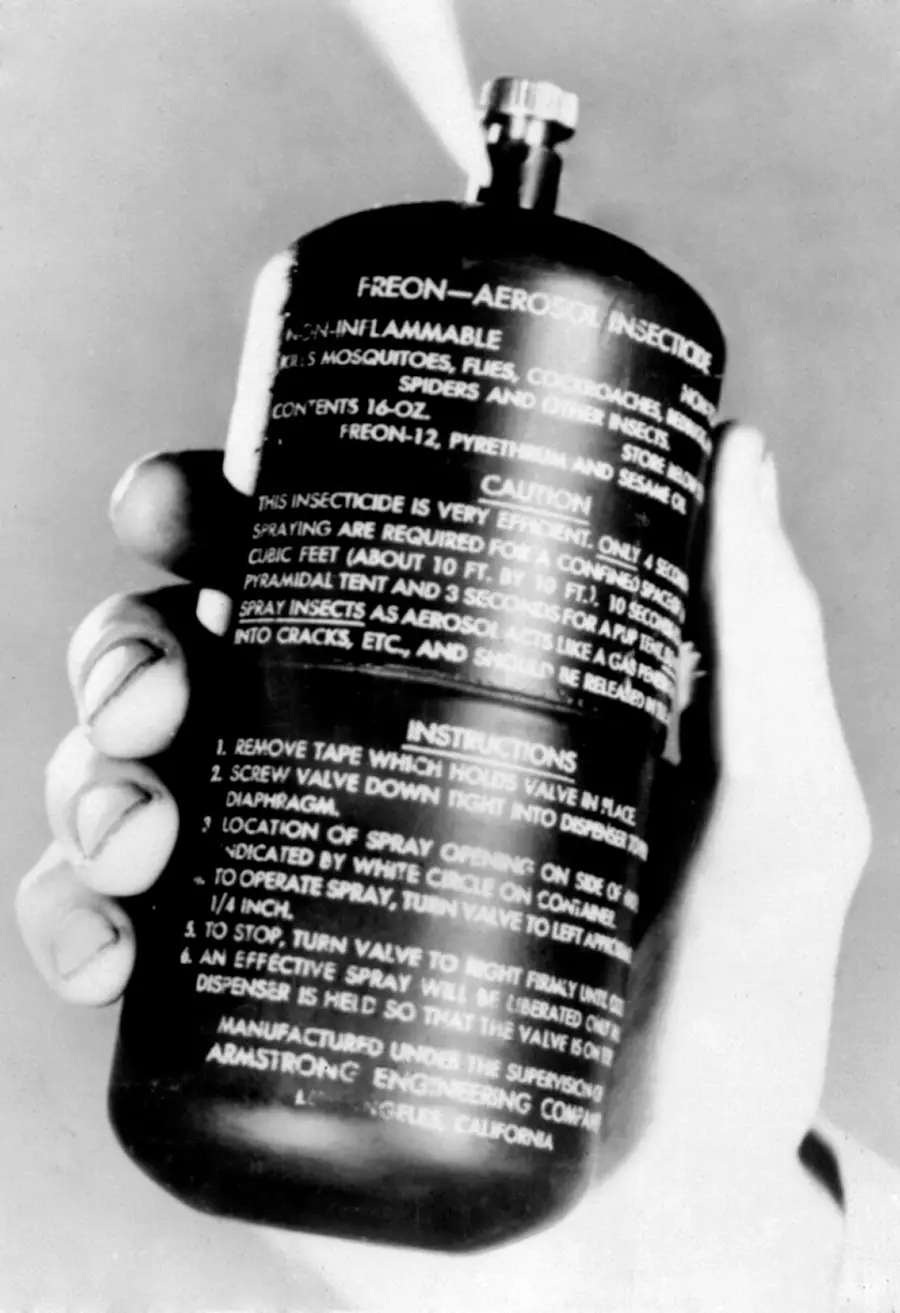
The United States Department of Agriculture joined forces with military medical researchers during World War II to protect soldiers stationed in the South Pacific from contracting malaria via tropical mosquito bites. Scientists Lyle Goodhue and Sullivan Fales successfully engineered a portable, high-pressure dispensing can that utilized a liquefied gas propellant to spray a fine, continuous mist of insecticide over a wide area. This functional design allowed soldiers to quickly sanitize their tents and military bunkers from disease-carrying bugs within a matter of seconds. The basic valve design and pressurized canister logic were released to consumer markets after the conflict, paving the way for hairsprays, spray paints, and modern household cleaners.
7. Sanitary napkins (Cellucotton)
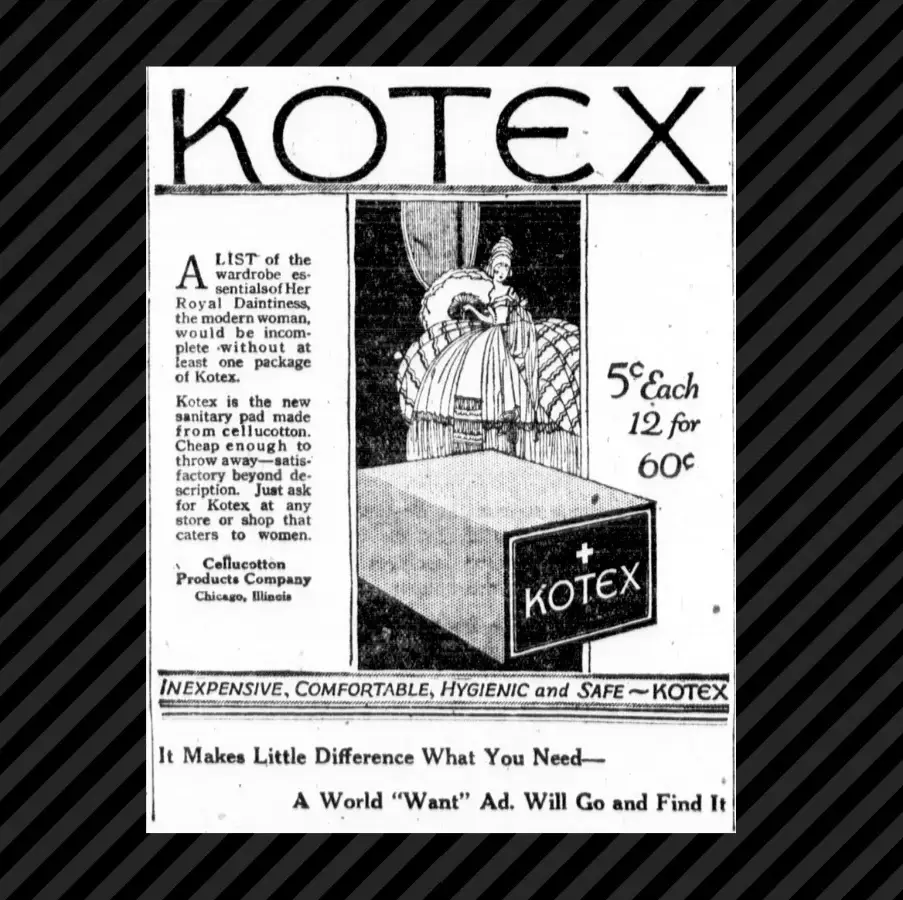
An American manufacturing firm developed a highly absorbent material made from processed wood pulp called Cellucotton during the early years of World War I, marketing it to the military as a cheap alternative to traditional cotton surgical bandages. Red Cross field nurses quickly discovered that the disposable, hyper-absorbent sheets were exceptionally effective for managing their own personal hygiene needs during extended shifts on the front lines. Once the war concluded, the manufacturing company bought back the massive surplus of unused military bandages from the government, re-engineering the wood pulp material into a commercial product line. This breakthrough gave birth to the modern feminine hygiene industry and completely transformed healthcare options for women worldwide.
8. GPS
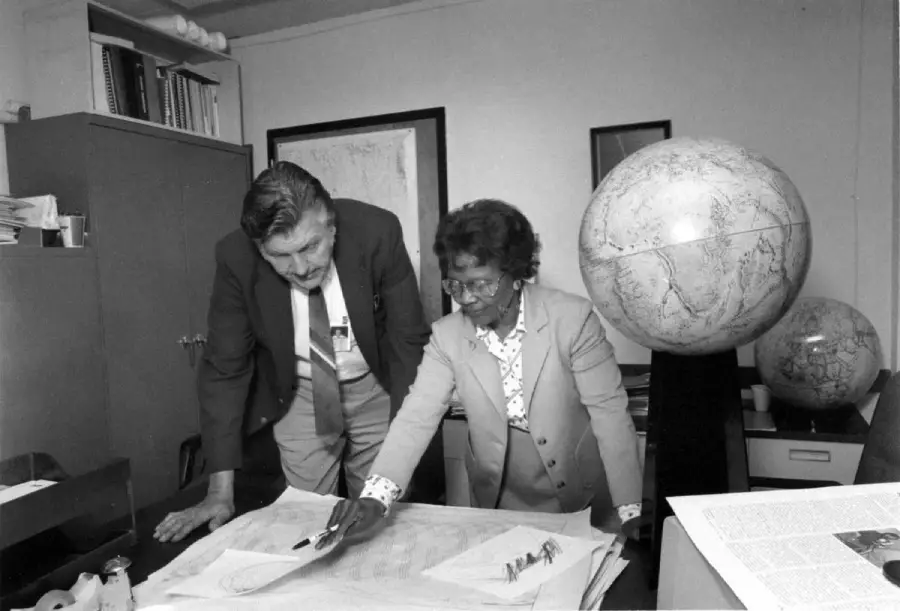
The foundational technology behind modern digital mapping and real-time transit apps was originally developed by the United States Department of Defense during the height of the Cold War. The military required an absolute, un-jammable satellite navigation network that could track nuclear submarines and guide intercontinental ballistic missiles with pinpoint accuracy across the globe. They launched the very first experimental navigation satellites into orbit during the late 1970s, keeping the high-frequency tracking codes restricted exclusively for secret tactical operations. President Ronald Reagan eventually signed an executive order to open the satellite network up to civilian airlines for public safety, a decision that eventually allowed smartphones to navigate our daily commutes.
Sign up for our newsletter
9. Jeep
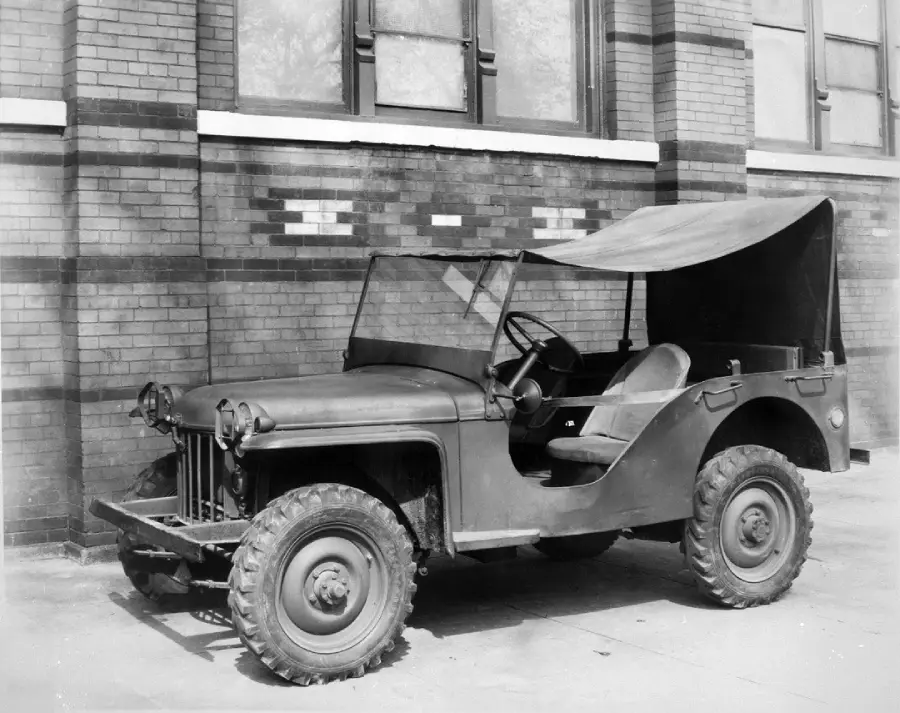
In 1940, the United States Army realized it desperately needed a lightweight, rugged, and highly versatile reconnaissance vehicle that could replace traditional horses and motorcycles across rough battlefield terrain. The military invited multiple automotive firms to construct a functional four-wheel-drive prototype within an incredibly tight forty-nine-day deadline, resulting in the iconic, boxy design we recognize today. The vehicle performed flawlessly during the global conflict, earning immense praise from generals who credited the machine with completely accelerating Allied logistics. After the victory, the manufacturing company filed trademarks to adapt the rugged military workhorse for civilian farmers, turning a battlefield necessity into the definitive global icon of weekend off-road adventure.
10. Aviator sunglasses
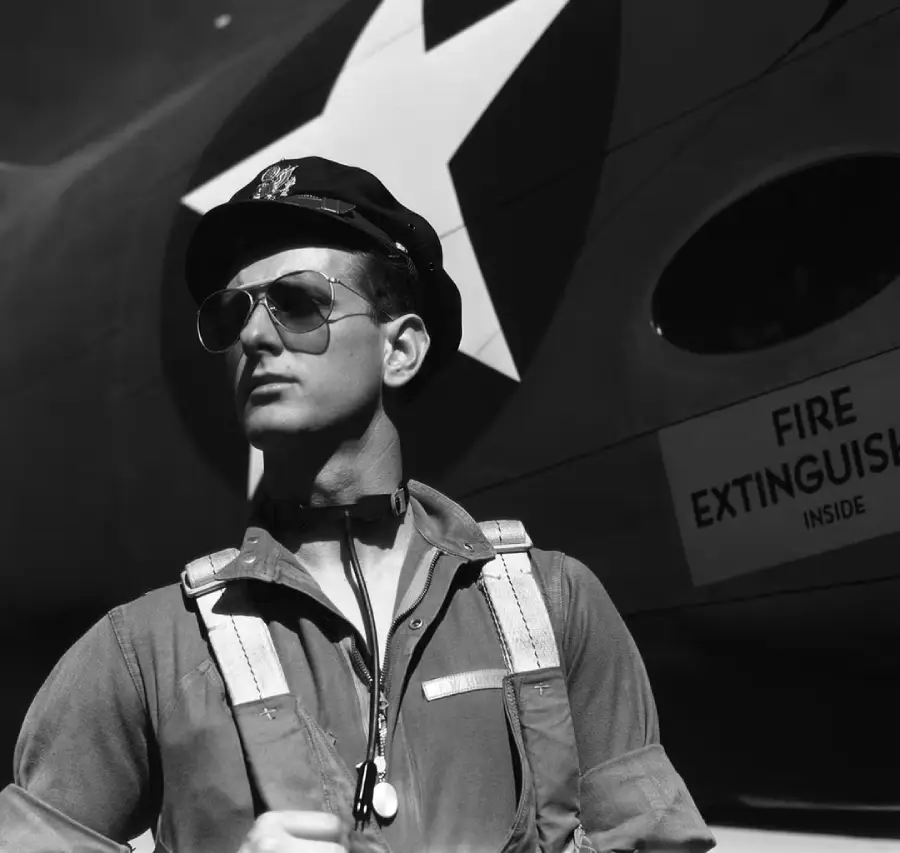
Bausch & Lomb worked closely with United States Army Air Corps pilots in the late 1930s to develop specialized eyewear that could protect aviators from the blinding, high-altitude glare of the sun during combat flights. The engineers designed a unique teardrop-shaped lens that could completely cover the entire human field of vision, using an advanced green tint formula to block harmful infrared and ultraviolet light rays. The sleek, lightweight wire frames were a massive hit among military pilots, who proudly wore them outside of their cockpits while walking around public airfields. The company branded the shades under the name Ray-Ban, releasing them to the public where they instantly transformed into an immortal symbol of effortless Hollywood cool.
11. Cargo pants
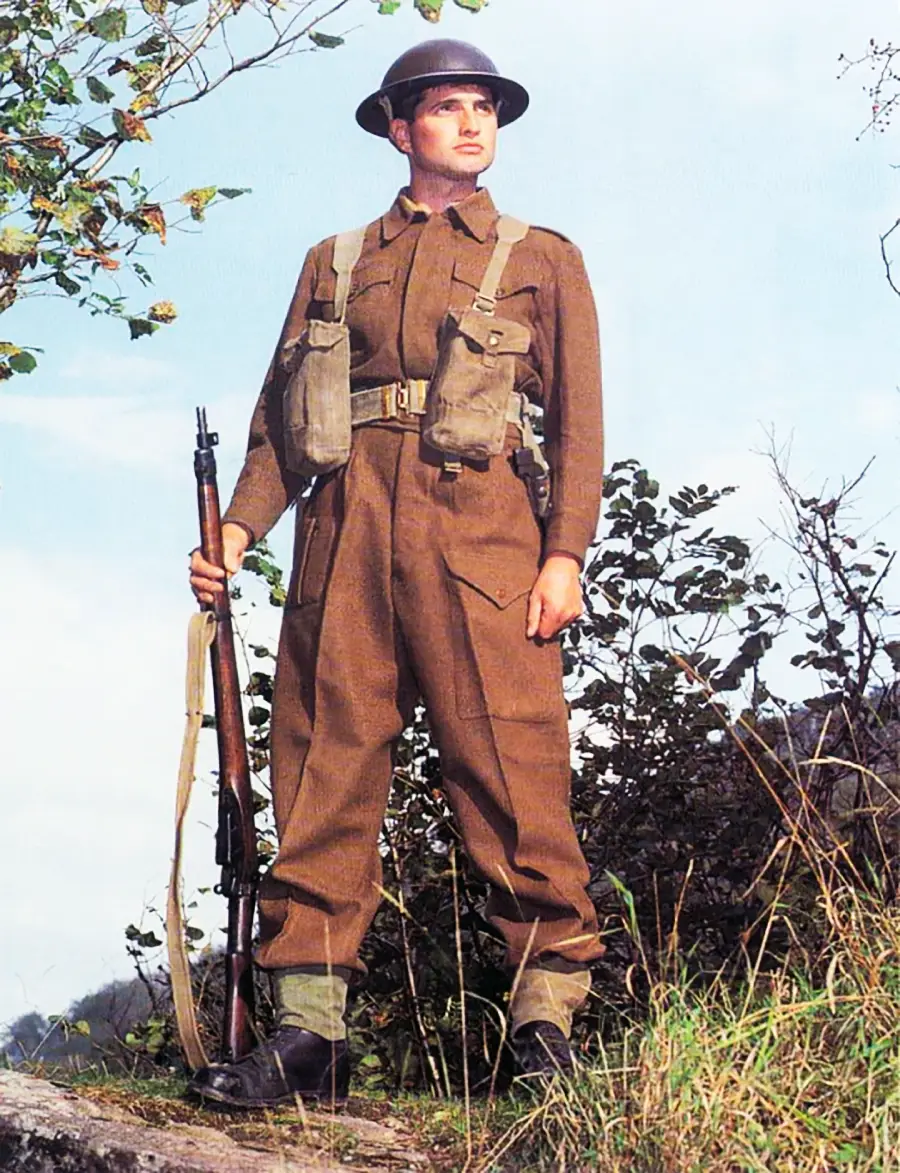
The British military completely overhauled their infantry uniforms in 1938, introducing a highly functional pair of rugged trousers that featured a large, deep pocket sewn directly onto the side of the thigh. This innovative design allowed soldiers to carry extra ammunition clips, tactical maps, and field dressing kits in a highly accessible location while crawling through muddy trenches. The United States military quickly adopted the practical design for their elite paratrooper divisions during World War II, expanding the pocket sizes to hold heavy equipment during parachute jumps. The multi-pocket layout eventually trickled down into civilian workwear, eventually evolving into a massive global fashion staple during the casual clothing boom of the 1990s.
12. Synthetic rubber tires
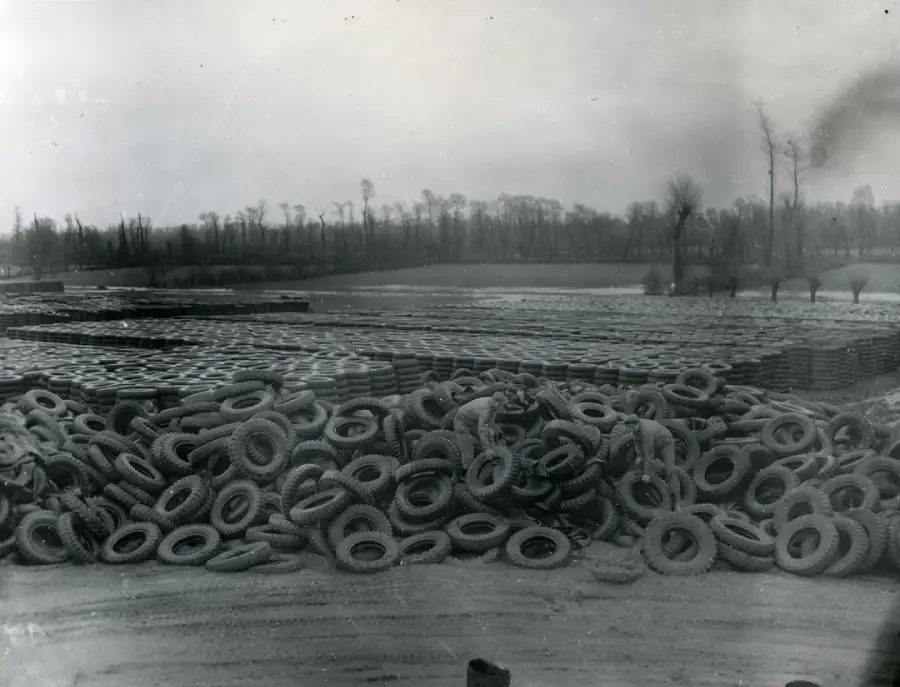
Before the outbreak of World War II, the global automotive and aerospace industries relied almost exclusively on natural rubber harvested from rubber trees to manufacture tires, seals, and hoses. When access to these tropical plantations was abruptly cut off by military blockades, a massive coalition of American scientists and chemical corporations launched a frantic crash program to synthesize an artificial alternative. They successfully mastered the chemical polymerization of styrene and butadiene, allowing factories to mass-produce durable synthetic rubber at a fraction of traditional time constraints. This wartime breakthrough permanently shifted global manufacturing protocols, and today, over sixty percent of the rubber used across the planet is synthetic.
13. The EpiPen
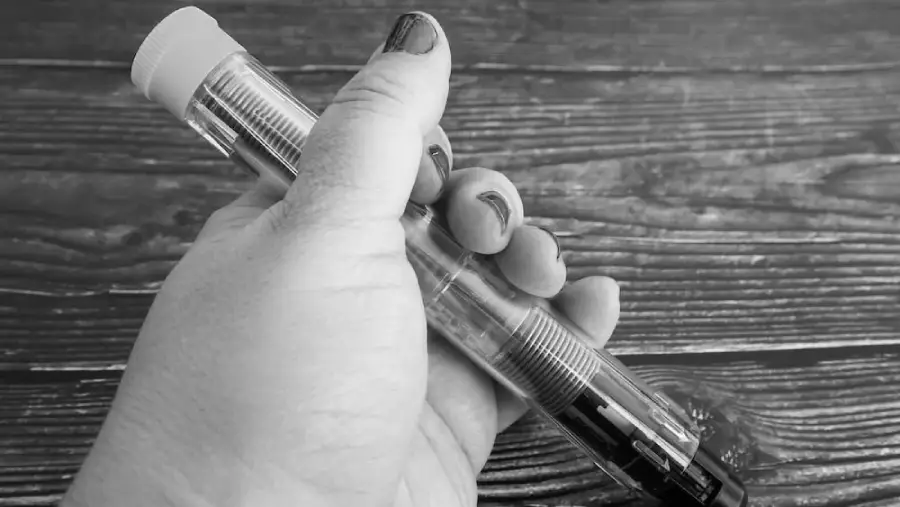
The automated injection technology that currently saves millions of individuals from experiencing fatal allergic reactions was originally engineered to protect military personnel from chemical weapon attacks. During the Cold War, defense researchers built a rugged, spring-loaded auto-injector that would allow soldiers to instantly administer nerve agent antidotes through their heavy combat uniforms with a single, rapid press against the thigh. The device was specifically designed to be entirely foolproof, ensuring that a panicked or injured soldier could successfully operate the mechanism in pitch darkness. A clever inventor eventually realized this same rapid delivery system could be loaded with epinephrine, transforming a battlefield shield into a vital piece of modern medical infrastructure.
14. Wristwatches
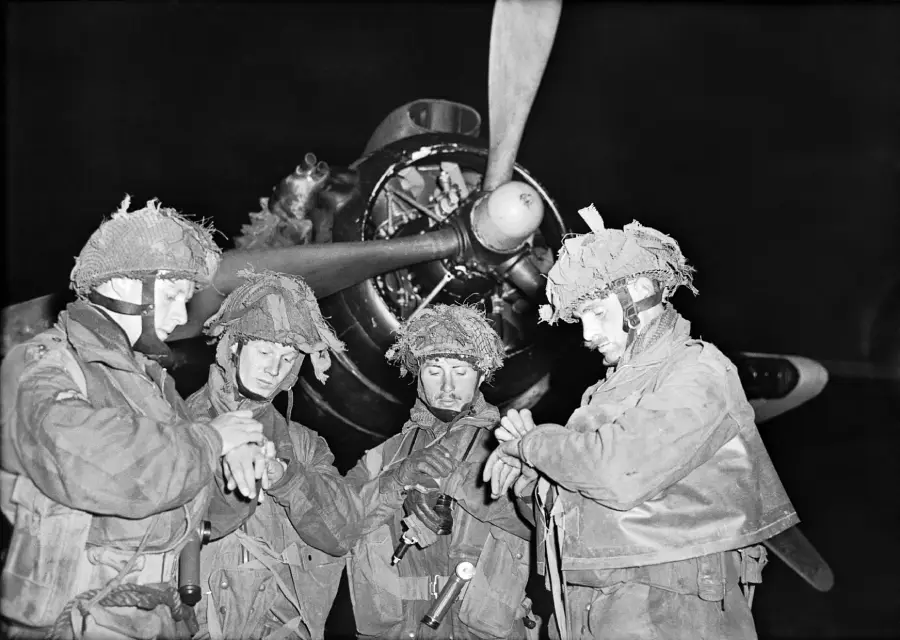
Before the late 19th century, wristwatches were viewed strictly as delicate, decorative jewelry pieces worn exclusively by wealthy high-society women, while men relied entirely on traditional pocket watches kept in their vests. This convention shifted dramatically during the Boer War and World War I, as officers realized that fumbling with a pocket watch while holding a rifle made coordinating artillery strikes nearly impossible. Soldiers began soldering small metal loops onto their pocket watches so they could strap the devices directly onto their wrists, allowing them to track seconds at a glance. The trend returned home with the troops, completely redefining masculine fashion standards and establishing the wristwatch as the definitive global tool for modern time management.
15. The internet (ARPANET)
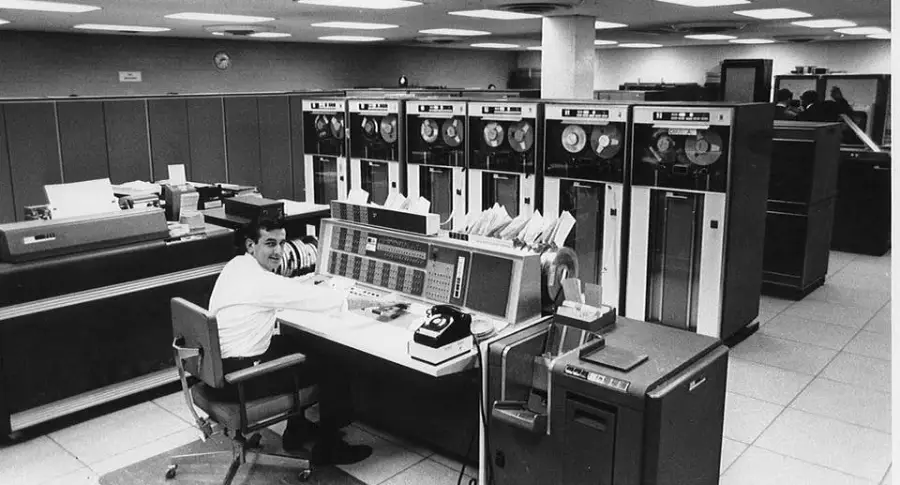
The early architectural blueprint for our modern digital world was originally funded and developed by the United States Department of Defense’s Advanced Research Projects Agency during the late 1960s. The military required a decentralized computer communication network that could successfully survive a catastrophic nuclear strike, ensuring that if one command hub was destroyed, data could automatically reroute through surviving nodes. This experimental network, known as ARPANET, successfully connected computer terminals across elite research universities for the very first time in human history. The protocols developed for this secret military project eventually evolved into the open-source infrastructure of the World Wide Web, completely transforming human civilization forever.
16. Nylon stockings
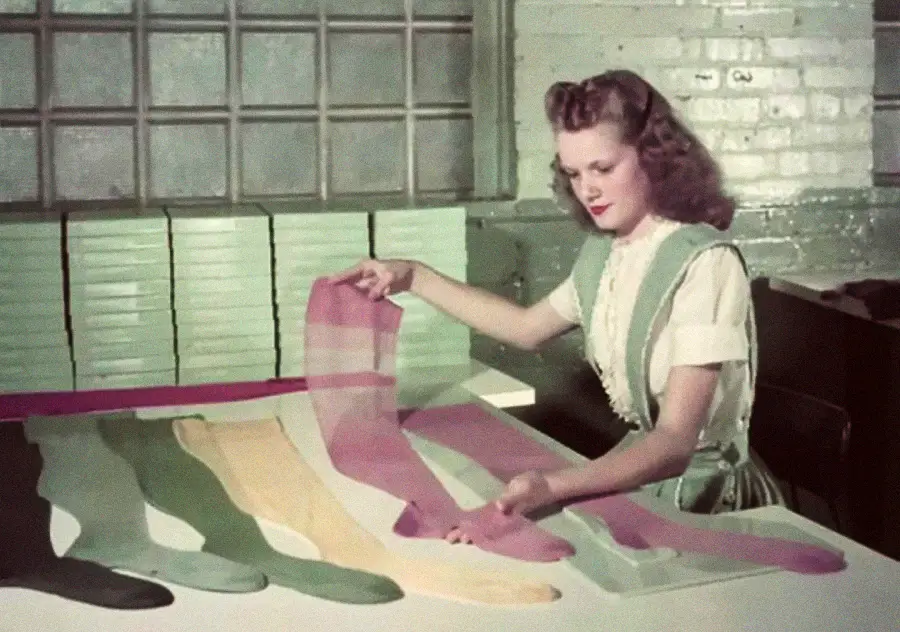
This synthetic polymer was originally developed by DuPont chemical researchers in the late 1930s, causing an absolute consumer frenzy when it was introduced to the public as a lightweight material for women’s hosiery. When America entered World War II, the government immediately requisitioned the entire national supply of nylon, ordering factories to pivot overnight to manufacture heavy-duty military parachutes, tow ropes, and combat tents. The material proved to be vastly superior to traditional silk, offering incredible tensile strength and complete resistance to mildew under harsh jungle conditions. Women across the country willingly donated their used stockings to the military effort, turning a simple fashion luxury into a vital strategic raw material.
17. Penicillin mass production
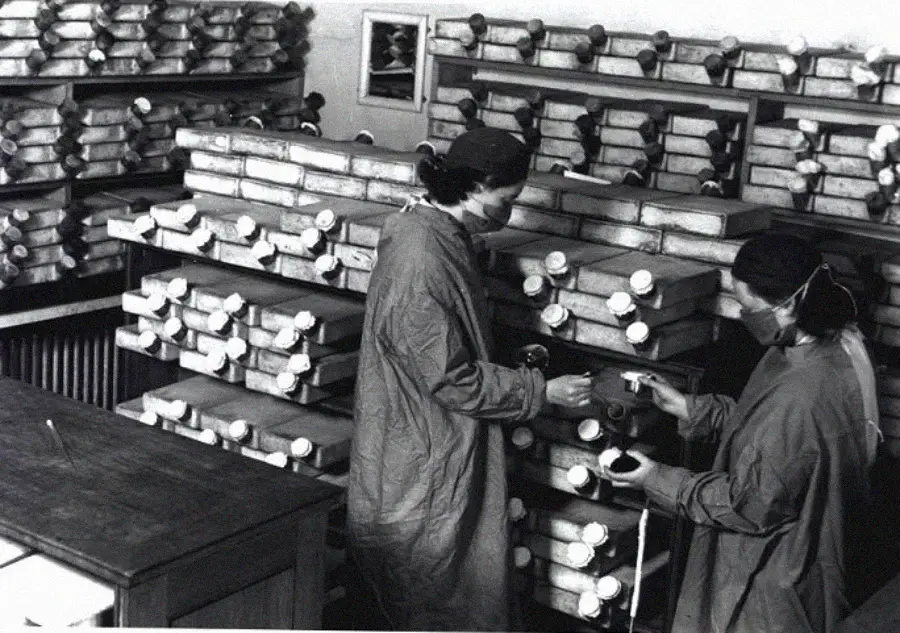
While Scottish scientist Alexander Fleming accidentally discovered the mold-based antibiotic in 1928, it remained a rare, unstable laboratory curiosity that was incredibly difficult to isolate in useful quantities for over a decade. The looming threat of massive casualties ahead of World War II prompted the British and American governments to launch an aggressive, high-priority manufacturing initiative that mirrored the scale of the atomic bomb project. Engineers developed a revolutionary deep-tank fermentation process using corn steep liquor and massive industrial agitators to cultivate the healing mold by the ton. This wartime manufacturing miracle successfully saved hundreds of thousands of wounded soldiers from dying of simple battlefield infections, changing modern medicine forever.
18. M&M’s candy
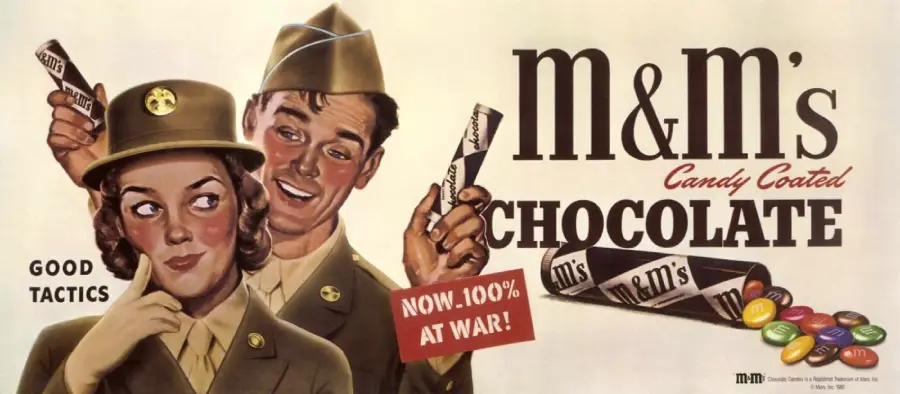
Forrest Mars Sr., a member of the legendary candy dynasty, encountered soldiers during the Spanish Civil War who were eating small, pellet-sized pieces of chocolate coated in a hard sugar shell. He noticed that the protective sugar coating successfully prevented the chocolate from melting under the intense heat of the Mediterranean sun, allowing troops to carry a quick source of energy in their pockets without creating a messy disaster. Mars patented the manufacturing process and officially launched the candy in 1941, securing an exclusive contract to sell the sweet treats directly to the United States military for inclusion in soldier rations. The candy became an immediate household favorite after the troops returned home, birthing one of the most successful confectionery brands in global history.
Explore more interesting inventions:
Exploring the unexpected, high-stakes origins of our favorite conveniences serves as a striking reminder that human progress is frequently forged in the fires of survival. It is incredible to realize that the devices we use to heat our meals, navigate our neighborhoods, and protect our health were born out of a desperate need to secure a geopolitical advantage. If you enjoyed this illuminating look at the hidden history of modern technology, make sure to explore these 20 Forgotten Inventions That Were Way Ahead of Their Time, or 16 Vintage Photos of Bizarre Inventions. You can also check out these 15 Mid-Century Inventions That Failed to Change the World.