Ancient Rome is usually pictured as a world of emperors, marble temples, and soldiers marching across Europe. Daily life, however, could feel oddly familiar. Romans lived in crowded apartments, complained about traffic, grabbed food on the go, followed sports stars, and covered public walls with opinions. Strip away the togas and Latin inscriptions, and parts of Roman city life start looking much less ancient.
1. They Bought Fast Food on the Street
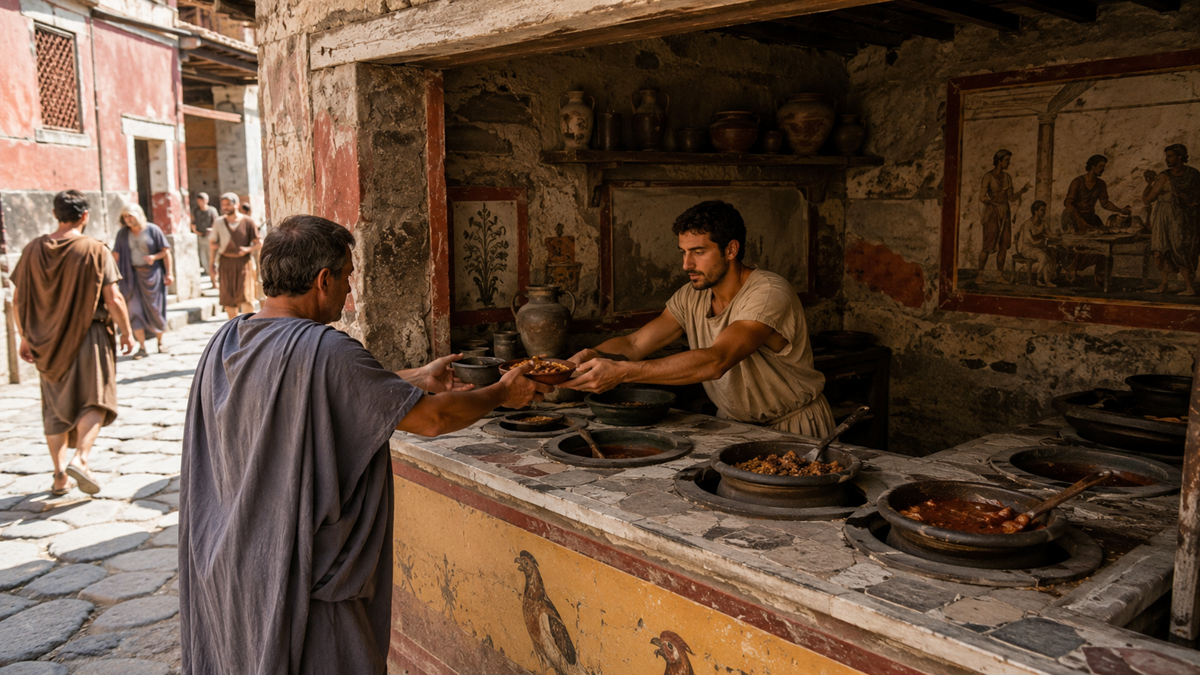
Cooking at home was not always practical, especially for poorer Romans living in apartment buildings without proper kitchens. Many city residents bought meals from thermopolia, small food counters that opened directly onto the street. Large containers built into the counter held prepared dishes, wine, nuts, or other foods that could be served quickly. Pompeii had dozens of these establishments, making parts of the city feel surprisingly close to a neighborhood filled with takeout spots.
2. They Lived in Crowded Apartment Buildings
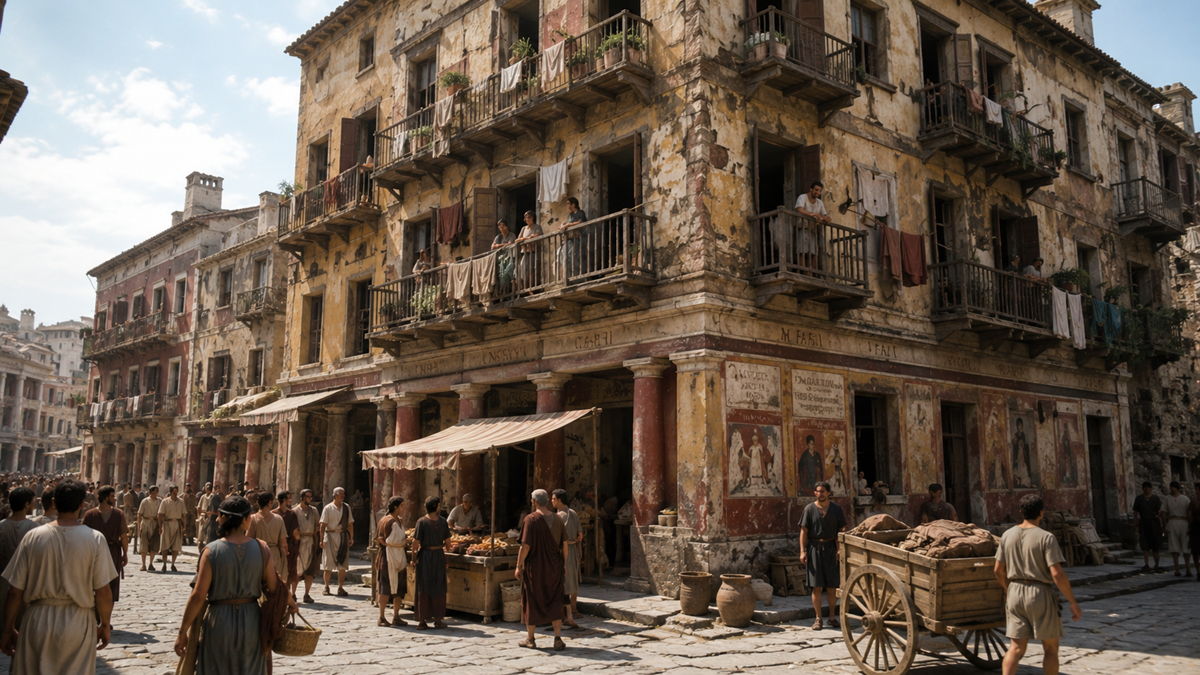
A large share of Rome’s population lived in multistory apartment blocks called insulae. The best rooms were usually on the lower floors, while cheaper, smaller, and less comfortable units were higher up. Fires, structural problems, thin walls, and unreliable landlords were common complaints. For anyone who has dealt with noisy neighbors or a broken elevator in a crowded city, the basic experience does not sound entirely unfamiliar.
3. They Complained About Traffic and Noise
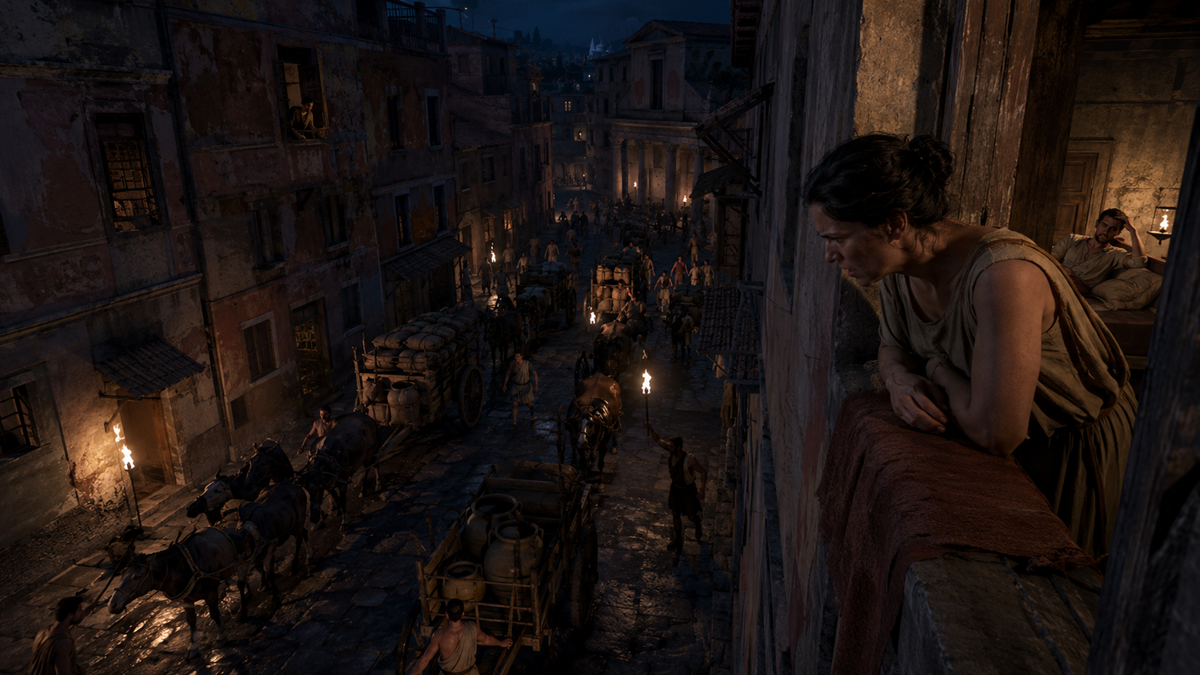
Rome had serious congestion problems. Julius Caesar introduced restrictions that kept many carts out of the city during daylight hours, but this simply pushed deliveries into the night. The result was the sound of wooden wheels and animals moving through narrow streets while residents tried to sleep. Roman writers complained about urban noise in terms that would fit comfortably into a modern neighborhood forum.
4. They Wrote Graffiti Everywhere
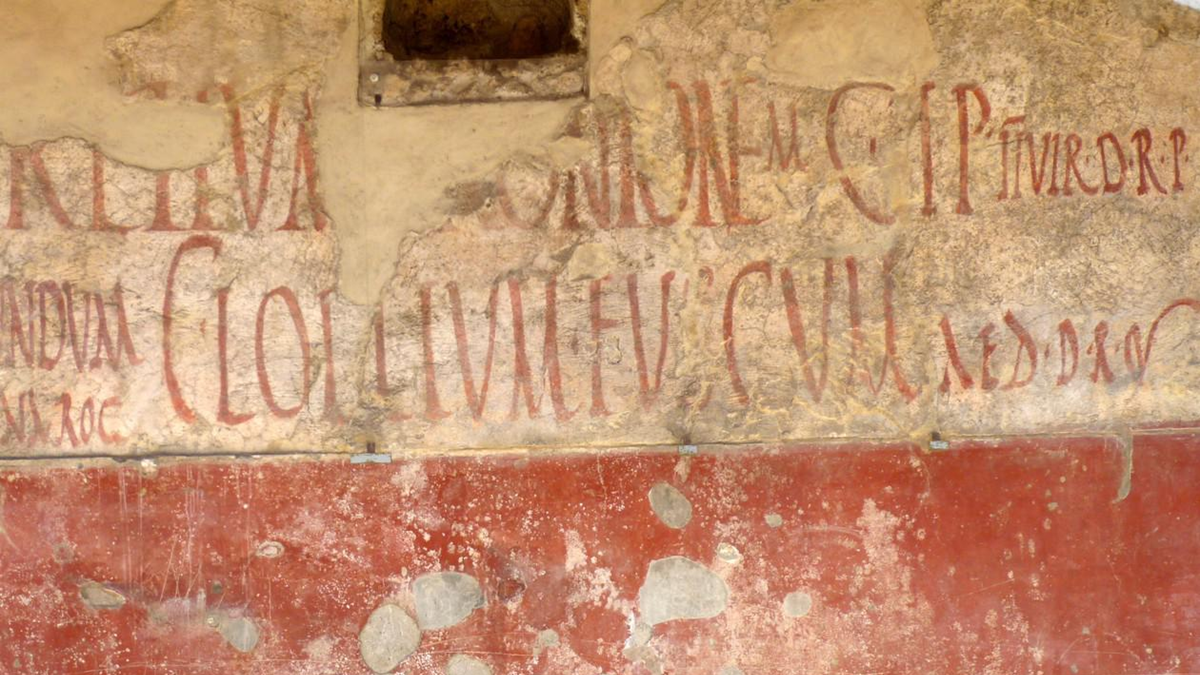
The walls of Roman cities were filled with names, jokes, insults, advertisements, romantic messages, and political opinions. Some graffiti praised gladiators, while other examples mocked neighbors or recorded who had been romantically involved with whom. Pompeii preserved thousands of these messages. They read less like formal inscriptions and more like an ancient version of comments, posts, and bathroom-wall arguments.
5. They Followed Sports Stars
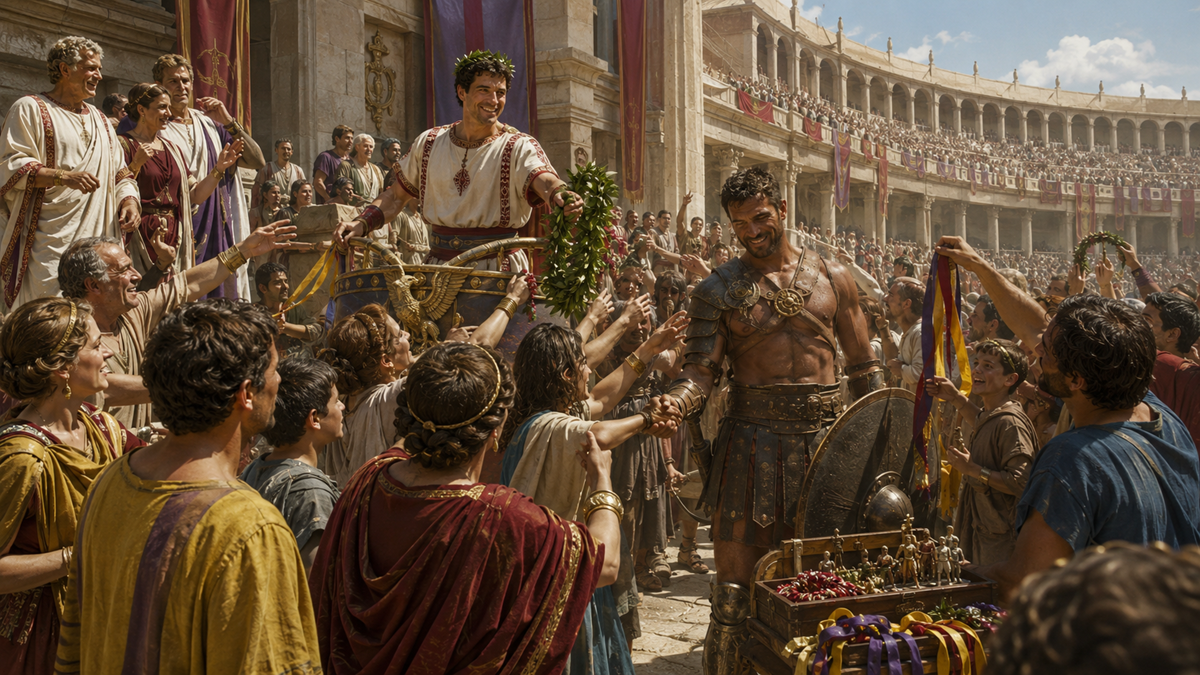
Gladiators could become recognizable public figures with loyal supporters. Their names appeared in graffiti, fans discussed their victories, and some were promoted as especially attractive or charismatic. Chariot racers drew even larger crowds and could earn enormous sums. Roman sports culture came with celebrity athletes, rival fan groups, merchandise, and plenty of emotional investment.
Trending on The Scroller

6. They Joined Fiercely Loyal Fan Clubs
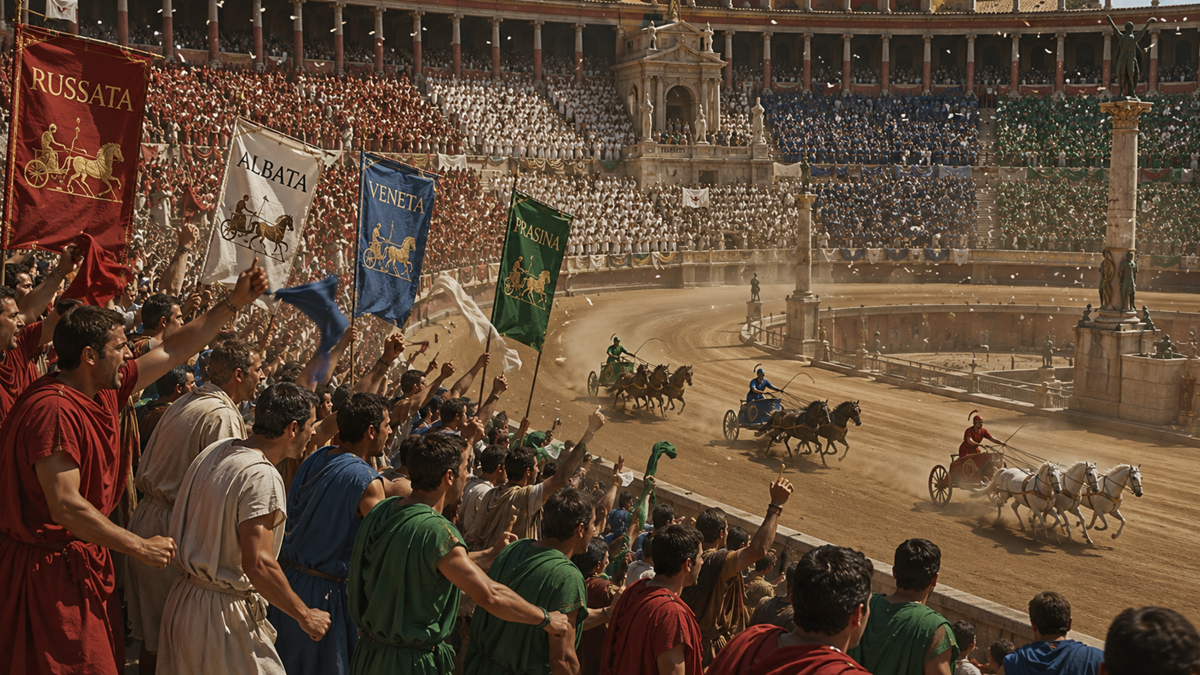
Chariot racing supporters were divided into factions, most famously the Reds, Whites, Blues, and Greens. Fans wore faction colors, bet on races, and treated victories as a matter of personal pride. Rivalries occasionally became violent. The intensity feels familiar to anyone who has watched sports supporters turn a match into a question of identity.
7. They Went to Public Gyms and Spas
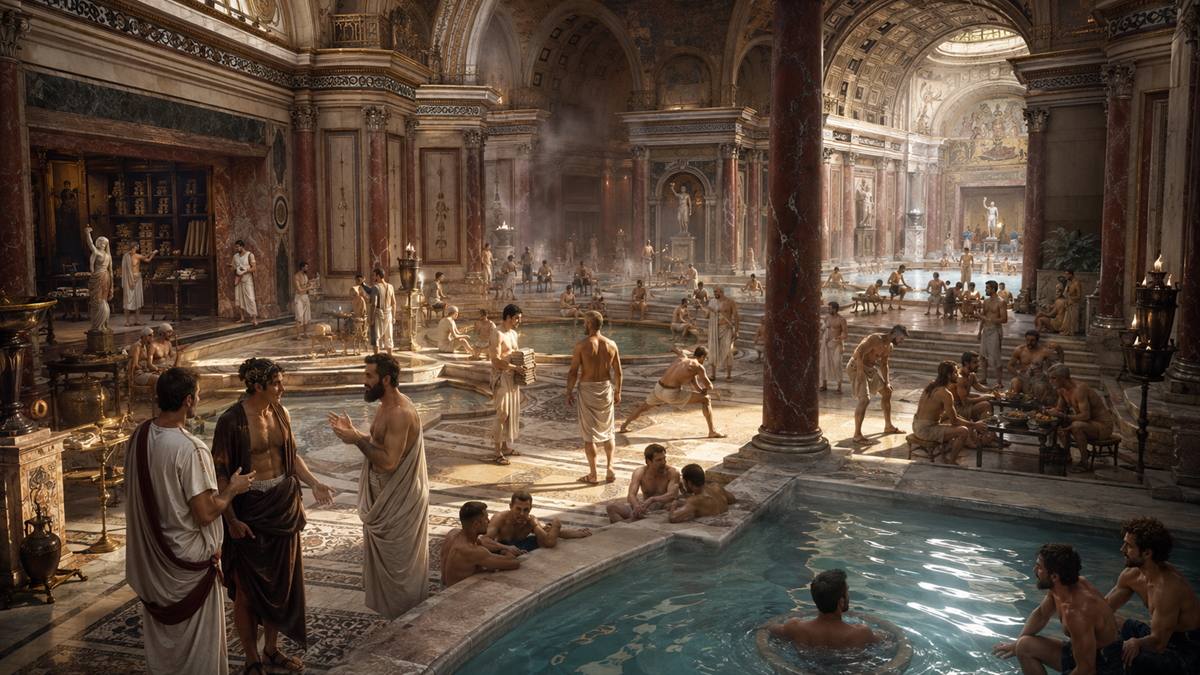
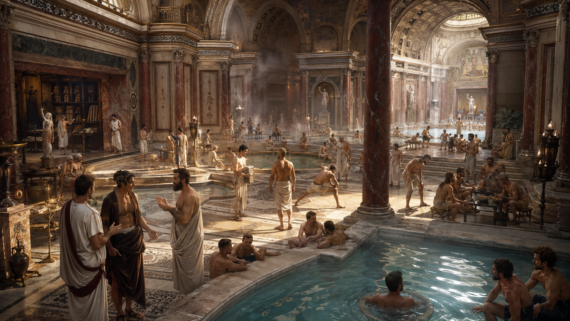
Roman bath complexes were not simply places to wash. Visitors could exercise, swim, meet friends, conduct business, eat snacks, read, or move through rooms heated to different temperatures. Large baths included gardens, libraries, and spaces for conversation. They functioned as a combination of gym, spa, social club, and community center, often all under one enormous roof.
8. They Used Political Campaign Advertising
Candidates for public office relied on painted endorsements placed on highly visible walls. These messages asked residents to support particular men and sometimes claimed that professional groups, neighborhood associations, or local businesses backed them. Campaigning depended heavily on reputation and public visibility. The wording was different, but the urge to cover every available surface with political promotion was already well established.
Sign up for our newsletter
9. They Shopped in Large Commercial Centers
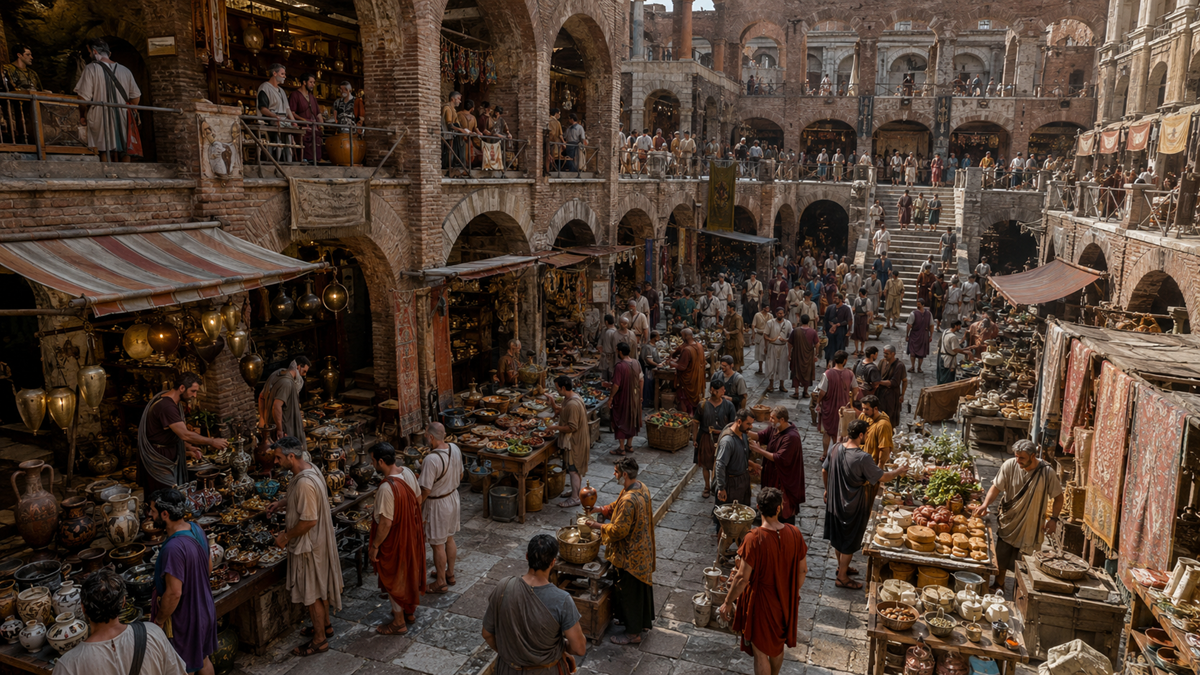
Roman cities contained busy markets where people could buy food, clothing, household goods, imported products, and prepared meals. Trajan’s Market in Rome, although probably used partly for administration, included rows of shops and offices arranged across several levels. Commercial streets often grouped similar trades together. The result was a shopping experience built around browsing, comparison, convenience, and crowded public spaces.
10. They Used Central Heating
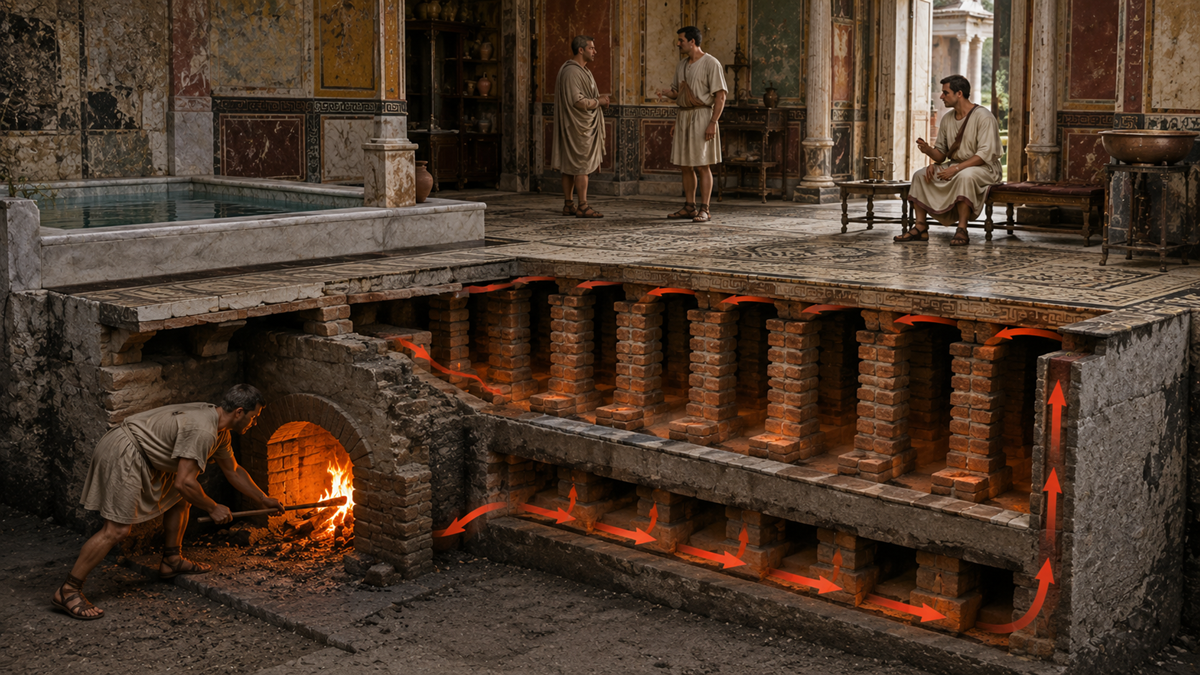
Wealthy homes and public baths sometimes used a heating system known as the hypocaust. Furnaces pushed hot air beneath raised floors and, in some buildings, through spaces inside the walls. It required fuel, labor, and regular maintenance, so it was not available to everyone. Still, the basic goal was recognizable: heat the building without filling the main rooms with smoke.
11. They Had Public Toilets
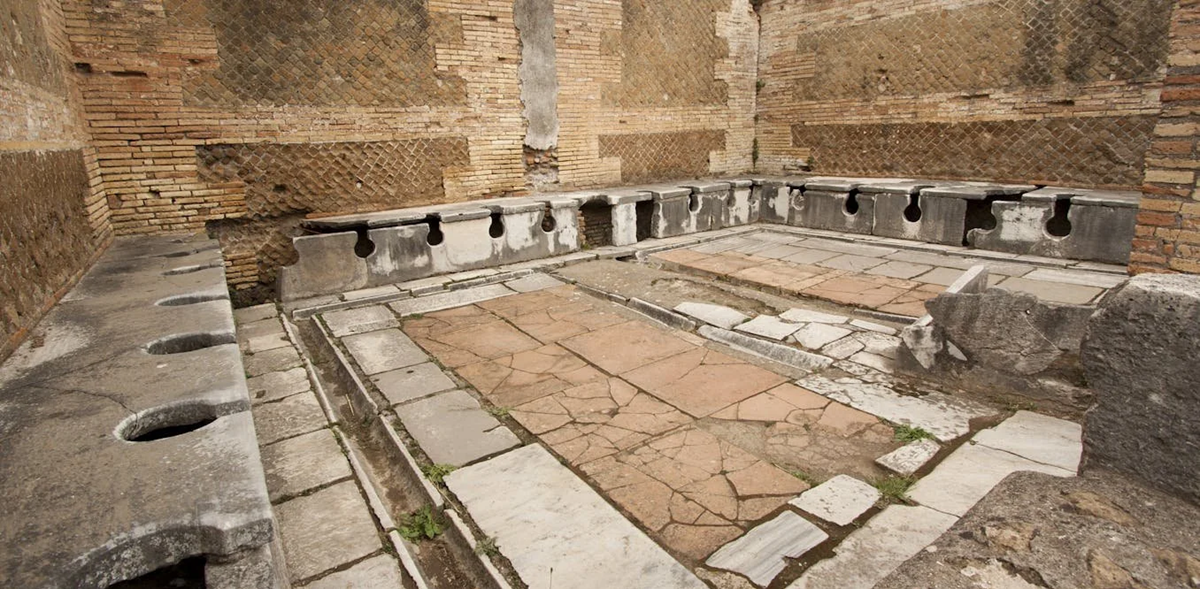
Roman cities built communal latrines with rows of stone seats positioned above flowing drainage channels. Privacy was limited, and using the toilet could be a social experience rather than a solitary one. Some facilities were connected to water systems that carried waste away. The engineering was practical, even if the seating arrangement would make most modern visitors uncomfortable.
12. They Relied on Long-Distance Delivery Networks

The Roman state operated the cursus publicus, a transportation and communication network that moved official messages, administrators, and supplies across the empire. Relay stations provided fresh horses, lodging, and other support along major roads. It was mainly reserved for government business rather than ordinary personal mail. Even so, its dependence on routes, scheduled stops, paperwork, and authorized access feels like an early version of large-scale logistics.
13. They Used Concrete for Massive Construction
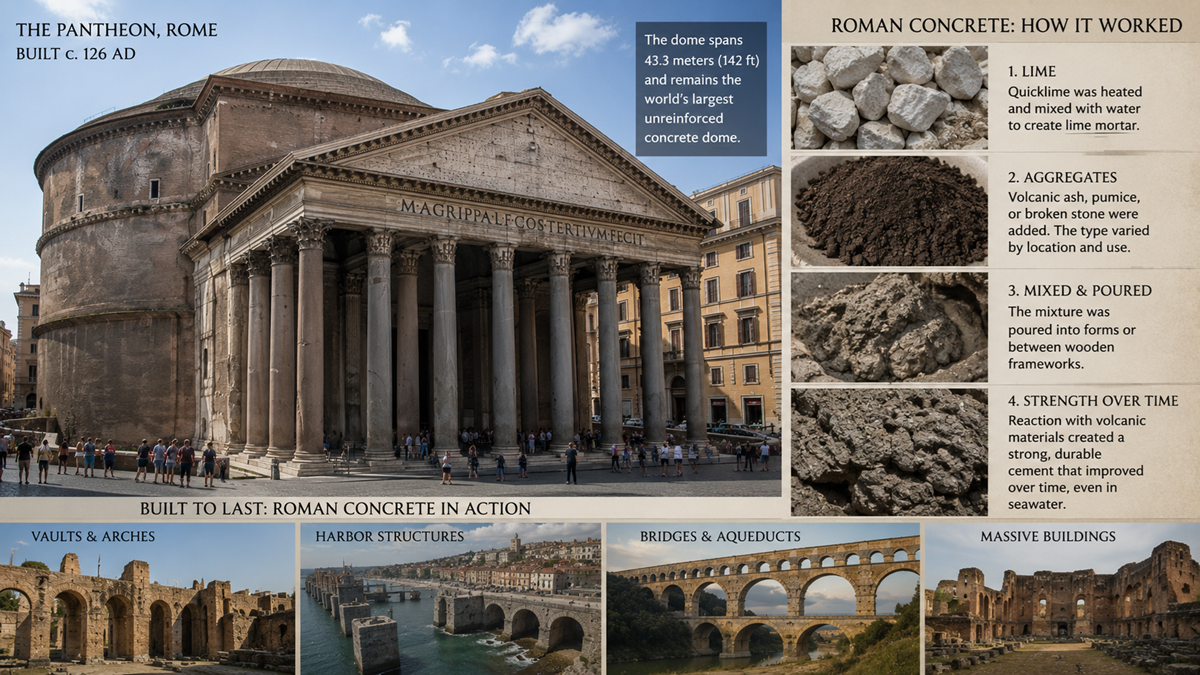
Roman builders developed durable concrete mixtures that allowed them to create domes, vaults, harbor structures, and buildings on a scale that would have been difficult with cut stone alone. The Pantheon’s enormous concrete dome is still standing nearly two thousand years after it was completed. Roman concrete did not have one universal formula, and builders adapted mixtures to different projects. Their focus on practical, scalable construction remains very recognizable.
14. They Followed a Calendar That Still Shapes Ours

Julius Caesar’s calendar reform established a 365-day year with an extra day added every four years. The Julian calendar was later adjusted into the Gregorian calendar used in much of the world today, but the basic structure remained. Several month names also come directly from Roman tradition. Every time someone checks a date or schedules a meeting, part of that Roman system is still quietly operating.
15. They Built Social Networks Around Favors and Connections
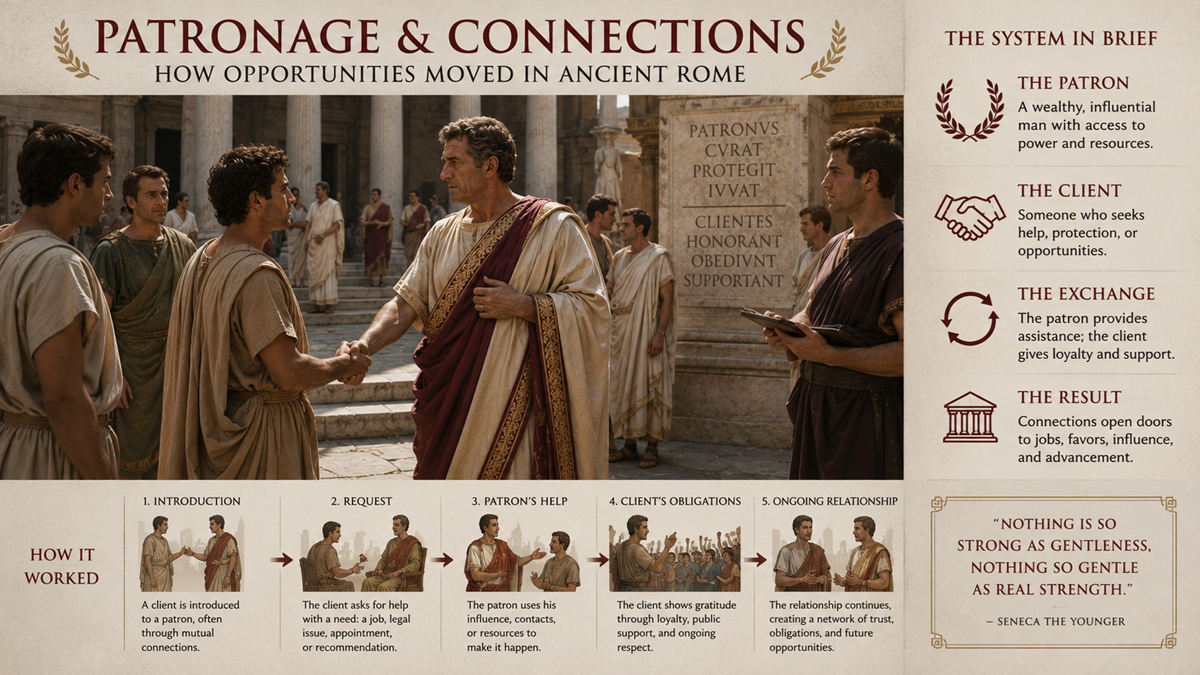
Roman society depended heavily on personal relationships, introductions, patronage, and obligations. A powerful patron might help someone find work, handle a legal problem, gain an appointment, or meet the right person. In return, clients offered loyalty, public support, and regular displays of respect. The system was far more formal and unequal than modern professional networking, but the principle of opportunities moving through personal connections has clearly survived.
In the mood for more?
Check out 18 History Facts That Sound Like Total Lies But Actually Happened, or take a look at 29 Historic Artifacts That Bring the Past to Life. If you want to see more stories from the ancient world, you can check out 14 Ancient Civilizations That Vanished and Left Historians Guessing
Images without an attribution have been generated by AI.