
Most people don’t think twice about the little sounds and vibrations coming from their phones. A message arrives, a news alert pops up, or an app announces something that probably could have waited. Turn those notifications off for two days, though, and some surprisingly familiar habits start to stand out. Researchers have looked at how people behave without constant alerts, and while the results aren’t always what digital detox advocates promise, they reveal quite a bit about how phones compete for our attention.
1. Concentration Gets Interrupted Less Often

A phone doesn’t have to be picked up to break someone’s concentration. Researchers at Florida State University demonstrated this in 2015 when they found that receiving a notification could disrupt performance on an attention-demanding task, even when participants ignored the alert entirely. A vibration or sound was enough to interfere. With notifications switched off, those interruptions disappear, leaving fewer reasons to lose track of a difficult paragraph, calculation, or train of thought.
2. People Still Check Their Phones Anyway

Here’s the frustrating part. Turning off notifications doesn’t necessarily stop people from reaching for their phones. A 2024 study involving 205 participants found that disabling alerts for a week didn’t significantly reduce how often they checked their devices. Many continued doing it out of habit, without any buzz or banner prompting them. Apparently, the phone doesn’t always have to ask for attention to get it.
3. The Silence Can Feel a Little Unusual

Someone who normally receives dozens of alerts might notice how little their phone suddenly has to say. No vibration during lunch, no little sound from the next room, no screen lighting up in the middle of something else. It can feel odd at first, particularly for people accustomed to being reachable throughout the day. There’s no scientific rule saying this happens after exactly 48 hours, but the contrast between constant alerts and none at all can be hard to miss.
4. It’s Easier to Remember What Was Happening Before an Interruption

Picture someone editing a document when a message arrives. They glance at it, answer quickly, and return to the document, only to realize they’ve forgotten what they were about to change. Psychologists have studied this problem for decades. Switching between tasks takes mental effort, and resuming complicated work can involve reconstructing information that was previously fresh in the mind. Fewer notifications mean fewer opportunities for that particular annoyance, especially during work that requires keeping several details straight.
5. Some People Actually Feel More Anxious

Silence isn’t relaxing for everyone. In a 2019 experiment involving 237 smartphone users, researchers compared different ways of delivering notifications. Participants who received no alerts reported greater anxiety and fear of missing out than those receiving notifications normally. Not knowing whether an important message had arrived could be more uncomfortable than dealing with the alerts themselves. For people who worry about missing updates, turning everything off may introduce a different kind of distraction.
Trending on The Scroller


6. Reading Without Constant Pauses Becomes More Practical

Reading a book while a phone keeps vibrating is a little like trying to follow a movie while someone repeatedly asks unrelated questions. Even when the interruptions are brief, the reader may have to find their place again or remember a detail from the previous paragraph. Silencing notifications removes one reason for those breaks. That doesn’t mean comprehension automatically improves, but it can make sitting through a long chapter without an unexpected interruption more realistic.
7. Checking the Phone Can Feel Less Automatic

Something interesting happened in the 2024 study of people who disabled notifications. Participants didn’t significantly reduce their actual checking frequency, but they reported that checking felt less habitual. They were still opening their phones, just without the familiar signal telling them to do it. That distinction might seem small, yet it’s the difference between responding to an interruption and deciding to look at something independently.
8. The Workday May Feel Less Exhausting

Anyone who has worked in a busy group chat knows how quickly small messages can pile up. A 2023 field experiment involving 247 participants examined what happened when workplace communication notifications were disabled during the day. Reducing interruptions was associated with better work performance and less strain, although the results varied with participants’ fear of missing out and pressure to respond. The problem isn’t always the message itself. Sometimes it’s the feeling that another one could arrive at any moment and require an immediate answer.
Sign up for our newsletter
9. There Are More Moments When Nothing Happens

Waiting in line, sitting on a bus, or standing around while the coffee brews used to involve quite a lot of doing nothing. Smartphones made those pauses easier to fill, and notifications provide another excuse to look at a screen. Without alerts arriving, a few of those moments may simply pass quietly. That doesn’t mean boredom suddenly becomes enjoyable or that creativity improves after two days. It just means fewer things are competing to fill the silence.
10. Conversations Have One Less Thing Competing for Attention

A phone vibrates on the table during dinner. Nobody answers it, but somebody glances down, and for a moment the conversation loses its attention. It’s a familiar scene, and one that becomes less likely when notifications are disabled. People can still check their phones voluntarily, of course. But without unexpected sounds and vibrations, there’s one less reason to interrupt a story, miss a question, or look away while someone is speaking.
11. Replying Immediately May Stop Feeling Quite So Urgent

Some workplaces and social circles have developed an unwritten rule that messages deserve quick answers. The problem is that quick can gradually start to mean almost immediately. When notifications are disabled, messages no longer announce their arrival throughout the day, making it possible to discover them during a later phone check instead. Whether that feels comfortable depends on the person. Someone who worries about unanswered messages may feel more pressure, not less, especially if others still expect an instant response.
12. Productivity Doesn’t Necessarily Improve

It’s tempting to imagine that switching off notifications will suddenly turn an ordinary afternoon into several hours of uninterrupted productivity. Research paints a less convenient picture. In the 2024 weeklong experiment, participants didn’t report significant improvements in productivity or smartphone-related distraction after disabling alerts. Other studies have found benefits, particularly in specific working conditions. Notifications are only one source of distraction, and removing them doesn’t prevent procrastination, wandering thoughts, or the urge to open another app.
13. Wondering About Messages Can Become Its Own Distraction

There’s a particular kind of distraction that happens without any sound at all: wondering whether someone has sent a message. People who stop receiving notifications may compensate by opening their phones to check. The 2024 experiment found that participants continued checking at roughly the same frequency despite having their alerts disabled. The external interruption had gone away, but the impulse to look for updates remained. Sometimes curiosity does the work that notifications used to do.
14. Getting Notifications in Batches Might Work Better
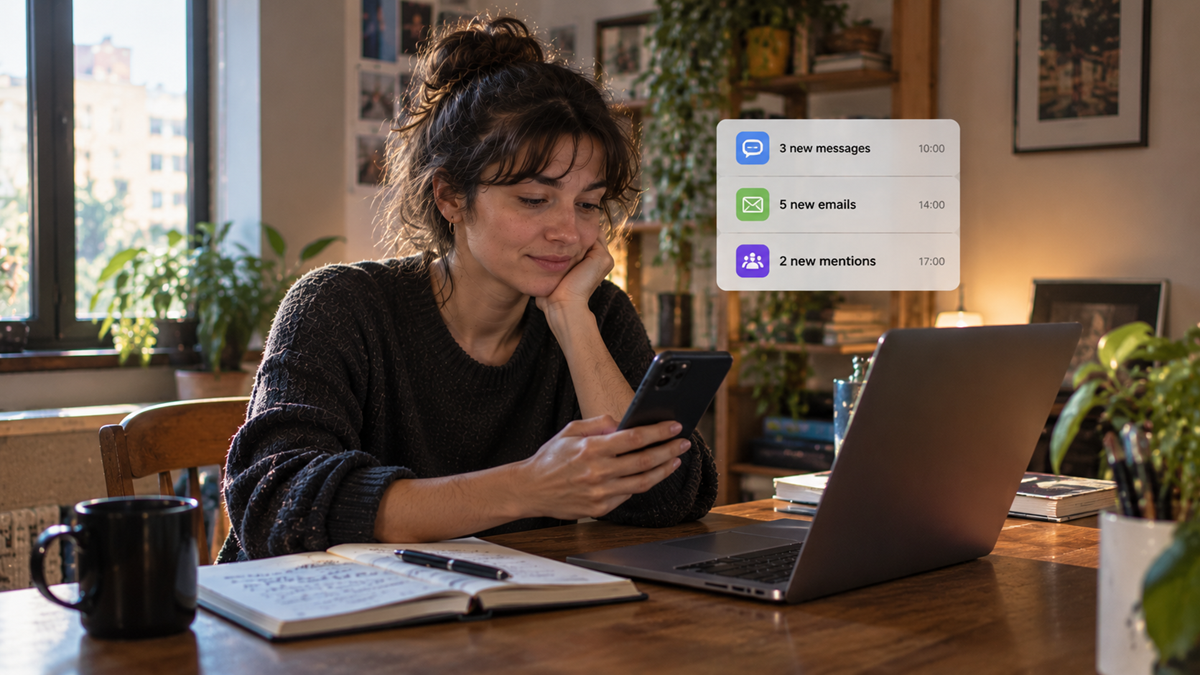
Researchers have tested an alternative to receiving alerts constantly or turning them off completely. In a 2019 experiment, participants received notifications in three scheduled batches each day. They reported feeling more attentive, more productive, and more in control of their phones, along with lower stress levels. Interestingly, people who received no notifications didn’t show the same overall benefits. Having a reasonably predictable time for updates may be more comfortable than spending the day wondering what has arrived.
15. Forty-Eight Hours May Expose Habits That Have Been There for Years

Two days without notifications won’t reset the brain, and researchers haven’t identified a special attention-related change that happens at the 48-hour mark. What people may notice instead is how much of their phone use continues without any prompting. They might open an app while waiting for food, unlock the screen after finishing a task, or check messages just because a few minutes have passed. Those habits can survive even when the notifications that once encouraged them have disappeared.
In the mood for more?
Check out 15 Unexpected Ways Smartphones Quietly Changed Human Behavior, or take a look at 15 Agitating Photos That Take Aim At One’s Inner Peace. If you want to see more surprising facts about human attention, you can check out 12 Strange Ways Working From Home for a Year Can Change Your Brain.