We live in an era where almost every unusual photograph is immediately accused of being fake. When we see something that defies common sense, our first instinct is to assume a digital artist created it. But long before editing software existed, the natural world was already producing sights that look completely fake to the human eye.
From a deep-sea fish with a transparent head to a massive waterfall that appears to flow beneath the ocean, these remarkable sights challenge what we expect nature to look like. All 12 of these examples are completely real, although some rely on highly specific environmental conditions, bizarre evolutionary traits, or massive geological optical illusions to pull off their unbelievable appearances.
1. A fish with a completely transparent head
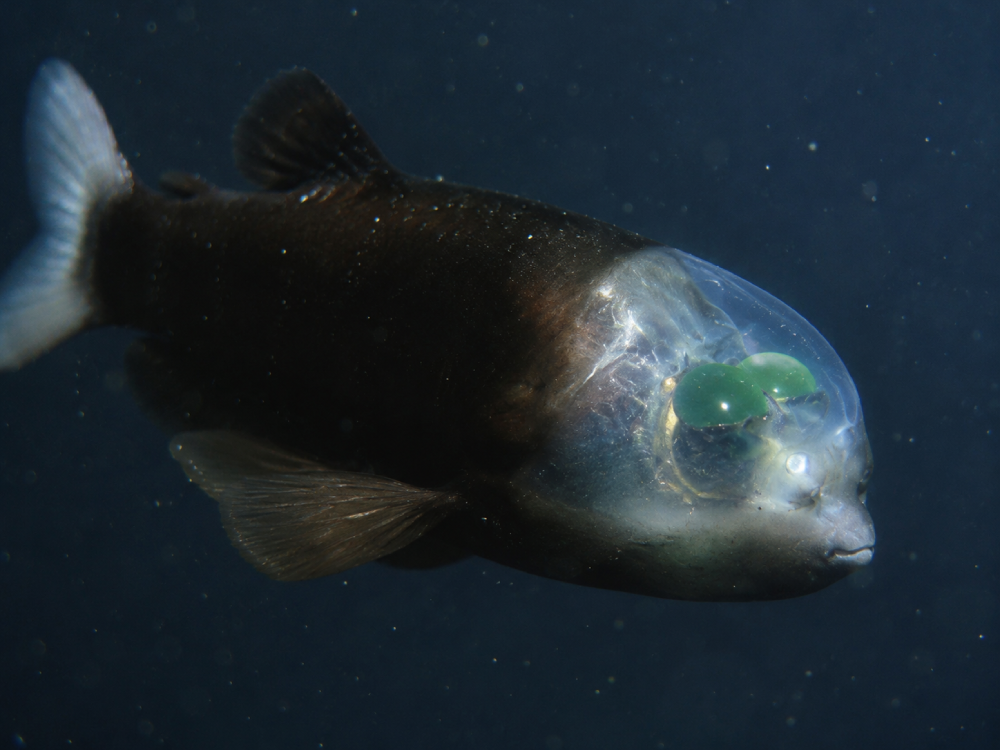
The barreleye fish looks like a creature invented by a special effects department, but it actually lives deep in the Pacific Ocean. Its head contains a transparent, fluid-filled dome through which its bright green eyes are clearly visible. Even stranger, researchers discovered that those internal eyes can physically rotate, allowing the fish to look straight upward for prey and then forward while actively feeding. Scientists at the Monterey Bay Aquarium Research Institute carefully documented this extraordinary biological adaptation in 2009.
2. A lake that looks like someone poured pink paint into it
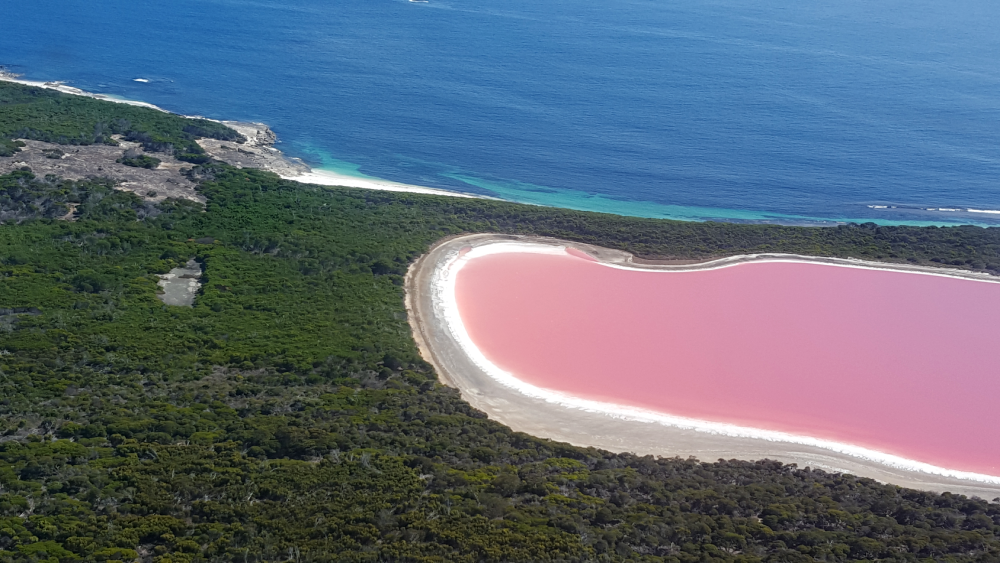
Lake Hillier in Western Australia became internationally famous for water that looked almost impossibly bubblegum pink. Its remarkable, saturated color is a completely natural phenomenon associated with microorganisms and the lake’s highly saline environment, rather than artificial dyes or clever photo editing. However, nature is constantly changing: heavy rainfall in 2022 significantly diluted the lake’s salt levels, causing its famous bright color to fade, proving that its surreal appearance remains heavily subject to natural fluctuations.
3. Rocks that move across the desert without anyone pushing them
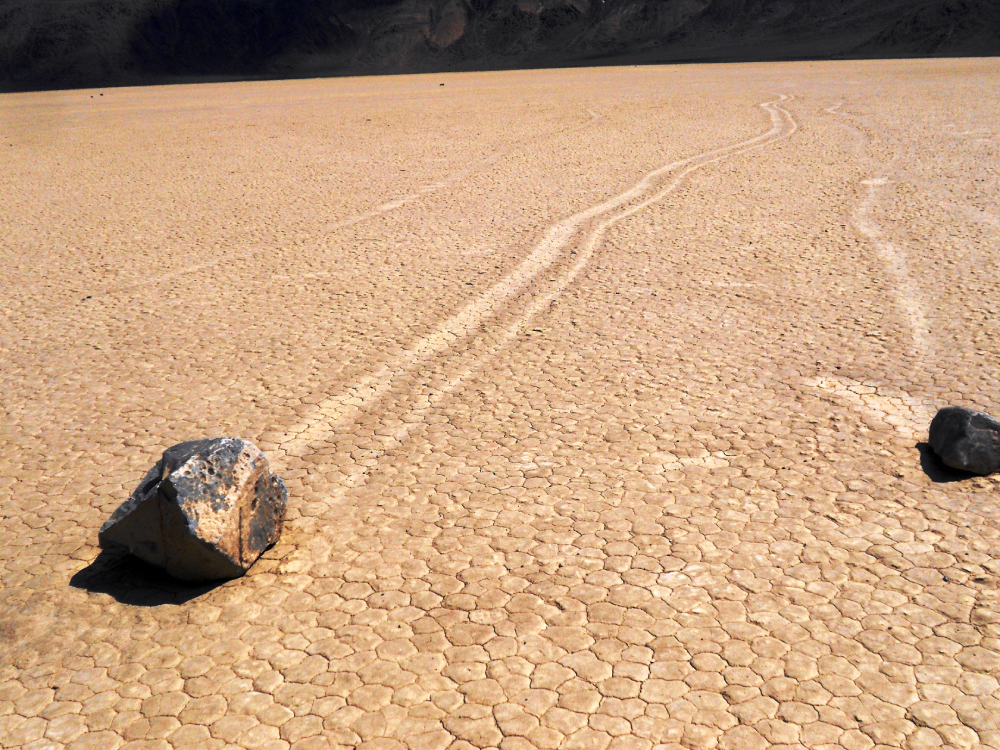
At California’s Death Valley National Park, heavy rocks leave long, dragging trails across a dry lakebed, making it look as though someone secretly pulled them across the desert overnight. Some of these stones weigh hundreds of pounds, and their distinct tracks can stretch for hundreds of feet. Scientists finally observed the actual movement in 2013, discovering that extremely thin sheets of floating ice, pushed by gentle winter winds, can slowly shove the heavy stones across the wet, slippery mud.
4. Clouds that look exactly like flying saucers
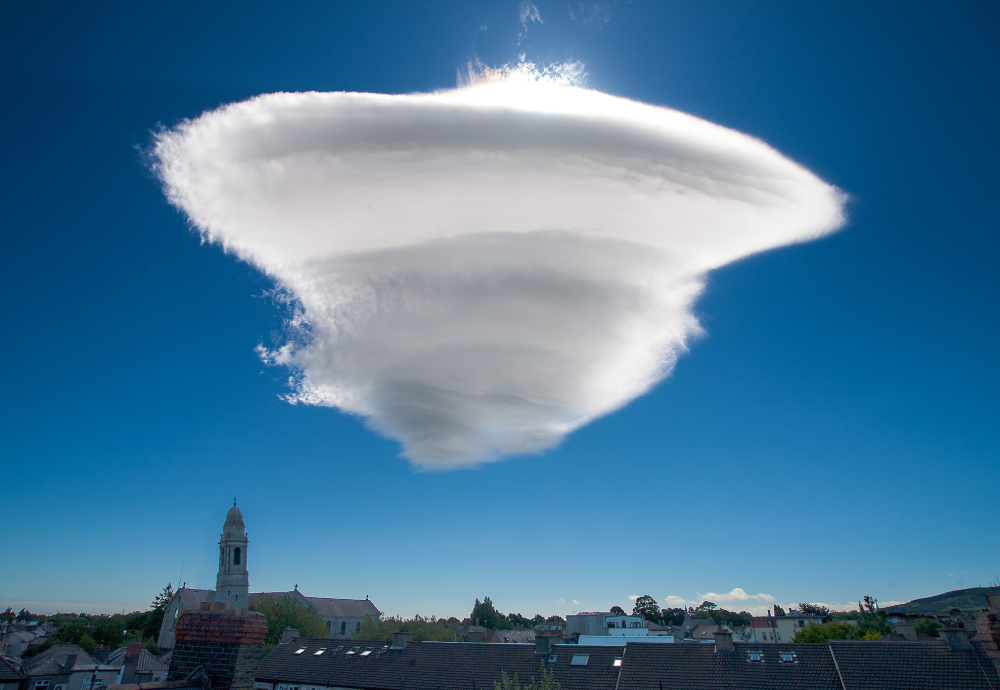
Some clouds form into shapes so perfectly smooth and symmetrical that they resemble enormous UFOs quietly hovering over mountain peaks. Known to meteorologists as lenticular clouds, these formations develop when moist air flows over elevated terrain and produces standing atmospheric waves. Although strong wind moves continuously through them, the clouds can appear almost entirely motionless because moisture repeatedly condenses and evaporates in the exact same locations. Unsurprisingly, their highly structured appearance has helped explain numerous reported UFO sightings.
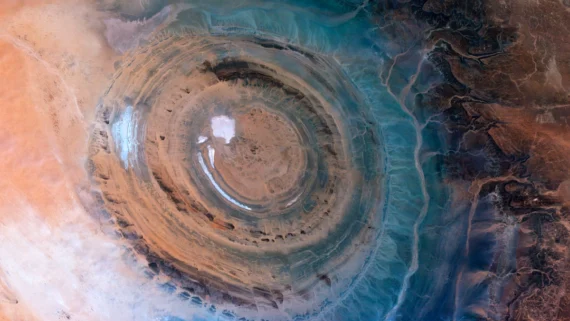
5. A giant eye in the middle of the Sahara Desert
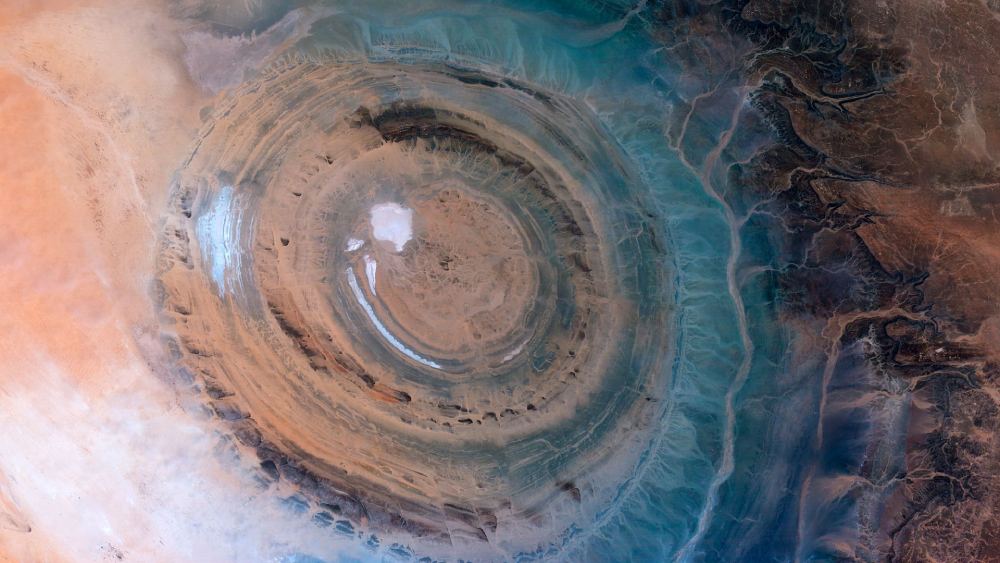
When viewed from space, the Richat Structure in Mauritania looks exactly like an enormous, unblinking eye carved directly into the Sahara Desert. Measuring approximately 25 miles across, its nearly perfect circular rings initially led researchers to suspect it was an ancient meteorite impact crater. Scientists now understand it as a massive uplifted geological dome whose various rock layers were slowly exposed by wind and erosion over immense periods of time. Its extraordinary shape is so distinctive that astronauts routinely use it as a visual landmark from orbit.
Trending on The Scroller

6. Trees that look like giant upside-down umbrellas
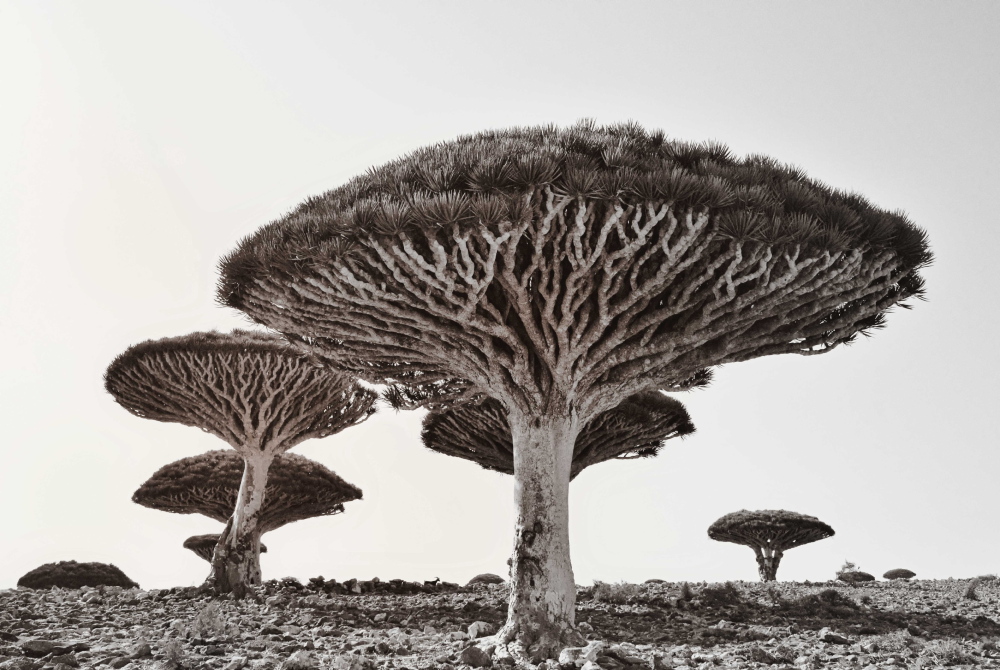
On Yemen’s isolated Socotra Island, dragon’s blood trees grow into strange, umbrella-shaped silhouettes that make the arid landscape look like an alien planet. Their densely packed, tangled branches and completely flat, upward-facing foliage naturally help the tree capture precious moisture from heavy mist in the island’s often harsh environment. Even their dramatic name sounds completely imaginary: when the trees are cut, they bleed a deep red resin that was historically highly valued for various medicinal and artistic uses.
7. A cave filled with crystals that look like giant glass swords
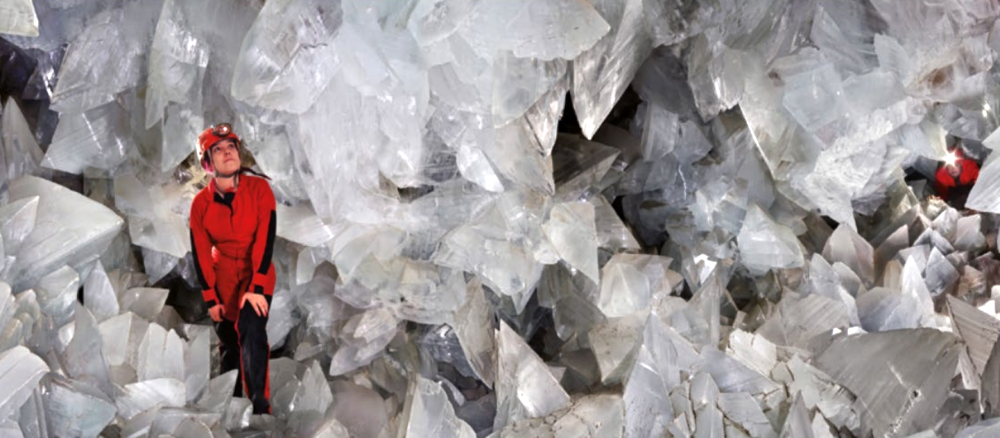
Hidden deep inside an abandoned silver mine in Almería, Spain, the Pulpí Geode looks like an artificial chamber deliberately decorated with enormous glass sculptures. Discovered in December 1999, the hollow cavity measures about 26 feet long and contains remarkably transparent gypsum crystals, some approaching 6.5 feet in length. Unlike many of the world’s most extraordinary underground crystal formations, which are strictly off-limits to protect them, this specific geode can actually be viewed by ordinary visitors through organized tours.
8. An Antarctic glacier that appears to bleed
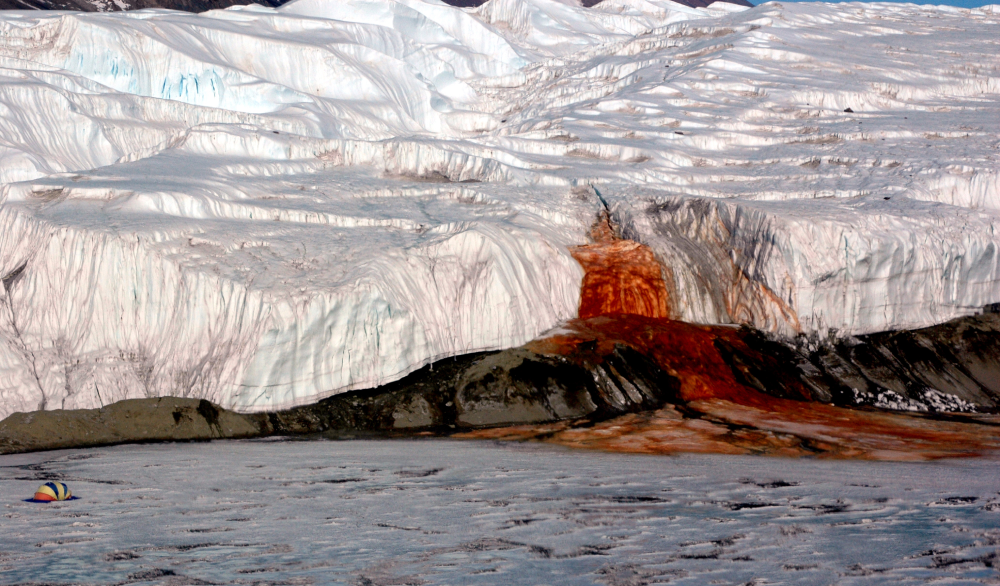
Antarctica’s Taylor Glacier contains a terrifying visual feature called Blood Falls, where dark reddish material heavily stains the otherwise pristine white and blue ice. Although it strongly resembles a crime scene from a horror movie, the strange coloration actually comes from an underground subglacial lake pushing iron-rich salty water out through the face of the glacier. When those iron compounds finally hit the open air and encounter oxygen, immediate chemical reactions produce the rusty red appearance that gives the formation its unsettling name.
Sign up for our newsletter
9. A tree whose bark looks like a rainbow painting
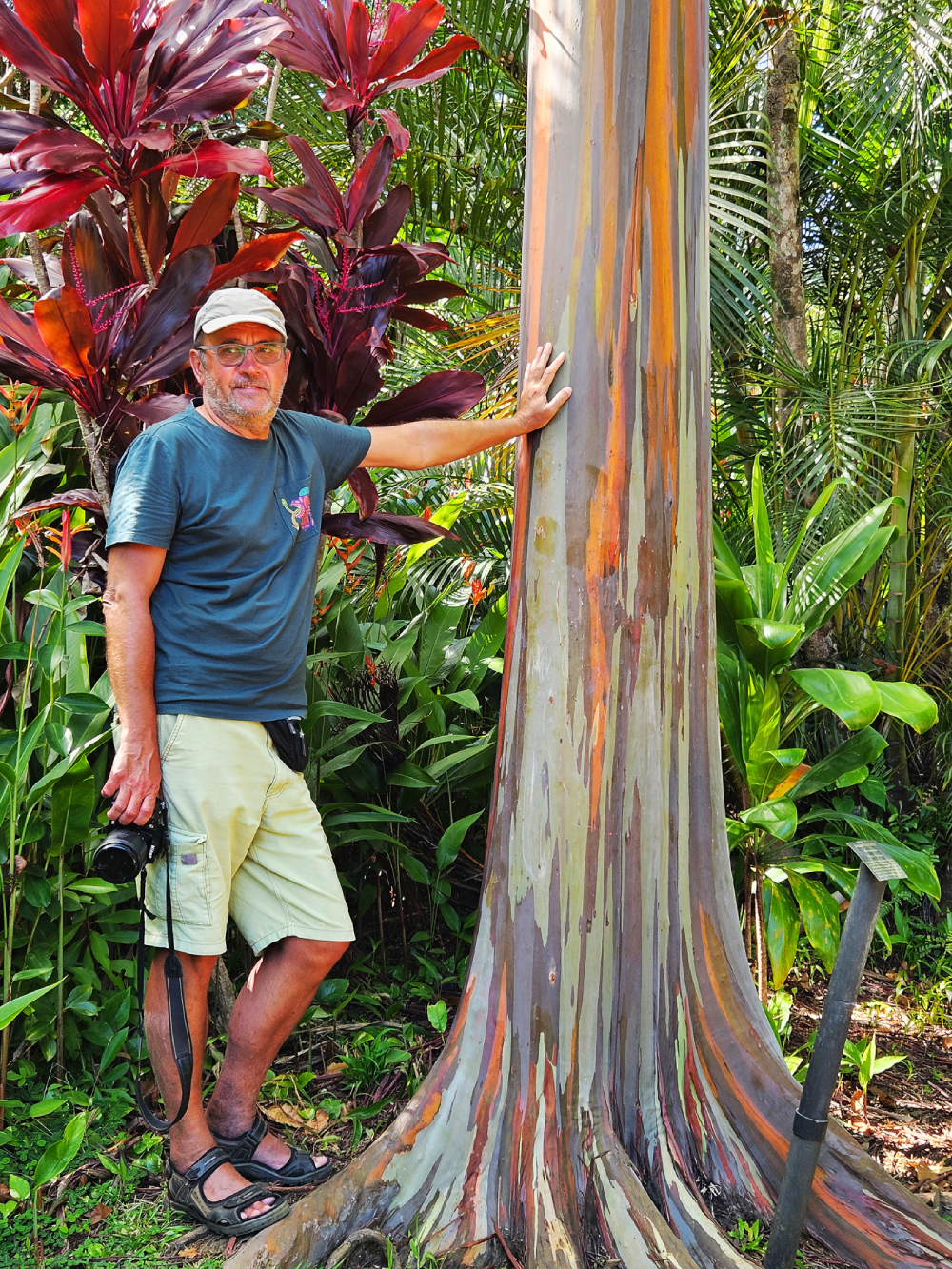
The rainbow eucalyptus looks exactly as though someone took a thick brush and painted its trunk with bright, vertical streaks of green, orange, red, and purple. The spectacular neon colors are completely natural. They develop as the tree sheds thin patches of its outer bark, exposing fresh, bright green inner bark that gradually changes into different vibrant colors as it ages. Native to parts of Southeast Asia and the western Pacific, this specific species is highly unusual among eucalyptus trees because it naturally occurs north of the equator.
10. A tiny sea creature that looks like a blue dragon
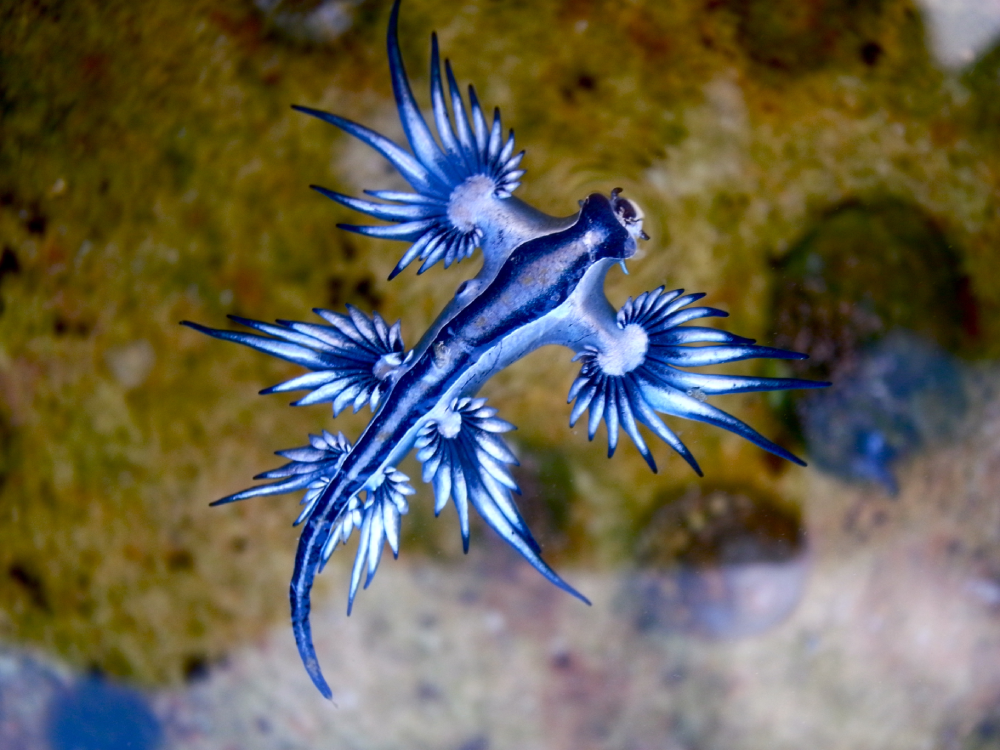
The blue dragon, scientifically known as Glaucus atlanticus, looks like a miniature fantasy creature equipped with electric-blue wings and delicate, branching limbs. In reality, it is a highly specialized sea slug that typically measures less than 1.2 inches long and spends its life floating upside down near the ocean’s surface. Despite its incredibly delicate, ornamental appearance, it aggressively feeds on venomous marine animals like bluebottles and can actually retain their dangerous stinging cells to use for its own defense.
11. Mushrooms that glow like tiny electric lamps
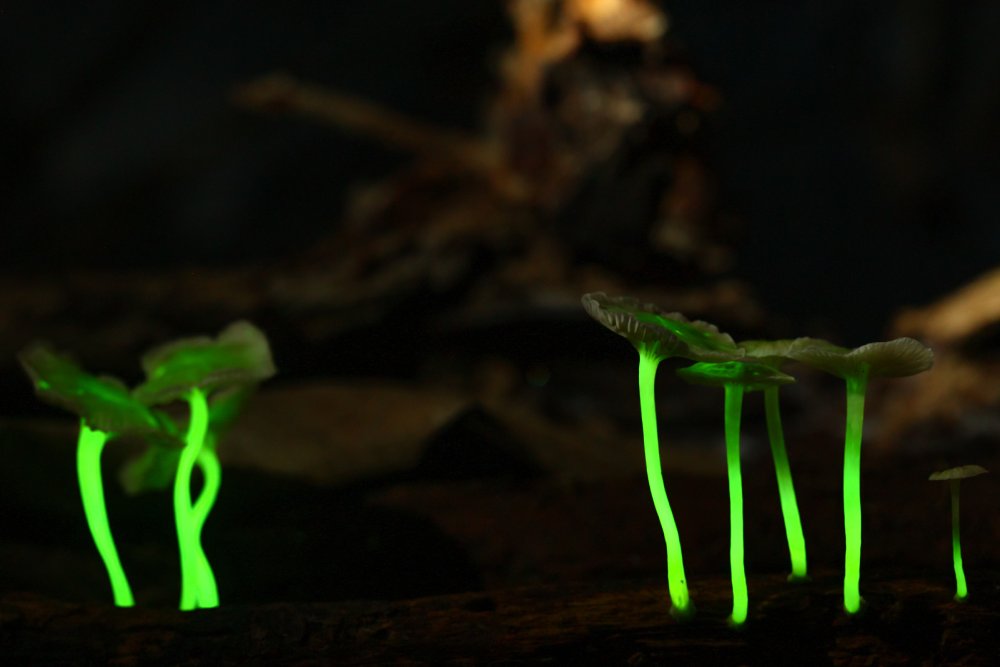
Certain species of mushrooms are capable of producing their own visible light, creating an eerie, neon green glow that makes a dark forest floor resemble a fantasy movie set. Species of Mycena, including Mycena luxaeterna, are highly bioluminescent, meaning their strange light is generated entirely by internal chemical reactions rather than reflected sunlight. A major scientific study published in 2010 identified several previously unknown or newly recognized luminescent species, demonstrating just how much glowing fungal diversity remains hidden in the dark.
12. An underwater waterfall that looks like the ocean is draining away

Off the tropical coast of Mauritius, aerial photographs consistently reveal what appears to be a massive, terrifying waterfall plunging directly beneath the ocean’s surface. There is no actual underwater waterfall, but the dramatic visual effect is completely real. Fine sand and silt moving constantly along the submerged, steeply dropping slope, combined with the sharp visual contrast between the shallow turquoise coastal water and the incredibly dark ocean depths, create an extraordinary optical illusion that looks impossible without digital manipulation.
In the mood for more fascinating facts?
Sometimes the most unbelievable images are the ones that actually need the least digital manipulation. From strange evolutionary adaptations to massive geological formations and natural optical illusions, the real world consistently produces sights that can be much harder to believe than anything we invent. If you want to explore more fascinating facts, make sure to check out these 12 Viral Claims Debunked by Real Evidence and Fact-Checks or these 14 Unbelievable 20th Century Events That Sound Like Movies. You can also take a look at these 20 Myths People Still Believe Are True.