Stepping into the muddy labyrinth of the Western Front required far more than sheer courage and a standard rifle. Between 1914 and 1918, millions of World War I soldiers carried roughly sixty pounds of specialized gear strapped to their backs, designed to keep them alive inside flooded trenches and under relentless artillery barrages.
Many of these everyday items look remarkably primitive today, yet they represented cutting-edge survival technology during the first truly industrial conflict. From hollowed brass shell casings turned into windproof lighters to pungent tins of whale oil meant to save frostbitten feet, every single piece of standard kit served a gritty, practical purpose. Examining the contents of a typical infantryman’s pack reveals the harsh realities of daily life on the front lines. Here are twelve essential objects that were standard equipment for troops fighting in the Great War.
1. The Brodie steel helmet
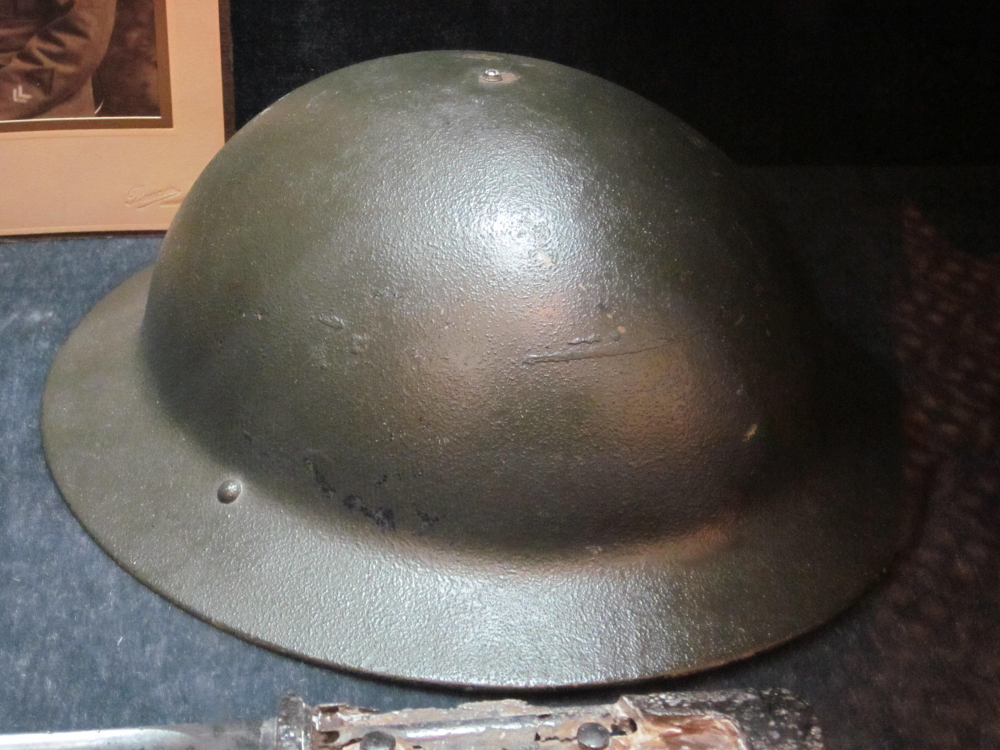
Patented in London by inventor John Leopold Brodie in 1915, this shallow, wide-brimmed bowl replaced soft cloth caps across the British Army. Stamped from a single sheet of tough Hadfield manganese steel, its distinctive soup-plate silhouette was engineered specifically to deflect deadly shrapnel raining down from overhead artillery bursts.
2. The small box respirator gas mask
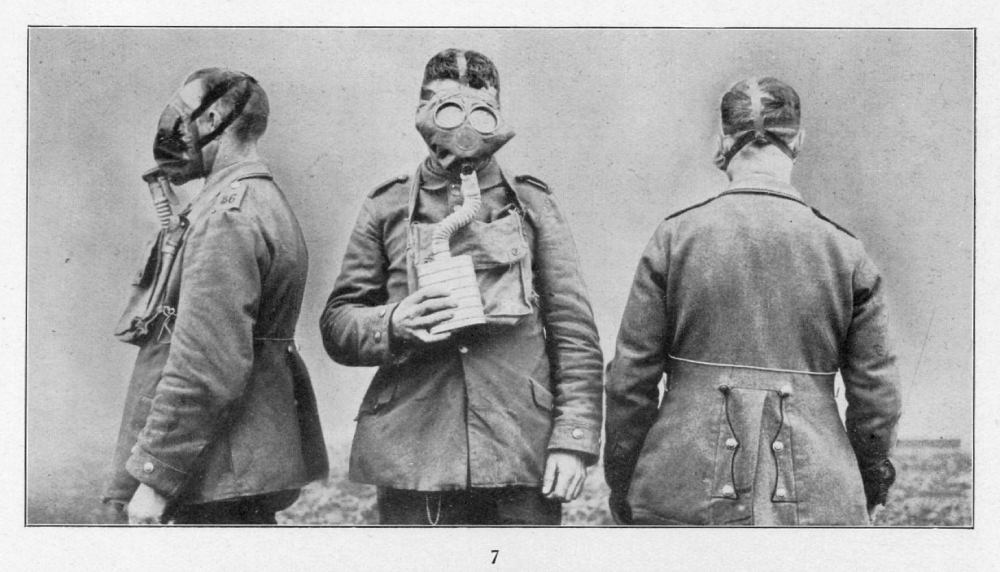
Developed by British chemist Edward Harrison in 1916, this life-saving mask became the primary defense against horrific chemical attacks on the Western Front. A flexible rubberized facepiece connected via a corrugated hose to a canvas chest satchel packed with charcoal and soda lime granules that filtered out chlorine and phosgene gas.
3. Collapsible trench periscopes
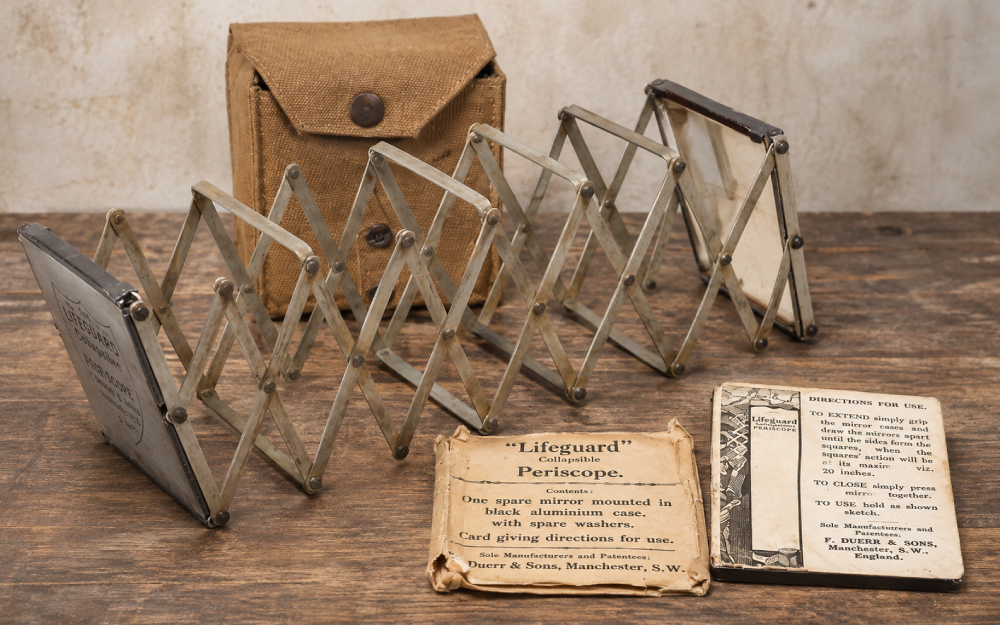
Standardized across Allied front lines by 1915, simple angled mirror devices like the cardboard Lifeguard periscope prevented countless fatal sniper wounds. Infantrymen held these slender tubes above the mud parapet to safely monitor enemy barbed wire without ever raising their heads into the line of fire.
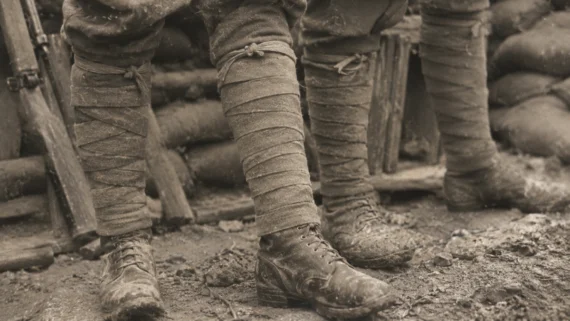
4. Woolen leg puttees
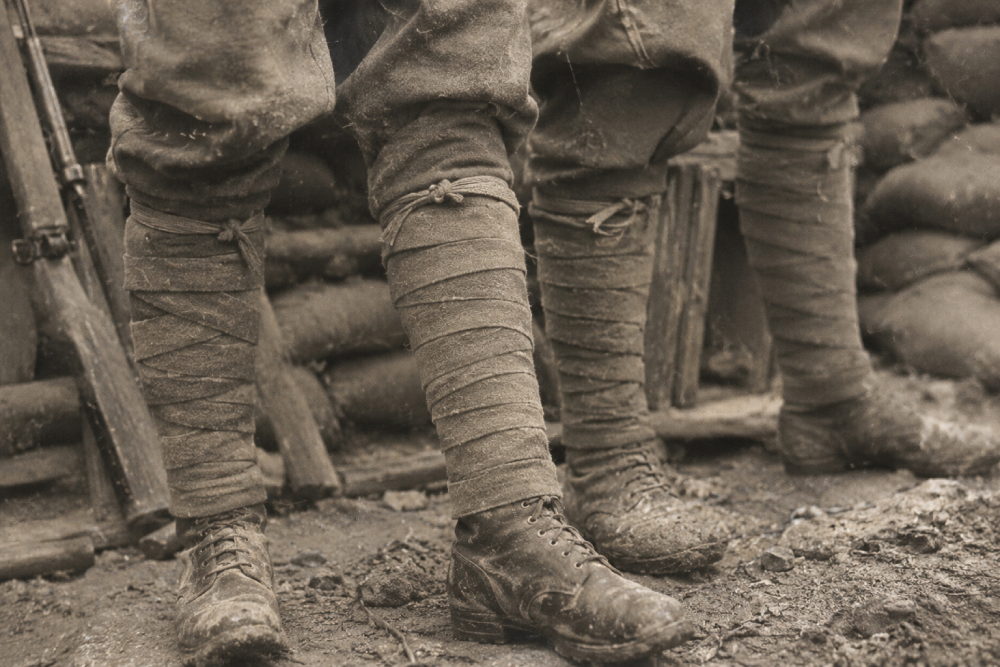
Adapted from British Indian Army uniforms in the late nineteenth century, puttees were long strips of heavy khaki wool wrapped tightly from the ankle up to the knee. They kept thick trench mud out of leather boots and supported weary ankles, though wrapping them too tightly often restricted blood flow and worsened trench foot.
5. The 1908 pattern entrenching tool
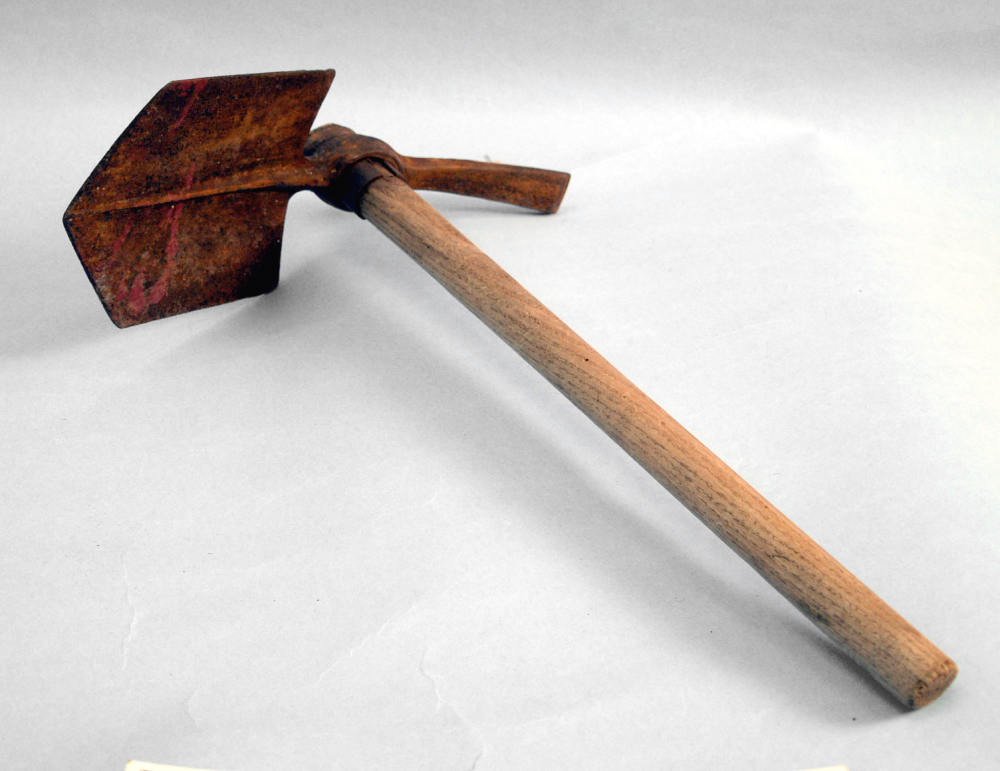
Issued as part of the standard 1908 British Webbing Equipment, this compact tool featured a detachable wooden handle and a forged steel head combining a small spade and pickaxe. Troops relied on it constantly during nighttime advances to rapidly dig shallow protective cover under heavy machine-gun fire.
Trending on The Scroller


6. Brass cartridge trench lighters
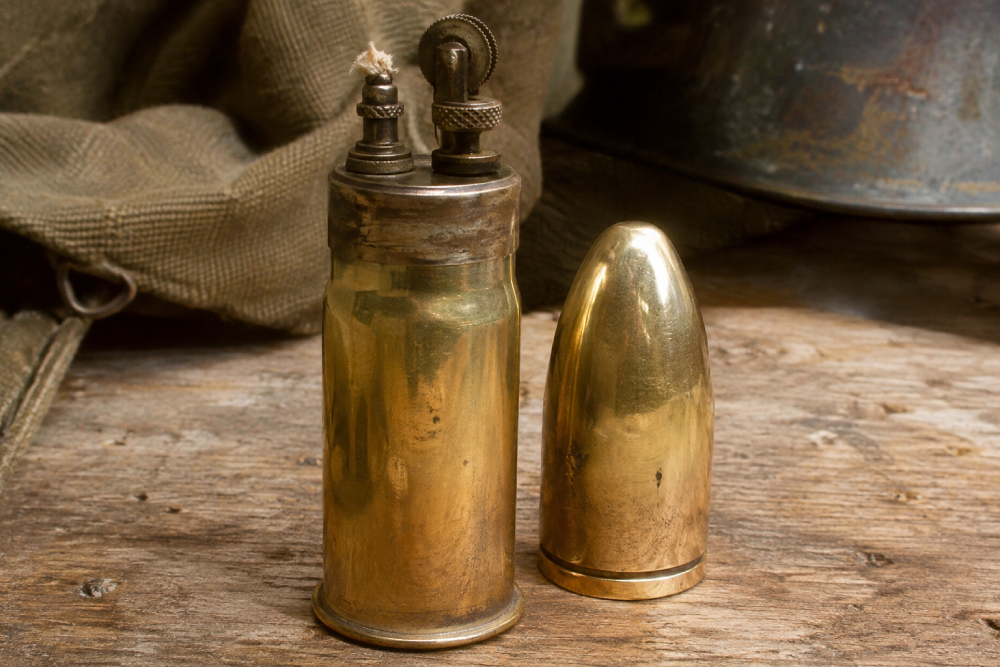
Crafted from spent brass rifle cartridges starting around 1915, alongside early Austrian petrol lighters patented by Julius Meister in 1918, these windproof gadgets were indispensable in damp dugouts. Using a simple steel flint wheel and a long cotton wick, they sparked reliably in pouring rain where cardboard matches instantly turned to mush.
7. Princess Mary’s 1914 Christmas tin
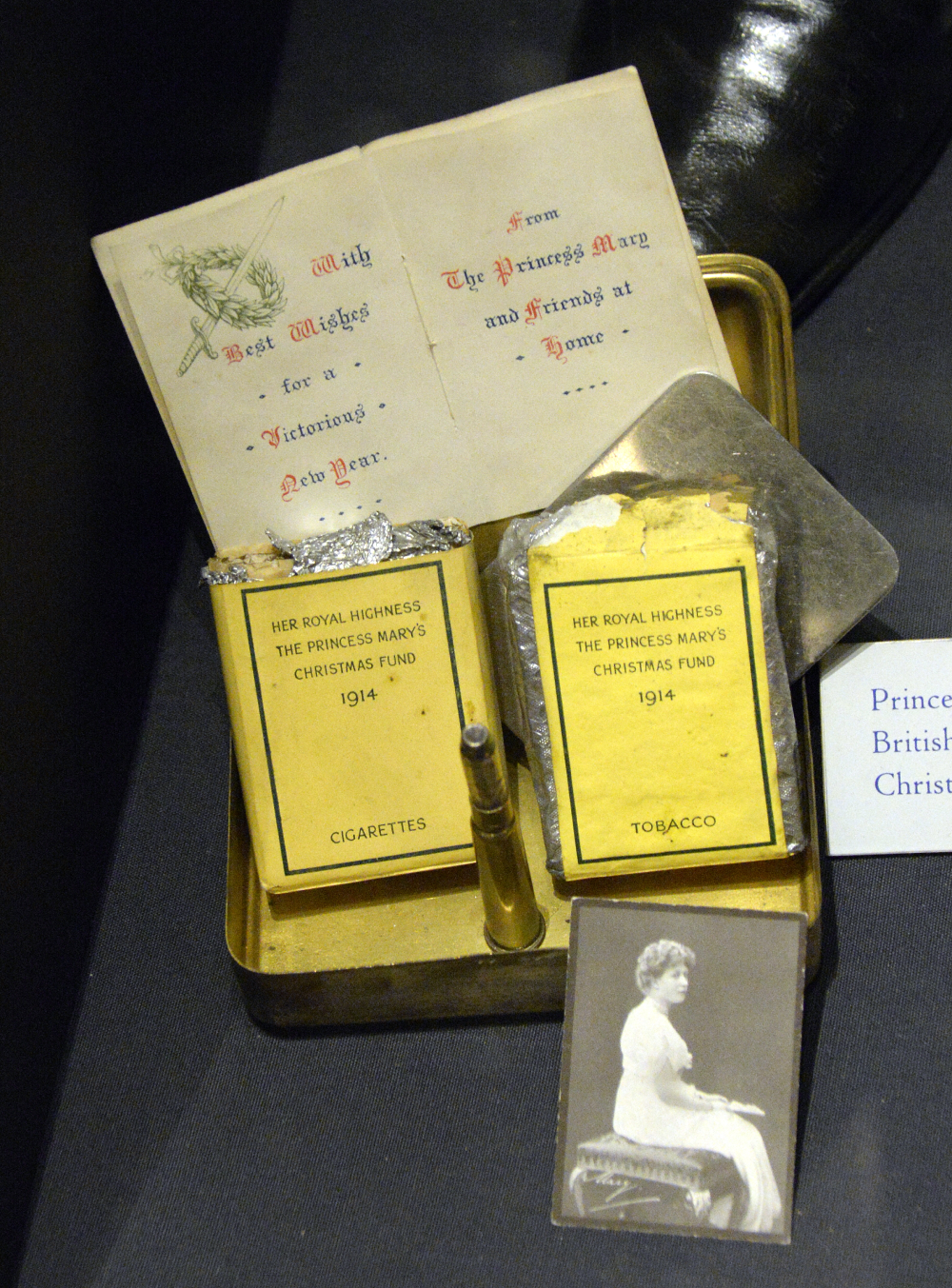
Commissioned in late 1914 by seventeen-year-old Princess Mary, this embossed brass gift box was delivered to every British and Imperial troop serving on Christmas Day. Originally filled with tobacco, cigarettes, a pipe, and a greeting card, troops quickly repurposed the sturdy metal tins to protect family photographs and letters from trench dampness.
8. The French Adrian helmet
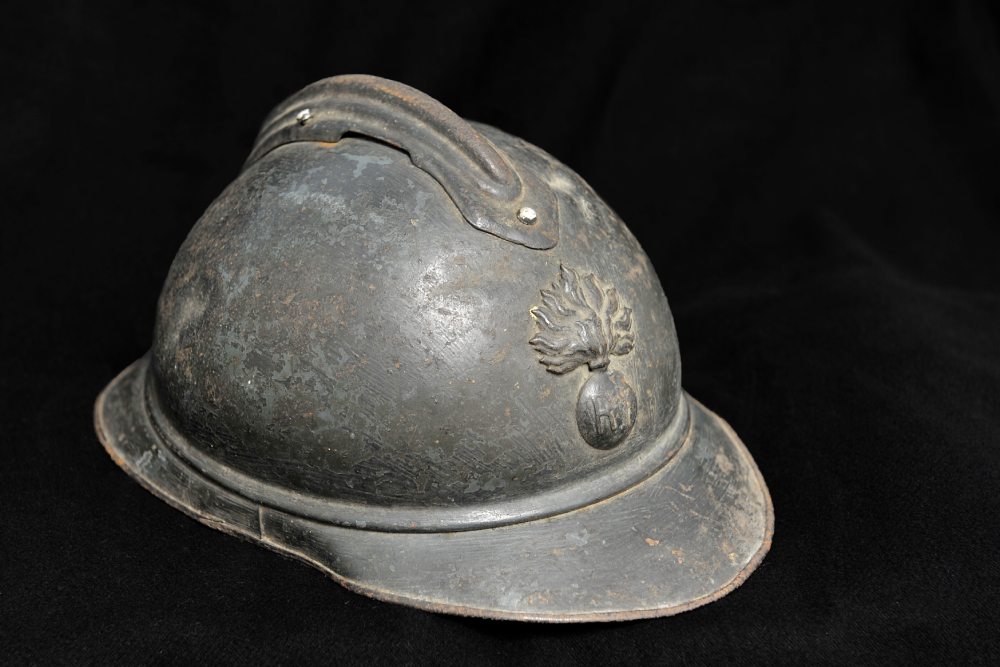
Introduced in 1915 by Quartermaster-General August-Louis Adrian, this iconic steel helmet drastically reduced fatal head injuries among French infantrymen. Easily recognized by its raised central crest designed to deflect falling debris and a stamped metal front badge indicating the wearer’s military branch, it inspired helmet designs worldwide for decades.
Sign up for our newsletter
9. The Webley Mark VI revolver
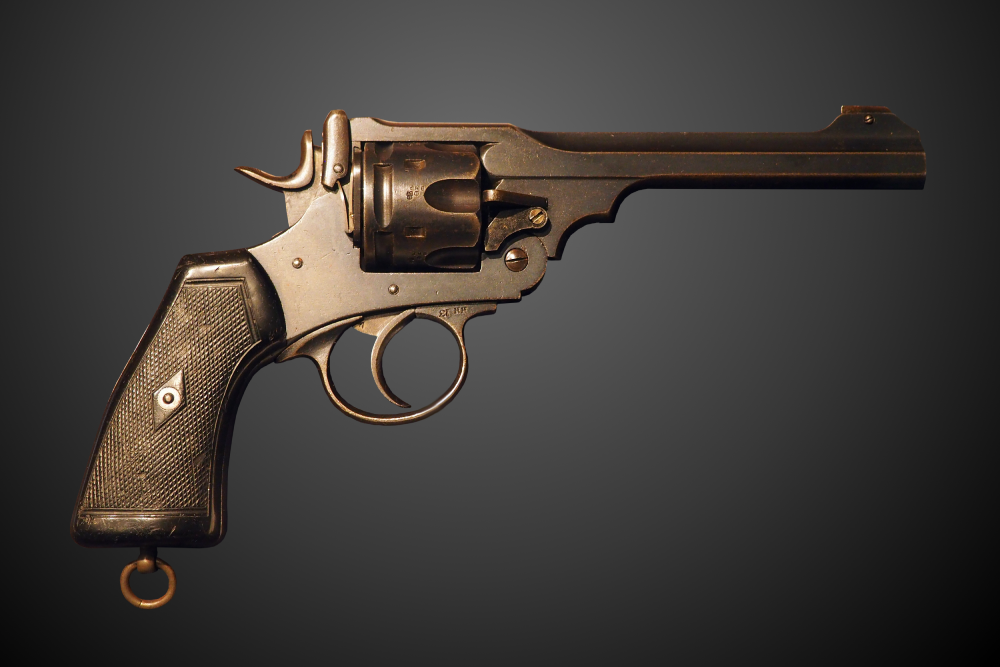
Adopted as the official British service sidearm in May 1915, this heavy .455 caliber revolver was prized by officers and trench raiders alike. Its rugged top-break cylinder mechanism functioned reliably even when coated in thick Flanders mud, outperforming early semi-automatic pistols that jammed easily in dirty conditions.
10. Vulcanized fiber identity discs
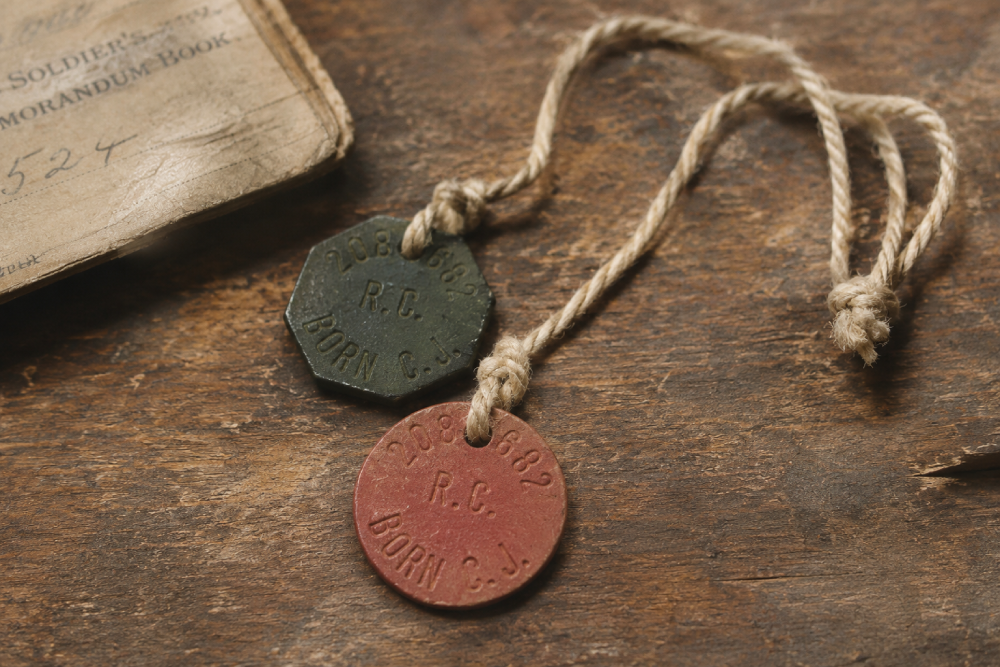
Beginning in 1916, the British War Office replaced single aluminum tags with a pair of compressed red and green vulcanized fiber discs worn on a cotton cord. This grim two-tag system ensured that one disc remained buried with a fallen troop while the second was removed for official casualty records.
11. The M1910 aluminum canteen set
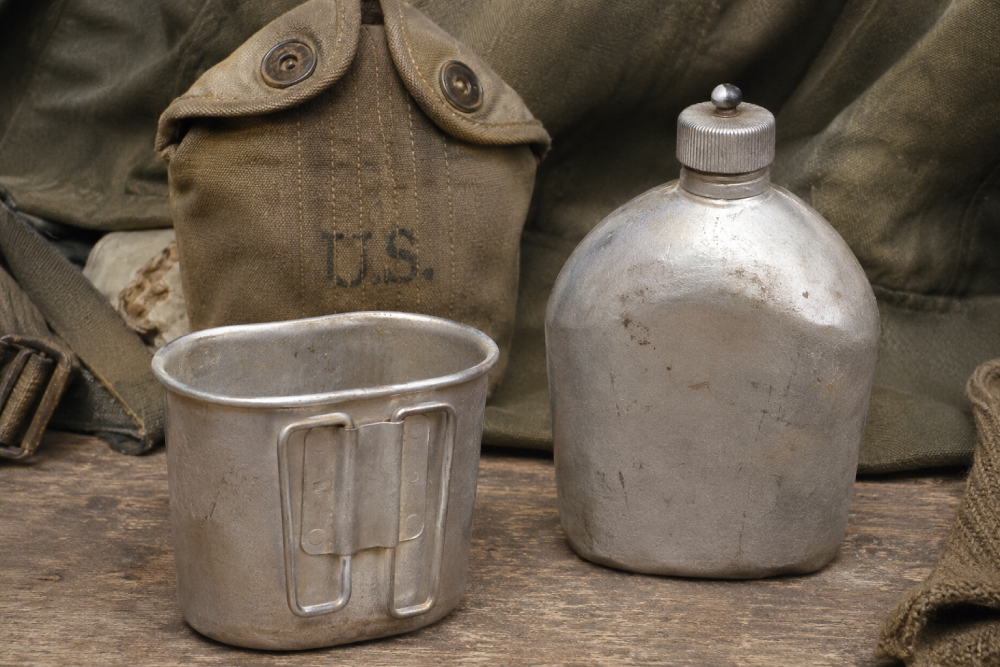
Standardized by the United States Army in 1910 and carried across France by American Expeditionary Forces in 1917, this kidney-shaped aluminum flask nested neatly inside a matching metal cup. A clever folding wire handle allowed hungry doughboys to boil coffee or heat rations directly over small canned-heat stoves in the trenches.
12. Whale oil and antiseptic foot powder
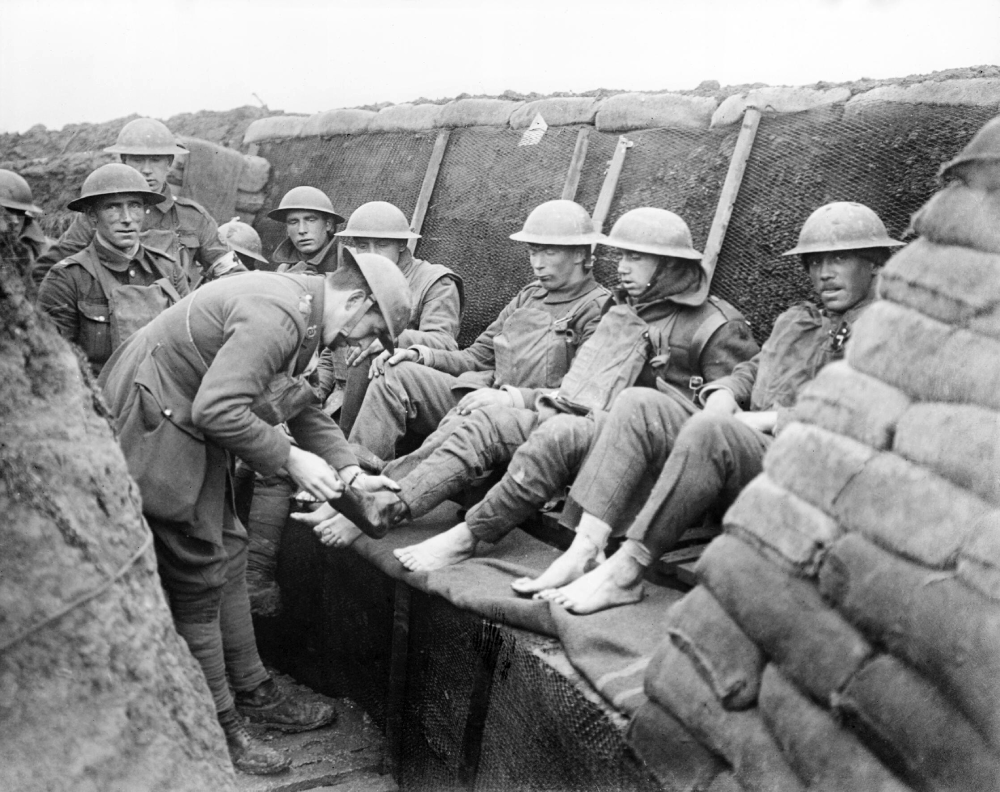
Issued strictly at the platoon level starting in the freezing winter of 1914, pungent whale oil was a mandatory daily defense against the agonizing fungal rot known as trench foot. Officers inspected bare feet daily while troops rubbed grease into their skin and dusted their wool socks with tin cans of boric acid powder.
Want more wartime stories?
Seeing these worn brass tins, steel bowls, and makeshift lighters up close reminds us just how resourceful ordinary people had to be to survive the brutal conditions of the Great War. Every dent and scratch on these everyday objects tells a quiet story of endurance inside the trenches. If you love exploring fascinating historical artifacts, weird vintage inventions, and wartime curiosities, make sure to check out these Trench Warfare Innovations: 12 Strange Weapons Used in WWI or these From Trenches to Homes: 14 Wartime Inventions We Use Today. You may also like these 17 Vintage Photos of Women Working in World Wars.