

Scientists have uncovered incredible truths about the universe, yet some mysteries still refuse to show us an explanation. From strange phenomena to baffling discoveries in nature, there are moments when even the best minds in the world are left with more questions than answers. It’s a hard reminder that no matter how far knowledge advances, the unknown still has a way of keeping us curious.
This collection explores some of the most puzzling things researchers continue to study and debate. Each one offers a glimpse into the edges of human understanding, where theories are tested, assumptions are questioned, and the search for answers is just as fascinating as the mysteries themselves. Let’s dive into 15 things scientists have a hard time explaining.
1. Dark matter

Astronomers noticed something strange when studying galaxies. They noticed that they spin so fast that, based on visible matter alone, they should fly apart. The only way the math works is if an unseen form of mass is adding extra gravity. This invisible substance doesn’t interact with light, which makes it impossible to observe directly with telescopes. Scientists infer its presence through how it bends light from distant objects and influences galaxy motion. Despite decades of experiments, no one has identified the particle or material responsible. Whatever dark matter is, it appears to make up about 85% of all matter in the universe.
2. Dark energy
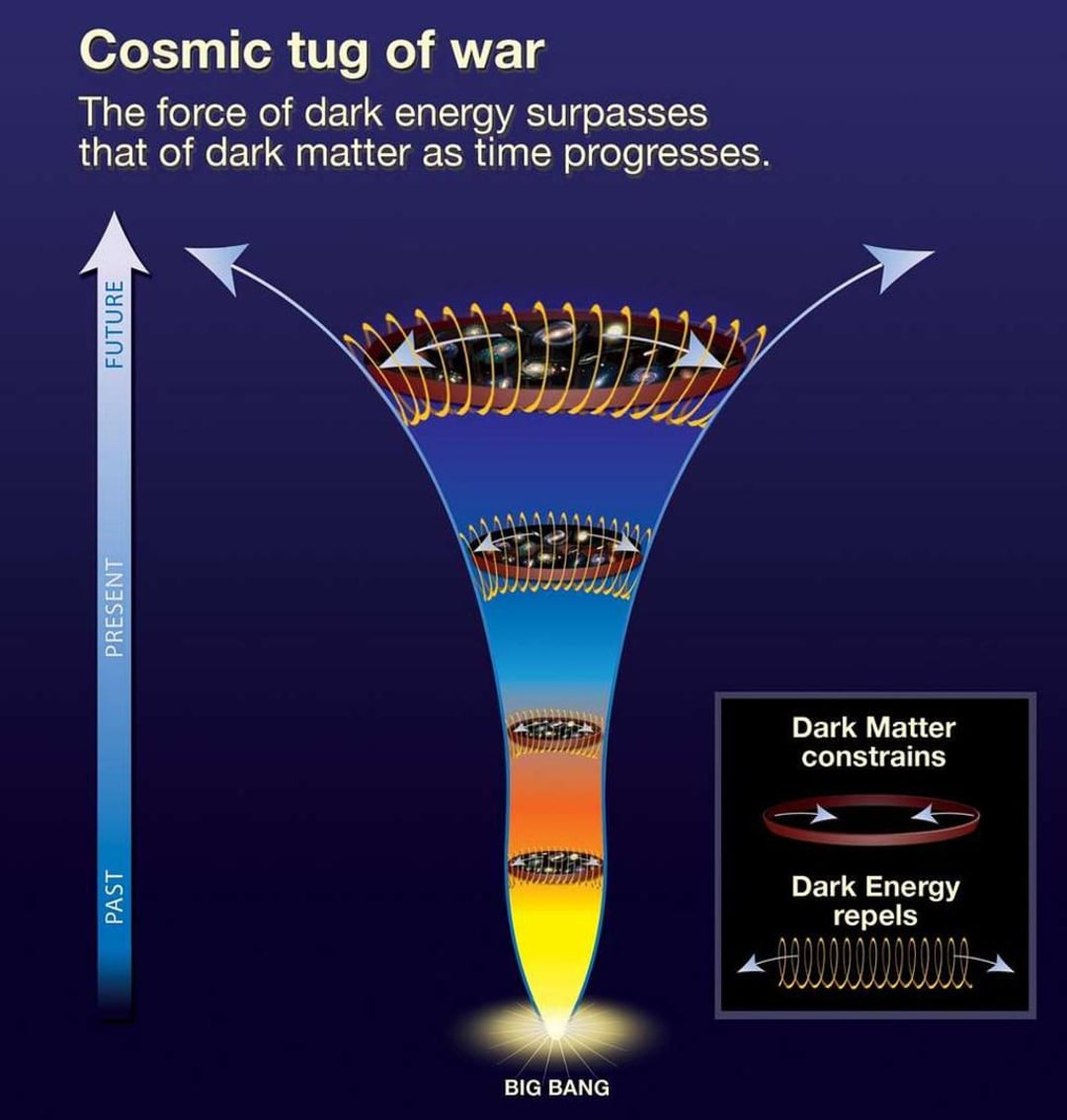
In the late 1990s, astronomers discovered that the universe’s expansion is speeding up instead of slowing down. Something seems to be pushing space itself outward, counteracting gravity on a massive scale. This mysterious influence has been labeled “dark energy,” but the name is just a placeholder for our ignorance. It may be a property of empty space, or it could signal that our understanding of gravity is incomplete. Observations suggest it makes up roughly 70% of the universe’s total energy content. Even with precise measurements, its true nature remains one of cosmology’s biggest puzzles.
3. What was going on before the Big Bang
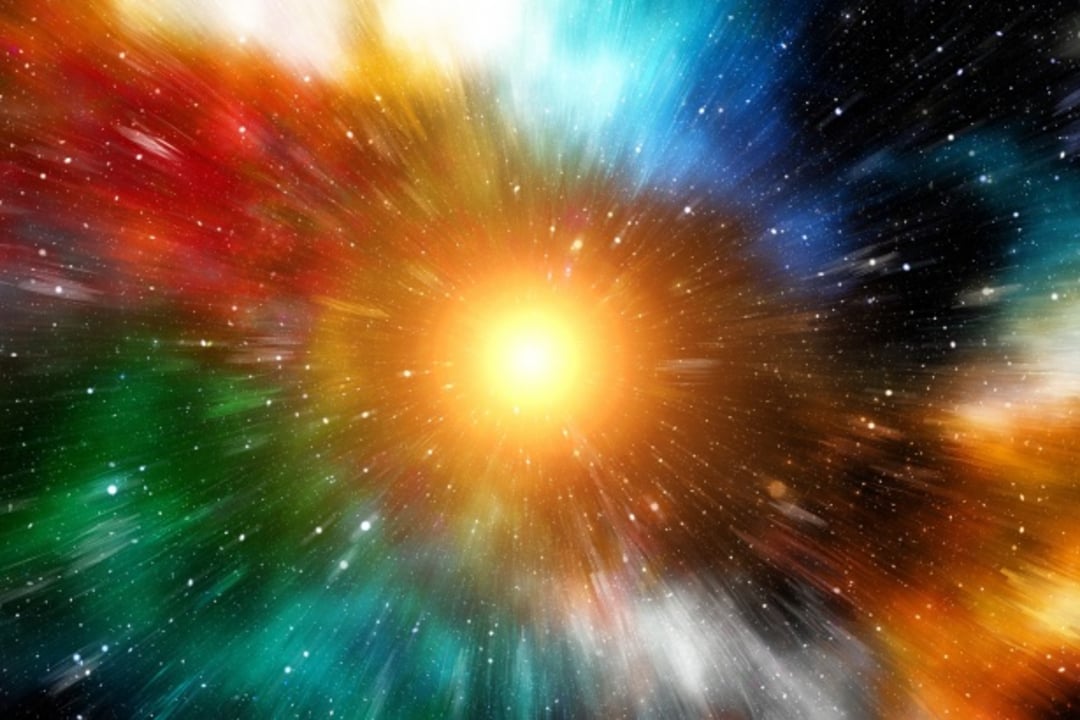
The Big Bang theory describes how the universe expanded from an extremely hot, dense state, but it doesn’t explain what came before that moment. When scientists run the equations of physics backward, they hit a point where the math breaks down. Space and time themselves may have begun at the Big Bang, making “before” a meaningless concept. Some theories suggest our universe emerged from a quantum fluctuation or a bounce from a previous universe. Others propose a multiverse where new universes constantly form. For now, this earliest chapter of cosmic history sits beyond the reach of our science. Isn’t that crazy to think about? Some of the top scientists’ best guess is a multiverse theory.
4. Why consciousness exists

It may seem simple, but it’s a lot more complex the more you try to explain it. What makes us conscious? The brain is made of physical cells sending electrical and chemical signals, yet this activity somehow produces thoughts, sensations, and self-awareness. Scientists can identify which brain regions are involved in perception and decision-making, but that doesn’t explain subjective experience. Some theories argue consciousness emerges from complex information processing, while others suggest it may be a fundamental feature of reality. Despite progress in neuroscience, the bridge between brain activity and lived experience is still unclear.
5. Fast Radio Bursts
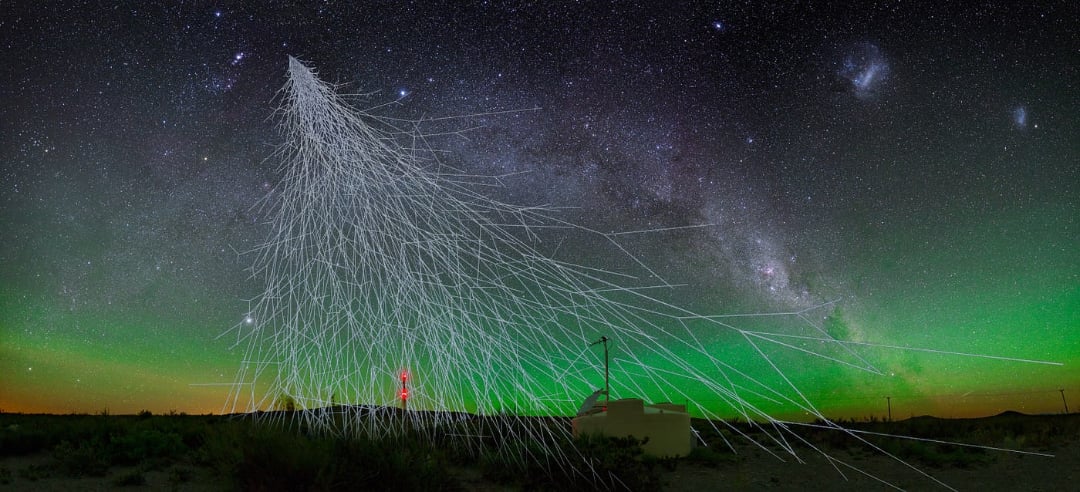
Fast radio bursts (FRBs) are incredibly brief flashes of radio energy coming from distant galaxies. They release as much energy in milliseconds as the Sun does in days. A few have been traced to highly magnetized neutron stars called magnetars, but not all signals fit this explanation. Some bursts repeat in strange patterns, while others appear only once. Their extreme brightness and short duration make them hard to study in detail. Each new detection adds data, but the full range of their causes is still being pieced together.
Trending on The Scroller


6. Ball Lightning

Ball lightning is described as a glowing, floating sphere that sometimes appears during thunderstorms. Witnesses say it can drift through the air, pass through windows, or vanish silently. Because it’s rare and unpredictable, scientists have very few reliable recordings. Laboratory experiments have produced similar-looking plasma balls, but none fully match eyewitness accounts. Some researchers think it could involve vaporized silicon from soil struck by lightning. Even so, a complete and widely accepted explanation has yet to emerge.
7. The placebo effect

The placebo effect truly shows the power of the human mind. People given inactive treatments can experience real improvements in symptoms if they believe the treatment will help. Brain imaging shows that expectations can trigger the release of chemicals linked to pain relief and mood changes. This suggests the mind can influence bodily processes in measurable ways. However, the effect varies widely between individuals and conditions. Researchers still don’t fully understand why belief has such powerful biological consequences.
8. Why we dream

During sleep, especially REM stages, the brain becomes highly active and produces vivid images and emotions. Dreams can replay memories, invent impossible scenarios, or process fears and desires. Some scientists think dreaming helps consolidate memories and regulate emotions. Others propose it’s a byproduct of random neural activity that the brain weaves into a story. There is no single theory that explains all aspects of dreaming. The purpose and meaning of dreams remain open questions in neuroscience.
Sign up for our newsletter
9. Tardigrade survival

Tardigrades (or water bears) are microscopic animals capable of surviving extreme environments. They can endure freezing temperatures, intense radiation, and even the vacuum of space. When conditions become harsh, they enter a dried-out state called a “tun,” slowing their metabolism almost to zero. Special proteins appear to protect their cells and DNA from damage. Scientists are investigating whether these mechanisms could have medical or space-travel applications, and their resilience challenges all previous assumptions about the limits of life.
10. The origins of life

Life must have arisen from non-living chemistry on the early Earth, but the steps involved are still uncertain. Experiments show that organic molecules can form under prebiotic conditions. However, assembling these into self-replicating systems is far more complex. Competing ideas include life starting near deep-sea vents or in shallow ponds exposed to cycles of drying and wetting. Each scenario solves some problems while raising others. The transition from chemistry to biology remains one of science’s deepest mysteries.
11. The Fermi Paradox

The Milky Way contains billions of stars, many with Earth-like planets. Given the vast numbers, intelligent civilizations should have arisen elsewhere. Yet we see no clear evidence of alien technology or communication. This contradiction is known as the Fermi Paradox. Possible explanations range from life being extremely rare to civilizations self-destructing before spreading. Others suggest advanced beings might be deliberately avoiding contact. For now, the silence of the cosmos is puzzling.
12. Why is ice slippery?

Ice reduces friction in a way that’s more complicated than simple smoothness. Pressure and motion can create a thin layer of liquid water on the surface. However, slipperiness also occurs at temperatures too cold for melting alone to explain it. Some studies suggest the outermost molecules of ice are loosely bonded, forming a naturally slick layer, but the balance of these effects is still debated. Even everyday phenomena can hide subtle physics.
13. Memory storage in the brain

Memories are believed to form through changes in the strength of connections between neurons. This process, known as synaptic plasticity, helps encode experiences. Yet scientists still struggle to pinpoint how specific memories are stored and later retrieved. Memories can also shift over time, becoming altered or blended. Different brain regions handle various types of memory, from facts to motor skills. The full architecture of memory remains an active research frontier.
14. The great attractor

Galaxies in our region of space are drifting toward a specific area at high speeds. This motion suggests a massive gravitational pull is pulling them in. The region lies behind the Milky Way’s dense plane, making it difficult to observe directly. Astronomers have mapped galaxy distributions and found a vast structure called the Laniakea Supercluster. The Great Attractor may be part of an even larger gravitational network, and its full structure and influence are still being studied.
15. The Voynich Manuscript

The Voynich Manuscript is a 15th-century book filled with unknown writing and unusual illustrations. It includes drawings of strange plants, astronomical diagrams, and bathing figures. Linguists, cryptographers, and historians have all attempted to decode its script. Statistical analysis suggests it follows language-like patterns, yet no translation has been confirmed. Some think it hides a secret code, while others suspect that it’s all an elaborate hoax. Its meaning, if any, remains elusive.
Want to see more science content?
Check out 20 “Impossible” Structures Found Deep in the Ocean That Science Can’t Explain, or take a look at 20 Bizarre Facts Science Can Actually Back Up. Finally, if you want to see weather phenomena, check out 15 Weather Phenomena That Look Like Special Effects (But Are 100% Real).