We often think of the natural world as a chaotic, tangled mess of organic shapes and unpredictable growth, but every so often, nature reveals a hidden obsession with math. When you stumble upon something truly symmetrical in the wild, it can be a jarring experience that makes you feel like you’ve spotted a glitch in the Matrix. From the fractal patterns of a romanesco broccoli to the hexagonal precision of a honeycomb, these structures are so flawless they look like they were rendered by a high-end computer or meticulously crafted by a human hand. This biological precision is rarely for show; it is almost always a result of efficient energy use, structural integrity, or a very specific survival strategy.
Seeing these symmetrical marvels up close reminds us that geometry isn’t just a subject we learn in school, but the very language the universe uses to build itself. We are used to seeing straight lines and perfect angles in our cities and gadgets, so finding them in a deep forest or on the ocean floor feels like discovering a secret blueprint. These examples prove that while humans pride ourselves on our design skills, nature was masterfully using the golden ratio and fractal geometry long before we ever picked up a ruler. Let’s take a look at fifteen times the wild world got so perfectly organized that it ended up looking artificial.
1. Romanesco broccoli

The Romanesco broccoli is perhaps the most famous example of a symmetrical masterpiece that looks like it belongs in a laboratory. Every single floret on its head grows in a logarithmic spiral that is a perfect fractal, meaning the pattern repeats itself at every scale. It follows the Fibonacci sequence so precisely that it almost feels too engineered to be something you would find in a vegetable patch. An interesting fact is that mathematicians have studied this plant for decades to understand how biological cells can “count” to create such complex geometric shapes.
2. The Amazon lily pad

When you see a Victoria amazonica lily pad from above, its perfectly circular shape and raised edges make it look like a giant green serving tray or a man-made float. The underside reveals a complex, symmetrical ribbing system that is so strong it can support the weight of a small child without sinking. These ribs are filled with air and arranged in a radiating pattern that inspired the architectural design of London’s Crystal Palace in 1851. It is a stunning example of how nature creates maximum structural strength with minimal material, resulting in a disc that looks like it was cut with a laser.
3. The starfish
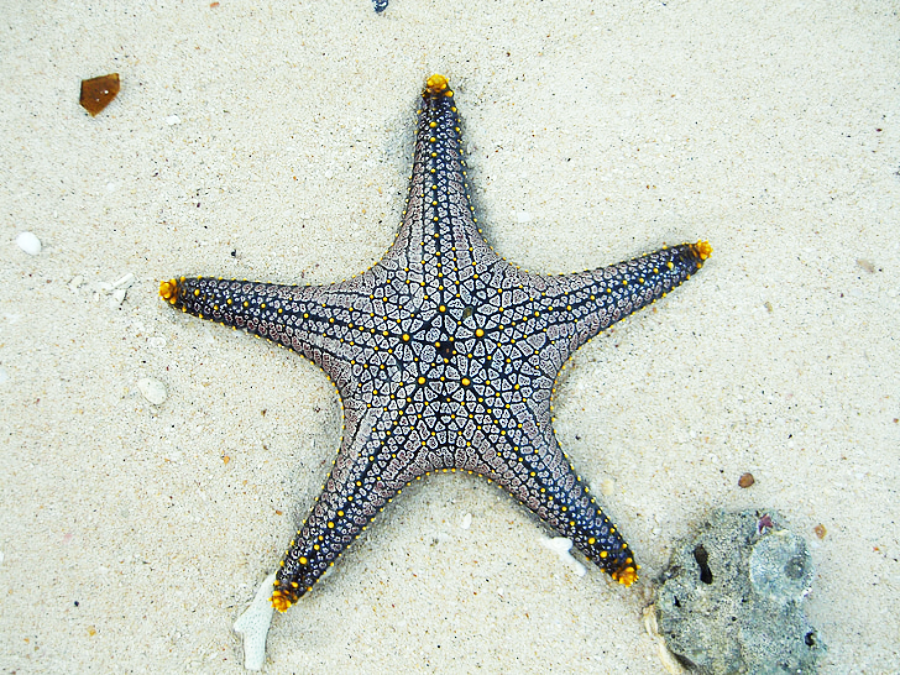
The starfish, or sea star, is a living lesson in radial symmetry that looks like a hand-carved ornament found on the seabed. While most animals have a left and right side, the starfish is built around a central axis that allows it to perceive the world in 360 degrees. This symmetrical layout is so consistent across thousands of species that it looks like a mass-produced design. An interesting fact is that if a starfish loses an arm, it can regenerate a new one that perfectly matches the geometric proportions of the remaining four, maintaining its star shape throughout its life.
4. Bismuth crystals
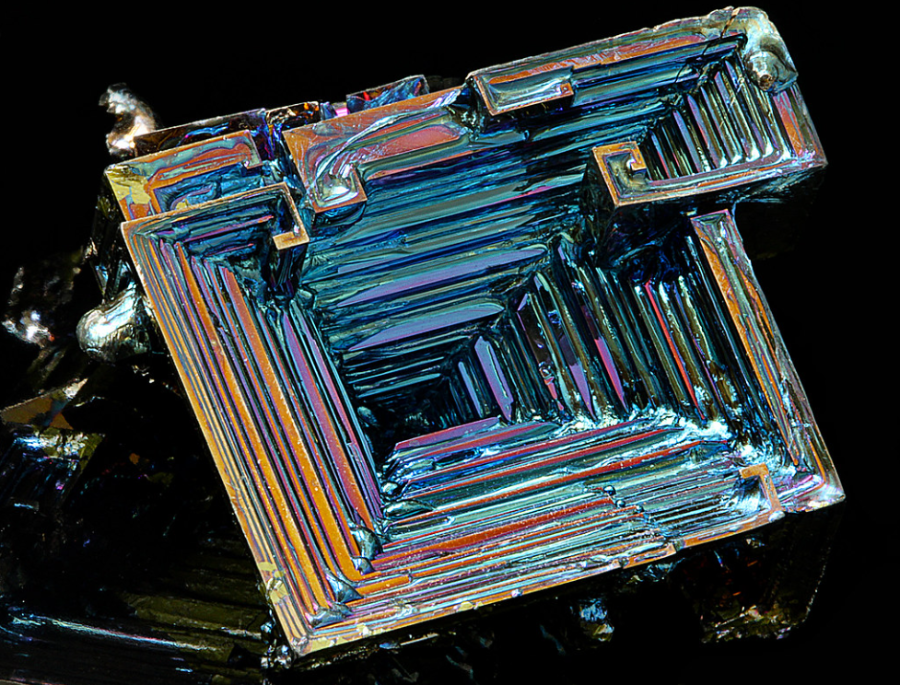
While bismuth is a naturally occurring element, its crystals look like a high-tech city from a sci-fi movie or a complex art installation. As the liquid metal cools, it forms symmetrical “hopper crystals” that look like iridescent staircases or ziggurats. The vibrant colors are caused by a thin layer of oxidation that reflects light in a rainbow spectrum, making the metal look like it was painted by an artist. It is one of the few places where nature creates right angles and square spirals with the precision of a master architect.
5. The honeycomb
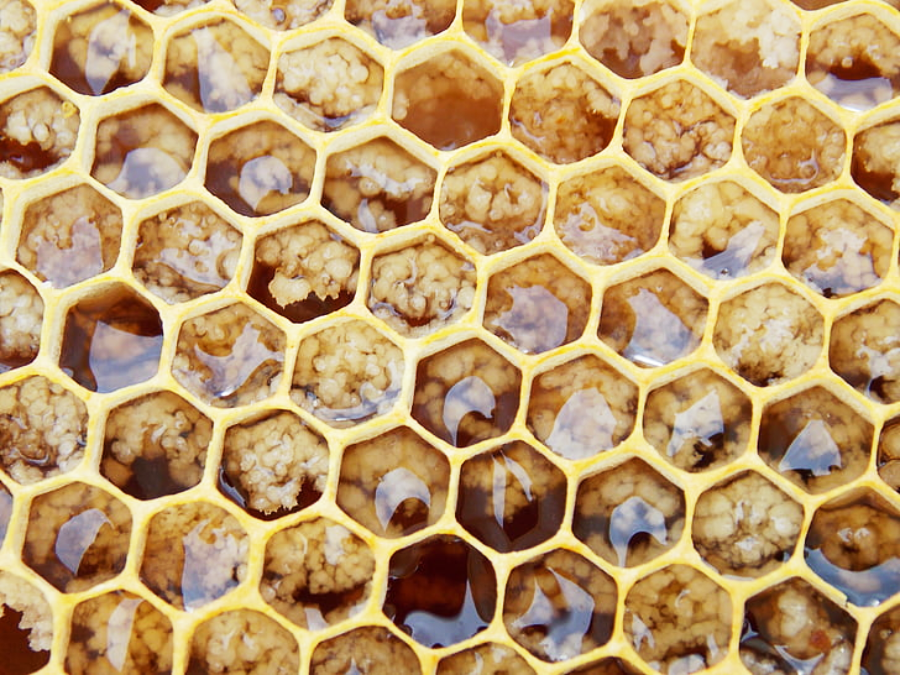
Bees are perhaps nature’s most talented mathematicians, creating symmetrical hexagonal cells that are identical down to the millimeter. This specific shape is used because it allows for the most storage space with the least amount of wax, creating a structure that is incredibly lightweight yet remarkably strong. If the cells were round or square, there would be wasted space or structural weaknesses that could collapse under the weight of the honey. It is a masterclass in industrial design that looks like a 3D-printed mesh rather than something built by tiny insects.
Trending on The Scroller


6. The boxfish

Most fish are streamlined and organic in shape, but the boxfish looks like it was designed by a car manufacturer obsessed with compact efficiency. Its body is encased in a symmetrical, hard, box-like shell made of fused bony plates that provide incredible protection against predators. This cubic structure is so aerodynamically stable that engineers at Mercedes-Benz once used the boxfish as a primary inspiration for a concept car’s frame. It’s a literal biological box that swims through the ocean with the precision of a high-tech drone.
7. The dahlia flower

The Dahlia is often cited as the gold standard for floral symmetry, with its petals arranged in a mathematically perfect radial pattern. Each layer of petals is spiraled in a way that follows the Fibonacci sequence, creating a 3D dome that looks like it was meticulously hand-folded from silk. From a distance, the flower appears so organized and flawless that it’s often mistaken for a high-end artificial decoration. An interesting fact is that this symmetrical layout helps the flower maximize its surface area to attract pollinators like bees and butterflies.
8. Snowflakes

Every single snowflake is a masterpiece of six-fold radial symmetry, formed as water vapor freezes around a microscopic speck of dust. Because the molecules of water naturally arrange themselves in a hexagonal lattice, the resulting arms of the snowflake grow in identical patterns from the center. While no two snowflakes are exactly alike, their symmetrical integrity is so precise that they look like they were cut out of paper by a master artist. It is one of nature’s most delicate examples of how physics creates order out of the freezing chaos of the atmosphere.
Sign up for our newsletter
9. The Nautilus shell
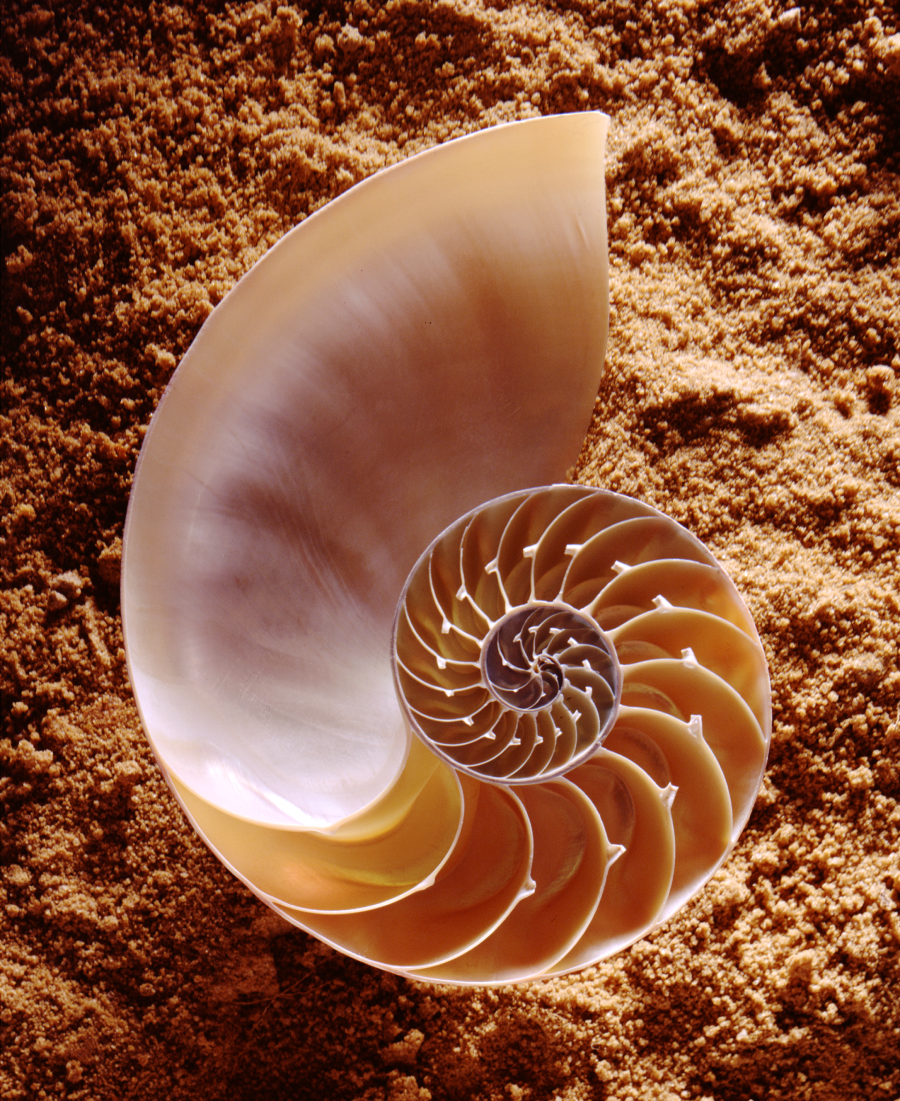
The Nautilus shell is the ocean’s most famous example of the “Golden Ratio,” featuring a spiral that expands at a constant geometric rate. As the creature grows, it builds a new, larger symmetrical chamber and moves its body forward, leaving the old chambers behind to help with buoyancy. This logarithmic spiral is so perfect that it has inspired artists, architects, and mathematicians for centuries as a symbol of universal harmony. It is a stunning piece of biological architecture that allows the Nautilus to dive deep into the ocean without being crushed by the pressure.
10. The passion flower

The passion flower looks less like a plant and more like a complex, multi-layered mechanical clock or a piece of futuristic jewelry. Its various parts -the petals, the fringe-like corona, and the central reproductive organs- are all arranged in a highly symmetrical, tiered layout. This complexity isn’t just for show; the specific heights and distances between the parts are perfectly calibrated so that only specific insects can reach the nectar, ensuring successful pollination. It is one of the most visually “over-engineered” flowers in the world.
11. Spider webs

When an Orb Weaver spider spins its web, it creates a symmetrical masterpiece of engineering that looks like a high-tech architectural blueprint. The spider uses radial lines for strength and spiral lines for catching prey, resulting in a grid that is nearly identical on all sides. This geometry allows the web to distribute the impact of a flying insect without snapping, showcasing an incredible understanding of structural tension. Seeing a dew-covered web in the morning light reveals a level of mathematical precision that few humans could replicate by hand.
12. Pyrite cubes

Pyrite, or “Fool’s Gold,” can naturally form into perfect, shiny cubes with 90-degree angles and flat, mirror-like surfaces. These cubes aren’t carved by humans; they grow this way due to the specific arrangement of iron and sulfur atoms at the microscopic level. Finding a perfectly square, metallic cube embedded in a rough rock feels like discovering a piece of ancient alien technology left behind. It is one of the few instances where nature creates the “unnatural” shape of a perfect cube entirely on its own.
13. The Aloe Polyphylla

Also known as the “Spiral Aloe,” this plant is a living work of art that grows its leaves in a perfect, symmetrical five-point spiral. The leaves can grow in either a clockwise or counter-clockwise direction, creating a tight geometric vortex that looks like a 3D-printed sculpture. This specific spiral allows the plant to catch the maximum amount of sunlight and water while maintaining a compact, sturdy shape in its native mountain habitats. It is so visually perfect that it is often the centerpiece of botanical gardens and professional photography.
14. Pufferfish sand circles

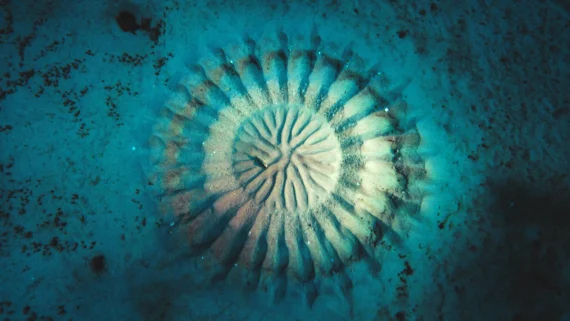
On the seabed near Japan, divers discovered incredibly complex, symmetrical circles in the sand that looked like underwater crop circles. It turns out these mandalas are built by a small male pufferfish who spends days flapping his fins to create ridges and valleys in the sand. This labor-intensive project is designed to attract a mate, with the symmetrical patterns serving as a visual testament to the male’s strength and persistence. It is a rare example of an animal creating a geometric art installation to ensure its survival.
15. The sunflower head
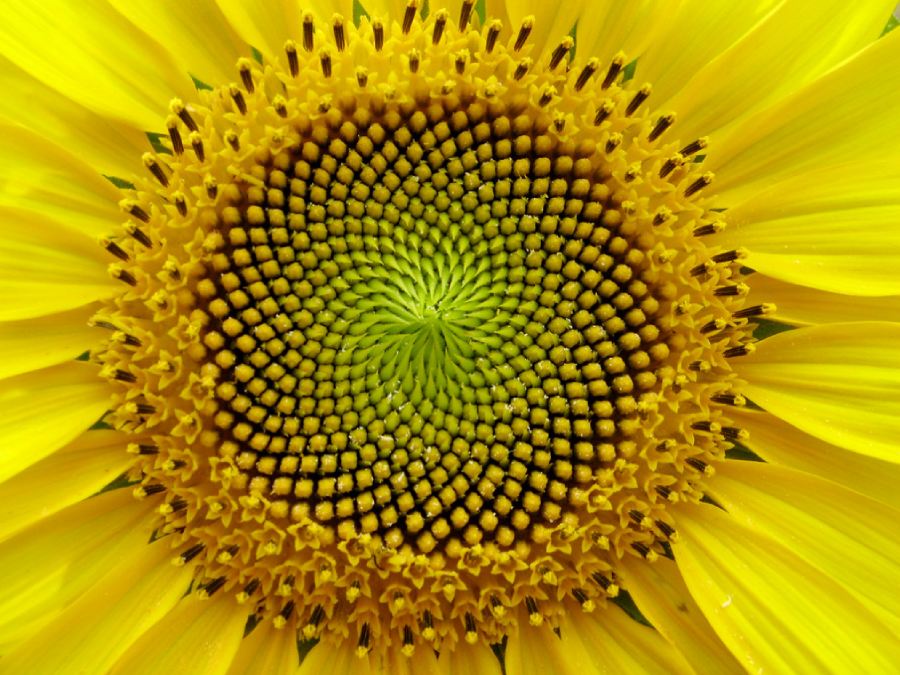
If you look closely at the center of a sunflower, you’ll see that the seeds are packed in a dense, symmetrical pattern of intersecting spirals. These spirals follow the Golden Angle, which ensures that each seed has enough space to grow without being crushed while filling every available millimeter of the flower head. This mathematical efficiency allows the sunflower to hold the maximum amount of seeds possible, providing a massive food source for birds and humans alike. It is a mesmerizing example of how nature uses high-level geometry to solve the problem of packing and growth.
Explore more fascinating nature facts:
It is a humbling reminder that while we look for wonders in the stars or through a telescope, the most incredible geometry on Earth is often hiding in plain sight. These symmetrical marvels prove that nature is the ultimate designer, using mathematics to create beauty and efficiency in every corner of the wild. If you’re in the mood for more visual wonders, don’t miss these 20 Reality Glitches That Are Actually Real Facts, or 20 Ocean Facts That Might Spark Thalassophobia. You can also check out 15 Real Weather Phenomena That Look Like CGI in the Sky.