Today, we rely on smartphones and cloud drives to store every phone number, birthday, and random grocery item, yet humans spent centuries building astonishing contraptions to offload human memory long before electronic computers existed. Without digital hard drives to fall back on, scholars, merchants, and engineers turned to spinning wooden wheels, knotted strings, and towering walls of index cards to keep vital facts from slipping away.
Some of these analog data systems look like ornate pieces of Renaissance furniture, while others resemble intricate clockwork puzzles or wearable miniature gadgets. From ancient bronze gearboxes that tracked the stars to massive rooms filled with millions of handwritten cards, these clever tools prove that outsourcing our brainpower is nothing new. Here are twelve fascinating inventions created to store, organize, and retrieve human knowledge before the digital age arrived.
1. Inca Quipu knotted cords
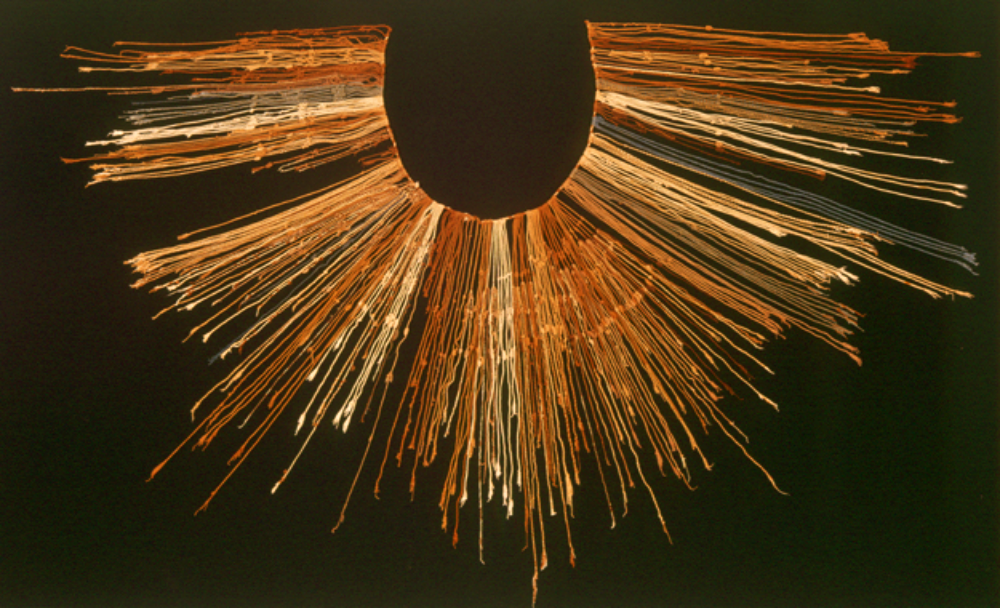
During the fifteenth century, Inca administrators known as quipucamayocs kept track of empire-wide taxes, harvests, and census figures across the Andes without using any written alphabet. Instead of paper scrolls, they tied intricate series of base-ten knots into colorful, dangling cords spun from cotton and llama wool to store complex numerical records.
2. The Antikythera mechanism
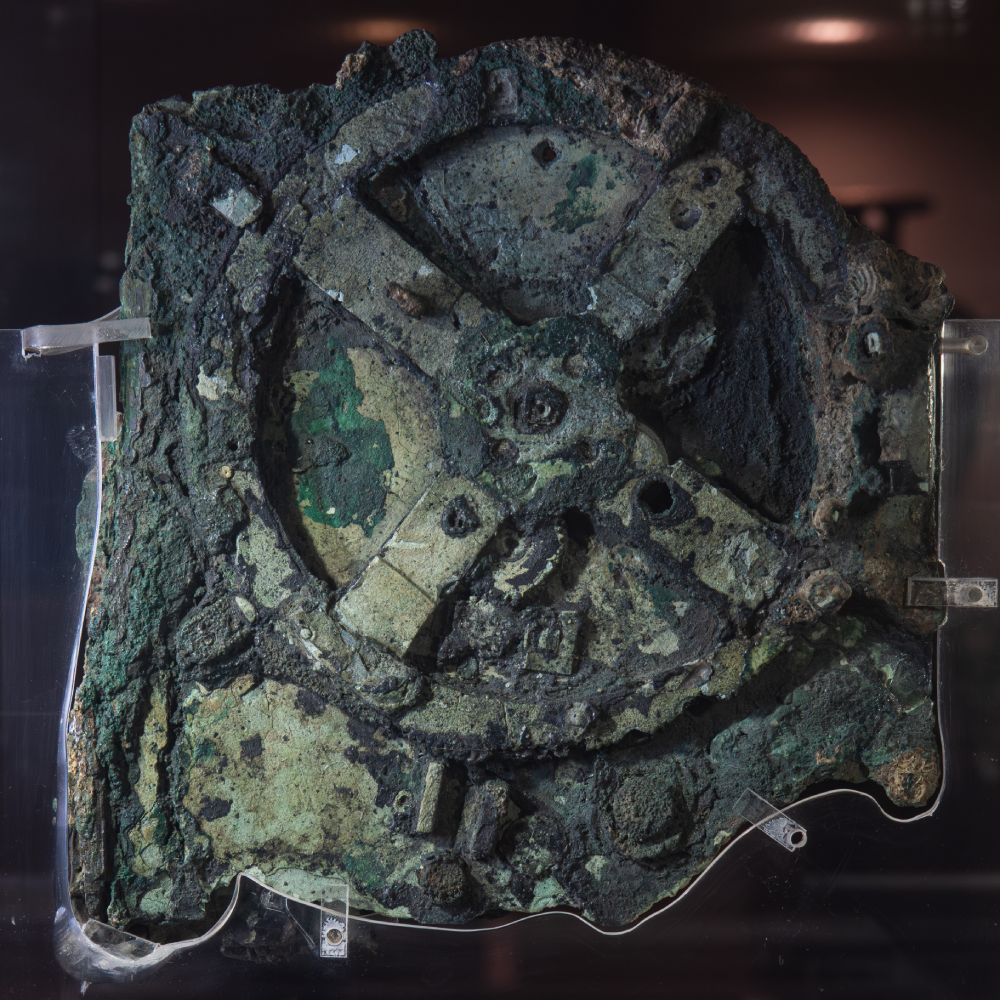
Discovered by sponge divers off the Greek island of Antikythera in 1901, this corroded bronze box built around 100 BC functioned as an ancient mechanical almanac. By turning a small hand crank, Greek astronomers could rotate dozens of interlocking gears to accurately predict solar eclipses, lunar phases, and the exact dates of the Olympic Games decades in advance.
3. Ramon Lull’s rotating paper volvelles
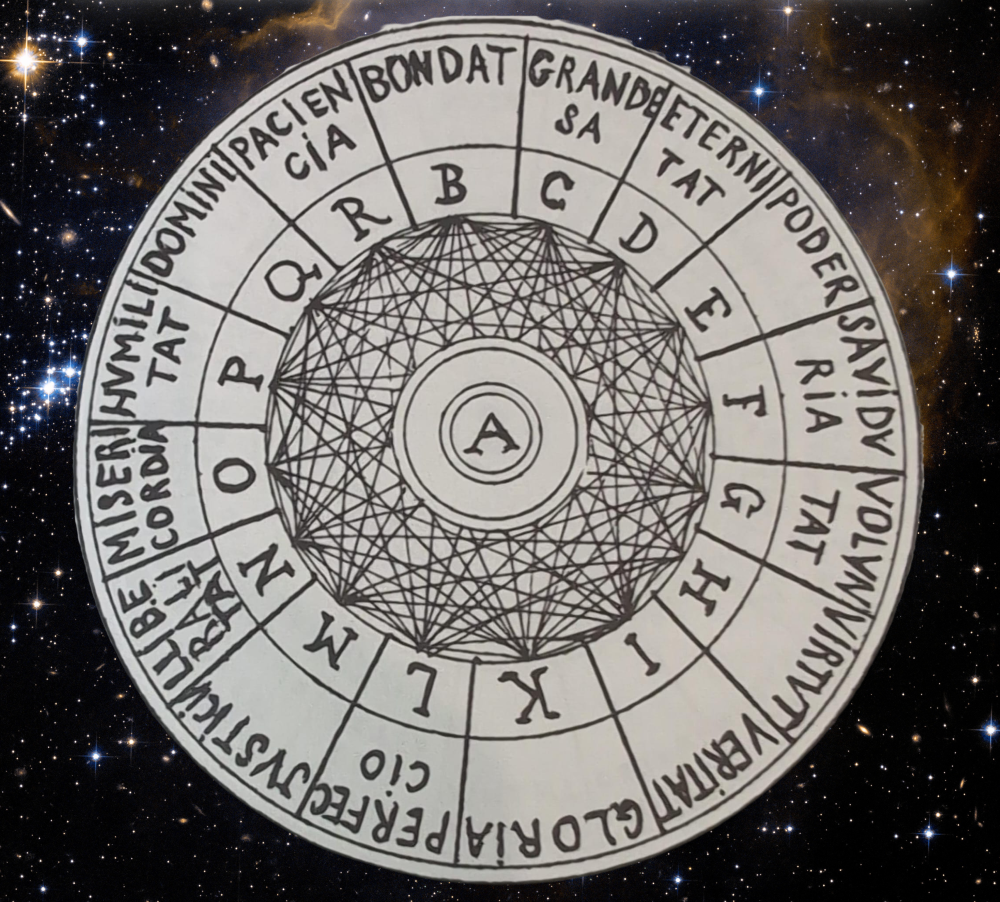
In 1305, Majorcan philosopher Ramon Llull published his Ars Magna, introducing movable paper wheels pinned directly onto parchment book pages. Scholars spun these concentric discs inscribed with letters and symbols to mechanically cross-reference philosophical concepts and generate logical combinations without memorizing lengthy texts.
4. Giulio Camillo’s wooden memory theater
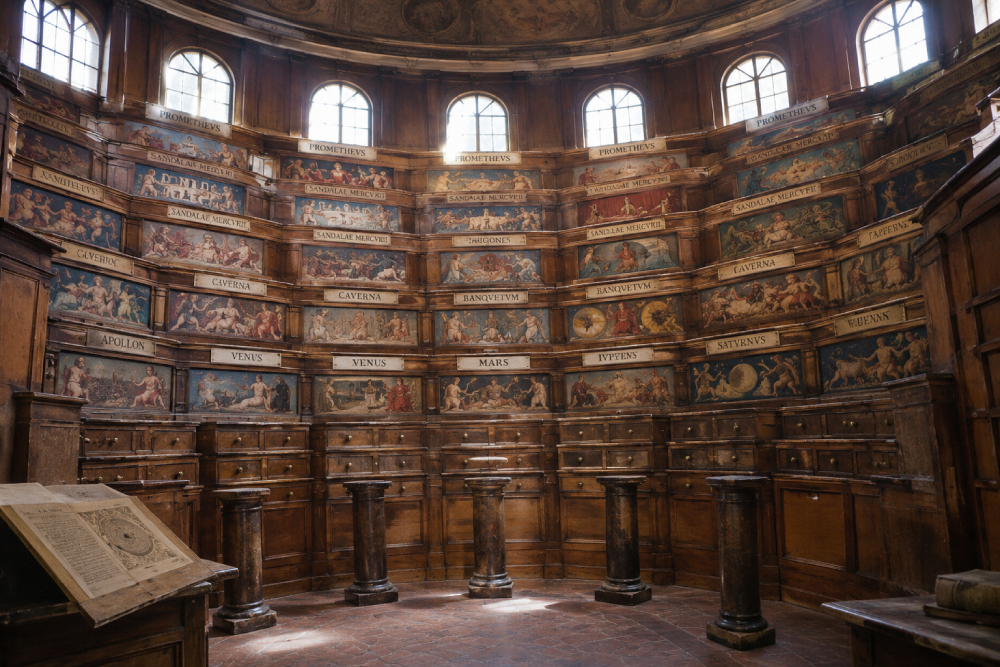
Around 1530, Italian philosopher Giulio Camillo constructed a walk-in wooden amphitheater in Venice and Paris for King Francis I of France that promised to hold all human knowledge. Visitors stood at the center of the semicircular structure, surrounded by seven tiers of painted mythological images and small drawers packed with reference manuscripts.
5. Agostino Ramelli’s rotating bookwheel
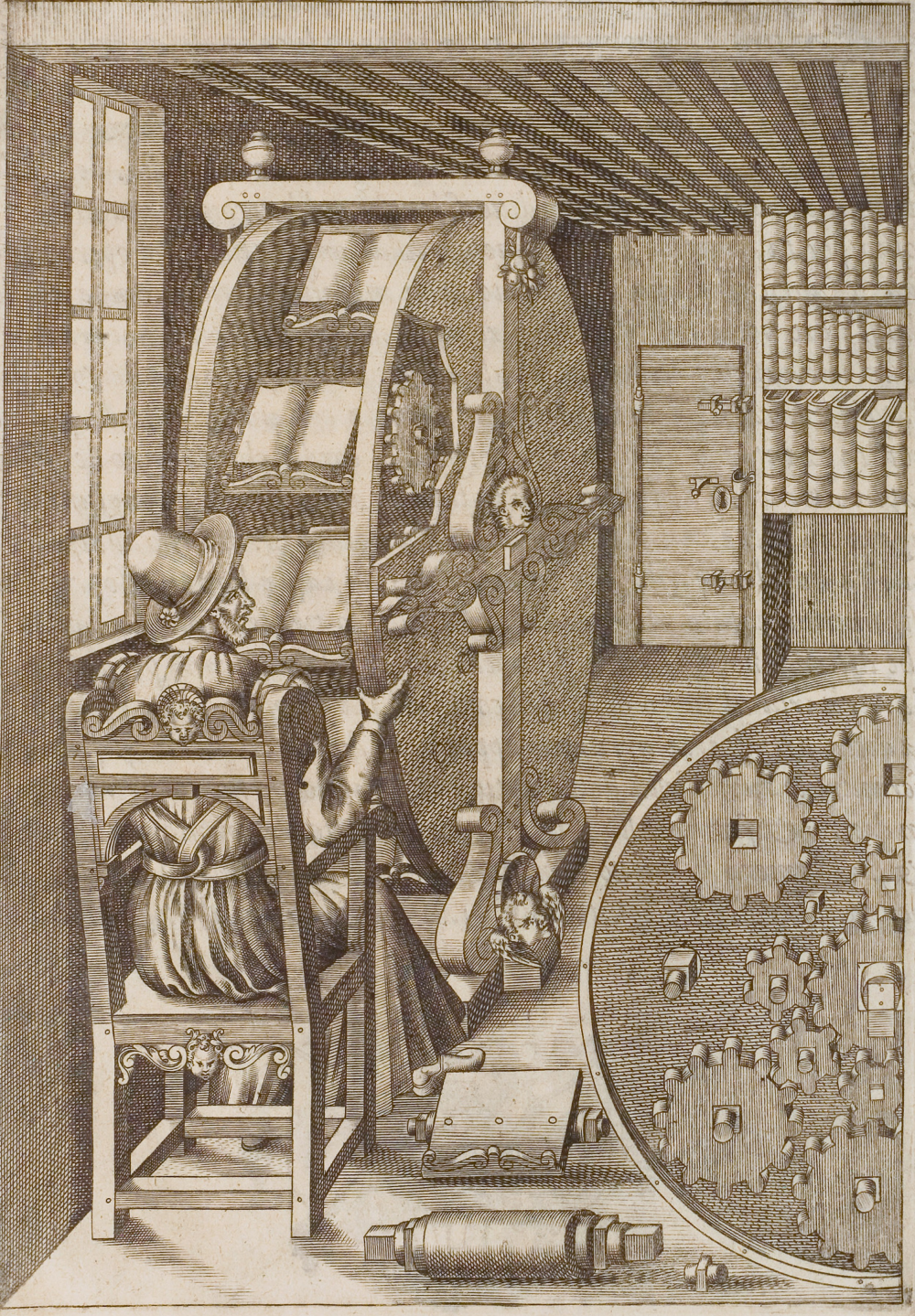
Italian military engineer Agostino Ramelli unveiled this towering wooden Ferris wheel for scholars in his 1588 Paris treatise, Le diverse et artificiose machine. Using an epicyclic gear system, the rotating drum kept up to a dozen heavy folio books open at a readable angle simultaneously, so researchers could compare texts without losing their place.
Trending on The Scroller


6. Athanasius Kircher’s organum mathematicum
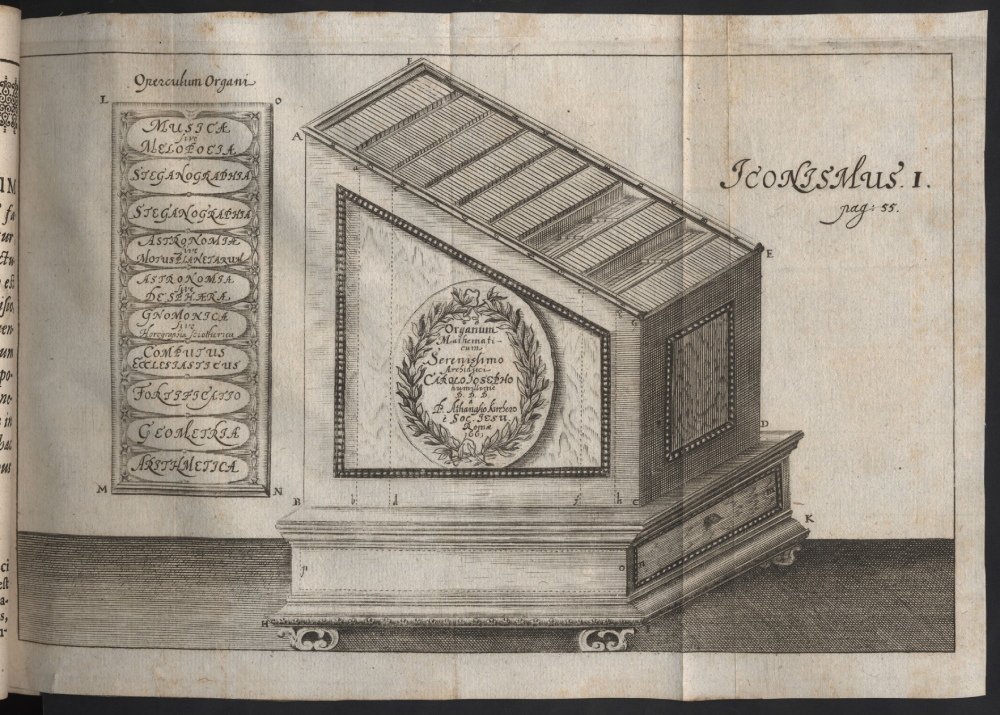
In the 1660s, German Jesuit polymath Athanasius Kircher designed a portable wooden reference chest in Rome for young Habsburg archdukes. Inside the divided box sat dozens of color-coded boxwood slats engraved with tables for arithmetic, music composition, astronomy, and secret ciphers, eliminating the need to memorize complex formulas.
7. Joseph Marie Jacquard’s punched loom cards
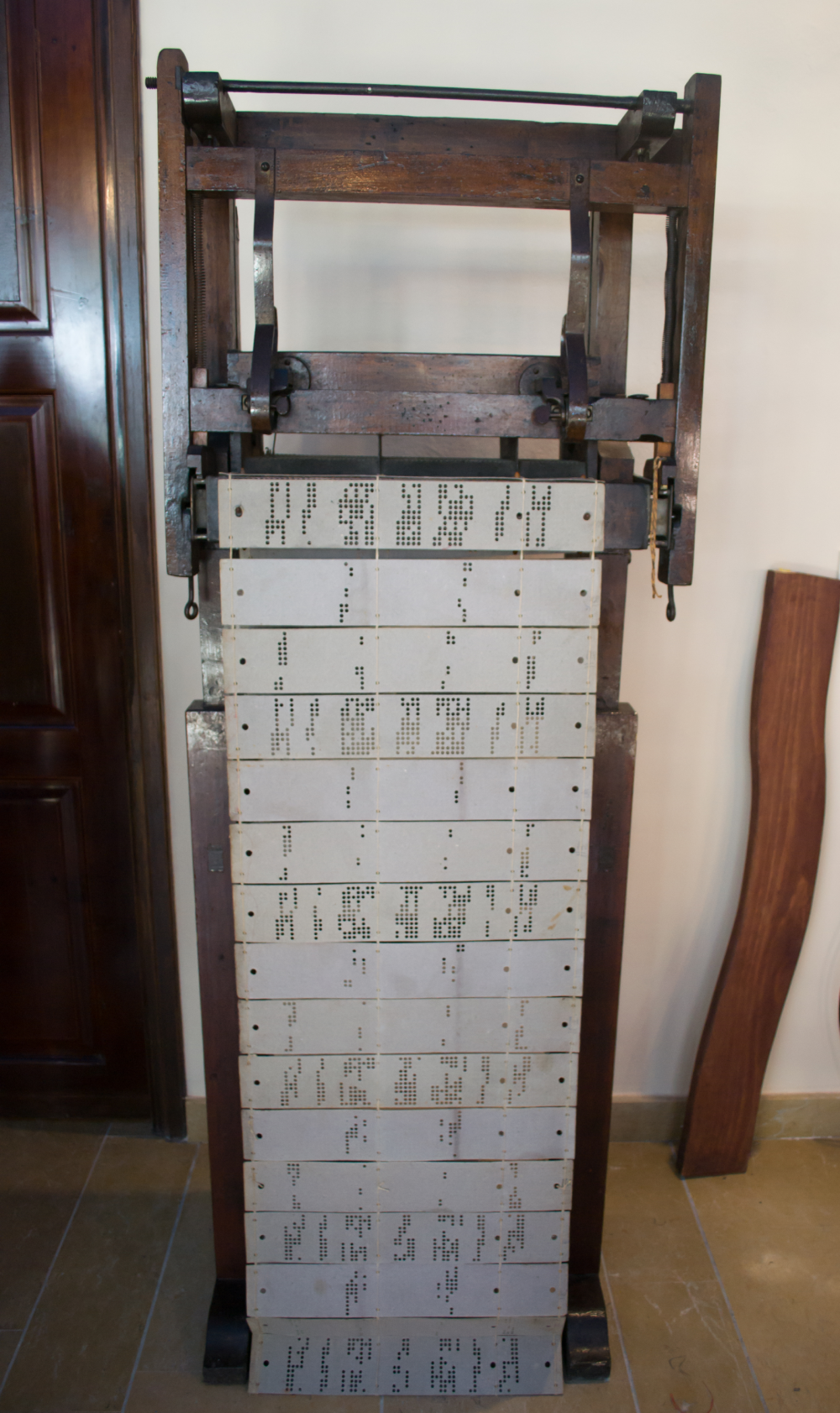
Unveiled in Lyon, France, in 1804, Joseph Marie Jacquard’s programmable silk loom replaced human pattern memorization with long chains of stiff, perforated pasteboard cards. Metal rods passed through the punched holes to lift specific warp threads automatically, allowing workshops to reproduce intricate floral brocades flawlessly every single time.
8. Semyon Korsakov’s homeoscope pin machine
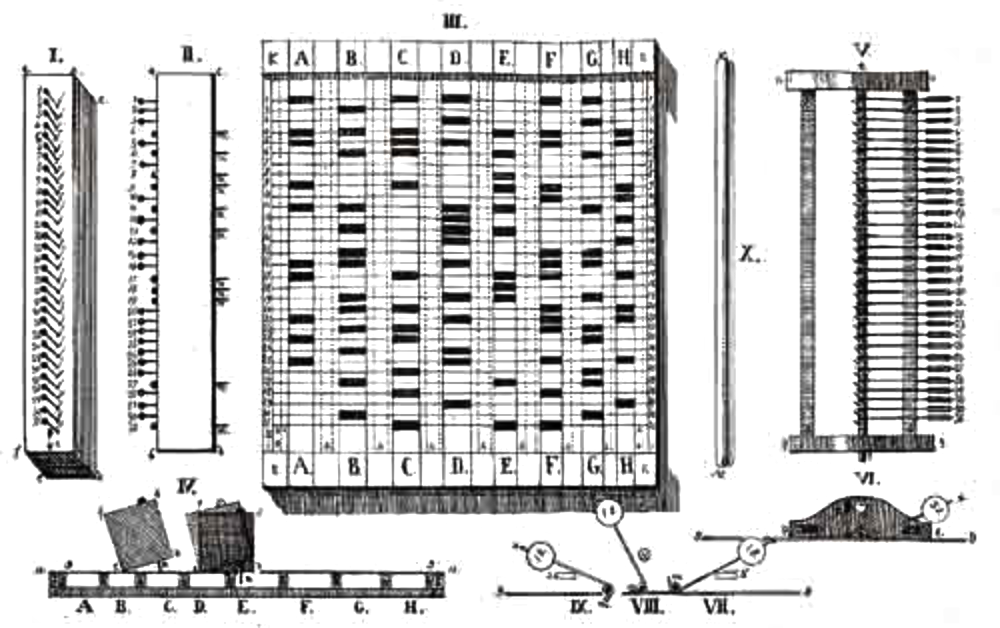
In 1832, Russian statistician Semyon Korsakov built wooden mechanical devices in Saint Petersburg that searched through punched data cards using sliding metal pins. Designed to help doctors match patient symptoms against thousands of herbal remedies, his frame-like Homeoscope acted like an early mechanical database long before electricity entered offices.
Sign up for our newsletter
9. William Wooton’s patent secretary desk
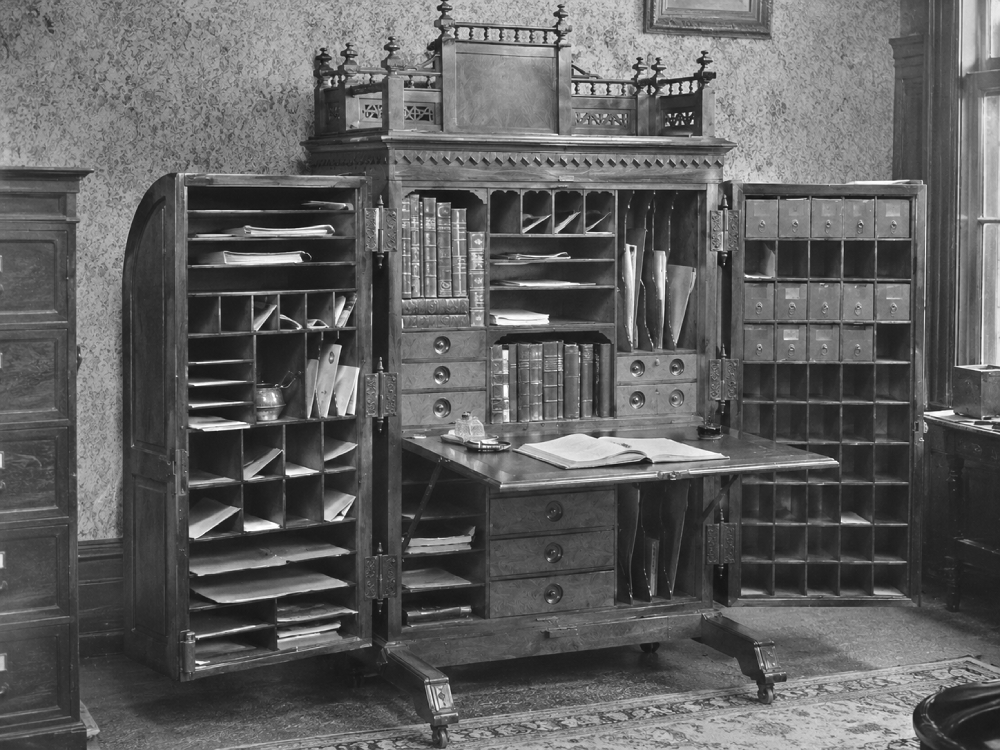
Patented in Indianapolis in 1874 by William S. Wooton, this massive walnut cabinet earned the nickname “King of Desks” among Victorian executives. Swinging open its hinged wings revealed over one hundred labeled pigeonholes, letter drops, and rotating filing boxes built to organize an entire company’s paperwork within arm’s reach.
10. Herman Hollerith’s census tabulating machine
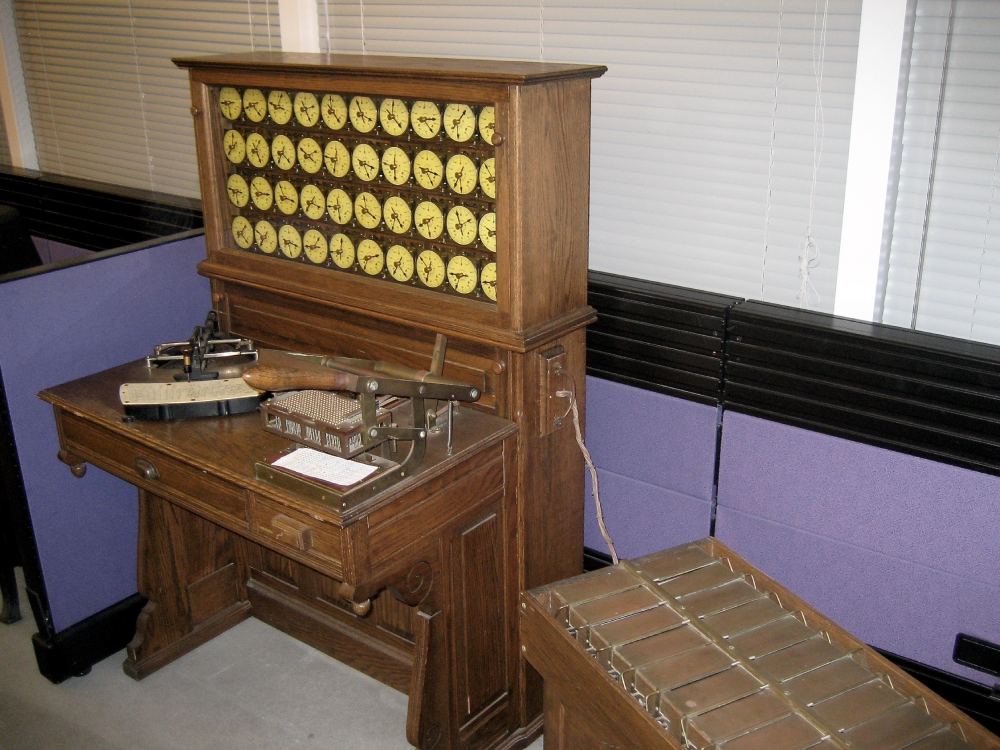
Facing a massive backlog from the 1880 United States Census, inventor Herman Hollerith built an electromechanical tabulator in 1890 that read personal data punched onto stiff manila cards. Spring-loaded brass pins dropped through the holes into tiny cups of mercury to complete electrical circuits and advance mechanical dial counters, cutting years off manual record-keeping.
11. Paul Otlet’s Mundaneum index vault
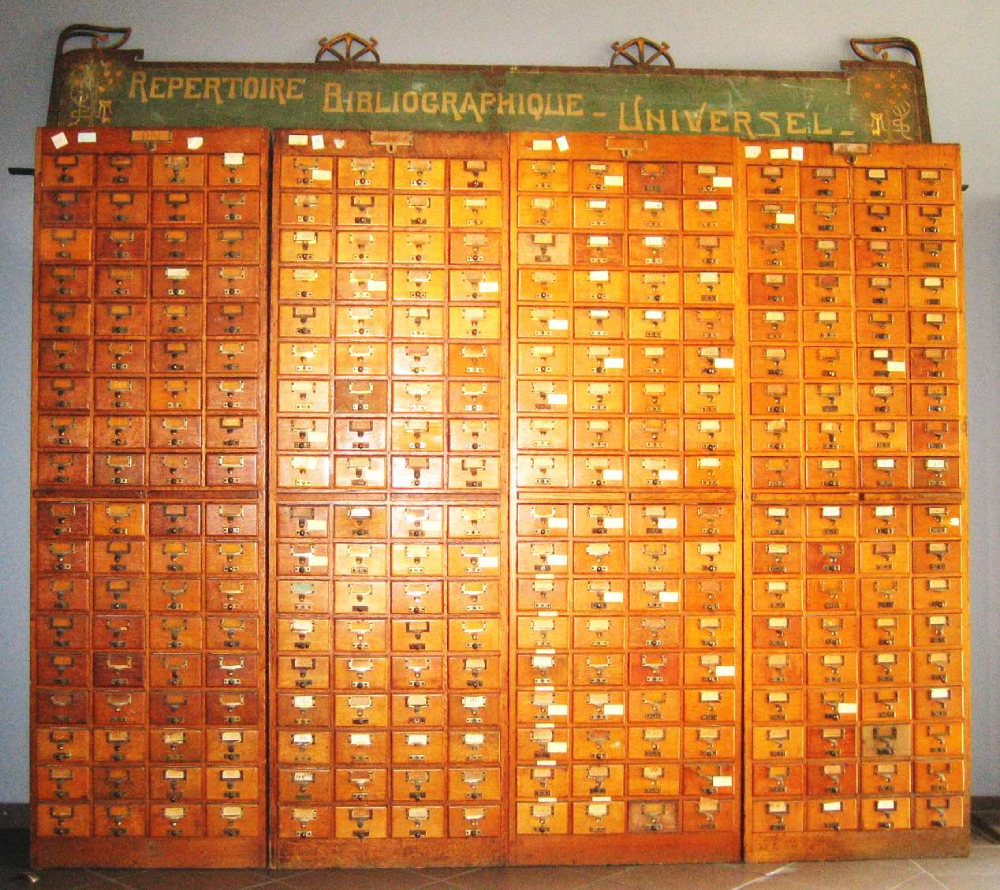
Starting in Brussels in 1910, Belgian visionaries Paul Otlet and Henri La Fontaine attempted to catalog every piece of published knowledge on Earth inside a massive warehouse called the Mundaneum. Using custom wooden cabinets filled with over twelve million cross-referenced index cards, staff answered research questions sent in by mail and telegraph like a human-powered search engine.
12. The 1927 wrist-mounted paper scroll
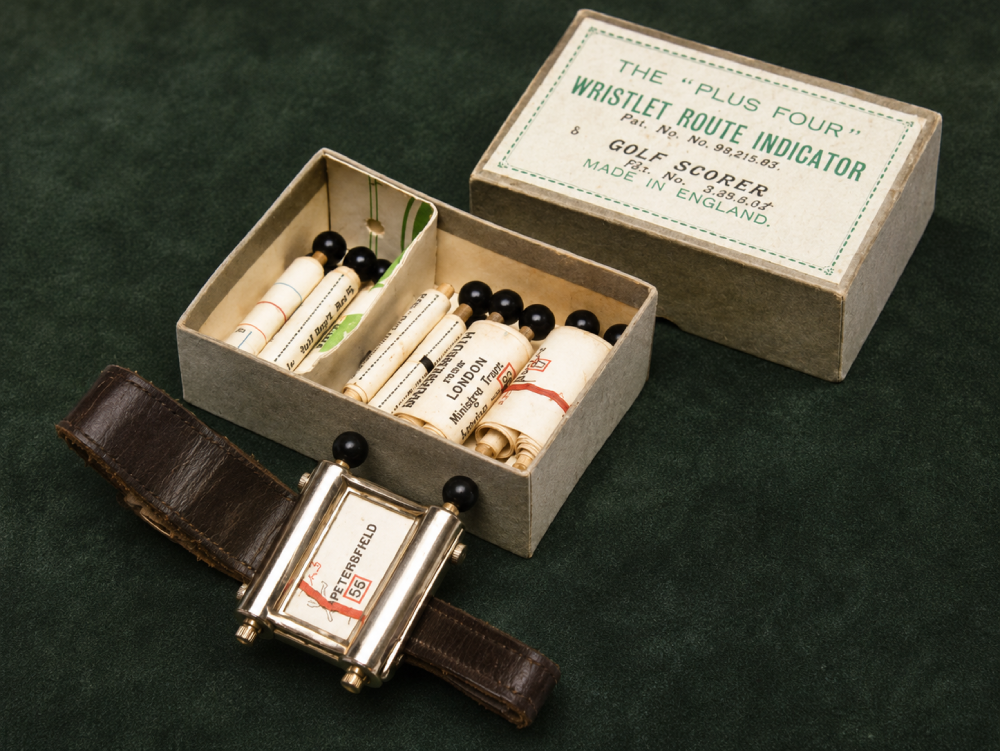
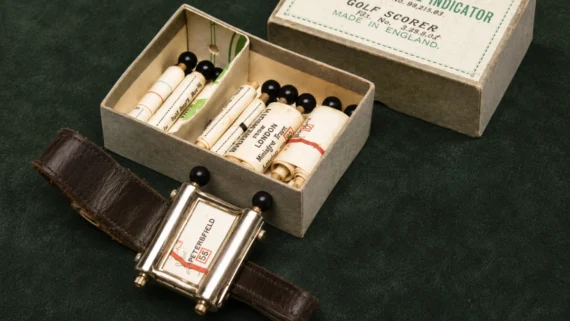
Patented in London in 1927, this miniature leather-strapped wrist gadget gave forgetful pedestrians a wearable notepad decades before smartwatches existed. Turning two tiny side knobs rolled a narrow strip of paper past a small glass window, letting drivers and shoppers jot down street directions or errands on the move.
Explore more fascinating inventions:
Seeing how past inventors transformed wooden wheels, brass gears, and millions of index cards into external hard drives proves that human ingenuity has always found a way to conquer forgetfulness. Long before glowing screens sat in every pocket, clever thinkers turned physical craftsmanship into reliable tools for preserving knowledge. If you love exploring forgotten historical gadgets, unusual scientific experiments, and fascinating inventions, make sure to check out these 12 Patented Inventions That Complicated Life or these From Trenches to Homes: 14 Wartime Inventions We Use Today. You can also explore these 12 Forgotten Inventions to Make Laundry Easier.